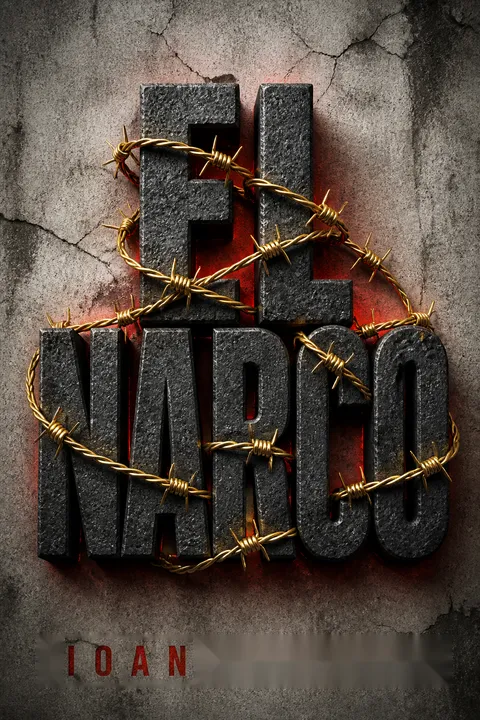


Key Takeaways
Understand El Narco as a criminal movement, not merely a drug business.
A killer’s confession opens the story. In a Juárez prison, former police officer Gonzalo describes years of kidnapping and murder, then his attempt to seek redemption in a Christian congregation. His path illustrates the book’s central argument: Mexican trafficking networks have grown beyond smuggling into a social force that recruits people, influences communities, and wages armed conflict.
A whole world, not one boss. El Narco includes growers, couriers, assassins, corrupt officials, local gangs, and the cultural forms that make traffickers seem powerful or heroic. The networks compete and cooperate; they are not one ghostly organization. Grillo argues that understanding this movement is essential to understanding why arrests alone have not ended the violence.
The movement lens shifts attention from celebrity kingpins to the relationships that keep criminal power functioning. That is useful because a network can survive the removal of its most visible leader. It also prevents the opposite mistake: treating everyone touched by the drug economy as part of a single coordinated army. The term captures a genuine social reach, but its breadth requires care. A farmer seeking income, a coerced police officer, and a commander ordering massacres occupy very different positions in the same system.
Prohibition and American demand turned Sinaloa’s poppies into a durable export industry.
A market grows from a ban. Chinese immigrants brought opium poppies to Sinaloa in the late nineteenth century. When the United States passed the Harrison Narcotics Act in 1914, restricting opiates and cocaine, it helped create a black market that paid smugglers to supply prohibited drugs. Early trafficking already involved political protection, as a 1916 U.S. investigation alleged that Baja California’s governor took payments from smugglers.
Demand widened the business. In the 1960s and 1970s, American appetite for marijuana, heroin, and cocaine expanded the trade far beyond a handful of mountain growers. Government crackdowns sometimes moved production elsewhere rather than stopping it. Operation Condor, Mexico’s large 1970s crop-eradication campaign, helped shift marijuana production toward Colombia, a pattern known as the balloon effect.
This history makes prohibition more than background policy. It helps explain why illegal supply became profitable, politically protected, and geographically mobile. The balloon metaphor is especially useful: pressure on one production zone can push activity into another, so local success may conceal wider displacement. Yet demand and prohibition do not explain every turn in cartel violence. Political corruption, local poverty, and competition over routes shape how a profitable market becomes an armed conflict.
Democracy broke the PRI’s criminal bargain before Mexico built reliable replacements.
The old order managed crime. Under the PRI, political leaders and police maintained a hierarchical system of corruption. Traffickers could pay for protection, while officials could restrain or arrest them when they threatened the arrangement. A plaza, or trafficking territory, had a coordinator who moved drugs and handled payments to police. The system was corrupt, but authority was more centralized.
The transition fractured control. When the PRI lost power in 2000, the new democratic government inherited weak institutions without the same chain of command. Police forces splintered, officials worked for rival criminal groups, and some officers fought one another. The 2001 escape of Joaquín Guzmán from prison became a symbol of institutional weakness, though the book finds no solid evidence that the president ordered or enabled it.
The account complicates the comforting idea that democratic elections automatically produce capable institutions. Political competition can expose old arrangements before new rules and agencies are strong enough to replace them. That does not make authoritarian corruption a desirable form of order: its apparent stability depended on coercion and selective impunity. The more precise lesson is institutional. Reform must build trustworthy policing and accountability, not merely remove the political hierarchy that had kept criminal bargains coordinated.
Follow the border corridor: that is where traffickers capture leverage and profit.
Routes create bargaining power. Mexican groups first helped Colombian traffickers move cocaine north, then gained greater control over distribution in the United States. Their advantage was not simply producing drugs. They controlled access to lucrative border crossings and the networks that carried shipments through them. In Mexico, a plaza became valuable territory because traffickers could tax shipments moving through it.
The margins rise northward. A United Nations estimate cited in the book valued a kilo of cocaine at about $2,147 in Colombian ports in 2009, $34,700 at the U.S. border, and $120,000 on New York streets. The figures are estimates, but the steep increase shows why control of transport and distribution matters. Grillo cautions that broader estimates of cartel income are much less certain.
The supply-chain perspective explains why an organization can gain power without owning every stage of production. Control of a bottleneck can matter more than control of a farm, especially when the product’s value rises sharply along its route. The same logic appears in many industries, but here the bottleneck is enforced through bribery, threats, and violence. The figures should be read as a map of incentives, not audited accounts: illegal markets leave far too little reliable data for precise totals.
Raids and kingpin arrests can redistribute violence while drugs keep moving.
Pressure changes the network. In the 1980s, U.S. enforcement made the Florida route more dangerous for Colombian cocaine smugglers. Mexican networks became more important as couriers, then took larger shares of the business. In the 1990s, the breakup of the old cartel arrangement and the removal of leaders helped fuel rivalries over territory.
Supply proved resilient. Border seizures remained substantial as Mexico’s violence rose. In 2009, U.S. authorities seized hundreds of metric tons of drugs at ports of entry and more than a thousand tons of marijuana through Border Patrol operations. The book argues that arresting a leader can trigger succession fights, while trafficking continues through replacement networks. Enforcement can weaken particular organizations, but seizure totals alone cannot show whether the overall market has shrunk.
A crackdown should be judged by more than the number of arrests or the size of a seizure. Those measures show activity, not necessarily whether the system is safer or supply has fallen. The book’s account resembles a basic problem in complex systems: removing one node can redirect traffic or provoke competition among those who remain. That does not make enforcement pointless. It means policymakers need to track unintended effects, including violence, displacement, and whether institutions gain lasting control.
Treat armed attacks on officials as a challenge to rule, not ordinary crime.
The target is authority itself. Grillo uses criminal insurgency to describe armed networks that attack police, soldiers, politicians, and public institutions while competing to control territory. Some groups attacked police bases, murdered public officials, and sought influence over election candidates. In places they dominated, officials and businesses could face a shadow authority that operated alongside, or in place of, the state.
The label has limits. These organizations do not share one ideology, and many are not trying to occupy the presidential palace. Their motives differ, from protecting drug routes to taxing other industries and pressuring officials to back off. Grillo argues that the absence of a conventional revolutionary program does not erase the threat. The term helps describe the armed challenge, but it should not make every cartel or every criminal act seem identical.
The value of the insurgency frame is diagnostic, not celebratory. It directs attention to who can impose rules, intimidate officials, and decide what happens in a territory. But labels also shape policy: calling a conflict an insurgency can encourage military responses with serious risks to civilians. The strongest use of the term therefore pairs a clear description of the threat with equally clear distinctions among organizations, motives, and levels of violence.
Songs, saints, and sermons turn cartel power into a local cultural language.
Stories give criminals a public image. Narcocorridos, or drug ballads, describe traffickers, prison escapes, alliances, and killings. The corrido tradition once carried news through isolated communities; modern narcocorridos continue that role while making some gangsters sound like daring outlaws. The broader narcocultura includes music, fashion, films, and displays of wealth shaped by the drug trade.
Faith can reinforce belonging. Some traffickers pray to the folk saint Jesús Malverde or to Santa Muerte. La Familia went further: its leader Nazario Moreno wrote a religious and political book for recruits, mixing Christian self-discipline with language of peasant resistance. These beliefs do not make every devotee a criminal, and the book does not claim music or religion alone causes violence. They show how criminal groups can borrow familiar symbols to build identity and loyalty.
Culture matters here because power is not sustained by weapons and money alone. Songs can circulate a group’s reputation; rituals can create belonging; and a story of the outlaw as defender of the poor can make criminal authority appear meaningful. That is not the same as proving that art causes violence. Cultural forms can report, romanticize, criticize, or simply sell. Distinguishing those functions prevents both the censorship reflex and the naïve claim that representation has no social influence.
When cartels diversify, families and migrants become targets, not just rival crews.
The business spreads beyond drugs. As some groups gained heavily armed forces, they expanded into extortion, kidnapping, migrant smuggling, car theft, and oil theft. These crimes draw money directly from communities. In Juárez, businesses that had long tolerated drug traffic began closing or leaving when gangs demanded regular payments.
The most vulnerable pay dearly. A human-rights report cited in the book estimated that ten thousand migrants were kidnapped in six months in 2009. In 2010, Zetas gunmen massacred seventy-two migrants in Tamaulipas. The book also reports a 317 percent rise in reported kidnappings across Mexico between 2005 and 2010. These crimes show why a cartel may be more than a trafficking organization: its armed units can extract money through fear even when they are not moving drugs.
Diversification changes the social contract between criminals and residents. A drug market can operate at a distance from many households; extortion and kidnapping make the threat intimate and recurring. The state’s failure to protect people then creates a grim opening for private protection, sometimes offered by one armed group against another. Any response must therefore measure not only drug flows, but also whether families can report crimes safely and businesses can refuse criminal demands.
Fund credible futures for young people before armed groups recruit them.
Recruitment begins with unmet needs. In Ciudad Juárez, gangs offered teenagers money, phones, weapons, and a sense of belonging. A 2010 study cited in the book estimated that 120,000 young people aged thirteen to twenty-four were neither in school nor formal employment. One teenager, Fríjol, joined a street gang at twelve and later entered the cartel war. He said young killers could be paid just 1,000 pesos, about $85, for a murder.
Alternatives need to be tangible. The book points to a Mexico City scholarship program that supported 50,000 students. It also describes a Juárez youth center offering art, music, computers, and a place to spend time safely. Such programs cannot erase cartel power, but they can provide something armed groups are already offering: income, attention, and membership in a group.
Recruitment is not simply a matter of individual bad choices when a criminal group is the only institution offering money, status, and companionship. The comparison between youth programs and incarceration also reframes prevention as practical investment, not sentimentality. Still, services cannot substitute for safe streets, decent work, or accountable police. Their value is greatest when they form part of a wider public presence that young people can trust and actually reach.
Pair focused policing with drug-policy reform; neither can make peace alone.
Target harm, not just headlines. The book argues for better police institutions, a focused effort against kidnapping, and restraint in using soldiers for routine policing. It also points to investment in schools and neighborhood programs. Colombia’s experience, as described by former president César Gaviria, suggests that a dedicated, trusted unit can make kidnapping less profitable by raising the chance of catching offenders.
Reconsider the market too. Mexico decriminalized possession of small amounts of drugs in 2009, but trafficking remained illegal. Grillo argues that broader reform, especially legalizing marijuana, could reduce cartel income. He also warns that cartels would not disappear overnight: extortion and kidnapping could continue. The conclusion is a combined strategy, not a magic fix: reduce criminal revenue, build credible institutions, protect civilians, and offer alternatives to recruitment.
The proposed package addresses different parts of the problem: police reform targets impunity, prevention addresses recruitment, and drug-policy change addresses the profits created by prohibition. Treating any one measure as sufficient would confuse a complex system with a single cause. Legalization also raises difficult questions about regulation, public health, and how quickly illicit groups could replace lost income through other crimes. The book’s strongest policy insight is the need to test reforms against actual harms, not the symbolism of being tough.
Analysis
Grillo’s central achievement is to make the Mexican drug war legible without reducing it to either a morality play or a tidy map of competing cartels. The narrative moves from poppy cultivation and American drug demand through political transition, trafficking economics, armed violence, popular culture, and policy. Gonzalo’s prison testimony gives the abstraction a human face, while the stories of bereaved families and threatened journalists show that the conflict’s costs extend well beyond combatants.
The book’s most consequential claim is that cartel power is not only a function of drug sales. It also depends on territorial access, police corruption, social recruitment, cultural prestige, and the capacity to intimidate or replace public authority. This explains why removing a capo can produce a succession struggle, why military deployments may raise violence without reducing trafficking, and why extortion marks a deeper intrusion into daily life. The argument is strongest when it distinguishes between organizational strength and state weakness: the cartels need not defeat the state everywhere to make public authority unreliable in particular places.
The term criminal insurgency is illuminating but necessarily contested. It foregrounds armed challenges to officials and territorial control, yet risks implying a unified political project where the book describes shifting alliances and sharply different motives. The label is best treated as a question about function: which groups can challenge authority, and how? That avoids collapsing ordinary trafficking, coercive governance, and attacks on civilians into a single category.
The policy conclusion follows from this complexity. Force may be needed against heavily armed groups, but it cannot replace civilian policing, anti-kidnapping capacity, youth opportunity, or debate over prohibition. Nor does the book establish that any one reform would end the conflict. Its durable contribution is a method of analysis: follow the money, the routes, the institutions, and the people exposed to violence, then judge policy by whether it reduces harm and restores credible public authority.
Review Summary
El Narco is praised as a comprehensive, well-researched account of Mexico's drug cartels and their violent rise to power. Readers appreciate Grillo's in-depth historical analysis, first-hand interviews, and exploration of narco culture. The book is noted for its accessible writing style and thorough examination of the economic, political, and social factors contributing to the drug war. While some criticize the author's occasional editorializing, most find it an invaluable resource for understanding the complex issue of drug trafficking in Mexico and its far-reaching consequences.
People Also Read



Glossary
El Narco
Mexico’s criminal movementThe collective Spanish label used in the book for Mexican drug traffickers and the social world around them. It does not describe one unified organization. The term includes competing networks, local crews, corrupt officials, workers, and cultural symbols shaped by the drug trade. Grillo uses it to emphasize a movement embedded in society, not just famous kingpins.
plaza
A trafficking territoryA territory or corridor through which drugs move, often corresponding to a city or region. A plaza head coordinates shipments, may transport drugs personally, and can tax other smugglers using the same route. The term also reflects the corruption surrounding trafficking, since control of a plaza often involves arrangements with police or other officials.
balloon effect
Supply shifts under pressureThe displacement of drug production or trafficking when enforcement pressures one area. Like air pushed from one part of a balloon into another, supply can move to a different region rather than disappear. Grillo uses the term to explain how crackdowns on Mexican marijuana production helped create opportunities for Colombian growers.
narcocorrido
A drug-trafficking balladA corrido, or Mexican narrative ballad, focused on drug traffickers and the world around them. Narcocorridos recount events such as killings, prison escapes, alliances, and smuggling. They continue a tradition in which songs carried news through communities, while also giving traffickers a public image and sometimes glorifying their power.
narcocultura
Culture shaped by traffickingThe cultural world connected to Mexican drug trafficking, including music, film, fashion, religious practices, and displays of wealth. The term describes how criminal power becomes visible and meaningful in some communities. It does not mean that everyone who enjoys its cultural forms participates in crime or supports cartel violence.
buchones
A narco-linked styleA youth fashion and social style associated with Sinaloan narcocultura. It mixes rural and urban, traditional and modern elements, including cowboy hats, distinctive boots, sneakers, bright caps, jewelry, and expensive clothing. The style signals status and proximity to the world of traffickers, though wearing it does not establish criminal involvement.
criminal insurgency
An armed challenge to authorityGrillo’s term for criminal organizations that use armed force to challenge civil authority, control territory, attack officials, or pressure governments. Unlike conventional ideological insurgencies, these groups may seek profits and freedom to operate rather than national power. The term describes some cartel behavior, not every cartel or every crime.
state capture
Criminal control of institutionsA condition in which criminal groups gain control over parts of the state, especially local police or public officials, and use them to protect their interests. In the book, captured institutions can act as a shadow government: residents and businesses may have to answer to cartel power even while formal authorities remain in place.
cartel decapitation
Removing a cartel’s leadersAn enforcement strategy that targets and removes high-ranking cartel leaders through arrest or killing. Supporters argue it weakens organizations and prevents any one kingpin from becoming a national-security threat. The book highlights a risk: removing a leader can trigger succession fights, split an organization, and increase violence without stopping the flow of drugs.
FAQ
What is El Narco: Inside Mexico's Criminal Insurgency by Ioan Grillo about?
- Comprehensive drug war analysis: The book explores the evolution of Mexico’s drug trade from its early roots to its current status as a violent criminal insurgency.
- Focus on transformation: It details how traffickers evolved from small-time smugglers into paramilitary organizations challenging the Mexican state.
- Cultural and societal impact: Grillo examines how narcoculture, violence, and corruption have deeply affected Mexican society and politics.
Why should I read El Narco: Inside Mexico's Criminal Insurgency by Ioan Grillo?
- Nuanced understanding: The book moves beyond headlines to explain the social, political, and economic factors fueling the Mexican Drug War.
- Human stories: Through interviews with traffickers, victims, and officials, Grillo humanizes the conflict and reveals its moral complexities.
- Global relevance: The analysis connects Mexico’s crisis to broader trends in organized crime worldwide, making it essential for understanding global criminal insurgencies.
What are the key takeaways from El Narco: Inside Mexico's Criminal Insurgency by Ioan Grillo?
- Criminal insurgency concept: Mexican cartels have become insurgent groups, using paramilitary tactics and challenging state authority.
- Role of U.S. policy: American drug and gun policies have significantly shaped the drug war’s evolution and violence.
- Cultural entrenchment: Narcoculture, including music, religion, and fashion, helps sustain and legitimize the drug trade within communities.
What are the main historical developments of the Mexican drug trade according to Ioan Grillo?
- Origins in the Golden Triangle: The trade began with opium poppy cultivation by mountain peasants in the early 20th century.
- Impact of U.S. prohibition: American drug laws created black markets that Mexican traffickers exploited, with inconsistent enforcement fueling growth.
- Rise of major cartels: The 1960s-1980s saw the emergence of powerful cartels linking Mexican and Colombian traffickers, transforming the industry.
How does Ioan Grillo define and use the term "El Narco" in El Narco: Inside Mexico's Criminal Insurgency?
- Collective identity: "El Narco" refers to the vast, shadowy networks of traffickers dominating Mexican society.
- Cultural movement: It encompasses not just crime, but a way of life with its own music, fashion, and religious practices.
- Analytical lens: Grillo argues that understanding El Narco as a movement, rather than focusing on individual kingpins, is key to grasping the conflict.
What are the key concepts and terms explained in El Narco: Inside Mexico's Criminal Insurgency by Ioan Grillo?
- Sicarios and gatilleros: The evolution of professional assassins, from Mexican gunmen to Colombian-style motorcycle hitmen and modern cartel killers.
- Narcocorridos and narco culture: Drug ballads and cultural expressions that glorify traffickers and shape public perception.
- Narco religion: The role of folk saints like Jesús Malverde and Santa Muerte, and the intertwining of faith and crime in cartel identity.
How does Ioan Grillo describe the transformation of Mexican drug traffickers into paramilitary groups in El Narco?
- Militarization of cartels: Traffickers evolved into heavily armed death squads, such as the Zetas, engaging in urban warfare and terror tactics.
- Role of ex-military: Former special forces soldiers brought military discipline and tactics, escalating violence and challenging state power.
- Impact on society: This shift led to unprecedented violence, blurring the lines between crime and armed conflict.
What is the role of youth and gangs in the Mexican drug war according to El Narco: Inside Mexico's Criminal Insurgency?
- Recruitment of youth: Cartels target teenagers and young adults from poor neighborhoods, offering money and status for joining as hitmen or lookouts.
- Gang alliances: Street gangs like Barrio Azteca form alliances with cartels, participating in massacres and turf wars.
- Psychological effects: Exposure to violence desensitizes young sicarios, perpetuating cycles of brutality and crime.
How does Ioan Grillo portray the role of Mexican journalists in covering the drug war in El Narco?
- Courageous reporting: Journalists risk their lives to expose cartel activities and government corruption, often facing deadly consequences.
- Corruption and propaganda: Some reporters are bribed or coerced by cartels, complicating the media landscape and public understanding.
- Raising awareness: Investigative journalism has forced the drug war into public view, challenging official silence and demanding accountability.
What are the main cartels and key figures discussed in El Narco: Inside Mexico's Criminal Insurgency by Ioan Grillo?
- Guadalajara Cartel origins: The rise of the Guadalajara Cartel and figures like Miguel Ángel Félix Gallardo and Juan Ramón Matta Ballesteros.
- Sinaloa Cartel dominance: Joaquin “Chapo” Guzmán and Ismael “El Mayo” Zambada’s leadership and expansion of the Sinaloa Cartel.
- Zetas and Gulf Cartel: The emergence of the Zetas as a militarized wing and their violent turf wars with the Gulf Cartel.
How does El Narco: Inside Mexico's Criminal Insurgency by Ioan Grillo explain the connection between drug trafficking and violence in Mexico?
- Territorial control: Cartels fight for control of trafficking corridors (plazas), leading to violent turf wars.
- Use of terror: Brutal tactics like mass kidnappings and public executions are used to intimidate rivals, authorities, and civilians.
- Corruption and fragmentation: Cartel infiltration of police and military undermines law enforcement and escalates violence.
What are the best quotes from El Narco: Inside Mexico's Criminal Insurgency by Ioan Grillo and what do they mean?
- On violence and fatalism: “Everyone dies in the end.” —Gustavo, a Colombian sicario, reflecting the grim outlook of cartel hitmen.
- On culture and identity: “A nation’s culture resides in the hearts and in the soul of its people.” —Mahatma Gandhi, used to frame the discussion of narcoculture.
- On drug policy failure: “The war on drugs has failed. And it’s high time to replace an ineffective strategy with more humane and efficient drug policies.” —Former Latin American presidents, highlighting the need for reform.
- On public desperation: “We need a Superman to come here and save us, to clean up this city, to take out the bad guys.” —Alma Herrera, expressing the longing for rescue amid chaos.
Download PDF
Download EPUB
.epub digital book format is ideal for reading ebooks on phones, tablets, and e-readers.








