

Key Takeaways
Let elephants teach you the difference between command and leadership
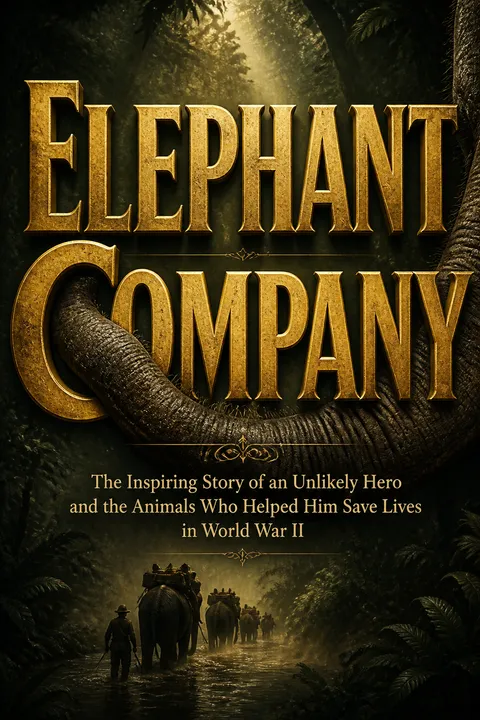
A different kind of hero. In 1920, after fighting through World War I, James Howard Williams left England for a job supervising teak logging in Burma. He expected adventure and elephants. He did not expect the animals to become his teachers. In 1927, fever-stricken and barely conscious, he was carried across a raging river on Bandoola, a tusker who chose his own footing through the torrent. Williams credited the elephant’s judgment, not his own, with saving him.
The relationship changed him. Years of watching elephants taught Williams to prize patience, courage, fairness, and careful attention to feeling. The book reverses the familiar tale of a person mastering an animal: sustained life among elephants helped Williams become a more humane colleague and commander. His wartime reputation as Elephant Bill grew from that apprenticeship.
What's striking is how the book makes expertise relational. Williams is not portrayed as a magician who controls a giant animal, but as someone whose knowledge grows through repeated attention to individual behavior. That distinction matters in any setting where authority can confuse compliance with understanding. The story also benefits from a little caution: Williams often interprets what elephants feel, and some moments remain inference rather than proof. The strongest evidence is practical: he observes, adjusts, and earns cooperation under pressure.
Earn trust through steady care, not rank or affection alone
Trust has a cost. Williams learned that affection did not automatically make an elephant trust him. Trust grew from consistency: knowing the animal, noticing pain, and doing difficult work without treating resistance as insolence. When Ma Chaw returned from a tiger fight with deep, infected wounds, Williams spent weeks opening the concealed pockets of infection and cleaning them. The treatment hurt, but he spoke gently, rewarded her, and returned day after day.
Care became communication. Ma Chaw later approached him and presented her back during an inspection. Williams could not prove she was asking for help, but he found an unhealed wound exactly where she had directed his attention. The episode captures his practical ethic: feelings matter, yet dependable action is what makes care credible. In the jungle, trust was not a soft extra. It enabled dangerous medical work and close cooperation.
This account links compassion to competence rather than treating them as opposites. In caregiving, veterinary practice, and leadership, the person who can reduce suffering earns a different kind of authority from the person who merely occupies a role. The scene also models epistemic restraint: Williams distinguishes what he knows, the persistent wound, from what he suspects, Ma Chaw's intention. That separation strengthens the emotional claim. Respect for an animal does not require pretending that every gesture has a clear human translation.
Replace breaking calves with patient schooling and build better workers
A gentler system. Working elephants were often captured as adults through kheddaring, a method that trapped wild animals in an enclosure and subdued them with ropes, chains, and beatings. Meanwhile, calves born in logging camps were neglected while their mothers worked. The book reports that nearly 70 percent of these calves could die. Williams and the mahout Po Toke proposed a different investment: raise young elephants with care, teach them gradually, and train young handlers alongside them.
Kindness made practical sense. At the elephant school, five-year-old calves learned basic commands through repetition, food, and praise. A mature bull helped guide them, while boy trainees grew into skilled uzis beside their partners. Williams argued that healthier, calmer elephants would work more reliably and cost less over time than repeatedly buying captured adults. The school began small, then expanded as the company saw its promise.
The school is both an animal-welfare reform and a workforce-design experiment. It replaces coercive onboarding with gradual learning, stable relationships, and skill development for both sides. Its economic argument is especially strategic: humane treatment becomes easier to defend inside a company when it also reduces costly replacement and improves performance. Yet the reform does not erase the underlying system. The calves are still being prepared for labor in a colonial timber industry. Better treatment matters, but it does not make extraction neutral.
Investigate the need beneath a dangerous act before assigning blame
A conflict can be misread. In 1926, Williams humiliated an employee, Aung Kyaw, over missing money. When the man drew a knife, Williams fought back and was stabbed. During his recovery, he concluded that his own contempt had escalated the confrontation. At Aung Kyaw’s trial, Williams testified that the attack was not planned murder, helping secure a lighter sentence. He had applied to a person the mercy he had learned to extend to elephants.
Context is not an excuse. Years later, Bandoola killed his rider after being kept hungry for days and then forced through an exhausting river crossing. Williams found that the tusker had been neglected by the people responsible for him. He disciplined those involved but refused to label Bandoola a rogue. The animal remained dangerous, and a man had died, but understanding the cause changed how Williams judged and managed him.
The useful principle is not automatic forgiveness. It is disciplined diagnosis before punishment. Williams's inquiry into Bandoola's care uncovered deprivation that a quick label of evil or madness would have concealed. In human conflict, too, explanations can improve accountability by locating preventable causes. Still, this approach has limits: explaining a harmful act does not restore its victim or guarantee safety. The book's strongest version of mercy combines investigation with consequences, rather than confusing understanding with absolution.
Follow the animal others trust, not the strongest one
Leadership appeared in the crossing. When thirty-five working elephants had to swim across a wide river, Williams and the riders did not simply order the biggest tuskers into the water. The elephants waited until a young female plunged forward with purpose. The other females followed her, then the males entered behind them. The crossing succeeded without losing an elephant or rider.
Authority was not size. In logging camps, elephants were rarely allowed to choose a leader. Released into the forest, however, they formed their own social order. Williams saw the river crossing as evidence that leadership could emerge through confidence and trust, not force or rank. The animal others followed was not necessarily the strongest; she was the one whose action made the next step seem possible. Williams carried that distinction into his own command of men.
The crossing offers a compact model of collective action: people and animals hesitate under uncertainty, then coordinate around a credible first move. The leader's influence lies less in issuing commands than in reducing the perceived risk of acting. That insight travels well to teams, where formal authority can be weaker than demonstrated judgment. The scene should not be flattened into a universal rule that groups always select the wisest leader. It shows a particular group, at a particular crossing, making a successful choice under shared conditions.
Treat local expertise as authority, even inside a colonial hierarchy
Williams had to become a student. The Burmese mahouts, called uzis, knew each elephant's temperament, tracks, habits, and history. Po Toke, who had raised and trained Bandoola, was Williams's most important teacher. Williams learned Burmese so he could communicate directly, watched how uzis handled animals, and came to rely on their judgment in medical care and dangerous crossings.
Respect did not dissolve the hierarchy. Williams often defended workers and challenged company practices, but he remained a British officer in an industry built under colonial rule. Burmese nationalists opposed British control of forests and timber leases, while Williams initially struggled to understand the political lives of men he trusted. The book holds both facts together: his respect for local knowledge was genuine, and his position still benefited from an unequal system.
This tension is central to reading Williams fairly. He resists the assumption that expertise belongs automatically to the person with the senior title, and his work improves when he listens to people whose knowledge comes from lifelong practice. At the same time, interpersonal decency cannot by itself repair institutional inequality. The story distinguishes good conduct within a system from justice in the system as a whole. That distinction protects the portrait from becoming either a simple celebration of colonial benevolence or a denial of Williams's real care.
Use trusted relationships as infrastructure when roads and institutions fail
Elephants made movement possible. During the Japanese invasion of Burma, roads were scarce, bridges were vulnerable, and refugees poured toward India. Williams used elephants to carry supplies, clear routes, and move people through terrain vehicles could not cross. The animals helped evacuate British families in 1942, then became a wartime engineering unit. Under Williams, No. 1 Elephant Company built bridges from local timber and supported Allied movement through the jungle.
Loyalty had material force. Burmese riders risked their lives to bring their elephants to Williams, even when the Japanese demanded the animals for their own forces. Williams's knowledge of the country, his Burmese, and his relationships with the uzis helped him gather the company. The animals were not just transport. Their skills, and the trust between handlers and commander, supplied a kind of mobility that the army's formal machinery could not provide.
The wartime story makes a vivid systems point: infrastructure is not only roads and equipment. It also consists of skilled people, shared knowledge, and relationships dependable enough to function when formal channels break down. The elephants could build a bridge, but the unit depended on riders who trusted Williams and on commanders willing to use unfamiliar methods. The account also shows the moral risk of turning living beings into military assets. Their effectiveness is remarkable, but wartime necessity does not make their exposure to injury and death incidental.
When the map ends, turn shared courage into a route
A cliff became a passage. In 1944, Williams led fifty-three elephants, their riders, and sixty-four women and children away from the advancing Japanese. The intended route failed, and the party reached an escarpment about 270 feet high with no passable trail. Turning back could mean capture. Williams and his companions cut steps into the sandstone and widened ledges, creating what they called an elephant stairway.
Confidence had to travel first. Bandoola climbed carefully, taking more than three hours to reach the summit. Every other elephant followed; none fell or refused. The refugees crossed too, and the party eventually reached safety after a trek of about three weeks, despite carrying only fifteen days of planned rations. Williams saw the climb as the culmination of years spent building trust, reading animals, and learning when to lead and when to let them decide.
The staircase is more than a feat of strength. It is a chain of justified confidence: builders make the terrain less impossible, Po Toke understands Bandoola, Bandoola tests each step, and the others follow. This is a useful model for leadership under uncertainty because it joins preparation with adaptation instead of romanticizing sheer will. The episode also makes visible the cost of a heroic narrative. The march exposes exhausted people and animals to grave danger, and success should not obscure how little margin for failure the group had.
Remember Bandoola as a partner, not merely a wartime mascot
The hero's end remained unresolved. After the Allied return to Burma, Bandoola was pushed into heavy work. Williams found him missing, then learned that the tusker had been shot in the head and one tusk removed. Williams suspected Po Toke, Bandoola's longtime mahout, but could not prove who killed him. The uncertainty made the loss harder, not easier. Williams kept the remaining tusk, a reminder of their bond that also carried the pain of the animal's death.
A life did not end with victory. Williams returned to England in 1946, leaving the jungle, the elephants, and many Burmese companions behind. He wrote about the animals and found moments of reunion with captive elephants, but his Burma life was gone. Bandoola's story resists a tidy ending: the animal who helped save people in war was also a working creature caught in human systems of labor and conflict.
Bandoola's death complicates the clean symbolism of the war hero. He is neither equipment with a famous name nor a human-like saint beyond criticism. He is an individual animal whose capacities made him valuable to several human institutions, with consequences that included extraordinary partnership and fatal exploitation. Williams's suspicion of Po Toke remains just that, suspicion. Preserving the uncertainty is ethically important: grief can make a compelling theory feel like certainty, while a careful account leaves room for what the evidence cannot settle.
Analysis
Elephant Company is a biography shaped as an education. Its central transformation is not that a soldier becomes a jungle adventurer, but that a man who has survived organized violence learns to practice attention in a different form. Williams's expertise grows through observation, language learning, veterinary improvisation, and dependence on Burmese mahouts. Bandoola is the story's emotional center, but the book repeatedly shows that no single bond explains the work. The elephants' collective behavior, the uzis 'knowledge, and the fragile logistics of forest life all matter.
The narrative's deepest insight concerns the difference between control and cooperation. Logging and war both treat elephants as productive resources, yet the animals have preferences, alliances, fears, and capacities that make simple command unreliable. Williams succeeds when he works with those realities, as in the river crossing and stairway evacuation. His authority becomes useful because it is informed by people and animals he does not fully control.
That achievement sits inside a colonial contradiction. Williams opposes brutal capture and treats Burmese workers with unusual respect, but his career serves a British corporation extracting teak from a country resisting British rule. His personal decency cannot stand in for political justice. The book is strongest when it allows these truths to coexist rather than turning affection into an alibi for empire.
The account also asks readers to distinguish witnessed behavior from interpretation. Williams reads gratitude, grief, courage, and intention in elephants, sometimes persuasively and sometimes speculatively. The animal's actions are concrete; the human meanings assigned to them remain hypotheses. This distinction does not diminish the story. It makes its best lesson sharper: moral regard begins with taking another being seriously, while intellectual honesty requires admitting what remains unknown.
Ultimately, the book's heroism is collaborative and costly. A bridge or escape route is built from skill, patience, and trust, not charisma alone. But the closing loss of Bandoola prevents victory from sealing the story. The animals help save lives, yet they are also endangered by the labor and war that depend on them. The result is not a parable in which kindness solves everything, but a vivid account of how care can make people more capable without making their world fair or safe.
Review Summary
People Also Read








Glossary
elephant wallah
elephant specialistA colloquial term for a person whose work centers on elephants. Williams begins as a forest assistant supervising logging camps and becomes an elephant wallah through years of learning their behavior, health, handling, and work from direct observation and Burmese mahouts. The term describes practical expertise and a close working life, not a formal veterinary qualification.
uzi
elephant handlerThe Burmese term used in the book for an elephant's rider and handler, comparable to mahout elsewhere. Uzis guided elephants at work, cared for them, and often knew their individual histories and temperaments from long experience. Their expertise in reading tracks, behavior, and health became essential to Williams's management and to the wartime Elephant Company.
kheddaring
wild-elephant captureA traditional method of capturing wild elephants by driving or luring them into a large enclosed trap, then restraining them with ropes and chains. In the book's account, the process could involve deprivation, intimidation, and beating to force submission. Williams considered this treatment cruel and promoted raising and training camp-born calves instead.
musth
male elephant hormonal stateA periodic condition in male elephants associated with elevated testosterone, secretions from temporal glands, strong sexual drive, and increased aggression. The book describes musth as a natural reproductive state, not simply illness or bad character. Because a bull in musth could be unpredictable and dangerous, handlers watched for its signs and took precautions.
twai sin
bonded female companionsA Burmese expression Williams used for closely bonded female elephants. These companions stayed together, supported one another, and could help care for calves. The relationship did not depend on being blood relatives. Williams noticed that separating such partners could distress them, and saw their bonds as part of the elephants' complex social lives.
Koonkie
adult elephant school guideThe mature elephant assigned to help guide young calves at Williams's elephant school. The Koonkie provided a living model of behavior and helped keep the young animals together during lessons and walks. Williams observed that the adult could control calves through presence and attention, not only physical correction.
Elephant Company
wartime elephant engineering unitThe wartime unit Williams organized from Burmese riders and working elephants, formally No. 1 Elephant Company, Royal Indian Engineers. It transported supplies, cleared routes, and built bridges from local timber for Allied forces in Burma. Its effectiveness depended on elephants' physical skills, the uzis' knowledge, and Williams's ability to recruit and coordinate them.
elephant stairway
steps cut into an escarpmentThe improvised route Williams's party cut into a steep sandstone cliff during the 1944 retreat from Japanese forces. Workers enlarged natural ledges and carved steps so elephants, refugees, and soldiers could reach the ridge above. Bandoola led the climb, followed by the other elephants. The stairway enabled the group to continue toward safety when mapped routes were blocked.
Download PDF
Download EPUB
.epub digital book format is ideal for reading ebooks on phones, tablets, and e-readers.








