

Key Takeaways
Turn slavery’s own roles into cover for a thousand-mile escape
A public escape plan. In December 1848, William and Ellen Craft fled Macon, Georgia, traveling roughly a thousand miles to Philadelphia in four days. Ellen posed as a sick, wealthy white man, while William acted the part of her enslaved attendant. Their disguise worked because it exploited rules of race, gender, class, and deference that usually constrained them. They traveled by train and steamer, not through the Underground Railroad, and passed through crowded public spaces where one mistake could expose them.
A route built on bondage. The couple rode railways and ships that also moved enslaved people and depended on their labor. Their journey was not an escape from a system they could simply leave behind: its infrastructure carried them north, while its laws and commerce kept reaching for them. Their love story is also a story about using the machinery of slavery against its intended purpose.
What’s striking is that the Crafts did not escape by finding a world outside the system. They read its rules with unusual precision and made those rules serve a different purpose. This resembles a broader principle in technology and politics: tools are not neutral in their effects, but their uses can be contested. A railway can move cotton and captives, or carry fugitives toward freedom. The account also resists the lone-hero myth. The couple’s ingenuity mattered, but it depended on money, timing, infrastructure, and the work of enslaved people who had built and operated the route.
Protect the bond slavery was designed to break, and make it your compass
Families under threat. William had watched his parents and siblings sold apart, and Ellen had been separated from her mother as a child. Both understood that enslavement attacked family ties as deliberately as it controlled labor. They first resisted marriage and parenthood while enslaved, fearing that any child could be taken from them. Later, still in bondage, they chose to marry through a broom-jumping ceremony, making a commitment slavery could not legally secure or guarantee.
Love as joint action. Their escape depended on cooperation: each learned the other’s risks, shared the plan, and kept faith through a journey in which they were often separated. The book calls their effort mutual self-emancipation, emphasizing that neither partner was merely a rescuer or passenger. Their bond shaped both the decision to flee and the kind of future they hoped to make.
The Crafts’ partnership challenges the familiar story of freedom as an individual achievement. Their commitment was not simply emotional support. It supplied information, discipline, and a shared reason to endure danger. That is close to what social scientists call relational agency: people’s capacity to act is formed through relationships, not just personal will. The distinction matters because romanticizing love can obscure the conditions that made family life perilous. The Crafts’ devotion did not make them invulnerable. It gave their resistance direction while leaving the violence of the system fully intact.
Turn hostile rules into tactical cover, then improvise when they fail
A disguise with layers. Ellen’s costume was only the beginning. She hid her hair, wore tinted glasses, and bound her face and writing hand to appear ill and avoid signing documents. The apparent disability gave a white gentleman a reason to keep to himself, while William’s attentive service made their assigned roles look believable. Ellen had learned elite manners by serving white households, and her sewing skills helped make the disguise. Her inability to read, however, made signs and written forms a constant danger.
No plan survives every stop. The Crafts changed tactics as circumstances changed. Ellen avoided conversation on the train, relied on a friendly acquaintance to help at Charleston’s Custom House, and challenged an official in Baltimore who tried to detain them. Near the journey’s end, William slept through a train car transfer, leaving Ellen briefly alone. Their success came from adapting, not from executing a flawless script.
This episode makes improvisation look less like spontaneous cleverness than prepared attention. Ellen draws on skills gathered under coercion, including sewing, observation, and emotional restraint, then adjusts when a situation changes. In contemporary terms, this is adaptive expertise: applying knowledge flexibly rather than repeating a fixed procedure. Yet the story also shows the cost. Constantly reading other people’s expectations demands vigilance and leaves little room for error. The disguise was brilliant, but it worked partly because Ellen’s complexion and learned social cues gave her access to a role denied to darker-skinned fugitives.
A constitutional compromise made every free-state refuge provisional
The law followed them. The Crafts reached Philadelphia in 1848, under the older Fugitive Slave Act, which allowed enslavers to seek fugitives across state lines. In 1850, Congress passed a tougher law as part of a compromise intended to preserve the Union. Federal commissioners could order alleged fugitives returned, while those accused could not testify on their own behalf. People who helped them faced fines and possible imprisonment.
Boston became a test case. Robert Collins, Ellen’s former enslaver, sent agents to recapture the couple. Local Black activists and abolitionists obstructed the effort, while federal officials prepared to enforce the law. The Crafts eventually escaped to Canada. Their experience exposes the central contradiction of the compromise: political unity was defended by granting slaveholders power over people who had sought freedom.
The law in this story is not an abstract backdrop. It changes the practical meaning of place: a person can cross into a free state without becoming secure there. Legal geography, the way jurisdiction determines what people may safely do, helps explain why the Crafts kept moving. The case also reveals how political compromise can distribute costs unequally. Lawmakers bargained over national stability, while Black families bore the risk of seizure and separation. At the same time, Boston’s resistance shows that statutes are enacted through people and institutions, and that enforcement can be contested.
Build collective defense before a crisis makes courage too costly
A network made escape possible. In Philadelphia, William Still and Robert Purvis helped the Crafts find shelter and assess their danger. In Boston, members of the Black community, including Lewis and Harriet Hayden, William Cooper Nell, and lawyer Robert Morris, organized protection. The Haydens’ home became a refuge, while the Boston Vigilance Committee coordinated legal help, warnings, and safe movement. At a public gathering, thousands answered Frederick Douglass’s call to protect people threatened by recapture.
Black leadership was central. White allies, including Theodore Parker, also took risks, but the book gives sustained attention to Black organizers who supplied local knowledge, housing, legal skill, money, and defense. Some were willing to use weapons. Their efforts protected the Crafts and challenged the idea that resistance depended mainly on benevolent outsiders.
The rescue scenes are best understood as organized work, not a spontaneous burst of sympathy. Networks distribute tasks: a person who cannot provide shelter may offer legal advice, money, intelligence, or a warning. That is a useful model for understanding mutual aid beyond this history. The account also preserves disagreement within the movement. Some abolitionists preached nonresistance; others believed physical defense was necessary. A story of solidarity should not erase those disputes or the danger they faced. Collective courage mattered because it was coordinated, but the costs were real and fell especially heavily on Black residents.
Tell the story publicly, but control what it reveals
Visibility brought power and risk. William Wells Brown invited the Crafts onto the abolitionist lecture circuit, where their account drew crowds and made slavery harder for northern audiences to dismiss. Publicity also helped alert their enslavers to their location. The Crafts sometimes changed or withheld details, including facts that could endanger family members. Ellen spoke publicly for a time, then stopped. The record does not settle whether that silence reflected pressure, exhaustion, strategy, or some combination.
They staged an argument at the Great Exhibition. In London, the American display showed no enslaved people. Brown placed an image of an enslaved Virginian beside the celebrated sculpture The Greek Slave, and the Crafts walked through the exhibition with their allies. The contrast made the missing American reality visible without a speech. Their bodies and movement became part of the argument.
The book treats storytelling as both political action and a problem of control. Public testimony can force an audience to confront what it prefers not to see, but attention can also turn a survivor’s life into material for other people’s purposes. Ellen’s choices about speaking, silence, and disclosure therefore matter as much as the audience’s response. This connects to current debates about consent in journalism and advocacy: a compelling story is not automatically public property. The historical record cannot establish Ellen’s precise motives for silence, so preserving that uncertainty is more responsible than assigning her a neat explanation.
Leave a nation that can reclaim freedom by statute
The North was not safe. After the 1850 law passed, agents came to Boston to seize the Crafts. Local resistance helped prevent their capture, but the threat remained. William and Ellen chose not to stay in a country where federal power could still return them to slavery. They traveled through Canada and then crossed the Atlantic to England, reaching Liverpool after a stormy voyage in steerage.
Sanctuary had limits. Canada brought racial discrimination as well as legal safety. In Halifax, the couple struggled to find lodging, and William was excluded from the inside of a stagecoach. England offered greater distance from American slave catchers, but the Crafts still encountered racial and class prejudice. Their flight therefore continued beyond the South and beyond the United States, because safety required more than crossing a state line.
The Crafts’ migration illustrates that freedom is partly a question of jurisdiction: rights depend on which government can reach a person and which community will defend them. That insight remains relevant to refugees and stateless people, though the historical circumstances are not interchangeable. The narrative also avoids treating Britain as a perfect refuge. A change of country reduced one particular danger without ending racism or hardship. Escape can create safety while also imposing losses, including distance from family and the life one hoped to build at home.
Make freedom tangible through literacy, independent work, and children born free
Freedom needed daily substance. In England, the Crafts studied reading, writing, mathematics, music, and scripture at a school in Ockham. They taught sewing and cabinetmaking in return for room, board, and education. In 1852, they welcomed their first child, Charles, born free. For Ellen, learning to read and write fulfilled a desire that had been denied by law in Georgia; for both, parenthood became possible without an enslaver claiming their child.
A family reunion mattered too. Ellen never stopped thinking of her mother, Maria, who remained enslaved in Georgia. After the Civil War, Ellen organized help to locate her. In 1865, Maria traveled to England and reunited with her daughter. The book presents these milestones not as automatic rewards of escape, but as achievements made possible by time, resources, allies, and persistence.
This account expands freedom beyond the removal of chains. Literacy enables people to navigate institutions and author their own accounts; income allows greater control over daily choices; family security gives the future a different shape. These are capabilities, not merely permissions. The distinction is important because formal freedom can exist without the material conditions needed to use it. The Crafts’ education and reunion depended on supporters and distance from American law, which underscores both their agency and their continuing dependence on circumstances they did not fully control.
After escaping, they built Woodville’s school for 75 Black children
They returned to build. After years in England, William and Ellen came back to the American South and pursued an agricultural and educational community. An earlier project at Hickory Hill was destroyed by night riders. At Woodville in Georgia, they eventually established a farm and school where, by William’s account, as many as seventy-five children of formerly enslaved families learned to read and write. The place joined the couple’s goals of education, work, faith, and family.
The ending stayed unfinished. The Crafts faced attacks and accusations, and a libel suit ended in defeat. The school closed, their hold on Woodville weakened, and the land was eventually taken by creditors. William and Ellen, together in life, were buried apart. Their accomplishments were substantial, but they did not erase the opposition or losses that shaped their lives.
Woodville makes the book’s final measure of freedom institutional rather than purely personal: the Crafts tried to create a place where other families could learn and work. The school’s vulnerability also matters. Resilience should not be mistaken for proof that injustice has been overcome, and a community’s achievements do not cancel the forces that can dismantle them. The book’s refusal of a tidy ending is historically clarifying. It lets readers see emancipation as an ongoing struggle over land, education, safety, and memory, not a single dramatic crossing.
Analysis
This is more than an escape narrative. It is a history of mobility: who could travel, who could be stopped, and whose movement counted as a right. The Crafts’ journey begins with a remarkable reversal of social roles. Ellen uses a white man’s clothing, wealth, illness, and authority as protection, while William performs the obedience expected of an enslaved attendant. Their performance exposes race, gender, class, and disability as categories enforced through ordinary interactions, from a ticket window to a hotel dining room. Yet the book also shows that passing was not a universal escape route. Ellen’s complexion and fluency in elite manners were crucial advantages, and the couple’s success depended on money, timing, and good fortune.
The narrative’s physical routes reveal a second contradiction. Railways and steamships carried the Crafts toward freedom, but those same networks transported cotton and enslaved people, and had been built or operated through enslaved labor. Infrastructure does not determine its own moral use. The political question is who controls it, who benefits, and who bears its risks. The Fugitive Slave Act of 1850 makes that question national: a free state could not guarantee safety when federal law empowered slaveholders to pursue fugitives across state lines.
The book’s strongest correction to the lone-hero story is its attention to collective action. Black activists provided shelter, intelligence, legal resistance, and armed defense. White allies mattered, but the organized Black community was not a supporting cast. Nor was the abolitionist movement unified. Its disagreements over nonviolence, political compromise, and public storytelling show how moral conviction must contend with strategy and risk.
Finally, the book is alert to the limits of its own evidence. Enslavers left records of property and finance; enslaved people often appear only in fragments. The Crafts’ own account was shaped by danger and advocacy, while some intimate details remain uncertain. Rather than pretend every scene is equally verifiable, the narrative distinguishes evidence from possibility and asks what silences reveal. That method suits a story without a clean finish. The Crafts achieved escape, education, family, and community-building, yet their later work remained vulnerable to violence and dispossession. Their history makes freedom visible as a practice, not a final destination.
Review Summary
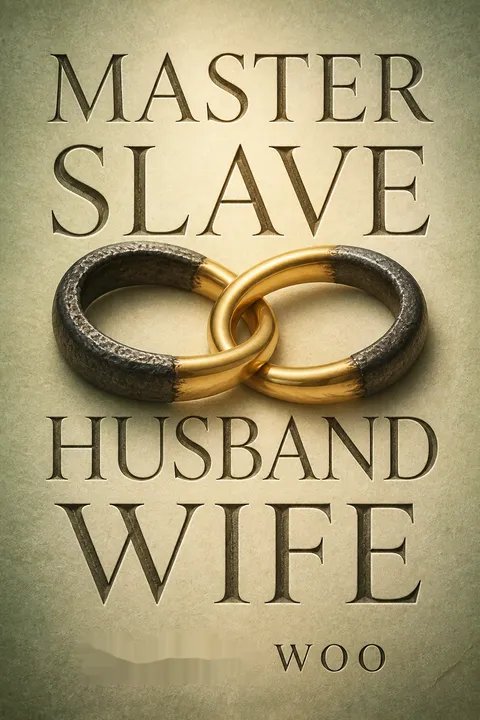
Master Slave Husband Wife recounts the daring escape of Ellen and William Craft from slavery in 1848. Readers praise the book's meticulous research and compelling narrative, highlighting the couple's ingenuity and bravery. While some found the historical context enlightening, others felt it overshadowed the Crafts' personal story. The book's pacing and level of detail divided opinions, with some finding it riveting and others dry. Overall, reviewers appreciated the importance of preserving this lesser-known piece of history, though opinions varied on its execution.
People Also Read







Glossary
Mutual self-emancipation
Shared escape and self-determinationA way of describing William and Ellen Craft’s freedom-making as a joint undertaking. Each contributed skills, planning, and courage, and their marriage shaped the purpose of their escape. The term resists framing William as the sole actor or Ellen as simply the person he rescued, while recognizing that they faced distinct risks.
Passing
Crossing imposed identity boundariesPresenting oneself as belonging to a socially recognized group different from the one others assign. Ellen Craft passed as a white man during the escape, using clothing, manner, apparent illness, and the authority associated with wealth and gender. Passing could create mobility, but it depended on scrutiny, appearance, and circumstances, and could carry grave danger if exposed.
Coverture
A wife’s legal identity subsumedA legal doctrine under which a married woman’s independent legal identity was substantially absorbed into her husband’s. She generally could not make contracts or sue in her own name as an independent person. The Crafts’ marriage in Boston gave their union legal recognition, but it also placed Ellen under a doctrine that curtailed married women’s formal rights.
Fugitive Slave Act of 1850
Federal fugitive recapture lawA law passed as part of the Compromise of 1850 that strengthened slaveholders’ ability to seize people who had escaped slavery, including in free states. Federal commissioners could order a person returned, while the accused could not testify on their own behalf. The law also punished people who aided fugitives, turning private resistance into a federal offense.
Overland Mail Route
A chain of transport connectionsA multi-stage route linking southern ports and northern cities through steamships, railways, coaches, and ferries. The Crafts used it after discovering that the direct steamship to Philadelphia had stopped running for the season. Its repeated transfers created opportunities for concealment, but also exposed travelers to inspection, delays, and separation.
Underground Railroad
Informal escape support networkA loose network of people, homes, and organizations that helped those escaping slavery find shelter, transportation, and protection. It was not a literal railroad or one centrally managed organization. The Crafts made their initial journey from Georgia without its assistance, but activists and safe-house keepers helped them after they reached Philadelphia.
One drop rule
Ancestry used to classify raceA racial rule of classification under which any known African ancestry could mark a person as Black, regardless of appearance. In the slaveholding South, racial identity was connected to inherited enslavement, which followed the mother. Ellen’s ability to appear white disrupted this imposed classification, but did not change the laws or social beliefs that made her vulnerable.
Walking exhibition
A staged public interventionThe Crafts’ and William Wells Brown’s public walk through the American section of London’s Great Exhibition with abolitionist allies. The display represented American industry while omitting enslaved people’s labor. Brown placed an image of an enslaved Virginian beside the famous Greek Slave sculpture, making the absence and contradiction visible through movement and juxtaposition.
FAQ
1. What is Master Slave Husband Wife by Ilyon Woo about?
- Epic escape narrative: The book recounts the true story of William and Ellen Craft, an enslaved couple from Georgia who escaped to freedom in 1848 by traveling 1,000 miles with Ellen disguised as a white, disabled male master and William as her enslaved servant.
- Historical and political context: Their journey is set against the backdrop of the 1848 revolutions, Manifest Destiny, and the intensifying national debate over slavery in America and Europe.
- Personal and collective struggle: The narrative intertwines the Crafts’ love, courage, and ingenuity with the broader fight for freedom and equality, highlighting both personal and societal stakes.
- Beyond escape: The book follows their transformation into prominent abolitionist activists, their life in England, and their ongoing legacy.
2. Why should I read Master Slave Husband Wife by Ilyon Woo?
- Uncover a forgotten history: The Crafts’ story is one of the most thrilling and underrecognized in American history, offering a fresh perspective on slavery, resistance, and the complexities of identity.
- Rich historical insight: The book provides a detailed look at 19th-century America, including its social, political, and technological changes, and how these shaped the lives of enslaved people.
- Inspiration from resilience: Readers witness extraordinary courage, love, and strategic brilliance, making the story both moving and thought-provoking.
- Meticulous research: Woo’s narrative is grounded in historical sources, including the Crafts’ own writings, ensuring both accuracy and depth.
3. Who were William and Ellen Craft, and what made their escape unique according to Ilyon Woo?
- Ingenious partnership: William and Ellen Craft were an enslaved married couple whose escape involved Ellen passing as a white, disabled male master and William as her servant, a daring inversion of racial and gender roles.
- Mutual self-emancipation: Their plan was a joint effort, symbolizing a partnership that defied the master-slave dynamic and challenged traditional narratives of slavery and freedom.
- Public figures post-escape: After reaching freedom, they became celebrated abolitionist speakers, sharing their story across the U.S. and Britain.
- Symbolic act: Their escape and subsequent activism forced society to confront assumptions about race, gender, and marriage.
4. How did William and Ellen Craft manage to escape slavery as described in Master Slave Husband Wife?
- Disguise and role reversal: Ellen disguised herself as a white, disabled male planter, using bandages, tinted glasses, and men’s clothing, while William acted as her enslaved servant.
- Use of transportation technology: They traveled openly by train, steamboat, and stagecoach, leveraging new transportation networks to move quickly and avoid suspicion.
- Meticulous planning: The escape was prepared in just four days, with Ellen sewing her disguise and both practicing their roles and securing necessary passes and funds.
- Faith and mutual support: Their journey was sustained by deep love, faith, and the belief that “God is on our side,” helping them endure constant danger.
5. What were the main dangers and challenges William and Ellen Craft faced during their escape in Master Slave Husband Wife?
- Risk of capture and violence: Being caught could mean brutal punishment, separation, or death, with slave patrols and bounty hunters posing constant threats.
- Legal and social obstacles: They had to navigate hostile officials, suspicious ticket clerks, and the Fugitive Slave Act, which empowered enslavers to reclaim fugitives even in free states.
- Racial and gender scrutiny: Ellen’s disguise challenged rigid social norms, risking exposure as a woman or a person of color traveling with a Black man.
- Emotional trauma: The fear of separation from each other and loved ones, especially Ellen’s mother, weighed heavily on them throughout their journey.
6. How did the Fugitive Slave Act of 1850 impact William and Ellen Craft and the abolitionist movement, according to Ilyon Woo?
- Increased danger in the North: The Act allowed slaveholders to pursue escaped slaves into free states, making the Crafts and others vulnerable to recapture.
- Galvanized resistance: The law spurred Black communities and abolitionists to form Vigilance Committees and pledge to resist slave catchers, with the Crafts becoming symbols of this resistance.
- Political polarization: The Act deepened sectional divides, with some leaders supporting its enforcement and others, like Frederick Douglass, calling for rebellion.
- Legal and public battles: The Crafts’ presence in Boston led to legal standoffs, public protests, and community mobilization to protect them.
7. What role did abolitionist networks and key figures play in William and Ellen Craft’s journey as described in Master Slave Husband Wife?
- Support and protection: Abolitionists like William Wells Brown, Robert Purvis, and Vigilance Committees provided shelter, legal aid, and moral support.
- Public advocacy: The Crafts joined lecture tours, sharing their story to raise awareness and funds for the anti-slavery cause.
- Complex relationships: The book explores tensions within abolitionist circles, including differing strategies and personal conflicts, which the Crafts navigated carefully.
- International connections: Their activism extended to Britain, where they continued to work with abolitionist networks and faced new challenges.
8. How does Master Slave Husband Wife by Ilyon Woo explore themes of race, gender, and identity through the Crafts’ story?
- Crossing boundaries: Ellen’s disguise as a white male master inverted racial and gender hierarchies, exposing the social constructions of both.
- Passing and ambiguity: Ellen’s light skin allowed her to “pass” as white, while William’s demeanor challenged stereotypes of Black men, highlighting the fluidity of identity.
- Intersectionality: The Crafts’ experiences reveal how race, gender, class, and disability intersected to shape their journey and activism.
- Challenging norms: Their story questioned rigid societal categories and highlighted the performativity of identity under oppressive systems.
9. How did William and Ellen Craft’s backgrounds and family histories influence their escape and activism in Master Slave Husband Wife?
- Trauma of family separation: William was separated from his family by slave sales, fueling his resolve to escape and reunite with loved ones.
- Ellen’s complex lineage: As the mixed-race daughter of her enslaver, Ellen experienced abuse and separation from her mother, shaping her determination for freedom.
- Skills and education: Both learned trades and secretly familiarized themselves with literacy, which became crucial for their disguise and survival.
- Family as motivation: Their love for each other and desire to protect future children propelled their daring plan and ongoing activism.
10. What was the significance of William and Ellen Craft’s activism and public lectures after their escape, according to Ilyon Woo?
- Abolitionist advocacy: The Crafts joined prominent abolitionist circuits, sharing their story to raise awareness and funds for the anti-slavery movement.
- Breaking social norms: Ellen became one of the first self-emancipated Southern women to speak publicly, challenging racial and gender expectations.
- Building empathy: Their lectures helped audiences confront the realities of slavery, inspiring collective action and support for fugitives.
- Strategic storytelling: They balanced revealing enough to authenticate their story while protecting themselves and others, using their narrative as a tool for social change.
11. How does Ilyon Woo use sources and narrative techniques in Master Slave Husband Wife to tell the Crafts’ story?
- Blending history and analysis: Woo combines archival research with literary analysis of the Crafts’ own narrative, Running a Thousand Miles for Freedom, to create a rich, layered account.
- Filling historical gaps: She uses newspapers, letters, legal documents, and other archival materials to reconstruct parts of the Crafts’ lives not covered in their own writings.
- Critical engagement: Woo exposes the limitations and biases of historical records, especially regarding enslaved people, and encourages readers to consider multiple perspectives.
- Inviting conversation: The narrative aims to spark further discussion about the past and its ongoing impact on issues of race, identity, and justice.
12. What are the key takeaways and best quotes from Master Slave Husband Wife by Ilyon Woo?
- Humanizing history: The book personalizes the brutal realities of slavery through the Crafts’ story, showing courage, love, and resistance in the face of oppression.
- Complex identities: It challenges simplistic racial and gender categories, illustrating how identity can be fluid and strategically navigated for survival and freedom.
- Power of community: The narrative highlights the crucial role of abolitionist networks, legal battles, and collective action in resisting slavery and protecting fugitives.
- Enduring legacy: The Crafts’ journey underscores the ongoing struggle for freedom and justice, inspiring reflection on the costs of slavery and the meaning of liberty.
- Notable quotes: “We hold these truths to be self-evident: that all men and women are created equal.” and “God made of one blood all nations of men” (Acts 17:26) encapsulate the book’s themes of equality and universal human dignity.
Download PDF
Download EPUB
.epub digital book format is ideal for reading ebooks on phones, tablets, and e-readers.








