

Key Takeaways
Treat your email list as an asset you can reach without platform permission
Build a durable audience. Social platforms can change their rules or lose popularity, while email remains a basic way people communicate online. Paulson argues that a permission-based list lets a business reach interested people directly, repeatedly, and at low marginal cost. He cites a study estimating $43 in return for every $1 spent on email, but the book’s sharper proof is his own business: MarketBeat grew from a site reliant on Google traffic into a company with nearly 3 million subscribers and more than $25 million in 2021 revenue.
Ownership has limits. An email list can outlast a social account, but it still depends on an email service provider and inbox companies deciding to deliver messages. Treat it as a durable business asset, not a guarantee of access.
What's striking is the distinction between owning an audience relationship and renting distribution. A social platform controls both the audience data and the rules for reaching people. Email gives a business more control over its contact list, which makes it a useful hedge against concentrated platform power. Still, access is conditional: providers can suspend accounts, and inbox filters can suppress messages. The strongest version of the argument is therefore not that email is risk-free, but that it spreads risk across a more open technical system. The cited return estimate is compelling, yet no channel-wide average can predict a particular business's results.
Trade a specific solution for an address, then tailor it to the page
Make the exchange concrete. A lead magnet is useful material offered in return for a visitor's email address. It might be a guide, template, trial, discount, or short training series. Its job is to solve one recognizable problem, and it should closely match the page where it appears. A visitor reading about home buying, for example, is more likely to want a home-buying checklist than a general newsletter.
Let evidence improve the offer. The book reports that effective opt-in forms can convert 4% to 5% of visitors, while weak ones may convert only 0.5%. SignWell raised sign-ups for its email series from under 5% to over 20% after investigating visitors' objections through surveys and phone calls. Test one change at a time, including the offer, wording, or form placement.
This is a practical application of the principle of relevance: the closer an offer is to the need a person is already expressing, the less explanation is required. It also resembles a well-designed user interview. Instead of assuming why a form underperforms, SignWell asked people directly and changed the offer based on evidence. The caution is that conversion rate alone can reward an overly forceful prompt or a low-quality incentive. The useful measure is whether the new subscribers remain interested and eventually benefit from the business's content or product.
Automate the welcome, then earn attention with a useful, predictable rhythm
Start the relationship well. A welcome email should thank the subscriber, explain what kinds of messages will arrive and how often, and offer a clear next step. An autoresponder series is a sequence of prewritten emails delivered to each new subscriber over time. Paulson suggests spacing messages a few days apart and building a series that may continue for several months, mixing useful instruction, relevant offers, and requests for feedback.
Keep the connection alive. Broadcast emails are one-time messages sent to some or all subscribers, often for news, education, or a promotion. A regular newsletter can make the relationship dependable, but the right frequency depends on the audience. Investors may welcome frequent updates; casual hobbyists may not. MarketBeat uses a 30-day welcome series, while GMB Fitness reported that email was responsible for nearly 80% of its sales.
An automated welcome sequence is a form of onboarding: it reduces the gap between a person's initial interest and their ability to understand what the organization offers. The same logic appears in education and software design, where timely guidance can help newcomers form habits and use a product. Consistency also makes communication easier to anticipate. But a schedule is not inherently valuable. Excessive frequency can turn useful contact into interruption, so retention, clicks, replies, and unsubscribes matter more than a calendar followed mechanically.
Write for one recognizable subscriber and give each email one job
Make the reader specific. Paulson recommends building an avatar, a fictional portrait of a typical subscriber based on their goals, problems, and circumstances. It helps a writer imagine a person rather than address an abstract crowd. For sales emails, he uses AIDA, a copywriting framework that moves from attracting attention to building interest, creating desire, and asking for action. The subject line earns attention; the message explains relevance; one clear call-to-action tells the reader what to do.
Balance asks with usefulness. Educational material, practical tips, and helpful resources give value; a sales pitch asks the reader to act for the sender's benefit. The book recommends sending more useful material than promotional material, and avoiding multiple competing calls-to-action in one message. A personal tone can help, but the promise must match the actual offer.
The avatar technique reduces a real writing problem: messages aimed at everyone often feel addressed to no one. It is related to perspective-taking, a tool used in design and communication to anticipate what another person needs to know. AIDA also gives writers a sequence to revise against instead of relying on inspiration. The limitation is that a fictional customer can harden into a stereotype. Good audience portraits should be revised using survey answers, customer conversations, and behavior, rather than treated as facts simply because they are vivid.
Optimize the path to purchase, not the increasingly unreliable open rate
Find where people drop out. A sale requires several steps: someone joins the list, engages with messages, opens a relevant offer, clicks through, understands the sales page, and completes checkout. Each step can lose potential buyers, so test the whole path rather than blaming the email alone. The book describes a MarketBeat campaign in which the first message on the final sale day generated 91 sales, while three later reminders that day produced 247 more. The result suggests reminders can matter, but does not prove that every audience wants repeated messages.
Measure outcomes. Apple Mail Privacy Protection can register tracking pixels without a person actually reading the email, making some open-rate data misleading. Clicks, conversions, and revenue provide stronger evidence of interest and business value. Split-test one meaningful change at a time, then compare results after enough subscribers have responded.
This is a shift from measuring activity to diagnosing a system. A low open rate may reflect a weak subject line, but a low purchase rate can also come from a mismatched offer, confusing sales page, or checkout friction. The funnel view helps locate the bottleneck. It also guards against mistaking correlation for cause: a reminder campaign may coincide with more sales because the deadline is near, not merely because the message count rose. Tests need adequate volume, and attention metrics should not substitute for customer value.
Monetize trust through matched offers, not a parade of unrelated ads
Choose revenue paths that fit. The book describes six ways to earn from an email audience: sell your own products, promote third-party products for a commission, rent a mailing to advertisers, run co-registration ads, place ads in newsletters, or use email to send readers to an ad-supported website. Paulson favors a business's own products when available, since the seller keeps more of the sale, but relevant affiliate offers can also work. He warns against promoting products he would not recommend himself.
Let the audience shape the model. MarketBeat expected subscriptions to dominate, but advertising eventually accounted for about 80% of its revenue. Its large, focused audience made ads and affiliate relationships viable. Co-registration ads can also earn revenue when new subscribers sign up, but buying email lists is discouraged because those people did not consent to receive the sender's messages.
A mailing list is not a single revenue model. It is a distribution asset that can support products, advertising, subscriptions, or referrals, and the best mix depends on audience intent and business capability. That flexibility resembles portfolio design: several income sources can reduce dependence on one offer. Yet every revenue stream creates incentives that can alter the content. Advertising may be lucrative while weakening credibility if it overwhelms the newsletter. The durable constraint is trust, which is slower to build than an ad placement and easier to spend than to restore.
Protect delivery by earning consent, cleaning lists, and honoring exits
Reputation affects reach. Email service providers manage subscriber lists, delivery infrastructure, and tools for scheduling and tracking messages. Authentication records, including SPF and DKIM, help receiving services verify that a sender is authorized. Delivery also depends on engagement: repeated ignoring, invalid addresses, and spam reports can harm a sender's reputation. Remove hard bounces and inactive subscribers, and make unsubscribing easy. Since Apple's privacy features can distort open data, clicks and other signs of activity are useful for identifying engaged readers.
Treat compliance as operational work. The book reviews U.S. CAN-SPAM, Canada's CASL, Europe's GDPR, and California privacy rules. Their requirements differ, but clear identity, truthful subject lines, permission where required, an accessible opt-out, and careful handling of personal data are central practices. Laws change, so businesses should verify current requirements for the places where their subscribers live.
Deliverability is a collective reputation problem. One sender's careless behavior can affect the placement of messages from a shared domain or infrastructure, so list hygiene benefits more than the sender alone. Technical authentication helps establish identity, while consent and relevance establish whether a message is wanted. Neither can replace the other. The legal landscape also exposes a limit of generic marketing advice: rules vary across jurisdictions and change over time. A checklist is useful, but it is not a substitute for current legal guidance when a business operates across borders.
Use personal prospecting when your market is too small for a newsletter
Choose the right direction. Inbound email marketing attracts subscribers who choose to sign up. Outbound email prospecting identifies specific potential customers and sends them a personal introduction. It can suit companies selling expensive, specialized products to a small number of buyers, where waiting for a large audience to assemble makes little sense.
Make outreach deliberate. GoGo Photo Contest sold fundraising software to animal shelters, a market with only about 12,000 U.S. organizations. The company identified shelter leaders, explained the unfamiliar fundraising idea, and followed up selectively. It helped shelters raise more than $25 million in donations. Paulson recommends beginning with a small number of tailored messages, asking for a clear next step, and stopping after a few unanswered attempts. Targeted outreach is not a license for mass unsolicited mail, and applicable laws still matter.
The distinction between inbound and outbound is fundamentally about market structure. A broad consumer business can benefit from compounding audience growth, while a business with a finite list of institutional buyers may need direct conversations. GoGo's example shows that outreach can also educate a market when the offer is unfamiliar. Its results depend on a focused audience and a valuable service, not simply on sending more messages. Personalization should reflect a real reason for contact, not serve as camouflage for indiscriminate solicitation.
Build browser push as a second permission-based channel, not an email replacement
Add another route back. Web push notifications let a website send short messages through a browser after a visitor grants permission. A web push service provider collects subscribers and handles sending, much as an email service provider does. The book recommends adding push after email fundamentals are in place, using HTTPS, and balancing promotions with useful news or content. Notifications are brief, so the message must make its value clear quickly.
Respect the interruption. MarketBeat built a push audience of roughly 600,000 users and reported more than $250,000 in annual push revenue in 2019 and 2020. But browser makers began limiting immediate permission prompts, and the company's growth leveled off. Push can reach people who miss an email, but it is another channel with its own platform rules, costs, and risk of irritating subscribers.
Push notifications illustrate the appeal and danger of immediacy. They can bring a reader back without requiring the reader to search an inbox, but the same prominence makes an irrelevant interruption feel especially intrusive. Browser policies also show that no channel is wholly independent of platform governance. A resilient strategy uses channels as complements, not as excuses to repeat the same pitch everywhere. The important design question is not how many alerts can be sent, but which moments justify interrupting someone's attention.
Analysis
The book's central contribution is not a secret formula for persuasive copy. It is an operating model for turning permission into a durable commercial relationship. The sequence is concrete: choose delivery infrastructure, make a relevant offer, communicate consistently, learn from behavior, monetize selectively, and protect the ability to reach the audience. MarketBeat supplies the narrative spine. Its early dependence on search traffic created a business vulnerability; a newsletter became both a recurring service and a foundation for subscriptions, advertising, and other products.
The strongest parts of the model are also its most transferable. A useful lead magnet is a product demonstration in miniature. A welcome series is onboarding. Segmentation is an attempt to reduce irrelevant communication. Testing treats marketing as a measurable system rather than a matter of taste. These ideas connect the book to product design and service operations, where value depends on matching a solution to a person's actual need and observing what happens after delivery.
The main caution is that the book's performance examples come largely from businesses with unusually large audiences, strong market fit, or dedicated marketing resources. MarketBeat's millions of subscribers and substantial advertising budget are not ordinary starting conditions. The cited average email return is likewise a broad historical estimate, not a forecast for an individual company. Smaller firms should borrow the methods, not assume the outcomes.
The word owned also needs qualification. A business may control its subscriber records, but an ESP can suspend the account, inbox providers can filter messages, privacy rules can change, and subscribers can withdraw permission. Email is less dependent on one social platform, not free of intermediaries. The book's most durable lesson is therefore disciplined stewardship: grow a list through real value, communicate honestly, evaluate results beyond opens, and preserve trust as carefully as the technical ability to send.
Review Summary
Email Marketing Demystified is highly regarded by readers as a comprehensive guide to email marketing. Many praise its detailed, practical advice for beginners and intermediate marketers. Readers appreciate the author's experience-based insights, actionable tips, and case studies. The book covers essential topics like building a mailing list, writing effective copy, and monetization strategies. While some note that certain information may be outdated, most find it valuable for understanding email marketing fundamentals. Overall, readers recommend it as a useful resource for anyone looking to start or improve their email marketing efforts.
People Also Read









Glossary
Email service provider
Email delivery and list toolsAn email service provider, or ESP, supplies the software and infrastructure for managing subscribers and sending bulk email. Common features include opt-in forms, list management, message scheduling, templates, performance tracking, and delivery support. The book distinguishes general ESPs from providers focused mainly on email delivery APIs and platforms with more extensive marketing automation.
Lead magnet
A signup incentiveA lead magnet is a useful resource or offer given to a visitor in exchange for an email address. It may be a guide, template, free trial, video lesson, discount, or similar item. The book stresses that it should solve a specific problem and closely relate to the content or product the visitor is considering.
Autoresponder series
Automated subscriber email sequenceAn autoresponder series is a set of prewritten emails delivered to each new subscriber in sequence after signup. It can welcome readers, set expectations, teach useful material, introduce products, and invite feedback. Unlike a broadcast email, which is sent once to a selected audience, the series is triggered by a subscriber's entry onto the list.
Marketing automation
Action-triggered targeted messagesMarketing automation sends messages based on a subscriber's behavior, interests, or customer status. A purchase might trigger product instructions, a free-trial signup might start an onboarding sequence, and an abandoned cart might prompt a reminder. The purpose is to make messages more relevant, though building and maintaining these campaigns requires additional planning and technical capability.
AIDA
Four-stage persuasion sequenceAIDA is a copywriting framework organized around attention, interest, desire, and action. In email, the subject line seeks attention, the message develops interest in an offer, the copy connects the offer to a reader's goals, and a clear call-to-action requests a next step. The book traces the framework to advertising pioneer E. St. Elmo Lewis.
Co-registration advertising
Signup-page partner offersCo-registration advertising presents additional offers to a person immediately after they sign up for another mailing list. If the person chooses an offer, their contact information is passed to the advertiser, typically through an integration or data file. The book describes it as both a way to acquire subscribers and a way for publishers to earn revenue from signup pages.
Sunsetting
Removing inactive subscribersSunsetting is the practice of reducing or ending email to subscribers who have stopped engaging. Removing inactive or invalid addresses can improve engagement measures, reduce delivery costs, and protect sender reputation. Because privacy features can make open tracking unreliable, the book recommends considering clicks, verified opens, website visits, and other activity when deciding whether a subscriber is dormant.
Web push notifications
Browser-based subscriber alertsWeb push notifications are short messages a website can send through a browser after a visitor grants permission. A web push service provider manages opt-ins, subscriber records, delivery, and performance reporting. Businesses use the channel to announce content or promotions, but browser support and permission rules vary, and frequent irrelevant alerts can prompt users to opt out.
FAQ
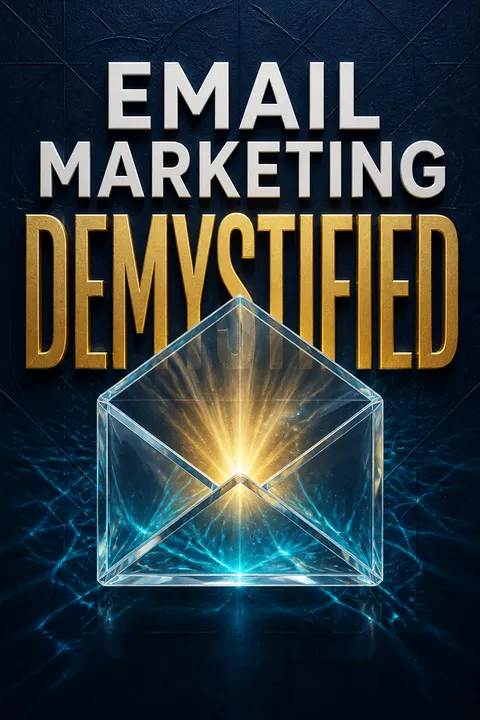
What is "Email Marketing Demystified" by Matthew Paulson about?
- Comprehensive Email Marketing Guide: The book is a step-by-step manual for building, growing, and monetizing an email list, aimed at entrepreneurs, marketers, and business owners.
- Actionable, Real-World Strategies: Paulson shares proven techniques he used to grow MarketBeat’s list from 250,000 to nearly 3 million subscribers, with detailed case studies and examples.
- Covers All Aspects: Topics include selecting an email service provider, list-building, copywriting, automation, deliverability, legal compliance, and advanced monetization.
- Updated for Modern Challenges: The third edition addresses new trends like mobile-first email, privacy laws, changes in tracking, and the resurgence of email newsletters.
Why should I read "Email Marketing Demystified" by Matthew Paulson?
- High ROI Channel: The book demonstrates why email marketing consistently outperforms other channels, with data showing up to 4,300% ROI.
- Practical, Tested Advice: Paulson’s methods are based on real business results, not theory, making the advice reliable and actionable.
- Covers Beginner to Advanced: Whether you’re starting from scratch or optimizing a large list, the book provides value at every stage.
- Addresses Current Landscape: It helps readers navigate new privacy regulations, mobile usage, and evolving best practices in email marketing.
What are the key takeaways from "Email Marketing Demystified"?
- Email’s Enduring Power: Email remains the most stable, profitable, and resilient marketing channel, outlasting social media trends.
- List Building is Foundational: Growing your list through compelling lead magnets and optimized opt-in forms is essential for long-term success.
- Segmentation and Automation: Targeted, automated campaigns increase engagement and revenue by delivering the right message to the right person at the right time.
- Monetization Diversity: There are multiple ways to profit from your list, including selling your own products, affiliate marketing, ads, and co-registration.
- Deliverability and Compliance: Maintaining list hygiene, understanding legal requirements, and monitoring deliverability are critical for sustainable results.
How does Matthew Paulson define and recommend building a mailing list in "Email Marketing Demystified"?
- Lead Magnets are Key: Offer something of value (e.g., reports, discounts, videos) in exchange for email addresses to increase opt-in rates.
- Optimize Opt-In Forms: Use entry pop-ups, footer forms, and minimal required fields to maximize sign-ups; test different placements and copy.
- Split-Test Everything: Regularly test headlines, descriptions, button text, and form types to improve conversion rates over time.
- Multiple Acquisition Channels: Beyond your website, leverage co-registration, social media, contests, and partnerships to accelerate list growth.
What are the main types of email service providers (ESPs) discussed in "Email Marketing Demystified," and how should you choose one?
- Three Main Categories: Email API Providers (EAPs) for developers, traditional ESPs for general use, and Marketing Automation Platforms (MAPs) for advanced segmentation and automation.
- Key Selection Criteria: Consider functionality, cost, customer service, software age, and terms of service.
- Recommendations by Use Case: ConvertKit for creators, MailChimp for nonprofits, Klaviyo for e-commerce, SendGrid for developers, and ActiveCampaign for small businesses.
- Long-Term Commitment: Switching ESPs can be difficult, so research thoroughly and choose a provider that fits your current and future needs.
What are the most effective strategies for growing an email list, according to "Email Marketing Demystified"?
- Website Opt-Ins: Use compelling lead magnets and well-placed opt-in forms as the foundation.
- Paid Acquisition: Invest in co-registration advertising, lead generation services, and list rentals if your funnel is profitable.
- Partnerships and Swaps: Swap email sends with other list owners or rent lists to reach new audiences.
- Offline and Social Tactics: Collect emails in physical stores, at events, via QR codes, and through social media campaigns.
How does "Email Marketing Demystified" recommend structuring and sending emails to maximize engagement and sales?
- Welcome and Autoresponder Series: Start with a strong welcome email, then deliver a sequence of educational, promotional, and engagement emails over weeks or months.
- Broadcast Emails: Regularly send newsletters, announcements, and promotional campaigns to keep your list engaged.
- Segmentation and Automation: Use marketing automation to send targeted messages based on user actions, interests, or purchase history.
- Testing and Tracking: Monitor open rates, clickthroughs, conversions, and revenue to refine your approach.
What are Matthew Paulson’s best practices for writing effective email copy in "Email Marketing Demystified"?
- Know Your Audience: Create an avatar of your typical subscriber and write as if addressing them personally.
- Compelling Subject Lines: Use curiosity, urgency, numbers, and personalization to increase open rates.
- Clear Calls-to-Action: Each email should have a single, focused objective and a prominent call-to-action.
- Value First, Then Ask: Follow the “give, give, give, ask” principle—provide value before making sales pitches.
What are the six main ways to monetize an email list, as outlined in "Email Marketing Demystified"?
- Sell Your Own Products: Use your list to promote and sell your company’s products or services.
- Affiliate Marketing: Promote third-party products and earn commissions on sales.
- List Rentals: Rent your list to advertisers for dedicated email sends.
- Co-Registration Ads: Place co-registration units on your “thank you” page to earn from new opt-ins.
- Newsletter Ads: Insert banner or text ads in your regular newsletters.
- Drive Website Traffic: Use email to send subscribers to your site, where you monetize via ads or other offers.
How does "Email Marketing Demystified" address email deliverability and list maintenance?
- Use a Reputable ESP: Always send through a professional provider to maximize inbox placement.
- Set Up Authentication: Implement SPF, DKIM, and (optionally) DMARC and BIMI records for your sending domain.
- List Hygiene: Regularly remove inactive, bounced, or spam-reporting addresses to maintain high engagement rates.
- Monitor and Adapt: Check for blacklists, track deliverability metrics, and adjust sending practices as needed.
What legal and compliance issues does "Email Marketing Demystified" cover, and how should marketers address them?
- CAN-SPAM (US): Follow rules on sender identification, truthful subject lines, opt-out mechanisms, and honoring unsubscribes.
- CASL (Canada): Only email those who have given explicit or implied consent; stricter than US law.
- GDPR (Europe): Obtain clear, unambiguous consent, track proof of opt-in, and honor data access/deletion requests.
- Disclosure Requirements: Always disclose affiliate relationships and paid endorsements clearly and conspicuously.
What advanced topics and trends does "Email Marketing Demystified" cover, such as outbound email and web push notifications?
- Outbound Email Marketing: For B2B or niche markets, use cold email prospecting to reach potential customers directly, following best practices to avoid spam.
- Web Push Notifications: Treat browser notifications as a “second email list” to reach users outside the inbox, with high opt-in and engagement rates.
- Triggered and Automated Campaigns: Leverage behavioral triggers and automation to send timely, relevant messages.
- Adapting to Privacy Changes: Stay current with evolving privacy laws, tracking limitations (like Apple’s MPP), and new best practices for engagement and compliance.
What are the best quotes from "Email Marketing Demystified" by Matthew Paulson, and what do they mean?
- “Email is the slow, steady, and massive platform that allows marketers to build audiences that will last for years, even decades if managed properly.”
- Emphasizes email’s long-term value compared to fleeting social media trends.
- “If you aren’t, you are making a huge mistake. Depending on the size of your business, you could be leaving hundreds of thousands of dollars on the table. Maybe even millions.”
- Stresses the financial opportunity cost of neglecting email marketing.
- “You are not your audience.”
- Reminds marketers to set aside personal biases and focus on what their subscribers actually want.
- “The biggest mistake that you can make with your autoresponder series is not having one at all.”
- Highlights the importance of consistent, automated communication for engagement and sales.
- “Email marketing works like rocket-fuel for businesses … but only if you implement what you learn.”
- Encourages readers to take action, not just absorb information.
About the Author
Download PDF
Download EPUB
.epub digital book format is ideal for reading ebooks on phones, tablets, and e-readers.








