


Plot Summary
Prologue
Henri has lived by two opposing forces: loneliness draws him toward cruelty, while nausea warns him when he crosses his own moral limits. He believes those feelings are proof that some part of him is still resisting the monster he fears becoming.
Then Ily kicks him, and both restraints fall silent. For the first time, Henri mistakes the absence of shame for freedom, and the story begins with him stepping willingly into the darkness he once fought.
The prologue makes Henri’s transformation psychological rather than supernatural. Nausea has functioned as a bodily conscience, while loneliness has made him interpret isolation as his natural home. When both disappear, he experiences moral surrender as relief. That distinction matters: the change may feel liberating to Henri, but it is not evidence that his choices have become harmless. His self-understanding is already compromised by the way he converts an internal sensation into permission to hurt another person.
The Kick That Breaks Him
Ily is bound to a cross in Victor Grand’s fortress, still expecting protection from Henri, the man with whom she made a secret pact. Psilocybin twists the room into a menagerie of speaking dead animals, but she understands enough to fear what Henri is doing. Victor orders him to collect 102 drops of her blood.
Henri rejects the rusty tools, uses a concealed switchblade, and cuts Ily while marking his own body with her blood. Her pleas do not stop him. When he abandons the counting ritual and drinks from her wound, he crosses the boundary he once promised himself he would never cross. He sexually assaults her, then leaves with Victor, newly convinced that his lack of nausea means he is free.
The first rupture is not simply Henri’s violence but his reinterpretation of it. He treats the loss of internal distress as proof that he has discovered his authentic self, turning relief into a moral argument. Ily’s drug-induced perceptions make the scene unstable, but her fear and resistance remain clear. The narrative establishes an important distinction between what Henri believes his transformation means and what his actions actually do: he has not escaped consequences, he has chosen to ignore them.
The Pendant Opens Her
Peter carries Ily to Dr. Belford, who cleans her shallow cuts and confirms she does not need a transfusion. Still numb and unable to speak, Ily follows Peter to the jewelry vault, where former captives’ treasured objects remain after their owners are gone. A pendant from her adoptive brother, Krish, breaks through her dissociation; she collapses and cries until the other jewels gather around her.
Elsewhere, Henri watches sunrise and tests himself for remorse. None comes. At breakfast, he sees Peter kiss Ily and feels possessive rather than protective. Victor notices the late-arriving jewels and the kiss, then uses the estate’s security recordings to investigate Henri’s past behavior.
Ily’s pendant gives grief a concrete object to attach to. The vault’s accumulated possessions suggest that each captive has a life beyond the role Victor assigns, while the crowd’s response shows care surviving inside the system. Henri’s sunrise test moves in the opposite direction: he looks inward only to confirm the conclusion he wants. Their parallel mornings reveal two forms of adaptation, one grounded in connection and mourning, the other in self-authorization.
Victor Rewinds the Night
Victor plays recordings of Henri with Ily in the library and bedroom, along with footage of Henri vomiting after sex. He asks him to explain his confessions, his apparent distress, and the promise that Ily would help free the captives. Henri admits that he encouraged her to believe his treatment of her was part of a rescue plan, but he presents the deception as strategy rather than remorse.
The final recording catches Ily identifying him as an undercover officer. Victor’s guests turn on Henri, and guards press guns to his head. Rather than claim he is law enforcement, Henri insists he never said that himself. He is given one last chance to explain who sent him and what he intended to do.
The cameras turn private behavior into evidence, but they do not offer a neutral truth. Victor controls what is shown and uses the footage to test Henri’s loyalty as much as to expose his lies. For Ily, the recordings confirm that intimacy and rescue were entangled with manipulation. For Henri, the crisis creates a choice between preserving his cover and admitting the identity he has kept hidden, a choice that will determine whether he remains an infiltrator or becomes part of Victor’s world.
Mercer Chooses His Cage
Henri reveals that he is Henri Mercer, half-brother to Q Mercer, who sent him to locate Victor’s island and prepare a mercenary attack. Q supplied thirty million euros and a tracking device disguised as cufflinks. Henri offers Victor the money and declares that he wants to stay, not escape. Victor keeps him on probation and allows him to retain Ily exclusively if he proves his identity.
Using Victor’s restricted phone, Henri reaches Q’s household and learns that Q has a wife and young son. Ily gives Q her full name and family details, hoping they can find her. Victor strikes her down before she can say more. Henri carries her away, and Victor grants him time alone with her.
Henri’s confession turns the apparent rescue mission into a family conflict shaped by money, bloodline, and choice. He rejects Q’s plan, but his new allegiance is not an ethical conversion: he chooses the institution that allows him to act on his desires. Ily’s attempt to contact home briefly restores her identity beyond the estate. Victor’s violence immediately demonstrates that information itself is dangerous, and Henri’s protection still comes from possession rather than release.
Three Days Under
The exhaustion of the night leaves Ily and Henri asleep for three days. When she wakes, she showers in his room, but Henri joins her and forces sex despite her lack of consent. Ily cannot escape the physical response her body produces, so she decides to claim the climax as something she controls rather than accept it as proof that she wanted him.
Henri reads that choice as intimacy and as confirmation that they belong together. Their different interpretations deepen the danger between them: Ily is trying to preserve a portion of agency inside captivity, while Henri treats bodily response as evidence of a bond he is entitled to demand.
This section refuses the easy equation of arousal with consent. Ily’s effort to reclaim the sensations her body produces is a survival strategy, not an endorsement of Henri’s coercion. Henri’s interpretation exposes how urgently he wants bodily evidence to settle questions of love and belonging that his actions have made impossible to resolve. Their sexual connection may be intense, but the power imbalance and Ily’s refusal remain central facts, not obstacles the story can simply wish away.
A Favor Paid in Bruises
At a secluded pool, Ily challenges Henri’s claim that he can protect her while he continues to abuse her. Henri demands that she play the role of his willing partner; when she refuses, he spanks her and offers a favor if she satisfies him. Ily performs oral sex, then uses the promised favor to ask for time with the other jewels.
Henri grants her two hours, but his jealousy remains fixed on Peter, whom he suspects of loving her. Ily visits the captives and returns to dinner, where she refuses to let Henri decide what her arousal means. She guides his hand to her body and makes clear that desire is hers to choose, even in a place where nearly every choice is constrained.
Ily learns to bargain within the narrow openings captivity leaves her. Her sexual compliance secures contact with Peter and the others, but it does not erase the coercion that frames the bargain. Her assertion that she can choose desire is more complicated than simple empowerment: she is trying to reclaim ownership of her body under conditions designed to take it away. Henri, meanwhile, mistakes access for intimacy and struggles to distinguish her pleasure from his control.
Desire on Victor's Table
During Victor’s staged dinner entertainment, Ily insists that being physically aroused does not mean Henri owns her feelings. She deliberately turns the encounter into a contest over who controls her pleasure; Henri responds by having sex with her on the table, while she uses the experience on her own terms.
Victor ends the evening by ordering a treasure hunt through the grounds, with prizes that include a deadly Diamond Kiss. In the storm, Peter searches for that prize because he fears a Master will find it and use it. Ily urges him to help the captives escape, but three guests corner them before they can make a plan. Peter fights back, and Ily offers herself to the men to keep them from killing him.
The dinner turns desire into contested evidence. Henri sees Ily’s body as confirmation of his claim; Ily tries to make the same sensations serve her own survival. Neither interpretation cancels the coercive setting. The treasure hunt then converts the estate’s violence into a game with prizes, making the captives’ danger literal and public. Peter’s search and Ily’s bargain reveal their priorities under pressure: he tries to prevent a weapon from reaching a Master, while she is willing to risk herself to keep him alive.
The Storm's Cruel Bargain
The three guests, Daxton, Roger, and Larry, overpower Peter and tie him to an apple tree. They threaten to rape Ily and kill them both. Ily bargains for Peter’s life by promising not to resist, and Daxton accepts, while Larry leaves Peter tethered in the rain. Ily removes her clothes and tries to detach from her body as Daxton begins assaulting her.
She is not able to stop what is happening, but she holds onto the belief that the captives may still escape one day. Henri, searching the grounds, hears the unnatural silence around the attack and recognizes Ily’s presence before he can see her. He turns toward her instead of continuing to search for the treasure.
Ily’s apparent surrender is a decision made under mortal threat, not freely given consent. Her bargain exposes the coercive arithmetic of the island: she can trade her body for a chance that Peter survives, but the men retain the power to break their promise. Her dissociation protects her from the immediate experience without making the assault less real. Henri’s sudden recognition of her shifts the coming confrontation from pursuit for his own gratification to a violent attempt at intervention.
Henri Becomes the Storm
Henri attacks the three men before Daxton can continue. He leaves Larry alive, kills Daxton through the injuries he inflicts, and breaks Roger’s neck badly enough that Roger will never walk again. Henri carries Ily back to his room, washes her, and learns that Daxton had begun to penetrate her before he arrived.
Ily tells Henri that he brought her into this danger and that she chose submission only to protect Peter. Henri insists that his rescue proves his care, then forces sex on her despite her repeated requests for him to stop. When he finally recognizes her fear and refusal, he retreats to the bathroom, horrified by what he has done.
The rescue does not cleanse Henri’s earlier or later choices. He protects Ily from Daxton, then repeats the central harm by disregarding her refusal himself. His delayed recognition matters psychologically, but remorse is not repair. Ily’s account challenges the possessive logic that casts violence as protection whenever it comes from him. The scene sharply separates physical rescue from ethical care, showing that the person who stops one assailant can still become another.
Rachel Carries Victor's Heir
Henri and Ily spend three days apart after the assault. When Victor returns, he confirms that Daxton died and Roger survived with permanent paralysis. He reveals that Rachel, his favored captive, is six weeks pregnant and orders Henri to kill her because he does not want the child. Henri points out that Victor is likely the father and reminds him that Victor once admitted wanting an heir.
Victor relents, but only conditionally: Rachel and the pregnancy must survive the day’s punishment. He also makes clear that Peter has been disciplined for helping Ily, and that Ily must be brought under control. The reprieve saves Rachel for now, while Victor’s next game turns the threat against every captive.
Rachel’s pregnancy forces Victor to confront the contradiction between his private wish for an heir and his treatment of people as disposable property. Henri’s intervention is a refusal to become Victor’s executioner, but it does not amount to rejecting the larger system. The conditional reprieve keeps Rachel’s safety dependent on Victor’s mood and the coming game. The three-day silence between Henri and Ily also leaves their relationship unresolved, with injury and remorse neither repaired nor honestly settled.
Targets at the Drawbridge
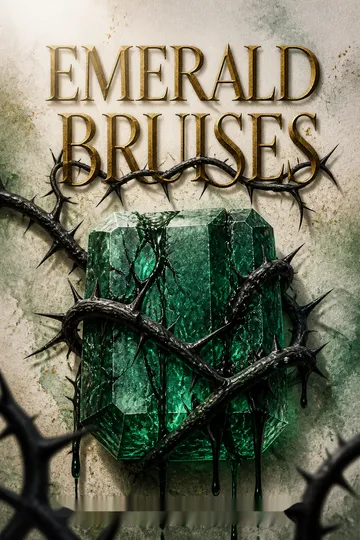
Victor unveils Emerald Bruises as a paintball hunt with no rules against mutilation or death. The Masters will pursue the captives across the island, and the winner may do whatever he wants with the jewel he catches. Ily reaches the kitchen with Rachel and discovers Peter’s hands and feet have been badly burned; he is drugged, but insists the captives can still escape.
Staff paint targets on the jewels and dress them in underwear, turning them into literal marks. At the drawbridge, Victor deactivates their collars and the island’s electric fence, promising a head start and the chance to flee. Henri shoots Ily with an orange paintball to mark her as his, then tells the others to run.
Victor disguises a massacre as sport, using the language of fairness and freedom while retaining control over the rules, weapons, and consequences. Disabling the collars gives the captives mobility, but the paintball guns and open terrain turn that freedom into exposure. Peter’s injuries show the cost of resisting Victor, while his determination keeps escape imaginable. Henri’s shot at Ily carries a double meaning: he claims her for himself, even as he prepares to pursue her alongside the other Masters.
The Hunt Begins
With the drawbridge down and the collars disabled, Victor gives the jewels fifteen minutes to scatter before the Masters begin their pursuit. Henri fires a paintball at Ily’s thigh, insisting that no one else may claim her, while she stands beside Peter and Rachel among the marked captives. The shot does not protect her; it makes her a target in a game whose winner has permission to do anything.
At Victor’s signal, all thirty jewels race across the bridge and disappear into the island’s grounds. Henri watches them go, then commits himself to the hunt, intent on cutting away the feelings he believes have made him vulnerable. The book ends as the chase starts, leaving Ily’s escape and Henri’s next choice unresolved.
The ending converts the book’s central contradiction into physical action. Henri wants to protect Ily and possess her at once, so he marks her as his while helping launch a hunt in which she may be caught by anyone. The fleeing captives create a genuine opening, but the island’s geography and the Masters’ permission to use violence make that opening perilous. Henri’s decision to hunt is not a resolution; it is a cliff edge, with his self-proclaimed freedom set against the consequences of his choices.
Analysis
Emerald Bruises builds its central conflict around a dangerous confusion between feeling and moral truth. Henri experiences the disappearance of nausea as liberation, but his relief does not make his actions harmless. The novel repeatedly shows him using desire, jealousy, and even rescue as evidence that he cares for Ilyana, while he ignores the fact that care without respect for her refusal remains coercive.
Ilyana’s struggle is more complex than a simple resistance narrative. She tries to reclaim choice in a setting where nearly every option has been designed by someone else. Her use of sexual sensation as a survival tactic does not turn assault into consent; it shows how a captive may try to keep some ownership of an experience that cannot be safely refused. Her compassion for Peter and the other jewels gives her a purpose beyond survival, but it also exposes her to further danger.
Victor’s estate is not merely a backdrop for individual cruelty. Its cameras, collars, financial arrangements, and staged games form a system that converts domination into routine and entertainment. Victor’s selective kindness is effective precisely because it is real enough to make control appear negotiable. Henri’s decision to join that system rather than dismantle it makes his self-acceptance a form of complicity.
The ending refuses a clean romantic resolution. Henri’s protective impulses coexist with possessiveness, and Ilyana’s attraction does not erase betrayal or fear. As the jewels flee across the drawbridge, the novel leaves both characters inside an unresolved moral and physical pursuit. Its most unsettling question is not whether desire is genuine, but whether either character can distinguish genuine feeling from the power that has been imposed on them.
Review Summary
Emerald Bruises continues the dark and intense journey of Henri and Ily in The Jewelry Box series. Readers praise Winters' captivating writing style and the book's increased darkness compared to its predecessor. The story explores Henri's descent into his twisted desires and Ily's struggle for survival. Many reviewers found themselves emotionally invested, experiencing a range of feelings from horror to sympathy. While some criticized certain aspects, most eagerly anticipate the next installment, praising the author's ability to create a gripping, morally complex narrative.
People Also Read




Characters
Ilyana Sharma
Defiant captiveIlyana is an adopted daughter and devoted sister to Krish, whose connection to home remains vital after she is taken to Victor’s island. She is compassionate, spiritually curious, and stubbornly protective of other captives. Her instinct to find meaning and goodness in people makes her vulnerable to Henri’s deception, but it also gives her a reason to resist despair. As her captivity intensifies, she tries to reclaim choices wherever she can, especially around her body and her bonds with the other jewels. Her strength is not invulnerability: she can be frightened, conflicted, and physically responsive while still refusing the meanings others impose on those experiences.
Henri Mercer
Self-declared monsterHenri first enters Ilyana’s life as Henri Ward, a wealthy stranger whose apparent restraint invites her trust. Beneath that persona, he is a lonely man frightened by his violent desires and the nausea that follows them. He craves intimacy as intensely as control, but has little understanding of how to distinguish love from possession. His self-acceptance is therefore unstable: he stops fighting his impulses, then treats that surrender as proof that he is free. Ilyana becomes both the focus of his desire and the person whose judgment he most fears, sharpening the conflict between his wish to own her and his need to be seen.
Victor Grand
Architect of captivityVictor is the wealthy master of Joyero, a secluded fortress where he houses captive jewels and entertains powerful guests. He presents himself as a generous host and paternal keeper, providing food, medical care, and carefully enforced routines. That benevolence is inseparable from surveillance, punishment, and ownership. Victor enjoys testing people, especially Henri, whose instincts intrigue him and whose family history gives their relationship extra charge. His need for order is partly strategic and partly personal: he has built a private world for people who do not fit outside it, then made himself its unquestioned authority.
Peter
Protective fellow captivePeter is an experienced jewel who speaks Hindi with Ilyana and tries to keep the captives alive by watching over them. He carries responsibility for the group so heavily that he often blames himself for harms he could not prevent. His loyalty makes him both a source of comfort and a target for Victor’s discipline. Peter’s care for Ilyana is genuine, though it is complicated by his own longing for a life beyond the island.
Q Mercer
Henri's powerful relativeQ is Henri’s half-brother and the wealthy source of the assignment that brings Henri to Victor’s island. Strategic and protective of his own family, he expects Henri to follow the plan and regards Victor as a longstanding enemy. His call reveals the distance between the brothers: Q offers a route back to family, while Henri increasingly defines belonging on his own terms.
Rachel
Victor's favored jewelRachel is Victor’s favored captive, valued for her intelligence and treated as a special possession within Joyero. She is sharp-tongued, practical, and attentive to the risks facing the other jewels. Her own precarious situation makes her sympathetic to Ilyana without turning her into a simple guide; she understands how quickly Victor’s apparent affection can become a threat.
Krish Sharma
Ilyana's beloved brotherKrish is Ilyana’s autistic brother, with whom she shares a deep, often quiet understanding. Her memories of their childhood and his gift of a pendant help anchor her identity when captivity strips away familiar routines. He represents the family life she longs to return to and the person whose emotional world she feels especially responsible for protecting.
Dr. Belford
Captive physicianDr. Belford tends to the jewels from private rooms within Victor’s estate. She treats wounds and monitors their health despite her own constrained position. Her practical care offers a rare measure of professionalism in a place where medical knowledge is often used to maintain captivity rather than end it.
Kirk
Peter's wary friendKirk is one of the captives who watches over Peter and worries about the consequences of openly resisting Victor. He understands how quickly affection can be used against the jewels, so he tries to temper Peter and Ilyana’s impulses with hard-earned caution.
Citra
Fellow jewelCitra belongs to Peter’s circle of fellow captives. Her quiet presence and small acts of care help create the fragile community the jewels build among themselves.
Rebecca
Fellow jewelRebecca is one of the captives who joins the others when Ilyana breaks down. She understands the effects of the drugs and the strain of life in the fortress.
Nancy
Fellow jewelNancy is among the captives who gather around Ilyana after her grief finally surfaces. Her presence reflects the mutual care that persists within the jewel community.
Corine
Captive in serviceCorine is a jewel required to serve the estate’s guests. Her routine makes visible how Victor’s captives are expected to move between communal life and forced service.
Dane
Fellow jewelDane is one of the captives in Peter’s community. He warns the others when their talk of resistance risks reaching Victor or the guards.
Yasmin
Remembered captiveYasmin is a former jewel whose death from untreated internal bleeding haunts the surviving captives. Her story makes Peter especially alert to the dangers of silence and delayed care.
Roland
Predatory guestRoland is one of Victor’s guests, known for his appetite for cruelty and his influence among the other Masters. His presence makes clear that Victor’s island attracts people who treat violence as entertainment.
Daxton
Threatening MasterDaxton is a guest who uses his status to intimidate the jewels and challenge Henri’s claim over Ilyana. He is among the Masters whose behavior helps turn Victor’s games into immediate danger.
Roger
Cruel guestRoger is one of the guests who joins Daxton and Larry in threatening Peter and Ilyana during the storm. He treats the captives’ vulnerability as an opportunity for amusement.
Larry
Complicit guestLarry is a guest who participates in the storm confrontation and helps restrain Peter. He is calculating enough to discuss the risks of defying Victor even while threatening the jewels.
May
Kitchen caretakerMay works in the estate’s kitchen and shows concern for Rachel and the jewels. Her folk remedies and small provisions offer care beyond the formal, tightly controlled system.
Suzette
Q's devoted housekeeperSuzette works in Q’s household and recognizes Henri when he calls. Her warmth briefly connects him to the family life he has kept at a distance.
Samuel
Ilyana's former boyfriendSamuel is Ilyana’s former boyfriend, whose past criticism of her sexuality resurfaces in her thoughts during captivity. His judgment becomes one more painful standard she must unlearn.
Plot Devices
The Blood Tally
Turns blood into a bondVictor’s instruction to collect a precise number of drops gives Henri’s violence the shape of a ritual. Henri marks his own body with Ilyana’s blood and eventually tastes it, treating the act as a private transformation. The tally connects bodily harm to ownership in Henri’s imagination, while the story shows that his sense of spiritual union does not make Ilyana’s consent present.
The Security Recordings
Expose the hidden performanceVictor’s cameras record the estate’s private spaces and let him review Henri’s behavior with Ilyana. He uses selected footage to test Henri’s explanations and reveal the undercover misunderstanding to the guests. The recordings function as both surveillance and a weapon of interpretation: Victor can turn intimate moments into evidence, while the gaps in the audio leave room for uncertainty and manipulation.
The Satellite Scrambler
Seals the island from rescueVictor’s communications system blocks ordinary outside contact and operates through a satellite, rather than a device Henri could simply switch off inside the castle. Victor alone controls the necessary access codes and his restricted phone. The scrambler explains why Henri cannot summon help, why the captives have little contact with the world, and why Ilyana’s brief call to Q is so consequential.
Collars and Remote
Enforce obedience at a distanceThe jewels’ collars can be triggered with Victor’s remote, turning a small device into a constant threat of pain. Victor uses the remote to punish individuals and to make a whole line of captives suffer through a linked chain. Later he deactivates the collars for the hunt, but that apparent freedom merely makes the jewels easier to chase across the island.
Emerald Bruises
Makes escape a lethal gameVictor’s paintball hunt uses painted targets, a head start, and a temporary shutdown of the collars and electric fence to present pursuit as sport. The Masters receive permission to disregard the rules that normally limit their violence. The game turns the captives’ desire to flee into entertainment for their captors and leaves the story poised on an unresolved chase.
The Jewelry Box Series Series



About the Author






Download PDF
Download EPUB
.epub digital book format is ideal for reading ebooks on phones, tablets, and e-readers.








