

Plot Summary
Prologue
Charles Beaumont Whiting returns from Mexico to take charge of the family mills, then builds a hacienda across the river from Empire Falls. When trash and a dead moose collect on his bank, he has engineers blast a straighter channel through the Robideaux land, sending the river faster downstream.
He marries Francine Robideaux, the educated daughter of the family that sold him the land, and gradually becomes the forceful businessman his father expects. Their marriage settles into his habitual submission. Years later, after living again in Mexico, he will return to Empire Falls and die by suicide.
The prologue gives the river a history before it becomes Miles Roby’s problem. C.B. treats the water as something he can correct, just as he tries to manage the duties and desires that have displaced his younger self. His engineering project succeeds in moving the visible rubbish, but the choice leaves a danger in the landscape that the prologue cannot yet measure. His marriage repeats the pattern in miniature: Francine’s will reshapes his public identity, while he preserves private longings he cannot act upon. The opening therefore frames the town’s decline not as a single misfortune, but as the accumulated result of decisions whose costs arrive downstream.
The Grill at Empire’s End
Miles Roby runs the Empire Grill, a shabby restaurant at the end of Empire Avenue, where customers gaze toward the abandoned mills that once sustained the town. He hopes to inherit the business from its owner, Francine Whiting, but her promise comes with years of uncertainty and a steadily deteriorating building.
His marriage to Janine has ended, she is preparing to marry the boastful fitness-club owner Walt Comeau, and Miles lives above the restaurant. Their sixteen-year-old daughter, Tick, moves between her parents and carries a backpack so heavy that it worsens a spinal curve. Miles wants to protect her, yet often cannot tell what she needs. Even his vacation with her has only briefly eased their growing distance.
The restaurant is not merely Miles’s workplace. It is the physical form of his stalled inheritance, a business that keeps him close to the town’s past while seeming to offer him a future only after its owner dies. His attention to Tick makes that stasis emotionally costly: he fears repeating his mother’s sacrifices, yet his protective habits can also prevent his daughter from becoming separate from him. The abandoned mills and the overloaded backpack give the same pressure two scales. Empire Falls carries the weight of lost industry; Tick carries the weight of an unsettled family. Miles notices both, but has not yet learned how to set either down.
The Blue Table
At school, Tick has lost the friends she once knew through her former boyfriend, Zack Minty, and she eats alone during a late lunch period so she can take art. She befriends Candace Burke, a lonely classmate who steals an Exacto knife and talks constantly about boys. In art class, Candace cuts her thumb badly while carving a boyfriend’s name into a chair.
Tick faints at the sight of blood, then quietly pockets the knife rather than return it. Zack continues pressing Tick to take him back, while she remembers a gentle boy, Donny, whom she met on Martha’s Vineyard. At the same table, the nearly silent John Voss paints an egg and watches from the edge of the group, a stranger Tick has not yet chosen to know.
Tick’s school life is governed by invisible borders: social groups, academic tracks, and the rules that decide who can sit where. Her friendship with Candace offers companionship, but it also asks Tick to navigate another girl’s need for attention without surrendering her own judgment. The stolen knife is both a practical object and a sign of agency she does not know how to use. She keeps it after fainting, not because she wants to harm anyone, but because possession feels safer than helplessness. John’s silence provides a counterpoint to Candace’s constant speech. Both children are exposed, in different ways, to a school that notices their difference more readily than their needs.
Grace Across the River
Miles’s memories reach back to a childhood trip to Martha’s Vineyard with his mother, Grace. There they meet Charlie Mayne, a silver-haired stranger who treats Grace with a tenderness absent from her marriage to Miles’s unreliable father, Max. Charlie makes room for Miles too, buying him clams and taking mother and son to watch the sunset.
Grace later reveals that Max is in jail, then returns to Empire Falls without Charlie, who promised they might share a future but never came. Soon afterward Grace becomes seriously ill. Miles, still a boy, fears her happiness caused the illness and keeps her secret from Max. Years later, she tells him not to remember the man, leaving Miles with a guilt he cannot explain.
Miles’s childhood interpretation turns adult choices into a moral equation he can survive: his mother’s happiness seems to cause her illness, and silence seems to protect her. That logic allows a child to feel some control over events that are otherwise incomprehensible, but it burdens the adult Miles with responsibility for a secret that was never his to manage. Grace’s brief happiness is neither a simple escape nor a betrayal easily judged from outside. It reveals how little room she has to choose, and how powerfully Miles absorbs her choices as instructions about his own. The river crossing, repeated in her work and in her son’s memories, becomes the boundary between lives she can imagine and lives she must keep living.
A Job for John
David, Miles’s younger brother and the Grill’s gifted cook, has begun improving the restaurant with international dinners and catering. He urges Miles to seek a liquor license and stop letting Francine Whiting control the business, but Miles resists leaving the arrangement he believes he owes her.
David is sober after a near-fatal crash, while their father, Max, keeps asking Miles for money and work. At Tick’s request, Miles hires John Voss as a busboy. John works steadily but barely speaks, and his shabby clothes suggest a life of neglect.
Principal Otto Meyer admits he asked Tick to befriend the boy because classmates bully him. Miles recognizes that John is vulnerable, yet the boy’s strangeness makes him uneasy even as he gives him a chance.
The restaurant begins to improve when David introduces change, but Miles experiences growth as a risk to the obligations that define him. His loyalty to Francine, his family, and the Grill can look like decency; it can also keep him from choosing a life of his own. Hiring John exposes the same conflict in a smaller, more immediate form. Miles acts compassionately, but his discomfort shows how easily compassion becomes conditional when the person in need is difficult to read. Tick’s request matters because it moves her from being someone Miles protects to someone who asks him to act. It also places John inside a fragile network of care that the adults have not yet learned how to sustain.
Cindy’s Football Date
Cindy Whiting, Francine’s disabled daughter and Miles’s childhood classmate, returns to Empire Falls after years in an institution. Francine tells Miles that Cindy may be improving, then presses him to consider what he owes her. Still shaken by the old woman’s influence, Miles invites Cindy to the high-school football game.
He also begins painting St. Catherine’s Church with Max, discovering that his father can still climb ladders while he freezes on the steeple. At the game, Cindy falls in the stands and Jimmy Minty, the town policeman and Zack’s father, catches her. On the same day, Janine learns that Walt is sixty, not fifty, and that his business plans and finances are far less solid than he implied.
Francine’s request makes Miles’s kindness difficult to separate from pressure. He wants to help Cindy, but he also fears the moral test Francine seems to set for him and the possibility of being absorbed into her family’s wealth and authority. The football game places these private calculations in public view, where Cindy’s physical vulnerability and Miles’s embarrassment become inseparable. Meanwhile, Janine’s discovery about Walt exposes a different form of self-deception: she has mistaken confidence and sexual attention for security. Both characters face the gap between what they hoped a relationship would provide and what the other person can actually offer. Miles hesitates; Janine presses forward, even as her doubts surface.
The Face in the Gazette
A newspaper photograph of Grace at the shirt factory unsettles Miles. He recognizes the man beside her as Charlie Mayne, then understands that Charlie was C.B. Whiting, Cindy’s father and Francine’s husband. The revelation recasts Grace’s brief island happiness, her later illness, and Francine’s long attention to Miles.
David has already warned that Francine keeps him on a treadmill, and Miles finally acts on that warning: he proposes reopening Bea Majeski’s failing tavern as a restaurant with a liquor license. He and Bea begin planning the conversion, hoping to give David’s food a larger business and Miles a life beyond the Empire Grill. He keeps the plan quiet, afraid Francine will stop it before it begins.
The photograph changes Miles’s understanding of the past by making a private memory legible in public evidence. What he had treated as a childhood episode now connects Grace’s choices to the Whiting family’s history and to Francine’s power over the town. Yet knowledge does not immediately make Miles free. His first response is not a clean break but a secret plan, still shaped by fear of Francine’s reaction. The proposed restaurant is therefore both a practical alternative and a test of whether he can act without permission. His choice is not simply to reject the past; it is to stop allowing an old promise, made under unequal conditions, to dictate the rest of his life.
The Empty House
Principal Otto Meyer receives anonymous notes asking where John Voss’s grandmother is. His investigation turns the boy’s silence into an emergency: the house has no power or telephone service, and Charlotte Owen is nowhere to be found. Otto breaks in and discovers signs that she has been gone for months. Police later find her remains at the old landfill, along with several dead dogs.
John has disappeared. His file reveals that his parents abused him by stuffing him into a laundry bag and leaving him hanging in a closet. At the same time, Zack’s teasing and his reckless gun game have made fear into a contest among the students. Otto knows he should have protected John sooner, but now he can only search.
The discovery forces adults to confront the difference between an unusual child and a child in danger. John’s silence had been treated as a social defect, while his living conditions remained hidden in plain sight. Otto’s guilt is sharpened by the fact that he has to break into the house before he can see what ordinary school records could not convey. The laundry bag connects the boy’s childhood terror to the enclosed, unresponsive person his classmates encounter. Zack’s gun game offers a distorted response to fear: instead of admitting vulnerability, he turns it into a performance of control. Both boys are shaped by violence, but only one has the power to make others play.
The Grill Is Cornered
As Miles and David prepare Bea’s tavern for reopening, state inspectors shut it down over extensive safety and health violations. A liquor-control agent has already cited Bea after finding Tick beside unattended beer glasses, and Francine’s real-estate offer now looks like part of a larger effort to block the partnership.
Miles goes to confront her at the old mills, where she is meeting potential buyers. Jimmy Minty tries to keep him from reaching her. Miles punches Jimmy, who knocks him down and leaves him battered.
Before Francine leaves, Miles tells her he will quit the Empire Grill and challenges her about the history behind her power. He is taken to the hospital, still unsure whether he has escaped her control or simply made himself easier to punish.
The inspectors make the costs of Miles’s delayed independence concrete: Bea’s business cannot open without money and repairs, while the Empire Grill remains the only livelihood he knows how to preserve. His confrontation with Francine is therefore both a business dispute and a belated attempt to name the coercion he has felt for years. But violence does not resolve the imbalance. Miles injures Jimmy and is injured in return, turning a moral protest into a physical conflict that can bring legal consequences. The scene tests whether action alone counts as freedom. Miles has finally moved against Francine’s control, yet he has not escaped the habits of anger, guilt, and self-sacrifice through which that control has worked.
The Blue Table Falls Silent
While Miles lies injured in the hospital, John walks back into art class with an old revolver. He shoots Justin Dibble and teacher Doris Roderigue, then wounds Candace in the neck. Otto Meyer steps between John and Tick and is killed. Tick grabs the Exacto knife she has kept in her backpack and cuts John across the face; when Zack reaches her, she slashes his hand as well.
John turns the gun toward Tick, but the remaining round does not fire. The room empties into blood, broken glass, and shock. Miles reaches the school and finds Tick hidden behind the door, gripping the knife and unable to recognize him at first. He kneels until she knows him, then carries her away.
The shooting transforms the ordinary objects of the school into instruments of survival: an art knife, a grocery bag, a classroom door, a gun inherited from an earlier generation. Tick’s earlier fainting at the sight of blood has not disappeared, but she acts through fear rather than waiting for it to pass. Otto’s intervention is a deliberate adult response to a danger he had previously tried to manage through conversation and school procedure. The tragedy does not make John’s suffering less real, nor does his abuse excuse the violence he commits. Miles’s late arrival intensifies the emotional cost: he can save Tick from the room, but cannot undo the moment when she had to face it alone.
A Road Out
With Tick traumatized and the town overwhelmed by the shooting, Miles puts her in his Jetta and drives south without waiting for a formal decision about custody. He takes her to Peter and Dawn’s empty house on Martha’s Vineyard, where he keeps her close and rebuilds ordinary routines through walks, shops, and visits to public places.
She gradually begins to respond to the world again, though loud conflict can still undo her progress. Cindy visits Miles in the hospital before returning to Augusta, where she has a companion and a life she wants him to recognize as more than misery.
Max eventually finds Miles on the island and joins him and Tick. His clumsy warmth helps ease the isolation, while Miles begins to see that his daughter needs recovery, not just protection.
Leaving Empire Falls is a necessary act of care, but it also repeats the family pattern of escaping a place rather than resolving its demands. Miles chooses distance because Tick cannot yet endure the town’s scrutiny, and his choice gives her a chance to experience safety through repetition. That recovery depends on ordinary encounters, not a single revelation. Cindy’s visit challenges Miles’s habit of defining her by her disability and unhappiness; she insists that he see a life he had never bothered to ask about. Max’s arrival adds another complication. The father Miles has spent years resisting can still offer something Tick needs, suggesting that inherited flaws do not erase every possibility of affection.
The River Turns Home
From the island, Miles learns that Francine has drowned in the swollen Knox River during a spring flood. Max, who believes the Roby and Robideaux families are related, decides to return for her funeral, and Miles agrees to bring him.
Before leaving, Miles visits Summer House, where a dream gives voice to his old belief that he caused Grace’s suffering by keeping her from Charlie. He wakes with a clearer understanding that childhood guilt has distorted his memory, and he is ready to return to his own life.
Janine welcomes him and Tick back, though their marriage remains complicated and Walt has moved out. Miles, Tick, and Max head north together, while the town’s mills begin attracting new investment and the future of Callahan’s remains uncertain.
The return is not a victory over Francine so much as a release from the idea that Miles must keep organizing his life around her. His dream at Summer House gives shape to the child’s impossible guilt, but it does not convert the past into a clean moral lesson. Grace’s choices remain hers, and Miles can no longer treat himself as their cause. Francine’s death brings the river’s history into the present, while the town’s renewed investment offers prosperity without guaranteeing justice for those who bore the losses. The ending leaves Miles with a less grand but more usable task: to return to his daughter, his family, and a town whose future cannot be controlled by any one person.
Epilogue
The epilogue returns to C.B. Whiting’s homecoming with a revolver, intending to kill Francine after years apart. He finds her with their disabled daughter, Cindy, and Grace, the woman he had loved, and the sight changes his purpose. He turns the gun on himself instead.
Years later, the channel he had blasted through the Robideaux land helps intensify a spring flood. Francine is swept from her gazebo into the Knox River, with Timmy the cat clinging to her as the current carries them toward the dam. The river C.B. tried to command becomes the force that ends the Whiting family’s hold over the town.
The epilogue closes a circle without pretending that the past has been repaired. C.B.’s suicide grows from his recognition that his fantasy of escape depended on abandoning Cindy, the very child whose life had already been broken by his actions. His death prevents him from learning whether Grace could have forgiven him or whether Francine was more complicated than his hatred allowed. The flood, meanwhile, makes his old engineering ambition material again: he altered the river to protect his property, but the altered current magnifies the danger that finally takes Francine. The ending refuses a neat moral balance. The river does not judge; it carries forward the consequences of human decisions.
Analysis
Empire Falls is a town where economic decline has become a habit of perception. Residents look toward the abandoned mills, imagine buyers who may never arrive, and mistake endurance for a plan. Miles embodies that habit most clearly. He keeps the Grill open, remains available to Francine, and tries to protect Tick by anticipating every danger, yet his decency often becomes a method for avoiding decisions that might hurt someone. David’s impatience and Max’s appetite offer opposite corrections: act before the moment closes, or stop pretending that life can be made tidy. Neither is a complete ethic. The novel’s central question is how to care for people without turning care into control or self-erasure.
The family histories sharpen that question. Grace’s compassion is admirable, but Miles inherits it as guilt, treating his mother’s choices as debts he must repay. Francine’s discipline produces material power, yet her power makes the town dependent on favors that never quite become freedom. Cindy and John show two different forms of injury that adults cannot simply cure through good intentions. Their needs demand attention, but attention alone cannot undo what has happened to them. The school shooting is therefore not a sudden interruption of a peaceful community. It is the catastrophic arrival of violence that the town’s institutions have noticed too late, after years of bullying, neglect, and inherited harm.
The river gives these personal histories a public scale. C.B. changes its course to protect his property, but the altered channel carries consequences beyond his plans. In the same way, each character’s attempt to manage pain sends effects downstream to children, spouses, workers, and neighbors. The ending offers no clean settlement between justice and forgiveness. Miles can return to Tick and to Empire Falls, but he cannot restore what was lost or ensure that new prosperity will be shared fairly. His modest possibility is more human: to recognize the limits of his responsibility, choose where he will stand, and remain present without mistaking endurance for love.
Review Summary
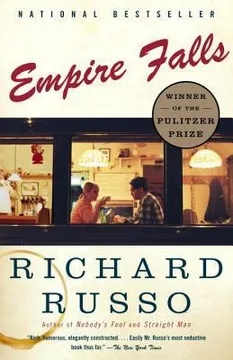
Empire Falls is a Pulitzer Prize-winning novel set in a declining Maine mill town, centered on Miles Roby, a middle-aged diner manager trapped by circumstance and obligation. Most reviewers praise Russo's richly developed characters, sharp dialogue, and balance of humor with melancholy. The novel is widely described as character-driven rather than plot-driven, rewarding patient readers with an immersive, deeply human story. Some critics found the pacing slow and the length excessive, but the majority consider it a masterpiece of American literary fiction.
People Also Read








Characters
Miles Roby
The reluctant caretakerMiles manages the Empire Grill and has spent much of his adult life maintaining promises made by other people. Attentive to his daughter Tick and quietly loyal to his brother David, he often confuses responsibility with self-erasure. His patience can be generous, but it can also become a way of avoiding choice and conflict. He notices the town’s humiliations and absurdities more readily than he knows how to change them. Miles is shaped by Grace’s example of care and by Max’s example of appetite, though he resists both extremes. His central struggle is not whether he feels deeply, but whether he can act on what he wants without making another person bear the cost.
Tick Roby
The watchful daughterTick is Miles and Janine’s intelligent, observant teenage daughter. She is drawn to art, books, and the small errors in her town that she and Miles call Empire Moments. Her humor often masks how much she fears social exposure, bodily vulnerability, and the sudden changes adults impose on her life. She is more perceptive than she is confident, and her generosity toward outsiders can place her in difficult situations. Tick resembles each parent in ways she is still trying to understand: Miles’s sensitivity and Janine’s capacity for secrecy. Her development centers on learning how to trust her own perception without letting fear decide every relationship.
Grace Roby
The quiet moral centerGrace is Miles and David’s mother, a devoted worker and a deeply religious woman whose compassion extends beyond her immediate family. She believes people have a duty to make life fairer for those who have been hurt, and she acts on that belief even when the cost is personal. Her kindness is not simple passivity: she can be firm, protective, and unexpectedly bold. Grace’s son sees her through the limited understanding of a child, then carries those impressions into adulthood as guilt and reverence. She represents both the strength and danger of a life organized around sacrifice, especially when others assume her generosity can be endlessly relied upon.
Francine Whiting
The town’s quiet powerFrancine owns much of Empire Falls and exerts influence through property, money, and carefully controlled favors. Ambitious and disciplined, she distrusts sentiment as a guide to action and prefers to break large goals into manageable steps. She can be witty and perceptive, but her sharp intelligence often serves control rather than intimacy. Her relationship with her daughter Cindy is strained by conflicting ideas of what help should look like. Francine’s public generosity keeps the town dependent without granting it independence. She sees Miles as both a familiar presence and a person whose choices can reveal more about him than he intends.
Max Roby
The shameless survivorMax is Miles and David’s father, a house painter, drinker, and practiced improviser who treats rules as obstacles to be negotiated. He can be selfish, careless, and astonishingly free of embarrassment, yet his appetite for life gives him a rough warmth that his more dutiful son struggles to accept. Max does not often provide conventional parental care, and his sons have learned not to rely on him. Still, he notices what others miss and can offer affection in unexpected forms. His bond with Tick is easier than his bond with Miles, partly because she does not mistake his habits for a moral argument she must win.
David Roby
The restless younger brotherDavid is Miles’s younger brother and the inventive cook who helps keep the Empire Grill alive. A history of drinking and a devastating crash have made him wary of his own impulses, though not of challenging Miles’s. He values action over prolonged deliberation and often sees the trap in his brother’s loyalty before Miles does. His damaged arm makes everyday work harder, but he does not want pity or lowered expectations. David’s bluntness can wound, yet it comes from a genuine fear that Miles will lose his life by spending it on obligations that no one else would accept.
Janine Roby
The dissatisfied wifeJanine is Miles’s estranged wife and Tick’s mother. After years of feeling overlooked, she pursues fitness, sexual confidence, and a chance to remake her life. She is forceful, vain, funny, and often cruel when she feels threatened. Her certainty about what she wants can conceal how little she understands the people she chooses. Janine’s impatience with Miles reflects genuine frustrations, but her pursuit of escape also risks repeating the very dissatisfaction she hopes to leave behind. Her relationship with Tick is strained by the girl’s loyalty to her father and by Janine’s difficulty distinguishing a child’s independence from rejection.
John Voss
The silent, wounded boyJohn is a withdrawn student who lives with his grandmother and is treated as an easy target by his classmates. He is difficult to read, and his silence makes both peers and adults uncomfortable enough to mistake distance for indifference. His art offers a glimpse of a mind that is active even when he seems absent from the room. Tick and Miles try to include him, while Principal Meyer recognizes that he is being bullied. John’s circumstances reveal how much suffering can remain invisible when a child has no reliable way to ask for help.
Cindy Whiting
The hopeful daughterCindy is Francine’s daughter, disabled since a childhood accident, and a former classmate of Miles. She has spent much of her life moving between hospital care, institutions, and her mother’s home. Her longing for connection can make her cling to people who offer kindness, especially Miles and his mother, Grace. Beneath her romantic hopes is a more complex person than Miles first understands, with humor, desire, and private forms of resilience. She challenges the assumption that her life can be summarized by either her disability or the pity others feel for her.
C.B. Whiting
The conflicted industrial heirC.B. inherits the Whiting enterprises and returns to Maine after years of travel, including a formative stay in Mexico. He is capable in business despite having once imagined a life as an artist, and he struggles with the difference between the self he wanted and the role he accepts. His house and river projects express a desire to shape the world around him, while his private life remains governed by fear and obligation. C.B. belongs to a family whose men measure themselves against inherited expectations, even when they suspect those expectations will make them unhappy.
Charlie Mayne
The island strangerCharlie is the polished, silver-haired man Miles and Grace meet during their childhood vacation on Martha’s Vineyard. He is generous with Miles and attentive to Grace, seeming able to make small wishes come true through confidence and social ease. To a child, he represents possibility: good food, open roads, and a life not ruled by the habits of Empire Falls. His charm is genuine but does not guarantee courage or follow-through. The contrast between his freedom on the island and the responsibilities waiting at home shapes Miles’s lasting memory of him.
Walt Comeau
The boastful fitness ownerWalt is a small-town fitness-club owner whose silver hair, tight shirts, and loud confidence make him impossible to ignore. He courts Janine by offering attention and a new vision of herself, and he treats Miles with a mixture of competition and attempted generosity. Walt is not merely a schemer; he often believes his own optimistic plans. His talent for keeping options open can look like business sense until others discover how little is secured beneath the performance. He wants to be admired as a successful man, especially by people who see through him.
Jimmy Minty
The ambitious local copJimmy is a police officer, Zack’s father, and a former neighbor of Miles. He wants recognition and authority in the town where he grew up, and he believes his attachment to Empire Falls makes him more trustworthy than outsiders. His memories of poverty and exclusion sit alongside a habit of manipulation learned from his father. Jimmy can be genuinely sentimental about family and local loyalty, but he also uses those sentiments to justify intruding into other people’s lives. His uneasy friendship with Miles is shaped by envy, familiarity, and a persistent wish to be accepted.
Zack Minty
The volatile football starZack is a popular, physically imposing student and Jimmy Minty’s son. He understands school status as something to defend and uses charm, cruelty, and athletic skill to keep others orbiting him. His relationship with Tick combines genuine attachment with a desire to control how she sees him. Zack’s dangerous games turn fear into a test of nerve, allowing him to disguise his own vulnerability as toughness. He is neither unaware of consequences nor willing to be governed by them, which makes him a destabilizing presence among students who already feel powerless.
Candace Burke
The talkative outsiderCandace is Tick’s classmate, a self-conscious girl from a difficult home who narrates her life through a stream of boyfriends, jokes, and dramatic declarations. Her loudness is partly performance and partly a defense against being dismissed. She wants friendship badly and can be careless with other people’s feelings when she is seeking reassurance. Candace and Tick approach vulnerability differently: Candace speaks first and explains later, while Tick observes before she trusts. Their friendship gives each a rare chance to be chosen without having to perform popularity.
Charlene
The loyal Grill waitressCharlene has waited tables at the Empire Grill for years and knows how to draw people into conversation. She is warm, perceptive, and wary of choosing men whose quiet decency might require her to change her own habits. Her long friendship with Miles carries affection, but she understands that affection and romantic desire are not interchangeable. Charlene is one of the few people who can challenge Miles without humiliating him. Her practical loyalty to David and the restaurant helps keep the Roby brothers from retreating into their separate grievances.
Otto Meyer
The burdened principalOtto is the principal of Empire High and Miles’s old friend. He tries to protect students within a school culture that often rewards popularity and ignores cruelty. His kindness is real, but his habit of passing difficult responsibilities to others can leave vulnerable children carrying burdens they should not have to bear. Otto is also a father who fears he has been too permissive with his own son. His concern for John and Tick reflects both professional duty and a personal uncertainty about how adults can help without pretending they control more than they do.
Father Mark
The questioning priestFather Mark is the younger priest at St. Catherine’s and one of Miles’s closest confidants. He is intellectually curious, politically engaged, and more comfortable with doubt than the older clergy around him. Their conversations about faith, desire, and responsibility give Miles room to examine questions he avoids at the restaurant. Father Mark’s compassion is not the same as certainty, and he sometimes learns that reflection can become a way to delay action. His friendship offers Miles a kind of pastoral care grounded in conversation rather than judgment.
Father Tom
The fading old priestFather Tom is St. Catherine’s longtime pastor, now living with severe dementia. He can be crude and unpredictable, yet his former authority still shapes how parishioners respond to him. His presence links the church’s older traditions to a community changing faster than its institutions can manage.
Horace Weymouth
The town’s sharp observerHorace writes for the local newspaper and spends much of his time at the Empire Grill, where he plays gin with Walt and watches the town’s routines. Cynical about human nature, he is nevertheless capable of restraint when he sees someone vulnerable. Horace’s instinct to observe before intervening makes him a useful witness, but it can also leave him carrying knowledge he should have acted on sooner.
Bea Majeski
The tough tavern ownerBea is Janine’s mother and the owner of Callahan’s, a tavern whose trade has dwindled along with the town. Blunt and self-reliant, she hides affection beneath criticism and sees more clearly than her daughter wants her to. Bea understands the costs of running a small business and is willing to take a chance when there is a real prospect of survival. Her affection for Miles is grounded in respect for his kindness, not in an illusion that he can solve every problem.
Plot Devices
The Knox River
Carries the past downstreamThe river links the Whiting family’s industrial power to the town’s present decline. It once drove the mills, then carried their waste past workers’ neighborhoods and accumulated debris near C.B.’s property. C.B. has engineers blast a straighter channel to move the rubbish, changing the river’s speed and future behavior. For Miles, the river also marks the crossing Grace makes to work for Francine and the boundary between the life she inhabits and the one she once imagined. Its changing current gives the family’s private decisions a physical consequence that persists long after the decision makers are gone.
The Empire Grill
Measures Miles’s choicesThe diner is both a livelihood and a test of whether Miles can distinguish loyalty from entrapment. Its failing equipment and thin profits reflect the town’s economic decline, while David’s international menus show that change can attract new customers. Francine’s ownership keeps Miles dependent on her promise to leave him the business. When he considers Bea’s tavern instead, the choice becomes concrete: risk an unfamiliar venture or continue in the place where his identity has been formed. The Grill also gathers the town’s voices, allowing rumor, affection, rivalry, and small acts of care to meet at one counter.
Martha’s Vineyard
A refuge from Empire FallsThe island enters Miles’s life first through a childhood vacation with Grace, then returns as the place he visits with Tick and later uses as a refuge. To a child, it offers unfamiliar food, open beaches, and a man who seems able to make things happen. For the adult Miles, it becomes a recurring measure of distance from the life he has chosen in Maine. His attachment is complicated by the fact that the island belonged first to his mother’s memories, not necessarily to his own ambitions. It can shelter him, but it can also let him postpone decisions about home.
The Exacto Knife
Turns art into defenseTick takes the knife from art class after Candace cuts herself and keeps it hidden in her backpack. At first it is an uncomfortable object, linked to blood and Tick’s fainting response. It also gives her a private feeling of control in a school where she often feels exposed. The knife’s meaning changes as Tick becomes more alert to danger and less willing to let other people decide what she can endure. Its presence connects her artistic life to the practical question of self-defense, without making her suddenly fearless or comfortable with violence.
The Empty Revolver
Makes fear a contestZack’s gun game relies on the claim that an unloaded revolver is harmless, even as the weapon’s physical presence provokes terror. It rewards students who can perform confidence and shames those who cannot. The game gives Zack a way to control others while disguising his own fear as bravado. Its threat grows more serious when the old revolver appears again in John’s hands, no longer an instrument of adolescent theater. The device links inherited violence, peer pressure, and the dangerous belief that knowing the odds is the same as controlling the outcome.


Download PDF
Download EPUB
.epub digital book format is ideal for reading ebooks on phones, tablets, and e-readers.








