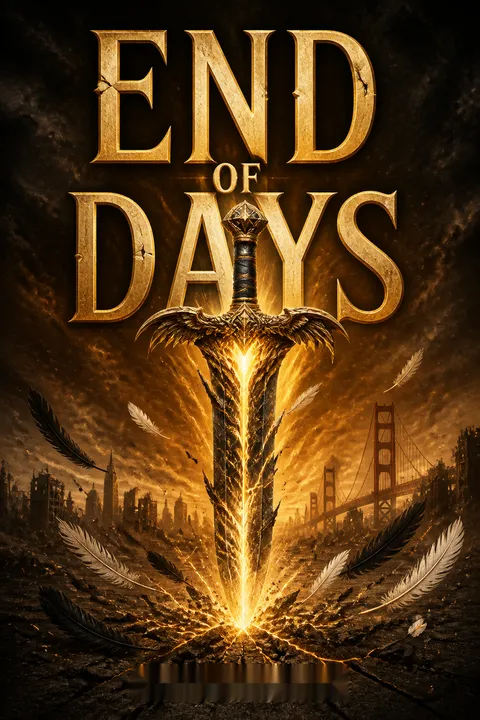


Plot Summary
A Victorian on Angel Island
After the aerie massacre, Penryn Young carries her rescued little sister, Paige, away from San Francisco with Raffe, an archangel forced to fly on demon wings, and Beliel, the wingless enemy they have taken captive. They choose Angel Island over Alcatraz, hoping its green hills will offer shelter. At an abandoned Victorian, armed men flee when Raffe and the locust swarm confront them, leaving the house to Penryn’s group.
Raffe chains Beliel to the garden fence and tends the angel wings he hopes to have reattached. While Paige sleeps, Penryn dreams of Beliel among the newly Fallen, gripping Raffe’s hand as they are dragged toward torment. The image suggests their enmity began in a bond Penryn does not yet understand.
The island offers a fragile domestic pause, but every object in it carries the weight of violence: the antique house is shelter, Beliel’s chains are both restraint and unresolved history, and Raffe’s severed wings make his body a reminder of the society he wants to rejoin. Penryn’s dream complicates the simple division between enemy and ally before she has evidence enough to trust that complication. Her instinct is to care for Paige and keep the group alive, even while the scene quietly warns that the past is still active among them.
Beliel’s Memory Opens
Beliel offers Penryn a glimpse of his past through her angel sword, Pooky Bear. In the memory, Beliel is a newly Fallen Watcher, forced to watch hellions torment Mira, his human wife, while he cries out for Raffe to protect her. The Pit lord notices Penryn inside the memory and sends hellions after her.
They burst through Beliel’s body into the garden, where Penryn kills one and drives the others away, but suffers a shoulder wound. Raffe returns from Alcatraz and treats her injury. Penryn tells him what she saw, yet Beliel’s accusation that Raffe betrayed him leaves her newly uncertain about the angel she loves. Raffe insists she cannot trust Beliel, while his own reluctance to let her go exposes how much he fears losing her.
The memory does not settle the question of who is trustworthy. Instead, it gives Beliel a human history of grief without erasing his present cruelty, and shows Raffe as a commander whose promise could not protect everyone he loved. Penryn’s sword makes private memory physically dangerous: looking backward releases predators into the present. Her attraction to Raffe now competes with a more adult task, judging him by choices rather than by longing or by Beliel’s self-serving account.
The Swarm Turns South
A wave of hellions drives Penryn, Raffe, and Paige from the island. As they flee through the air, White Streak, a brutal locust leader Penryn recognizes from Alcatraz, attacks one of Paige’s pets and tears away its wing.
Most of Paige’s small following obeys his threat and returns to the larger swarm, leaving her with only a few creatures. The group heads toward the Resistance, hoping its doctor can help Paige and reattach Raffe’s wings. On the way, Penryn discovers a starving man in a ruined department store.
Paige approaches him as prey, but stops when she sees the child’s drawing he clutches. Penryn gives the unconscious man water instead of leaving him to die. The encounter shows her that Paige is still making choices, even when hunger makes each one costly.
The flight south puts two kinds of survival in view. White Streak uses fear to make the swarm obey, while Paige’s attachment to her injured pet reveals a different, vulnerable kind of authority. The dying man’s drawing becomes a test of recognition: Paige sees a father through the hunger that has begun to reshape her. Penryn cannot cure her sister by force, so she learns to read small acts of restraint as evidence of personhood. That attention will matter more than any claim that Paige is simply a monster or a miracle.
The Resistance Needs Paige
At the Resistance camp, Penryn finds Doc, the human doctor who treated Paige on Alcatraz, and learns that the refugees have attacked him for creating the altered children. His arm is badly broken, leaving him unable to operate on Paige or reattach Raffe’s wings. The camp still distrusts Paige, whom its fighters once tied up, while Doc believes her connection to the locusts could help humanity.
Penryn reunites with her mother, now a Resistance captain, and discovers that a New Dawn cult member has volunteered to feed Paige. Paige refuses the offer, leaving her hunger unresolved. Before Penryn can make a plan, a calm cult woman tells Raffe that someone is seeking him at a church. The message draws him toward a dangerous meeting.
The camp’s contradictions mirror the crisis outside its walls: people need Paige’s power but recoil from her body, and they need Doc’s expertise while punishing him for the harm he caused. Penryn rejects the easy logic that usefulness cancels a person’s dignity. Paige’s refusal of a willing victim matters because it is her decision, not the camp’s imposed story about her. The broken arm removes the practical solution Penryn hoped for, forcing her family to accept help from people she has strong reasons to distrust.
Josiah Names the Betrayal
At the church, Josiah, an albino angel who once served Raffe, claims that Laylah can restore Raffe’s angel wings. He also reveals that Uriel killed Gabriel, the Messenger, and is manufacturing an apocalypse to secure the vacant office. Since Doc can no longer operate, Raffe accepts the chance to reach Laylah and stop Uriel. He leaves Penryn with his sword and a painful farewell.
New Dawn members then drug Penryn and deliver her to the aerie, hoping to trade her for protection. In the Rolls-Royce, she persuades the disfigured driver to speak with her by treating him as a person rather than recoiling from his face. A street gang attacks the convoy, but cultists clear a path, and the driver continues toward the angels’ stronghold.
The choice separates Penryn’s immediate human loyalties from Raffe’s responsibility to his people, while making betrayal the political engine of the crisis. Josiah’s warning gives Raffe a reason to return, but his history of deception keeps the promise of surgery morally unstable. Penryn’s exchange with the driver extends her earlier recognition of Paige: she refuses to let injury dictate who counts as human. Her capture shows how readily desperate survivors turn one another into bargaining material when an invader offers safety.
Uriel Stages Judgment
At the aerie, Uriel displays Penryn before the gathered angels and presents Beliel and Pit-born hellions as proof that the apocalypse is underway. He claims divine authority and promises his followers glory if they choose him as Messenger.
Penryn exposes his lie about Gabriel, but Uriel turns the crowd’s anger into a demand for a trial. He throws Penryn into a living dome with hellions and Beliel, where the last survivor is supposed to earn freedom. Penryn fights with Pooky Bear while Beliel kills hellions beside her, and the two form a temporary alliance.
Then Raffe returns with his restored white wings and interrupts the execution. He challenges Uriel’s claim, agrees to a trial by contest, and names Penryn as his second. To find fighters strong enough to oppose Uriel, they decide to enter the Pit.
Uriel turns spectacle into a substitute for evidence. The crowd sees a monster, a captive girl, and a promised apocalypse, then is invited to treat violence as a verdict. Penryn’s presence is political theater as much as personal punishment: Uriel uses her as proof that humanity is dangerous and deserving of conquest. Raffe’s return interrupts that script, but his decision to name Penryn his second also places her inside angelic politics, where affection cannot shield her from public consequence.
The Watchers in Hell
Penryn and Raffe use the sword to enter the Pit, where Penryn lands among Raffe’s former Watchers, now battered newly Fallen. Beliel is there too, blind and changed, but still tied to the squad’s history. Pit lords hunt the group with chained angels and screaming heads that seek new bodies.
Raffe eventually reaches Penryn, and his old soldiers recognize their commander. He tells them that Gabriel’s warning about monstrous Nephilim was false: after searching generations of human families, Raffe found no such monsters and delayed reporting so he would not be ordered to kill them.
The Watchers agree to help defeat Uriel, though escape requires one of them to remain behind as the gateway through Beliel. They choose together, knowing the choice will condemn one old comrade to isolation.
The Pit makes punishment into a system that feeds on isolation, mutilation, and the hope of being restored. Against that system, the Watchers recover identity through recognition: Raffe is their commander again, and shared memory briefly makes them more than prey. His disclosure about the Nephilim reframes obedience as an ethical problem, not a virtue in itself. Their escape plan demands a sacrifice from within the group, but they choose it collectively rather than allowing a commander to hide the cost from those who will bear it.
Beliel Becomes the Gateway
The Watchers ride hellions through Beliel to escape the Pit, leaving him behind as the doorway and severely injuring him. Josiah and Penryn’s mother reach the aerie during the return.
Paige distracts the angels with her locusts while her mother sets fire to an outer building, giving Josiah a chance to remove Beliel and place the returning group in a truck. Beliel dies soon afterward. His old Watcher comrades honor him by carrying his burning body together instead of letting any part fall.
Raffe then leaves for the coming contest, and Penryn drives toward the Resistance with her family. Josiah catches up with a warning: Uriel has defined the contest as a blood hunt in which angels will kill humans. Penryn chooses to turn back toward the camp rather than flee.
Beliel’s final passage makes his long history of betrayal inseparable from his role in the Watchers’ escape: he is both the necessary route out and the person left to pay for it. The funeral gives him a communal dignity he once believed impossible, without asking Penryn to forget what he did. Meanwhile, Raffe’s choice of duty and Penryn’s decision to return to the humans expose the competing loyalties that will shape the final battle. Neither can be reduced to romance or allegiance alone.
Obi Leaves Penryn the Camp
Penryn reaches the Resistance camp to find it wrecked by resurrected locust victims and street gangs. She helps carry the wounded until she finds Obi, the Resistance leader, dying from a chest wound. He urges her to unite the survivors and use what she knows about angels. After he dies, the camp’s fragile order begins to dissolve.
Penryn gathers those who remain and tells them the blood hunt will begin at sunset; a fire has already cut off the peninsula’s southern route. When a desperate father tries to hand off his daughter’s friend, Penryn insists that the child is family too. She accepts leadership and orders the healthy to ferry people across the bay while volunteers prepare to draw the angels toward the Bay Bridge.
Obi’s death transfers more than command. It leaves Penryn with the same moral burden he carried: holding strangers together when fear makes separation seem safer. Her response to the father’s attempt to abandon a child turns family from blood relation into a practical obligation. The decision to evacuate and create a diversion is not a promise that everyone can be saved. It is a refusal to let panic decide in advance which people are expendable.
The Talent Show Lures Them
Penryn’s group sends survivors toward the Golden Gate and prepares the damaged Bay Bridge as a decoy, using lights, speakers, fighters, and the twins’ promised talent show to draw Uriel’s angels away from the evacuation. The crowd grows far beyond expectation.
Performers dance and sing while people who have spent months hiding make noise together again. The plan’s first result is not the angels but a locust swarm attracted by the lights and sound. White Streak arrives, cripples one of Paige’s pets, and tries to assert control over the swarm.
Paige attacks him and is overwhelmed; Martin shoots a locust threatening her, while other creatures join the fight. Paige’s side and White Streak’s side rise into the mist, carrying the struggle beyond Penryn’s sight just as the angels arrive.
The talent show functions as both military bait and a brief restoration of public life. The survivors do not mistake performance for safety; they choose to sing, dance, and gather despite knowing the risk. That choice makes the crowd more than a target assembled by Penryn’s strategy. Paige’s confrontation with White Streak then tests whether authority rests on terror or on bonds strong enough to draw others voluntarily. The suspense lies in Penryn having to lead without controlling the people she loves.
Raffe Breaks the Blood Hunt
The angels descend, and the bridge defense uses spotlights and piercing sound to disrupt their exceptional sight and hearing while rifle teams knock them toward the shark-filled bay. When Uriel’s fighters land among the humans, Raffe arrives with the Watchers and attacks his own kind rather than joining the hunt.
He gives Penryn earplugs, and they fight back to back as their mismatched group protects the bridge. Paige returns above them, bloodied, riding with the locust swarm after defeating White Streak.
Her victory pulls locusts against the angels and keeps the spectators from overwhelming the human line. Then six-headed beasts climb from the bay. They bite through the hidden crowd beneath the bridge, forcing Penryn to lower the escape ladders and pull the survivors into the battle zone.
Raffe’s return answers Penryn’s fear that he would choose acceptance among angels over the people he loves, but the choice is costly: he is publicly rejecting the order he once served. The battle succeeds only because each group contributes what the others lack: human ingenuity, Watcher skill, and Paige’s influence over the locusts. The sixers expose the weakness in the plan’s neat division between fighters and evacuees. Safety beneath the bridge was never outside the violence; the danger had simply been hidden from view.
The Messenger Loses Everything
The sixers carry an engineered plague that sickens angels and locusts, while human fighters remain unaffected. Uriel still declares victory, but Raffe bites the Pit lord’s token and summons the ally who promised help.
The Pit lord sends the Consumed, the tortured heads from the Pit, against the sixers, turning the monsters into a new army. Raffe strikes Uriel, and humans overwhelm the wounded angel before his followers can save him. To pay the Pit lord, Raffe lets two hellions cut off his restored wings.
With Uriel dead and Raffe unable to claim the Messenger’s office, the angels prepare to leave under the authority of the absent Michael. Raffe remains with the Watchers. On the boat, he admits he wants a life with Penryn, while she asks for a safe place where survivors can rebuild.
The ending rejects victory as restoration to the old hierarchy. Raffe saves people by surrendering the very wings that represented his return to angelic belonging, and Uriel’s authority collapses when spectacle and force can no longer conceal the costs of his rule. The humans’ victory is compromised by bloodshed, but the survivors are not asked to become perfect or innocent before they can rebuild. Penryn’s request is concrete: safety, food, and a future in which loyalty is lived rather than proclaimed.
Epilogue
After the battle, Penryn, Paige, and their mother move through the damaged peninsula telling survivors that the angels are leaving. Paige is healing and eating again, though her appetite and scars remain reminders of what she endured. Their mother distributes rotten eggs from her grocery cart, convinced they may still be useful.
Raffe watches from above on demon wings, while Penryn carries Pooky Bear, which has not yet accepted him again. The twins have somehow kept the prize RV and are advertising another show. The war has ended, but the survivors are still learning how to live together, and Penryn’s mother is already cracking a bottle over someone who steals from her cart.
The epilogue refuses a polished return to normal. The neighborhood remains marked by fire and gang control; Paige’s recovery is real but incomplete, and even Pooky Bear’s trust cannot be restored on command. The twins’ entertainment and the mother’s eccentric preparations turn survival into ordinary, improvised labor. Raffe watches rather than rules, a small image of the changed relationship between power and community. Peace here is not the absence of damage. It is the daily work of making room for people who are still frightened, strange, and difficult to trust.
Analysis
End of Days makes the apocalypse a contest over who gets to define humanity. Uriel calls humans disposable and presents his manufactured monsters as proof that divine judgment has begun. The Resistance, meanwhile, can reproduce the same logic when it treats Paige as a weapon or Doc as nothing but the harm he caused. Penryn’s choices resist both reductions. She protects Paige without pretending her hunger is harmless, and she asks the camp to treat an abandoned child as family even when resources are scarce.
The story also tests loyalty against obedience. Raffe’s soldiers were punished for loving human women, while Raffe himself has spent centuries following an order to find monstrous Nephilim that never existed. His eventual refusal to hunt people is not a rejection of responsibility; it is a recognition that duty can be corrupted by the authority that defines it. Beliel’s history complicates this moral clarity. His suffering explains some of his bitterness but does not excuse his later cruelty, and the Watchers’ funeral honors his shared past without erasing the damage he caused.
The talent show makes the book’s argument about survival unusually concrete. The crowd gathers not because danger has vanished but because they want one night in which singing and watching dance are possible again. That fragile public life cannot defeat the angels by itself, yet it gives people a reason to act together. The victory is likewise not a clean restoration: Uriel dies, the angels prepare to leave, and Raffe loses his wings. What remains is a community made from damaged people who keep choosing responsibility over abandonment. The novel’s hope is not that suffering makes everyone better. It is that people can still recognize one another and build obligations in a world designed to break them.
Review Summary
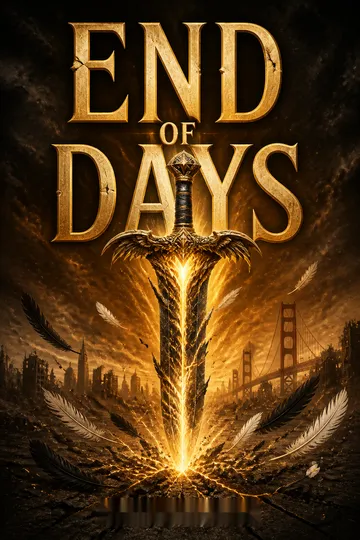
End of Days receives mostly positive reviews as a satisfying conclusion to the Penryn & the End of Days trilogy. Readers praise the intense action, character development, and romance between Penryn and Raffe. Some criticize the pacing and unanswered questions, while others appreciate the humor and unique worldbuilding. The book is noted for its balance of dystopian elements and angel lore. Overall, fans express bittersweet feelings about the series ending but are generally pleased with how the story concludes.
People Also Read



Characters
Penryn Young
Reluctant human commanderPenryn is a teenage survivor who has learned to act quickly because her family cannot rely on anyone else to keep them alive. She is observant, skeptical of grand claims, and more compassionate than she likes to admit. Her care for Paige requires her to face painful facts without reducing her sister to a threat. Penryn’s relationship with Raffe complicates her judgment, since desire and distrust coexist. She is not a natural strategist, but she understands people’s fears and notices when they still choose kindness. That attention gradually makes her a leader others can follow, even when she cannot guarantee their safety.
Raffe
Exiled archangel commanderRaffe is a formidable archangel and former commander of the Watchers, now caught between his people and the human girl who has become his closest companion. He is disciplined, guarded, and accustomed to treating desire as a danger to duty. His confidence can look like arrogance, but it also hides the loneliness of someone who has lost his place among his own kind. Penryn challenges the assumptions behind his contempt for humans because she acts with courage without claiming perfection. Raffe’s central struggle is not simply choosing whom he loves; it is deciding whether belonging is worth obedience to a corrupt order.
Paige
Stitched little sisterPaige is Penryn’s younger sister, a small, severely injured child whose body has been altered by angelic experiments. Her scars, unusual appetite, and bond with the locusts make other people fear her, but she remains gentle toward creatures and people who do not threaten her. Before the catastrophe she was a vegetarian and a child who relied on her family; now hunger and instinct constantly test the values she still holds. Penryn’s protectiveness can sometimes mistake Paige’s silence for helplessness. Paige has her own will, and her choices reveal a more complicated person than either the Resistance’s fears or the cult’s worship can explain.
Penryn’s mother
Unpredictable family anchorPenryn’s mother has long been difficult for her daughters to depend on, and Penryn often approaches her with frustration as well as love. The apocalypse does not make her predictable, but it exposes capacities Penryn had not expected: nerve, practical daring, and an ability to command people who might otherwise dismiss her. She is especially tender with Paige, though her judgment can alarm Penryn. Her odd habits, including hoarding rotten eggs, are not merely comic relief; they show how she converts private fixations into tools when circumstances change. She remains a mother whose care is real but rarely conventional.
Beliel
Raffe’s embittered former WatcherBeliel is a demon who has become one of Penryn’s most dangerous captives. His cruelty toward Paige and his role in the human experiments make him difficult to pity, yet the sword exposes an earlier self shaped by loyalty, love, and punishment. He once served under Raffe among the Watchers and had a human wife, Mira. Beliel’s bitterness is not an excuse for what he does; it is a clue to how prolonged suffering can harden grief into accusation. Penryn sees both truths at once, resisting his attempt to use the past as a simple defense of his present actions.
Uriel
Apocalypse-making contenderUriel is an ambitious archangel who seeks the Messenger’s authority and understands how to make fear look like divine confirmation. He is a political performer as much as a military leader, using staged wonders, frightening creatures, and public spectacle to persuade the angels that the crisis demands his rule. His confidence depends on controlling what others see and when they see it. Uriel’s contempt for humans is bound to a larger belief that order justifies cruelty. He is dangerous not because he is merely deceptive, but because he can turn a crowd’s uncertainty into permission for violence.
Obi
Resistance organizerObi is the human leader trying to hold a resistance force and a refugee camp together at once. He makes hard choices under pressure and can seem controlling, especially to Penryn, who remembers his earlier treatment of her family. Yet the people around him trust his willingness to accept the same risks he asks of them. He sees Penryn’s combination of persistence, knowledge, and loyalty before she sees herself as a leader. Obi’s authority comes less from being flawless than from taking responsibility when every available choice carries a cost.
Josiah
Raffe’s oath-bound informantJosiah is an albino angel with red eyes and a past shaped by slavery and an oath of loyalty to Raffe. He moves between angel politics and Penryn’s world, carrying information that can be valuable even when his motives are difficult to read. His apparent betrayal leaves Raffe wary, while Josiah insists that the bond between them still matters. He is a survivor who understands what it means to live outside a secure community, and his choices are shaped by both gratitude and the desire to prove that his life belongs to him.
Doc
Compromised human surgeonDoc is the human doctor who performed procedures on Paige and other children under angelic authority. His knowledge makes him useful to the Resistance, but it does not erase the harm he helped cause. He believes Paige may be important to humanity’s survival and wants to repair what he can, though others have good reason to distrust him. Doc’s conflict is practical and moral: he continues trying to treat people even when the victims of his earlier work turn against him. His actions invite the question of whether remorse has value when repair remains incomplete.
Laylah
Angel physician and makerLaylah is an angel physician whose experiments help create the altered children and monsters used in Uriel’s plans. Ambition and technical skill make her valuable to powerful angels, but also place her inside the consequences of their demands. She is capable of medical work that no human doctor can easily duplicate, yet Penryn has reason to question whether Laylah’s help comes from compassion or self-preservation. Her role connects the apocalypse’s theatrical monsters to laboratories, where bodies become materials for political designs.
Gabriel
Murdered angelic MessengerGabriel is the Messenger whose death destabilizes the angel host and creates the opening Uriel exploits. His authority rested on rules presented as divine commands, including the prohibition against angels marrying human women. Through Raffe and the Watchers, those rules appear less certain than the angels were taught to believe. Gabriel is mostly present through the consequences of his decisions, which makes him a distant but consequential figure in the story’s debate about obedience and truth.
Obi’s twins
Comic resistance tacticiansKnown as Tweedledee and Tweedledum, the twins are matching brothers who handle fights, betting, and morale for the Resistance. Their jokes can seem frivolous beside the losses around them, but their talent for turning a crowd’s appetite for spectacle into organized action proves useful. They care about survival without surrendering playfulness, and they help Penryn build a plan that gives the refugees a reason to gather. Their comedy is not an escape from danger so much as one way they keep people connected inside it.
White Streak
Ruthless locust leaderWhite Streak is a large, scarred locust with a white mark in his hair and a talent for enforcing obedience through fear. Penryn remembers him as a tormentor from Alcatraz, and Paige encounters him as a rival for influence over the swarm. He treats weaker creatures as examples for others, making his leadership depend on visible punishment. His presence gives the locusts a social order rather than leaving them as a faceless mass of monsters.
The Pit lord
Demon lord and bargainerThe Pit lord rules through spectacle, enslaved Fallen, and the promise that anyone can be traded for power. He is immense, violent, and capable of recognizing opportunity even in defeat. His bargains turn a desperate battle into a transaction with consequences beyond the battlefield. The Pit lord embodies a world where every rescue carries a price, and his manner suggests that he sees loyalty as something to purchase or exploit.
The Watchers
Raffe’s fallen soldiersThe Watchers are Raffe’s former elite warriors, cast down for marrying human women. In the Pit they are battered, hunted, and still capable of moving together with practiced discipline. Their shared history gives Raffe a connection to the angelic community he has lost, while their punishment exposes the cost of the laws that govern it. They are a group rather than a single personality, but each member faces the same question: whether loyalty can survive when the institution that demanded it has abandoned them.
Martin
Distrustful Resistance fighterMartin is a Resistance fighter who once helped restrain Paige when the camp feared her. He remains wary of her, but he can recognize when she is protecting people and act on that recognition. His changing response shows how fear can harden into cruelty, but need not make it permanent.
The damaged driver
Disfigured reluctant captorThe driver who transports Penryn to the aerie has been horribly disfigured by angels and is desperate for a place among humans. His anger masks his fear of being rejected by everyone, including his own family. Penryn’s willingness to speak to him without flinching lets him consider that humanity might be defined by choices rather than appearance.
Plot Devices
Pooky Bear
Sword and memory keyPenryn hides an angel sword inside a stuffed bear, a disguise that makes a weapon look like a piece of childhood comfort. The sword can guide its bearer in combat and expose memories when it touches someone connected to them. That power lets Penryn see Beliel’s past, but it also allows creatures from the Pit to emerge into the present. Later, the sword becomes the route through which the Watchers attempt to escape. Its changing role joins violence, memory, and the question of who has the right to wield power.
The Pit gateway
A perilous route through timeThe sword can create a passage between the human world and the Pit when a hellion travels along its blade. Beliel’s connection to the Watchers makes his body the point through which Penryn and Raffe enter and leave. The mechanism is dangerous and poorly understood, so escape requires a Watcher to remain behind as the gateway. This device turns the group’s rescue plan into a moral choice: their way out depends on leaving someone they once called a comrade in the place that has already tortured him.
Uriel’s false apocalypse
Spectacle as political leverageUriel uses monsters, staged resurrections, and claims of divine instruction to make his election feel like an emergency. He presents a false apocalypse as evidence that the angels need him as Messenger immediately. The spectacle gives frightened soldiers a story that simplifies their choices and disguises his own ambition. His contest and blood hunt extend that strategy, turning political disagreement into violence against humans. The device shows how a manufactured crisis can become real once people act on it.
The Bay Bridge talent show
A gathering turned into baitPenryn and the Resistance use a talent show, bright spotlights, amplified sound, and a crowd to draw the angels away from refugees escaping across the Golden Gate. The performance gives survivors a rare chance to gather openly, while the lights and sound exploit the angels’ heightened senses during the attack. The plan attracts locusts first and leaves the crowd vulnerable, but it also gives the humans a way to coordinate resistance. The show is simultaneously entertainment, camouflage, and a declaration that people remain more than prey.
The sixers’ plague
Apocalypse turns on its makersThe six-headed beasts were created as part of Uriel’s staged apocalypse, but an experimental human plague contaminates them and becomes dangerous to angels and locusts. Humans are unaffected by the disease, though the beasts can still kill them by attacking. Their arrival breaks the blood hunt’s simple division between hunter and hunted, forcing both sides to face a threat neither can control. The outbreak makes Uriel’s manufactured catastrophe materially real, while revealing that political shortcuts in a laboratory can escape their intended purpose.
Penryn & the End of Days Series

Download PDF
Download EPUB
.epub digital book format is ideal for reading ebooks on phones, tablets, and e-readers.








