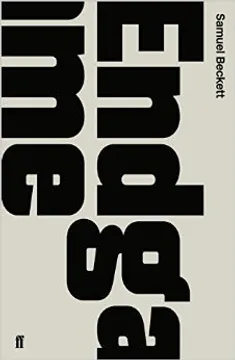


Plot Summary
The Room's Opening Ritual
Clov moves through the bare room with practiced steps: he opens the high windows, checks the ashbins, and uncovers Hamm, a blind man who cannot leave his wheeled chair. Outside, Clov finds no change in the world; inside, Hamm asks to be put to bed almost as soon as he has been roused. Their routine is powered by mutual need and open resentment.
Hamm controls food and summons Clov with a whistle, while Clov repeatedly threatens to go. Neither can explain why they remain together: Hamm has nowhere else to turn, and Clov sees nowhere else to go. The play begins with an attempted departure that has become another part of the daily service.
The opening turns routine into the play's main engine. Clov's careful movements suggest a world held together by habit, but his repeated efforts to leave show that habit is not comfort. Hamm's whistle makes dependence sound like command, while Clov's obedience makes command look less powerful than it claims. Their exchange reveals a binding with no clear contract: Hamm needs a body to perform tasks, and Clov needs a place, however punishing, to remain. Because each attempted break becomes another repetition, the audience is made to feel the trap as structure rather than as a single decision.
Parents in the Ashbins
Hamm's parents, Nagg and Nell, live in separate ashbins and surface when Nagg asks for food. Clov brings him a biscuit because the household has run out of the soft food Nagg wants, but Nagg cannot bite it and Clov closes the lid over him again. Later, Nagg wakes Nell.
Their failing sight and lost mobility make even a kiss impossible, yet memories of a tandem accident and a rowing trip briefly recover their old intimacy. Nagg tries to revive Nell with a comic story, but Hamm cuts the exchange short. When Clov checks Nell, he finds no pulse and lowers her back into her bin. Nagg remains below the other lid, with their shared past suddenly reduced to one listener.
The ashbins make family life literal containment. Hamm's parents are present enough to demand food and attention, but their bodies have been reduced to needs that Clov must manage. Nagg and Nell's memories briefly restore them as lovers rather than burdens; the failed kiss then makes the distance between remembered life and present incapacity visible. Their humor does not undo that loss. It gives them a way to touch the past together, until Hamm's impatience and Nell's silence end the moment. The scene also complicates Hamm's authority: the people who made him are now dependent on the household he controls.
A World Reduced to Zero
Hamm sends Clov to inspect the world through a telescope. From the windows, Clov reports a grey, emptied landscape, a lifeless sea, and no sign of movement. Hamm still asks for signs that nature might return, but Clov says the seeds he planted have not sprouted and will not.
When Clov discovers a flea on himself, Hamm panics at the possibility that human life might begin again, and orders him to use insecticide. Clov powders the flea until he believes it is dead. The tiny creature has briefly supplied the room with something more consequential than its occupants: the possibility of renewal, which Hamm treats as a threat rather than a promise.
The telescope converts the outside world into a report that cannot be verified by Hamm, who depends on Clov's eyes but distrusts his descriptions. The repeated inspections offer no rescue, only confirmation of depletion. Against that vast emptiness, the flea becomes a startlingly potent sign of life. Hamm's fear is not simply fear of an insect; he imagines a renewed humanity inheriting the same suffering. His response exposes how thoroughly the characters have come to treat continuation as danger. The failed seeds and the exterminated flea make hope tangible, then show how quickly this household tries to suppress it.
Hamm's Borrowed Son
As Clov again tries to leave, Hamm reminds him that he took him in when he was small and acted as his father. Clov accepts the description but has no memory of arriving. Hamm insists that the room was Clov's home, while Clov's dependence on it now seems as much a prison as a shelter.
Hamm predicts that Clov will one day become blind and helpless like him; Clov counters that he cannot even sit down. Their unequal bodies make escape and self-sufficiency equally difficult. Hamm also asks Clov to bring him a toy dog, a rough, unfinished object that cannot stand by itself. Clov's history and the toy's failure both expose how little in this room can function without assistance.
Hamm's claim to have been Clov's father gives their routine a history, but not a reassuring one. Clov's lack of memory leaves the origin of their bond in Hamm's hands, while his acknowledgment of the past does not amount to affection or consent. Hamm uses care as evidence of ownership; Clov experiences the same household as a place he cannot escape. The incomplete toy dog mirrors the arrangement between them: it can be made to appear upright only while someone holds it. The scene asks whether dependence can create obligation without creating tenderness, and whether a home remains a home when leaving it is physically and emotionally obstructed.
The Story That Stops
To occupy the day, Hamm tells Nagg a story about a man who crawls to him on a bitter holiday, asking for food for his young child. Hamm first rejects the man's request, then offers him work and considers taking in the child as well. The account may echo Clov's arrival, though the play never confirms that they are the same child.
Clov interrupts with news of a rat in the kitchen, and Hamm shifts from storytelling to a prayer that brings no answer. Nagg joins the prayer, then recalls that he once ignored Hamm's cries when Hamm was frightened as a little boy. The father who once withheld comfort now listens as his own son fails to offer him any.
Hamm's story offers a possible origin for Clov, but its unfinished, self-correcting form resists becoming a reliable explanation. Hamm can narrate himself as a benefactor who offers work and shelter, yet the tale begins with his refusal to feed a desperate child. Nagg's memory then turns the family history back on Hamm: as a child, he too was left without comfort. The failed prayer does not settle whether care is absent or simply unavailable. Instead, the sequence shows each generation repeating a pattern of need, refusal, and belated appeal, while storytelling offers only a temporary frame for that repetition.
The Empty Medicine Box
After Hamm's story breaks off, Clov checks the bins. Nell appears dead, while Nagg is still alive, crying and eating the biscuit he has kept. Hamm asks Clov to move him toward the window and then seeks a kiss or a hand; Clov refuses to touch him. When Hamm later calls for his painkiller, Clov tells him the box is empty and there will be no more.
The small supply that has helped structure Hamm's days is gone, and his questions turn from routine to fear. Clov continues moving around the room, but the care he provides has narrowed to tasks, not comfort. Hamm remains dependent on the one person who will not offer the contact he wants.
The scene strips away two kinds of reassurance at once. Nell's absence becomes something Clov can confirm by looking into a bin, while Hamm's medicine is an exhausted supply that cannot be restored by another command. Hamm's requests for touch expose a need that his authority cannot satisfy. Clov's refusal is not presented as a sudden act of cruelty; it grows from a relationship built on service without tenderness. The room still contains bodies, objects, and procedures, but each is less able to answer Hamm. Physical scarcity becomes emotional fact: the last dose is gone, and no gesture can replace it.
Mother Pegg's Dark
As Clov looks outside, Hamm asks whether he knows what has happened to the world. Clov answers with a specific memory: Mother Pegg once asked Hamm for oil for her lamp, and Hamm refused her. Clov says she died because of the darkness, while Hamm defends himself by claiming he had none to give.
The accusation punctures Hamm's repeated presentation of himself as helpless and wronged; he once had a choice that mattered to someone else. Clov then struggles with the question of why he still obeys Hamm. When Hamm demands the toy dog, Clov's frustration breaks into violence: he strikes Hamm with it, then gives it back. The room's familiar roles have briefly become physical rather than merely verbal.
Mother Pegg's remembered request changes the meaning of Hamm's helplessness. He may be blind and dependent now, but Clov recalls a moment when Hamm could have acted and refused. The play does not turn that memory into a simple moral verdict; Hamm's claim of having no oil remains beside Clov's charge. What matters is that Clov has carried the event as evidence against the story Hamm tells about himself. His blow with the toy dog is a rupture in their service ritual, not a liberation. Even after striking Hamm, he returns the object, and the relationship resumes its old shape without being repaired.
The Boy Beyond the Window
Looking through the telescope, Clov spots what appears to be a small boy outside. Hamm refuses to have Clov go after him, reasoning that the child will either perish there or come to them; the chance of a new life receives no rescue. Clov later appears dressed for a journey, but he remains motionless by the door rather than clearly leaving.
He describes a future in which his confinement might end, though he cannot tell when or how. Hamm asks for a few final words, then calls for Clov, for his father, and for the comfort of a response. None comes. Hamm discards his whistle and toy dog, unfolds his handkerchief, and covers his face. Clov stays at the threshold as the play ends.
The boy outside gathers the play's central uncertainty into a single sighting: life may still exist beyond the room, but neither man can establish what it means or what should be done. Hamm's refusal to send Clov after him keeps compassion subordinate to resignation. Clov's travel clothes suggest a break, yet his stillness at the door prevents the ending from confirming one. Hamm's final gestures discard the tools that once summoned and comforted him, but they do not produce release. The closing tableau holds both men between action and inaction, leaving the audience with a departure prepared but not completed.
Analysis
Endgame builds its drama from a contradiction: everyone wants the ordeal to stop, yet each person depends on the routines that keep it going. Hamm commands Clov because he cannot move, but Clov's obedience gives Hamm the authority he otherwise lacks. Nagg and Nell survive inside bins, where family intimacy persists as appetite, memory, and failed touch. These relationships do not fit a clean opposition between cruelty and care. Hamm once offered shelter, according to his own account, yet Clov recalls his refusal to help Mother Pegg; Nagg remembers withholding comfort from Hamm himself. Each person has been both dependent and withholding.
The play's repetitions also make storytelling an action, not an explanation. Hamm's chronicle lets him shape the past, but its revisions and unfinished ending expose the limits of that control. Clov's reports from outside offer facts without a usable future: grey land, failed seeds, then the uncertain image of a child. Even the flea, the clearest sign of biological possibility, is treated as a danger to eliminate. The characters do not simply inhabit a world without meaning; they keep testing whether a meaningful beginning or ending can still be made, then discover that their tests produce no certainty.
The final tableau refuses the relief of a completed choice. Clov is dressed to leave but does not visibly go, while Hamm stops summoning him and covers his face. This is neither reconciliation nor proof that escape is impossible. Beckett holds the audience in the same interval as the characters, where action is prepared, withheld, and repeated. The play's most unsettling insight is that dependence can persist after affection has thinned, and that a person may keep performing the gestures of an ending without being able to finish it.
Review Summary
People Also Read


Characters
Hamm
Blind master of the roomHamm is a blind, largely immobile man who directs the household from a wheeled chair. He depends on Clov to move him, inspect the outside world, manage his parents, and administer what little remains of their supplies. His commands are often petty, but they protect him from confronting how little control he truly has. Hamm also turns speech into a refuge: he tells stories, revisits old questions, and tries to arrange events into a narrative he can command. His dependence does not make him gentle; he can withhold food, patience, and affection even as he asks others to stay. The tension between his need for care and his refusal to offer it shapes nearly every relationship in the room.
Clov
Restless keeper and servantClov is Hamm's attendant, able to walk but afflicted by poor eyesight and painful legs. He performs the room's repeated chores, reports what lies beyond the windows, and answers Hamm's whistle even while insisting that he wants to leave. Hamm says he took Clov in as a child and acted as his father, but Clov cannot remember the beginning of their relationship. His language is blunt and practical, often puncturing Hamm's grander claims, yet he remains entangled in a bond he cannot explain. Clov's wish for independence is real, but so are his habits of obedience and his dependence on the place he resents.
Nagg
Needful comic fatherNagg is Hamm's father, confined to an ashbin beside his wife, Nell. He asks for food, old stories, and small acts of attention, though his body can no longer manage even a hard biscuit easily. Humor is his way of keeping contact with Nell and with the son whose childhood he remembers imperfectly and painfully. Nagg's appetite can look selfish, but his need is also a plea to remain noticed. His memories reveal that family tenderness has never been reliable in this household.
Nell
Clear-eyed buried witNell is Hamm's mother and Nagg's companion in a neighboring ashbin. Frail and nearly blind, she is more exacting than Nagg, correcting his imprecision and resisting his attempts to turn memory into a familiar joke. Their shared recollections preserve the warmth of a relationship that their present bodies can barely enact. Nell's wit is dry rather than sentimental; she can acknowledge the absurdity of their condition without pretending that laughter cures it.
Mother Pegg
A remembered petitionerMother Pegg is an absent figure from Hamm and Clov's past. Her request for lamp oil becomes a concrete test of Hamm's claim that he has always been powerless, and Clov remembers her as someone who needed help.
The starving father
Petitioner from the wastesThe unnamed father appears in Hamm's unfinished story, crawling to ask for food for his child. His request puts hunger and responsibility at the center of Hamm's self-authored account of how he once offered shelter.
The outside boy
Possible sign of renewalThe boy is glimpsed through Clov's telescope beyond the room. He is too distant for the men to know his circumstances, but his apparent presence forces them to consider whether anyone remains outside their closed world.
Plot Devices
The ashbins
Family turned into furnitureNagg and Nell emerge from separate ashbins to eat, remember, and speak with each other. The bins make their dependence impossible to overlook: their son and Clov control when they are uncovered and what food reaches them. At the same time, the containers give the play a grim visual joke, reducing family life to a pair of domestic objects. Their lids can close over a conversation or a body, so the same stage prop serves as shelter, confinement, and a crude boundary between being present and being hidden.
Windows and telescope
A world known secondhandHamm cannot see the world outside, so he sends Clov up ladders to inspect it and report back. The windows create a narrow threshold between the room and the unknown, while the telescope makes Clov's vision seem more authoritative without making it certain. Hamm questions each report and asks for new inspections, turning observation into another repeated task. Late in the play, the same method produces an apparent sighting of a child. The device therefore shifts from confirming desolation to raising an uncertain possibility that neither man can resolve.
Hamm's unfinished chronicle
A past rewritten while spokenHamm tells a story about a desperate father and child, interrupting himself, revising details, and stopping before the tale reaches a stable conclusion. The story gives Hamm a way to occupy time and to cast himself as a person who offered work and shelter. Its resemblance to Clov's unknown childhood invites a connection, but the play never confirms that the tale explains Clov's arrival. The chronicle's instability matters: it is both a possible record of the past and an act of self-fashioning, shaped by Hamm's need to keep speaking.
The three-legged toy dog
A prop for borrowed tendernessHamm's unfinished toy dog cannot stand without Clov's help, and Hamm must touch it to learn where it is or what pose it holds. The object offers him a manageable substitute for companionship, one that can be positioned to seem attentive without having any will of its own. Because the dog is incomplete, it also echoes the room's impaired inhabitants and their dependence on another person's hands. Its use shifts between comfort, frustration, and violence, showing how easily Hamm's desire for affection becomes an attempt to control the thing that appears to offer it.
About the Author
Other books by Samuel Beckett

Download PDF
Download EPUB
.epub digital book format is ideal for reading ebooks on phones, tablets, and e-readers.








