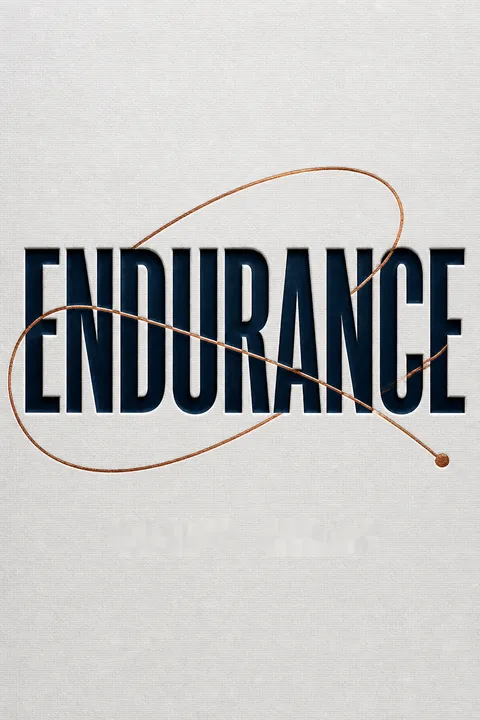


Key Takeaways
Design for the human body, because rockets cannot outrun biology.
The body sets limits. Kelly’s year in orbit was not only an endurance record. It was an experiment in what happens when the human body spends far longer in weightlessness than most astronauts had before. Muscles weakened, bones lost mass, fluids shifted toward the head, and vision changes remained a serious concern. Radiation exposure also raised health risks that could last beyond the mission. Even returning to Earth brought swollen legs, pain, nausea, and difficulty walking as his body readjusted to gravity.
Mars makes this urgent. The International Space Station provides a place to study these problems before sending crews on longer journeys. Kelly and Russian cosmonaut Mikhail Kornienko collected data on themselves, while Kelly’s identical twin, Mark, provided a comparison on Earth. The study could inform future research, but two astronauts are far too few to settle broad medical questions.
What's striking is the shift from treating astronauts as pilots inside a vehicle to treating the body as part of the vehicle itself. Human-factors engineering makes a similar point: systems fail when designers account for machinery but underestimate the people operating it. Here, the implications reach beyond spaceflight, since changes associated with weightlessness resemble some effects of aging and inactivity. Still, a yearlong mission involving two men cannot establish how every body responds. Its value is partly diagnostic: it identifies risks, generates hypotheses, and points to the larger studies needed before confident predictions about a Mars crew are possible.
Borrow a vivid ambition, then turn it into coursework.
A goal changed everything. Kelly was a distracted student who struggled to complete ordinary schoolwork. At eighteen, reading Tom Wolfe’s account of test pilots gave him a concrete picture of a demanding life he wanted: fly, take risks, and do work that mattered. The book did not make him qualified. It gave him a reason to become qualified.
The route was uneven. An admissions dean rejected Kelly from the Merchant Marine Academy because his grades were poor. He transferred to SUNY Maritime instead, then learned how to study. On his twin brother Mark’s advice, he spent a long weekend working every problem for a calculus exam. The result was his first perfect test score. What had looked like a fixed weakness became a skill he could practice, and the Navy eventually sent him to flight school.
A vivid ambition can make delayed effort feel worthwhile. Psychologists sometimes describe role models as expanding a person’s sense of possible selves: the future becomes imaginable, not merely desirable. Kelly’s account adds an important practical step. Inspiration must connect to specific work, such as studying mathematics or accepting a structured training environment. The story also resists a tidy triumph narrative: one book did not erase poor preparation, and a rejection redirected his path. A memorable example can open a door in the mind, but instruction, persistence, and available opportunities determine whether the person can walk through it.
Build expertise through small corrections, not confidence alone.
Precision is learned. Kelly’s first flight in a small Navy trainer felt difficult, and early landings were rough. Later, flying an F-14, he failed his first attempt to qualify for aircraft-carrier landings. A more experienced officer explained that Kelly was letting small deviations in altitude and speed accumulate. He needed to keep making adjustments, rather than waiting until the aircraft was far off course.
Practice made the difference. Kelly improved through repeated flights, simulator sessions, and attention to feedback. The lesson carried into spaceflight, where a minor error can have serious consequences. A pilot must be willing to admit a mistake, understand its cause, and correct the process. Confidence helps someone begin, but it cannot substitute for accurate observation and practice.
This is a useful model of expertise as calibration rather than swagger. In aviation, the gap between what a pilot thinks is happening and what the instruments show can become dangerous quickly. The same pattern appears in fields as different as surgery and competitive sport: small adjustments, made early, prevent larger corrections under pressure. Kelly’s account also shows why mistakes are informative only when people can discuss them openly. Practice without honest feedback may simply rehearse the error. The approach is not a guarantee of success, but it turns performance into something more measurable than talent or self-belief.
Treat endurance as resource management, not a test of stoicism.
Energy has a budget. Kelly knew a year in orbit would feel different from a short mission. His work was scheduled in tight blocks, but tasks often ran long, taking time from exercise, meals, personal calls, or sleep. He learned to pace his effort and accept that good enough could be wiser than exhausting himself in pursuit of perfection.
The environment mattered. Carbon dioxide levels on the station could rise when the air-scrubbing equipment failed. Kelly noticed headaches, congestion, burning eyes, irritability, and trouble thinking clearly. Yet a backup scrubber was not always authorized for use, despite his complaints. The episode shows that endurance is not simply a private matter of will. It depends on noticing strain, reporting it, and having the surrounding system respond. Kelly also chose to count days completed rather than dwell on how many remained.
The mission makes endurance less heroic and more managerial. Sleep, exercise, attention, and clean air are limited resources, and spending one carelessly can weaken performance elsewhere. This resembles workload management in hospitals and other high-stakes settings, where fatigue is treated as a system risk rather than a character flaw. Kelly’s sensitivity to his own symptoms is valuable, but individual monitoring has limits: a crew member cannot compensate indefinitely for faulty equipment or dismissive decision-making. Resilience is strongest when personal adaptation and institutional responsibility operate together, not when a person is expected to endure preventable harm quietly.
Make maintenance and logistics part of the exploration plan.
Survival runs on repairs. The space station was a laboratory, but it was also a home full of machinery that had to keep working. Kelly spent substantial time repairing life-support equipment, including the carbon dioxide removal assembly, which he nicknamed Seedra. He also repaired the urine processor that turned waste into water. These jobs were difficult in weightlessness, where tools and parts floated away and a misplaced object could disappear for years.
Supplies are part of safety. Three cargo vehicles were lost during the mission, forcing the crew to reconsider food, clothing, water, and spare parts. The station had reserves, but repeated failures made the limits visible. Experiments and exploration depend on reliable toilets, air, power, and resupply. Kelly’s experience suggests that plans for distant missions must budget for routine repair and resource recovery, not just the dramatic journey and scientific objectives.
Maintenance is often invisible because successful repairs restore things to normal. Yet reliability engineering treats that quiet work as central: a system is only as dependable as its components, repair procedures, and supply chain. The station’s closed-loop water processing and repeated equipment failures make this tangible. There is also a caution in Kelly’s account. Astronaut improvisation can save time, but improvisation in a life-support system must be governed by sound expertise and verification. The goal is not to celebrate heroic fixes instead of robust design. It is to recognize that maintenance capacity is itself a design requirement for exploration.
Let inconvenient warnings outrank schedules and institutional confidence.
Past warnings mattered. Kelly describes the Challenger disaster, in which engineers raised concerns about how cold weather could affect the shuttle’s booster seals. Their warnings did not reach decision-makers in a way that changed the launch decision. Years later, the Columbia shuttle broke apart after foam struck its wing during launch. Engineers had raised concerns about foam shedding before, but the hazard had come to seem routine. The crew was told there was no reason to worry.
Safety needs open channels. Kelly’s career taught him that technical competence is not enough if people cannot convey bad news to those with authority. Spaceflight requires checklists, simulations, and repeated review, but those controls cannot replace a culture where uncertainty is taken seriously. The cost of delay is visible and immediate. The cost of ignoring a warning may remain hidden until there is no chance to correct the decision.
The key organizational danger is not simply that people make mistakes. It is that institutions can teach people to treat repeated anomalies as harmless, especially when earlier flights survive. Research on high-reliability organizations emphasizes the value of listening to frontline expertise and investigating small failures before they combine. Kelly’s stories make that principle vivid without suggesting that caution can eliminate risk. Excessive delay can also carry costs, and experts can disagree. The safeguard is not automatic veto power for every concern, but transparent reasoning, direct access to decision-makers, and a clear record of why a warning was accepted or rejected.
Treat cross-cultural trust as equipment that must be maintained.
Cooperation became practical. The International Space Station joined the work of fifteen countries and required more than a hundred launches and a hundred spacewalks to assemble. Kelly, a former American Navy pilot, traveled to orbit with Russian cosmonauts on a Soyuz rocket derived from a Cold War missile. On the station, Americans and Russians depended on one another for power, supplies, transport, and emergency support.
Trust was built in daily work. Crews had to coordinate across languages and different approaches to training, hardware, and communication. Kelly found that a capable crewmate could make a difficult day manageable, while poor cooperation could make simple tasks exhausting. The station’s achievements were not produced by goodwill alone. They required repeated coordination, mutual respect, and confidence that a partner would do the work when another person’s life depended on it.
The station offers a rare example of cooperation made concrete by shared vulnerability. International relations can look abstract when conducted through statements and agreements; in orbit, each side’s contribution is tied to working systems and human safety. Organizational research similarly finds that diverse teams gain from complementary perspectives when members can communicate and coordinate effectively. Diversity by itself does not produce trust, and cultural differences can create real friction. Kelly’s account is most persuasive when it shows trust as a practiced capability: learning how colleagues work, sharing responsibility, and building enough familiarity to rely on one another under pressure.
Count the family on Earth as part of the mission crew.
The sacrifice was shared. Kelly’s year away meant missed birthdays, holidays, and ordinary time with his daughters. His partner, Amiko, handled family responsibilities and supported his mission while also managing her own demanding work. She sometimes felt their conversations had become requests for help with the mission rather than moments of connection. Kelly had to recognize that making the separation look easy could leave her feeling shut out.
Distance has limits. Phone calls and video chats helped, but they could not replace touch or restore moments that passed while he was in orbit. When Kelly learned that his sister-in-law Gabby had been shot, he was far from his family and could only listen and offer support remotely. His mission depended on people on Earth, whose emotional and practical labor was part of its cost.
The mission challenges the familiar image of the lone explorer. A long absence is sustained by people who stay behind, often absorbing work that is essential but less visible. Family research describes this kind of change as a redistribution of responsibilities across a household, not a temporary pause in family life. Kelly’s account also highlights that communication is not automatically intimacy: conversations can become logistical, and the distant person may underestimate the burden at home. Recognizing those limits does not make separation easy, but it makes the support network more visible and gives partners a better chance to express needs directly.
After orbit, water, gravity, and dinner become astonishingly precious.
Ordinary life returned as a shock. After nearly a year without gravity, Kelly struggled to stand and walk. His legs swelled, his joints hurt, and even putting a glass down on a table felt unfamiliar. Yet he also found deep comfort in bed sheets, a blanket, and the sound of his family talking nearby. After returning home, he jumped into his swimming pool, where the sensation of being surrounded by water made an ordinary pleasure feel extraordinary.
Earth was never just scenery. From the station’s Cupola, Kelly saw the planet’s beauty and the thinness of its atmosphere. He also saw regions affected by severe pollution. His return gave new force to familiar experiences: a meal at a table, fresh food, rain, wind, and physical closeness. The mission changed what he noticed, even though it did not produce one sudden answer to every scientific question.
The contrast between orbit and home makes dependence visible. Gravity, clean water, breathable air, and shared meals are so reliable on Earth that they recede into the background. Removing them turns convenience into infrastructure and routine into a source of comfort. That perspective also sharpens the environmental stakes: the planet is not merely a view but the life-support system everyone shares. A space traveler’s experience is unusually dramatic, and deprivation is not necessary for people to value ordinary life. Still, Kelly’s return offers a compelling reminder that attention can change the felt value of things that were present all along.
Analysis
Endurance works as both a mission memoir and a practical account of what human spaceflight demands. Its narrative moves between Kelly’s unlikely path into aviation, the long chain of training and setbacks, and the daily realities of a year aboard the International Space Station. That structure is important: the mission feels extraordinary, but the book repeatedly shows how it rests on ordinary practices such as studying, checking a connection, repairing equipment, and talking honestly with a crewmate.
The strongest tension is between individual discipline and systems dependence. Kelly is unusually comfortable with danger and has the ability to focus in a crisis, yet neither quality can replace working life support, clear communication, functioning resupply, or sound management decisions. His experience therefore complicates the heroic astronaut story. The person in orbit is not an independent conqueror but one exposed part of a large technical and human network. When the network works, exploration becomes possible. When it fails to hear warnings or provide adequate support, individual competence has narrow limits.
The book also makes clear that the mission’s scientific conclusions remain provisional. Kelly and Kornienko gathered unusually valuable data, and the twin comparison offered an additional perspective, but a two-person spaceflight cannot establish universal biological effects. That limitation does not diminish the experiment. It distinguishes discovery from proof: a mission can identify risks, reveal questions, and improve procedures without delivering a definitive medical answer.
The most lasting insight is therefore not that endurance means tolerating anything. It means learning how to persist while managing finite resources, recognizing vulnerability, and relying on other people. The same principle applies to ambitious work on Earth. A difficult goal needs more than a brave individual. It needs preparation, feedback, functioning systems, candid communication, and a clear-eyed account of who bears the cost.
Review Summary
Endurance by Scott Kelly receives mostly positive reviews, with readers praising its fascinating insights into life on the International Space Station and Kelly's personal journey to becoming an astronaut. Many appreciate the candid descriptions of the challenges faced in space and the alternating chapters between his year-long mission and his earlier life. Some readers find parts of the book dry or technical, but overall, it's recommended for those interested in space exploration and astronaut experiences.
People Also Read


Glossary
Twins Study
Twin comparison studyA NASA study comparing Scott Kelly, who spent nearly a year in space, with his identical twin Mark, who remained on Earth. Researchers collected medical and biological information from both brothers to investigate possible effects of long-duration spaceflight, including genetic changes. The comparison offered an unusual control, though two participants cannot establish how all astronauts respond.
Fluid Shifts
Study of fluid redistributionA study examining how body fluids move during prolonged spaceflight and how those changes may relate to pressure inside the skull and vision problems. Kelly and Mikhail Kornienko took measurements and used the Russian Chibis device to draw fluid toward the lower body. The work addressed a leading, but not yet proven, explanation for some astronauts’ visual changes.
carbon dioxide removal assembly (CDRA)
Space station CO2 scrubberA life-support system aboard the International Space Station that removes carbon dioxide from cabin air. Its absorbent beds separate CO2 from the circulating air, after which the gas is vented or processed as part of water recovery. Kelly calls the finicky device Seedra and describes repeated failures, repairs, and crew symptoms when carbon dioxide levels rise.
Chibis
Lower-body pressure deviceA Russian device worn like a pair of pants that creates negative pressure around the lower body. The pressure draws fluids away from the head, partly countering the upward fluid shift experienced in weightlessness. In the Fluid Shifts study, astronauts used the device while researchers measured physiological responses. A previous user had lost consciousness during an experiment.
expeditionary behavior
Self-reliance and crew supportA NASA term for the combination of behaviors that help people function on a long mission: caring for oneself, supporting crewmates, helping when needed, and avoiding interference when others need space. Kelly describes it as difficult to define and teach, yet essential when a small crew lives and works together under stress.
space brain
Difficulty concentrating in spaceKelly’s term for the concentration problems astronauts can experience in space, particularly while adjusting to weightlessness. Disorientation, fluid shifts, sleep quality, and elevated carbon dioxide can all affect how sharply a person thinks. The label captures a practical operational concern: even a modest loss of focus matters when a crew must follow detailed procedures.
FAQ
What's Endurance: A Year in Space, A Lifetime of Discovery about?
- Personal Journey: The book chronicles Scott Kelly's year-long mission aboard the International Space Station (ISS), offering insights into his experiences, challenges, and discoveries.
- Scientific Exploration: It highlights various scientific experiments conducted during the mission, focusing on the effects of long-duration spaceflight on the human body.
- Human Connection: The narrative delves into the emotional and psychological challenges of being away from family and Earth, emphasizing the importance of relationships.
Why should I read Endurance: A Year in Space, A Lifetime of Discovery?
- Insight into Space Life: The book provides an authentic look at the daily life of an astronaut, including the mundane and extraordinary aspects of living in microgravity.
- Inspiration and Resilience: Scott Kelly's story is one of perseverance, showcasing how he overcame personal and professional obstacles to achieve his dreams.
- Scientific and Cultural Perspectives: It blends personal anecdotes with scientific insights, making it both educational and engaging, while highlighting international cooperation in space exploration.
What are the key takeaways of Endurance: A Year in Space, A Lifetime of Discovery?
- Adaptation to Space: Kelly discusses how astronauts adapt to living in microgravity, including changes in perception and physicality.
- Importance of Teamwork: The book emphasizes the significance of collaboration among international crews, showcasing problem-solving and support.
- Resilience in Isolation: Kelly reflects on the emotional toll of long-duration spaceflight, highlighting the importance of maintaining connections with loved ones.
What are the best quotes from Endurance: A Year in Space, A Lifetime of Discovery and what do they mean?
- “A man must shape himself to a new mark directly the old one goes to ground.”: This quote by Sir Ernest Shackleton encapsulates the need for adaptability and resilience.
- “We are better than this. We must do better.”: Reflects on the need for humanity to rise above violence and work towards peace and understanding.
- “A year in space contains a lot of contradictions.”: Captures the duality of the space experience—offering incredible opportunities but also significant challenges.
How does Scott Kelly describe his experience of returning to Earth in Endurance?
- Physical Discomfort: Kelly recounts the physical challenges he faced upon returning to Earth, including nausea and difficulty adjusting to gravity.
- Emotional Reunion: He reflects on the joy of reuniting with family and the strangeness of familiar sensations like gravity.
- Long-term Effects: Kelly discusses the long-term implications of space travel on the human body, emphasizing the importance of understanding these effects.
What scientific experiments does Scott Kelly participate in during his mission?
- Rodent Research: Examines the effects of microgravity on mice, helping scientists understand muscle and bone loss in space.
- Fluid Shifts Study: Investigates how fluid distribution in the body changes in microgravity, crucial for understanding vision problems.
- Genetic Studies: Includes a study comparing his genetic data with that of his identical twin brother, Mark Kelly, to uncover biological effects of spaceflight.
How does Endurance address the psychological effects of long-duration spaceflight?
- Isolation and Loneliness: Kelly candidly discusses the emotional challenges of being isolated in space for an extended period.
- Coping Mechanisms: Highlights strategies Kelly employs to cope with stresses, including maintaining communication with family.
- Team Dynamics: Explores the dynamics of working closely with a small group of people in a confined space, emphasizing strong relationships.
What challenges does Scott Kelly face while living on the ISS?
- Physical Health Issues: Deals with various health challenges, including high CO2 levels and an ingrown toenail.
- Equipment Malfunctions: Details several equipment failures, including problems with the carbon dioxide removal system.
- Adapting to Microgravity: Shares experiences adjusting to life in microgravity, noting that even simple tasks become complex.
How did Scott Kelly prepare for his year in space?
- Extensive Training: Underwent rigorous training, including survival training and learning Russian systems.
- Physical Conditioning: Maintained a strict exercise regimen to counteract the effects of microgravity.
- Mental Preparation: Worked on strategies to cope with isolation and stress, including setting personal goals.
What is the Twins Study mentioned in Endurance?
- Comparative Research: Involved Scott and Mark Kelly, allowing scientists to study the effects of long-duration spaceflight.
- Health Insights: Examined various health markers, including genetic changes and immune response.
- Future Implications: Findings are expected to inform future missions to Mars and help develop strategies to mitigate health risks.
What role did international cooperation play in the ISS?
- Collaborative Efforts: Highlights how astronauts from different countries work together, sharing knowledge and resources.
- Cultural Exchange: Interactions among crew members foster understanding and friendship, breaking down barriers.
- Scientific Advancements: International collaboration enhances the scientific output of the ISS, bringing unique perspectives.
How did Scott Kelly’s perspective on Earth change during his mission?
- Heightened Appreciation: Living in space gave Kelly a new appreciation for the beauty and fragility of Earth.
- Environmental Awareness: Became more aware of environmental issues, such as pollution and climate change.
- Personal Reflection: Prompted Kelly to reflect on his life, relationships, and the importance of human connection.
Download PDF
Download EPUB
.epub digital book format is ideal for reading ebooks on phones, tablets, and e-readers.








