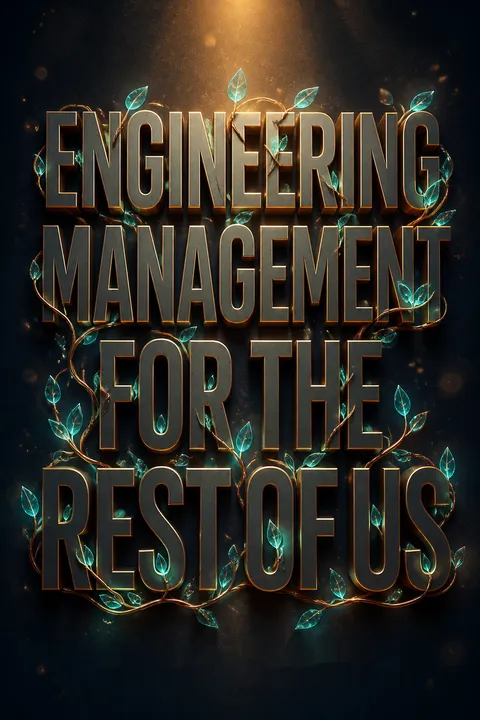


Key Takeaways
Measure engineering management by what your team can accomplish together
The job changes shape. Engineers often enter management because they know the technology or can get a project shipped, then discover that their work is no longer mainly writing code. It is enabling other people to do excellent work together. That means clearing obstacles, explaining why work matters, coordinating across teams, and helping people grow. A manager may spend the day responding to interruptions so engineers can protect the concentration their work requires.
Technical skill still matters. Experience with the work helps a manager understand constraints and make better strategic decisions, but it does not make managing people automatic. Drasner writes for engineers who feel thrown into leadership, not for people who imagine management is an inborn talent. The role has real consequences for other people, so taking it seriously, and accepting that mistakes are part of learning, is a better starting point than pretending to have it mastered.
The central shift is from personal output to the conditions that make shared output possible. That distinction can feel like a loss to an engineer who measures progress in commits, but it offers a more accurate account of managerial work: the result is distributed across people, processes, and decisions. The book is especially useful because it treats management as learnable practice rather than personality type. Its caution is equally important: technical credibility helps a manager understand the system, but it cannot substitute for listening, clarity, or judgment.
Use values to understand workplace friction before judging someone's character
Values provide context. Values are beliefs that guide what people consider important and how they act. They may come from upbringing, experience, or changing circumstances, and they can differ even among people with good intentions. A teammate who prizes order may read an informal habit as disrespect; someone who prizes spontaneity may see no problem. Understanding that difference can turn a personal accusation into a conversation about expectations and needs.
Make the context discussable. A team exercise can invite each person to choose a handful of values and explain why they matter. The goal is not to diagnose colleagues or force agreement. Values are clues, not a verdict. Drasner warns against using someone's stated values as ammunition when their behavior falls short. The same reflection applies to managers and organizations: team and company values are useful only when they help people make real decisions and set boundaries.
This approach replaces the tidy story of a good person versus a bad person with a more useful question: what is each person trying to protect or achieve? That can lower the temperature enough for people to solve the actual problem. It also resists a common managerial shortcut, turning one frustrating behavior into a permanent character label. The tool has limits: a values conversation cannot excuse harmful conduct or settle every disagreement. Its value is diagnostic. It can reveal where communication, expectations, or the work itself are misaligned.
Build trust by making mistakes discussable, then repair the system
Trust changes what teams can do. Drasner describes an engineer calling her in the middle of the night after a code change flooded a service with requests and damaged company systems. Rather than shame the engineer, the team worked together to restore service. The employee trusted the manager enough to raise the alarm, and the team expected fair recognition and recovery time afterward. The incident became a shared problem to solve, not a culprit to punish.
Managers set the tone. Trust grows when leaders admit mistakes, ask questions, and show concern through action. Regular one-on-ones give employees private space to raise concerns, clarify priorities, and discuss goals. Trust must also exist among teammates: if everyone brings problems only to the manager, the team remains dependent on one person. Vulnerability can carry different risks for people facing bias, so leaders should build trust with judgment rather than demand disclosure.
The incident illustrates trust as an operating condition, not a pleasant atmosphere layered on top of work. People surface bad news sooner when they do not expect humiliation, and earlier information gives a team more room to respond. The emphasis on repair is particularly strong: a blameless response need not mean consequence-free work; it means looking for the process weakness as well as the human error. The call for leaders to be vulnerable also needs care. The book recognizes that the same admission can be interpreted differently depending on who makes it.
Own the team's failures and let its people receive credit for success
Pronouns reveal responsibility. When a team succeeds, the manager can name the people who did the work without inserting themselves into the victory. When it fails, the manager should examine their own role in setting priorities, expectations, and timelines. Blaming employees as a separate “them” shifts responsibility away from the person accountable for creating the conditions around their work.
Ownership includes leadership decisions. Managers should not describe a leadership decision as something other people imposed if they took part in making it. Instead, explain the goal behind the decision, the reasoning, and what the team can influence. Drasner contrasts a demoralizing announcement of a feature quota with a clearer explanation of the company goal and how the work might support it. If a manager made a mistake, acknowledging it and correcting course can restore clarity and trust.
This is a compact rule for managing power: accountability travels upward, while recognition travels toward the people doing the work. It helps prevent a manager from using authority only when things go well. The advice also treats communication as part of the work itself. Explaining a decision does not guarantee agreement, but it lets employees understand its basis and respond to the real tradeoffs. There is a boundary worth keeping: taking responsibility does not require claiming control over every outcome. It does require being honest about the manager's actual contribution.
Create conditions for focus, purpose, connection, and fair compensation
Happiness is not forced cheer. Drasner describes a release threatened by a swarm of automated service calls and a stream of cartoon hamsters appearing in the team's chat. The team stayed playful while fixing the problem. That is different from telling upset employees to pretend everything is fine. A healthy team can acknowledge stress while still feeling connected and supported.
Flow needs the right environment. Flow state is deep involvement in a challenging activity, with attention concentrated on the work. A manager cannot command it, but can make it more possible through meaningful goals, manageable challenge, respect, timely feedback, autonomy, and fewer distractions. Fair compensation matters too: people struggling with inequity have less room to focus on the task. Social connection, including peer programming when handled respectfully, can make difficult work less isolating and help teams share context.
The chapter's strongest distinction is between morale and performance theater. A team does not need constant cheerfulness; it needs enough trust to tell the truth and enough support to keep working through difficulty. The focus on fair pay also prevents motivation advice from becoming a substitute for material fairness. Flow is a useful design goal, but it should not become a demand that employees remain absorbed at all times. Interruptions, routine maintenance, and recovery are normal parts of work, not evidence that a team lacks passion.
Make career growth explicit, and teach employees to advocate for themselves
A career ladder creates shared expectations. Career laddering is a system for describing what responsibilities and capabilities are expected at different levels. In Drasner's example, senior engineers excel in their own work, staff engineers expand their impact by helping others, and principal engineers build systems that support many people. A ladder is not a promotion machine by itself; managers must apply it consistently and explain what progress looks like.
Turn aspirations into a plan. Ask what kind of work an employee wants and review the current and next-level expectations together. Then agree on near-term goals, revisit progress, and remove work that distracts from growth. Drasner recalls protecting a talented employee behind the scenes, only to learn years later that the promised promotion never happened. The lesson was to teach the employee how to navigate the process, not merely to clear obstacles. If agreed expectations are met, the manager must follow through on the promotion.
This framework makes advancement less dependent on a manager's memory or personal advocacy. It gives employees language for discussing scope, evidence, and next steps, while making promises visible enough to revisit. The emphasis on expanding impact at higher levels also counters the idea that promotion simply means doing more individual work. Still, ladders can mistake what is easy to count for what matters. They work best as a basis for conversation, not as a rigid checklist that ignores changing roles, unequal access to opportunities, or valuable work that is difficult to quantify.
Give feedback as a specific act of care, and stay curious when receiving it
Make feedback concrete and timely. Before giving criticism, check that it is necessary, examine personal bias, and consider how the other person prefers to hear it. Describe a specific action and its effect instead of making a broad judgment about character. For example, identify that a presentation spent too long on introductory material and explain how that affected the audience, rather than labeling the speaker self-centered. Offer a workable next step and leave room for questions. Sensitive feedback generally belongs in private.
Treat receiving feedback as work too. A manager can invite comments in one-on-ones, project discussions, or anonymous forms, while giving people notice and time to prepare. Defensiveness may signal a blind spot, but it does not prove the criticism is correct. Ask clarifying questions and separate useful information from personal attack. Avoid switchtracking, the habit of answering one criticism by raising a different complaint about the other person.
The partnership framing gives feedback a clear purpose: improve how work gets done, not establish who is superior. Specific examples make that purpose easier to see and give the recipient something they can act on. The chapter also correctly treats feedback as subjective and affected by power, emotional state, and bias. A manager should not assume that a calm delivery makes feedback fair, or that discomfort means it should be avoided. The test is whether the exchange is specific, proportionate, and connected to a meaningful improvement.
Make room for disagreement, then give one person responsibility for the decision
Silence can disguise conflict. A quick agreement may mean that a team feels unsafe challenging a proposal, not that it has reached consensus. Productive disagreement can surface risks and improve a plan, provided people discuss ideas rather than attack identities. Managers can restate what each side is concerned about, identify shared goals, and make room for quieter voices before the loudest opinion wins.
Meetings need purpose and ownership. State why the group is together, invite only the people needed, and close with decisions, owners, and next steps. A DRI, or directly responsible individual, owns the outcome and makes the decision when discussion alone cannot resolve competing options. That person should hear relevant views, but a meeting need not end in a popularity vote. Private team spaces and regular one-on-ones can help people raise concerns before a larger forum.
The useful distinction is not between harmony and conflict, but between disagreement that improves a decision and conflict that punishes people for speaking. Naming an owner prevents endless discussion while preserving the value of dissent. This is especially important in technical work, where many choices have tradeoffs rather than a single provable answer. The process depends on legitimate ownership: a DRI who lacks relevant context or authority can merely centralize confusion. Clear scope, access to information, and a real chance to challenge the proposal make responsibility more credible.
Change the culture that supports a process before changing the process itself
People must see why change matters. Drasner joined a team accustomed to rejecting new ideas because it had learned to protect itself from excessive demands. Simply announcing a new research function would not have shifted that pattern. She and colleagues instead built support around a shared need for the products to evolve, talked with partners, considered risks, and promoted examples of curiosity. Over months, the new direction became part of how people discussed the work, making structural changes easier to accept.
Respect the path to the present. Explain the problem, the intended outcome, and the tradeoffs. Listen to people closest to the work, and support them in learning the skills the change requires. Some changes need careful preparation followed by a quick transition; other changes are better introduced in steps. Do not portray the old approach as foolish, and do not blame the team if an experiment fails. The leader owns the risks of the direction they advocate.
The story shows why change is not just a project plan. A new structure can be formally installed while the assumptions and habits that defeated it remain untouched. Building shared purpose makes change less dependent on a leader's force of will and gives employees a reason to participate. The approach is not an argument for endless consensus: listening and gradual cultural work still need a clear direction. The useful balance is to move at a pace that fits the disruption, while being direct about the problem and the decision.
Turn strategy into fewer priorities and smaller, reviewable pieces of work
A goal needs a route to the work. OKRs, meaning objectives and key results, connect an ambitious direction to measurable outcomes. Drasner gives the example of an objective to grow signups, then tracing past evidence to initiatives that might contribute, such as product releases or improving the signup path. A quarterly plan can make priorities visible and expose tradeoffs when new requests arrive. If every project is urgent, the team has no usable priority.
Keep execution slices small. Smaller pull requests are easier to review, test, and revise than a large bundle of changes. Branches, labels, feature flags, and clear descriptions help teams coordinate incremental work. A minimum viable product can test an idea, but stripping it down too far may make it unpleasant or useless to customers. Speed is not the same as haste: choose a direction, keep feedback flowing, and account for technical maintenance rather than measuring productivity by counts of issues or pull requests alone.
This section connects strategy with engineering practice rather than treating them as separate management concerns. Visible priorities help teams negotiate scope, while small changes shorten the distance between an assumption and evidence. The warning about metrics is essential: counts can reward easy work and overlook difficult fixes or careful review. The same caution applies to minimum viable products. A limited first release is valuable when it tests a real proposition, not when it transfers an unfinished experience to customers and assumes they will patiently return.
Schedule around your values, and treat your own recovery as managerial work
A calendar exposes real priorities. Drasner suggests periodically sorting commitments against the things that matter to a person, then checking whether recurring meetings reflect those priorities. She learned that her team meetings and one-on-ones were central responsibilities, while some other meetings could be reduced or removed. Tracking energy for a couple of weeks can also reveal when to schedule focused work, conversations, and breaks. A weekly task system should leave room for urgent work rather than pretending plans never change.
Boundaries preserve capacity. Saying no early can spare a manager, their team, and their family from commitments that cannot all be met. Yet boundaries should not become an excuse to disappear from the people a manager supports. Drasner describes gratitude journaling as one practice that helped her notice small sources of steadiness during a painful period in her family's life. Coaching, peers, rest, exercise, or other sources of support may help managers keep perspective without denying hardship.
The strongest idea is that a manager's limits are part of the team's operating environment. A calendar overloaded with meetings or commitments is not merely a personal inconvenience; it reduces attention available for judgment and support. At the same time, self-care is not a universal recipe, and gratitude should not be used to make hardship seem acceptable. The book presents these practices as tools for resilience, not cures. Its practical standard is whether a routine helps a manager remain present, make better choices, and honor commitments that matter.
Analysis
The book's unifying argument is that engineering management is the design of conditions: conditions for people to speak honestly, understand priorities, build useful software, and grow without relying on a manager to rescue every situation. Its examples make that shift concrete. A technical failure becomes a test of whether people can report mistakes; a missed promotion exposes the cost of protection without skill-building; a tense meeting shows whether dissent has a safe place and a decision owner.
The most valuable feature of this approach is its attention to interdependence. Trust is tied to system reliability, career development to workload allocation, and execution speed to psychological safety and technical infrastructure. Management is not portrayed as a collection of soft skills added after the real engineering. It shapes whether engineering work can proceed at all. The book also offers practical mechanisms, including career ladders, regular one-on-ones, quarterly plans, small pull requests, and explicit meeting ownership.
Its advice is deliberately presented as a toolkit rather than a universal management doctrine. That humility fits a job where teams vary in size, history, culture, and power dynamics. It also creates a useful challenge for readers: a practice should be judged by whether it improves clarity and care in a particular setting, not by whether it matches a prescribed template. A career ladder can become bureaucracy; transparency can become gossip; boundaries can become absence; speed can reward rushed work. The book's recurring remedy is to examine intent, impact, and context, then communicate more clearly.
The result is a humane but demanding model of leadership. Caring is not sentiment alone. It means setting expectations, confronting harmful behavior, making tradeoffs visible, and accepting responsibility when a decision fails. The manager's work is less about being indispensable than building a team that can think, communicate, and act without depending on one person's constant intervention.
Review Summary
Engineering Management for the Rest of Us receives mostly positive reviews, praised for its practical advice, approachable style, and focus on trust and human dynamics. Readers appreciate the author's personal experiences and insights. Some find it an excellent resource for new managers, while others note it covers basics without delving deep. Critics mention it may be too simplistic for experienced managers. Overall, it's considered a valuable guide for those transitioning to engineering management, offering a balance of theory and practical advice.
People Also Read



Glossary
Career laddering
Levels and growth expectationsA system that describes the responsibilities and capabilities expected at different stages of a role. It helps employees understand their current level, what growth could look like, and what evidence may support advancement. Drasner treats a ladder as one part of an ongoing partnership, supported by regular review, near-term goals, and follow-through on earned promotions.
OKRs
Objectives and measurable resultsObjectives and key results connect a broad organizational aim to measurable outcomes. An objective describes an important direction, while key results specify evidence of progress, such as a target for signups. The system helps teams align and prioritize, but it requires a limited number of goals, clear communication, and judgment beyond metrics alone.
DRI
Directly responsible individualThe person who owns a project's outcome and is responsible for making a decision when a group cannot resolve a choice through discussion. A DRI should gather relevant perspectives, but responsibility is not the same as requiring unanimous agreement. Naming the DRI clarifies accountability and helps a team move forward.
MVP
Minimum viable productA minimum viable product is a deliberately limited version of a product or feature that can be released to test an idea and support iteration. It should be small enough to learn from without being so incomplete that customers cannot use it or lose confidence. Teams should account for the possibility that stakeholders may redirect work after release.
Flow state
Deep, focused involvementA state of concentrated involvement in an activity, where a person is absorbed in a task and experiences focused, energized engagement. In the book's management context, flow is more possible when work is meaningful, challenging but manageable, supported by timely feedback, and protected from unnecessary distraction. A manager can shape these conditions but cannot command the state itself.
Ego resilience
Capacity to hear feedbackThe ability to receive feedback or acknowledge mistakes without treating them as a collapse of personal worth. Ego resilience helps a person take useful responsibility while separating their own actions from matters that belong to someone else. In the book, it supports learning, collaboration, and recovery when work goes wrong.
Switchtracking
Deflecting feedback with counter-criticismA conversational pattern in which someone responds to feedback by raising a separate complaint about the person giving it. The second concern may be valid, but introducing it as a defense prevents the original issue from being understood. The two pieces of feedback need separate conversations so that neither cancels the other.
30/60/90
Near-term career planningA planning exercise in which an employee identifies work they hope to accomplish over a coming period, commonly framed in thirty-, sixty-, and ninety-day increments. Drasner starts with the ninety-day direction and then identifies what is realistic in the nearer term. The plan can include measurable outcomes, learning goals, or behavior changes, and should be revised as conditions change.
Tetris Effect
A learned pattern of attentionThe term describes how repeated attention to a subject can make related patterns increasingly noticeable. Drasner applies the idea to gratitude: regularly recording what is appreciated may help a person notice small positive details in ordinary life. It is presented as a resilience practice, not as a way to deny pain or guarantee that circumstances improve.
FAQ
What's "Engineering Management for the Rest of Us" about?
- Overview: "Engineering Management for the Rest of Us" by Sarah Drasner is a comprehensive guide for both aspiring and current engineering managers. It provides practical advice on managing teams, fostering collaboration, and enhancing productivity.
- Target Audience: The book is designed for those who have transitioned from engineering roles to management, often without formal training, and need guidance on leading effectively.
- Content Structure: It is divided into four parts: Your Team, Collaboration, Helping Your Team Do Their Best Work, and Your Work, each focusing on different aspects of engineering management.
- Real-World Examples: The book includes real-world examples and anecdotes to illustrate key points, making it relatable and actionable for readers.
Why should I read "Engineering Management for the Rest of Us"?
- Practical Advice: The book offers actionable tips and strategies for managing engineering teams, making it a valuable resource for new and experienced managers alike.
- Empathy and Passion: Sarah Drasner emphasizes empathy and passion in leadership, encouraging managers to build trust and psychological safety within their teams.
- Comprehensive Coverage: It covers a wide range of topics, from career laddering and feedback to conflict management and prioritization, providing a holistic view of engineering management.
- Relatable and Engaging: The book is written in an engaging and often humorous style, making complex management concepts accessible and enjoyable to read.
What are the key takeaways of "Engineering Management for the Rest of Us"?
- Trust and Vulnerability: Building trust and modeling vulnerability are crucial for effective team management and fostering a supportive work environment.
- Prioritization and Clarity: Managers should focus on aligning teams with clear objectives and priorities to ensure efficient execution and avoid chaos.
- Feedback and Growth: Constructive feedback is essential for personal and team growth, and managers should create a culture where feedback is welcomed and acted upon.
- Self-Care and Resilience: Managers need to prioritize their own well-being to maintain resilience and effectively support their teams.
How does Sarah Drasner define "values" in the context of engineering management?
- Core Beliefs: Values are fundamental beliefs that guide actions and decisions, helping individuals and teams determine what is important.
- Individual and Team Values: Understanding both individual and team values can provide context for behavior and help build mutual understanding and trust.
- Values Exercises: Drasner suggests conducting values exercises with teams to uncover shared values and foster a supportive and cohesive work environment.
- Alignment and Boundaries: Aligning work with personal and team values can prevent burnout and ensure that boundaries are respected.
What is the importance of "trust and vulnerability" according to Sarah Drasner?
- Foundation of Teamwork: Trust is the foundation of effective teamwork, enabling open communication, collaboration, and innovation.
- Modeling Vulnerability: Managers should model vulnerability by admitting mistakes and showing empathy, which encourages team members to do the same.
- Building Trust: Trust is built gradually through consistent actions and communication, and it can be easily lost if not nurtured.
- Impact on Performance: High-trust teams tend to perform better, as trust fosters a positive work environment and reduces fear of failure.
How does "Engineering Management for the Rest of Us" address feedback?
- Feedback as a Partnership: Feedback should be viewed as a partnership aimed at mutual growth, rather than a top-down directive.
- Constructive and Timely: Feedback should be specific, constructive, and delivered as soon as possible to be effective and actionable.
- Receiving Feedback: Managers should also seek feedback to improve their leadership skills and demonstrate a culture of continuous learning.
- Feedback Challenges: The book acknowledges the challenges of giving and receiving feedback, emphasizing the need for empathy and understanding.
What strategies does Sarah Drasner suggest for "prioritizing your team's work"?
- Align with Objectives: Prioritize tasks that align with the team's objectives and key results (OKRs) to ensure focus and clarity.
- Break Down Tasks: Break down large projects into manageable tasks to facilitate progress tracking and reduce overwhelm.
- Use of Tools: Utilize tools like kanban boards and labels to organize and visualize work, making it easier to manage and prioritize.
- Regular Review: Regularly review and adjust priorities based on changing circumstances and feedback to maintain alignment with goals.
How does the book suggest handling "conflicts" within a team?
- Embrace Conflict: View conflict as an opportunity for growth and innovation, rather than something to be avoided.
- Separate Ideas from Identity: Encourage team members to focus on ideas rather than personal identities to facilitate productive discussions.
- Immediate Action: Address conflicts promptly to prevent them from escalating and affecting team morale and productivity.
- Values and Conflict: Understanding team members' values can provide insight into conflicts and help find common ground for resolution.
What is the role of "career laddering" in engineering management according to the book?
- Defining Expectations: Career laddering provides a clear framework for what is expected at different levels of a role, guiding career progression.
- Clarity and Growth: It offers clarity on growth paths, helping employees understand how to advance and what skills to develop.
- Partnership Approach: Managers should work with employees to align career laddering with personal goals and company needs, fostering a sense of partnership.
- Regular Review: Regularly reviewing career ladders ensures they remain relevant and aligned with both individual and organizational goals.
How does Sarah Drasner recommend "setting boundaries" as a manager?
- Importance of Boundaries: Setting boundaries is crucial for maintaining personal well-being and preventing burnout in a demanding role.
- Saying No: Learn to say no to tasks that do not align with priorities or values, and communicate boundaries clearly to others.
- Balance and Flexibility: Balance is key, and boundaries should be flexible enough to adapt to changing circumstances without compromising core values.
- Modeling Behavior: Managers should model healthy boundary-setting behavior to encourage their teams to do the same.
What are some of the best quotes from "Engineering Management for the Rest of Us" and what do they mean?
- "Trust is built in drops and lost in buckets." This quote emphasizes the gradual nature of building trust and how easily it can be lost, highlighting the importance of consistent, trustworthy actions.
- "The fact that you’re worried that you’re not a good manager is a key part of being a good manager." This reflects the idea that self-awareness and concern for one's effectiveness are crucial traits of a good manager.
- "If everything is important, nothing is." This underscores the necessity of prioritization, as trying to do everything at once leads to inefficiency and lack of focus.
- "You can’t call yourself a leader by coming into a situation that is by nature uncertain, ambiguous—and create confusion. You have to create clarity where none exists." This quote highlights the leader's role in providing clarity and direction amidst uncertainty.
How does "Engineering Management for the Rest of Us" address "self-care and resilience" for managers?
- Self-Care Importance: Self-care is essential for maintaining resilience and effectiveness as a manager, preventing burnout and stress.
- Finding Joy: Managers should find joy in small moments and practice gratitude to enhance resilience and maintain a positive outlook.
- Gratitude Journaling: Keeping a gratitude journal can help shift focus from negativity to positivity, improving mental well-being.
- Support Systems: Building a support system, including coaching and mentorship, provides managers with the resources and encouragement needed to navigate challenges.
Download PDF
Download EPUB
.epub digital book format is ideal for reading ebooks on phones, tablets, and e-readers.








