

Key Takeaways
Use the chart as a map of potential, not a verdict about fate
A symbolic portrait. Herring treats a natal chart as a symbolic snapshot of the sky at a person's birth. In her approach, planetary positions do not cause behavior or dictate events. They offer a vocabulary for exploring needs, habits, and possible ways of responding to life. The chart stays fixed; the person's choices and understanding do not.
Room to change. A placement can have more than one expression, from a useful strength to a limiting habit. The task is not to label someone once and for all, but to consider which expression they are living and what other choices are available. Astrology, in this view, is a prompt for self-knowledge, not a substitute for it.
What's valuable here is the distinction between a description and a destiny. In narrative psychology, people make sense of themselves through stories, and a good story can reveal options that a rigid label hides. But labels also shape behavior: someone told they are naturally jealous, for example, may start treating jealousy as inevitable. The chart is most constructive when its interpretations remain hypotheses to examine against experience. That stance preserves the reflective value of the symbols without granting them authority over a person's choices.
Read planets, signs, and houses as need, style, and life arena
Three distinct jobs. Planets describe broad human functions or needs, signs suggest the style through which those needs are expressed, and houses identify the life activities where they tend to play out. A planet in a sign and house therefore becomes a layered statement, not a standalone personality label. Aspects add information about how different parts of the chart interact.
Build the sentence. For instance, Mars points to action and desire. In Gemini, that drive may take an exploratory, question-led style; in the eleventh house, it may find an outlet among groups, peers, or shared aims. This method narrows broad possibilities without claiming that every person with the placement behaves identically.
Separating function, style, and context resembles a useful move in behavioral analysis: distinguish what a person is trying to do from how they do it and where the behavior occurs. It prevents a sign from being mistaken for a complete personality. The weakness is interpretive flexibility. Because each symbol has several possible expressions, a reader can often find a match after the fact. Asking the chart owner what fits, and what does not, makes the process more collaborative and less like a confident pronouncement.
Look beneath sign stereotypes for the motive that creates many behaviors
Find the root. Herring describes signs as archetypes: broad, recurring patterns of human experience, rather than fixed lists of traits. A sign's visible behaviors are branches that can grow from a smaller set of underlying motives. Aries, for example, may show initiative, competitiveness, or impatience, but the shared impulse is to assert oneself and act directly.
One motive, many outcomes. Scorpio's interest in hidden truths might appear as careful investigation and psychological insight, or as suspicion that invents secrets where none exist. The setting and the rest of the chart help shape which expression is more likely. Understanding the motive makes interpretation more adaptable than memorizing a catalogue of supposedly universal traits.
This root-and-branch approach makes archetypes generative: a reader can reason from a core motivation to several plausible behaviors instead of memorizing stereotypes. That resembles the use of ideal types in social science, where a simplified pattern helps organize observation without being mistaken for a full person. The necessary safeguard is to look for counterexamples. If every action is made to confirm the same archetype, the symbol stops helping the reader understand behavior and starts filtering out inconvenient evidence.
Synthesize the chart through patterns, tensions, and repeated themes
Parts affect parts. Aspects are angular relationships between planets that describe how their functions interact. A conjunction blends their expression; a sextile suggests an easy opportunity to cooperate; a trine indicates comfortable flow; a square brings friction; and an opposition sets competing needs across from each other. None is automatically good or bad. Ease can become an unexamined habit, while tension can call attention to a conflict that needs active management.
Look for repetition. A single placement offers many possible meanings. When several placements point toward a similar concern, such as independence or emotional security, that overlap may reveal a chart theme. Contradictions matter too: they can represent competing needs rather than a mistake in the reading.
The emphasis on relationships between parts is stronger than treating a chart as a checklist. It resembles systems thinking, where a component's effect depends partly on its connections to other components. The analogy has limits: psychological conflict does not reliably produce growth simply because it is present. Some tensions are productive prompts, while others remain painful or require outside support. Calling an aspect challenging should describe a proposed pattern, not imply that struggle is inherently beneficial.
Build from familiar habits toward the North Node's unfamiliar counterbalance
A habit and a direction. The South Node represents familiar, practiced responses that can feel comfortable and come easily. The North Node points toward less familiar approaches that may broaden or balance them. The two are opposite points in a chart, so Herring presents them as ends of a spectrum, not as a simple bad-versus-good ranking.
Make growth concrete. A Scorpio South Node, for example, might suggest a tendency to seek emotional intensity or search for what is hidden. Its Taurus North Node counterpart points toward steadiness, simplicity, and trust in gradual change. The point is not to discard the familiar strength, but to notice when it has become automatic and practice another response.
This framework turns development into a tension between mastery and exploration. That is a useful complement to accounts of learning that focus only on building existing strengths: familiar skills can stabilize a person, yet overreliance can narrow what they notice and try. The node language is most useful as a metaphor for deliberate practice, not as proof of a predetermined life mission. Growth also depends on circumstance, resources, and safety, not simply the willingness to leave a comfort zone.
Use difficult symbols to investigate patterns, not predict catastrophe
Follow recurring clues. Herring presents Pluto as a symbol of deep fear, defense, and the possibility of profound change. Rather than treating it as a forecast of disaster, she suggests looking at repeated patterns: avoidance, intense attachments, or relationships and situations that seem to replay the same wound. Such patterns can point toward a fear worth examining, though they do not prove its origin.
Name, then choose. In her account, recognizing a fear can make it easier to respond consciously instead of relying on old defenses. A person afraid of rejection might notice that they withdraw before anyone can get close. The aim is not to erase fear, but to understand its triggers and stop letting automatic protection decide every next move.
The focus on repeated behavior connects with psychotherapy's attention to patterns and protective strategies. It can help readers ask what a response is protecting them from, rather than simply condemning it. Astrology cannot establish that a particular placement reveals trauma, however, and a reader should not use a chart to diagnose another person or recover memories. If fear or past harm is overwhelming, trained clinical support is more appropriate than symbolic interpretation alone.
Let apparent contradictions reveal the inner negotiation a person lives
A chart can disagree with itself. One person may seem outgoing in public yet guard their private feelings. Herring's example is Steve Martin, whose Leo Sun and Ascendant suggest expressive presence, while his Scorpio Moon and prominent Pluto suggest privacy and emotional intensity. Rather than choosing one side, the interpreter asks how both might operate in the same life.
Biography adds context. Martin's account of a tense family relationship, his public career in comedy, and his eventual departure from stand-up give the reading concrete questions to test. The chart does not prove why he made those choices. The exercise shows how an interpreter can combine symbols and life details into a more complex portrait than a single sign stereotype allows.
The example demonstrates the power of synthesis: a public performer can be skilled at drawing attention and still feel protective of private life. That is a richer human picture than treating public visibility as proof of constant extroversion. Yet biographical interpretation has a hindsight problem. Once a reader knows the life story, many symbols can be fitted to it. The strongest use of the example is as a method for generating questions, not as independent evidence that the chart explains Martin's career.
Start with the Sun, Moon, and Ascendant, then build the whole chart
Begin with essentials. Herring's Big Three method starts with the Sun's role in identity, the Moon's emotional needs, and the Ascendant's way of meeting the world. Interpret each placement by sign and house, then consider how the three cooperate or conflict. Aspects, repeated themes, and other placements can be added as context, rather than piled on at once.
Get the map right. A chart depends on birth date, place, and, especially for houses and the Ascendant, accurate birth time. The book uses tropical astrology, which anchors its twelve equal signs to the Sun's seasonal relationship with Earth, not to the constellations bearing the same names. Without a reliable birth time, house-based readings become uncertain.
Starting with a small set of high-salience features is a sound way to manage complexity. In data analysis, a model becomes easier to interpret when the analyst identifies key variables before adding detail. The same discipline helps prevent a reading from turning into a catalogue of every possible meaning. Still, the apparent precision of birth data should not be confused with precision in psychological conclusions. Accurate coordinates can produce a consistent chart calculation, but they cannot by themselves validate the meanings assigned to it.
Ask permission before turning someone's private chart into a public story
Interpretation carries power. Herring treats a natal chart as potentially revealing personal material, so she recommends obtaining permission before reading someone else's chart or sharing what the reading suggests. A parent's reading of a child's chart and a reading of a public figure are offered as exceptions, but discretion remains important.
Leave room for correction. A responsible reading presents possibilities rather than declaring what someone feels, remembers, or will do. The person whose chart is being discussed should be able to say that an interpretation misses the mark. This matters especially when the subject involves family history, fear, relationships, or other vulnerable experiences. A symbolic reading should invite reflection, not take ownership of someone's story.
Consent is not a courtesy added after interpretation; it shapes whether the exchange is trustworthy at all. A chart reading can create an authority imbalance because specialized vocabulary may make conjecture sound like privileged knowledge. Clear permission, tentative language, and the option to decline reduce that pressure. There is also a calibration issue: people often recognize themselves in broad descriptions, even when those descriptions fit many people. Respectful practice keeps the chart holder's account more important than the interpreter's confidence.
Analysis
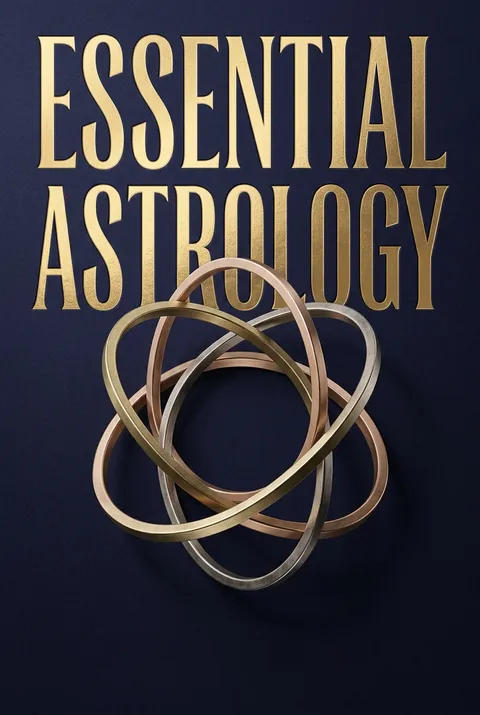
Essential Astrology is best understood as a handbook for symbolic interpretation, not as evidence that planetary positions determine personality. Its central contribution is methodological: it replaces isolated traits with a layered reading of psychological function, expressive style, life context, and interaction among chart components. The recurring insistence on multiple possibilities is a meaningful corrective to popular Sun-sign shorthand, which can turn a flexible symbol into a rigid identity.
The book's strongest teaching move is to make interpretation cumulative. A placement begins as a range of hypotheses, aspects show possible internal cooperation or tension, and recurring motifs help prioritize what matters. The Steve Martin case makes this process memorable because public performance, private emotional life, family history, and career change are treated as parts of one complicated person. But the same example exposes a central epistemic risk: once a biographical story is known, interpreters can select chart meanings that fit it. A plausible narrative is not the same as an independently verified explanation.
The author explicitly frames astrology as symbolic correspondence rather than planetary causation. That avoids a crude causal claim, but synchronicity itself is not established here as a scientific mechanism. Cognitive tendencies such as confirmation bias and the Barnum effect can make broad, resonant descriptions feel unusually precise. Readers can limit that risk by recording interpretations before learning a person's biography, asking what evidence would count against a reading, and treating the chart as a prompt for questions rather than a verdict.
The practical value therefore rests less on astronomical validation than on the quality of the reflective conversation. Used carefully, the framework encourages people to distinguish needs from habits, notice recurring conflicts, and imagine alternative responses. Used carelessly, it can encourage self-stereotyping, invasive speculation, or fatalism. The book's own emphasis on choice, context, and consent points toward the more responsible use: keep interpretations provisional, test them against lived experience, and let the person remain more complex than the chart.
People Also Read

Glossary
Natal chart
Birth-time symbolic mapA circular representation of the sky as viewed from a particular birthplace at a particular moment. It records the positions of the Sun, Moon, planets, signs, houses, and selected calculated points. In Herring's approach, it is interpreted as a symbolic portrait of human needs and possibilities, not as a mechanical cause of behavior.
Archetype
Recurring symbolic patternA broad, recurring idea or pattern that can appear in many people, cultures, or stories. Herring uses archetypes to explain why a sign is not a fixed list of personality traits: one underlying motive can take many forms. The symbol provides a root for interpretation, while observable behaviors are possible expressions of it.
Ascendant
Eastern horizon chart pointThe precise point where the ecliptic meets the eastern horizon at the time and place of birth. It marks the beginning of the first house in most chart systems. Herring interprets it as a person's instinctive interface with the world, including how they approach new situations and how others may first encounter them.
Aspect
Angular link between planetsA measured angular relationship between two planets or chart points. The major aspects discussed in the book are the conjunction, sextile, square, trine, and opposition. Herring interprets these links as describing how different psychological functions may blend, cooperate, flow easily, frustrate one another, or pull in opposing directions.
Moon's Nodes
Opposing calculated pointsThe North and South Nodes are calculated points where the Moon's orbital path crosses the ecliptic, the apparent path of the Sun. In Herring's psychological interpretation, the South Node represents familiar habits and the North Node points toward less familiar approaches that may encourage balance and growth. They are opposite ends of one axis.
Nodal foundation method
Node-centered chart interpretationA chart-reading technique that begins with the South Node as a picture of familiar responses, then examines planets linked to the nodes and the North Node as a direction for developing less familiar responses. The rest of the chart is interpreted against this foundation. Herring presents the method as a way to identify themes, not as a fixed prediction of destiny.
Skipped step
Repeated nodal obstacleA term associated with astrologer Jeff Green for a planet that squares the Moon's Nodes. In the book's nodal method, that planet can describe a recurring difficulty that obstructs movement toward the North Node and pulls a person back toward familiar South Node patterns. Working with the issue is treated as a possible gateway to growth.
Astrological alphabet
Related planet-sign-house meaningsA set of associations among planets, signs, and houses that share some symbolic themes. For example, Mercury, Gemini, and the third house all connect with communication and information. The association can help identify repeated themes, but Herring cautions that these components are not interchangeable: each retains its own meaning.
Chart ruler
Ascendant sign's ruling planetThe planet that rules the sign on the Ascendant is called the chart ruler. Its sign and house placement can add detail to how a person approaches the world and how the chart's themes may be organized. A planet closely conjunct the Ascendant may also become especially prominent in this interpretation.
Orb
Allowed aspect distanceThe number of degrees by which two planets may differ from an exact aspect and still be considered linked. Astrologers vary in the distance they allow, and the book notes that smaller orbs are generally treated as stronger. An orb is an interpretive convention, not a separate celestial object.
Download PDF
Download EPUB
.epub digital book format is ideal for reading ebooks on phones, tablets, and e-readers.








