

Key Takeaways
Build hope from purpose, agency, and people who share it
Hope needs structure. Here, hope means more than expecting good news. It is a reason to move toward a future that seems worthwhile. It depends on three supports: a sense of control over one’s actions, values that make effort matter, and a community that shares those values. Lose one, and the others weaken too.
Pilecki made purpose concrete. Polish resistance officer Witold Pilecki volunteered to enter Auschwitz, organized an underground network, and sent reports of mass murder to the outside world. His allies and the Allies doubted his warnings, and no rescue came. His story shows how a cause can sustain action even when success is uncertain. The book’s point is not that every life needs a grand mission, but that people need something worth doing and others with whom to do it.
What's striking is that hope is treated as a social and practical resource, not simply a sunny mood. This aligns with research on motivation, which distinguishes feeling capable, having meaningful goals, and feeling connected to others. Pilecki’s example gives those abstractions moral weight: purpose did not guarantee rescue, but it enabled service under appalling conditions. The framework also guards against simplistic advice to think positively. Still, community can strengthen harmful causes as readily as humane ones, so shared purpose needs ethical scrutiny as well as emotional force.
Work with emotion, because reasoning alone cannot steer your behavior
Feeling helps decide. The case of Elliot, a man whose brain tumor and surgery damaged his capacity to feel, challenges the idea that reason alone produces sound choices. His memory, intelligence, and ability to explain consequences remained strong, yet he became unable to prioritize, maintain work, or care for relationships. Without emotional signals that marked some outcomes as important, he could not reliably choose among them.
Negotiate instead of suppressing. The book calls the belief that reason should dominate emotion the Classic Assumption. Its alternative is emotional regulation: notice a feeling without condemning it, then find a small, emotionally acceptable step toward a valued action. A person who dreads exercise might begin with a brief visit or pair it with something enjoyable. Facts can inform behavior, but they rarely supply the motivation by themselves.
Elliot’s case anticipates a central insight in affective neuroscience: emotion is not merely noise added to rational thought; it helps the mind assign importance and make decisions. The practical shift from self-attack to curiosity also resembles cognitive behavioral approaches that examine thoughts and feelings without treating either as unquestionable truth. The two-brain metaphor is useful shorthand, but it can suggest two separate agents where brain systems are deeply intertwined. The sound lesson is integration, not a literal internal driver and passenger.
Treat your strongest convictions as stories that pain taught you
Pain creates moral judgments. The book’s Newton’s Laws of Emotion describe how people react to perceived unfairness by seeking to restore a sense of balance. If a hurt remains unresolved, a person may conclude either that the offender is bad or that the harm was deserved. Over time, such judgments can become part of identity: a person betrayed by one partner may start to expect betrayal from everyone.
Experience can revise the story. Values are not just preferences; they are narratives about what matters and what people deserve. The book illustrates this with a hard-partying woman whose priorities changed after volunteering with children in need. Parties did not require heroic self-denial; they simply lost their appeal when her values shifted. Change often hurts because it asks people to revise stories that once helped them make sense of pain.
Narrative identity research offers a useful parallel: people organize memory into stories that explain who they are, and those stories influence what they notice and expect. That makes the book’s focus on revising interpretations more durable than a call to erase the past. The account also helps explain why contradictory evidence can feel threatening rather than liberating. One caution is that trauma does not produce a single predictable belief, and changing a story cannot substitute for safety, support, or treatment when those are needed.
Join communities without handing them your conscience
Beliefs organize belonging. A God Value is the highest priority through which someone interprets other concerns. It might be money, a spiritual faith, political ideology, romantic attachment, or personal pleasure. The book describes spiritual, ideological, and interpersonal forms of religion as different ways people build shared meaning and hope.
Belonging can be weaponized. At a Boston campus, the author encountered young political activists who told disaffected students that a vague system was to blame for their problems and that joining the movement offered a way to change the world. The group supplied explanation, agency, and community. The same tools can also produce scapegoats, rituals of loyalty, and hostility to criticism. Science stands apart in one important respect: its claims can be revised when evidence changes, even though choosing to value evidence still involves a value judgment.
The account captures how movements offer more than arguments: they provide identity, solidarity, and a map from frustration to action. Social psychology likewise shows that group identity can coordinate cooperation while sharpening divisions between insiders and outsiders. The useful distinction is not between people with beliefs and people without them, but between commitments that remain open to correction and those that treat dissent as betrayal. The comparison among religions, ideologies, and fandoms is illuminating, but it should not flatten their very different histories, institutions, and consequences.
Expect your mind to recreate dissatisfaction even as life improves
The yardstick can move. In a study described in the book, people classified colored dots, threatening faces, and ethical proposals. When examples of the target category became less common, participants began labeling borderline cases as members of that category. The researchers called this prevalence-induced concept change; the author uses Blue Dot Effect as a broader shorthand for shifting perceptions.
Pleasure also resets. The book connects this bias to the hedonic treadmill: major gains or losses often affect reported happiness for a time, then people adapt toward their usual level. A new job, home, or vacation can feel like the missing piece, but expectations soon rise again. This does not mean material progress is worthless. It means improvements in comfort do not automatically provide a lasting answer to questions of purpose or value.
The Blue Dot Effect points to a subtle cost of success: when a problem becomes rarer, attention may shift toward less severe versions rather than simply registering progress. This resembles adaptation in perception and consumer behavior, where new comforts quickly become normal. The book is right to distinguish historical improvements from emotional forecasts, but adaptation is not identical for everyone. Severe loss, chronic illness, or unsafe conditions can change well-being in lasting ways. The idea is most useful as a warning against treating dissatisfaction as proof that life is objectively getting worse.
Measure adulthood by principles, not bargains for approval
Maturity changes the motive. The book sketches three ways of making choices. A child follows immediate pleasure or avoids immediate pain. An adolescent learns rules and social consequences, often as a bargain for approval or future reward. An adult can act from principles even when doing so brings no payoff.
Respect people as more than tools. Immanuel Kant’s Formula of Humanity says that people should not be treated merely as instruments for someone else’s goals. Lying, for example, deprives another person of the ability to make an informed choice. The point is not that people never help one another achieve goals. It is that consent, honesty, and dignity matter in themselves, not only when they produce a convenient result. The framework turns ethical conduct from a transaction into a standard for action.
The distinction between acting from principle and acting for reward connects Kantian ethics with developmental theories of moral reasoning. It offers a practical test: would the action still seem right if it brought no applause or advantage? The emphasis on respecting another person’s agency is especially useful in relationships and work. The stages are best read as a lens, not a complete map of human development. People may act maturely in one setting and transactionally in another, and principled duties can conflict, requiring judgment rather than a simple rule.
Choose meaningful difficulty instead of making happiness your only target
Pain is unavoidable; fragility is not. The book borrows the term antifragility for systems that gain strength from manageable stress. Exercise can strengthen the body through strain; avoiding all exertion can weaken it. A relationship can also deepen when difficulty prompts honest communication rather than blame.
Separate pain from its added story. In Buddhist teaching, the first arrow is the physical or emotional hurt; the second is the suffering added by interpretation and rumination. Meditation practices observing thoughts and feelings without immediately obeying them. The Buddhist monk Thich Quang Duc’s self-immolation, carried out in protest against repression in South Vietnam, illustrates extraordinary endurance, not a model everyone should imitate. The actionable point is to face chosen, meaningful challenges while recognizing that trauma and overwhelming hardship can injure rather than strengthen.
Antifragility makes adversity more precise than the familiar slogan that hardship builds character. Some stress can produce learning, while overwhelming or prolonged stress can damage health and agency. That distinction matters: the aim is not to glorify suffering, but to avoid designing a life around escaping every discomfort. The two-arrow image also echoes mindfulness-based approaches that separate an experience from automatic judgment. Its promise should be kept modest, however. Attention can change a person’s relationship to pain, but it cannot make all suffering optional or remove the need for material support.
Limit your options to protect attention, commitment, and real freedom
Marketing sells emotional relief. In 1928, publicist Edward Bernays arranged for women to smoke during New York’s Easter parade and presented the act as a sign of independence. The campaign tied a product to identity rather than to its practical merits. The book calls the wider pattern a Feelings Economy: businesses gain value by easing pain or distracting people from it.
Choice is not always freedom. Digital services can make useful information and connection easier to reach, but they can also profit from outrage, insecurity, and compulsive attention. The book contrasts endless variety with freedom created by chosen limits: commitments to a relationship, a craft, or a community can produce depth that constant option-shopping cannot. Self-limitation is meaningful when it is chosen, not imposed by someone else.
Bernays’s campaign is an early example of marketing that sells identity along with the product, a pattern now familiar in platforms optimized for attention. Behavioral economics adds a useful nuance: more options can increase decision costs and regret, but options also matter when they expand access or protect people from coercion. The distinction is therefore not between technology and virtue, or variety and commitment in the abstract. It is whether a design strengthens a person’s agency and relationships, or repeatedly captures attention without serving goals that person would endorse.
Release the fantasy of a final solution, then act within reality
Hope can heal or destroy. Pilecki’s commitment to saving prisoners shows hope directed toward protecting human beings. The book sets that against political movements that promised a perfected society and justified atrocities in its name. Its concern is not that all hope is wicked, but that a promised future can make present suffering seem acceptable.
Accept without surrendering. Nietzsche’s amor fati means accepting one’s fate, including pain and uncertainty, rather than insisting reality conform to an imagined ideal. The book’s challenge to act without hope is not a call to apathy. It is an invitation to behave well now, without requiring a guaranteed payoff or a flawless future to make the action worthwhile. The target is dependence on salvation stories, not effort, care, or improvement.
This is the book’s most provocative turn: hope can motivate resistance, yet its promise of a final cure can also license cruelty along the way. The distinction between accepting reality and approving injustice is essential. Acceptance can reduce futile denial while leaving room for practical resistance and repair. The proposed alternative is strongest as a discipline of present action, not as a claim that goals or optimism are useless. People need future-oriented planning; the warning is against making moral behavior conditional on a promised utopia.
Make algorithms strengthen judgment rather than monetize human impulses
Machines expose human limits. Google’s AlphaZero learned chess through self-play and, in a reported match, beat the specialized program Stockfish across one hundred games. The example suggests how quickly machine systems can surpass people in narrow tasks. The book imagines that increasingly capable AI could become an opaque authority people depend on without understanding.
Design for dignity. The more immediate concern is already visible in ordinary recommendation systems: they can steer what people see and reward material that provokes a reaction. The book argues that technology should support privacy, autonomy, careful reasoning, and human development instead of exploiting emotional weaknesses. Its picture of AI as a future religion is deliberately speculative, not a settled forecast. The practical question is who sets the systems’ goals, whose interests they serve, and how people can challenge their decisions.
AlphaZero’s achievement usefully separates raw calculation from learning through feedback, while the larger argument raises questions of governance rather than mere computing power. Algorithmic systems can shape attention and opportunity even without becoming conscious or godlike. That makes transparency, accountability, and meaningful human recourse more urgent than speculation about machine motives. The book’s forecast of AI as a new object of worship is vivid, but inevitability is overstated: institutions and design choices influence how technology is deployed. The durable warning is that powerful tools inherit the values of those who build and govern them.
Analysis
The book’s central argument is that people need meaning, agency, and belonging, but the narratives that supply those needs can also make conflict feel sacred. Its first half explains this psychologically: emotion assigns importance, values become stories about what is deserved, and communities reinforce those stories. Its second half shifts from individual coping to social design, arguing that the pursuit of comfort and unlimited choice can erode tolerance for ordinary difficulty and leave people vulnerable to movements that promise certainty.
The most useful thread is the movement from control to coordination. Elliot’s case undermines the fantasy that reason can simply command emotion. Kant’s principle then gives that insight an ethical direction: people should not be reduced to instruments for goals, even goals described as liberating or benevolent. Antifragility and chosen limits extend the same thought into daily conduct. Growth is not a feeling state to maximize, but a capacity to encounter difficulty without surrendering judgment or dignity.
The argument’s force comes partly from its deliberate collision of registers: Auschwitz, neuroscience, Nietzsche, advertising, meditation, and chess software all become evidence about how humans seek purpose. That synthesis is memorable, though it can blur distinctions. The book sometimes treats broad claims about religion, happiness, and cultural decline more confidently than the evidence warrants, and its proposed relationship between prosperity and fragility is suggestive rather than a complete causal account. Its developmental categories are also cleaner than real lives, where people can be principled in one domain and self-protective in another.
The strongest reading is therefore not that hope should be discarded literally, but that hope should lose its status as a guarantee. Future goals remain valuable when they guide action without making other people expendable. The book’s practical ethic is to accept uncertainty, scrutinize the stories that flatter one’s side, choose worthwhile commitments, and treat present consciousness with care. That is a more workable response to meaninglessness than either naive optimism or resignation.
Review Summary
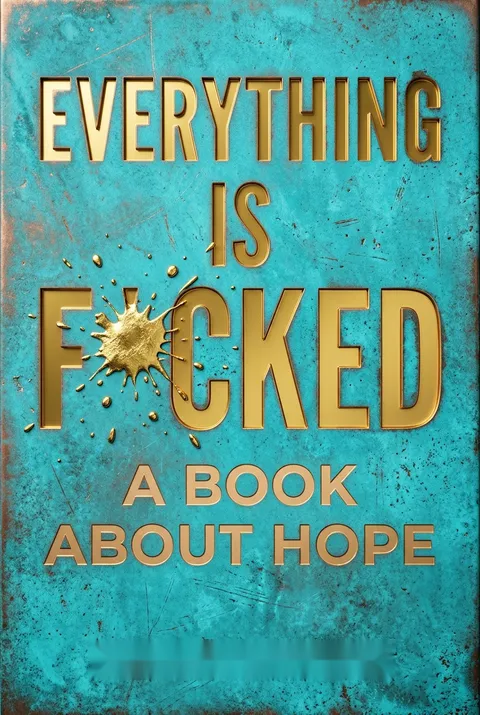
Everything Is F*cked receives mixed reviews. Some praise its mature exploration of hope, pain, and meaningful living, appreciating Manson's wit and philosophical insights. Others criticize its disjointed structure, oversimplification of complex ideas, and perceived contradictions. Many find value in Manson's discussions on developmental psychology, fake freedom, and the pitfalls of excessive comfort. However, some readers feel the book lacks cohesion and fails to deliver on its premise of hope. Overall, opinions vary widely on the book's effectiveness and relevance.
People Also Read






Glossary
Thinking Brain
conscious reasoningThe book’s label for conscious thought, calculation, language, and deliberate analysis. It can compare options and suggest plans, but it does not independently generate the emotional force that moves a person to act. The term is a metaphor for part of mental functioning, not a claim that reasoning and emotion occupy two separate brains.
Feeling Brain
emotion and valuationThe book’s label for emotions, impulses, intuition, and bodily responses that give experiences value and motivate action. It rapidly marks outcomes as desirable or threatening, while conscious reasoning can help interpret and redirect those signals. The term emphasizes that decision-making depends on feeling, rather than depicting emotion as a defect reason must eliminate.
Classic Assumption
reason should rule emotionThe belief that self-control means using rational thought to suppress or dominate emotion. The book argues that this model fails because feelings help people assign importance and act. Trying to crush emotion can create indifference, while following every impulse can create distorted judgment. The proposed alternative is to recognize feelings and work with them.
Newton’s Laws of Emotion
a model of emotional valuationThe book’s analogy to Newton’s laws of motion, used to explain how people respond to pain, fairness, self-worth, and identity. Perceived harms create a desire to restore balance; unresolved harms can alter a person’s sense of worth; and established identity stories tend to persist until experience challenges them. It is a conceptual model, not a set of literal physical laws.
God Value
highest guiding valueThe highest priority in a person’s value hierarchy, used as a lens for interpreting other experiences. Money, a spiritual belief, political ideals, romantic attachment, or personal pleasure can each function as a God Value. Because it sits at the top of the hierarchy, it strongly shapes which goals, communities, and explanations seem meaningful.
Blue Dot Effect
perception shifts with prevalenceThe author’s broader label for a tendency to shift categories or judgments when expected examples become less common. In the cited research, participants began classifying borderline dots, faces, or proposals as members of a category after clear examples of that category declined. The book uses the term beyond the study to describe how expectations can reshape perceived threats and problems.
Formula of Humanity
respect people as endsA principle drawn from Immanuel Kant: people should not be treated merely as tools for achieving someone else’s aims. It directs attention to whether an action respects another person’s agency, choices, and dignity. The book uses it to connect everyday virtues, such as honesty and respect, with an ethic that does not depend on promised rewards.
antifragility
gaining from stressA property of systems that improve under some forms of stress or disruption, rather than simply breaking or resisting change. The book applies the idea to bodies, relationships, and minds: exercise can strengthen the body, and manageable difficulty can prompt learning. Antifragility does not mean all adversity is beneficial; overwhelming stress may cause harm.
Feelings Economy
markets built around emotionThe book’s term for economic activity that creates value by changing how people feel. Some products reduce or transform pain, while others distract people from it. Marketing can connect products to identity or insecurity rather than practical need. The concept highlights how companies can profit from emotional relief, attention, and diversion.
amor fati
acceptance of one’s fateA Nietzschean idea translated as love of one’s fate. In the book, it means accepting life’s unavoidable mixture of pain, uncertainty, meaning, and disappointment rather than demanding that reality match an ideal future. It is presented as active acceptance, not passivity: a person can acknowledge circumstances and still choose how to act within them.
FAQ
What's Everything Is Fcked: A Book About Hope* about?
- Exploration of Hope: The book examines hope's role in human psychology, arguing that while it's essential for survival, it can also lead to destructive behaviors.
- Historical and Modern Context: Manson contrasts historical examples of hope, like Witold Pilecki's heroism, with modern struggles of hopelessness despite material progress.
- Philosophical Insights: Incorporating Nietzsche's philosophy, Manson challenges readers' understanding of morality and identity, suggesting hope often requires rejecting reality.
Why should I read Everything Is Fcked* by Mark Manson?
- Unique Perspective: Manson blends humor with deep philosophical insights, making complex ideas accessible and engaging.
- Relevance to Modern Life: The book addresses contemporary issues like anxiety and the search for meaning, resonating with those feeling lost.
- Practical Advice: Offers actionable insights on cultivating a healthier relationship with hope and navigating life's challenges.
What are the key takeaways of Everything Is Fcked*?
- Complex Nature of Hope: Hope is necessary but can lead to unrealistic expectations and disappointment, crucial for personal growth.
- Embrace Reality: Encourages confronting life's harsh realities rather than escaping into false narratives for a more fulfilling existence.
- Values and Identity: Discusses how values shape identities and influence decisions, emphasizing critical evaluation for a healthier self.
What are the best quotes from Everything Is Fcked* and what do they mean?
- “Hope is the only thing any of us willingly dies for.”: Highlights hope's profound importance, driving risks and sacrifices.
- “Everything is fucked. And hope is both the cause and the effect of that fuckedness.”: Captures hope's paradox, inspiring yet leading to conflict.
- “We are a culture in need of hope.”: Reflects societal struggles with hopelessness, calling for reevaluation of what gives us hope.
How does Mark Manson define hope in Everything Is Fcked*?
- Psychological Necessity: Describes hope as essential for survival and motivation, fueling desires for better futures.
- Dual Nature: Emphasizes hope's constructive and destructive potential, leading to positive change or unrealistic expectations.
- Hope and Identity: Connects hope to values and identities, shaping actions and decisions based on deepest beliefs.
What is the Uncomfortable Truth in Everything Is Fcked*?
- Existential Reality: Refers to life's harsh realities, like death's inevitability and individual insignificance on a cosmic scale.
- Psychological Impact: Ignoring this truth can lead to anxiety and hopelessness; embracing it allows for a meaningful life.
- Path to Hope: Accepting the Uncomfortable Truth builds sustainable hope grounded in reality, fostering resilience.
How does Manson relate hope to modern society in Everything Is Fcked*?
- Paradox of Progress: Despite material advancements, many feel more hopeless, highlighting a disconnect between progress and well-being.
- Crisis of Meaning: Focus on individualism and consumerism leads to a crisis of meaning, leaving people lost and disconnected.
- Need for Community: Emphasizes community's role in fostering hope, suggesting shared values combat isolation and despair.
What role do emotions play in Everything Is Fcked*?
- Emotions Drive Action: Emotions are primary motivators behind actions, influencing decisions and behaviors.
- Emotional Regulation: Importance of managing feelings to navigate life's complexities, recognizing and addressing responses.
- Impact on Values: Emotional experiences shape values and beliefs, influencing identities and personal development.
How does Manson address the concept of maturity in Everything Is Fcked*?
- Crisis of Maturity: Modern society struggles with discomfort and pain, leading to reliance on diversions and superficial values.
- Childish vs. Adult Values: Contrasts immediate gratification with responsibility and sacrifice, essential for true maturity.
- Encouraging Self-Reflection: Promotes self-reflection to understand values and motivations, crucial for overcoming adulthood challenges.
What is the significance of Witold Pilecki's story in Everything Is Fcked*?
- Heroism and Hope: Pilecki's story exemplifies hope in dire circumstances, illustrating human capacity for resilience.
- Confronting Evil: His actions in Auschwitz highlight the importance of confronting evil and standing for what's right.
- Legacy of Resistance: Pilecki's legacy inspires reflection on values and responsibilities, showing hope as a catalyst for change.
What is the "Formula of Humanity" in Everything Is Fcked*?
- Kant's Ethical Principle: States to treat humanity as an end, not a means, guiding ethical behavior and personal growth.
- Application in Daily Life: Encourages treating oneself and others with respect, recognizing inherent individual value.
- Transcending Transactional Relationships: Challenges transactional nature, urging unconditional acts of love and respect.
How does Manson connect hope to societal issues in Everything Is Fcked*?
- Hope and Political Extremism: Hope can lead to extremism, imposing values on others, undermining democratic principles.
- Crisis of Values: Modern crisis rooted in inability to cope with discomfort, leading to superficial distractions and lost connections.
- Hope as a Double-Edged Sword: Inspires change but perpetuates suffering, emphasizing internal values over external validation.
About the Author
Download PDF
Download EPUB
.epub digital book format is ideal for reading ebooks on phones, tablets, and e-readers.








