

Key Takeaways
Let an unexpected child revise the standards by which you measure a life.
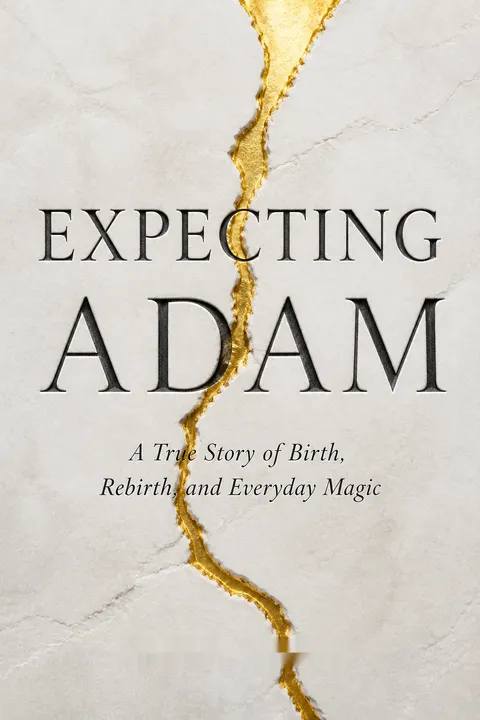
A life beyond the plan. Martha Beck and her husband, John, are ambitious Harvard scholars who expect to raise capable children and keep climbing. A difficult pregnancy, followed by a prenatal diagnosis of Down syndrome, breaks that plan open. Beck’s memoir is not simply a story of accepting a disabled child. It follows two parents confronting what they have mistaken for success, certainty, and a worthwhile life.
The story’s deeper turn. Beck also recounts experiences she interprets as spiritual: a message apparently delivered through a stranger, a rescue she cannot explain, and a sense of connection with her unborn son. She does not resolve these events into proof. The central change is that she stops treating prestige, intellect, and control as the only reliable guides to a life’s value.
What's striking is how the memoir links a change in family circumstances to a change in the standards used to judge a life. That makes its challenge broader than parenting: achievement can become a substitute for deciding what achievement is for. Yet the story should not turn Adam into a device whose purpose is to improve his parents. Beck’s love and gratitude are particular to her family, not a claim that disability is a gift for every household. The child remains a person, not a moral lesson.
Prestige can train you to mistake self-erasure for competence.
Performing invulnerability. At Harvard, Beck and John learn to conceal fear and treat family needs as threats to academic seriousness. Beck invents an assertive persona, “Fang,” for campus: competitive, fearless, and sharply different from her anxious private self. John’s professor publicly humiliates him for missing class to attend the birth of his first child. The message is plain: personal life is a poor excuse for failing the institution.
The body refuses the bargain. During the pregnancy, Beck vomits, faints, and struggles to care for her toddler, yet keeps trying to work as if effort can override illness. She recalls finishing illustrations immediately after giving birth to her daughter. In hindsight, that devotion looks less like strength than a learned inability to stop.
The memoir shows how institutions shape behavior not only through rules, but through the identities people build to survive them. Fang is useful in a competitive setting, yet she also helps Beck dismiss real limits. That distinction matters: grit can carry someone through a hard task, but it can also disguise a system’s refusal to accommodate ordinary human needs. The account is not proof that elite education always demands self-neglect. It is a close portrait of how one person internalizes that demand until her body becomes impossible to ignore.
Accept help before your private crisis becomes a medical emergency.
A crisis named plainly. While John is away in Asia, Beck becomes too nauseated and weak to eat or care for her toddler comfortably. She calls the worsening cycle of not eating and becoming still sicker a “Death Spiral.” Ashamed of needing help and afraid to reveal her pregnancy, she tries to manage alone. Then Sibyl, a near-stranger, arrives with exactly the foods Beck can tolerate and helps care for her daughter.
Care is an action. Sibyl returns with Deirdre, who shares her own story of being cared for when she was alone and ill. Their practical, unshowy support shows Beck that mothering need not come only from a biological parent. A person can mother by feeding, listening, tending, and staying present.
The episode makes support concrete: not a vague offer to help, but food, childcare, and company at the moment they are needed. It also reveals how shame can hide need from the very people who might respond. Beck’s experience invites a useful question: what kind of specific help would make it easier for someone to say yes? There is a limit to the lesson, though. Informal care can be generous, but it cannot replace accessible medical care, paid leave, or dependable childcare.
A prenatal diagnosis describes risks, not the worth or whole future of a child.
Numbers become personal. A screening test produces a low AFP result, which Judy, the clinic nurse-practitioner, explains has a small statistical association with Down syndrome. Beck is told the preliminary odds are one in 895. A later amniocentesis confirms that the fetus has trisomy 21, the extra chromosome associated with Down syndrome. Beck and John must face both the information and the question of what to do with it.
Prediction is not a verdict. Beck’s decision to continue the pregnancy is shaped by attachment, fear, and the experience of carrying Adam, not by a universal rule about abortion. She challenges the idea that a child should be welcomed only if he meets a standard of health or ability. Her uncertainty does not disappear; she simply refuses to let a test result define the entire person.
The distinction between diagnosis and valuation is ethically essential. A test can identify a condition and inform choices, but it cannot settle what makes a life worth living. Beck’s account also shows how medical options are framed by social expectations about acceptable bodies and futures. At the same time, her decision cannot stand in for every pregnant person’s circumstances. Reproductive autonomy includes the right to continue a pregnancy and the right to end one; neither choice should be made into a measure of moral worth.
When experts prescribe a life choice, ask whose fears their certainty protects.
Authority has an agenda. A Harvard obstetrician urges Beck to terminate, assuming her refusal to eat means she is trying to end the pregnancy indirectly. He argues that a child with Down syndrome will impose a heavy burden. Separately, John’s celebrated academic adviser argues that keeping the baby will damage John’s career and tells him to persuade Beck to abort. Their confidence rests partly on professional status and assumptions about disability, family, and success.
Expertise has boundaries. Beck does not reject medical knowledge; she seeks tests and care throughout a high-risk pregnancy. But she distinguishes clinical information from a doctor’s claim to decide which life is acceptable. She reads the obstetrician’s pressure as fear, though that interpretation is hers, not a diagnosis of his motives.
This section is strongest when it separates technical expertise from moral authority. Clinicians can explain risks and options; patients live with the consequences and bring values that cannot be measured in a chart. The same distinction applies to academic mentors, whose institutional power can make a career preference sound like an objective necessity. Still, one hostile or presumptuous encounter should not erase the value of competent medical guidance. The practical standard is neither blind obedience nor blanket distrust, but informed advice that leaves the decision with the person whose life is at stake.
Name the fear beneath an argument before it becomes a verdict.
Grief hides as anger. Beck and John cope differently after Adam’s diagnosis. She searches for information and openly grieves; he buries himself in work and tries to think about something else. Their silence leaves each imagining what the other feels. One night, while John makes chocolate-chip-cookie dough, Beck says she fears Adam’s future. John accuses her of demanding perfection, and their argument spills into a chaotic fight with the dough.
A truer conversation. Beneath the accusation, John recognizes his own fear of never being good enough. Beck tells him she loves him as he is, and he finally cries. They also admit that the name they had planned does not feel right. Both settle on Adam, a name they had each independently come to associate with their son.
The scene captures a common relational trap: one person’s coping style can look like indifference to the person who needs visible grief, while visible grief can look like accusation to the person trying to keep functioning. The argument becomes useful only when the couple recognizes that its stated subject is not its real subject. Humor helps them survive the exchange, but it does not make the pain trivial. The book’s implication is practical: ask what fear is speaking before treating a partner’s reaction as a final judgment.
Judge capacity by knowing the child, not by stale averages.
The individual exceeds the category. After Adam’s diagnosis, Beck finds an outdated manual that presents bleak, inaccurate claims about people with Down syndrome. Later, a school evaluator mistakes Adam’s deliberate wrong answers for inability. Adam has figured out that failing the test earns him a break and a swing. A therapist who knows children with Down syndrome recognizes what the evaluator misses.
Find the route that works. Adam’s learning often depends on personal connection. He shows little interest in letters as abstract symbols, but learns them when they stand for people he loves. Though his speech is difficult to understand, he can communicate in other ways, including writing the name of a new friend. These examples do not predict every child’s abilities; they show why assessment must make room for the actual person.
Beck’s scenes expose the danger of treating a category as an individual forecast. A low score or diagnostic label can become self-confirming when evaluators mistake unfamiliar behavior for incapacity and then offer fewer opportunities. The alternative is not to deny impairment or promise limitless potential. It is to observe carefully, adapt communication, and test assumptions against the child’s demonstrated interests and skills. That approach is more accurate and more humane, especially when a single assessment may influence access to a classroom or support.
Trade status-chasing for attention to what actually delights you.
Joy in small things. Adam takes pleasure in details his parents once overlooked: smelling every plant in a store display, receiving batteries, choosing a suit, or making his baby sister laugh. His parents’ academic world prizes speed, polish, and achievement. Adam’s attention makes ordinary experience feel worth noticing in its own right.
A different measure of success. After his birth, Beck and John leave jobs that no longer fit the life they want; John eventually finds work better suited to his interests, and the family moves to Arizona. Beck does not present this as a simple formula for everyone. Adam’s influence is more basic: the parents begin to ask whether their work and ambitions make room for living, rather than assuming that prestige will deliver happiness.
The shift is not from ambition to laziness, but from treating achievement as an end to treating it as a means. Adam’s delight gives the family a new test for success: does a choice create room for connection and attention, or merely win approval? That test can clarify priorities without requiring everyone to quit a job or reject conventional goals. Economic security and meaningful work matter too. The memoir’s sharper point is that neither should be confused with happiness simply because a culture rewards them.
Keep wonder open without mistaking a powerful experience for proof.
Mystery enters the memoir. Beck recounts vivid experiences she understands as spiritual: a sensed presence during a dangerous fire, impressions of being with John across great distances, and comfort during a pregnancy crisis. She also admits that illness, exhaustion, or her own mind could help explain what she felt. The experiences change her personally, but she does not offer a method for proving their source.
A dream meets the world. Years later, recurring dreams about dolphins lead Beck to an article about swimming programs for disabled children. She takes Adam to a Florida center, where he swims with a dolphin. The psychologist offers a practical account of how water and an engaging animal can help children move and learn. Beck experiences something more mysterious alongside that explanation, and leaves the question open.
The memoir is most persuasive when it distinguishes the reality of an experience from certainty about its cause. A person can find comfort, direction, or meaning in an event without asking others to accept a supernatural explanation as established fact. That distinction protects both wonder and intellectual honesty. It also makes space for readers who interpret the same events psychologically, medically, or spiritually. Beck’s openness is compelling as autobiography; it would be less defensible as a universal claim that unexplained events prove a particular theology.
Analysis
Expecting Adam works on two tracks. On the visible track, a Harvard-trained couple faces a medically complicated pregnancy, a Down syndrome diagnosis, strained work and family relationships, and the ordinary demands of raising children. On the other, Beck narrates experiences she interprets as spiritual, using them to question the supposedly firm boundary between rational knowledge and private intuition. The book’s structure depends on keeping both tracks in view. Remove the mystical episodes and the memoir remains a sharp account of ambition, disability, medical authority, and care. Treat those episodes as proven facts, and the book claims more than its evidence can establish. Beck’s own uncertainty is therefore not a weakness to correct; it is part of the book’s intellectual honesty.
The memoir also challenges a narrow model of prenatal choice. A diagnosis may supply information, but its meaning is filtered through assumptions about dependence, productivity, family burden, and social worth. Disability studies helps clarify the distinction: a person’s impairment is real, while exclusion, inaccessible institutions, and other people’s expectations can intensify its consequences. Beck shows both the relief of love and the practical pain of stigma. The two should not cancel each other out.
The most important caution is against turning Adam into an inspirational instrument. Beck sometimes describes him as a teacher whose presence transforms everyone around him. That is true to her experience, but it risks repeating a familiar demand that disabled people justify their place by improving nondisabled people. The memoir counters this risk when it attends to Adam’s tastes, jokes, frustrations, friendships, and specific ways of learning. He does not need to be an angel, a cure for his parents’ ambition, or a symbol of unconditional joy to deserve acceptance. The book’s lasting argument is strongest when it insists that a person’s worth precedes any lesson others draw from knowing him.
Review Summary
Expecting Adam receives mixed reviews, with praise for Beck's writing style and humor, but criticism for perceived inconsistencies and spiritual claims. Some readers find the story of raising a child with Down syndrome inspiring, while others question its authenticity. Critics note Beck's negative portrayal of Harvard and her religious background. The book's exploration of spiritual experiences during pregnancy polarizes readers, with some finding it comforting and others dismissive. Overall, the memoir sparks debate about disability, faith, and personal growth.
People Also Read


Glossary
Fang
Beck’s defensive campus personaFang is Beck’s name for the forceful, competitive, apparently fearless identity she summons to function at Harvard. The persona helps her meet the institution’s expectations while suppressing anxiety, illness, and vulnerability. Beck later sees that this performance can protect her socially while also making it harder to admit when she needs help.
Death Spiral
A worsening nausea cycleBeck’s label for the self-reinforcing cycle in which pregnancy nausea prevents her from eating or drinking, while the resulting weakness and dehydration make the nausea worse. The term describes a dangerous physical experience, not simply ordinary morning sickness. Sibyl’s food and care help Beck interrupt the cycle while John is away.
Seeing Thing
Beck’s vivid distant impressionsThe Seeing Thing is Beck’s informal name for episodes in which she experiences vivid images or impressions of people and places far away, especially her husband John. She describes one instance that seems to match details of John’s experience in Tokyo. She considers the episodes real experiences but does not claim to know their cause.
Adamic
Adam’s family speech dialectAdamic is the family’s name for Adam’s distinctive way of speaking. Because the muscles involved in speech are affected by his Down syndrome, he often rearranges or substitutes sounds and uses gestures, sound effects, and his own pronunciations. His family members learn to interpret the dialect, though communication can remain difficult.
Prod
A prenatal kicking gameProd is Beck’s name for a game she plays with Adam before birth. When he pushes against her abdomen, she presses back and feels him shift position. The exchange lets her experience him as an active, particular presence rather than an abstract pregnancy or a medical diagnosis.
Bunraku puppeteers
A metaphor for unseen forcesBeck borrows the image of Bunraku puppeteers, who visibly manipulate stage puppets, to describe her feeling that unseen forces are guiding events or actions in her life. The phrase functions as a metaphor for her sense of being carried by influences beyond conscious control. It does not identify what those influences are.
mothering
Care expressed through actionBeck uses mothering as a verb for the practical and emotional work of caring for another person, rather than as a role limited to biological mothers. Sibyl and Deirdre mother Beck by bringing food, caring for her toddler, and staying with her through illness. The idea separates caregiving from biological reproduction.
diffability
A term for differing abilityIn the afterword, Beck attributes this term to a friend who uses it for communication or connection across differences in ability. Beck describes people who say they connect with Adam in dreams or in ways that do not depend on ordinary speech. The book presents the word informally and does not define it as a clinical or scientific concept.
FAQ
What's Expecting Adam about?
- Personal Journey of Motherhood: Expecting Adam is a memoir by Martha N. Beck that details her experiences during pregnancy, particularly when she learns her unborn son, Adam, will have Down syndrome. It explores the emotional and physical challenges she faces.
- Themes of Acceptance and Love: The narrative delves into themes of acceptance, love, and societal pressures surrounding parenting and disability. Beck shares her transformation from a driven academic to a more open and accepting individual.
- Spiritual Elements: Beck discusses her encounters with spiritual beings or angels, which guide her during difficult times, adding depth to her journey as she navigates motherhood and personal belief.
Why should I read Expecting Adam?
- Relatable Experiences: Beck's candid portrayal of pregnancy, including struggles with morning sickness and emotional turmoil, is relatable. Her humor and honesty make the narrative engaging.
- Insight into Parenting a Child with Disabilities: The book provides valuable insights into parenting a child with Down syndrome, challenging societal norms and expectations.
- Inspiration and Hope: Beck's journey is one of hope and inspiration, showing that love and connection can flourish in unexpected circumstances, encouraging readers to embrace life's uncertainties.
What are the key takeaways of Expecting Adam?
- Embrace the Unexpected: Beck illustrates the importance of embracing the unexpected in life, showing how Adam's arrival changed her perspective on parenting.
- The Power of Community: The memoir emphasizes the significance of community and support during challenging times, highlighting the importance of human connection.
- Redefining Success: Beck challenges traditional definitions of success, arguing that true fulfillment comes from love and connection rather than societal accolades.
What are the best quotes from Expecting Adam and what do they mean?
- “You’ll never be hurt as much by being open as you have been hurt by remaining closed.”: This quote encapsulates Beck's journey toward vulnerability and acceptance, suggesting that openness leads to deeper connections and healing.
- “I had learned to ignore the miraculous in my life.”: Reflects Beck's initial skepticism and struggle to recognize beauty and magic around her, serving as a reminder to appreciate extraordinary moments.
- “Thou art the thing itself.”: Emphasizes the essence of Adam’s being, highlighting unconditional love and acceptance, regardless of societal labels.
How does Expecting Adam address societal perceptions of disability?
- Challenging Stereotypes: Beck confronts stereotypes associated with Down syndrome, illustrating that individuals with disabilities are often viewed through a narrow lens.
- Personal Experience: She shares the emotional toll of societal judgment and the pain of feeling like an outsider, highlighting the need for greater understanding.
- Celebrating Uniqueness: The book celebrates the uniqueness of individuals like Adam, showing that they can bring joy and wisdom to the world.
What role do spiritual experiences play in Expecting Adam?
- Connection to the Divine: Beck describes spiritual experiences during her pregnancy, including encounters with angels, providing comfort and guidance.
- Intuition and Guidance: These elements serve as a metaphor for intuition and inner guidance, reflecting Beck's growing awareness of listening to her instincts.
- Exploration of Belief: Beck challenges conventional beliefs about religion and the supernatural, encouraging a more open-minded approach to spirituality.
How does Beck's academic background influence her writing in Expecting Adam?
- Analytical Perspective: Beck's background as a Harvard-trained sociologist informs her analytical approach to her experiences, contrasting with her emotional journey.
- Humor and Wit: Her academic training contributes to her sharp wit and humor, making her story relatable and engaging.
- Critique of Academia: Beck critiques the rigid structures of academia and the pressure to conform, leading to a reevaluation of what it means to be successful.
What challenges does Beck face during her pregnancy in Expecting Adam?
- Physical Discomfort: Beck grapples with severe morning sickness and other physical ailments, describing the toll on her mental and emotional well-being.
- Emotional Turmoil: She navigates feelings of fear, guilt, and uncertainty as she comes to terms with Adam's Down syndrome diagnosis.
- Societal Expectations: Beck faces societal pressures regarding motherhood and disability, reflecting on judgments and assumptions made by others.
How does Expecting Adam redefine the concept of success?
- Value of Connection: Beck argues that true success lies in the quality of relationships and connections, rather than societal accolades.
- Embracing Imperfection: The memoir emphasizes the beauty of imperfection, encouraging readers to let go of rigid standards.
- Personal Fulfillment: Beck illustrates that personal fulfillment comes from within, finding joy in the present moment, regardless of societal expectations.
What impact does Adam have on Beck's life and perspective?
- Catalyst for Change: Adam serves as a catalyst for Beck's personal growth, challenging her preconceived notions about disability and success.
- Source of Joy: Despite challenges, Adam brings immense joy and love into Beck's life, reshaping her understanding of happiness.
- Connection to Community: Adam's arrival fosters a sense of community and connection, highlighting the power of human connection in navigating life's challenges.
How does Beck’s relationship with John evolve throughout Expecting Adam?
- Initial Strain: Beck describes the strain on her marriage as they navigate Adam’s diagnosis, leading to tension and misunderstanding.
- Communication Breakthrough: They learn to communicate more openly about their feelings, allowing them to reconnect and support each other.
- Shared Journey: Their relationship deepens as they embrace parenthood together, finding strength in their love for Adam and shared experiences.
How does Expecting Adam redefine the concept of family?
- Expanded Definition: Beck expands the traditional definition of family to include emotional and spiritual bonds, emphasizing love and acceptance.
- Support Networks: The book highlights the role of friends and community in providing support, with relationships becoming crucial to her journey.
- Embracing Differences: Beck illustrates that families can thrive despite differences, with Adam teaching her that love can unite people profoundly.
About the Author
Other books by Martha N. Beck



Download PDF
Download EPUB
.epub digital book format is ideal for reading ebooks on phones, tablets, and e-readers.








