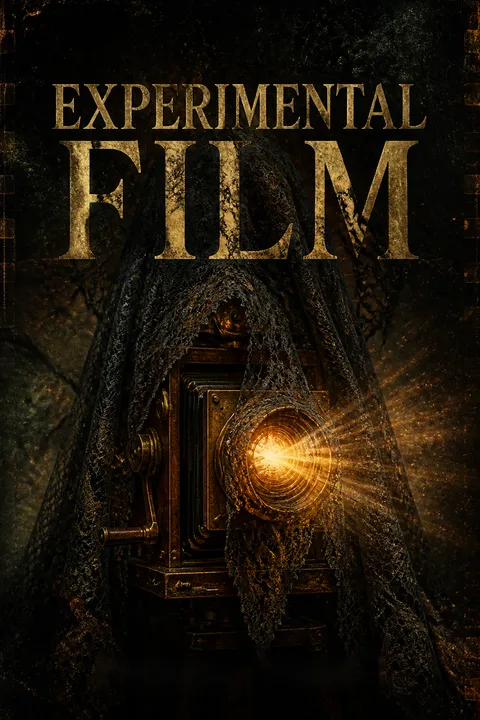


Plot Summary
A Film Remembers
In October 2014, Lois Cairns, a former film teacher and underpaid critic, attends a Toronto experimental-film screening to review work by Wrob Barney. At home, she keeps seeing one sequence in her mind: a veiled woman with a shining blade in a field. A childhood book supplies the missing connection.
Its story, Lady Midday, describes a supernatural visitor who tests workers at noon and punishes the rude. Lois recognizes the film's images as an uncanny version of the tale, collected by Iris Whitcomb, a long-dead Ontario artist whose son disappeared. The discovery offers Lois what her stalled career has denied her: a forgotten piece of Canadian film history she might finally claim as her own.
The discovery lands where Lois is most vulnerable: between professional frustration and the exhausting demands of parenting Clark, whose autism makes daily life unpredictable. Her excitement is not merely ambition; finding a neglected film promises evidence that her expertise can produce something lasting. Yet the film's power comes from the gap between image and explanation. Lois feels compelled to make a story from fragments, precisely the interpretive instinct that may expose her to danger.
Barney's Borrowed Ghost
Lois asks Barney where he found the strange footage. He admits he copied it from silver-nitrate reels catalogued at the National Film Archive, where he had helped Jan Mattheuis search for lost films along the old Japery studio distribution route. Barney says the reels came from several caches, including five originals Mattheuis recovered from a hollow tree beside a dangerous limestone shaft.
He also describes seeing a childhood cache burned as a public safety hazard, an image that returns to Lois in a disturbing dream. Before the interview ends, Barney hints that Mattheuis does not understand what he recovered. Lois contacts the archivist, hoping his account will help her establish the filmmaker's identity and secure funding.
Barney's account makes preservation itself morally unstable. The film survives because people hid it, but nitrate stock can destroy whatever houses it. Barney frames his copying as public access; Lois sees appropriation, though she shares his appetite for recognition. Their conflict is therefore more than a professional quarrel. Both treat another person's work as a path toward self-definition, while Mattheuis represents the institutional promise that careful cataloguing can contain what unruly art releases.
The Date in the Book
Mattheuis describes how he found the reels, then shows Lois Barney's notes naming a possible maker: Mrs. Whitcomb. Lois brings him her copy of Whitcomb's fairy-tale collection, but its 1925 publication date seems to postdate the films. Simon, Lois's husband, finds her a copy of the book; its afterword reveals that Whitcomb had been transcribing the stories since 1905, years before the films and her disappearance.
Lois returns to the Archive with a chart matching tales to images. The Japery prints and the original reels share subjects and techniques, making Whitcomb's authorship credible enough for Mattheuis to fund a research project. Lois turns down Barney's demand for help getting his Archive job back.
The copyright date first punctures Lois's preferred story, then the afterword restores it on firmer evidence. That reversal distinguishes inquiry from wish fulfilment: she has to risk being wrong before she can make a case others will trust. Her refusal to help Barney also marks a boundary, though it is not yet a wise or generous one. Lois wins a contract, but the victory binds her more tightly to the images and to the self-worth she has invested in their discovery.
Safie Enters the Dark
Lois recruits Safie Hewsen, a former student and filmmaker whose work draws on her Yezidi family's stories. At a Nuit Blanche installation by Soraya Mousch, Lois experiences the same smells of soil and burnt hay that accompanied her earlier visions. Soraya warns Safie that the Whitcomb project could pull its investigators into something dangerous, but Safie accepts the job after losing a grant for her own film.
On the drive north, she explains a Yezidi cosmology in which local spirits persist when people stop honouring them. Lois treats the idea as useful context rather than belief. The conversation nevertheless makes her consider that Whitcomb may have made her films for a purpose beyond artistic experimentation.
Safie is not simply technical support. Her religious and cultural knowledge offers a model in which stories can preserve obligations as well as images. Lois, who prefers evidence she can organize, initially converts this perspective into research material. Their partnership creates a productive tension: Safie attends to what the stories ask of people, while Lois wants to establish what happened. Soraya's warning foreshadows the cost of treating a haunting as a fascinating subject rather than a relationship.
Giscelia's Field
At the Quarry Argent Folklore Museum, director Bob Tierney shows Lois and Safie records suggesting Iris Whitcomb was once Giscelia Wròbl, a girl taken into an orphanage after her father, Handrij, led his family into a field to await the apocalypse. Her siblings and grandmother died there.
Giscelia's statement describes a bright, burning woman confronting her father, and claims that the visitor was the only real thing in a landscape of fever and grief. The account echoes Lady Midday's tale, including the severed head and the sun-struck field. Lois calls it a powerful origin story, already imagining its value in a documentary. Safie is less certain that turning the trauma into compelling material is harmless.
The archive replaces an eccentric artist's biography with a child's catastrophe. Giscelia's testimony refuses the clean distinction Lois wants between hallucination and event: fever could distort memory, but the family's deaths and the father's violence are documented. Lois immediately recognizes narrative value, revealing how professional habits can turn suffering into evidence and evidence into product. Safie's discomfort matters because it identifies a cost Lois has not yet learned to count: the dead cannot consent to the story made from them.
The House Paints Back
During Val Moraine's tour of the Vinegar House, Lois and Safie find huge murals of worshippers and predatory shadows, with a veiled figure looming above the doorway. Upstairs, they learn that Hyatt Whitcomb, Iris's developmentally disabled son, had secretly left his crib through a service shaft. His chalk drawings still cover its walls, including repeated versions of the same glaring face.
His clothes were found buried beyond the garden maze after his disappearance. Lois separates from Safie to inspect the ruined greenhouse, where she finds old stage flats. A violent headache overtakes her; she falls among broken glass and convulses. Safie calls for help, and Lois reaches the hospital unable to remember what happened.
The house makes family influence literal: Hyatt's private drawings and Iris's public murals share a visual vocabulary, but the shaft also turns childhood escape into an image of confinement. Lois recognizes Hyatt's traits in her own son, yet cannot keep that recognition from becoming another research clue. Her seizure breaks the illusion that scholarship can remain detached from the body. From this point, every investigation risks becoming an encounter rather than an observation.
The Rhyme at Home
After two days in hospital, Lois returns home with no clear medical explanation for her seizure and advice to reduce her pain medication. Clark begins repeating a strange rhyme about the world turning inside out and something waiting at a door.
A recording toy adds a woman's voice singing an unfamiliar verse about mirrors. Lois finds Arthur Whitcomb's papers, which describe his wife's childhood trauma, their trip to her ancestral village, and her encounter with the figure she called Lady Midday.
Arthur later believed his wife had been touched by something beyond ordinary belief. When Clark develops a high fever and vomits soil and a plant bulb, his parents rush him to SickKids. A photograph on his tablet appears to show the veiled figure watching him.
The rhyme gives the supernatural a domestic address. What began as images in an archive now surfaces through Clark's repetitions, a form of communication Lois understands from daily life but cannot easily interpret. Her uncertainty is compounded by guilt: she fears that her son is endangered and that her own obsession has brought the danger near him. The photograph does not prove what she sees, but it destroys the comfort of treating the haunting as private, safely contained by her own unstable perceptions.
The Archive Burns
While Clark remains in hospital, Lois learns that a fire has destroyed the National Film Archive's offices. The blaze began during a screening of silver-nitrate film; Jan Mattheuis is among the dead, and the Archive's digital copies were stored in the same building.
Lois feels responsible for the chain of events, though she has no proof that Barney caused the fire. Earlier, someone entered her apartment and stole her research box, while Barney's paid assistant Malin helped him sabotage the digital presentation Lois and Safie had prepared.
The project's evidence is vanishing just as its human cost grows. Safie then reveals a lead: Vasek Sidlo, now more than a hundred years old, once worked with Whitcomb and may still remember what she was trying to do.
The fire converts preservation's technical risk into irreversible loss. Nitrate, a material capable of holding an image for decades, also burns with extraordinary force; the Archive's decision to keep its digital copies on-site makes safety and institutional failure inseparable. Lois responds by taking blame for events she cannot control, a familiar extension of her belief that responsibility means personal fault. Sidlo's existence offers a way forward, but the urgency comes with a warning: the human witness is nearly as fragile as the evidence.
Sidlo's Last Image
Lois, Safie, and Simon visit Sidlo at an assisted-living home. The blind centenarian recognizes that Lois has been touched by the same presence that haunted Iris. He explains that he could imprint another person's memory onto film, and that Iris had used his ability to make images of the experience she could not forget.
Lois persuades him to recreate the memory on silver nitrate, believing they can use the film to draw Lady Midday away from Clark. During the session at Lois's apartment, Sidlo holds the sealed reel and Lois's hand. A scorch mark shaped like wings appears on the blinds; Sidlo dies, Lois suffers another seizure, and she wakes in hospital temporarily blind. The reel is taken as evidence.
Lois mistakes access for control. Sidlo's gift can preserve an image, but preservation is not the same as containment; the film remains a doorway in both directions. Her plan is driven by love for Clark, yet it also repeats Iris's central error: using art to bargain with a power whose terms no human understands. Sidlo's death and Lois's blindness strip the experiment of its comforting abstraction. The camera has stopped being an instrument she studies and become part of the danger.
Barney's Stolen Premiere
As Lois recovers, she and Safie learn that Barney has used stolen material to create a new film, Untitled 14, which he plans to premiere at the Ursulines. Malin had accepted his money to damage Safie's presentation and turn over their files. The reel made with Sidlo's help has disappeared from police evidence, and Lois fears Barney intends to show it.
Simon wants to keep her away from the screening, but Lois believes that an audience will be exposed if Barney starts the projector. She and Safie leave before Simon can stop them. Partly sightless and still recovering, Lois follows Safie through the dark streets toward the studio, while Simon races after them and tries to reach her by phone.
Barney's ambition transforms private theft into a public hazard. He does not merely want credit for discovering Iris's work; he wants to control the conditions in which other people encounter it. Lois's decision to go is both ethically clearer and emotionally perilous than her earlier pursuit: she is trying to protect strangers, not win a career. Simon's fear is not a failure of courage. He sees the bodily cost Lois discounts whenever she believes the next action can repair what has already been lost.
Noon Breaks Through
Inside the screening room, Lois and Safie find audience members injured by the film's heat and light. Lois crawls through smoke to reach the projector and stops it, restoring her sight as the room freezes in an impossible stillness. Lady Midday emerges from the screen and offers Lois a perfected future: a thriving career and a son who speaks and behaves as she has wished.
Lois refuses the bargain, insisting that Clark must remain himself rather than become a reward shaped to please her. As the goddess raises her weapon, Barney charges with a folding chair, demanding the attention he believes should have been his. The projection ruptures. Barney dies, the apparition vanishes, and rescuers carry Lois outside, where she collapses.
The climax makes Lois choose between a fantasy of ease and the difficult particularity of the people she loves. The offered version of Clark is seductive precisely because it answers her private fears, but it would replace her actual child with a wish. Rejecting the bargain is not a claim that suffering is good; it is a refusal to treat another person's identity as payment for relief. Barney's final intervention exposes the need beneath his plagiarism: he wants to be chosen, even by the force he helped unleash.
A Story That Sells
After the fire, Lois learns that thirteen people died and many more were injured. Investigators later identify two ancient skeletons found near the screen as Iris Whitcomb and Hyatt, though the circumstances of their deaths remain unexplained.
Lois and Safie publish a successful book presenting the events as a blend of lost film history, true crime, and Barney's obsession; Lois never tells the public how much of the story she believes. She returns to a writing career, and part of her income goes into a fund for Clark.
Her sight improves but remains legally impaired. A final account, attributed to a medium's session, warns that Iris's films were never meant for others to see. Lois cannot know whether the warning is genuine, but she keeps working and remembering.
The resolution refuses a clean conversion of horror into wisdom. Lois gains the career she wanted, but must disguise the events that made it possible, turning truth into a public narrative that can be believed without accepting the supernatural. Her choice also funds Clark's future, linking professional ambition to a concrete act of care. The final warning keeps the story open: records do not neutralize what they record, and a successful explanation may be another form of looking away.
Epilogue
The novel's closing Sting presents a message attributed to Iris Whitcomb through a modern medium. It suggests that Iris made the films to cut a terrible memory away from herself and warn others, but that every image became another invitation to look.
Lois's public book offers a plausible, marketable account of the disaster; the final message leaves open whether Iris has found a way to speak through the record, or whether the living are still making patterns from grief.
The Sting challenges the tidy closure of the Credits. Lois has built a career by arranging fragments into a story, yet Iris's supposed message warns that images can preserve danger as readily as knowledge. The ending does not verify the supernatural voice. Instead, it makes verification itself part of the unease: readers must decide whether the final text is evidence, invention, or another artifact that invites interpretation. The book closes by implicating the audience in the same appetite that drove Lois to keep watching.
Analysis
Experimental Film makes interpretation feel less like a neutral act of understanding than a form of contact. Lois's professional skill is to read images, identify references, and build causal stories from fragments. Those same abilities help her recover Iris Whitcomb's work, but they also feed her conviction that she can make the past useful and the supernatural manageable. The novel complicates this confidence through evidence that never settles cleanly: a folktale predates the films, a child's statement echoes its imagery, damaged recordings reveal more than their makers intended, and medical explanations coexist with events they cannot fully account for.
The book's most painful parallel is between Lois and Iris. Both women love a child whose needs unsettle their imagined future, and both seek a form of control through art. Iris tries to make images that might recover or placate what she has lost. Lois initially treats the same images as a career-making discovery, then tries to use them to protect Clark. Their intentions differ, but both risk turning a child into the reason for an impossible bargain. Lois's decisive refusal is not a rejection of care or ambition. It is her recognition that loving Clark means accepting the child he is, not buying a version of him who would ease her fear.
Cinema provides the novel's central metaphor without becoming a simple villain. A film preserves a moment, but it also selects, edits, and invites an audience to complete what remains unseen. The archive's nitrate reels make that tension literal: preservation can become combustion, and a public screening can expose people to more than an image. Lois's eventual book offers a survivable public account, while the Sting keeps supernatural truth unresolved. The story asks whether one can remember without claiming mastery, and whether some mysteries become more dangerous when treated as possessions to be recovered, explained, or shown.
Review Summary
Experimental Film by Gemma Files receives mixed reviews, with ratings ranging from 1 to 5 stars. Readers praise its unique blend of horror, film history, and folklore, as well as its exploration of motherhood and autism. Many appreciate the atmospheric writing and complex characters. However, some find the pacing slow and the protagonist unlikable. Critics note the book's dense exposition and technical film jargon, which may be challenging for some readers. Overall, it's considered an ambitious and unconventional work that resonates with many but may not appeal to all.
People Also Read



Characters
Lois Cairns
The restless film historianLois is a former film teacher, critic, and researcher whose expertise has not translated into the stable career or recognition she wants. She is sharp, funny, combative, and skilled at spotting patterns, but those strengths can become compulsions when she needs a problem to solve. Her love for Clark is profound, complicated by the fatigue and uncertainty of raising an autistic child while fearing for his future. She also struggles to care for her own health, often treating pain and exhaustion as inconveniences to outwork. Lois's narration is intelligent but not fully reliable: she is alert to ambiguity in film and history, yet often mistakes intensity for control.
Simon Burlingame
Lois's steady partnerSimon is Lois's husband and Clark's father, a logical thinker with a gentle manner and a practical sense of responsibility. He supports Lois's work even when he doubts her conclusions, and he helps care for Clark when sensory overload and routine changes make ordinary days difficult. Simon often tries to soothe conflict rather than intensify it, but his patience has limits when Lois treats her own safety as expendable. His steadiness is not passivity: he can challenge her directly and remain beside her even when their beliefs diverge.
Clark Cairns
A boy of vivid patternsClark is Lois and Simon's young autistic son. He communicates largely through echolalia, repeating fragments of songs, shows, and familiar routines, and he often experiences the world through intense sensory and emotional patterns. He is affectionate, playful, and persistent about contact, though he may seek it on his own terms and struggle when adults demand conventional responses. Lois loves him fiercely but worries about his independence and the ways other people may misunderstand him. Clark's repeated phrases are not empty decoration; they are part of his language and a meaningful, if difficult to interpret, expression of his inner life.
Safie Hewsen
The filmmaker and witnessSafie is a former student of Lois's, a technically gifted filmmaker, and a member of a wealthy Armenian Yezidi family. Her film work draws on the stories and beliefs passed down by her great-grandfather, Aslan, and she approaches images with both craft and cultural responsibility. Safie is observant where Lois is impulsive, but she is not immune to the pull of a compelling project. She accepts the research job after a grant rejection, partly for the work and partly because she feels an artistic kinship with Iris Whitcomb's unfinished legacy. Her loyalty becomes a source of practical courage.
Iris Whitcomb
The vanished filmmakerIris Whitcomb was an artist, collector of folklore, and devoted mother whose paintings and films drew on Wendish stories. After her son disappeared, she withdrew into mourning and pursued spiritualist circles in hopes of understanding what had happened. Her husband admired her talent but could not fully understand the fears that governed her work. Iris's films are visually daring, repeatedly transforming a single folktale through masks, puppets, animation, and altered images. She remains an elusive figure because the records surrounding her life are incomplete, and the story must be reconstructed from objects, testimony, and other people's memories.
Wrob Barney
The ambitious appropriatorWrob Barney is a wealthy Toronto experimental filmmaker who builds collages from found footage and cultivated personas. He has an eye for striking images and a talent for attracting attention, but his confidence shades into entitlement when another artist's work offers him a way to improve his own reputation. Wrob presents himself as a champion of neglected Canadian cinema, and there is some sincerity in that claim; however, he also expects access and credit on his own terms. His rivalry with Lois is sharpened by their shared hunger to make forgotten art matter and to have their own names attached to it.
Vasek Sidlo
The blind image-makerVasek Sidlo is a blind medium associated with Kate-Mary des Esseintes's spiritualist circle and later with Iris Whitcomb. Though he cannot see images conventionally, he has an unusual ability to imprint memories onto film. His long connection to Iris gives him a rare understanding of her aims, but years of carrying that knowledge have left him weary. Sidlo is gentle and perceptive, and he treats the supernatural less as spectacle than as a burden whose consequences must be endured.
Jan Mattheuis
The archival gatekeeperJan Mattheuis directs the National Film Archive's Ontario Film Recovery Project. He is an experienced film historian who values recovery, documentation, and public access, while recognizing that Wrob Barney's motives are not entirely trustworthy. Jan's fieldwork leads him to a hidden cache of nitrate reels, and he helps Lois turn a striking resemblance into a fundable research project. His work represents the fragile institutional effort to preserve records that can be both culturally precious and physically dangerous.
Arthur Whitcomb
The devoted husbandArthur Whitcomb is a mining magnate who builds a home for Iris and supports her artistic interests. He loves her intensely and tries to help when grief and unusual beliefs isolate her, but his devotion does not mean he understands her. His letters and journals become an important record of their marriage, their son's early life, and the choices that shaped the family's history. Arthur's desire to protect Iris can also lead him to decide what is best for her without fully asking what she wants.
Lois's mother
The anxious grandmotherLois's mother is an actor and recovering alcoholic who has spent much of her life protecting and advising her daughter. She worries about Lois's pain, sleep deprivation, and tendency to put work ahead of health, while also wanting Clark to be treated with patience. Their closeness makes their arguments unusually sharp: each recognizes the other's weaknesses and fears being dismissed in return. Her concern is real, even when Lois experiences it as control.
Soraya Mousch
The wary artistSoraya is an experimental artist and former collaborator of the missing filmmaker Max Holborn. She creates an immersive sound installation with Safie's help and mentors younger artists, but her history has left her cautious about obsessive projects. Soraya recognizes danger in Lois's fixation before Lois does and tries to warn Safie without explaining everything she knows. Her careful distance suggests experience with the cost of looking too closely.
Leonard Warsame
Barney's uneasy partnerLeonard is Wrob Barney's partner and assistant, a thoughtful man who has seen the gap between Wrob's public claims and private ambitions. He tries to restrain Wrob's worst impulses and considers how to separate himself from their entangled work. Leonard's concern is complicated by affection and loyalty, which make it difficult to act before events become dangerous. He later helps Lois understand the history behind Wrob's conduct.
Malin Riegert
The sound technicianMalin is Safie's friend and a specialist in digital sound reconstruction. She helps Safie and Lois analyze the faint audio hidden in their recordings. Her technical skill makes an otherwise inaudible clue available, while her need for money leaves her vulnerable to Barney's offer.
Val Moraine
The Vinegar House guideVal Moraine runs tours of the Vinegar House and knows the local stories surrounding the Whitcomb family. Her practical care for visitors sits beside a lifelong familiarity with the estate's unsettling reputation. She helps Lois and Safie access rooms and records normally left off the tour.
Plot Devices
Silver-nitrate film
Memory made dangerously physicalThe early film stock preserves images in a volatile physical form. Its sensitivity to light and tendency to ignite make it a genuine archival hazard, but the story also gives it a supernatural function: Vasek Sidlo can imprint memories onto it, and Iris Whitcomb treats the resulting images as a means of reaching beyond ordinary reality. The same material can preserve, expose, and destroy. It links the lost-film investigation to the fires, the central supernatural threat, and the danger of turning a private memory into a public spectacle.
Lady Midday's folktale
A myth that tests attentionIris Whitcomb's collected Wendish story describes a noon spirit who approaches workers, asks questions, and punishes those who fail to meet her demands. Lois first encounters the tale as a source for Barney's film, then finds it echoed in paintings, family testimony, and the Vinegar House. The folklore supplies a pattern for interpreting events, but it does not settle whether those events are supernatural, remembered through trauma, or both. Its repeated demand for attention makes looking itself a source of risk.
Experimental film
A viewer completes the imageThe novel's films use cuts, masks, animation, holes, reflections, and damaged images rather than straightforward explanation. Lois's training encourages her to connect fragments into a narrative, while the novel's visual and audio evidence repeatedly resists certainty. This form supports the mystery: each viewer sees a different version of the work, and every act of interpretation changes the viewer's relation to it. Cinema becomes more than a subject of Lois's research. It is the means by which memories, fears, and supernatural attention can cross into other minds.
Clark's repeated rhyme
A warning without explanationClark's echolalic language lets a strange rhyme enter family life before Lois understands its source. He repeats it across different moments, and a recording toy seems to add a verse no one remembers teaching him. Because repetition is already part of his ordinary communication, the warning is easy to dismiss as imitation. That ambiguity gives the supernatural an intimate form and forces Lois to consider whether she is interpreting her son accurately or projecting her own fears onto him.
Lois's frame narrative
A witness edits her own historyLois narrates as a film critic who knows that framing determines what viewers see, but her account includes gaps caused by seizures, dreams, and incomplete memory. She sometimes relies on Safie's footage, documents, or other people's testimony to reconstruct events. The reader therefore receives the story as an edited record whose creator is both investigator and participant. Her later public explanation is more plausible than her private account, leaving uncertainty about whether she is protecting others, herself, or the career she finally regained.
Download PDF
Download EPUB
.epub digital book format is ideal for reading ebooks on phones, tablets, and e-readers.








