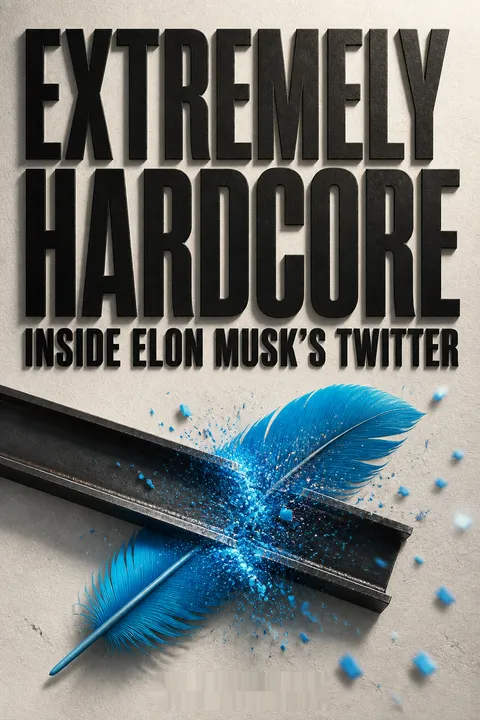


Key Takeaways
A platform’s owner cannot make his personal feed the public’s priority
The feed became personal. Four months after buying Twitter, Elon Musk was alarmed that President Joe Biden’s Super Bowl post received about three times as many views as his own. An engineer showed that public interest in Musk had fallen sharply since the deal was announced. Musk fired him, then demanded an urgent fix. Engineers altered the recommendation system to put Musk’s posts in front of users, even if they did not follow him, and multiplied their reach by a factor of one thousand. Users soon found their feeds dominated by Musk’s replies and posts.
Attention is not ownership. The intervention briefly gave Musk what he wanted, but it also made the platform feel like a personal megaphone. His power to change the system did not mean users wanted the result.
What’s revealing is the difference between having an audience and controlling the machinery that distributes attention. A platform’s recommendation system is not merely a neutral window onto public interest; it helps create the interest it measures. Once leaders can alter that system for personal benefit, engagement numbers become less a measure of user preference than of managerial power. The episode also shows why user trust depends on perceived fairness, not only technical performance. A platform may have the right to promote its owner, but doing so can weaken the credibility of every ranking decision.
Fix Twitter’s paralysis without mistaking speed for competent leadership
The old system was flawed. Twitter had influence but lagged behind rivals in product development and advertising technology. Former CEO Jack Dorsey was often absent, while routine decisions could involve layers of discussion. Engineer Yao Yue called its culture “benevolent anarchy”: people could shape the product, but progress depended on finding the right people and persuading them. Machine-learning engineer Randall Lin showed that Twitter could improve: one experiment on the recommendation system increased active minutes by 3.5 percent.
Urgency had an appeal. Musk promised faster execution, and employees frustrated by delay welcomed the change. But speed alone did not supply clear priorities, sound technical judgment, or reliable management. A fast deadline can move a team; it cannot make a bad decision good.
The book is strongest when it resists a simple before-and-after story. Twitter’s bureaucratic habits were real, and some employees welcomed the chance to build more quickly. Yet organizations need both exploration and control: freedom to test ideas, plus processes that identify risk and coordinate work. The problem is not simply too much process or too little urgency. It is whether the process serves a purpose. Cutting deliberation can improve execution on reversible choices, but launches involving safety, privacy, or core infrastructure require more than confidence and a countdown.
Free speech on a platform is constrained by its business and infrastructure
Speech has operating costs. Musk described Twitter as a digital public square, but the company depended on advertisers, app stores, and regulators. Advertising supplied roughly 90 percent of its revenue, and brands wanted their messages kept away from hate speech and other harmful material. Apple and Google could delay or reject app updates if Twitter failed to meet their rules. The Federal Trade Commission also held the company to a consent order governing user privacy.
Moderation is part of the product. Twitter’s trust and safety staff had to make difficult choices about what to remove, label, or limit. The work was imperfect, and the company had sometimes delayed action against powerful accounts. But removing moderation did not remove constraints. It shifted the risk to advertisers, users, employees, and regulators.
The useful distinction here is between the ideal of open expression and the institutional conditions that make a service available. A platform’s rules are not written in a vacuum: advertisers purchase predictable surroundings, app stores control distribution, and privacy law limits how a company handles data. That does not settle where moderation should draw its boundaries. It does show why “no moderation” is not a stable operating model for a commercial platform. The harder question is who sets the boundaries, how they are explained, and whether those decisions can be challenged consistently.
Layoffs erase the knowledge that keeps a complex service alive
People carried the system. In November 2022, Musk dismissed about 3,700 employees, roughly half the company, and Twitter soon cut thousands of contractors as well. The reductions reached engineering, security, privacy, trust and safety, and regional teams. Some layoffs removed employees who knew how to operate essential systems. Twitter nearly lost the passphrase needed to access its servers; JP Doherty, who ran the team monitoring platform stability, was the only remaining employee who knew it.
Headcount is not the whole cost. Contractors were locked out while some were in the middle of critical child-safety work. Afterward, managers had to consider rehiring people whose expertise was urgently needed. The cuts reduced payroll quickly, but also removed institutional memory and left fewer people to maintain the product.
A workforce is not just a cost line. It is also a distributed memory system: people know which service is fragile, which process exists for regulatory reasons, and whom to call when a failure appears. That knowledge is hard to reconstruct from documents, especially during a crisis. The book’s examples make a case for distinguishing genuinely redundant work from hidden operational dependencies before making sweeping cuts. That does not mean large companies should preserve every role indefinitely. It means the savings from a layoff should be measured against the loss of resilience, not just the immediate reduction in salaries.
A blue check sold as status can destroy the trust it signaled
Verification answered a practical question. Twitter’s blue check originally helped users distinguish authentic accounts from impersonators. Musk turned it into a paid feature, charging $8 a month and arguing that the change would make the badge fairer. The rushed rollout allowed subscribers to impersonate prominent people and companies. A parody account posing as Eli Lilly announced that insulin would be free. The real company had to correct the claim, its stock fell 4.37 percent, and it paused advertising on Twitter.
The test failed fast. Twitter paused new subscriptions less than forty-eight hours after launch. The service had attracted fewer than 61,000 subscribers by then. The badge had been sold before the company had reliable ways to preserve what it meant.
Verification is a small interface element carrying a large promise: that an account has been checked against some meaningful standard. The badge’s value comes from shared confidence, not its color or price. Selling it without preserving the identity check converted a trust signal into a status marker and created an obvious route for impersonation. This is a general product-design lesson: monetization can weaken the feature being monetized if the business model changes its meaning. The counterpoint is that legacy verification was not perfectly fair or accessible. Reform required a better verification design, not simply abolishing the distinction.
Treat critical infrastructure as a system, not a line item
A cost cut can move risk elsewhere. Twitter operated three data centers so that the service could keep running if one failed. In December 2022, Musk ordered the Sacramento center shut down to save money, despite concerns about moving its servers safely and maintaining capacity. The company eventually moved thousands of racks and estimated annual savings of $117 million. But its software contained about 70,000 references tied to the Sacramento site, a detail Musk said he had not been told.
The consequences surfaced in service. Twitter suffered repeated outages, including a major disruption after the shutdown. Its engineers had warned that the remaining centers might struggle to carry the full load. The savings were tangible; so was the stability risk.
This is a classic resilience problem: spare capacity can look wasteful until the day it prevents failure. Infrastructure costs are visible on a spreadsheet, while the avoided outage is hypothetical and therefore easy to undervalue. The relevant comparison is not simply one data center versus two. It is the full system, including dependencies embedded in code, recovery time, and the consequences of lost service. The case also cautions against treating technical debt as an abstraction. Old design decisions can make a seemingly simple operational change expensive, even when a leader has strong reasons to reduce spending.
Algorithmic neutrality fails when leaders secretly rewrite it for themselves
Ranking choices shape public attention. Twitter’s recommendation system selected possible posts, scored them, and filtered what appeared in users’ feeds. After Musk’s engagement fell, engineers created a list of prominent accounts to monitor, including Musk, political figures, athletes, and some of their own accounts. The list, first intended as a diagnostic tool, became a set of “VIP users” whose posts could bypass limits on how often they appeared.
The intervention was not abstract. After Musk’s Super Bowl post received fewer views than Biden’s, engineers changed the system so Musk’s posts flooded the For You feed. The public saw the result immediately. A feed that presents itself as personalized can quietly become an instrument for a leader’s preferences.
Ranking systems inevitably make choices about relevance, repetition, and reach. The ethical issue is not whether an algorithm has influence, but whether its influence is governed by disclosed, consistent criteria. A special exception for an owner makes the system less legible to users and can distort the very signals engineers use to evaluate performance. The VIP list also illustrates how a monitoring tool can become a privilege mechanism without a clear decision to make that transition. Transparent rules and auditable exceptions matter most when those with the greatest platform power are also the people benefiting from the ranking.
Rules lose legitimacy when leaders exempt themselves and punish critics
Free-speech claims met selective enforcement. Twitter had already faced criticism for treating President Donald Trump differently from ordinary users, delaying a permanent suspension until after the January 6 Capitol attack. Under Musk, the stated commitment to open speech also had limits. He banned journalists who reported on accounts tracking his plane, arguing that links to the accounts exposed his location. He had previously defended the plane-tracking account as speech he would tolerate.
The costs reached people with little power. Musk-backed releases of internal documents named a low-level employee involved in an earlier moderation decision. She received threats, including threats directed at her family. Former trust and safety head Yoel Roth also faced a harassment campaign after Musk misrepresented his academic work. Transparency became a weapon when context and personal safety were ignored.
Rules earn legitimacy through consistency and due process, not through their stated ideals alone. The book shows how selective enforcement can make both sides distrust the system: critics see censorship, while targets of abuse see protection withdrawn. There is a real tension between public accountability and employee privacy. Publishing internal records can expose consequential decisions, but naming a junior worker who did not make those decisions adds little accountability and can create serious harm. A credible transparency process distinguishes evidence about institutional choices from personal exposure for spectacle.
Do not confuse viral attention with a viable business model
The deal created a financial squeeze. Musk acquired Twitter for $44 billion, financing part of the purchase with $13 billion in company debt that carried roughly $1.5 billion in annual interest. Advertising had generated about 90 percent of Twitter’s revenue, but brands pulled back amid concerns about moderation and brand safety. By early 2023, daily revenue was reported at $5.93 million, down 40 percent year over year.
Subscriptions did not fill the hole. About 290,000 users had subscribed to Twitter Blue two months after its relaunch, an estimated $28 million in annual revenue, less than 1 percent of the revenue target Musk had described. Twitter later became X, but a new name and viral stunts did not resolve its dependence on advertisers or its debt burden.
The financial story is not simply that subscriptions failed or that advertising proved indispensable. It is that a product transition has to match user behavior, advertiser incentives, and the company’s cost structure at the same time. Twitter Blue targeted creators even though many users mostly read rather than post, while the company alienated the advertisers that funded the service. Viral attention can create the impression of momentum, but it is not equivalent to recurring revenue, retention, or trust. A new business model needs evidence of durable demand before it can replace an established one.
Build worker solidarity before management makes speaking up costly
Workers faced uneven choices. Some employees left after Musk demanded an all-in commitment; others stayed because they needed a paycheck or health insurance. Engineer JP Doherty remained while his son needed surgery and his family depended on his benefits. Yao Yue urged colleagues not to resign simply because Musk demanded it, and was later fired. The National Labor Relations Board issued a complaint alleging that her dismissal was retaliation for protected collective action.
Colleagues supported one another. Former employees pooled resources for legal advice, helped coworkers find jobs, and raised money for people facing hardship. Engineer Manu Cornet, once skeptical of unions, reconsidered collective action after the takeover. The company’s old culture disappeared, but relationships among its workers did not.
The workers’ stories broaden the book beyond executive behavior into the practical meaning of power at work. A public principle such as loyalty or free expression is difficult to exercise when rent, medical care, and family obligations are at stake. Collective support can reduce the isolation that makes each employee negotiate alone, although it cannot erase unequal bargaining power. Yue’s case also underscores that speaking up is not merely a matter of personal courage. It depends on whether coworkers can act together and whether institutions provide a route to challenge retaliation.
Analysis
The book’s central argument is less that a single bad executive ruined a healthy company than that concentrated ownership magnified existing weaknesses while removing the people and processes that might have corrected them. Twitter was already slow, under-monetized, and struggling to balance user safety with open expression. Those problems gave Musk’s reform agenda an initial plausibility. The failure lay in treating speed, cost reduction, and personal conviction as substitutes for organizational knowledge.
The narrative repeatedly shows a breakdown in feedback. Engineers supplied unwelcome information, but the leader’s preferences increasingly determined what counted as an acceptable answer. That changes what data can do: metrics become tools for reassurance or intervention rather than shared evidence. The engagement boost is the clearest example, but the same pattern appears in product launches, security decisions, and infrastructure cuts. When dissent becomes career-threatening, the organization loses its ability to detect mistakes early.
The book also makes a useful distinction between a platform’s public rhetoric and its operating dependencies. Twitter could not simply choose absolute free speech while relying on app stores, advertisers, privacy law, and people exposed to harassment. This does not mean moderation decisions are automatically fair or correct. It means they are governance decisions with real consequences, and they require accountable processes rather than improvisation by whoever owns the company.
The reporting is strongest when it lets competing employee experiences remain visible. Some workers wanted Musk to break bureaucracy and build quickly; others saw a volatile manager, a deteriorating product, and growing personal risk. That complexity keeps the story from becoming a simple morality play. It also makes the outcome more instructive: a capable organization can tolerate conflict, but it cannot learn when its leader treats disagreement as disloyalty. Twitter’s collapse is therefore a case study in how power can damage both the product and the conditions under which people tell the truth about it.
Review Summary
Extremely Hardcore received mixed reviews, with an average rating of 4.09/5. Many readers praised the detailed reporting and insider perspective on Musk's Twitter takeover. Some found it engaging and well-sourced, while others felt it lacked new information for those who closely followed the events. Critics noted potential bias against Musk and a lack of deeper analysis on broader issues. The book's structure and pacing were generally well-received, though some wished for more original insights or a more balanced perspective.
People Also Read










Glossary
mDAU
users eligible for adsAn abbreviation for monetizable daily active users. It refers to the accounts Twitter estimated it could show advertisements to, rather than every account using the service. Twitter disclosed that its estimate of false or spam accounts involved judgment and might not reflect the actual number, a distinction central to Musk’s attempt to challenge the acquisition.
Flyway
privacy review processTwitter’s internal process for assessing how a new feature could affect user privacy and security. Teams documented a proposal and technical design, then sought review across relevant engineering, security, and privacy groups. The process was connected to the company’s Federal Trade Commission consent order, making rushed product launches a potential compliance risk.
Twitter Blue
paid subscription serviceTwitter’s subscription product, expanded under Musk to include a blue verification check for paying users. The redesign tried to turn verification into a revenue source and reduce reliance on advertisers. Its rushed launch enabled impersonation, including fake accounts posing as public figures and companies, and subscriptions initially generated little revenue compared with Twitter’s advertising business.
API
software connection interfaceAn application programming interface is a set of rules that lets separate software systems exchange information or use one another’s functions. Twitter’s API enabled outside developers and researchers to build tools or study public posts. Musk’s decision to introduce costly access tiers threatened small services, public-interest bots, and research projects that had relied on free access.
VIP users
accounts tracked for reachA group of prominent accounts that Twitter engineers monitored while investigating changes to engagement. The list included Musk and other public figures, as well as some employees’ accounts. It began as a way to compare performance, but accounts in the group could receive exemptions from limits that normally constrained how often one user’s posts appeared in recommendations.
rate limiting
cap on repeated requestsA technical method for restricting how often a user or system can make requests within a specified period. It can protect services from abuse, such as repeated attempts to guess a password. In July 2023, Twitter applied broad limits to how many posts users could view, saying it aimed to deter data scraping. The change also disrupted ordinary reading and some safety-related use.
FAQ
What's Extremely Hardcore: Inside Elon Musk's Twitter about?
- Musk's Acquisition: The book details Elon Musk's acquisition of Twitter, from his initial interest to the sweeping changes he made after taking control.
- Employee Insights: It includes perspectives from over sixty Twitter employees, offering a behind-the-scenes look at the impact of Musk's leadership.
- Cautionary Tale: The narrative serves as a warning about the effects of a billionaire's influence on a major social media platform, focusing on the balance between free speech and content moderation.
Why should I read Extremely Hardcore: Inside Elon Musk's Twitter?
- Insightful Analysis: The book provides a deep dive into the complexities of managing a social media platform under a controversial figure like Musk.
- Real Employee Stories: It features compelling personal stories from Twitter employees, highlighting their struggles during a chaotic transition.
- Understanding Modern Leadership: Readers gain a critical examination of modern leadership styles in tech, especially the risks of impulsive decision-making.
What are the key takeaways of Extremely Hardcore: Inside Elon Musk's Twitter?
- Leadership Impact: Musk's erratic leadership led to significant layoffs and a culture of fear, emphasizing the need for stable management.
- Content Moderation Challenges: The book discusses the difficulties of balancing free speech with effective content moderation under Musk's leadership.
- Financial Consequences: It highlights the financial instability Twitter faced post-acquisition, with a decline in revenue and advertiser trust.
What are the best quotes from Extremely Hardcore: Inside Elon Musk's Twitter and what do they mean?
- “This app makes zero fucking sense”: Reflects Musk's frustration with Twitter's metrics and his impulsive nature in seeking immediate solutions.
- “Going forward, to build a breakthrough Twitter 2.0 and succeed in an increasingly competitive world, we will need to be extremely hardcore”: Captures Musk's demand for a high-intensity work culture.
- “The bird is freed”: Musk's tweet after firing key executives, signifying his intent to reshape Twitter but also marking the start of chaos.
How did Musk's acquisition affect Twitter's employees?
- Mass Layoffs: Musk's acquisition led to the firing of about half of Twitter's workforce, creating fear and uncertainty.
- Cultural Shift: Employees reported a shift from a collaborative environment to one driven by high-pressure demands.
- Increased Workload: Many employees faced longer hours and more intense work conditions, impacting their well-being.
What major changes did Musk implement at Twitter?
- Verification System Overhaul: Introduced a subscription model for Twitter Blue, leading to impersonation and confusion.
- Content Moderation Policies: Relaxed rules resulted in a spike in hate speech and misinformation.
- Return to Office Mandate: Enforced a strict return-to-office policy, reversing the remote work culture.
How did Musk's leadership style differ from previous Twitter executives?
- Impulsive Decision-Making: Musk's approach was characterized by impulsive decisions without thorough analysis.
- Engineering Focus: Emphasized an engineering-driven culture, prioritizing technical solutions over traditional management.
- High-Pressure Environment: Created a high-pressure work culture, contrasting with Twitter's previous collaborative environment.
What role did content moderation play in Musk's vision for Twitter?
- Free Speech vs. Safety: Musk emphasized free speech, often conflicting with the need for effective content moderation.
- Increased Tolerance for Harmful Content: Led to a more permissive environment for harmful content, raising concerns.
- Implementation Challenges: Employees struggled to balance Musk's directives with practical content moderation realities.
How did advertisers respond to Musk's changes at Twitter?
- Pullback in Spending: Many advertisers paused campaigns due to concerns over brand safety and content management.
- Increased Scrutiny: Advertisers scrutinized Twitter's policies more closely, leading to a "high risk" designation.
- Loss of Trust: Changes eroded trust between Twitter and advertisers, resulting in significant revenue losses.
How did Musk's decisions affect Twitter's financial health?
- Declining Revenue: Significant drop in advertising revenue as major brands pulled ads over content concerns.
- Cost-Cutting Measures: Implemented aggressive cost-cutting, including layoffs, with mixed financial results.
- Subscription Struggles: Transition to a subscription model faced challenges, failing to offset advertising losses.
What were the reactions of Twitter employees to Musk's changes?
- Mixed Feelings: Varied reactions, with some hopeful about Musk's vision and others disillusioned and fearful.
- Solidarity and Resistance: Employees banded together to support each other and advocate for better treatment.
- Longing for the Past: Many expressed nostalgia for Twitter's culture before Musk's takeover.
What does the future hold for X (formerly Twitter)?
- Continued Uncertainty: Ongoing challenges include financial instability and user retention under Musk's leadership.
- Potential for Innovation: Musk's vision includes ambitious plans, but execution remains uncertain.
- Regulatory Challenges: Likely to face increased scrutiny from regulators, impacting operations and reputation.
Download PDF
Download EPUB
.epub digital book format is ideal for reading ebooks on phones, tablets, and e-readers.








