

Plot Summary
Prologue
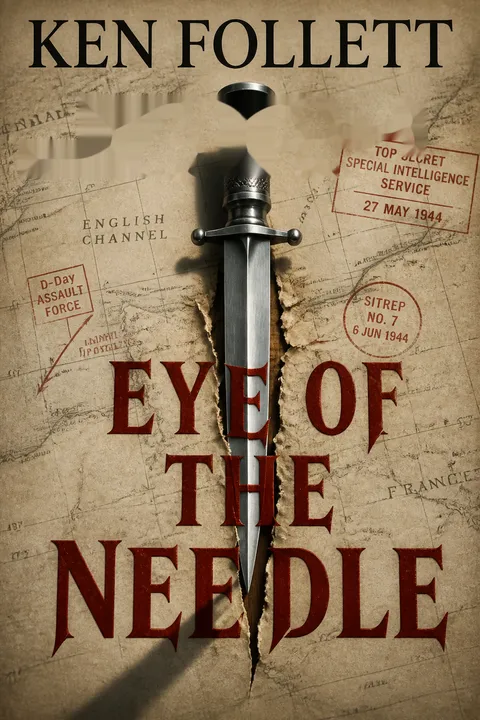
In 1944, German intelligence watches a vast army appear to gather in East Anglia. The barracks, aircraft, ships, troop movements, and radio traffic are carefully staged to make the Germans expect an invasion at Calais, while the real Allied landing plans point elsewhere.
The deception depends on the enemy trusting what its agents report. The book imagines what might happen if one professional spy in Britain saw through the performance and carried proof back to Hitler.
The opening makes espionage a contest over interpretation, not simply access to information. The Allies manufacture evidence designed to survive photographs, intercepted signals, and human observation, then rely on German officers to mistake coherence for truth. The imagined spy threatens more than secrecy: his credibility could redirect armies and alter the invasion's odds. By presenting the deception before the people caught inside it, the prologue creates dramatic irony. Readers know the apparent army is false, while Faber and the German command must decide what can be trusted.
The Lodger's Hidden Trade
In wartime London, Henry Faber poses as an unremarkable railway clerk while studying troop movements through his job and sending reports to Germany by hidden wireless. He keeps multiple identities and lodgings, but has left one vulnerability in his Highgate room: the landlady, Una Garden, can unlock his door.
When she enters hoping to seduce him, she sees the transmitter. Faber kills her with his stiletto, resumes sending his report, then stages the body to suggest a sexual killing before slipping away. Her death leaves the police with a missing lodger and an unsolved murder. Years later, a detail in that case will give MI5 its first solid link to the spy known as the Needle.
Faber's trade depends on turning ordinary life into camouflage, yet Una's visit exposes the human cost of making every relationship a security risk. His choice to kill is both tactical and revealing: he can explain violence as wartime necessity, but must still manage its physical aftermath and repair his cover. The staged crime shows a professional mind treating another person's body as evidence to be arranged. That chilling competence also contains a weakness. He protects himself from discovery by refusing intimacy, leaving his isolation as carefully maintained as his false papers.
Godliman Enters the Game
As France falls in 1940, Colonel Andrew Terry recruits his nephew, medieval historian Percival Godliman, to help catch German spies. Godliman leaves his research and joins MI5, where he meets Frederick Bloggs, a Scotland Yard investigator, and learns that captured German agents are being turned into double agents.
Their false reports help Britain manipulate German expectations, but the system works only if no independent spy can contradict them. Intercepted transmissions point to a skilled operator who signs off with a familiar private signal and is called Die Nadel, the Needle. MI5 cannot identify him or trace his transmissions. Godliman and Bloggs inherit a dangerous absence: an unseen professional who may be reporting the truth.
Godliman's recruitment converts his scholarly habits into wartime tools. He is trained to infer a past from fragments, and the double-agent system presents a similar problem on a national scale: evidence is deliberately authored, so its meaning depends on who controls its source. Bloggs supplies the practical police work that Godliman's abstractions cannot replace. Their partnership forms around a shared uncertainty, but also around grief. Bloggs has lost his wife in a bombing raid, while Godliman has long lived apart from ordinary attachments. The hunt gives both men purpose, though it also risks making suspicion their only mode of connection.
A Wedding, Then Storm Island
Lucy and David Rose marry in August 1940, on the eve of his first day as an RAF fighter pilot. Driving through the blackout, David crashes into a truck and loses both legs before he can fly in combat. His father sends the couple to a remote Scottish island to recover, where David throws himself into sheep work and physical tasks from his wheelchair.
Lucy gives birth to their son, Jo, but David withdraws from her and refuses sexual intimacy, ashamed that his injury has made him feel like a failed war hero. Lucy stays, trying to interpret his harshness as a form of self-defense. By 1944, their small household is orderly on the surface and starved of affection beneath it.
The crash gives David the injury of a combatant without the story of combat that would make it legible to him. His labor on the island becomes an improvised test of worth, but the harder he works to prove independence, the more he distances himself from Lucy. Lucy's endurance is not simple passivity: she chooses to remain for Jo, for the marriage's remembered tenderness, and because leaving would mean surrendering the life she has built. The island intensifies every silence. Its isolation offers safety from the war, yet leaves the couple with no outside world to interrupt their private injuries.
The Needle Gets Orders
In 1944, Faber receives an order to meet another German agent in London. Suspecting the rendezvous is compromised, he uses a boy to pass instructions, follows the contact to his lodging, and enters at night. The visitor is Major Friedrich Kaldor, sent to explain that Hitler wants a report on the First United States Army Group supposedly gathered under General Patton in East Anglia.
Faber is given a North Sea U-boat rendezvous for his return. He does not trust the Abwehr's judgment or the safety of its procedures. After Kaldor has seen his face, Faber kills him, then leaves to investigate alone, carrying both the mission and the means to escape.
Faber's distrust is not merely professional caution; it is the governing principle of his identity. He treats orders, colleagues, and institutions as potential threats, and his survival record appears to validate that suspicion. Killing Kaldor prevents MI5 from questioning the messenger, but it also removes a human link between Faber and the organization he serves. The assignment places him between two systems of deception: Britain's carefully constructed illusion and Germany's increasingly unreliable command structure. His decision to investigate personally reflects confidence in his own perception, yet also a need to remain the sole judge of what counts as truth.
An Army Made of Plywood
Moving through East Anglia by canal boat, Faber slips into a guarded area and finds barracks with no real interiors, rusting vehicles without engines, and an airfield crowded with plywood aircraft. He recognizes that the installation is built to deceive aerial reconnaissance, and understands that the Allies want Germany to expect the invasion at Calais.
At dawn he photographs the dummy planes and barracks, then hides the negatives against his body. A Home Guard patrol catches him near his boat. Faber kills all five men, conceals their bodies, sinks the boat beneath a railway bridge, and walks toward London with the film. The photographs are proof, but carrying them makes him a hunted man.
Faber sees through the decoys because he studies not only what is present but what a real military site would require: foundations, engines, traffic, and use. The discovery confirms his self-image as the one observer who can separate appearance from fact. Yet obtaining proof demands a burst of violence that turns observation into exposure. His choice to preserve the negatives rather than rely on radio reveals a rare concern about transmission security, while the bodies he leaves behind create a trail for MI5. The deception's physical emptiness becomes a trap precisely because Faber understands it correctly.
Parkin's Last Train
MI5 connects the killings to the old Highgate case after Godliman notices that Una Garden suffered the same kind of stiletto wound used on the dead Home Guards. A surviving lodger and German military photographs help identify Faber, and former lodger Billy Parkin is pulled from the Italian front to recognize him.
Meanwhile, MI5 intercepts Faber's backup package to a contact at the Portuguese Embassy and learns he is fleeing by train. Parkin boards in disguise, but Faber recognizes him, tortures him for information, and kills him. Parkin's final deception sends Faber toward a guarded station, yet Faber spots the waiting tail, hides in the coal tender, and escapes again.
This pursuit turns old observations into operational knowledge: the landlady's wounds, Parkin's memory, and a photograph from Faber's youth finally give MI5 a face. The very process of identification also exposes the cost of treating people as instruments. Parkin is valuable because he remembers, but his return from combat puts him in direct reach of the man he can identify. Godliman's plan is intelligent and still vulnerable to Faber's experience. Parkin's last act briefly reverses that imbalance, showing how a compromised agent can continue to shape events even when he cannot survive them.
The Road to Aberdeen
After slipping away from Liverpool aboard the train's coal tender, Faber jumps near a signal box, steals a bicycle, and continues north. He forces two elderly sisters to provide food, dry clothes, and their old Morris Cowley, then abandons the failing car near Stirling. Richard Porter, a wealthy local magistrate, gives him a lift to Aberdeen without realizing whom he is helping.
MI5 follows the abandoned car and Porter's belated identification, but Faber has already reached the harbor. He waits for darkness, steals a fishing boat, and sets a course for the prearranged U-boat pickup. Each escape depends on using strangers' ordinary kindness or routine before they understand the danger.
Faber's flight is a sequence of borrowed resources: an old car, a stranger's hospitality, a vessel left at its mooring. The people he exploits are not foolish so much as accustomed to cooperation, a social habit wartime scarcity has made necessary. Porter is particularly important because his public authority reassures Faber that he can be useful and predictable. MI5's pursuit narrows the distance but cannot fully control local contingency. The episode unsettles the heroic romance of espionage: Faber's survival rests less on grand strategy than on quick reading of ordinary people, while every act of trust becomes a possible breach in their safety.
A Wreck on Storm Island
A violent storm destroys Faber's stolen boat before he can reach the submarine. He fights through the surf and climbs the island's steep ramp, collapsing outside the cottage of Lucy and David Rose. Lucy and David warm him, lend him clothes, and let him sleep in their son's room.
Faber hides his camera negatives and stiletto, then learns that the island has a second cottage, an old shepherd named Tom, and a radio transmitter. He also recognizes the distance between Lucy and David. On his second night, he and Lucy begin an affair. For Lucy, his attention breaks years of loneliness; for Faber, intimacy interrupts the discipline that has kept his mission intact.
The storm removes Faber's control over his route and delivers him into a household whose emotional fractures he can read more easily than his own. Lucy's hospitality is both a practical response to a shipwrecked stranger and an opening created by years of marital neglect. Faber responds to her as a person, but also as a temporary refuge from vigilance; those motives are not cleanly separable. Their affair gives Lucy a sudden experience of desire and tenderness, while making her complicit in a secret she has never had to keep. The quiet cottage becomes more dangerous than the open sea because Faber can no longer remain only an observer.
David Finds the Negatives
David notices that Faber has hidden photographic negatives and confronts him in the adapted jeep on the island track. Their fight begins when David reaches for his shotgun. Faber overpowers him, and David falls from the cliff while trying to hold on; Faber takes back the film.
He then goes to Tom's cottage, kills the shepherd, and returns alone, telling Lucy that David is staying overnight. Lucy sees David's body washed onto the beach and understands that Faber is responsible. The man who had offered her tenderness has become the danger inside her home. When Faber blocks her first attempt to leave, she hides what she knows and waits for a safer chance to act.
David's discovery collapses the distinction between Faber's private tenderness and public violence. His accusation is not simply jealousy: the negatives expose a threat to the war effort, while the affair confirms that Faber has entered the household under false pretenses. David's death gives Lucy no time to mourn before she must interpret Faber's behavior as a survival problem. Faber's cover story is a final attempt to control what the island's inhabitants know, but Lucy's recognition breaks his monopoly on interpretation. The intimacy that once made her feel seen now supplies the evidence by which she identifies the murderer.
Lucy Plays for Time
Lucy takes her young son, Jo, toward Tom's cottage, hoping the shepherd can protect them, but finds Tom dead as well. With no ally left, she returns to the cottage and pretends to accept Faber's account. She gives Jo a small portion of David's sleeping medicine, then uses Faber's confidence and their affair to create an opening.
Carrying Jo and a shotgun, she drives away in the jeep. When it runs out of fuel, she rigs a crude ignition trap and continues on foot through the storm to Tom's cottage, where she sends an SOS over his Royal Observer Corps radio. Faber follows her. The signal reaches several British stations, but no one can land while the storm holds.
Lucy's resourcefulness emerges not as sudden fearlessness but as the ability to act while frightened, exhausted, and morally divided. She uses the very intimacy that once offered relief as cover, manipulating Faber's trust without pretending that her feelings have vanished. Her decisions are practical and imperfect: the fuel trap may not work, the radio call is confused, and Jo's safety depends on her ability to keep moving. The island's isolation has deprived her of help, but also given her detailed knowledge of its paths, buildings, and equipment. Domestic competence becomes tactical expertise under pressure.
The Cottage Holds Its Ground
Faber returns to Tom's cottage, but Lucy has barred the doors, nailed the windows, loaded two shotguns, and kept Jo asleep. She fires when Faber approaches, then waits through the night as he tests the windows and tries to coax her outside. With the storm easing, she uses the dog to attack him; Faber kills it, but Lucy strikes his hand with an axe as he reaches through a broken window.
Godliman reaches her by radio and urges her to destroy the transmitter. When Faber captures the set and prepares to contact the U-boat, Lucy shorts out the house power with her bare hand. Faber flees toward the cliff to swim to the submarine. Lucy dislodges a rock that knocks him from the slope.
The cottage becomes a defense system assembled from household materials: nails, doors, firearms, an axe, a dog, and the radio itself. Lucy does not win through superior force. She keeps changing the terms of the encounter, turning Faber's assumptions about a frightened, dependent woman into openings for resistance. Her injury to the hand and her electrical shock make the defense physically costly. The radio is a paradoxical device: it can bring rescue, but it can also deliver Faber's intelligence to Germany. Lucy's decision to destroy its function shows that protecting the wider world may require sacrificing the only channel connecting her to it.
The Message Hitler Trusts
As Faber falls onto the rocks below the cliff, British aircraft, a corvette, and a landing party arrive. Bloggs reaches the body and recovers the stiletto, papers, and negatives that match the intercepted photographs. Lucy has stopped Faber from reaching the U-boat with his evidence. In Germany, however, Hitler receives a message in Faber's name confirming the false East Anglian army and predicting an attack on Calais.
He trusts the report and refuses to move the panzer divisions toward Normandy. The deception therefore survives the spy who saw through it. Bloggs turns his attention to Lucy and Jo, while Godliman learns that the woman on Storm Island has done what the whole intelligence apparatus could not.
The resolution separates material proof from political belief. Bloggs retrieves the negatives, establishing what Faber saw and preventing him from carrying the evidence away, yet the German command still receives a report that reinforces the Allies' intended deception. Hitler's decision reveals that intelligence is never simply a matter of accurate data; it is filtered through loyalties, expectations, and the leader's desire to be vindicated. Lucy's intervention preserves the strategic illusion, while the official machinery arrives only after she has paid the immediate cost. The victory is real, but it is neither clean nor proportionate to the losses that made it possible.
Epilogue
In 1970, Fred Bloggs watches England lose to Germany in the World Cup and insists that cunning, not force, is how the Germans were beaten in the war. His adult son Jo arrives with his family, and Bloggs tells the grandchildren that their grandmother helped stop a German spy from exposing the Allied deception.
Lucy, now grey-haired, brings tea and gently resists turning the ordeal into a public tale. Bloggs holds her arm, and the two share a quiet memory before a child knocks over the cup and pulls them back into the room.
The epilogue converts a wartime operation into family memory, but refuses to make that memory entirely comfortable. Bloggs explains history as a clever trick and celebrates Lucy's medal, while Lucy prefers privacy and the ordinary act of serving tea. Their difference shows how public narratives simplify what private survivors carry: the story of the spy can be told as strategy, but the deaths, fear, and aftermath remain lodged in the household. The interruption by the child breaks their shared recollection without erasing it. The war is over, yet its meaning continues to be negotiated between generations.
Analysis
Eye of the Needle makes the success of intelligence depend on a problem more fragile than secrecy: belief. The Allies' decoy army is not convincing because it is perfectly hidden, but because it is made visible in forms German officers already expect to trust. Faber's photographs are accurate, yet their arrival cannot guarantee that the truth will be accepted. Hitler's judgment is shaped by loyalty and intuition as much as evidence, so the deception survives even after its physical construction has been exposed.
Faber and Godliman mirror one another as readers of fragments. Godliman uses records, wounds, memories, and patterns to reconstruct an unseen agent; Faber reads landscapes, routines, and human weaknesses to move unseen. Their difference is ethical as well as professional. Godliman's investigation increasingly depends on cooperation, while Faber's self-protection makes every relationship disposable. His affair with Lucy briefly disrupts that logic, but he cannot make tenderness compatible with the violence on which his mission rests.
Lucy becomes the story's decisive actor because her knowledge is intimate and local. She understands Faber's habits, knows the island's terrain, and can turn household objects into defenses. Her courage does not erase grief or desire; it requires action while both remain present. In contrast to the distant military plans that put her at risk, Lucy's choices are immediate and embodied: carry Jo, bar a door, damage a radio, keep moving. The novel's final irony is that an intelligence apparatus can manufacture a strategic illusion, but cannot control the ordinary people caught inside it. Its survival depends on a woman whom the spy and the state alike initially underestimate.
Review Summary
Eye of the Needle is a gripping World War II spy thriller that captivates readers with its suspenseful plot and well-developed characters. The story follows a German spy's attempt to deliver crucial information about D-Day to Hitler, while being pursued by British intelligence. Follett's masterful storytelling, historical accuracy, and complex character relationships create a page-turning experience. Many readers praise the book's tension, pacing, and satisfying conclusion. Some criticize the explicit sexual content, but overall, it is widely regarded as one of the best spy novels ever written.
People Also Read


Characters
Henry Faber
The covert German professionalFaber is a German intelligence officer working under false identities in Britain. Physically disciplined, observant, and skilled at reading other people's routines, he trusts his own judgment far more than he trusts institutions or colleagues. His suspicion keeps him alive, but it also turns connection into a threat he must manage. Faber can recognize tenderness and beauty, yet his habit of treating danger as permission for violence makes those recognitions unstable. He serves as the story's most capable observer and its most dangerous misreader: he sees the Allied deception clearly, but underestimates the emotional and moral force of the people who shelter him.
Lucy Rose
The island's quiet defenderLucy is David's wife and Jo's mother, living with them on Storm Island. Direct, sensual, and emotionally perceptive, she wants a marriage with mutual affection rather than mere household endurance. She has spent years accommodating David's injury and withdrawal, but she is not defined by patience alone. Her curiosity about Faber grows from isolation as well as attraction, and her capacity for practical care gives her unusual command of the island's domestic world. Lucy's strength is not an absence of fear. She notices what fear demands, adapts quickly, and keeps making decisions when the people around her can no longer protect her.
Percival Godliman
The historian turned hunterGodliman is a medieval historian recruited into MI5 by his uncle, Colonel Terry. His patient attention to records and contradictions makes him adept at tracing a hidden person through scattered evidence. Before the war, his wife's death had drawn him away from public life and into scholarship; intelligence work reawakens his appetite for risk and collaboration. He can be absent-minded in ordinary settings, but becomes forceful when a pattern emerges. Godliman's intellectual confidence is balanced by an awareness that analysis cannot guarantee control. He depends on Bloggs's field experience and, eventually, on people far outside the intelligence service.
Frederick Bloggs
The dogged field investigatorBloggs is a Scotland Yard investigator seconded to MI5, working closely with Godliman. Stocky, practical, and skilled at interrogation, he understands how local police, witnesses, and ordinary routines can advance a search. He is proud of his wife Christine, whose ambulance work makes her courage central to his understanding of duty. Her loss leaves him guarded and angry, and he initially pours that grief into the pursuit of Faber. Bloggs is not merely an instrument of the investigation: his partnership with Godliman gives him a route back toward human attachment, even as the work repeatedly tests his capacity for compassion.
David Rose
The grounded fighter pilotDavid is Lucy's husband, an RAF trainee whose legs are lost in a blackout car crash before he can enter combat. Intelligent, handsome, and proud, he responds to disability by mastering the work of the island, building his strength through sheep farming and demanding physical tasks. His drive contains genuine courage, but it is also shaped by shame that his injury came outside battle. He struggles to accept dependence and to let Lucy comfort him, turning a once-loving marriage into an uneasy partnership. David's attachment to action and masculine competence governs how he sees himself and what he believes he can offer his family.
Jo Rose
The watchful young sonJo is Lucy and David's young son, raised among the close routines of Storm Island. Curious, affectionate, and alert to tension even when he cannot explain it, he brings ordinary childhood needs into an increasingly dangerous household. His presence shapes Lucy's choices, forcing her to judge every risk not only by her own chances but by his safety. Jo is also a reminder of the future David and Lucy hoped to share, a future both adults struggle to protect in different ways.
Tom McAvity
The solitary island shepherdTom is the elderly shepherd who tends the sheep at the far end of Storm Island. He is self-reliant, reserved, and more comfortable with animals than with visitors, yet welcomes David and Lucy as neighbors. His dog and his Royal Observer Corps radio connect the isolated island to both its natural rhythms and the mainland's wartime warnings. Tom's steady presence gives the Roses a practical ally and makes his cottage a crucial point in Faber's plans.
Colonel Andrew Terry
The intelligence mentorTerry is Godliman's uncle and a senior intelligence officer who recruits him into MI5. A smoker with a dry manner, he understands the scale of Britain's double-agent operation and the consequences of a genuine spy discovering its secrets. He gives Godliman the opportunity to serve without pretending that the work is clean or simple. Terry balances familial familiarity with institutional authority.
Billy Parkin
The witness from HighgateParkin is a former lodger in the Highgate house where Faber lived, later serving as a soldier in Italy. Young, energetic, and more capable than his former neighbors expected, he is recruited because he remembers Faber's appearance. His blunt manner hides a sharp practical intelligence, and his experience in combat has changed the boy who once hoped to enlist. Parkin provides MI5 with a rare human link to an agent who has otherwise left almost no trace.
Una Garden
The landlady who noticesUna Garden is Faber's widowed landlady in Highgate. Lonely and drawn to his quiet attractiveness, she mistakes his reserve for shyness and tries to bring him closer. Her domestic familiarity with the house gives her access to a secret he has worked hard to conceal.
Christine Bloggs
The courageous ambulance driverChristine is Bloggs's wife, an ambulance driver who works during the London air raids. Her courage is not fearlessness; she is frightened by what she sees and continues to work anyway. Bloggs's pride in her gives their marriage a depth that shapes his grief and his understanding of heroism.
Major Friedrich Kaldor
The German messengerKaldor is an Abwehr officer sent from Germany to deliver Faber's new assignment. He carries orders from senior command and a plan for Faber's escape by U-boat, but must win the experienced agent's confidence before he can complete his task.
Adolf Hitler
The commander who choosesHitler receives intelligence reports about the expected Allied invasion and weighs them against his own intuitions. His confidence in Faber gives one agent's assessment unusual weight within German military planning. He is surrounded by advisers who disagree over where to place the forces needed to repel an invasion.
Erwin Rommel
The beach-defense advocateRommel commands German forces on the French coast and argues that an invasion must be stopped at the beaches, before Allied air power prevents a counterattack. He distrusts the idea of holding armor far inland as a mobile reserve. His strategic dispute with other generals reflects the uncertainty created by conflicting intelligence.
Richard Porter
The trusting local magistratePorter is an Aberdeen magistrate and local authority figure who gives Faber a lift after the spy abandons his car. He is sociable and eager to repay a favor, and his casual generosity carries Faber farther north before he understands whom he has helped.
Alfred Rose
The island's absent benefactorAlfred is David's father and the owner of Storm Island. He arranges the Roses' move there after David's accident, hoping the isolation will give them time to recover and rebuild their lives.
Plot Devices
The FUSAG deception
A false army redirects attentionBritain constructs dummy barracks, aircraft, vehicles, ships, and radio traffic to make German intelligence believe General Patton's army is massing in East Anglia for an assault on Calais. The operation gives the Allies a way to shape German deployments without direct control over German decision-makers. Faber's photographs threaten the deception because they show that the installations are hollow, while the German leadership's expectations make it possible for false confirmation to remain persuasive.
The double-agent network
Captured spies become channelsMI5 turns captured German agents into controlled sources, sending fabricated intelligence through channels the Abwehr believes are genuine. The method prevents Germany from replacing captured agents with unknown operatives and gives Britain a means to feed false reports to the enemy. Its success depends on near-total control. A single professional spy who discovers the truth could contradict the constructed picture and expose the entire system.
Faber's false identities
Paperwork makes a spy ordinaryFaber maintains multiple names, jobs, lodgings, and forged identity documents, changing his appearance and behavior to fit each role. The arrangement lets him move through British society without drawing attention and gives him somewhere to retreat when a cover is compromised. It also shapes his habits: he avoids attachment, watches people closely, and treats routine questions as potential tests. Each identity buys safety, but none gives him a home or a stable ally.
The negatives and radio
Proof must reach commandFaber photographs the dummy army so the evidence can convince German leaders more strongly than a radio report alone. He carries the negatives hidden against his body and also sends a backup package through a Portuguese Embassy contact. His planned U-boat pickup provides a way out of Britain and a direct route to German command. MI5's interception of the package narrows the search, while the Royal Observer Corps radio on Storm Island brings Lucy and the pursuers into the same communications struggle.
Storm Island
Isolation turns into a trapThe remote island gives Lucy and David privacy from the mainland but leaves them dependent on a fortnightly supply boat and Tom's radio. Its single steep ramp, rough shore, scattered cottages, and exposed cliffs shape both Faber's arrival and the final pursuit. The storm delays rescue and the U-boat, trapping everyone in the same small territory. What first appears to be a refuge becomes a confined battlefield whose geography Lucy knows better than Faber.
About the Author
Other books by Ken Follett







Download PDF
Download EPUB
.epub digital book format is ideal for reading ebooks on phones, tablets, and e-readers.








