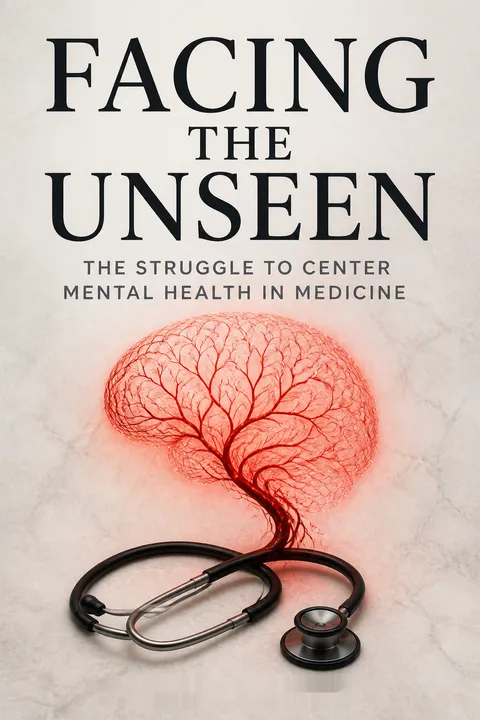


Key Takeaways
Treat mental health as ordinary medicine, because bodies and minds never separate
The divide is artificial. Damon Tweedy begins with a doctor asking a psychiatrist for help after a patient describes putting a loaded gun in his mouth. The general physician feels that suicide belongs to someone else’s specialty. The patient, meanwhile, has repeatedly declined mental health referrals while attending appointments for every other medical problem. Their encounter captures the book’s central argument: mental distress is neither rare nor separate from physical health, yet medicine often treats it as an exception.
The scale is substantial. The book cites estimates that about one in five US adults experiences mental illness in a year, and about one in twenty has a serious condition. Suicide, substance use, and untreated distress affect families, patients, and doctors themselves. Yet the system still tends to divide care into mental and physical compartments.
The opening case makes the mind-body divide visible as a practical failure, not merely a philosophical mistake. A primary care doctor already knows the patient’s history and has earned his trust, yet feels underqualified to respond to a crisis that intersects with his ordinary medical care. That tension suggests a useful standard: a health system should not require every clinician to become a specialist, but it should make recognizing distress and reaching appropriate support part of ordinary practice. The argument does not erase the distinct expertise of psychiatry. It asks why that expertise is so often difficult to access precisely when medical care needs it.
Train doctors on ordinary distress, not only locked wards and psychosis
A skewed first lesson. Tweedy’s medical-school psychiatry rotation took place almost entirely in a remote state hospital. He saw forced medication, frightened patients, and severe psychosis, but not the outpatient care where most people receive psychiatric treatment. The experience taught students to associate psychiatry with confinement and extreme illness, rather than with helping people manage depression, anxiety, grief, or substance problems.
The mismatch matters because depression is about twenty times more common than schizophrenia, while anxiety disorders are nearly ten times more prevalent than bipolar disorder. The book cites research indicating that roughly one in five primary-care visits involves a mental-health diagnosis, with the share rising when substance use and behavioral factors are included. A short hospital rotation is a poor substitute for learning how these problems appear in everyday clinics.
The rotation functions like a biased sample: students encounter people at their most impaired, then mistake that concentrated view for the whole field. The same error occurs when a doctor learns about diabetes only from intensive-care cases. Broader exposure would not make severe illness less important; it would prevent severe cases from defining every patient. Training also shapes professional status. When psychiatric care is physically isolated from other specialties, students can infer that the separation reflects a real difference in legitimacy. Curriculum design therefore teaches values through placement and contact, even when formal lectures say the disciplines belong together.
Treat stigma as a clinical hazard, even when it sounds like efficiency
Bias hides in routine talk. Tweedy describes learning to dismiss mental illness long before he became a psychiatrist. His family framed emotional distress as weakness or loss of control, and neighborhood wisdom advised keeping away from people whose behavior seemed alarming. In medical training, colleagues used insults for psychiatric patients and treated their care as a distraction from “real” medicine.
The assumptions changed when a former basketball acquaintance, Scott, arrived at the hospital manic and paranoid. Tweedy struggled to reconcile the patient in front of him with the capable young man he remembered. He also watched colleagues call Scott a problem rather than a person. Later, he recognized similar warning signs in an intern whose repeated questions were mocked as eccentric, and in a colleague who disclosed a history of depression. Doctors were not outside the stigma they helped reproduce.
The account is powerful because it does not assign prejudice only to villains. The narrator is implicated, and his changing response follows contact with people he had previously kept at a distance. That makes stigma easier to recognize in practice: it can appear as impatience, humor, avoidance, or a belief that someone is simply difficult. Professional competence can also become a shield against vulnerability, especially when doctors assume that distress signals personal weakness. Still, noticing warning signs is not the same as diagnosing a colleague. A humane response needs respectful inquiry, confidentiality, and clear routes to support, rather than gossip or amateur clinical labeling.
Let resources, not insurance status, stop deciding who gets humane crisis care
The same crisis, different exit. Stephanie arrives at an emergency department after taking pills and calling for help. She agrees that she needs treatment. But the psychiatric unit has no beds, private hospitals will not accept her without insurance, and outpatient care is unaffordable. The remaining option is transfer to a state hospital in handcuffs in a police car. Another woman with a similar crisis, but insurance, gets a bed upstairs and a nurse escort.
The book describes this disparity as the product of a system, not one clinician’s deliberate cruelty. Psychiatric beds are scarce and often poorly funded; in the author’s state, police were the default transport for involuntary psychiatric transfers. The author also cites evidence that Black Americans are less likely to receive outpatient mental-health treatment and more likely to be involuntarily hospitalized. Class-based barriers and racial history intensify each other.
Stephanie’s story shows how administrative decisions become part of clinical care. Bed availability, insurance rules, and transportation protocols determine whether a patient experiences help as treatment or punishment. Good intentions at the bedside cannot reliably overcome a system that offers one group choices and another coercion. The distinction between intent and outcome is crucial: inequity can emerge without an individual consciously choosing to discriminate. At the same time, identifying structural causes should not make responsibility abstract. Institutions can examine who is transferred, who waits, and who is restrained, then change the rules and resources that produce those patterns.
Treat opioid addiction early with medication, not suspicion and a distant referral
A missed opening. Natalie comes to a VA emergency room asking for help with opioids after prescribed pain pills led her to street drugs and heroin. She also has trauma from a sexual assault during military service. Her tests show no immediate medical emergency, so the trainee follows the rules he knows: manage withdrawal symptoms, send her home, and ask a clinic to call the next week. The referral does not connect her to care.
The book describes opioid use disorder as a treatable medical condition, yet medical training and practice often treated drug use as a moral failure. Buprenorphine offered a way to start treatment in ordinary clinics, but, in 2019, only about 8 percent of eligible physicians had obtained the required authorization. Federal restrictions were eased in 2022. The author’s later examples include emergency-department treatment, naloxone, and help arranging continuing care.
Natalie’s case exposes a contradiction: clinicians may treat the physical consequences of addiction while declining to treat the condition driving them. A referral is not meaningful access if the patient cannot be reached, must wait, or returns to an environment where the problem continues. The book’s account also resists a simple blame narrative by showing how prescribed medication, trauma, and limited support can converge. Medication is not a guaranteed cure, and treatment needs follow-through. But withholding an effective starting point because addiction seems less urgent than other conditions can turn a moment of willingness into another missed chance.
Never let a psychiatric label end the physical examination
Symptoms cross categories. Lennie entered psychiatric care after depression and a suicidal thought, but he also complained of foot pain. He later needed part of his leg amputated. He believed doctors had failed to examine his foot soon enough; the records could not establish exactly what each clinician had done. His story nevertheless shows the danger of allowing a psychiatric label to eclipse a physical complaint.
The opposite error appears in Jade, a young woman brought in with psychosis. An emergency physician noticed swollen joints and skin changes, considered lupus, and arranged medical admission rather than assuming schizophrenia. The book also cites a report that people with psychiatric disorders in public systems died fifteen to thirty years earlier than others, commonly from heart disease, cancer, stroke, and lung disease. Physical and psychiatric care both require vigilance beyond the first explanation.
These cases point to a diagnostic hazard known across medicine: once a plausible explanation takes hold, contradictory clues can become harder to see. A psychiatric history may bias clinicians toward interpreting chest pain as panic; a mental-health setting may make a physical examination seem like someone else’s task. The remedy is not to distrust psychiatric diagnoses or to investigate every symptom without limit. It is to preserve a disciplined openness to alternatives, especially when a new symptom has not been adequately explained. Shared responsibility matters too, since divided records and specialist boundaries can make crucial information disappear between teams.
Keep the person visible when dementia narrows what medicine can change
Care is more than a cure. Tweedy initially wants to pass Earl, a man with developing dementia, to neurology. His supervisor asks what that referral would accomplish and redirects attention to the family’s real needs: driving safety, finances, guns, daily support, and planning. At a later appointment, Earl talks with the doctor about sports. The exchange reveals abilities and interests that a cognitive test cannot capture, and gives his wife and daughter a moment with the person they know.
Tweedy contrasts this with medical-school training, where students were steered away from an older patient with dementia because he was a poor teaching case. A Longitudinal Integrated Clerkship, or LIC, is a medical-education approach in which students follow patients over time across different stages of care. It helps learners see lives beyond the hospital crisis and the diagnosis.
Dementia makes the limits of cure impossible to ignore, so it tests whether medicine can value care without promising reversal. Earl’s sports conversation is not a treatment claim. It is evidence that identity and connection remain clinically meaningful even when memory declines. The family’s practical decisions matter as much as a prescription, and caregiving itself can reshape relatives’ health and relationships. Longitudinal contact corrects the distortions of crisis-based training by showing patients in more than one state. That approach cannot eliminate grief or replace specialist expertise, but it can make dignity and preparation part of competent care.
Use prescriptions as part of care, not as a substitute for understanding
A label is not a plan. Erica arrives after receiving seven psychiatric prescriptions across two visits and being told first that she had depression and anxiety, then that she might be bipolar. Tweedy’s interview does not support bipolar disorder. He simplifies her medications and makes room to discuss grief, family conflict, and work. Her improvement accompanies both medication and a better therapeutic relationship; when she stops the antidepressant and struggles again, restarting it helps.
The story does not argue against psychiatric medication. It questions treatment that substitutes rapid diagnosis and multiple prescriptions for careful listening. Psychiatric diagnoses rely on a patient’s account and a clinician’s observations, not a single definitive lab test. Responses to medication vary, and symptoms may reflect illness, loss, relationships, or several forces at once. For Erica, medication works best within continuing care rather than as a stand-alone answer.
Erica’s case resists two tempting simplifications: that medication alone explains recovery, or that improvement without medication would prove her distress was not real. The narrative instead treats care as an ongoing process of interpretation, adjustment, and trust. That stance is especially useful where diagnostic boundaries are uncertain, because humility can coexist with action. A prescription may reduce suffering while conversation clarifies what the suffering means and what else might help. The tension is structural too: clinicians face short visits and limited therapy access, making pills the easiest service to deliver. Better judgment requires more than asking doctors to listen longer without changing the conditions of care.
Put mental health care beside primary care, where patients already show up
Make the handoff immediate. Willie meets Tweedy directly after a primary-care visit. He is depressed and conceals a suicide plan, but the same-day conversation, a follow-up call after he misses an appointment, and continuing visits help keep him connected to care. Doug’s case shows the reverse route: a psychiatrist orders an ECG, notices a possible heart problem, and coordinates with Doug’s primary-care doctor. Cardiology finds serious blockages and treats them.
Collaborative care is a model that connects mental-health professionals with primary-care teams so patients can receive assessment and support where they already seek medical help. The book describes evidence that it improves access, reduces depression’s burden alongside physical illness, and can improve satisfaction while lowering costs. Its expansion requires staff, communication, and payment systems that reward shared work rather than isolated specialties.
Integration is not simply placing two clinics in the same building. Willie benefits because help is available at the moment his distress becomes visible, while Doug benefits because a psychiatrist can recognize a physical danger and reach a physician who can act on it. Both cases make continuity a safety feature: people are less likely to vanish between referral, scheduling, and treatment. Yet proximity alone cannot solve shortages or guarantee trust. The model depends on teams having time, shared responsibility, and clear channels for decisions. Its promise lies in making mental and physical care routine partners, not occasional consultants.
Analysis
The book’s central achievement is to make marginalization visible at several scales without reducing it to bad attitudes alone. Tweedy begins with his own assumptions, then follows the consequences of clinical training, hospital design, insurance rules, workforce shortages, and professional hierarchy. A patient can be harmed by an individual’s bias, but also by a workflow that makes a humane alternative unavailable. The memoir’s self-implication gives this systems argument credibility: the narrator sometimes dismisses, avoids, or misreads people before recognizing the same habits in colleagues and institutions.
A deeper argument concerns medical knowledge. Psychiatry is criticized for relying on descriptions rather than definitive tests, yet the book notes that many familiar chronic conditions also depend on thresholds, symptoms, and judgment. The difference is not simply that one kind of medicine is objective and another subjective. It is that certain specialties have accumulated greater institutional legitimacy, payment, and access to resources. That distinction helps explain why a psychiatric diagnosis can both invite coercion and deny care: patients may be treated as incapable when control is needed, then treated as unworthy when resources are scarce.
The proposed response is not to replace psychiatry with primary care, nor to pretend that every clinician can manage every crisis. It is to build reliable interfaces: realistic training, physical assessment across specialties, prompt access to evidence-based addiction care, and mental-health support embedded where people already receive care. The stories also reveal a limit: integration cannot by itself repair poverty, grief, stigma, or bed shortages. It can, however, prevent organizational boundaries from adding avoidable harm. The author’s regional professional experience gives the narrative intimate force while limiting its claim to represent every setting. Its strongest lesson is consequently not a universal account of psychiatry, but a demand that health systems judge themselves by what patients actually encounter.
Review Summary
Facing the Unseen receives praise for its compelling argument to integrate mental and physical healthcare. Readers appreciate Dr. Tweedy's clear writing, personal anecdotes, and insights into the challenges of psychiatric care. Many found the book enlightening, especially regarding the stigma surrounding mental health in medicine. While some wished for more solutions or implementation details, most reviewers highly recommend it to healthcare professionals and general readers alike, citing its potential to spark important conversations about mental health treatment.
People Also Read



Glossary
Collaborative care
Mental health integrated with primary careA care model that connects primary-care clinicians with mental-health professionals, such as psychiatrists, psychologists, social workers, and nurses. Patients can receive mental-health assessment and support through the medical settings they already use, with clinicians communicating and coordinating rather than relying only on distant referrals.
Longitudinal Integrated Clerkship
Following patients across timeA medical-education approach in which students follow individual patients over an extended period and encounter their care across settings and stages. Rather than learning mainly from short rotations and isolated hospital episodes, students build continuing relationships and see how illness and treatment unfold in everyday life.
Split care
Separate prescriber and therapistAn arrangement in which one mental-health clinician, often a psychiatrist or nurse practitioner, manages medication, while another professional, such as a psychologist or social worker, provides psychotherapy. It can distribute work according to expertise, but may require patients to repeat their stories and coordinate care between clinicians.
Military sexual trauma
Sexual assault during military serviceA term used in the book for sexual assault experienced during military service. The account of Natalie shows how this trauma can shape a veteran’s emotional distress and relationship with care. Her experience also illustrates why substance use and trauma cannot always be treated as unrelated problems.
Opioid use disorder
Problematic opioid use requiring careA medical condition involving harmful or difficult-to-control use of opioids, including prescription pain medicines and drugs such as heroin. In the book, treatment includes medication such as buprenorphine, relief of withdrawal, and connection to continuing support. Tweedy emphasizes that stigma and access barriers often obstruct this care.
Download PDF
Download EPUB
.epub digital book format is ideal for reading ebooks on phones, tablets, and e-readers.








