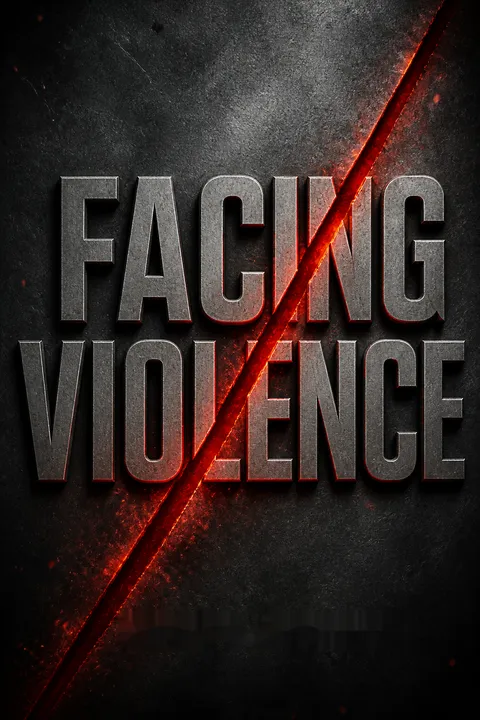


Key Takeaways
Treat self-defense as a whole event, not a bag of fighting techniques
A skill can be incomplete. Miller opens with a Kurdish lieutenant who had learned to shoot correctly, but found that range skills did not prepare him for combat conditions. The lesson applies to self-defense training: techniques can work as taught and still fail when used without context. Effective preparation must include the choices made before violence, the reaction to a sudden attack, and the consequences that follow.
Preparation has several parts. Miller connects legal and ethical judgment, understanding violence, avoiding conflict, responding to ambush, breaking a freeze, fighting, and dealing with the aftermath. These parts interact. Training to hit hard without understanding force law may create legal danger; failing to explore one’s limits may cause hesitation when action is needed.
What's distinctive is the book's insistence that self-defense is a system, not a technique collection. That resembles safety engineering, where a reliable outcome depends on people, procedures, equipment, and the environment working together. The framing also prevents a common training error: treating the physical encounter as the whole problem. A limitation is that seven broad areas can only be mapped, not mastered, in one book. The most useful reading is therefore as a diagnostic checklist, not a complete curriculum.
Set your force limits before fear makes the decision for you
Skill is not willingness. Miller distinguishes capability, what a person can physically do, from capacity, the emotional ability to do it. A martial artist may know how to injure someone yet discover an unexpected hesitation when asked to imagine using that skill against a child, a relative, or a person with a disability. Such questions expose ethical limits before a crisis makes reflection costly.
Legal tests need context. Miller organizes force justification around Intent, Means, Opportunity, and Preclusion: whether the other person appears willing and able to harm, can reach the target, and leaves no workable alternative. His broader principle is to use only force reasonably believed necessary to reach safety. Laws vary by jurisdiction, so this framework is a prompt for preparation, not legal advice.
The valuable distinction here is between a belief about oneself and a tested response. In high-stakes settings, abstract commitments often conceal unresolved conflicts between safety, identity, and moral responsibility. Scenario discussion can make those conflicts visible without pretending to erase them. The legal framework is useful as a way to structure questions, but legal doctrines differ, and the book’s broad language about proof and justification should not substitute for current local law or qualified legal counsel.
Identify the kind of violence before choosing your response
Not every confrontation has the same purpose. Miller distinguishes social violence, which serves status, group loyalty, or rule enforcement, from asocial violence, in which a victim is treated as a resource. A Monkey Dance is his term for a status challenge that can move from staring and verbal provocation to pushing and a fight. Joining it can turn a chance to leave into mutual combat, with both participants facing harm and legal consequences.
Read the pattern, not just the words. Group attacks may enforce territory or bind members together. A rule-enforcing assault may stop if the person acknowledges a genuine mistake. Predatory violence follows different incentives. These labels are practical hypotheses, not certain diagnoses, and the same encounter can shift as people react.
This model is memorable because it asks what the violence is for, not merely what it looks like. That question changes the meaning of a challenge, a crowd, or a request to move somewhere private. It also discourages one-size-fits-all advice, such as always talking or always standing firm. The categories should remain provisional: people rarely announce their motives clearly, and a misclassification can make a reasonable tactic unsafe. Observation must stay paired with readiness to revise the interpretation.
Leave early: exits and distance beat a better punch
The safest fight is avoided. Miller ranks staying away from predictable danger above escaping it, escaping above verbal de-escalation, and de-escalation above physical force. He identifies settings with intoxication, groups of young men, contested territory, and privacy as places where violence may be more likely. The point is not to live fearfully, but to notice when the surroundings reduce options and to leave before pride or confusion narrows them further.
Make escape a practiced habit. Notice exits, alternate routes, obstacles, and places where movement could be blocked. Miller also recommends examining a familiar route from a potential attacker’s perspective to spot vulnerable locations. Intuition can flag a problem before conscious thought explains it. Treat that feeling as a reason to observe and reassess, then try to identify the specific cues behind it.
The emphasis on early exit reframes awareness as a way to preserve choices, rather than as constant threat scanning. That is psychologically important: vigilance without an action plan can become exhausting, while knowing how to leave gives attention a practical purpose. The book’s advice to consider places from an attacker’s perspective can sharpen situational awareness, but it should not become an invitation to see every stranger as dangerous. Risk awareness is most useful when it supports proportionate, ordinary decisions.
Social politeness can fail disastrously against a predator
A predator wants access or control. Miller calls someone a Resource Predator when violence is a means to obtain something, such as money or a car, and a Process Predator when the violent act itself is the goal. Predators may use a blitz, relying on speed or intimidation, or charm, using social interaction to gain access and privacy. A request to move to a secluded second location is especially alarming in the book’s model.
Use the response that fits the risk. Surrendering property may end a resource-driven robbery; it does not meet the goal of a process-driven assault. Miller argues that pleading, flattery, and negotiation can fail when the attacker does not recognize a shared social obligation. Drawing attention to the encounter and reaching witnesses may be more useful than trying to persuade the attacker to care.
The central insight is that familiar social skills are not universal tools. Appeasement can preserve cooperation in ordinary relationships, yet be misread as vulnerability when the other person is exploiting access or isolation. That distinction is valuable well beyond physical safety, wherever someone uses charm to bypass boundaries. Still, a stranger’s friendliness or invitation alone cannot establish predatory intent. The framework works best as a reason to maintain boundaries and public options, not as a confident verdict about another person’s character.
Pretrain a simple response, then practice breaking the freeze
Surprise disrupts decision-making. Miller uses the OODA loop, Observe, Orient, Decide, Act, to explain why a person who first notices an attack in progress is already behind. Under stress, perception and movement can change: vision may narrow, hearing may distort, fine coordination may deteriorate, and memory may become unreliable. Freezing can be involuntary, tactical, or rooted in confusion, unfamiliarity, or conflict about what action is acceptable.
Make the first action familiar. Operant Conditioning, in Miller’s usage, pairs a recognizable stimulus with a rehearsed response until action requires less deliberation. A simple, repeatable response can interrupt an attacker’s momentum and create a chance to escape; it cannot guarantee safety. To break a freeze, Miller advises noticing and naming it, initiating one action, and repeating the instruction to act.
This is a practical application of a broader principle: skills that must be retrieved under pressure need rehearsal under conditions that resemble pressure. The approach also rejects the fantasy that confidence alone prevents freezing. Yet the OODA model simplifies a more complicated process, and conditioned responses can misfire when a cue is ambiguous or training is unrealistic. Rehearsal should build adaptable judgment, not a brittle reflex, and physical practice belongs in safe settings with competent instruction.
Fight to reach safety, not to win a contest
The goal changes the tactics. A sparring match rewards dominance within rules; an assault demands survival and, when possible, escape. Miller says every encounter involves the person defending, the threat, the environment, and luck. A training partner also behaves differently from someone attacking without concern for injury, so drills that rely on predictable timing or restraint may create false confidence.
Use what the situation offers. Position, movement, obstacles, and unexpected changes can create openings. Miller’s rule of thumb is to reduce disorder when control is improving and introduce more uncertainty when losing, because a change may interrupt the attacker’s advantage. Whatever the tactic, stop when the threat and immediate danger have ended. Continuing to punish someone can turn self-protection into excessive force.
The distinction between winning and escaping is a critique of metric fixation: people tend to pursue the goal their training rewards, even when the real problem has a different endpoint. In this case, a clean submission or knockout may be less useful than a route to safety. The book also rightly treats the environment as active rather than decorative. Its advice about increasing chaos needs careful judgment, however, since unpredictability can harm bystanders as well as an attacker.
Budget for injuries, investigations, and civil claims after force
Survival does not end the event. Miller describes possible injuries that need prompt medical attention, including concussions and exposure to blood-borne pathogens. He advises checking for harm once safe, contacting emergency services, and getting medical evaluation when there is concern. Stress can also distort immediate memory and speech, so statements made in the first emotional minutes may have consequences in an investigation or lawsuit.
Legal outcomes are separate. Criminal proceedings assess whether a crime occurred; civil claims assess responsibility for harm, under different rules. A favorable criminal outcome does not automatically end a civil case. Miller recommends speaking with a lawyer experienced in self-defense matters and emphasizes that laws vary. The practical point is to plan for medical, legal, financial, and personal consequences, rather than treating them as remote footnotes.
The aftermath belongs inside the definition of preparedness because decisions made in seconds can generate years of medical and legal consequences. This is a strong corrective to stories that end when the attacker falls. The distinction between criminal and civil proceedings is especially important, though the book’s legal descriptions are rooted in a particular jurisdiction and era. Readers should verify current local rules with qualified professionals rather than treating general guidance as a reliable prediction of a case.
Review survival honestly without letting the event define your identity
A violent event can unsettle a life story. Miller notes that survivors may feel fear, guilt, anger, relief, or almost nothing, and may be surprised by the gap between what they imagined and what happened. He argues that there is no single correct emotional response. Friends can help by listening without judging, while the survivor decides what support is useful. Feeling changed does not mean being permanently broken.
Turn memory into learning, not blame. An After-Action Debriefing reconstructs what happened, identifies what worked, then asks what could be improved without assigning fault. It can expose both strengths and gaps. Miller also warns that victimhood can become a way to control others or avoid responsibility for later behavior. Recovery, in this account, means acknowledging the event while continuing to live beyond it.
The chapter resists two familiar extremes: insisting that trauma must permanently define someone, and demanding that the survivor simply move on. Its debriefing method offers a middle path, converting experience into specific learning while avoiding the false certainty of hindsight. That is useful in many high-stakes fields, but emotional recovery is not a performance review, and some people need sustained professional care. Honest reflection and compassion are compatible; improvement should not become another standard by which a survivor is blamed.
Analysis
Facing Violence is best understood as a systems account of self-protection, told through a practitioner’s stories rather than built as a controlled scientific study. Its strongest contribution is not a novel fighting move. It is the insistence that a physical encounter sits inside legal rules, personal ethics, social motives, stress physiology, environmental constraints, and a long aftermath. The book’s repeated cases make that interdependence vivid: a successful intervention can still create legal exposure, while a technically skilled person can hesitate because the action conflicts with an unexamined moral boundary.
The model also resembles safety engineering. Serious failures rarely arise from one isolated mistake; they emerge when several safeguards are absent or assumptions do not match reality. Miller’s sequence encourages readers to ask what happens before, during, and after an incident, and to identify where their own preparation is thin. His distinction between social and predatory violence is particularly useful as a hypothesis about motive, because it explains why a tactic that defuses a status dispute may be ineffective against someone seeking privacy or control.
The same strengths create limits. The author’s vivid categories can make messy human behavior seem more legible than it is. An observer may not know whether a person is posturing, enforcing a group norm, or preparing an assault, and the cost of a mistaken reading can be high. Some of the legal claims are jurisdiction-specific and should not be treated as current universal doctrine. Likewise, experiential examples establish practical insight, but they do not prove how often a pattern occurs.
The most durable message is therefore not to memorize the taxonomy, but to use it humbly. Prepare ethical decisions in advance, preserve options, rehearse a small number of robust actions, and expect uncertainty. The book’s sharpest warning is aimed at training that teaches a move while ignoring the conditions that make it necessary and the consequences that follow.
Review Summary
Facing Violence by Rory Miller is highly praised for its comprehensive approach to self-defense, covering legal, psychological, and practical aspects. Readers appreciate Miller's real-world experience and no-nonsense writing style. The book is particularly valued for its insights on violence dynamics, avoidance strategies, and dealing with the aftermath of violent encounters. While some find certain sections less relevant or outdated, most consider it essential reading for martial artists, self-defense instructors, and anyone interested in personal safety. Some readers note overlap with Miller's previous work but still recommend this as the superior option.
People Also Read





Glossary
Intent, Means, Opportunity, and Preclusion
Four force-justification questionsA framework Miller uses to assess and explain a threat. Intent concerns whether the person appears willing to cause harm; Means concerns the ability to do so; Opportunity concerns access to the target; Preclusion concerns whether safer alternatives, such as leaving or getting help, were unavailable or ineffective. The relevant law varies by jurisdiction.
Capability
Physical ability to actThe physical skill or ability to perform an action, such as striking or applying a restraint. Miller distinguishes capability from capacity: knowing how to cause harm does not establish that a person can emotionally bring themselves to do it in a real confrontation. Training can develop capability without resolving that internal conflict.
Capacity
Emotional ability to actA person's internal willingness or emotional ability to use a physical capability. Someone may understand a technique and perform it in practice yet hesitate when faced with the real possibility of injuring another person. Miller argues that examining ethical boundaries and emotional reactions in advance can reveal this gap.
Monkey Dance
Status-driven dominance ritualMiller's term for a common social confrontation in which people, especially young men, jockey for status. It may escalate through staring, verbal challenges, approach, contact, and a punch. Because participants often have opportunities to disengage, joining the exchange can become mutual combat rather than self-defense.
Resource Predator
Violence used to get somethingA person who uses or threatens violence to obtain a separate goal, such as money, property, or access. In Miller's model, surrendering the requested resource may sometimes end the encounter. The label describes the apparent purpose of an assault, not a diagnosis of the person or a guarantee of how the encounter will unfold.
Process Predator
Violence as the goalA person whose primary aim is the violent act itself, rather than a separate resource. Miller includes rape, torture, and serial killing among examples. He treats efforts to move a victim to a private secondary location as a serious warning sign, because isolation can provide the attacker time and control.
Survival Stress Response
Body and mind under threatThe collection of physical and perceptual changes that can accompany extreme fear or danger. Miller describes effects such as narrowed vision, altered hearing, reduced fine coordination, memory distortion, and freezing. These responses can interfere with skills learned in calm training, which is why he emphasizes realistic rehearsal and preparation.
Operant Conditioning
Rehearsed cue-response trainingA method of training that repeatedly pairs a recognizable stimulus with a desired response, reinforcing correct actions and discouraging incorrect ones. Miller applies it to simple responses to sudden attacks, aiming to reduce the time spent interpreting and choosing. The response must be practiced safely and should not be mistaken for a guarantee.
After-Action Debriefing
Structured review after an eventA three-part review of a high-stakes event. First, reconstruct what happened as accurately as possible. Next, identify what went well. Finally, ask what could be improved without blaming participants. Miller presents it as a way to learn from an event while acknowledging that memory can be incomplete or inconsistent.
Social violence
Violence serving group dynamicsViolence that functions within a social group, serving purposes such as status, solidarity, territorial boundaries, or enforcement of group rules. Miller contrasts it with asocial violence, where a person is treated as a resource rather than as a member of a shared social world. The distinction is a practical model, not a perfect classification.
FAQ
What's Facing Violence: Preparing for the Unexpected about?
- Understanding Violence: The book delves into the complexities of violence, focusing on its dynamics, precursors, and aftermath rather than just physical techniques.
- Seven Key Elements: Rory Miller outlines seven critical elements essential for self-defense training, including legal and ethical implications, violence dynamics, and the aftermath.
- Real-World Application: It serves as a guide for navigating real-life confrontations, emphasizing the importance of understanding violence to prepare effectively.
Why should I read Facing Violence: Preparing for the Unexpected?
- Practical Insights: The book offers practical insights into the nature of violence, addressing psychological and legal aspects beyond physical techniques.
- Expert Experience: Rory Miller draws from his extensive experience in law enforcement, providing a unique and informed perspective on violence.
- Comprehensive Approach: It covers a wide range of topics, ensuring readers are well-rounded in their understanding of self-defense.
What are the key takeaways of Facing Violence: Preparing for the Unexpected?
- Seven Elements of Self-Defense: Emphasizes addressing legal and ethical implications, understanding violence dynamics, and preparing for the aftermath.
- Importance of Awareness: Stresses the need for awareness and understanding of personal ethical beliefs about violence.
- Legal Consequences: Highlights the importance of understanding self-defense laws to avoid legal repercussions.
How does Facing Violence address legal implications?
- Understanding Force Law: Explains that self-defense laws vary by state, making it crucial to know local legal definitions.
- Affirmative Defense Concept: Highlights that claiming self-defense is an affirmative defense, placing the burden of proof on the defender.
- Consequences of Ignorance: Stresses the importance of being informed about local laws to ensure legal protection.
What is the "freeze" response discussed in Facing Violence?
- Biological Reaction: Describes the freeze response as a survival mechanism that occurs under extreme stress, often immobilizing individuals.
- Types of Freezes: Categorizes freezes into tactical, physiological, non-cognitive mental, and cognitive, each with different implications.
- Breaking the Freeze: Provides strategies for recognizing and overcoming the freeze response through training and mental conditioning.
What is the Monkey Dance concept in Facing Violence?
- Social Violence Dynamics: Refers to a ritualized form of social violence involving dominance displays rather than genuine fights.
- Avoiding the Dance: Advises recognizing when a Monkey Dance is occurring to avoid unnecessary conflict.
- Consequences of Engagement: Engaging can lead to mutual combat and legal consequences, emphasizing the importance of walking away.
What is the Counter-Ambush strategy in Facing Violence?
- Immediate Response: Focuses on responding quickly and effectively to unexpected attacks, emphasizing instinctive reactions.
- Elements of Speed: Discusses the OODA loop and how training can allow for immediate action by bypassing middle steps.
- Training for Reflexes: Advocates for operant conditioning to develop reflexive actions that can be executed under stress.
How does Facing Violence suggest handling a Group Monkey Dance?
- Recognizing the Dynamics: Explains that a Group Monkey Dance involves multiple individuals, making it more dangerous.
- Limited De-escalation Options: Suggests acting unpredictably or humorously to defuse the situation, as de-escalation rarely works.
- Importance of Witnesses: Recommends drawing attention to the situation to deter escalation and ensure favorable legal outcomes.
What are some psychological effects of violence discussed in Facing Violence?
- Understanding Freezing: Addresses the psychological phenomenon of freezing during an attack and the importance of breaking out of it.
- Ethical Beliefs: Emphasizes understanding one’s own ethical beliefs about violence and their impact on decision-making.
- Aftermath Considerations: Discusses potential guilt and trauma, highlighting the importance of preparing for the aftermath.
What is the Dracula’s Cape technique mentioned in Facing Violence?
- Counter-Attack Method: A technique designed to respond to an attack by using the elbow to strike while closing the distance.
- Execution Steps: Involves tucking the chin and using the lead elbow to strike, creating a defensive posture.
- Follow-Up Options: Allows for additional strikes or control techniques, making it versatile for various attacks.
How does Facing Violence address the concept of "luck" in violent encounters?
- Unpredictable Variables: Describes luck as unforeseen elements that can influence the outcome of a violent situation.
- Minimizing Luck: Discusses strategies for minimizing luck's impact through preparation and adaptability.
- Recognizing Opportunities: Encourages recognizing and seizing opportunities during chaotic encounters to turn the tide.
What are the best quotes from Facing Violence and what do they mean?
- “Self-defense is not a contest.”: Emphasizes that self-defense is about survival, not winning or losing.
- “You must know your own ethical beliefs about violence.”: Highlights the importance of self-awareness in decision-making.
- “Action beats reaction.”: Underscores the necessity of being proactive in self-defense to prevent an attacker from gaining the upper hand.
About the Author
Download PDF
Download EPUB
.epub digital book format is ideal for reading ebooks on phones, tablets, and e-readers.








