

Key Takeaways
Treat a gripping breaking-news story as a lead, not a confirmed fact.
A story built on reality. After the 2017 Mexico City earthquake, a school really had collapsed, children really were trapped, and a rescue dog named Frida really was working at the scene. Reports then spread that a girl called Frida Sofia was alive beneath the rubble. Rescuers, reporters, and government officials repeated details, but no such girl existed. True elements made the unverified center of the story feel more credible, while hope made it emotionally hard to question.
Verify before amplifying. An analysis discussed in the book found that false news reached 1,500 people about six times faster than truth did. In breaking news, early accounts can be mistaken without being deliberate deception. Treat them as provisional, check whether independent sources confirm the central claim, and watch for corrections as facts emerge.
The Frida Sofia story shows why verification is not merely a test of whether a source seems reputable. A chain of respected sources can repeat an unconfirmed claim, especially when each relies on the others. The distinction between an honest early error and intentional deception also matters: both can mislead, but they call for different judgments about motive and responsibility. In fast-moving events, the most careful response is neither instant belief nor reflexive cynicism. It is calibrated patience: share what is known, label what remains uncertain, and revise when evidence changes.
Make your first hypothesis work harder by looking for evidence against it.
Belief shapes the search. In psychologist Peter Wason's number experiment, participants saw a sequence such as 2, 4, 6, guessed the hidden rule, and proposed more number sets for the experimenter to assess. Most tested examples that supported their guess instead of trying examples that could disprove it. The experiment illustrates confirmation bias: the tendency to seek or interpret information in ways that support existing beliefs. Implicit bias is different: it describes how stereotypes and assumptions can shape judgments without conscious awareness.
Build in a countercheck. The authors use their fondness for coffee to show how personal preferences can make supportive health claims feel more convincing than cautionary ones. Awareness helps, but a practical test is stronger: ask what evidence would change the conclusion, then actively look for it. Personalized feeds can make that discipline harder by showing users more of what their past clicks suggest they prefer.
This is a compact lesson in scientific reasoning: a hypothesis earns confidence by surviving serious attempts to challenge it, not by collecting friendly examples. The same logic applies to political claims, health advice, and classroom research. Yet awareness of bias alone rarely defeats it; people can recognize the concept and still protect a favored belief. A useful extension is to make disconfirmation routine and social, with peers asked to find the strongest evidence against a claim before the group accepts it. That practice should not imply that every side is equally supported. Evidence, not symmetry, decides.
Diagnose the manipulation precisely instead of calling every dispute fake news.
A long history of deception. In 1782, Benjamin Franklin fabricated a newspaper supplement describing gruesome killings to strengthen support for American independence. It imitated a real paper, mixed false claims with recognizable facts, and reached readers through trusted community members. The book uses this episode to show that digital tools have accelerated deception, but the human motives and persuasive tactics are much older.
Name the tactic. A post-truth climate is one in which emotion and personal belief can outweigh objective evidence in shaping public judgment. The broad label fake news can obscure important distinctions: propaganda advances a cause, disinformation deliberately spreads falsehood to influence opinion, clickbait uses sensational presentation to attract attention, satire invents stories for humor, and conspiracy theories explain events through secret plots. The label is also used to dismiss reporting simply because it challenges someone's beliefs.
Precise categories help readers ask better questions: Is this content inaccurate, intentionally deceptive, satirical, or merely unwelcome? That distinction is useful in classrooms and public debate because correcting an error is not the same task as identifying a coordinated attempt to mislead. Franklin's story also complicates any golden-age account of journalism: the press has long been both a channel for public knowledge and a tool for persuasion. Still, motive is often difficult to establish from a post alone. It is safer to describe what the content does and what evidence supports the claim before declaring why its creator made it.
Teach students to curate the news that reaches them on phones.
News arrives by design. The book reports that about two-thirds of Americans got at least some news through social media in a 2017 survey. Research on young people found that news often reached them through phone notifications and followed accounts, rather than through deliberate searches. A filter bubble is an online environment shaped by browsing behavior and algorithms that can limit exposure to ideas a user has not shown interest in.
Manage the feed. A notification curator deliberately chooses which apps and sources can push news to a device. Students can assess those sources as carefully as they assess a website, seek a range of credible perspectives, and remove browsing history that may reinforce personalization. Mobile Reader View can also reduce ads and other distractions. The authority of the original author matters more than the trustworthiness of the friend who shared the post.
The shift from searching for news to receiving it changes the literacy task. Students need to judge individual stories, but they also need to understand the systems that select and deliver those stories. This connects media education to choice architecture: small defaults, such as notification permissions, shape what people encounter before they make a conscious decision. Personal curation can broaden a feed, but it cannot make platform algorithms transparent or neutral. Schools can teach useful habits while also treating platform design as part of the problem, rather than implying that each student can solve it alone.
Treat empathy as a safety condition for difficult fact-checking.
False stories reach real people. The book describes a man who entered a Washington pizza restaurant armed with guns, seeking children he believed were being held in a basement as part of the false Pizzagate conspiracy. The restaurant had no basement, and no children were found. In another account, a school librarian found an anti-immigrant slogan written on a wall used by English-language learners. Students feared that their families might be deported, and the librarian eventually removed the wall as a space for student messages.
Protect people while testing claims. The authors argue that repeated, fear-driven messages can weaken empathy and make hostile behavior seem acceptable. Their teaching advice includes setting clear discussion norms, giving students language to challenge claims without attacking people, modeling respectful conduct, and making room for reflection. Empathy does not mean treating every claim as true; it helps keep inquiry from becoming a threat to classmates.
Accuracy and empathy solve different problems, but they reinforce one another. Evidence helps establish what is true; empathy helps people hear correction without reducing one another to political symbols or stereotypes. That distinction is vital in classrooms where students may be personally affected by a story under discussion. Empathy should not become a substitute for fact-checking, and civility should not silence those describing harm. The strongest classroom norms protect both open scrutiny of ideas and the dignity of people who must live with the consequences of those ideas.
Verify a claim's origin, context, and independent support before sharing.
Skills were often missing. The Stanford History Education Group assessed more than 7,800 students across 12 states using 56 tasks. Students struggled to distinguish advertisements from editorial content, assess manipulated images, recognize bias, and judge online accounts. The book argues that students need practice with the real information environment, not only with lists of pre-approved sites.
Check beyond appearances. Triangulation means comparing a claim with multiple credible sources to see whether independent evidence supports it. Start by identifying who created the material, when it appeared, and what evidence it offers. Check whether an image is authentic and whether statistics have context. Notice loaded language and sensational headlines. Then seek independent reporting or documentation. A familiar platform, a polished design, or a trusted friend sharing a post can create an impression of reliability, but none proves the underlying claim.
This approach combines lateral reading, source criticism, and basic statistical literacy: readers leave the page to learn who is behind it, then compare its claims with other evidence. It is more robust than judging credibility by visual polish or a checklist alone. However, multiple pages do not guarantee independent confirmation; they may repeat a single original report. Readers should trace claims back to their earliest available source and ask whether the sources truly corroborate one another. The goal is not to make every ordinary search exhaustive, but to match the depth of checking to the stakes of the claim.
Turn verification into a short, recurring classroom habit, not a one-off unit.
Make practice manageable. The book describes a sixth-grade teacher who gives students three quick questions: Does the story seem believable? What is known about its source? Do its words or images seem emotionally loaded? He uses brief lessons several times each quarter, helping students rehearse evaluation without turning every class into a research project. A fourth-grade librarian used a book about separating truths from lies to teach keyword searches, source checks, and comparison across websites.
Teach the whole process. The authors' Five Core Principles are a planning guide: educators examine their own biases, use technology to build understanding across differences, teach language for challenging ideas respectfully, model responsible behavior, and give students time to reflect. These practices make media literacy more than a hunt for errors. They join source evaluation with habits of discussion and self-correction.
Brief, repeated practice resembles skill training in other fields: a manageable routine is more likely to be remembered and used than a complex procedure introduced once. The examples also show that rigor need not mean age-inappropriate material; younger students can investigate claims through accessible stories and guided searches. Still, repetition should not become a formula detached from real contexts. Students need chances to apply the same habits to the posts, videos, images, and breaking stories they actually encounter, with support when the topic is emotionally charged.
Give media literacy class time, trained partners, and real internet access.
Good intentions need structure. In the authors' 2018 survey of educators, 87% said they taught media literacy in some form, but only 7% reported district instructional goals for addressing fake news, and 6.5% said their district had invested in or identified a curriculum. The book also reports that school districts often block social platforms used for news, and that schools lost roughly 10,000 full-time librarian positions, about 19% of the workforce, between 2000 and 2016.
Make instruction everyone’s work. Media literacy belongs in social studies, English, and other subjects where students already interpret evidence and arguments. Teacher-librarians can help select sources, co-teach, connect lessons across subjects, and coach students as they evaluate their work. Access matters too: if some students only use technology for drills while others get authentic research opportunities, schools reproduce unequal preparation for digital citizenship.
The book's strongest institutional argument is that individual skill cannot flourish without time, access, and knowledgeable support. Blocking difficult content may reduce immediate exposure, but it also withholds practice evaluating the material students meet elsewhere. The equity concern is especially important: digital access is not just possession of a device, but the opportunity to use it for meaningful inquiry and participation. At the same time, schools should not be made solely responsible for correcting an information system optimized for attention and rapid sharing. Media education needs institutional investment alongside accountability for the platforms and policies that shape what users see.
Analysis
The book’s most durable insight is that misinformation is not a single content problem. It is a meeting point between human cognition, media incentives, social trust, and educational design. The opening account of the nonexistent earthquake survivor gives that argument a memorable form: authentic details, rushed reporting, and a compelling hope can combine into a false narrative without requiring every participant to be deliberately deceptive. That distinction gives educators a more useful starting point than simply labeling sources trustworthy or fake.
The book is also strongest when it treats media literacy as civic practice rather than a narrow research technique. Its links between source evaluation, empathy, respectful disagreement, and equitable access recognize that people do not encounter information as detached analysts. Claims arrive through relationships, identities, and emotional stakes. The classroom examples make the proposed work tangible, from short recurring lessons to collaboration between teachers and librarians.
A limitation follows from the book’s emphasis on the responsibility of readers and educators. Better judgment can reduce careless sharing, but it cannot by itself repair business models that reward engagement, recommendation systems that personalize exposure, or unequal access to meaningful learning. Placing the burden chiefly on teachers risks turning a structural problem into an individual competency test. A fuller response requires schools to invest in instruction while public institutions and technology companies address the conditions that make deceptive content profitable and difficult to trace.
The book’s practical advice is best understood as a foundation, not a universal checklist. Source scrutiny, corroboration, and reflection are adaptable habits, but they must be matched to context and stakes. A viral claim about immediate danger demands a different level of verification from a low-stakes classroom curiosity. The larger educational aim is not blanket distrust. It is calibrated trust: knowing what evidence supports a claim, what remains uncertain, and when a person or institution should be held accountable for getting it wrong.
Review Summary
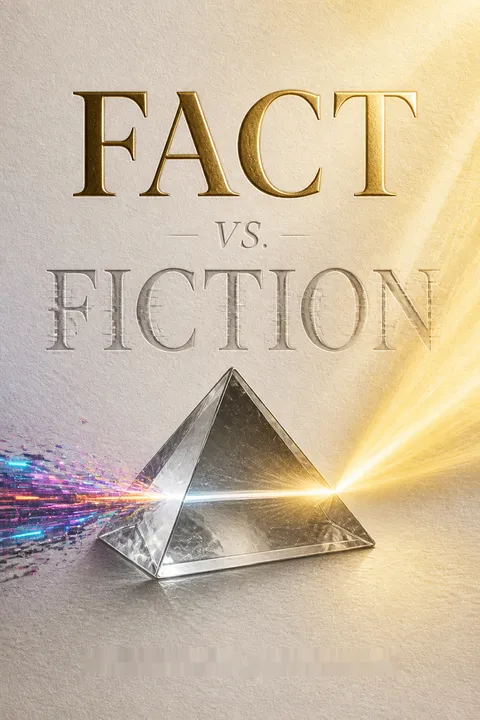
Fact vs. Fiction is highly praised by educators for its valuable insights on teaching critical thinking skills in the age of fake news. Readers appreciate its practical resources, engaging anecdotes, and accessible language. The book offers strategies for identifying misinformation, understanding psychological factors behind fake news, and integrating media literacy into curricula. Many reviewers highlight its relevance for teachers, librarians, and parents. While some note its US-centric focus and potential for updated content, most consider it an essential resource for addressing the challenges of information literacy in today's digital landscape.
People Also Read


Glossary
Post-truth
Belief outweighs objective evidenceA condition in which emotion and personal belief can influence public opinion more than objective facts. The book uses the term to describe an information climate where evidence may be dismissed when it conflicts with identity or prior convictions, and where public figures can use labels such as fake news to discredit unwelcome reporting.
Confirmation bias
Seeking support for existing beliefsThe tendency to search for, interpret, or remember information in ways that support what a person already believes. The book illustrates the tendency through Peter Wason's number-rule experiment: participants commonly tested examples that confirmed their guesses rather than seeking examples that could disprove them.
Implicit bias
Unconscious influence of assumptionsThe influence of existing assumptions and stereotypes on understanding, actions, and decisions without a person consciously intending that influence. In media evaluation, implicit bias can affect which claims seem credible or suspicious. The book recommends recognizing such influences as part of becoming a more careful consumer of information.
Filter bubble
Personalized information narrowing exposureAn online experience shaped by browsing behavior and platform algorithms that favors content aligned with a user's inferred interests and beliefs. This personalization can make information more relevant, but may also reduce exposure to unfamiliar or contradictory perspectives. The book treats it as a reason to examine and deliberately curate news feeds.
Citizen journalism
Public reporting with digital toolsThe collection, circulation, and analysis of news or information by members of the public, often using mobile devices and social media. Citizen reports can provide rapid, valuable firsthand accounts, but each represents a limited perspective and may be incomplete or inaccurate until checked against broader evidence.
Triangulation
Comparing independent sourcesA fact-checking practice that tests a claim against multiple credible sources and evidence. The aim is not simply to count websites repeating the same statement, but to see whether independent reporting or documentation supports it. Triangulation helps readers assess context, identify unsupported claims, and avoid relying on a single post or account.
Notification curator
Person who selects news alertsA reader who deliberately chooses which apps, accounts, and sources can deliver news notifications to a device. The term emphasizes that news literacy includes shaping the stream of information that arrives, not only evaluating individual stories after they appear. Curating alerts means scrutinizing sources and seeking a useful range of perspectives.
Five Core Principles
Guide for planning media literacyThe book's planning framework for teaching media literacy alongside empathy and responsible participation. It asks educators to examine their own biases, use technology to help students understand others, teach respectful ways to challenge ideas, model responsible conduct, and make space for reflection. The principles guide lesson design rather than prescribe a single curriculum.
FAQ
What's "Fact Vs. Fiction: Teaching Critical Thinking Skills in the Age of Fake News" about?
- Overview: The book, authored by Jennifer LaGarde and Darren Hudgins, focuses on equipping educators with the tools to teach students critical thinking skills necessary to discern fact from fiction in the age of fake news.
- Purpose: It aims to address the challenges posed by misinformation and the spread of fake news, particularly in the context of education and how it affects students' understanding of the world.
- Content: The book provides strategies, lesson plans, and resources for educators to help students evaluate the credibility of information they encounter online.
- Context: It discusses the historical context of fake news, its psychological impact, and the role of technology in amplifying misinformation.
Why should I read "Fact Vs. Fiction: Teaching Critical Thinking Skills in the Age of Fake News"?
- Relevance: In today's digital age, misinformation is rampant, and this book provides practical tools to combat it, making it highly relevant for educators, parents, and anyone interested in media literacy.
- Educational Focus: It offers educators specific strategies and lesson plans to integrate media literacy into their teaching, which is crucial for developing informed and critical thinkers.
- Comprehensive Approach: The book covers the psychological, historical, and technological aspects of fake news, providing a well-rounded understanding of the issue.
- Empowerment: By reading this book, you'll be better equipped to empower students and others to navigate the complex information landscape critically and responsibly.
What are the key takeaways of "Fact Vs. Fiction: Teaching Critical Thinking Skills in the Age of Fake News"?
- Critical Thinking Skills: The book emphasizes the importance of teaching students to critically evaluate information sources and recognize bias and misinformation.
- Media Literacy: It highlights the need for media literacy education in schools to prepare students for the challenges of discerning credible information in a digital world.
- Role of Educators: Educators are positioned as crucial players in combating fake news by integrating media literacy into their curricula and fostering an environment of critical inquiry.
- Empathy and Bias Awareness: The book stresses the importance of empathy and awareness of personal biases in understanding and evaluating information.
How does "Fact Vs. Fiction" address the issue of fake news in education?
- Lesson Plans and Strategies: The book provides educators with practical lesson plans and strategies to teach students how to identify and evaluate fake news.
- Historical Context: It explores the history of fake news, showing that misinformation is not a new phenomenon but has been amplified by modern technology.
- Psychological Insights: The authors delve into the psychological reasons why people believe and spread fake news, offering insights into how to counteract these tendencies.
- Empowering Students: The book focuses on empowering students to become savvy information consumers who can navigate the digital landscape with confidence.
What are some specific methods or advice from "Fact Vs. Fiction" for teaching media literacy?
- Frameworks for Evaluation: The book introduces frameworks like the CRAAP Test and other checklists to help students evaluate the credibility of information sources.
- Interactive Lessons: It suggests using interactive and engaging lessons, such as analyzing real and fake news stories, to teach students how to spot misinformation.
- Technology Integration: The authors advocate for integrating technology into media literacy education, using tools like Google Classroom and digital portfolios.
- Empathy Building: The book recommends using technology to build empathy, such as connecting students with peers globally or using virtual reality to experience different perspectives.
What are the best quotes from "Fact Vs. Fiction" and what do they mean?
- Voltaire's Quote: "In the case of news, we should always wait for the sacrament of confirmation." This emphasizes the importance of verifying information before accepting it as true.
- Benjamin Franklin's Insight: "By the press we can speak to nations." This highlights the power of media to influence public opinion, for better or worse.
- Obi-Wan Kenobi's Wisdom: "Who is more foolish, the fool or the fool who follows him?" This quote underscores the importance of critical thinking and not blindly following misinformation.
- Call to Action: "We believe that helping our students develop the skills they need to discern fact from fiction...is the fundamental skill of citizenry." This stresses the critical role of education in fostering informed citizens.
How does "Fact Vs. Fiction" suggest educators handle the challenge of teaching about fake news without getting political?
- Focus on Skills: The book advises focusing on teaching critical thinking and media literacy skills rather than political content, which helps avoid bias.
- Neutral Examples: It suggests using neutral or historical examples of misinformation to teach students about fake news without delving into current political debates.
- Encouraging Dialogue: The authors recommend fostering an environment of respectful dialogue where students can discuss and challenge ideas without attacking individuals.
- Emphasizing Facts: The book emphasizes teaching students to differentiate between facts and opinions, helping them understand that facts are non-partisan.
What role do teacher-librarians play according to "Fact Vs. Fiction"?
- Information Specialists: Teacher-librarians are positioned as key players in teaching media literacy, given their expertise in information management and research skills.
- Collaborative Partners: The book highlights the importance of collaboration between teacher-librarians and classroom teachers to integrate media literacy across the curriculum.
- Resource Providers: Librarians can provide valuable resources and support for both students and teachers in navigating the complex information landscape.
- Advocates for Literacy: They are seen as advocates for media literacy, helping to create a school culture that values critical thinking and informed citizenship.
How does "Fact Vs. Fiction" propose using technology to combat fake news?
- Digital Tools: The book suggests using digital tools like Google Classroom, Seesaw, and virtual reality to engage students in media literacy education.
- Augmented Reality: It recommends using augmented reality to provide students with immersive experiences that build empathy and understanding of different perspectives.
- Social Media Literacy: The authors advocate for teaching students how to critically evaluate information on social media platforms, where much misinformation spreads.
- Notification Management: The book advises teaching students to curate their notifications and manage their digital environments to reduce exposure to fake news.
What are some challenges "Fact Vs. Fiction" identifies in teaching media literacy?
- Time Constraints: Educators often face time constraints and pressure to focus on tested subjects, making it challenging to integrate media literacy into the curriculum.
- Lack of Resources: Many schools lack the resources or support to implement comprehensive media literacy programs, which the book addresses with practical solutions.
- Political Sensitivity: Teaching about fake news can be politically sensitive, but the book offers strategies to navigate these challenges while maintaining neutrality.
- Rapidly Changing Landscape: The fast-paced evolution of technology and media requires educators to continually update their skills and knowledge to stay relevant.
How does "Fact Vs. Fiction" address the psychological aspects of fake news?
- Confirmation Bias: The book explains how confirmation bias leads people to believe information that aligns with their existing beliefs, making them more susceptible to fake news.
- Emotional Manipulation: It discusses how fake news often uses emotional manipulation to influence opinions and spread misinformation.
- Cognitive Overload: The authors highlight the challenge of cognitive overload in the digital age, where the sheer volume of information can make it difficult to discern truth from fiction.
- Empathy Erosion: The book warns of the erosion of empathy caused by fake news, which can lead to increased polarization and division.
Download PDF
Download EPUB
.epub digital book format is ideal for reading ebooks on phones, tablets, and e-readers.








