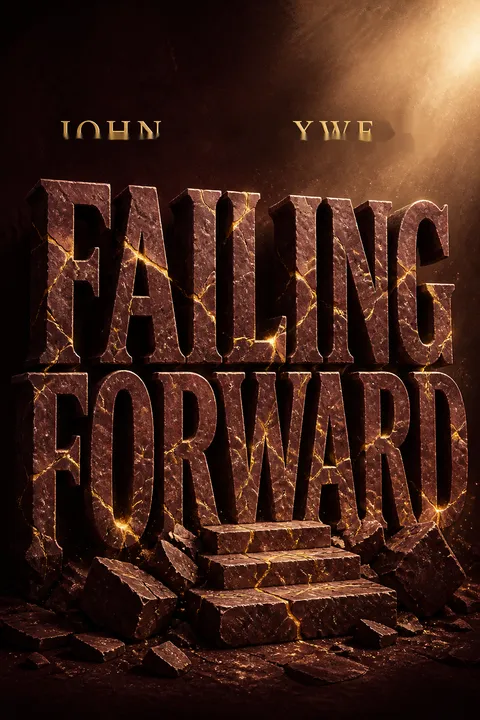


Key Takeaways
Treat a setback as information, not a verdict on your worth
Failure is part of progress. Maxwell argues that a mistake becomes damaging when it is misunderstood or repeated, not simply because it happened. Tony Gwynn made 3,000 career hits while usually going hitless in about two of every three attempts. His record makes sense only across a long career, not by judging one at-bat. Maxwell also cites an estimate that entrepreneurs experience an average of 3.8 failed ventures before succeeding.
Separate action from identity. Humor writer Erma Bombeck endured serious illness and professional disappointments, yet treated each unsuccessful project as something she had done, not proof that she was a failure. The distinction does not erase consequences. It makes room to examine what happened without condemning the whole person.
This distinction resembles cognitive reappraisal: changing the interpretation of an event can preserve the ability to respond constructively. It also guards against a common reasoning error, treating one poor result as evidence of a permanent trait. Still, a useful account of failure cannot stop at personal interpretation. A missed deadline or failed product has observable consequences, and other people may bear the cost. The strongest version of Maxwell's point is therefore not that failure is subjective in every respect, but that identity need not be sentenced by one result. Keep the evidence, reject the global self-condemnation, and decide what the evidence asks you to change.
Take the first useful step before confidence catches up
Fear feeds on avoidance. The book calls the pattern in which past setbacks create fear, fear causes inaction, and inaction prevents learning the Fear Cycle. With less experience, the next attempt feels even more threatening. Maxwell contrasts this with Samuel Langley, a respected scientist whose two failed aircraft launches and public ridicule led him to abandon flight experiments. The Wright brothers, working without Langley's status or funding, kept testing and improving their aircraft, then achieved powered flight.
Action creates information. Maxwell's advice is not to wait until fear disappears. Identify the task, name the fear, and take a first manageable step. Each attempt supplies experience that can improve the next one. The goal is not reckless action, but movement that interrupts avoidance.
The sequence closely matches a principle used in behavioral activation and exposure-based approaches: action can precede motivation, and carefully approaching a feared task can weaken avoidance. The key word is carefully. A small, reversible experiment often teaches more than a dramatic leap, particularly when the stakes involve health, money, or other people. Langley's story also warns that criticism can distort the meaning of a failed attempt. Yet persistence alone does not prove a method is sound. The useful response is to keep acting while testing assumptions, gathering feedback, and changing the design when evidence calls for it.
Own your part, then change the behavior that produced the result
Responsibility creates an exit. Maxwell's Failure Freeway describes the rut of repeating mistakes while blaming others, hiding errors, charging ahead without reflection, or eventually quitting. Nicholas Leeson, a trader at Britain's Barings Bank, concealed losses by making increasingly risky trades. The resulting losses reached about $1.3 billion and brought down the bank. His case illustrates how hiding a mistake can turn a setback into a catastrophe.
Review before repeating. Responsibility means identifying one's actual contribution, not claiming fault for everything. After a bad result, ask what happened, what part was within your control, and what specific action should change. Admit errors promptly, then use the information. Repeating the same approach faster is not persistence; it is a refusal to learn.
This is a useful bridge between personal accountability and organizational learning. In high-reliability workplaces, errors are surfaced early because concealment prevents correction and allows small problems to compound. The lesson is not that individuals alone cause complex failures: incentives, supervision, and flawed systems matter too. A blame-free culture can still demand responsibility, provided it distinguishes honest mistakes from reckless choices and asks how the surrounding process contributed. Maxwell's practical insight survives that nuance: candor is not self-punishment. It is the condition that makes diagnosis and repair possible.
Separate what you can influence from what you must endure
Choose where effort goes. Grocery-store owner Greg Horn returned from a trip to find his Cynthiana, Kentucky, store submerged by a flood. He had no flood insurance, and the damage to inventory alone reached about $500,000. Horn could not undo the flood or the insurance gap. He could organize cleanup, replace equipment, and reopen. He and his staff removed the ruined contents and restored the store in sixteen days, allowing eighty employees to return to work.
Sort facts from problems. Maxwell distinguishes circumstances that must be accepted from problems that can be acted upon. Acceptance is not surrender, and optimism is not pretending to feel fine. It means directing attention toward solvable parts of a situation while acknowledging grief, limits, and uncertainty.
This is a practical form of control appraisal, the process of distinguishing influenceable conditions from conditions that require adaptation. That distinction can conserve attention during a crisis. It also needs a humane boundary: a positive attitude cannot replace insurance, money, medical care, or public support. Horn's recovery depended on resources and people as well as resolve. The idea is most useful when it prevents rumination about unchangeable facts without implying that people who cannot recover simply lacked the right mindset. Agency matters, but so do material conditions and help from others.
Stop forcing a career that fights your strongest abilities
Change the diagnosis. John James Audubon spent years in unsuccessful trading ventures, moving between locations and business arrangements. He assumed commerce was his proper occupation, while hunting and drawing birds were merely hobbies. Around age thirty-five, he committed to creating a large collection of American birds. His paintings became the foundation of Birds of America, a celebrated publication that brought him recognition and financial security.
Study the person, not just the plan. Maxwell recommends seeing strengths and weaknesses clearly, admitting where a role is a poor fit, and developing the abilities that serve a worthwhile goal. Sometimes improvement means training. Sometimes it means changing direction. Audubon's story makes the point sharply: more effort in the wrong kind of work would not have corrected the underlying mismatch.
Audubon's shift resembles person-environment fit: performance depends partly on whether a role matches someone's skills, interests, and working style. That perspective can turn repeated frustration into useful career information. It should not become a license to avoid every difficult skill. Some weaknesses are trainable, and worthwhile work often includes tasks that are not naturally enjoyable. A sound diagnosis asks whether the obstacle is lack of practice, a character issue, or a durable mismatch. The answer changes the remedy. Maxwell's emphasis on self-knowledge is strongest when paired with honest feedback from colleagues and evidence about what the work actually requires.
Measure success partly by the capability you build in others
Achievement is interdependent. In the book's opening, Maxwell frames success as involving relationships, helping others develop, attitude, and leadership. His example of basketball player David Robinson shows why. Robinson had been a leading scorer for years, but on the 1999 San Antonio Spurs he accepted a more defensive role and made room for teammate Tim Duncan. The team won the NBA championship.
Give with attention. Maxwell's practical counsel is to put other people's needs into view, find out what matters to them, and respond with care and competence. This is not simply generosity as a pleasant extra. In leadership, teaching, and family life, other people's growth can be part of the result being pursued. The measure shifts from personal credit alone to whether a group becomes more capable.
Robinson's change in role illustrates a central challenge in team performance: individual excellence can obstruct collective success when status and contribution are confused. Leadership often means choosing the task the group needs over the task that most visibly displays personal talent. This connects to prosocial motivation, where helping others can give effort a durable purpose. The caution is that service should not become self-erasure or a way to avoid difficult conversations. Healthy contribution includes boundaries, shared responsibility, and fair recognition. Maxwell's strongest point is that achievement is rarely a solo product, even when one person's name becomes the public shorthand for it.
Turn hardship into learning, not a story you merely survive
Adversity can teach, but not automatically. Maxwell describes a ceramics class split into two groups. One group was assessed on the amount of work produced, the other on the quality of a single perfect piece. The quantity-focused students made the strongest work because repeated attempts gave them more chances to discover what worked. The example captures the book's claim that practice and error can produce resilience, skill, innovation, and unexpected benefits.
Reflect deliberately. A setback becomes useful when it changes what someone knows or does. Ask what caused the result, what was learned, what value remains, and what action comes next. Without that reflection, adversity may simply hurt. Maxwell's stories of people who find opportunity in hardship are invitations to search for learning, not promises that every loss will become a gift.
The ceramics example anticipates learning-by-doing: skill grows through cycles of attempt, feedback, and revision, not prolonged speculation about perfection. It also explains why a safe space to make mistakes matters. However, the claim that hardship reliably builds maturity is too broad if taken literally. Distress can impair learning, and some experiences leave no neat lesson. Contemporary trauma-informed practice begins with safety and support rather than demanding gratitude or growth. Maxwell's idea is most humane when framed as possibility: once a person has support and enough distance to reflect, experience can sometimes be converted into greater skill or perspective.
Choose risks by the value of the goal, not fear alone
Risk needs a reason. Maxwell argues that fear and odds of success are not enough to decide whether an attempt is worthwhile. The value of the goal matters. He recounts Joseph Lister's campaign to reduce infections during surgery. Drawing on Louis Pasteur's ideas about microbes, Lister began using carbolic acid to clean wounds and instruments. His colleagues ridiculed the theory, but his early results helped establish antiseptic practice.
Persistence needs a plan. Maxwell's FORWARD approach organizes recovery around clarifying the goal, planning, acting despite risk, accepting mistakes, relying on character, reviewing progress, and revising strategy. It is a cycle, not a guarantee. R. H. Macy's repeated business failures ended only when he found a stronger opportunity in New York and applied what he had learned about retail.
The book usefully separates courage from thrill-seeking: a risk earns consideration when the objective matters enough to justify its cost. Lister's story also shows how principled dissent can advance a field, although modern clinical ethics would demand safeguards and review before testing an intervention on patients. The same discipline applies outside medicine. Persistence should include checkpoints, evidence, and permission to stop when the expected costs exceed the goal's value. Otherwise, commitment can slide into the sunk-cost fallacy, the mistaken belief that past investment alone justifies further investment.
Find the recurring weakness behind failure, then build a yearlong plan
Look for repeat patterns. Maxwell lists ten common obstacles: poor people skills, a negative attitude, a poor fit, lack of focus, weak commitment, resistance to change, shortcut-seeking, reliance on talent alone, poor information, and absent goals. The list is a diagnostic, not a verdict. A weakness can be addressed only after it is noticed and named.
Dave Anderson learned by changing. Before building Famous Dave's barbecue restaurants, Anderson failed in an oil-conditioner venture and lost a wholesale florist business to bankruptcy. He then took a sales job to strengthen his people skills, practicing and learning until his territory became the company's top performer. Maxwell's practical step is to ask a trusted person for an honest assessment, choose one weakness, and follow a concrete growth plan long enough to evaluate progress.
A recurring-pattern audit is more useful than a general resolution to work harder because it directs effort toward a bottleneck. Anderson's story shows how a failure can expose a missing capability that a new role then develops. The framework also benefits from an external check: a person may mislabel structural barriers as personal defects, or overlook how a workplace rewards the very behavior it criticizes. A yearlong plan creates room for practice, but it should include intermediate feedback and measurable behavior changes. The aim is not to eliminate every weakness. It is to prevent one predictable weakness from repeatedly derailing important work.
Analysis
Maxwell's central move is to shift failure from a verdict into a process. Instead of treating an unsuccessful result as proof of incapacity, the reader is asked to examine interpretation, behavior, fit, and next steps. The stories give that claim emotional traction: Mary Kay Ash continues after bereavement, Greg Horn rebuilds after a flood, and Dave Anderson turns business failures into evidence about skills he needs to develop. The narrative repeatedly returns to a useful sequence: preserve self-respect, accept responsibility, act, learn, and adjust. The book's breadth is both its strength and its weakness. It connects individual attitude to leadership, relationships, work, and service, making failure relevant beyond entrepreneurship. Its many historical and business examples also show that achievement seldom follows a tidy straight line. Yet the stories can imply that persistence explains more than it does. Talent, timing, financial resources, health, social support, and structural barriers influence outcomes. Some people persist wisely and still do not get the result they want. An honest adaptation must keep that uncertainty in view without discarding the book's practical advice.
The most durable insight is not that every setback is secretly beneficial. It is that a setback can be made informative when a person can face it without collapsing identity into outcome, take responsibility for a real contribution, and revise the next attempt. That sequence also distinguishes productive persistence from stubborn repetition. The book's strongest tools are concrete: separate facts from solvable problems, identify recurring weaknesses, seek candid counsel, and translate reflection into changed behavior. Its motivational force works best when paired with realism about context and compassion for losses that cannot be redeemed. Failure can be a teacher, but it is not automatically a teacher. Attention, support, and deliberate response determine whether anything is learned.
Review Summary
Failing Forward receives mostly positive reviews for its inspiring message about reframing failure as a stepping stone to success. Readers appreciate Maxwell's practical advice, relatable anecdotes, and emphasis on personal responsibility. Many find the book motivational and life-changing, praising its ability to shift perspectives on failure. Some criticize the repetitive content and simplistic writing style. Overall, readers value the book's lessons on perseverance, learning from mistakes, and maintaining a positive attitude in the face of setbacks.
People Also Read









Glossary
Failing Forward
Learning through setbacksMaxwell's term for responding to errors, disappointments, and adversity in ways that support continued progress. It involves taking responsibility without treating a mistake as a permanent identity, extracting useful feedback, adapting one's approach, and continuing toward a meaningful goal. Failure itself does not ensure improvement; learning and changed action are essential.
Fear Cycle
Fear reinforced by avoidanceA pattern in which a past negative experience produces fear of trying again. Fear then leads to inaction, which prevents a person from gaining experience and competence. That lack of experience can make similar situations feel more threatening, reinforcing the original fear. Maxwell argues that purposeful action can interrupt the cycle.
Failure Freeway
A rut of repeated mistakesMaxwell's metaphor for a pattern of failure that continues because people refuse to examine their role or alter their behavior. Blaming others, concealing errors, pushing ahead without reflection, making excuses, and giving up can all keep someone trapped in the same outcomes. The exit begins with honest responsibility and a changed response.
FORWARD
A recovery planning sequenceMaxwell's named approach for acting after a setback. It moves from clarifying a goal and organizing a plan to taking action, accepting mistakes, drawing on character, reviewing progress, and revising strategy. The sequence emphasizes that getting back up is not enough by itself. Progress depends on learning from the attempt and improving the next one.
FAQ
What's "Failing Forward" about?
- Turning Mistakes into Success: "Failing Forward" by John C. Maxwell is about transforming mistakes and failures into stepping stones for success. It emphasizes the importance of learning from failures rather than being defeated by them.
- Mindset Shift: The book encourages a shift in mindset, viewing failure not as a setback but as a necessary part of the journey toward success.
- Practical Steps: Maxwell provides practical steps and strategies to help individuals embrace failure, learn from it, and use it to propel themselves forward.
- Real-Life Examples: The book includes numerous real-life examples and stories of successful people who have failed forward, illustrating the principles discussed.
Why should I read "Failing Forward"?
- Overcome Fear of Failure: The book helps readers overcome the fear of failure by redefining it as a learning opportunity rather than a defeat.
- Personal Growth: It offers valuable insights into personal growth and development, encouraging readers to embrace challenges and setbacks as part of their journey.
- Actionable Advice: Maxwell provides actionable advice and steps that readers can implement in their own lives to turn failures into successes.
- Inspiration and Motivation: The stories and examples in the book serve as inspiration and motivation for anyone looking to achieve their goals despite setbacks.
What are the key takeaways of "Failing Forward"?
- Failure is Not Final: Failure is not the end but a stepping stone to success. It's essential to learn from mistakes and keep moving forward.
- Change Your Mindset: Success requires a mindset shift, viewing failures as opportunities for growth and learning rather than obstacles.
- Persistence is Key: Persistence and determination are crucial in overcoming failures and achieving success. Keep getting up and trying again.
- Take Responsibility: Accept responsibility for failures, learn from them, and use them to make better decisions in the future.
How does John C. Maxwell define failure in "Failing Forward"?
- Failure as a Process: Maxwell defines failure not as a single event but as a process that involves learning and growth.
- Perception and Response: He emphasizes that the difference between average and achieving people is their perception of and response to failure.
- Opportunity for Growth: Failure is seen as an opportunity to learn, grow, and improve, rather than a permanent setback.
- Part of Success Journey: Failure is an integral part of the journey to success, and embracing it is essential for personal and professional development.
What is the "Failing Forward" method?
- Embrace Failure: The method involves embracing failure as a natural and necessary part of the success journey.
- Learn and Adapt: It encourages learning from each failure, adapting strategies, and making necessary changes to move forward.
- Take Action: Taking action despite the fear of failure is crucial. The method emphasizes the importance of acting and learning from the outcomes.
- Persistence and Resilience: Building persistence and resilience is key to failing forward, as it helps individuals overcome setbacks and continue striving for their goals.
What are some real-life examples from "Failing Forward"?
- Mary Kay Ash: The book discusses how Mary Kay Ash overcame personal and professional challenges to build a successful cosmetics empire.
- Truett Cathy: Maxwell shares the story of Truett Cathy, who turned setbacks into opportunities, leading to the success of Chick-fil-A.
- Arnold Palmer: The book highlights Arnold Palmer's ability to move past failures and maintain a positive outlook, contributing to his success in golf.
- Rudy Ruettiger: The story of Rudy Ruettiger illustrates how persistence and determination can lead to achieving one's dreams despite numerous obstacles.
What are the best quotes from "Failing Forward" and what do they mean?
- "We are all failures—at least, all the best of us are." This quote emphasizes that failure is a common experience among successful people and is a part of the journey to success.
- "Failure is simply a price we pay to achieve success." It highlights the idea that failure is an inevitable cost of pursuing success and should be embraced rather than feared.
- "The difference between average people and achieving people is their perception of and response to failure." This quote underscores the importance of mindset in determining how individuals handle failure and ultimately succeed.
- "If you learn to embrace that new definition of failure, then you are free to start moving ahead—and failing forward." It encourages readers to redefine failure as a learning opportunity, freeing them to progress and grow.
How can I apply the principles of "Failing Forward" in my life?
- Embrace Mistakes: Start viewing mistakes as learning opportunities rather than setbacks. Reflect on what went wrong and how you can improve.
- Develop Resilience: Build resilience by persisting through challenges and setbacks. Use failures as motivation to keep moving forward.
- Take Calculated Risks: Don't be afraid to take risks. Evaluate the potential benefits and learn from the outcomes, whether successful or not.
- Set Realistic Goals: Set achievable goals and break them down into smaller steps. Celebrate small successes and learn from any failures along the way.
What role does attitude play in "Failing Forward"?
- Positive Attitude: A positive attitude is crucial in failing forward. It helps individuals see failures as opportunities for growth rather than obstacles.
- Contentment and Optimism: Cultivating contentment and optimism allows individuals to remain hopeful and motivated, even in the face of setbacks.
- Gratitude for Experiences: Being grateful for all experiences, including failures, fosters a mindset of learning and growth.
- Focus on Solutions: A positive attitude encourages focusing on solutions rather than dwelling on problems, enabling individuals to move forward effectively.
How does "Failing Forward" address the fear of failure?
- Redefining Failure: The book redefines failure as a learning opportunity, helping to reduce the fear associated with it.
- Encouraging Action: It emphasizes the importance of taking action despite fear, as action leads to learning and growth.
- Building Confidence: By learning from failures and achieving small successes, individuals can build confidence and reduce their fear of future failures.
- Supportive Environment: Creating a supportive environment that encourages risk-taking and learning from mistakes can help alleviate the fear of failure.
What are the common reasons people fail according to "Failing Forward"?
- Poor People Skills: Inability to effectively relate to others can hinder success. Building strong relationships is crucial.
- Negative Attitude: A negative attitude can prevent individuals from seeing opportunities and learning from failures.
- Lack of Focus: Without clear goals and focus, individuals may struggle to make progress and achieve success.
- Unwillingness to Change: Resistance to change can prevent growth and adaptation, leading to repeated failures.
How does "Failing Forward" suggest overcoming setbacks?
- Take Responsibility: Accept responsibility for failures and learn from them to make better decisions in the future.
- Develop Persistence: Cultivate persistence and resilience to keep moving forward despite setbacks and challenges.
- Seek Support: Surround yourself with supportive people who can provide guidance and encouragement during difficult times.
- Reevaluate and Adjust: Continuously reevaluate your goals and strategies, making necessary adjustments to improve and succeed.
About the Author
Other books by John C. Maxwell









Download PDF
Download EPUB
.epub digital book format is ideal for reading ebooks on phones, tablets, and e-readers.








