

Plot Summary
Prologue
Levana wakes from a recurring dream in which she lies trapped in a fire, conscious of every burn and unable to escape. A kind face beckons through the smoke, but she wakes before she can reach it. The dream leaves her trembling and afraid to sleep again.
On the day her parents are to be buried, she uses her Lunar glamour to choose a beautiful face and adds a jewel beneath her eye to resemble a tear. Before she can leave her room, her older sister Channary arrives, already treating their parents' funeral as an inconvenience and Levana as someone she can command.
The nightmare gives the story an image of Levana's deepest vulnerability before the court sees her as a princess: she is trapped, watched, and unable to make another person stop her suffering. Her immediate response is to construct a face for public mourning, turning appearance into both shield and labor. The movement from dream to glamour also establishes an important gap between what Levana feels and what others can see. Her fear is real, but she has learned to manage it by controlling the image presented to the world.
The Funeral in Gray
King Marrok and Queen Jannali have been murdered by a shell, and their daughters must appear before the court in mourning. Channary expects to inherit the throne but shirks the funeral speech, leaving Levana to perform grief for the gathered nobles. During the receiving line, Levana meets Sir Evret Hayle, a royal guard she has admired for years, and discovers that his pregnant wife, Solstice, is beside him.
Evret's tenderness toward Solstice gives Levana a glimpse of the mutual devotion she has never known. Channary's cruelty at home and indifference to governing only sharpen the contrast: Levana believes she could rule better, but the crown belongs to her sister.
The funeral makes political succession and private longing collide in the same room. Levana is required to represent a bereaved royal family while managing a glamour that conceals her own appearance, so public performance becomes part of her survival. Channary's refusal to take the ceremony seriously is not merely a character flaw; it leaves Levana to carry responsibility without authority. Evret and Solstice then provide a concrete model of reciprocal affection. Levana does not simply envy Solstice's beauty. She envies the evidence of being cherished, and that distinction will shape her increasingly possessive interpretation of kindness.
Solstice's Blue Gloves
Before Channary's coronation, Levana slips away to Solstice's embroidery shop, pretending to seek gloves for the ceremony. She admires Solstice's handmade work and orders blue silk gloves connected by gold chains to a collar, asking for a design that includes an L. When Channary later finds Levana wearing Solstice's face and a false pregnancy, she mocks her and exposes the disguise to Evret on the palace stairs.
Levana tears off the gloves and dress, then attends the coronation in a pale glamour, watching Channary take the crown. On Levana's sixteenth birthday, a fire illusion terrifies her, but Evret sends her an old Earth pendant. Levana keeps the card's mention of Solstice from herself by tearing it away.
Levana's visit to the shop begins as an attempt to approach Evret indirectly, through the woman he loves. Solstice's craft attracts her because it joins individual skill to visible beauty, unlike a glamour that must be continually maintained. The public exposure turns imitation into humiliation, teaching Levana that looking like someone else cannot guarantee the affection she wants. The pendant then offers a less painful interpretation: she treats a small gesture of kindness as evidence of exceptional intimacy. By removing the reference to Solstice, she edits the gift until it supports the story she needs.
The Queen's Empty Order
At court, Levana pays attention while Channary waves through reports on bioengineered soldiers and a proposed disease for use against Earth. When the thaumaturges explain that shell blood can help make an antidote, Channary endorses gathering it from the ungifted population and appoints Sybil Mira to oversee the work.
Soon afterward, a medical-center messenger arrives to say Solstice is in labor and Evret must come at once. Channary orders him to remain at his post.
Levana publicly offers to take Evret as her escort, giving him a way to obey the queen while reaching his wife. At the clinic, Solstice dies after delivering a daughter. Evret grieves beside the infant, while Levana mistakes his grief and loneliness for the beginning of a future with her.
This section reveals that Levana can recognize an unjust decision and act against it when the stakes are immediate. She uses the authority she has, rather than waiting for Channary to show compassion, and Evret gets to reach Solstice. Yet her empathy has a limit: she interprets the widower's loss through the future she wants for herself. The policy discussion foreshadows the state's later use of shells as instruments, while Channary's casual approval makes brutality look like routine administration. Levana's own intelligence is already evident, but so is her capacity to make another person's suffering serve her private hopes.
A Wedding Under Pressure
After Solstice's death, Evret brings Levana his wife's Earth quilt as a gift of thanks and offers her friendship. Levana takes the gesture as proof of love. When he tries to refuse her advances, she uses her Lunar gift to press her feelings into his mind and make him return them. She then insists that he marry her, arguing that marriage will secure a family for both him and his infant daughter, Winter.
Evret accepts with little choice, and they wed using plain black rings while Winter is cared for by her nanny. Channary threatens to undo the marriage, but Levana refuses. Channary also reveals that she is pregnant, and later gives birth to Selene, securing an heir while Levana remains unable to conceive.
The marriage converts Levana's private fantasy into a legal bond, but the ritual cannot make the relationship mutual. Her use of Lunar influence is the decisive boundary crossing: she treats Evret's independent wishes as an obstacle to a happiness she believes is destined. The black rings, his reluctance, and his insistence on keeping his first wedding band register the marriage's divided emotional reality. Winter is also made part of Levana's imagined family without being consulted or loved on her own terms. The scene shows how power can imitate intimacy while hollowing out the consent that gives intimacy meaning.
A Crown by Default
Levana does not become pregnant, and she never forms an easy bond with Winter, who turns instinctively to Evret. Channary, meanwhile, neglects governing and grows increasingly ill with a persistent cough. Five months after the sisters discuss her condition, the queen dies from regolith poisoning. Because Selene is still a child, Levana becomes regent until her niece is old enough to rule.
She promotes Sybil Mira and takes a serious interest in policy, improving production and trade while tightening control over the outer sectors. The role suits her talents, but the title remains temporary. Levana can see Luna prospering under her decisions, yet the law still reserves the future throne for Selene.
Channary's death gives Levana the authority she has wanted, but not secure ownership of it. The regency rewards her competence while keeping her position conditional on a child who represents the dynasty's continuation. Her economic reforms show that her ambition is not purely theatrical: she understands how systems work and wants Luna to thrive. Yet she increasingly links the country's welfare to her own right to rule. This is a psychologically important shift. The more effectively she governs, the easier it becomes for her to treat succession as a threat to public stability rather than a personal wound.
The Nursery Goes Up
When Selene is three, Levana's resentment hardens into plans to remove her niece and keep the throne. On a birthday celebration, the sight of candles gives Levana the idea: a fire can look accidental.
Later, she sends Winter to a medical appointment and uses her Lunar influence to direct the young nanny into Selene's blanket-covered playhouse with a lit candle. Levana leaves the nursery and waits. A fire breaks out, killing the nanny and leaving Selene presumed dead.
Evret finds Winter safe, while Levana sees the burned remains and understands that her instructions caused the deaths. She announces Selene's death to the public. With the heir believed gone, Levana becomes queen, though the victory brings guilt and a quiet rumor that Selene may have survived.
The fire marks the point at which Levana's private entitlement becomes an act against a child. She does not strike Selene herself; instead, she scripts the nanny's actions and lets an ordinary domestic setting disguise her intervention. That distance allows her to call the result an accident, even as she knows she engineered it. The fire also folds her own childhood trauma into her political choices: a remembered spectacle of flames becomes a method for controlling succession. Her new crown is therefore built on a contradiction. She has obtained the authority she wanted, but the surviving possibility of Selene keeps that authority psychologically unstable.
The Heir Who Haunted Her
After hearing that Selene may have survived, Levana questions Dr. Eliot, who admits the child still had a heartbeat when she reached the nursery but insists she died there. Levana suspects a concealment and orders Sybil to extract the truth. Dr. Eliot is detained, but before Levana can question another doctor, Logan Tanner disappears. The unresolved mystery does not stop her rule.
Levana expands the engineered soldier program and sends carriers of the lethal disease letumosis to Earth, where it spreads from a town near the Sahara. She expects the eventual antidote to give Luna bargaining power. Meanwhile, guard numbers, curfews, and labor demands grow, even as advisers warn that Luna's resources cannot sustain the expansion.
Levana's inquiry is not driven by simple affection for a missing child. She wants control over the facts because uncertainty threatens both her throne and her account of what happened. Dr. Eliot's partial confirmation of a heartbeat intensifies the doubt without resolving it, and the missing Dr. Tanner leaves the question open. Levana responds to that instability by investing in external power: disease, soldiers, stricter labor, and control of information. Her methods become more systematic as her private certainty weakens. The political program is therefore not separate from her psychology; expansion offers a way to drown out a past she cannot conclusively erase.
Evret Sees Levana
Years into their marriage, Levana watches Evret play with Winter and his friend Jacin, while she remains outside their easy family life. When Winter asks about her birth mother, Evret remembers Solstice as the most beautiful woman he ever knew. Later, he explains that Solstice chose the Earth pendant for Levana after seeing her admire the quilt; his own card offered only friendship.
He also tells Levana that he married her because he feared what her power could do to him and Winter. Levana removes her glamour, revealing the burns and scars she has hidden since childhood. Evret says her appearance is not the central wound; her years of manipulation are. Levana leaves, then smashes the palace mirrors and orders them removed.
The pendant's origin collapses the emotional evidence Levana has built her life around. What she treated as Evret's romantic signal began as Solstice's compassion, while Evret's own gesture was real but limited to friendship. His account of the marriage forces Levana to see coercion from the other side: she had mistaken his compliance for choice because that interpretation preserved her desired identity. Removing the glamour makes the conflict visible, but it cannot repair the trust she has already damaged. Destroying the mirrors is an attempt to eliminate the instrument of truth after Evret has shown that the deeper reflection is relational, not merely physical.
Earth Through a Veil
Levana replaces the shattered mirror with a screen and watches an Earthen news report: Emperor Rikan's wife has died of letumosis. The disease she released has reached the royal family, and the emperor and his young son grieve before the cameras.
Luna's resource shortages make Earth increasingly important to Levana, while the disease and engineered soldiers offer possible leverage. She considers a marriage alliance, remembering that Channary once imagined marrying the emperor.
This time Levana sees marriage as a route to power over both worlds, not a promise of affection. She decides the alliance must be made through her, since only the queen can produce the royal heir needed to bind the kingdoms. Her attention shifts from securing Luna's throne to claiming a larger one.
The screen turns a distant catastrophe into an intimate political opportunity. Levana watches a bereaved family, but registers the event chiefly as proof that her weapon has worked and that Earth is vulnerable. This is not a sudden departure from her earlier motives; it extends her recurring belief that possession can solve emotional and political lack. The marriage plan repurposes the language of family into statecraft, joining her wish for recognition to Luna's material crisis. Yet the choice also exposes the limits of her control. She can arrange a spectacle of alliance, but the scenes of grief on the screen remind us that her strategies produce consequences beyond the court.
The Last Wedding Vow
Levana makes a secret bargain with retired head thaumaturge Joshua Haddon: he will kill Evret, and she will marry Haddon and make him king. After another night in Evret's arms, Haddon enters their room and shoots him. Evret pushes Levana behind the bed, then falls wounded. Levana kills Haddon with a knife before he can claim the promised reward.
As Evret dies, he asks her to care for Winter. Levana promises, though her affection for the girl has never matched Evret's. She removes the Earth pendant and places it in Evret's hand, surrendering the keepsake that had once sustained her belief that he loved her. The story ends with Levana grieving the man whose freedom she denied and recognizing the cost of her own choices.
The final attack reverses the power structure that has governed Levana's marriage. She arranged Evret's death as a transaction and expected to control the outcome, but when Haddon turns the bargain into an immediate reality, Levana kills him and finds herself alone with the consequences. Evret's last request concerns Winter, the child Levana has struggled to treat as her own, so his final act asks her to practice a care she cannot simply command into existence. Returning the pendant closes the story's central misreading: she relinquishes the token that had made kindness seem like romantic consent. Grief arrives too late to restore the choice she took from him.
Analysis
Fairest traces how a wounded need to be seen can harden into a demand to control what others see. Levana's glamour begins as protection from a society that prizes beauty, but protection becomes a way to avoid the risk of honest recognition. She can alter appearances and influence emotions, yet neither power produces the freely chosen intimacy she wants. The novel makes that failure concrete through Evret: his kindness is real, but Levana converts it into a claim on his love, then uses her gift and royal status to make refusal dangerous.
The political plot grows from the same psychology rather than running alongside it. Levana is an able administrator who improves production and understands the constraints Luna faces. Her competence is not a disguise for simple vanity. The danger is that she increasingly treats her own judgment as identical to the public good. Selene's succession becomes, in Levana's mind, a threat to Luna itself; disease, shell exploitation, surveillance, and coercive labor can then be framed as necessary solutions. Her private inability to secure affection and her public drive for expansion feed each other.
The story's objects clarify what Levana cannot initially interpret. Solstice's quilt and the Earth pendant carry care that is neither romantic nor transactional, but Levana wants them to certify a love she has not been given. Mirrors reverse the glamour's promise: they reveal that concealment cannot repair a relationship built on forced feeling. When Evret names the manipulation as the central injury, the novel refuses to make Levana's scars the source of the tragedy. The deeper damage is the choice she repeatedly takes away from others.
Her final grief does not redeem her by itself. Levana mourns Evret and promises to care for Winter, but the promise comes after years in which she has mistaken possession for belonging. The ending leaves emotional recognition arriving at the moment when it can no longer restore what was lost.
Review Summary
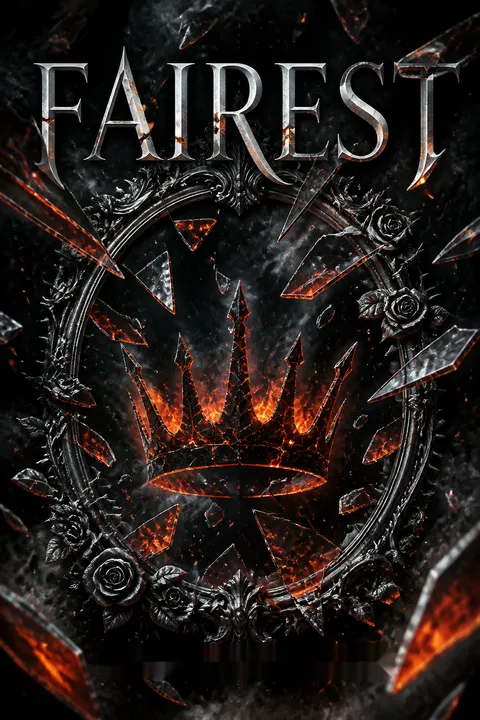
Fairest by Marissa Meyer is a prequel novella in The Lunar Chronicles series, providing backstory for the villainous Queen Levana. Readers found it fascinating to explore Levana's twisted mind and tragic past, though many struggled to sympathize with her despite her difficult upbringing. The novella offers insights into Luna's history and other characters' origins, enhancing the overall series experience. While some felt it unnecessary, most fans appreciated the added depth to Levana's character and the buildup to the final book, Winter.
People Also Read




Characters
Levana Blackburn
The veiled Lunar princessLevana is the younger daughter of Luna's royal family, a gifted glamour-user who can alter how others perceive her. She is observant, politically curious, and often more capable than her frivolous older sister, but years of shame about her appearance leave her hungry for reassurance. She treats beauty as protection and attention as evidence of love, making it difficult for her to distinguish affection from the response she can produce through power. Her intelligence gives her a genuine capacity for governing, while her fear of rejection makes her controlling in intimate relationships. Levana's central tension is between wanting to be known and fearing that anyone who sees her without a constructed image will withdraw.
Evret Hayle
The principled royal guardEvret is a senior palace guard, Solstice's husband, and Winter's devoted father. He takes duty seriously but is not emotionally distant: his tenderness toward his family is plain in the way he protects and comforts them. He values honest connection and personal choice, qualities that bring him into painful conflict with Levana's authority. His grief is sincere, and his kindness toward Levana is also sincere, but he does not mean it as romantic promise. Evret's steady moral center exposes the difference between care freely given and compliance produced by rank or mental influence. He is patient without being pliable, and his loyalty to his daughter remains central to his decisions.
Channary Blackburn
The careless elder queenChannary is Levana's older sister and the first daughter in line to inherit Luna's throne. Charming, beautiful, and quick to laugh, she treats royal privilege as permission to pursue amusement rather than responsibility. Her casual cruelty toward Levana is especially potent because she understands exactly where her sister feels exposed. Channary can be perceptive about other people's weaknesses, but she rarely applies that insight to governing or to the consequences of her own behavior. Her relationship with Levana combines sibling intimacy with a relentless contest for status. She embodies the court's assumption that effortless beauty and inherited authority are enough to make someone fit to rule.
Solstice Hayle
The gifted seamstressSolstice is Evret's wife, a talented seamstress whose shop earns a growing reputation among Artemisia's families. Her embroidered clothes and quilt reveal patience, imagination, and a pleasure in making objects that carry personal meaning. She meets Levana with warmth rather than suspicion, even when the princess approaches under a glamour. Solstice's kindness is neither grand nor strategic; she notices another person's loneliness and encourages Evret to treat Levana as a friend. That generosity makes her important to Levana's emotional story, though Levana repeatedly measures Solstice through envy rather than understanding.
Winter Hayle
Evret's cherished daughterWinter is Evret and Solstice's daughter, raised within the palace after her father marries Levana. As a child, she gravitates toward Evret and forms a close friendship with Jacin Clay. Her place in the royal household is unusual: she receives a princess's title through Levana but carries no royal blood. Winter's presence exposes the difference between being provided for and being emotionally welcomed. She is also the living link between Evret's first family and his second, a fact that affects how Levana understands both motherhood and her own place in the household.
Selene Blackburn
The royal child and heirSelene is Channary's daughter and the next royal heir, born into a court that treats her future as a matter of state. As an infant and young child, she depends on adults who assign meanings to her before she can shape her own identity. Her existence gives the succession a clear legal direction and leaves Levana's role politically temporary. Selene matters less for anything she chooses than for what others project onto her: continuity to Channary, a threat to Levana, and the possibility of a future beyond the current ruler.
Sybil Mira
The rising court thaumaturgeSybil is a confident thaumaturge who becomes Channary's representative for shell affairs and later earns Levana's trust. She is ambitious, disciplined, and skilled at navigating the machinery of court power. Levana favors her over more senior candidates because she values Sybil's effectiveness and recognizes something of her own drive in the younger woman. Sybil's loyalty is practical as well as personal: she supports the ruler who advances her and pursues the work that ruler assigns.
Joshua Haddon
The veteran head thaumaturgeJoshua Haddon is a senior thaumaturge who presents research and policy proposals to the royal court. He understands how scientific projects can serve political aims, including the Lunar effort to develop an antidote and military advantages against Earth. His experience gives him influence beyond his official position, and his confidence in his own usefulness makes him receptive to promises of greater status. He represents the court's ability to translate technical knowledge into instruments of state power.
Dr. Eliot
The royal family doctorDr. Eliot serves the royal household and treats its members, including the children. Her medical authority becomes important when Levana seeks certainty about a matter the palace would prefer to keep quiet. She is cautious under royal scrutiny and does not readily surrender her professional judgment.
Dr. Logan Tanner
The second palace doctorDr. Logan Tanner works at the medical center and arrives after the nursery fire. His presence becomes part of the unresolved account of what happened there, making him a person Levana wants to question. He remains a brief but consequential figure in the investigation.
Garrison Clay
Evret's trusted guard friendGarrison Clay is a fellow guard and Evret's friend. He and his family provide Evret and Winter with companionship beyond the royal household. His presence at important family occasions underscores the ordinary, affectionate life Evret values.
King Marrok
Levana's murdered fatherKing Marrok is Levana and Channary's father, whose assassination opens the story's political crisis. He had supported research into bioengineered soldiers and a disease intended to give Luna leverage over Earth. His plans continue to shape the court after his death.
Queen Jannali
Levana's murdered motherQueen Jannali is Levana and Channary's mother, killed alongside King Marrok before the funeral that opens the story. She is remembered through official portraits and through Levana's uncertain memories of the woman beneath her glamour. Her absence leaves her daughters to inherit both the throne and the family's unresolved rivalries.
Plot Devices
Lunar glamour and influence
Appearance and controlLunar bioelectricity allows gifted citizens to influence perception and, more directly, other people's thoughts. Levana uses glamour to present different faces, hide her scars, and manage how the court sees her. She also uses mental influence to shape Evret's feelings and the nanny's actions. The same ability therefore serves two contrasting functions: it protects Levana from exposure, and it lets her override other people's agency. Because glamour changes what observers perceive rather than changing the underlying reality, it makes the story's recurring question concrete: is acceptance meaningful when the person accepting has been shown a constructed image?
Mirrors and veils
Truth made visibleLevana avoids mirrors because they return the face her glamour conceals, while veils and altered appearances let her control how much of herself others can see. The mirror becomes especially important when Evret asks for honesty and Levana finally removes her glamour in front of him. Her later destruction of palace mirrors turns a private aversion into a royal command. This device links physical reflection to a deeper form of recognition: the crisis in Levana's marriage is not solved by seeing her scars, because Evret identifies manipulation and broken trust as the more consequential concealment.
The Earth pendant and quilt
Kindness misread as loveSolstice's handmade quilt first attracts Levana in the seamstress's shop, and the old Earth pendant later becomes her most treasured keepsake. Levana interprets the pendant as a declaration from Evret and uses it to reinforce her belief that he loves her. Much later, Evret explains that Solstice chose the gift after hearing of Levana's loneliness, while his accompanying note expressed friendship. The objects carry the history of an act of compassion that Levana cannot initially accept on its own terms. Their later meaning exposes how she has converted limited kindness into proof of romantic consent.
Letumosis and its antidote
Disease as diplomacyLunar researchers develop a fatal disease for Earth and discover that shell blood can help produce an antidote. Channary authorizes the collection of shell blood, and Levana later uses Lunar carriers to introduce the disease to Earth without their knowledge. She expects to offer a cure in exchange for political concessions, treating mass illness as leverage in negotiations. The plan joins scientific research, the exploitation of shells, and Luna's need for resources. It also reaches beyond the court: when the disease kills members of Earth's royal family, Levana sees a human catastrophe primarily as a strategic opening.
Bioengineered soldiers
Power made monstrousA military project begun under King Marrok aims to create soldiers with human intelligence and animal instincts. Levana becomes fascinated by their strength and by the terror they may inspire in enemies, then directs resources toward completing the program. The soldiers embody a wider pattern in Lunar policy: bodies are redesigned to serve the purposes of the state. Their existence gives Levana a potential instrument of force alongside letumosis and diplomacy, while the project's monstrous results mirror the court's increasingly brutal treatment of shells and workers.
The Lunar Chronicles Series


About the Author




Download PDF
Download EPUB
.epub digital book format is ideal for reading ebooks on phones, tablets, and e-readers.








