

Plot Summary
The Dice Beneath Wings
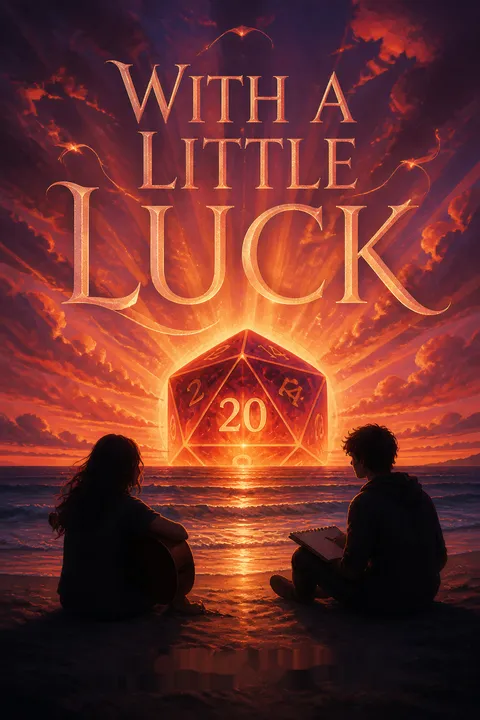
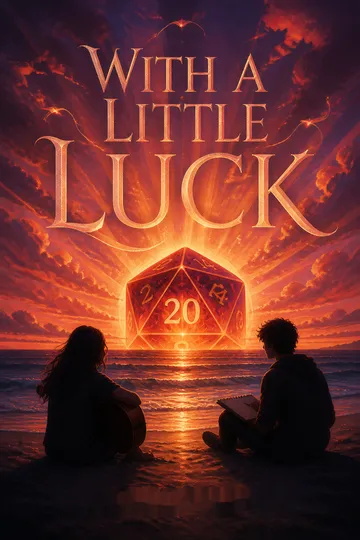
Sixteen-year-old Jude Barnett spends open mic night at Ventures Vinyl, the family record store, drawing a fantasy temple while his best friend Ari Escalante performs. When Ari falters during a new song, Jude finds an ornate red twenty-sided die beneath the turntable. A roll names his imaginary temple, Lundyn Toune, and reveals a signed Paul McCartney poster tucked inside the Wings album.
In the cluttered back room, a falling coffee mug should ruin the discovery, but Jude catches the spill with a rag he barely noticed. The die seems to pulse in his pocket. No one in Jude's family knows where it came from, so he carries it away as an unexplained gift and a possible charm.
The opening binds three kinds of value into one small event: the record store's family history, Jude's imaginative life, and an object whose power remains uncertain. The signed poster is not merely a windfall; it belongs to the parents' dream of keeping their struggling shop alive. Jude's miraculous reflex gives his private fantasy a foothold in ordinary life, but the scene carefully withholds proof. His first response is not mastery but wonder, a useful distinction for a story about how easily confidence can be mistaken for supernatural permission.
Luck Starts Rolling
Ari follows up on her challenge that Jude submit art to the Dungeon, the fantasy magazine he admires. He reluctantly sends a comic drawing after his twin sister Pru and younger sisters turn a coin flip into a binding decision. At school, Jude guesses correctly on a literature quiz, wins a statistics exercise with fifty-seven consecutive heads, and makes a broken vending machine release an entire row of chips.
The magazine accepts his drawing and offers payment. When Jude wonders whether the die is responsible, he rolls it and finds a long-lost favorite pencil beneath a bench. He begins to believe his temple's imagined blessing is real, just as good fortune starts giving him chances he would never have dared to take alone.
Jude's luck first appears as relief from the ordinary penalties of being anxious: the wrong answer, the lost money, the submission he fears. Yet the sequence does more than reward him. It shifts his sense of agency from choosing to being chosen, as if outcomes can certify his talent and worth. His family's coin-flip rituals make chance feel playful and communal, while the die turns that play into something consequential. The accepted drawing matters because it is a genuine achievement, but Jude immediately credits the object, planting the central question of whether good fortune enables courage or replaces it.
The Caller One Hundred
Jude's luck follows him through school, where a small errand places him beside a radio as it gives away VIP tickets to singer Sadashiv. He calls, uses the die's revealed number to complete the station's phone number, and wins.
The prize includes a guest, so Jude finally asks Maya Livingstone, the girl he has loved from afar since an elementary-school aquarium trip, to go with him. She accepts. Her yes turns a childhood fantasy into an actual evening, though Jude still assumes luck has done the essential work.
His family helps him choose clothes and flowers, while Ari encourages him without making his fear disappear. Jude arrives at Maya's house carrying lilies intended for her parents, too nervous to speak smoothly and too happy to retreat.
The ticket win converts chance into a social opening, but the decisive act still belongs to Jude: he asks. The distinction is psychologically important. His magical explanation protects him from the possibility that he could act without guarantees, while the family preparations make his desire visible to people who know him well. Maya's acceptance also complicates the pedestal on which he has placed her. He has long treated her as an ideal whose judgment could define him, but an invitation creates the possibility of meeting a person rather than worshipping an image.
A Fighter Joins the Party
At the concert, Maya relaxes Jude by sharing her uncertainty about college and asking about his art. She meets Sadashiv, and Jude mentions that Ari is entering a songwriting contest. Maya's excitement about fantasy stories surprises him; she asks to join his Saturday Dungeons & Dragons group, filling the place left by Matt, who needs a weekend job.
During the game, Maya creates Grit Stonesplitter, a fierce tiefling fighter, and fits in with Jude's friends almost immediately. Jude, however, keeps rolling twenties with the magical die and secretly substitutes ordinary results so the game remains fair. Later, after a fun mini-golf date, Maya tells Jude she enjoys being with him but imagines them as close friends, not a couple.
Maya's choice to play Grit gives her a self-authored identity that differs from Jude's idealized picture of her. The game becomes a setting where she can try on risk, appetite, and spontaneity without the social script she follows at school. Jude's concealed rolls reveal a contradiction: he wants luck to make him impressive, but not to erase the shared uncertainty that makes play meaningful. Maya's gentle boundary hurts, yet it also returns her to human scale. He has to encounter the distance between loving an imagined future and discovering what two people actually want.
The Date Without a Spark
Jude and Maya go to mini-golf, where he deliberately misses easy shots to avoid letting the die make him seem superhuman. Maya talks about the stories she invented as a child and admits she has often followed her friends' interests to remain liked. At dinner, she tells Jude she regrets avoiding an anime screening years earlier because her friends mocked the idea.
She loved playing Dungeons & Dragons, but fears revealing that side of herself to her usual circle. Jude reassures her that new interests need not erase old friendships. They nearly kiss, but neither moves. Maya imagines that, in another version of their lives, they might have become very good friends. Jude hears the distinction and cannot answer lightly.
Maya's confession reframes popularity as an adaptation, not proof of inner certainty. Her fear is not simply that friends will reject a hobby; she worries that changing interests will make her disloyal to the identity that secured belonging. Jude offers a generous answer, but his own silence at the near-kiss shows how little he understands his feelings beyond the fantasy of winning her. Their conversation creates intimacy without resolving desire. Friendship becomes not a consolation prize but a form of honest recognition, though Jude still needs experience to understand what he is recognizing.
Downpour at Condor
At the Condor Music Festival, Ari performs her original song Downpour in a songwriting competition while Jude accompanies her, along with Maya and the irrepressible Ezra Kent. Before Ari takes the stage, a fortune teller warns Jude that his inner life is divided and tells him a parable about luck changing meaning over time.
Maya then admits she has noticed Jude's astonishing streak. He confesses his long-standing feelings, and she kisses him. The kiss feels unexpectedly flat to Jude.
He declines to dance with her afterward and watches her dance with Ezra instead, while Ari's performance moves him in a different, more intimate way. Ari places second, not first, despite the crowd's strong response, and Jude feels he has failed to bring her luck.
The festival forces Jude's two romantic stories into the same physical space. His kiss with Maya tests the fantasy against sensation and finds it wanting, while Ari's performance awakens a less possessive attention: he wants her work to be heard because it is hers. The fortune teller's parable resists Jude's habit of classifying each event as a verdict. Second place can be recognition and disappointment at once. His guilt about Ari's result shows how deeply he has confused affection with control, imagining that caring for someone means being able to deliver the outcome they deserve.
The Dice Goes Missing
On the drive home, Jude discovers that the red die has vanished and his scratch tickets have all lost. A run of mishaps follows: grades fall, possessions break, and routine errands turn costly. At a later Dungeons & Dragons session, Jude asks Maya to junior prom in front of the group. She tells him she likes spending time with him but cannot return his romantic feelings, and he agrees they should be friends.
He recognizes that years of longing had been safer than risking an actual answer. Meanwhile, the campaign's fictional temple contains the same idea Jude has overlooked: its blessing comes only to someone who proves they do not need its magic. Jude cannot yet apply that lesson to himself.
The lost die gives Jude a ready-made explanation for every disappointment, making misfortune feel like punishment rather than randomness. That belief intensifies his dependence on the object even as its absence exposes how little he trusts his own judgment. Maya's refusal is painful but clarifying: he had invested in a future that neither of them had built together. The campaign's rule about earning magic by rejecting dependence on it is an unusually precise mirror of Jude's predicament. Its meaning is present before he can accept it, showing how insight can be available long before a person is ready to act on it.
The Comic Exposed
At lunch, Maya's friend Katie calls Jude's continued presence at her table pathetic and describes his private comic, which depicts a statue resembling Maya, as evidence of obsession. Tobey snatches Jude's sketchbook and shows it around, but Raul stops him and Maya returns the pages. Jude retreats to his old table, where Maya follows and apologizes.
Several students from her group then join Jude's friends, revealing shared interests they had hidden to fit in. Maya also explains that she found Jude's ornate red die at the festival and has kept it at home. The news revives his hope that its magic might return, although the more important change is that Jude's comic and hobbies have become visible to people beyond his closest circle.
The sketchbook scene turns Jude's private imagination into public evidence, exposing the vulnerability of making art before one knows how it will be read. Katie's accusation is cruel partly because it exploits the gap between idealization and affection, a gap Jude himself is beginning to recognize. Raul's intervention and Maya's apology prevent humiliation from becoming the final meaning of the scene. The new lunch-table alliances also echo Maya's earlier confession: several students have been performing conformity. The recovered die offers Jude a tempting material solution, while the genuine repair comes from people choosing to sit with him.
A Song Beneath the Crush
After accidentally sending Ari a message inviting her to karaoke, Jude learns that her song Downpour has made her a finalist at Condor. He also realizes his parents have accidentally sold the authenticated London Town album, with its McCartney signature, to a customer.
The losses sharpen his sense that his luck has turned against him. Looking through his comic, Jude recognizes that its bard and wizard resemble his long friendship with Ari more than his old fantasy of rescuing Maya.
He sends a new drawing to the Dungeon despite fearing rejection, then enters music-related giveaways, hoping to win Ari a meaningful gift. A Magic 8 Ball gives him contradictory advice, but an accidental invitation to karaoke gives him a chance to see Ari again.
Jude's recognition emerges through making, not through a sudden romantic revelation delivered from outside. The comic has been carrying knowledge his conscious mind refused to name, turning art into a record of emotional attention. His decision to submit another drawing matters even though he cannot control whether it is accepted; it is a small practice in acting without guaranteed reward. By contrast, the sweepstakes and Magic 8 Ball extend his old search for external permission. The lost album also makes luck feel morally loaded, as if a mistake proves a curse, when it is actually an ordinary consequence of carelessness.
A Promposal in Karaoke
At karaoke night, Jude struggles to tell Ari that he likes her, but a celebration at the bar interrupts him. Pru uses the evening to plan publicity for Ari's growing online audience and the upcoming Record Store Day. Ezra arrives and turns a Beach Boys duet into a public prom invitation to Ari. Caught off guard by the crowd, Ari initially accepts.
Jude hides his hurt while Ari's performance video continues to gain views and her finalist status draws attention. He begins assembling a small album of her songs as a gift and as a way to help the record store attract customers. At school, Katie later mocks Jude's interests, but his peers' response shows that the boundary between popular and nerdy students is less fixed than he assumed.
The interrupted confession emphasizes how often Jude waits for a perfect opening, then treats interruption as proof that he should remain silent. Ezra's theatrical confidence is both a foil and a source of genuine pain: he acts before he can know the answer, while Jude keeps trying to calculate it. Ari's initial acceptance happens under public pressure, a reminder that social performance can obscure private preference. Jude's album project expresses care more clearly than his speech does, though it also lets him communicate through a gift instead of risking a direct answer. His peers' shifting loyalties begin to loosen the social categories that govern his self-image.
The Record That Skips
For Record Store Day, Jude presents Ari with a homemade vinyl album of her songs, using his own fantasy artwork for the cover. Ari is moved, and Penny joins her onstage with a violin part she has written for Downpour. The store draws a crowd, but the new records all skip in the same place, disappointing buyers and deepening Jude's belief that the curse ruins whatever he attempts.
Pru finds him brooding afterward and insists that the failed batch does not make him unworthy. She draws out Jude's admission that he loves Ari, then connects his fictional temple's test to his real fear: he must act without relying on magical luck. Pru persuades him to attend prom and tell Ari directly.
The damaged records make an especially sharp reversal because Jude's gift is both creatively generous and practically flawed. The failure cannot be dismissed as a private disappointment: it affects Ari, the family business, and customers. Yet Ari's gratitude and Penny's collaboration show that the value of the gesture does not depend on a perfect product. Pru translates the campaign's puzzle into emotional language, refusing Jude's supernatural explanation while honoring what it reveals about him. Her intervention does not supply courage on his behalf; it helps him see that courage means accepting an outcome he cannot control.
The Quest Without Ari
Dressed for prom like a restrained fantasy adventurer, Jude first stops at Maya's house to retrieve the die. He explains that he hopes its magic will help him ask another girl out, and Maya recognizes he means Ari. At school, Jude rallies his friends to find Ari, only to learn from Ezra that she changed her mind about prom and is not there.
Jude nevertheless takes the microphone and publicly declares his feelings to an absent audience, then walks to Ventures Vinyl and smashes the die on the pavement. Ari arrives to collect copies of her damaged album. After explaining that she only accepted Ezra's invitation under pressure and wants him as a friend, she stays as Jude admits his feelings. He kisses her, and this time she kisses him back.
The quest structure gives Jude a way to stage bravery, but the crucial tests are not the public speech or the fantasy costume. He first has to lose the outcome he imagined: Ari is absent, and the die cannot make the declaration succeed. Breaking it is the physical rejection of a bargain in which luck would guarantee love. Ari's arrival then transforms the scene from performance into mutual encounter. Unlike his earlier kiss with Maya, this one is grounded in a clear choice and reciprocal desire. The difference is not magical intensity alone; it is that Jude finally risks speaking to the person in front of him.
London Town Returns
After Jude and Ari kiss, Sadashiv knocks on Ventures Vinyl's door with a piece of the shattered die lodged in his flat tire. He explains that his mother accidentally took the authenticated London Town album from the store and that he had meant to return it. Having followed Ari's music since the festival, he offers to discuss licensing her songs for his next album.
In the epilogue, his assistant returns the record, which the Barnetts frame behind the counter. Ari and Jude begin dating, while Jude submits more art and plans to apply to art school. Their first official date is a quiet afternoon reading together, a contrast to the improbable concert prize that began their romantic misadventures.
The final coincidence restores the signed album and opens a professional door for Ari, but the story has already made clear that these gifts are not proof of Jude's worth. Sadashiv's arrival matters because it links the store's history, Ari's ambition, and the broken die without making the romance dependent on supernatural success. The epilogue deliberately favors ordinary continuation over spectacle: applications, schoolwork, a returned record, and shared reading. Jude still encounters good and bad breaks, but no longer treats them as a verdict. Luck becomes one condition of life, not the author of his choices.
Epilogue
A week after Sadashiv's visit, the authenticated London Town album is back at Ventures Vinyl, framed above the counter. Ari is preparing to meet Sadashiv and his producers about her songs, while Jude has sent another drawing to the Dungeon and plans to apply to art school.
The couple's first official date is a bookstore visit followed by ice cream and quiet reading. Ari is also writing the ballad for Jude's Dungeons & Dragons campaign, and hints that its bard and wizard may end their story together.
The ending settles the book's competing ideas of luck into a modest, credible rhythm. Opportunities arrive, disappear, and sometimes return through coincidence, but Jude now submits work without needing a guarantee and loves Ari without turning her into a prize. Their bookstore date is deliberately unremarkable beside the concert, festival, and public declarations that preceded it. That quiet is not a lesser romance; it is evidence of mutual ease. The returned album repairs a family and business loss, while the song and comic allow Jude and Ari to imagine a shared future without confusing their fictional characters with a script they must obey.
Analysis
With a Little Luck makes probability a social and psychological problem, not simply a magical gimmick. Jude's die appears to grant him extraordinary outcomes, but what he most wants from it is permission: permission to submit art, ask Maya out, and imagine himself as someone worth noticing. The narrative repeatedly separates an outcome from the meaning Jude assigns to it. A winning streak does not prove he is talented, a lost contest does not prove Ari is undeserving, and a rejection does not erase affection. The fortune teller's farmer parable gives this distinction a memorable form, while the invented Temple of Lundyn Toune makes it playable. In the game, a person earns the blessing by destroying the token of promised luck. In Jude's life, he must eventually act without certainty that the world will reward him.
The romantic plot makes that lesson more intimate. Jude's childhood devotion to Maya is sincere, but its distance protects him from the vulnerability of reciprocity. Once he knows her, he discovers that admiration is not the same as compatibility. Maya's own arc parallels his: she has followed a social role that once secured belonging, and Dungeons & Dragons lets her try a more impulsive self. Ari, meanwhile, has long been present as friend, musician, and collaborator, but familiarity makes Jude overlook what his attention already knows. His art notices before he does. The comic's transformation from pedestal romance to a story of companions gives his inner life a form he can finally read.
The book also treats creative ambition as a series of public risks. Ari must perform her own songs despite wanting to stay behind the scenes; Jude must submit drawings without knowing whether editors will accept them. Their achievements are helped by friends, family, and a local business, not by solitary genius. Ventures Vinyl makes community material: a stage, a workplace, a financial responsibility, and a place where art can find its first audience. The closing movement refuses to equate happiness with uninterrupted good fortune. Jude still faces uncertain grades, possible rejection, and ordinary mistakes. His change is that these conditions no longer decide whether he is allowed to try.
Review Summary
With a Little Luck receives generally positive reviews (3.82/5 stars). Readers praise Marissa Meyer's contemporary YA romance about Jude, a nerdy high school junior who finds a magical 20-sided die that brings supernatural luck. Reviewers love the best-friends-to-lovers romance with Ari, the Dungeons & Dragons elements, and Jude's authentic teenage voice told from the male perspective. Many appreciate that Maya, his crush, isn't portrayed as mean but simply wrong for him. Some criticisms include the book feeling too long, Jude being cringeworthy, and lack of conflict. Fans especially enjoyed cameos from Instant Karma characters Pru and Quint.
People Also Read






Characters
Jude Barnett
Anxious fantasy-makerJude is a sixteen-year-old artist, Dungeon Master, and employee at his family's record store. He notices details others miss, but often uses imagination to rehearse failure rather than prepare for possibility. His crush on Maya becomes a safe private story because it asks nothing of him; his closeness with Ari is so familiar that he struggles to recognize its emotional weight. Jude's humor and generosity are real strengths, though he initially discounts them unless an extraordinary coincidence validates them. His creative work gives shape to feelings he cannot yet speak. He is driven by the desire to belong without being scrutinized, and by a quieter ambition to make art that matters.
Araceli Escalante
Songwriter in waitingAri is Jude's longtime friend and the magnetic host of Ventures Vinyl's open mic nights. Music is her deepest language: she can recognize a melody by ear, writes songs with emotional precision, and instinctively helps other performers feel welcome. Though confident onstage, she doubts the value of her own voice and imagines her ideal career behind the scenes, writing for others. Her patience with Jude is paired with a willingness to challenge his fear of rejection. Ari's affection for vintage instruments, community spaces, and the people around her gives her ambition a generous quality. She wants her songs to move people, but must also learn to let herself be heard.
Maya Livingstone
The admired classmateMaya is bright, kind, and widely liked at Fortuna Beach High, which Jude interprets as evidence that she belongs to a world beyond his reach. Beneath her social ease, she worries about maintaining approval from friends, teachers, and family. Her curiosity about fantasy games and anime reveals interests she has kept quiet to avoid seeming out of step with her usual circle. Maya is not merely Jude's romantic ideal; she is a young person trying to distinguish her own preferences from the identity she has built through other people's expectations. Her warmth makes others feel welcome, but her uncertainty can make her boundaries hard to read until she says them plainly.
Prudence Barnett
The family's strategistPru is Jude's twin sister, an incisive organizer who helps keep Ventures Vinyl financially and socially alive. She manages promotions, notices patterns, and is not shy about giving advice, whether or not anyone asked for it. Her drive comes from a practical form of care: she wants the people she loves to have options, stability, and the nerve to pursue what they want. Pru can be controlling when she thinks others are wasting their potential, yet her relationship with Quint has taught her to revise judgments. With Jude, she combines sibling teasing with an unusually deep understanding of how his fear disguises itself as caution.
Ezra Kent
The fearless showmanEzra is Quint's outgoing best friend, a mechanic, class clown, and social fixture who prefers a bold gesture to a carefully considered plan. His confidence makes him Jude's comic opposite, though it can also conceal how casually he treats other people's comfort. He flirts, jokes, and seeks attention because he enjoys making a room respond. Ezra is not simply a rival; his openness brings energy to the friend group, and his practical knowledge becomes useful when cars fail. His willingness to act provides Jude with a sharp, sometimes uncomfortable example of what risk looks like.
Quint
Pru's steady partnerQuint is Pru's boyfriend and Ezra's longtime friend. He volunteers at the sea animal rescue center and uses his camera with more confidence than he shows in ordinary conversation. His photography helps Ari make a professional-looking contest video, and his calm presence offsets Ezra's theatrics. Quint is attentive without being showy, and his relationship with Pru grows from an unexpected connection between people who initially misread one another. He values practical acts of care, whether arranging a shot, helping at the center, or making room for Pru's ambition.
Noah
The quick-witted gamerNoah is Matt's older cousin, a senior at a science-focused school, and the newest regular in Jude's Dungeons & Dragons group. They are academically driven, expressive, and comfortable initiating friendships. In the game they play Starling, a halfling rogue, and they bring a mischievous, collaborative energy to the table. Noah's ease with identity and social connection offers a contrast to Jude's self-consciousness. They approach new people directly and take other players seriously, helping Maya settle into the group without making her feel like a guest who must earn her place.
Lucy Barnett
The blunt younger sisterLucy is Jude and Pru's teenage sister, socially confident and quick to notice when someone needs practical help. She pushes Jude to dress with more intention before his date and gives him usable advice, even when she couches it in teasing. Lucy values being direct and dislikes the way Jude hides behind self-deprecation. Her support is grounded in family intimacy: she can criticize his choices because she wants him to feel capable of being seen.
Penny Barnett
The careful violinistPenny is a younger Barnett sister who practices violin diligently but feels uneasy performing alone. She is observant and generous with encouragement, especially when Jude doubts his artistic ability. Her musical discipline gives her a quiet confidence that Jude gradually learns to recognize. Penny is affectionate without being sentimental, and her willingness to share an original musical idea shows how encouragement can turn private practice into collaboration.
Eleanor Barnett
The coin-flip refereeEllie, the youngest Barnett, is five, imaginative, and fiercely committed to fairness. She settles family disputes with coin flips, a ritual she treats as the universe's impartial judgment. Her games create some of Jude's earliest contact with chance and give the novel's magical motif a homely, childlike origin. Ellie is affectionate and unembarrassed by her own enthusiasms, qualities Jude admires even when he is reluctant to perform in public.
Jude's parents
Record-store dreamersJude's mother and father run Ventures Vinyl and have recently bought the building, taking on a large mortgage to preserve the business. His father is sentimental about music and lucky records; his mother is more skeptical, emphasizing choices and perspective. Both parents support their children's ambitions while balancing five children, work, and money. Their store is not just a setting but a shared project that teaches Jude what commitment looks like: a dream sustained through paperwork, long hours, community events, and practical repairs.
César
The impulsive sorcererCésar is one of Jude's closest gaming friends, a lively presence who plays the reckless sorcerer Goren the Gruesome. He favors action and dramatic solutions, often urging the group into trouble before considering consequences. Outside the game, he is loyal and direct, and his straightforward friendship gives Jude a place where he is not required to perform social polish.
Matt
The working barbarianMatt is a member of Jude's Dungeons & Dragons group who takes a Saturday job to save for a car. His departure forces Jude to find a new player and eventually creates space for Maya. Matt's decision is practical rather than dramatic: he needs money and accepts that adult responsibilities can interrupt a beloved pastime. His character, the strong barbarian Brawndo, remains part of the group's shared history.
Russell
The fantasy novelistRussell is a younger member of Jude's gaming group who is writing an enormous fantasy novel and struggles more with titles than with pages. He plays Celryn, a logical monk who tries to keep the party on task. Russell's dry practicality balances his friends' impulsiveness, while his serious devotion to storytelling makes him a natural companion for Jude's imaginative work.
Kyle
The cheerful druidKyle is Russell's best friend and a bright, enthusiastic player in Jude's Dungeons & Dragons group. He plays Querth, a forest gnome druid, and is willing to interrupt a quest to help vulnerable creatures. His optimism is sincere rather than naive, and he helps make the game a welcoming place for a newcomer.
Sadashiv
The celebrated singerSadashiv is a famous British singer known for performing classic standards, with a devoted audience that includes Maya and Jude's younger sisters. His polished public image could make him seem remote, but he is courteous to fans and thoughtful about the musicians and songwriters around him. He represents the professional music world Ari hopes to enter, while his genuine interest in new work makes that world feel less inaccessible.
Myles Livingstone
Maya's teasing fatherMyles is Maya's warm, broad-shouldered father. He greets Jude with humor and makes clear that his daughter is excited about her plans, while trying not to intimidate her date.
Cynthia Livingstone
Maya's welcoming motherCynthia is Maya's attentive mother. She resembles her daughter and puts Jude at ease by welcoming him into the family home while setting ordinary expectations about the evening.
Rosa
Rescue-center founderRosa is Quint's mother and the founder of the Fortuna Beach Sea Animal Rescue Center. She oversees the care of animals that cannot return to the wild and provides Pru and Quint with meaningful volunteer work. Her center gives their relationship a practical foundation in shared responsibility.
The fortune teller
The keeper of perhapsThe fortune teller at the Condor festival offers Jude a parable about a farmer whose apparent luck repeatedly changes meaning. She does not predict a specific outcome; instead, she unsettles Jude's habit of treating events as simple blessings or curses. Her black cat, Cosmo, adds an eerie edge to an otherwise grounded encounter.
Katie
Maya's cutting friendKatie is part of Maya's school circle and uses jokes to enforce its social boundaries. Her remarks reveal how quickly concern about popularity can become cruelty when someone appears not to fit the group.
Trish Roxby
The karaoke hostTrish hosts karaoke nights at Encanto and brings a lively, welcoming presence to the restaurant. Her microphone later gives Jude an unexpected stage, while her ordinary kindness helps soften the embarrassment of his public attempt.
Plot Devices
The Scarlet D20
Luck made tangibleThe heavy red twenty-sided die appears beneath the turntable at Ventures Vinyl on the same night Jude finds the signed album poster. Its arrival coincides with improbable wins, quick reflexes, and opportunities that help Jude act despite his fear. He treats it as proof that he can secure desired outcomes, then blames its loss for a string of failures. The die's game-like nature makes the book's central question concrete: whether chance can grant courage or merely conceal it. Its connection to the broken stone in Jude's fantasy campaign allows him to interpret ordinary reversals as a curse until he chooses to destroy it.
The Temple of Lundyn Toune
A fantasy mirrorJude invents a temple for his Dungeons & Dragons campaign, where a stone maiden tests adventurers and a Scarlet Diamond appears to promise extraordinary luck. The real test is not winning the blessing but proving that the adventurer does not need it. The rules give Jude a symbolic language for his reliance on the red die, though he understands their meaning only gradually. The campaign also provides a safe place for Maya to experiment with a less constrained version of herself and for Jude to turn friendship into shared storytelling.
Coins and chance
Everyday fate ritualEllie uses coin flips to settle family disputes, and Jude participates in the household ritual before the magical die enters his life. At school, an extreme streak of heads makes chance feel uncanny, while later coin losses seem to confirm Jude's fear that fortune has abandoned him. The recurring flips connect playful family habits, statistical probability, and Jude's emotional avoidance. They also make his reliance on luck audible and visible: instead of choosing, he waits for an external result to absolve him of responsibility.
Jude's fantasy comic
Feelings drawn indirectlyJude's comic begins as a fantasy adventure about a wizard, a bard, and a cursed statue, but its images reveal the emotional assumptions he cannot yet state. His early depiction of Maya places her on a pedestal, beautiful and distant. Later pages give the bard and wizard the teasing familiarity and trust that define his bond with Ari. The comic is both a creative project and a private psychological record. It lets Jude observe how his imagined romances differ from the people who actually share his life.
Ventures Vinyl
Community made tangibleThe Barnett family's record store anchors the novel's intertwined plots. Its open mic nights give Ari a stage, its cramped back room reveals the signed album, and its Record Store Day creates both a business crisis and an occasion for Jude's handmade album gift. The shop is financially vulnerable after the parents buy the building, so music is tied to labor and family responsibility as much as nostalgia. Its counter, stage, and record bins repeatedly bring private hopes into shared view.
Instant Karma Series Series

About the Author







Download PDF
Download EPUB
.epub digital book format is ideal for reading ebooks on phones, tablets, and e-readers.








