


Plot Summary
Prologue
A Panacea director and senior agent weigh whether to recruit Winter Young again, knowing his last mission with Sydney Cossette brought danger and unfinished feelings. The agent is preparing to retire, and his concern for Sydney sounds less like professional supervision than the care of a father.
The director chooses Sydney to approach Winter, trusting that their former partnership will persuade him. Their conversation also reveals that the agency’s rules have kept its senior staff from pursuing the relationships they want, even as they contemplate what life after service might allow.
The opening frames affection as something that must operate through secrecy, duty, and indirection. Niall’s concern for Sydney is genuine, but the agency’s structure has made direct family life difficult for him; his approaching retirement therefore threatens more than a job. The decision to send Sydney to Winter also turns intimacy into a practical asset. The mission begins not with a villain’s attack, but with people who care for one another trying to act without admitting how much they care. That tension gives the espionage plot an emotional premise before Winter and Sydney meet again.
The Tell-All Breaks Cover
At a Honolulu beach interview, superstar Winter Young keeps reporter Evelyn Dace focused on his album until she announces that an unauthorized biography is coming and probes his family history. Her questions about his late brother, Artie, and his mother’s struggles expose the private grief he has built his public image around.
Winter leaves the stage rather than let the interview turn his pain into spectacle. Claire, his manager, promises to fight the publisher, but Winter suspects his unreliable mother may have contributed to the book. Alone afterward, he wonders whether even the people closest to him see a person or a product. Then he reaches his hotel suite and finds Gavi Ginsburg, his glamorous, on-and-off ex, waiting outside.
Winter’s fame grants him a vast audience but not control over the story that audience consumes. Evelyn converts grief into an interview tactic, and Winter’s exit is the only boundary he can enforce in public. His fear that his mother may have shared private material reveals a deeper injury: he has learned to treat intimacy as a possible leak. The image of the product is not merely a celebrity complaint. It names his conviction that affection is conditional on usefulness, an assumption that will shape both his relationship choices and his willingness to return to Panacea.
Sydney Returns at Dawn
Sydney Cossette, Panacea’s newly promoted operative, spends the night outside Winter’s hotel learning where he rehearses by listening to his guards. She has been ordered to recruit him for an extraction in Singapore, where an agent has missed a rendezvous and gone silent. The assignment gives her a reason to see Winter again, though she fears he may have forgotten their closeness during their first mission.
At dawn she slips into his dance studio and waits until he notices her in the mirror. Their greeting quickly turns into an argument disguised as flirtation, but Sydney explains the missing agent and the need for Winter’s celebrity access. He agrees to help, despite an upcoming tour and a complicated personal life.
Sydney’s unnoticed presence is a professional strength and an emotional defense. She can gather secrets precisely because other people fail to register her, yet Winter’s attention has always made her feel exposed in a way she both resists and wants. Recruiting him allows her to convert that vulnerability into a task with rules. Winter’s quick agreement likewise has two motives: the mission offers the adventure he has missed, and Sydney offers the possibility of being seen beyond his public persona. Their banter protects them from naming either motive.
A Suit Made for War
At Panacea’s hidden headquarters inside the Claremont Hotel, director Sauda Nazari and analyst Niall O’Sullivan prepare Winter for the Singapore mission. The missing operative is Tems Bourton, code-named the Arsonist, and the assignment is to extract him at a gala attended by President Rosen.
The agency believes rebels intend to kill Rosen and frame China, risking international war. Winter can enter the event through his concert invitation; his ex, Gavi, can serve as his expected date, while Sydney poses as his bodyguard.
During a fitting, Niall tests a bullet-resistant suit, explosive cuff, and flare pen on Winter, making the danger tangible. When Sydney learns Tems is her former lover, she leaves the room, then returns and accepts the mission.
The briefing makes the machinery of espionage visible: a concert credential, a date, and a bodyguard disguise become parts of one access strategy. Yet the most consequential preparation is emotional. Sydney’s reaction to Tems exposes a history of betrayal, while Niall’s approaching retirement quietly intensifies her fear of losing the person who trained her. Winter, by contrast, accepts danger before he understands its scale, driven partly by the chance to re-enter a world where his fame is useful in a different way. The suit’s demonstration transforms abstract risk into a bruise on his arm.
A Knife at Arrivals
In Singapore, Winter’s fans overwhelm the airport terminal, forcing Sydney to abandon Claire’s planned route and steer him through a freight elevator and an emergency exit. A disguised attacker lunges at Sydney with a knife on the tarmac; she pulls Winter clear, but the man vanishes into the crowd.
She sends Niall a description and tells Winter privately that someone targeted her. At the Marina Bay Sands suite, another surprise is waiting: Tems has arrived ahead of schedule, pretending to be hotel staff so Gavi will leave.
Once alone, he says Singapore’s Foreign Minister Ethan Seah may be connected to the plot against Rosen. He refuses to leave before finding proof, and asks Sydney and Winter to help investigate beyond their extraction orders.
The airport sequence turns celebrity into a physical hazard: Winter’s fame creates the crowd that blocks the safest route, while Sydney’s skill gets them through it. The knife attack then punctures the assumption that the threat is only political or distant. Someone knows enough to target Sydney personally, though she cannot yet identify who. Tems’s early appearance adds a second destabilizing force. He is not simply a rescue target waiting for orders; he brings information that challenges the mission’s boundaries and draws Sydney toward an old relationship she would rather keep sealed.
The Mission Goes Rogue
Tems tells Sydney and Winter that the rebel suspect he tracked has been killed, while evidence points toward Foreign Minister Seah receiving a parcel from the suspect’s network. The planned target remains President Rosen, but Tems believes Seah’s involvement cannot be proved without a recording or other solid evidence.
Sauda and Niall have ordered Sydney to extract Tems, not intervene in the assassination plot; Tems asks them to disobey and help protect Rosen. Winter proposes inviting Singapore’s cabinet to his Warcross concert, creating a chance for Sydney to observe Seah.
Sydney agrees, knowing she is putting her standing with Panacea at risk. Winter’s date with Gavi becomes part of the cover, while Tems keeps his contact with the pair secret from Niall.
The mission’s ethical problem is not whether the agents should follow orders blindly, but how to act when their assigned task may leave a preventable catastrophe untouched. Tems exploits Sydney’s loyalty and her knowledge of his habits, while Winter’s celebrity gives the group a route into elite spaces. Their choice to proceed is both principled and compromised: they want to protect Rosen, but they also accept Tems’s judgment without independent confirmation. That combination of urgency and incomplete trust will make the operation vulnerable to manipulation.
A Song Under Surveillance
At Winter’s Warcross concert, the cabinet members watch from his private box while Sydney tracks Seah and Tems monitors security feeds. Winter unexpectedly performs a song he wrote about Sydney during their first mission; when he looks toward her, the lyrics make their private attachment feel dangerously public.
Sydney suppresses her reaction and follows Seah into a corridor, where she records him speaking Mandarin about the gala and President Rosen. Tems detects that Seah’s caller is nearby, but a laser sight appears on Sydney before she can pursue the lead.
She reaches the box with Gavi’s help and sends Niall the recording. Niall identifies the repeated word as the name of a neurotoxin, leading the team to suspect Seah plans to poison Rosen.
The concert makes Winter’s two identities collide. His art is a means of genuine contact with millions, but that same intimacy can expose him and Sydney to scrutiny. Sydney’s response is not simple embarrassment: she fears that being emotionally legible will make them operationally vulnerable. Meanwhile, her ability to parse Seah’s call turns language into evidence, but only imperfectly. The discovery of a toxin gives the threat a concrete mechanism, while the laser sight confirms that someone is actively watching the investigators. Performance, surveillance, and danger now occupy the same room.
Gavi Sells the Secret
At the concert after-party, Winter realizes Gavi has been feeding his estranged father information for the promised tell-all. She admits sharing his schedule, the story of his stabbing, and her belief that he cares for his bodyguard, Sydney.
Winter leaves and calls his father, who confirms he is writing the book and attacks Winter’s ambition as undeserved. Soon after, Sydney brings him the recording of Seah and explains the suspected poison plot.
Winter, raw from the call, confronts her about performing the song she inspired; Sydney accuses him of risking their cover, while he admits he has thought about her constantly since London. She cannot answer his vulnerability and walks out. His family betrayal and their unresolved feelings now threaten to destabilize the mission.
Gavi’s betrayal hurts because it repeats the logic Winter fears most: private life becomes currency, and closeness becomes a route to profit. His father’s taunts then recast Winter’s career as compensation for a childhood wound, attacking the very work through which he has learned to connect with others. Sydney’s refusal to meet his confession is not indifference; it is an attempt to preserve operational control when emotional dependence feels lethal. The scene leaves both characters exposed, but in opposite ways: Winter speaks too openly, while Sydney retreats behind the discipline that has kept her functioning.
The Gala's False Victory
At the Istana gala, Winter uses a mistaken coat-check ticket to draw Seah away from his table, where Tems and CIA agents are ready to arrest him. Seah bolts instead of following the expected escape route, and the agents catch him near the entrance. Sydney senses that his behavior points to another conspirator and rushes back toward the banquet hall.
A gunshot sounds before she can stop what follows: President Rosen collapses with blood on his jacket. Winter gets Gavi moving toward the front exit while Sydney and Tems search for a way out. The operation has detained its suspected culprit but failed to prevent the assassination. The guests panic, armed guards seal the exits, and the team’s planned escape is suddenly uncertain.
The arrest creates the appearance of resolution just long enough to sharpen the reversal. Seah’s unexpected flight is the detail Sydney reads correctly: the apparent culprit may be only one piece of a larger operation. Winter’s role is instrumental rather than heroic in the conventional sense; he must keep Gavi safe while the mission fractures around him. The president’s shooting exposes the cost of treating evidence as certainty. The agents have acted on a plausible theory, but the conspiracy has anticipated their plan and placed another weapon inside the event.
Niall's Last Pickup
As Singaporean soldiers lock down the palace, Sydney sends Winter away with Gavi and leads Tems toward the east wing. Winter returns, and the three escape through a bathroom window after Sydney breaks the glass. Outside, Niall waits in a government car, but a second vehicle slams into it and explodes before they can reach him. Tems stops Winter from running into the burning wreckage.
The agents steal another car and flee, reasoning that the same hidden force may have arranged both the attack on Sydney and the president’s murder. They reach the assigned airfield only to find Panacea’s plane gone. Sauda cannot land it because Singapore has closed its airspace and suspended travel. The team is stranded, hunted, and without Niall.
Niall’s death destroys more than an escape plan. For Sydney, the agent who recruited and protected her has become the person she could not protect in return. For Winter, Tems’s restraint is a brutal reminder that action can be useless when it arrives one second too late. The absent plane then converts grief into immediate exposure: the team has no secure extraction and no reliable communications. Their enemy’s advantage lies in controlling the infrastructure around them, from vehicles to flight corridors, so survival now depends on improvisation rather than institutional support.
The Border Splits Them
With Singapore’s airports locked down, Winter, Sydney, and Tems evade police through Little India and hide briefly in a small hotel. A suspicious visitor forces them to leave before dawn.
Winter uses his fame to persuade a police officer to drive him toward the Malaysian border, while Sydney hides in the vehicle’s trunk and Tems travels separately. At the checkpoint, Tems crashes a motorcycle into the police vehicle, creating a fiery diversion.
Sydney escapes the wreckage and joins him on another bike; Winter continues with the officer toward the private airfield. Tems draws pursuing soldiers away from Sydney, who rides on alone. At the airfield, Winter reunites with Dameon, who reveals that American operatives have been asking how to eliminate Sydney.
The separation tests the different resources each character can use. Winter turns celebrity into a pass through a checkpoint, while Sydney and Tems rely on physical skill and willingness to create a diversion. Yet their escape depends on others choosing risk for them, a dependence Sydney has spent her life resisting. Dameon’s discovery that Americans are targeting Sydney overturns the comforting assumption that the threat comes only from Singapore. Winter’s public identity may open doors, but it cannot tell him which institution has become dangerous.
Dameon Names the Enemy
Dameon explains that he overheard two American men discussing Sydney by name and planning to report to an agency. Winter realizes this may explain why Tems could not reach the CIA after Rosen’s assassination. Sydney arrives at the airfield on a stolen motorcycle, and Winter tells her what Dameon heard. She fears Tems, who has been captured or separated at the border, will be handed to the same people.
Winter refuses to leave without her. They use Niall’s flare to blind cameras and approach the holding station where Tems is believed to be. Sydney slips inside while Winter stays outside as lookout. Through a window, she sees Tems calmly meeting with CIA officers, including the man who attacked her at the airport.
Dameon’s loyalty becomes active rather than merely supportive: he risks his own safety by telling Winter what he has learned. His observation also reframes earlier events, linking the airport attacker to an American institution and making the failed communications more suspicious. Winter’s insistence on accompanying Sydney turns their partnership into a chosen commitment, not simply a mission assignment. The station discovery is the first direct proof that the danger may come from within their supposed allies. Sydney’s habit of noticing small inconsistencies now matters more than the official story.
Tems Was the Inside Man
Sydney hears Tems discuss the assassination with the CIA officers as a completed operation, and learns that the director of the agency has not been informed. The cell recruited Tems before Panacea, using him as a double agent.
Tems also admits the operation against Niall was deliberate, driven by revenge for the death of his informant and friend, William Olsson, in Stockholm. Before Sydney can escape, Tems finds her and injects her with a sedative.
She wakes restrained in a room with the officers, while Tems tries to secure a recorded statement supporting their version of events. He warns that Winter’s safety may depend on her cooperation. Sydney realizes that the group’s internal trust is weak and chooses to challenge Tems rather than validate their account.
The revelation does not erase Tems’s grievance; it shows how he converted grief into a justification for an atrocity. William’s death and Niall’s decisions form a genuine moral injury, but Tems’s response makes private loyalty the only standard by which he judges right and wrong. That narrowing lets him call revenge justice and treason service. Sydney’s discovery also changes the meaning of her own mission: the person she was sent to rescue is now the source of the danger. Her refusal to cooperate is a decision to risk herself rather than let the cell turn her into evidence.
A Distraction in Little India
When the officers prepare to force a statement from Sydney, she threatens to expose them, provoking Tems to stop one from shooting her. At that moment, a radio report says Winter’s car has stalled amid a crowd in Little India, and every officer turns toward the commotion. Sydney lunges at the gunman, breaks free of the chair, and escapes through a window.
She steals the running jeep and drives toward the airfield, while Tems pursues on a motorcycle. The chase turns violent: he tries to puncture her tires, and she rams his pursuers off the road. Tems finally blocks her near the runway with a gun. Before he can fire, Winter charges from the darkness and knocks him down.
Winter’s fame, initially a liability that attracts crowds, becomes a deliberately created distraction. The crowd’s attention interrupts the cell’s control of the room and gives Sydney the seconds she needs to act. Sydney’s escape depends on reading Tems’s divided loyalties and provoking his remaining reluctance to let her die. The road chase then strips away any easy distinction between agent and criminal: both know the same tactics, and both use them against someone they once trusted. Winter’s sudden intervention is not a rescue from outside the mission; it is the consequence of refusing to leave Sydney behind.
The Runway Showdown
Winter reaches the jet’s open doorway as it begins rolling, and Dameon helps pull him aboard. Tems follows and holds a knife to Winter, ordering him to activate the explosive cuff from Niall’s protective suit. He plans to destroy the aircraft and blame the crash on mechanical failure. Winter headbutts Tems, dropping the armed cuff, while Sydney attacks.
As the plane accelerates, she pulls the emergency door open, sending the cuff toward the runway, where it explodes. Tems and Sydney tumble toward the opening, but Winter catches her and helps haul both of them back inside. The pilot stops the jet as emergency crews arrive. Tems survives and is taken into custody, ending the immediate threat to the three companions.
The climax makes the book’s central conflict physical: Tems tries to turn a shared escape into a staged disappearance, while Winter and Sydney survive by trusting one another’s timing. The protective suit and explosive cuff, introduced during training, become more than gadgets; they are the means by which the enemy’s story could have been manufactured. Sydney’s choice to catch Tems, despite his betrayal, preserves the possibility of trial and accountability. Winter’s grip on her makes their emotional bond material, not merely a song or an imagined future.
The Cost Comes Home
After the flight, investigators uncover the rogue CIA cell behind Rosen’s assassination and Niall’s murder. Tems gives Sydney the names of other conspirators, and the new administration moves to contain the diplomatic crisis; China accepts sanctions and an apology rather than war. Sydney visits Tems in confinement, hears his remorseful account of William, and leaves with information that can help bring down the remaining cell.
She then carries Niall’s unsent letter to his estranged daughter, Quinn, and gives it to her at home. The letter cannot restore the years they lost, but it carries Niall’s apology and the love he could not deliver himself. Sydney returns to Panacea grieving, with no way to publicly explain who Niall was to her.
The aftermath refuses the fantasy that exposing a conspiracy can undo its losses. Political catastrophe is contained, but Niall’s death and Quinn’s missed years remain irreversible. Sydney’s visit to Tems allows her to acknowledge his grief without absolving his choices; her mercy is compatible with judgment. Delivering Niall’s letter extends care beyond the boundaries of her own grief. It also marks a change in Sydney: she accepts that love can obligate her to act even when the result is uncertain, and even when she cannot keep the person she loved beside her.
A Door Left Open
Back in California, Gavi helps end Winter’s father’s tell-all by publicly challenging its falsehoods, then apologizes for the information she sold. Winter accepts her regret without returning to their destructive relationship.
When his father calls again, Winter lets the phone ring, refusing the old demand that he earn a parent’s approval. He tries to imagine happiness that does not depend on an audience or on Sydney, but a month later she appears at his home. Sydney admits she cannot promise a conventional relationship or regular contact; Winter promises that she can find him when she needs him.
They agree not to make promises their work cannot support, but allow themselves to imagine a future beyond fame and secrecy. She leaves the next morning, yet this time neither mistakes love for certainty.
Winter’s growth is not a clean escape from fame, family damage, or longing. He refuses his father’s call and releases Gavi, two choices that interrupt patterns in which affection requires either submission or spectacle. Sydney, meanwhile, risks an imperfect attachment without pretending that her profession has become safe. Their promise is deliberately limited: it offers availability, not control over time or outcome. The ending therefore shifts the lovers’ question from whether they can secure a conventional future to whether they can remain open while living without guarantees. Their hope is a practice, not a resolution.
Epilogue
In the closing mission log, Sauda instructs a newer agent to remove Winter and Sydney’s names from the reports and keep their involvement protected. She tells the agent to let Sydney rest, and to retain Winter’s file rather than close it, even though he seems unlikely to return to Panacea work.
The final exchange invokes the agency’s defining rule: loyalty to a secret. The log leaves Winter’s connection to Panacea unresolved, suggesting that the lives he and Sydney have tried to separate may still cross again.
The closing log echoes the opening’s administrative language while quietly changing its emotional weight. At the start, Panacea discusses Winter as a useful recruit and Sydney as someone to be watched over. At the end, the agency protects both of them by erasing their traces and keeping a file open. Secrecy remains the condition of their survival, but it is no longer only a barrier between them. It is also an act of care, one that preserves the possibility of future contact without promising it.
Analysis
Icon and Inferno builds its espionage plot around the gap between being seen and being known. Winter is recognized by millions, yet fears that his family and former lovers treat his private life as material to sell. Sydney is trained to disappear, yet Winter’s attention makes her feel unusually visible. Their opposing forms of exposure produce the book’s central romantic tension: he risks too much by opening himself, while she believes closeness creates a target that can be used against both people.
The conspiracy plot complicates the usual contrast between loyalty and betrayal. Panacea offers protection and purpose, but it also demands secrecy and sacrifices, as Niall’s estrangement from Quinn demonstrates. Tems’s grievance over William’s death begins in a real failure of care, yet he turns injury into permission to kill. His moral certainty is not a cure for institutional wrongdoing; it becomes another way to evade responsibility. Sydney’s choice to save him while refusing to absolve him offers a more demanding alternative: compassion need not erase accountability.
Winter’s celebrity is similarly double-edged. Crowds make him vulnerable, and public attention helps his father exploit him, but his fame also opens the gala and later becomes the distraction that gives Sydney time to escape. Art functions as both refuge and risk. The song he writes for Sydney carries a private truth into a space where every gesture may be studied, but it also gives him language for feelings he cannot safely claim.
The ending does not pretend that love dissolves danger or repairs every family wound. Winter and Sydney cannot promise ordinary availability, and Niall’s letter arrives too late to restore his relationship with Quinn. What changes is their willingness to act without certainty: Sydney delivers the letter, Winter refuses his father’s call, and the lovers choose a future they cannot control. The novel treats hope not as optimism that everything will work out, but as the decision to remain open without mistaking openness for safety.
Review Summary
Icon and Inferno is a thrilling sequel that surpasses its predecessor. Readers praise the fast-paced plot, character development, and the chemistry between Winter and Sydney. The book delves deeper into their pasts and relationship, while maintaining high-stakes action and political intrigue. Some readers found the plot twists predictable, but most enjoyed the book's tension and addictive writing style. The ending left many hoping for a third installment, as the story effectively balances romance and espionage elements. Overall, it's a satisfying continuation of the Stars and Smoke series.
Characters
Winter Young
The watched superstarWinter is a world-famous singer whose polished public manner conceals grief over his brother, a difficult relationship with his mother, and a childhood shaped by an absent, cruel father. He wants his music to matter to people, but the attention that comes with success often makes him feel used rather than known. That hunger helps explain why he gravitates toward both Gavi’s glamour and Sydney’s rare ability to see past his image. Winter is not a trained operative, yet he brings improvisation, nerve, and an instinct for reading a room. His central struggle is learning that self-worth cannot depend entirely on applause or on another person’s ability to choose him.
Sydney Cossette
The unseen operativeSydney is a Panacea agent trained to pass unnoticed, memorize details, and make quick decisions under pressure. Her language skills and sharp observational habits make her an exceptional field operative, but her emotional reserve began as protection from an abusive father and the early loss of her mother. Niall’s mentorship gives her a rare experience of dependable care, while Winter unsettles her belief that needing someone is a weakness. Sydney values loyalty and competence, yet she is not a rule-bound idealist: she can disobey orders when a life or a larger danger demands it. Her challenge is to remain independent without mistaking isolation for safety.
Tems Bourton
The volatile former agentTems, known within Panacea as the Arsonist, is a talented operative whose boldness often outruns his judgment. He and Sydney share the shorthand of agents and a brief romantic history, but his charm is edged with provocation, making it difficult to know when he is joking and when he is testing someone. Tems is shaped by a powerful sense of personal loyalty and an intolerance for decisions he considers unjust. Those traits can make him brave and resourceful, but they also narrow his view when grief or anger takes hold. He understands the costs of clandestine work intimately and tends to trust his own moral instincts more than institutional authority.
Niall O'Sullivan
Sydney's gruff mentorNiall is a veteran Panacea analyst who trained Sydney from adolescence and coordinates her missions with a mixture of exacting discipline and parental concern. His gruffness disguises deep attachment, especially where Sydney’s safety and his estranged daughter are concerned. He has spent so long protecting others through intelligence work that direct emotional repair feels harder to him than a dangerous operation. His approaching retirement forces him to consider what he has sacrificed for duty and whether he can reconnect with the family he left behind.
Sauda Nazari
Panacea's steady directorSauda is a Panacea director who balances strategic clarity with an unusually personal knowledge of the agents under her command. She gives Sydney difficult assignments because she trusts her ability, not because she mistakes her for invulnerable. Her relationship with Niall carries a restrained tenderness shaped by agency rules and years of shared work. Sauda understands that institutions can protect people and still demand painful sacrifices from them, so she values both mission success and the emotional cost of achieving it.
Gavi Ginsburg
Winter's magnetic exGavi is a socialite who knows how to command a room, attract attention, and turn public curiosity into influence. Her on-and-off relationship with Winter is exciting but unstable, partly because she is drawn to visibility while he longs for sincere connection. Gavi often uses charm and strategic ambiguity to protect herself, and she is more vulnerable to public judgment than she lets on. Her social instincts make her an asset in elite settings, but her instinct to manage appearances can damage the trust of people close to her.
Dameon
Winter's watchful friendDameon is one of Winter’s longtime dancers and closest friends, a steady presence who can read changes in Winter’s mood even when Winter tries to hide them. Their shared work has grown into a chosen family, and Dameon’s loyalty includes asking questions Winter would rather avoid. He is observant without being needlessly intrusive, and his calmness helps him notice the danger gathering around the tour. His friendship reminds Winter that being known can be a form of protection.
Claire
Winter's protective managerClaire manages Winter’s career and the elaborate logistics required to keep a global star safe. Fiercely competent and quick to retaliate when someone exploits him, she treats public relations as both a job and a shield. Her protectiveness is practical rather than sentimental, but it is rooted in real affection. Claire’s ability to coordinate people, travel, and security gives Winter a stable base even when his private life is in turmoil.
Winter's father
The old source of doubtWinter’s father is an estranged, manipulative presence whose criticism has helped shape Winter’s hunger to prove his worth. He treats family history as something he can use to defend his own public image and financial interests. His influence persists because Winter still carries the old question of whether his success is deserved. He represents a form of intimacy built on judgment, obligation, and control rather than dependable care.
Winter's mother
A loving but fragile parentWinter’s mother is loving in her own imperfect way, but grief and mental health struggles make her unreliable and difficult for him to reach. She travels frequently and often forgets details of his life, leaving Winter to manage worries that a child should not have had to carry. His affection for her persists alongside hurt and mistrust. Their relationship reflects how love can remain real even when a parent cannot consistently provide the attention a child needs.
Artie
Winter's absent older brotherArtie is Winter’s older half-brother, remembered as a protective and playful presence who shared their mother but had a different father. His death shaped Winter’s grief and helped define the family’s later instability. In Winter’s memories, Artie offers a model of warmth and practical care, including the small rituals that gave childhood meaning. He remains important not through present action but through the questions his absence leaves Winter asking.
Quinn
Niall's estranged daughterQuinn is Niall’s biological daughter, a woman whose childhood took place largely outside his reach because of his work with Panacea. She has built a family and life of her own, without the full account of why her father was absent. Her existence makes Niall’s retirement emotionally complicated, giving him a chance to seek reconciliation while confronting years that cannot be recovered.
President Rosen
The threatened head of statePresident Rosen is a popular American leader whose attendance at the Singapore gala makes him the target of an international conspiracy. Sydney remembers him as a politician capable of inspiring genuine loyalty, and his presence raises the stakes beyond a single extraction. His safety matters to the agents because an attack on him could destabilize relations among powerful nations.
Ethan Seah
The foreign minister under suspicionEthan Seah is Singapore’s foreign minister, a polished public figure whose position places him near President Rosen at the gala. Tems’s intelligence links him to the rebel network, making Seah a central focus of the agents’ investigation. In public, he appears composed and sociable, which makes it difficult to separate ordinary political behavior from signs of a concealed plan.
Leo
Winter's recovering dance partnerLeo is one of Winter’s longtime backup dancers and close friends. After the danger of their previous mission, he takes time away with his family, leaving Winter to miss him and feel responsible for the risks he has faced. Leo’s place in Winter’s chosen family shows how the singer’s life is sustained by relationships that are not merely professional.
Plot Devices
Panacea's hidden network
Turns luxury into coverPanacea conceals its headquarters beneath and within the Claremont Hotel, whose restaurant refrigerator opens onto a secret corridor and whose upper floors house specialized facilities. The agency’s wardrobe department supplies engineered clothing, while its AI and communications tools support surveillance and mission planning. These systems make undercover work possible without making it safe: the agents still depend on people, timing, and incomplete intelligence. The hidden headquarters also gives the story a visual contrast between respectable public spaces and the covert structures operating behind them.
Winter's public identity
Turns celebrity into accessWinter’s fame creates logistical danger, as crowds can overwhelm security, but it also grants access that Panacea could not quickly manufacture. His concert invitation places him among political and corporate elites, and his status helps him persuade authorities to escort him across a closed border. In the story, celebrity works like a double-edged credential: it attracts scrutiny and makes secrecy difficult, yet it can open doors, redirect crowds, and persuade strangers to help. Winter learns to use the attention that has often made him feel objectified.
The unfinished song
Makes private feeling audibleWinter’s song about Sydney begins as a private record of their first mission and his unresolved attachment. When he performs it unexpectedly at the Singapore concert, the song exposes his feelings to Sydney in a public venue and heightens her fear that their closeness could compromise the operation. Its emotional function persists after the mission: the song gives Winter a way to articulate what he struggles to say directly, while forcing Sydney to confront the difference between emotional risk and operational risk.
The protective suit
Makes survival wearableNiall equips Winter with a tailored suit woven from impact-resistant synthetic mesh, an explosive skull cuff, and a bright flare pen. The suit is introduced during Panacea’s fitting, where Niall fires a test round at Winter’s sleeve to demonstrate its protection. The cuff later becomes a danger when Tems tries to use it to destroy the escaping jet; Sydney throws open the emergency door, sending it outside to detonate. The equipment therefore serves as both practical preparation and a set of planted tools whose functions pay off in the climax.
The neurotoxin clue
Turns a whisper into evidenceDuring the concert, Sydney records Seah speaking Mandarin about the gala and a substance Tems identifies as a neurotoxin. The clue transforms the assassination threat from a general political rumor into a possible poisoning plan. It guides the team’s attempt to draw Seah away from President Rosen and gives the CIA a reason to arrest him. Yet the evidence is incomplete: Seah’s capture does not stop the actual shooting, revealing that the clue identifies only one part of a wider conspiracy.
FAQ
Sydney's reaction, Sydney leaving, but not the specific details of the cell, the recorder
- Winter's father's motivation for the book (beyond money, fear of Gavi)
- The significance of the "kǔ" neurotoxin beyond just being a poison (ancient ritual)
- The specific details of the CIA rogue cell's plan (framing China, using Seah as a decoy)
- The specific details of Tems's revenge against Niall (Stockholm incident, William Olsson)
- The specific details of Sydney's past trauma (father, cigarette burn scar)
- The specific details of Winter's past trauma (father, throwing away lyrics)
- The significance of the airport attack on Sydney (first sign of rogue cell targeting Panacea)
- The significance of the police officer's comments about the CIA (confirms CIA involvement, but not necessarily rogue cell)
- The significance of Dameon figuring out Winter's secret (confirms external suspicion, adds personal risk)
- The significance of the final mission log entry (Panacea keeping Winter's file open, recognizing his value beyond
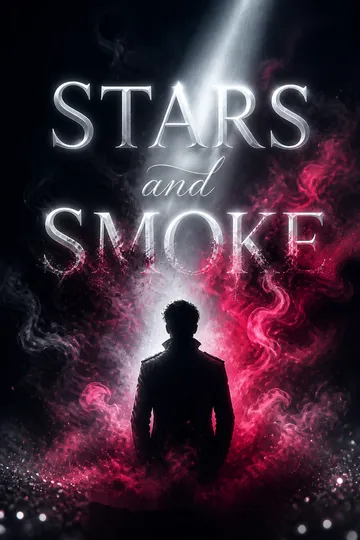
Stars and Smoke Series

About the Author







Download PDF
Download EPUB
.epub digital book format is ideal for reading ebooks on phones, tablets, and e-readers.








