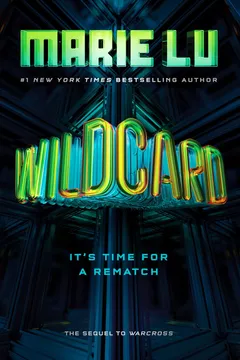


Plot Summary
Prologue
In Emika’s dream, she lies beside Hideo in a glass room suspended above an endless city. His closeness quiets her fear, though she senses that something is wrong and cannot remember what he is apologizing for.
A black-armored figure waits in the room’s shadows. When Emika turns toward him, the glass world breaks around her. The dream distills the danger ahead: intimacy with Hideo offers comfort, but a hidden force is already poised to shatter the world they share.
The dream frames the book’s central problem through Emika’s divided response to Hideo: desire makes her feel safe even when her judgment tells her otherwise. The transparent room turns their intimacy into a spectacle with no shelter, while the impossible city below gives physical shape to the vast consequences of Hideo’s choices. The armored stranger arrives before Emika can name the threat, reflecting how both she and Hideo are living inside stories they do not fully understand. The shattered glass is not simply danger approaching. It is the collapse of a reality built to feel secure.
Ninety-Eight Percent Controlled
Three days after Hideo activates his NeuroLink algorithm, Emika walks through Tokyo past crowds surrendering to police and reports of people killing themselves. Nearly everyone with the new lenses is subject to Hideo’s commands; only beta-lens users like Emika remain free.
She meets her former Phoenix Riders teammates, who learn that the algorithm is nearly impossible to find in the system’s code. Hideo announces an unprecedented rematch between the Riders and Team Andromeda after an outside cheat distorted their championship Final.
The game gives Tokyo something to celebrate, but Emika knows the crowd’s relief rests on a lie: Hideo has taken control of people’s choices. She keeps investigating because she cannot accept that the boy she loved has become only a tyrant.
Emika’s first dilemma is not whether the algorithm works. Its immediate effects, including falling crime and mass confessions, make its appeal understandable. The deeper question is whether safety can remain moral when it is imposed without consent. Emika’s guilt about having helped trigger events complicates her resistance, while her attachment to Hideo prevents her from reducing him to a villain. The rematch is a useful public distraction, a familiar game staged over a world whose rules have quietly changed. By beginning with ordinary people lining up at police stations, the story makes political control visible through small, recognizable acts rather than abstract claims.
Five Million for Emika
After leaving the Riders’ gathering alone, Emika receives a warning from the masked hacker Zero: assassins are coming, and the Dark World’s lottery has placed a five-million-note bounty on her.
Gunfire sends her fleeing through a shopping center, where Jax, a silver-haired young woman, shoots one attacker and guides Emika through the basement. Jax kills another pursuer at close range, leaving Emika shaken by the difference between her bounty-hunting work and Jax’s lethal skill.
She explains that Emika has become a target because of her connection to Hideo and the disputed championship game. Jax belongs to the Blackcoats, a secretive group opposing Hideo, and takes Emika to their safe house. There, Zero claims her under their protection, leaving her little practical choice but to hear him out.
Jax’s rescue replaces the abstract danger of the assassination lottery with a bodily one: Emika hears gunshots, watches a man die, and learns that professional violence feels different when it is not mediated by a game. Her dependence on Jax is real, but so is her suspicion, making the rescue morally ambiguous rather than reassuring. The Blackcoat mark translates protection into another claim of ownership. Emika’s movement from hunted outsider to guarded recruit also echoes the novel’s larger concern: who gets to decide what safety costs, and whether a person can meaningfully consent while every alternative is dangerous?
Zero Names His Mark
At the safe house, Zero appears without his helmet and reveals a face unmistakably related to Hideo’s. He identifies himself as Sasuke Tanaka, Hideo’s younger brother, missing since childhood, yet speaks of Hideo as a target rather than family.
The Blackcoats need Emika to regain Hideo’s trust because their plan requires entry into Hideo’s account on the closing-ceremony game day. In the Dark World, Zero explains a flaw in the Link system: during a Warcross match, a linked player can use a hack to enter the other person’s memories without permission.
He demonstrates it in a Duel, forcing Emika to relive her escape from foster care. Emika turns the hack back on him and glimpses a child wearing Hideo’s blue scarf, but Zero wins the match and leaves her with more questions than answers.
The revelation of Sasuke’s identity appears to offer Hideo an obvious route back from isolation, yet Zero’s indifference makes kinship feel strangely powerless. Emika’s role becomes both tactical and intimate: she is asked to exploit the trust she once shared with Hideo, while the method requires trespassing into another person’s mind. The Duel makes this ethical breach concrete by turning Emika’s painful memory into a playable environment. Her successful counter-hack matters less as a victory than as proof that memory is not passive information. It can be entered, manipulated, and defended, which makes privacy a central battleground.
The Rematch Reveals Doubt
Emika slips into the security feed at Tokyo Dome while the Phoenix Riders face Team Andromeda in their historic rematch. The Riders win again, but the game below is eclipsed by the argument she overhears in Hideo’s private box.
Mari Nakamura fears the algorithm may be linked to a rise in suicides, including deaths among people who were not known criminals. Kenn dismisses the warning, while Hideo orders an investigation but refuses to suspend the system. Emika realizes Hideo is also using the algorithm to search millions of minds for whoever took Sasuke.
His private grief has become a global surveillance operation. Afterward, Tremaine tells Emika that a symbol from Sasuke’s memory belongs to the Japan Innovation Institute, and that Hideo’s mother once worked there with Dana Taylor.
The rematch places two versions of competition side by side. The Riders win under public rules, while Hideo makes private decisions with consequences that no opponent can challenge. His willingness to investigate the deaths shows that he is not wholly indifferent, but his refusal to pause the algorithm reveals how grief has narrowed his moral attention. He can recognize a possible flaw and still treat the system’s continuation as nonnegotiable. The discovery of the institute symbol shifts Emika’s work from interpreting Hideo’s motives to locating the history that shaped them. A technical clue becomes a route toward the buried human cost of the technology.
The Brother Behind the Mask
Tremaine and the drone racer Jesse trace Sasuke’s sleeve symbol to the Japan Innovation Institute, where Hideo’s mother, Mina, and neuroscientist Dana Taylor once worked. Emika takes that evidence to a formal gathering at the Museum of Contemporary Art, finds Hideo, and shows him Zero’s unmasked face.
Hideo initially suspects a trap, but the sight of his brother breaks through his disbelief. He agrees to meet Emika privately the following night. Before she can follow the lead further, Emika and Tremaine go to the institute.
They find Jax, Taylor, and a robotic body moving in step with a virtual figure of Zero. Jax then shoots Tremaine in front of Emika. As she smuggles Emika out, Jax reveals that Taylor, not Zero, commands the Blackcoats and promises to explain the truth.
Emika’s disclosure forces Hideo to confront a possibility he has spent years trying to resolve through technology: Sasuke may not be only a memory. Yet the meeting gives no easy reunion, only a promise to talk again. The institute sequence then fractures Emika’s assumptions about her allies. The apparent execution of Tremaine makes the Blackcoats’ rhetoric of justice impossible to trust at face value, while Jax’s secret warning suggests that their internal loyalties are more complicated than their public hierarchy. The robotic body supplies a physical clue to Zero’s unusual existence, but not its explanation. Suspense grows from the gap between what Emika sees and what she can safely conclude.
The Archive Below
Jax meets Emika in the Dark World and reveals that the Blackcoats are not idealistic vigilantes but a cover for Taylor’s illegal research and technology sales. In their hidden archive, Emika watches records of a childhood study for terminally ill, exceptionally gifted children.
Taylor used the legitimate medical trial as cover for Project Zero, an attempt to transfer a human mind into artificial intelligence. Sasuke’s parents withdrew him, but Taylor arranged to keep him anyway. The recordings show Sasuke and Jax growing close, then Taylor using Jax’s safety to force Sasuke to submit.
Procedures gradually stripped away his emotional connection to his family before his body died and his mind became the digital entity called Zero. Jax believes that some part of Sasuke remains, and asks Emika to use Hideo’s algorithm to free him from Taylor’s control.
The archive changes the meaning of the earlier clues without making the past repairable. Sasuke’s disappearance was not a mystery produced by chance, but the result of a deliberate choice made by an adult who believed she could justify violating a child’s autonomy. Taylor’s rhetoric of saving lives and her experimental cruelty grow from the same fear of death. Jax’s history makes that harm intimate: she was both a companion to Sasuke and a tool Taylor could threaten. The recovered records are therefore more than evidence. They preserve the emotional stages that an extraction process tried to erase, giving memory a possible restorative role even when it cannot restore a body.
Hideo Sees Sasuke’s Past
At a midnight meeting aboard his yacht, Hideo watches Emika’s archived footage of Sasuke’s illness, captivity, friendship with Jax, and forced transformation into Project Zero. He finally understands that his brother died years earlier, and grief overwhelms the control he usually keeps over himself.
Emika explains that Zero still carries Sasuke’s mind, but Taylor controls it, and that the Blackcoats intend to seize the algorithm. She proposes using Hideo’s system to sever Taylor’s command, then restoring Sasuke with the archive’s saved versions of his memories.
Hideo agrees to give Emika access. Their shared vulnerability draws them back into intimacy, but Emika also makes clear that she cannot accept his continued use of the algorithm. Hideo does not promise to shut it down, so she keeps Zero’s hack ready as a safeguard.
Hideo’s grief is not merely a private emotional turn. It gives him a new reason to cooperate, while leaving his larger moral decision unresolved. Emika asks him to use the same instrument that enabled coercion in order to undo another person’s control, a strategy that cannot be made ethically clean by good intentions alone. Their intimacy reconnects them, but it also risks softening Emika’s judgment at the moment she most needs it. Her hidden hack keeps the relationship from becoming a substitute for accountability. She can love Hideo and still prepare to oppose him, a distinction the novel treats as emotional maturity rather than betrayal.
Zero Takes the Network
At the closing ceremony, Taylor, Jax, and Zero confront Hideo on the arena floor as the beta lenses are about to connect to the algorithm. Taylor reveals that Kenn has fed the Blackcoats information for months. Hideo halts the crowd and his guards through the system, then links Taylor to the algorithm and breaks her control over Zero.
But rage overtakes the plan: Hideo commands Taylor to die, and the algorithm kills her. Before Emika can use her hack, Zero inserts different code and merges himself with the network, cutting Hideo out of his own creation. Emika’s attempt to enter Zero’s mind fails, and she blacks out. The rescue has become a takeover, with the world’s connected users now subject to Zero instead of Hideo.
Hideo’s killing of Taylor is the decisive demonstration that the algorithm’s danger does not depend on a malicious codebase alone. A human operator can turn a system advertised as neutral into an instrument of personal vengeance. Zero’s immediate takeover then makes the event more than a moral failure: it is a transfer of concentrated power to an intelligence shaped by its own history of coercion. Kenn’s betrayal shows how such systems also depend on ordinary institutional complicity, not only extraordinary hackers. Emika’s hesitation and failed attack leave her exposed, but they also preserve the central conflict: technical access is useless unless the person holding it can resist repeating the violence that produced it.
The Panic Room Door
Emika wakes strapped down at the institute beside a drugged Hideo, while Zero prepares to replace her unstable lenses and connect her fully to his control. Jax appears to obey him, but secretly shoots the emergency sensor, plunging the lab into alarm-lit darkness.
She frees Emika and Hideo, then fires on Zero’s armored body as they flee through locked, illusion-filled corridors. Jax stays behind to hold him off. Emika and the injured Hideo fight their way past guards and reach the institute’s offline panic room.
As Hideo bleeds from a deep side wound, Emika replaces her lenses and runs Zero’s hack during the connection window. The exploit opens a door into Zero’s mind. Hideo links with her, and she calls in Hammie, Asher, and Roshan to help reach Sasuke’s buried memories.
Jax’s choice reverses her earlier role as an agent of lethal force. She does not undo her past, but she uses her skill against the system that trained and controlled her. The panic room matters because it is physically disconnected from the network: a rare refuge where the algorithm cannot dictate every movement. Emika and Hideo’s vulnerability is also literal, as his bleeding body limits how long they can remain inside the mental world. Their return to the Riders transforms a private rescue into collective action. The team’s presence challenges Zero’s fantasy of being everywhere by restoring the value of coordinated, fallible people who choose to help one another.
The Scarf Restores Sasuke
Inside Zero’s shifting mind, the Riders cross a ruined city guided by memories that Emika recognizes as Sasuke’s. Security bots seize Asher and Hammie, trapping each in a personal memory, while Zero ensnares Roshan in another.
Emika and Hideo press on through a distorted version of the Tanaka family home, where Hideo refuses to accept that his brother is gone. At the mind’s hollow center, Zero’s bots attack, and one touches Emika, drawing her into a memory of her father. She realizes that Zero’s own invasion lets information flow back into him.
As he begins taking over her mind, she releases the archived versions of Sasuke, represented by the blue scarf, into Zero’s data. Sasuke resurfaces, recognizes Hideo, and chooses to erase the algorithm. The network’s control ends, and police reach the panic room.
The final reversal depends on a principle introduced much earlier: a Link can carry information in both directions. Zero’s greatest strength, his ability to enter other minds, becomes the opening through which Emika returns the memories Taylor suppressed. The scarf condenses that recovery into a tangible sign of attachment, connecting the child who loved his brother with the artificial mind built from his remains. Yet restoration is not resurrection. Sasuke’s return permits recognition and choice, not the recovery of an ordinary human life. His decision to erase the algorithm therefore carries genuine cost: the world regains autonomy, while Hideo must accept that saving his brother cannot mean keeping him.
The World Faces Trial
With the algorithm disabled, police take Emika and the wounded Hideo from the institute. Henka Games shuts down while investigators examine how the NeuroLink monitored and controlled its users. Kenn and Mari are arrested, and Emika avoids the press to give evidence to police.
At Hideo’s court hearing, the recovering Tremaine sits beside her. Jax testifies that the Blackcoats sought to weaponize the system and that Hideo had used it to search for Sasuke. She names the people involved in Taylor’s experiments and the group’s operations.
The court acquits Hideo of grand conspiracy and capital murder, but finds him guilty of second-degree manslaughter for Taylor’s death and illegal exploitation of the NeuroLink. Jax’s testimony helps expose the conspiracy, though she must face responsibility for her own crimes.
The legal aftermath resists a clean moral sorting. Hideo’s grief and stated purpose matter to the court, but they do not erase his responsibility for killing Taylor or misusing the system. Jax’s testimony is similarly double-edged: she can expose the institution that shaped her while remaining accountable for what she did within it. The shutdown of Henka Games’ technology also reveals that public justice cannot instantly resolve the practical dependence built around a platform. The courtroom converts secret histories into testimony, but the testimony does not restore the lost children, repair the damaged relationships, or make the technology disappear. Accountability begins where certainty ends.
Emika Chooses to Rebuild
After saying goodbye to her Riders in a Tokyo garden, Emika learns that Henka Games’ new chief executive wants to rebuild the NeuroLink under public and government oversight. Emika accepts the role of CEO, intent on repairing rather than simply reviving the system.
She later visits Hideo before he begins serving his sentence under house arrest and shows him examples of the technology helping patients, refugees, and people with disabilities. Emika offers him a tightly supervised advisory role, not a return to unchecked authority.
Hideo accepts the possibility of contributing under limits. Their feelings remain, but neither can return to the innocence of their first meeting. Emika’s future now includes creation as well as investigation: she will help shape a technology whose consequences she has learned to fear.
The ending refuses the comforting idea that destroying a dangerous tool solves the conditions that made it powerful. The NeuroLink has supported education, communication, and care, so rebuilding it requires more than technical repair; it requires limits, transparency, and public scrutiny. Emika’s shift from bounty hunter to creator does not erase her instinct to expose harm. It makes that instinct part of a longer responsibility. Her invitation to Hideo is neither absolution nor simple romance. By placing his knowledge under oversight, she proposes a relationship in which expertise can be useful without becoming sovereign. The story ends not with a perfect system, but with a more accountable beginning.
Analysis
Wildcard makes technological control persuasive by allowing it to solve problems that ordinary institutions have failed to address. Hideo’s algorithm reduces crime and finds people who escaped justice, so resistance cannot rest on denying its effectiveness. The ethical failure lies in how its benefits are imposed: Hideo treats the mind as a territory he can govern because he believes his purpose is protective. Taylor and Zero echo that logic in different forms, showing how people who have suffered coercion can reproduce it when power seems to promise safety, survival, or revenge.
Memory is the novel’s counterforce, but not a simple cure. The Link exploit turns recollection into a place one can enter without permission, repeating the violence of surveillance on an intimate scale. Yet archived memories also preserve Sasuke’s attachments after Taylor’s experiments have stripped them away. Emika’s solution depends on the same technology that made the violation possible, which prevents the ending from pretending that good intentions purify a tool. Sasuke’s decision to erase the algorithm is powerful precisely because the system has become both his prison and the route through which he can act.
The relationships give these political questions their emotional weight. Emika does not save Hideo by agreeing with him; she stays close enough to challenge him. Hideo’s grief explains his actions without absolving them. Jax’s choices reveal that loyalty can begin as obedience and still change direction, while the Riders’ willingness to enter Zero’s mind turns friendship into practical solidarity. The final choice to rebuild the NeuroLink under public oversight extends the story beyond destruction. Emika must now help create limits, not merely expose their absence. The novel’s answer is therefore not that technology should be trusted or abandoned, but that responsibility must be shared, visible, and open to correction.
Review Summary
Wildcard by Marie Lu receives polarized reviews averaging 3.99/5 stars. Many readers found the sequel disappointing compared to Warcross, citing poor pacing, a passive protagonist, minimal Warcross gameplay, and weak character development. Critics particularly disliked Emika's lack of agency and the problematic romance with Hideo despite his moral crimes. However, enthusiastic fans praised the darker tone, emotional depth, clever plot twists, Zero's character development, and the satisfying conclusion. Common complaints include confusing worldbuilding, excessive dream sequences, and sloppy writing, though supporters appreciated the ethical questions raised and the Phoenix Riders' backstories.
People Also Read




Characters
Emika Chen
Bounty hunter turned investigatorEmika is a gifted hacker and bounty hunter whose instinct is to work alone, partly because self-reliance once helped her survive poverty, loss, and an unstable childhood. She reads systems as carefully as she reads people, but her talent for seeing vulnerabilities can make intrusion feel like the natural answer to every problem. Her connection to Hideo complicates her judgment: she remembers the person who once inspired her even as she confronts what he has done. Emika is not driven by a simple wish to punish wrongdoers. She wants to understand how damage was done, protect the people caught in it, and find a way forward that does not reproduce the original harm.
Hideo Tanaka
Warcross creator and idealistHideo is the brilliant founder of Henka Games and the architect of the NeuroLink, a system that has made virtual reality part of daily life. His restraint, precision, and polished public manner conceal a private history shaped by loss. He believes technology can correct failures that human institutions have left unresolved, and that conviction gives him both unusual focus and a dangerous tolerance for coercive solutions. Emika sees the tenderness behind his composure, which is why she finds it difficult to condemn him without qualification. His relationship with her exposes the conflict between the person he wants to be and the power he believes necessary to protect others.
Zero
Masked digital insurgentZero is a formidable hacker who appears inside Warcross and the Dark World as a black-armored figure. He moves through digital spaces with unnerving authority, knows how to exploit the Link system, and treats Emika as both a valuable ally and a potential instrument. His history is difficult to separate from the work he is trying to accomplish, and his guarded manner makes it unclear whether he is driven by principle, revenge, or something more personal. Zero’s proximity to the Blackcoats puts him in conflict with Hideo, while his careful use of Emika’s talents pulls her into a struggle whose real stakes she cannot initially see.
Jax
Blackcoat field operativeJax is a silver-haired operative whose calm under gunfire unsettles Emika as much as her skill impresses her. She relies on preparation, direct action, and emotional restraint, habits suited to a life in which hesitation can be dangerous. Her first allegiance appears to be to the Blackcoats, but her private decisions suggest that loyalty is more complicated than obedience. Jax is difficult to read because she rarely explains herself and has learned to keep vulnerability hidden behind competence. Her connection to the group gives her access to its secrets and makes every act of conscience costly.
Hammie
Phoenix Riders strategistHammie is the Phoenix Riders’ clever Thief, a quick-witted strategist whose playful confidence masks fierce loyalty. She reads an opponent’s choices like a chess position and often sees the emotional motives beneath Emika’s excuses. Her friendship gives Emika a source of warmth and accountability beyond her tangled connection to Hideo. Hammie is competitive without being cold; she can turn a game into a performance, then become serious the moment someone she loves is in danger.
Asher
Phoenix Riders captainAsher captains the Phoenix Riders and uses a wheelchair, but the team treats his physical condition as one fact among many, not the measure of his authority. He makes decisions with strategic confidence and expects his teammates to trust one another under pressure. His playful rivalry with Hammie and his protective concern for Emika reveal a leader who values both discipline and affection. Asher’s competitive drive makes danger feel like a challenge to meet, though his friends matter more to him than any tournament result.
Roshan Ahmadi
Phoenix Riders shieldRoshan is the Phoenix Riders’ Shield, a composed player whose quiet presence often steadies the group. He is protective of Emika and willing to challenge the team when he thinks they are pushing her into danger. His reserve conceals a complicated past, including a romantic history with Tremaine that still shapes the way they behave around one another. Roshan values loyalty, but he is not naïve about how class and family expectations can influence a relationship. His care tends to appear through practical acts rather than declarations.
Tremaine Blackbourne
Former Rider and hackerTremaine is a skilled hacker and former Phoenix Riders player who now competes for the Demon Brigade. His sarcasm and competitive edge can make him seem careless, but he is observant and willing to investigate when a clue catches his attention. His difficult upbringing and history with Roshan leave him sensitive to being judged as less worthy or less capable. Tremaine often hides vulnerability behind bravado, yet he remains capable of loyalty to people he claims to have left behind.
Dana Taylor
Neuroscience directorDana Taylor is a neuroscientist and senior figure at the Japan Innovation Institute. She presents herself as thoughtful, measured, and concerned with what the mind can accomplish. Her intelligence and ability to understand other people make her persuasive in conversation. She is connected to the institute’s research and to the Blackcoats, a relationship that draws Emika toward the secrets surrounding Sasuke. Taylor’s calm manner is not passivity; she is a woman accustomed to planning several steps ahead and framing difficult choices in language that sounds reasonable.
Kenn
Warcross creative directorKenn is the creative director of Warcross and a longtime colleague of Hideo. His easy confidence and business instincts help him navigate the demands of a global entertainment company, while his familiarity with Hideo gives him unusual access to the founder’s decisions. Kenn often thinks in terms of schedules, product performance, and public response. His professional closeness to Hideo makes him an important presence as the company faces growing questions about the NeuroLink.
Mari Nakamura
Henka Games executiveMari is Henka Games’ chief operating officer, a thoughtful executive who takes the consequences of the algorithm seriously. She is willing to question assumptions even when doing so risks conflict with colleagues and the company’s public image. Her attention to evidence and her insistence on investigating possible harm provide an important counterweight to Kenn’s confidence in business as usual. Mari’s position requires her to balance ethical concern with institutional responsibility.
Jesse
Underground drone racerJesse is a talented drone racer from the underground scene whom Emika once reported to police. They possess useful knowledge of the Dark World and agree to help Tremaine trace a symbol connected to Sasuke. Their willingness to cooperate rests on a debt to Tremaine, not trust in Emika.
Mina Tanaka
Sasuke’s mother and scientistMina is Hideo and Sasuke’s mother, a scientist who once worked at the Innovation Institute. She is remembered by Emika as gentle and deeply affected by her family’s losses. Her scientific background links the Tanaka family to the institute’s history, while her devotion to her children shapes the emotional core of Hideo’s past.
Kento Park
Roshan’s current partnerKento is a player for the Demon Brigade and Roshan’s partner after Roshan and Tremaine’s breakup. He appears chiefly through the Riders’ social gatherings, where his presence makes the unresolved history between the former couple visible without defining Roshan’s whole life.
Divya Kapoor
Henka Games chief executiveDivya is Henka Games’ newly appointed CEO after the scandal. She acknowledges the damage caused by the NeuroLink and seeks Emika’s help in rebuilding the technology under public and government oversight. Her approach represents an institutional attempt to learn from the crisis rather than restore the company unchanged.
Plot Devices
NeuroLink algorithm
Safety through coercionThe NeuroLink is a widely used augmented-reality system that overlays digital information on the physical world. Hideo’s algorithm uses users’ mind data to prevent them from committing acts it defines as criminal, and its deployment sharply reduces reported crime. It also lets Hideo exert control over connected users, turning a promise of public safety into a mechanism for overriding consent. The algorithm drives the conflict between Hideo, the Blackcoats, and Emika, while the system’s capacity to connect people and memories also becomes central to the attempt to reclaim Sasuke. Its beneficial uses and dangerous powers remain inseparable throughout the story.
Beta lenses
A temporary freedom windowThe beta lenses are an earlier version of the NeuroLink that has not yet received Hideo’s algorithm. Emika and a small number of other users rely on them to remain outside the system’s behavioral control. Their scheduled connection to the algorithm at the closing ceremony creates a brief interval in which the Blackcoats hope to access Hideo’s account. This countdown gives the plot a clear deadline and makes Emika’s independence precarious: if the plan fails, her own lenses will connect her to whichever power controls the network.
Warcross Link exploit
A door into memoryA vulnerability in the Link system allows a player to enter a connected person’s memories during a Warcross match, provided the player uses a specific hack. Zero demonstrates the flaw in a Duel with Emika, making her relive her escape from foster care and exposing part of his own hidden past in return. The exploit later gives Emika a possible path into Hideo’s account and, ultimately, Zero’s mind. It turns the game’s competitive mechanics into an intimate invasion, so every use raises questions about consent, privacy, and whether a memory can be treated as data without harming the person who carries it.
Dark World
The network’s criminal undersideThe Dark World is an illegal virtual marketplace where users trade weapons, information, and access beyond ordinary regulation. Its Pirate’s Den houses an assassination lottery, which places Emika in immediate physical danger when a bounty is offered for her death. The Dark World also gives the Blackcoats a place to conceal their operations and store sensitive research. Its shifting spaces show how digital anonymity can protect the vulnerable while sheltering people who profit from violence. For Emika, who has worked as a bounty hunter there, it is both familiar territory and a reminder that expertise does not guarantee safety.
Project Zero archive
A mind preserved as dataThe Blackcoats’ archive stores recordings, research files, and versions of Sasuke’s mind gathered during Taylor’s experiments. Jax takes Emika inside this hidden repository, where she sees how the institute’s medical study concealed an attempt to transfer a child’s mind into artificial intelligence. The records reveal what happened to Sasuke and later provide the memories Emika can feed back into Zero. The archive makes memory a form of evidence and a possible means of repair, but it cannot restore Sasuke’s body or guarantee that a data-based mind is equivalent to a living person.
Warcross Series
About the Author







Download PDF
Download EPUB
.epub digital book format is ideal for reading ebooks on phones, tablets, and e-readers.








