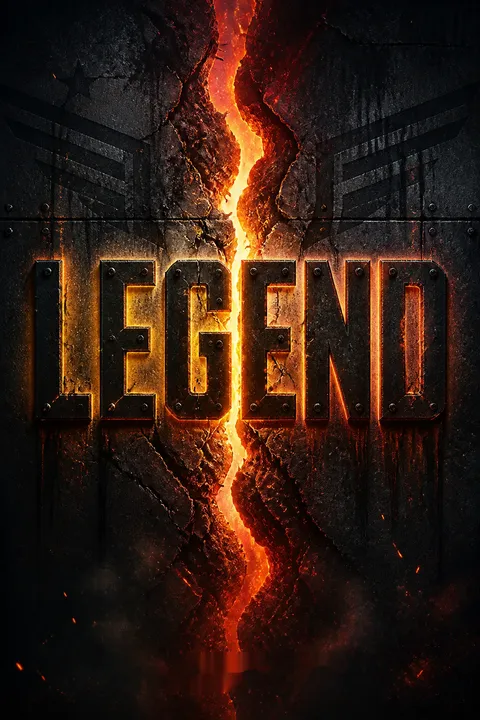


Plot Summary
The Marked Door
Fifteen-year-old Day watches plague patrols inspect the Lake sector, hoping they will spare the family he secretly visits. His mother and older brother, John, are still standing, but nine-year-old Eden is ill, and soldiers paint a strange three-lined X on their door. Day has money saved, but not enough for a cure.
Across Los Angeles, June Iparis, a fifteen-year-old military prodigy raised by her devoted brother Metias, is suspended from Drake University for a reckless climbing stunt. That night, Metias tells June he is guarding a shipment of mutated viruses at Central Hospital, then leaves her at home. While Day prepares to break into the hospital, June has no idea that her brother is about to cross his path.
The Hospital Knife
Disguised as an injured patient, Day slips into Central Hospital, steals a guard’s identification tag, and reaches the laboratory. The cure vials are gone, so he takes plague suppressants instead. Soldiers spot him, and he escapes through a stairwell window, badly hurt from the fall. Near a sewer entrance, Captain Metias catches up with him.
Day throws a knife to escape, striking Metias in the shoulder, then disappears underground. The wound proves fatal. When June arrives, Commander Jameson uses her brother’s body as a test of her investigative skill, then recruits her as a detective agent and assigns her to find Day. June notices that Day has left behind a pendant, the first clue to the person he risked his life to help.
A Cure as Bait
After discovering that Day sought medicine for someone in a quarantined sector, June predicts he will stay in Los Angeles. She creates a false lead, sending word that a cure is waiting at the ten-second place, the alley behind a bank Day once robbed in seconds.
Day recognizes the phrase and suspects a trap, but the possibility of medicine for Eden draws him there. June waits in disguise with a vial and listens as Day speaks through rewired street speakers.
His careful questions and refusal to work for the government confirm her impression of a solitary, resourceful criminal. Yet June’s hesitation gives away her affiliation. Day vanishes before she can identify him, leaving her with only his voice and the realization that she must find him on his own ground.
The Girl in the Ring
June enters the Lake sector undercover, living among beggars and questioning locals without finding Day. At an illegal Skiz fight, she steps into the ring to protect Tess, Day’s young companion, from being forced to fight.
June breaks the arm of Kaede, a formidable bartender who has hidden a knife, then is pursued by angry gamblers. Day saves June with a dust bomb, and he and Tess shelter her in an abandoned library. June does not reveal her identity; Day does not reveal his.
They trade cautious observations while Tess treats June’s wound, and Day quietly checks on his family that night. June spots him returning from a quarantined house with the three-lined mark, but waits before reporting him. She has begun to care about the boy she is meant to capture.
A Kiss, Then Betrayal
As June’s wound heals, she travels with Day and Tess, watching Day share food, protect Tess, and tend to her injury. Their attraction grows, and they kiss. Later, June follows Day to his family’s home and confirms that Eden is dangerously ill.
She reports the address to Thomas and arranges a patrol, intending to arrest Day without harming anyone. The next morning, June warns Day that soldiers are coming, but conceals that she summoned them.
Day races home and reveals himself to his mother, Grace, and John, then hides them beneath the porch as troops arrive. He sees June among the soldiers and understands she used his trust to locate his family. Thomas shoots Grace, and Day attacks the patrol before Commander Jameson wounds and captures him.
The Trial Was False
In custody, Day identifies himself as Daniel Altan Wing and admits to his crimes, but insists he did not kill Metias. June threatens his brothers to force answers, then learns the Republic records Day as a Trial failure.
At a celebration of his capture, she hears that Eden is being held in a laboratory and that warfront generals have come to see him. Suspicious, June searches classified files and finds Day’s Trial score: 674. The archived exam contains no marked mistakes, and its physical and interview scores are perfect.
Day had earned the same 1500 as June, yet the Republic erased his achievement and declared him dead. Soon afterward, a public court sentences him to execution, turning the false record into a sentence the whole city can watch.
The Roof of Chains
Before his execution, Day is chained on the roof of Batalla Hall and left under the sun. June brings him water, and he tells her that the Republic experimented on him after his Trial, leaving injuries that were recorded as evidence of death. He has also found red-numbered marks near pipes in the poor sectors and suspects the government is deliberately spreading plague.
Eden, he believes, was taken as a test subject. June doubts him, but orders guards to move Day to the hospital wing when his wounded leg worsens. Meanwhile, hundreds of Lake residents gather to protest his sentence. Thomas obeys Commander Jameson’s order to open fire; June watches the crowd fall and realizes the Republic treats dissent as another threat to be eliminated.
Metias Leaves a Map
After the massacre, June reexamines Metias’s crime report and notices poor photographs that obscure the fatal wound, plus dark smears on the knife resembling rifle grease. Searching his journals, she finds deliberate misspellings that spell out a hidden website.
Metias’s private entries reveal that their father, a laboratory researcher, discovered the Republic engineered annual plagues from animal viruses, released them into poor districts, then tested cures and biological weapons.
He also found that Trial failures were sent to morgues, not labor camps, and that their parents were killed after their father tried to resign. Metias had planned to leave Commander Jameson’s patrol and had warned June to resist from inside the system. June understands that she helped the government target Day, and decides to help him escape.
The Escape Bargain
Day tries to escape his cell by faking plague symptoms, but June stops him in the corridor and secretly tells him he will need her help. She then finds Kaede and Tess, who has joined the Patriots, and offers her 200,000 Notes and an electro-bomb in exchange for help.
Kaede agrees to consider the dangerous bargain. June plans to free John first, then use a staged disturbance to draw guards away while she escorts Day from Batalla Hall. Commander Jameson abruptly moves Day’s execution forward by a day, disrupting the plan and leaving June almost no time.
She still manages to get John out of his cell and into a ventilation shaft, then requests that Day see him before the firing squad. The brothers meet under armed watch, each trying to prepare the other for what comes next.
The Wrong Boy Dies
As June leads Day toward the execution yard, Thomas detains her for investigation, suspecting her of stealing the electro-bomb. It detonates outside, disabling nearby guns and filling Batalla Square with chaos. June escapes Thomas, cuts power to the basement grid, and reaches Day and John. With soldiers closing in and Day barely able to walk, John turns back wearing Day’s blindfold.
June and the Patriots get Day out through a rear exit, but John reaches the firing squad instead. From a rooftop, Day sees the broadcast of his supposed execution and recognizes John beneath the blindfold. June explains that John chose to buy them time. Grieving and furious, Day tends to June’s injured shoulder as they shelter together in the storm.
Barstow in the Rain
Three days later, June and Day hide in a freight car in Barstow while a public screen reports that Day was executed and orders evacuations across Los Angeles. The Republic has also lifted quarantine in some districts, a change that fits the pattern of plague tests ending once officials have gathered enough evidence.
Day wants to find Tess with the Patriots before crossing toward the warfront to search for Eden. June agrees to stay with him, despite having lost her rank, home, and former place in the Republic.
She still grieves Metias and worries about Ollie, left behind in her apartment, but no longer trusts the official story that shaped her life. Together, she and Day choose a route beyond the Republic’s reach, carrying the truth and their unfinished search with them.
One Day Forward
Sheltered from the hurricane, June and Day speak about the lives they might have led in each other’s place. Day explains that his name means meeting each day as a new chance, and June privately says farewell to Metias, keeping her brother’s strength rather than his old certainties.
Their next steps are practical: head toward Vegas, find Tess among the Patriots, then reach the warfront and learn what happened to Eden. Neither mistakes affection for safety. Day is wounded, June is exposed as a traitor, and the Republic is still powerful enough to pursue them.
But they now choose their risks together. The novel ends with them waiting for dawn in a railway car, not knowing whether the next day will bring rescue or pursuit, but no longer mistaking obedience for protection.
Analysis
Legend makes two gifted teenagers into opposing products of the same political machine. June has been taught that a perfect score validates the Republic; Day has been told that his perfect score was failure. Their conflict is therefore not simply one of law against crime. It is a struggle over who gets to define evidence, ability, and guilt. June’s talent initially strengthens the state because she applies it to the state’s chosen questions. Only when she examines the badly documented death of Metias, then reads the record he hid, does her intelligence become politically independent.
The Trial and the plague program form a chilling pair. One sorts children by declared capacity; the other removes people the government deems expendable. Together they expose how a meritocratic vocabulary can disguise coercion. Day’s suppressed score is especially important because it shows that the Republic fears not only failure but also exceptional ability when it cannot control what that ability might become. The manufactured epidemics extend this logic from individual bodies to whole communities.
The romance develops through acts of misrecognition and care. June first reads Day as a killer because the state gives her a simple story; Day reads June as a street girl because she has concealed her rank. Their moments of trust are concrete: he rescues her from the Skiz crowd, she tends to the evidence of his family’s illness, and each sees the other act beyond self-interest. Betrayal then hurts because their intimacy was earned, not merely imagined. June’s decision to free Day is not a rejection of reason. It is reason redirected toward the human facts the Republic has hidden.
The ending refuses an easy victory. Day escapes, but John dies in his place, Eden remains in government custody, and June cannot return to her former life. The Republic can falsify the public record, yet it cannot fully control what people remember or whom they choose to protect. The novel’s modest hope lies in that difference: resistance begins when private loyalty becomes a form of evidence against official truth.
Review Summary
Legend receives mostly positive reviews, praised for its fast-paced action, compelling characters, and engaging dystopian setting. Readers appreciate the dual perspectives of Day and June, though some find their young age (15) unrealistic for their abilities. The romance develops quickly but is generally well-received. Critics note thin world-building and predictable plot elements. Despite these issues, many readers enjoy the book and look forward to continuing the series, finding it a solid entry in the YA dystopian genre.
People Also Read







Characters
Day
The fugitive prodigyBorn Daniel Altan Wing, Day is a fifteen-year-old from the Lake sector whose speed, ingenuity, and appetite for risk have made him the Republic’s most wanted criminal. He steals food and money, sabotages military resources, and avoids harming people, though the state’s broadcasts turn those acts into proof of menace. His family gives his rebellion its intimate stakes: he wants to protect his mother, John, and Eden, not lead a cause. Day’s humor and watchfulness conceal a deep distrust of institutions that have already taken his childhood from him. He is quick to trust acts of kindness, especially when they resemble the loyalty he offers others, and that openness makes him both resourceful and vulnerable.
June Iparis
The Republic’s prodigyJune is a fifteen-year-old with a perfect Trial score, exceptional powers of observation, and a place in the Republic’s elite military training system. She thinks in evidence, patterns, and tactical probabilities, partly because competence gives her a way to manage the losses and uncertainties of childhood. Metias, her older brother, has been her guardian and closest emotional anchor. June is ambitious and daring, but her intelligence initially operates within the assumptions of the state that rewards her. Living undercover among poor-sector residents exposes the distance between her polished education and their daily risks. Her defining tension is between loyalty to the institutions that shaped her and the evidence she can no longer explain away.
Tess
Day’s watchful allyTess is a near-sighted orphan who has survived on the streets since childhood and travels with Day as his closest companion. He first helps her when she is alone and injured; she repays that care with practical skills, vigilance, and a willingness to challenge his reckless choices. Her small frame and gentle manner can make her seem fragile, but she reads people and surroundings with a careful intelligence that keeps them safer. Tess’s dependence on Day is real, yet she is not merely someone he protects: she has her own judgment, loyalties, and capacity to seek a place in the larger resistance. Her attachment to him mixes gratitude, affection, and hard-earned trust.
John Wing
The protective elder brotherJohn is Day’s older brother, a hard-working factory laborer who helps support their mother and younger brother. He is steady where Day is impulsive, and his reading difficulties have not kept him from becoming the family’s practical center. John understands the dangers of defying soldiers and repeatedly urges Day to think beyond the immediate thrill of a successful stunt. His protectiveness is not passive: he is willing to take responsibility when the family is threatened, even when he cannot control the larger forces closing around them. For Day, John represents home, restraint, and the love that can survive years of separation and fear.
Eden Wing
The inventive youngest brotherEden is Day and John’s nine-year-old younger brother, a gifted tinkerer who builds small devices from scraps and asks questions beyond his years. His intelligence makes him resemble Day, which is part of why Day worries about the fate awaiting him under the Republic’s Trial system. Eden is cherished by his family and remains curious even while ill, often trying to help with ordinary household problems. Through him, the story’s political dangers become immediate: what the Republic does to children is not an abstraction to the people who love him.
Metias Iparis
June’s steadfast brotherMetias is June’s older brother and guardian, a respected city-patrol captain who has cared for her since their parents died. He is protective without being emotionally distant, mixing military discipline with the small acts of attention that give June a sense of home. His career puts him close to the machinery of the Republic, while his private habits, especially keeping handwritten journals, reflect a cautious mind that values records beyond official databases. Metias shapes June’s standards for courage and loyalty, and his choices remain important to her long after she can no longer ask him what he intended.
Thomas
The disciplined patrolmanThomas is a young soldier who serves under Metias and later assumes responsibilities in his patrol. He comes from a poor background and has earned his position through discipline, competence, and strict adherence to the Republic’s rules. He has known June since she was young and feels both protective of her and invested in her regard. Thomas’s polished self-control makes him appear dependable, but his devotion to hierarchy can narrow his moral choices. His character shows how a system can turn discipline into virtue while leaving little room for independent judgment.
Commander Jameson
The ruthless commanderCommander Jameson leads a Republic patrol and recognizes June’s abilities as an asset to her command. She prizes efficiency, obedience, and results, treating investigation and force as interchangeable tools when pursuing her objectives. Her manner is coldly controlled, and she expects subordinates to follow orders without debate. Jameson’s authority gives her power over both June’s career and the lives of people the state labels dangerous. She represents a military culture in which competence can coexist with cruelty, and in which personal loyalty rarely outweighs institutional priorities.
Kaede
The streetwise fighterKaede is a skilled Skiz fighter and bartender who knows how to command a crowd and defend herself. She uses a hidden blade in the ring, revealing that her fights are less innocent than their informal rules suggest. Her connection to the Patriots gives her access to a wider political network, but she approaches alliances as a practical matter rather than a sentimental one. Kaede distrusts June for good reason and makes her prove that she is willing to pay for the risks she asks others to take.
Grace Wing
Day’s devoted motherGrace is the mother of Day, John, and Eden, living in the Lake sector under the strain of poverty, illness, and long absences. She is affectionate and resilient, trying to give her sons comfort even when the household has little to spare. Chronic coughing and injured hands reflect the physical cost of her work, but she continues to care for Eden and shield her family from despair. Her bond with Day is marked by the painful distance imposed by his supposed death and his need to remain hidden.
Taylor Arslan Wing
The absent fatherTaylor is Day’s father, a former warfront worker whose long absences leave his family with unanswered questions. He shares fragments of information about the past and gives Day a pendant that carries private family meaning. His work and knowledge connect the Wing family to dangers larger than their sector.
The Elector Primo
The Republic’s public faceThe Elector Primo is the Republic’s long-serving leader, presented across screens and public ceremonies as the nation’s reassuring authority. His carefully managed image reinforces the state’s claims of unity and victory. His brief appearance in June’s world shows how political power surrounds even personal celebrations.
Anden
The Elector’s sonAnden is the Elector Primo’s twenty-year-old son, a trained pilot introduced at a military celebration. He is being prepared for a political future and carries himself with polished formality, though he appears less assured than the older officials around him. His presence hints at the Republic’s dynastic political culture.
Chian
The Trial officialChian is a senior official involved in administering Trials and once mentored Metias. His scar and military decorations give him a conspicuous presence at public events, while his manner toward June combines praise with patronizing attention. He represents the officials who translate the Republic’s rankings and procedures into personal consequences for children.
Plot Devices
The Trial
A test that sorts childrenThe Trial assigns children a score that determines whether they can pursue education and privileged careers or are classified as failures. The Republic presents the system as fair measurement of ability, teaching June to treat its rankings as objective. Day’s hidden perfect score exposes how easily official records can be manipulated, while his childhood experience suggests that failure may lead not to labor camps but to lethal experiments. The Trial therefore links the novel’s class hierarchy to its central mystery: the state does not merely reward talent, it controls who is allowed to know what their talent is worth.
The Plague Marks
A warning that becomes evidenceSoldiers mark quarantined homes with red symbols, making illness visible and turning residents into targets of state surveillance. The extra line on the Wing family’s X signals that Eden’s case is unusual, while similar numbered marks near underground infrastructure later connect the illness to a larger system. At first, the marks motivate Day to risk a hospital break-in for medicine. Later, they help June and Day recognize that a supposedly natural epidemic may be part of a government program. The device turns an ordinary sign on a door into a clue whose meaning changes as the characters learn more.
Day’s Pendant
A keepsake that identifies himDay’s pendant is a plain, inexpensive object he carries for its family significance. He loses it during his escape from Central Hospital, and June finds it among the evidence. Its presence helps her connect the anonymous hospital intruder to the boy she later meets in the Lake sector. When she returns it to him in custody, the pendant also carries a family history tied to his father and the danger of preserving forbidden evidence. It works both as a practical clue in June’s investigation and as a small physical link between Day’s private identity and the Republic’s attempts to define him.
Metias’s Coded Journals
A trail through private recordsMetias leaves deliberate misspellings in his handwritten journals, forming a message that directs June to a hidden website. The method suits his distrust of traceable digital systems and his knowledge that June will examine details others overlook. The concealed entries preserve his investigation into their parents’ deaths and the Republic’s plague program. They also transform June’s grief into a concrete investigative task: rather than relying on official reports, she must interpret the evidence her brother hid for her. The journals make family memory an alternative archive, one the state cannot easily rewrite.
The Electro-bomb
A brief opening in securityJune gives Kaede a level-three electro-bomb as payment for the Patriots’ help. The device disables guns within a wide radius for two minutes, giving the rescue plan a narrow window to work. When the Patriots detonate it during Day’s execution, the blast disrupts security and throws Batalla Square into confusion. June uses the blackout to escape Thomas and reach Day and John. The bomb does not solve the escape by itself; it creates a temporary gap that June, John, Kaede, and the Patriots must exploit before the Republic’s weapons and command structure recover.
FAQ
Synopsis & Basic Details
What is Legend about?
- Dystopian Society Divided: Legend portrays a future where the Republic, formerly the western United States, is in constant war, with a stark divide between the elite and the impoverished.
- Two Contrasting Protagonists: The story follows June, a military prodigy from a wealthy family, and Day, a wanted criminal from the slums, whose lives intertwine after a murder.
- Quest for Truth and Justice: As June seeks revenge and Day fights for his family, they uncover the Republic's dark secrets, leading them to question everything they believed.
Why should I read Legend?
- Compelling Dystopian World: The novel offers a richly detailed and immersive dystopian setting, exploring themes of social inequality, government control, and rebellion.
- Complex Character Development: Readers will be drawn to the nuanced character arcs of June and Day, as they grapple with moral dilemmas and personal growth.
- Fast-Paced and Action-Packed: The narrative is filled with suspense, thrilling escapes, and unexpected twists, making it a page-turner for fans of action and adventure.
What is the background of Legend?
- Post-United States Republic: The story is set in a future where the western United States has become the Republic, a nation in constant conflict with its neighbors, suggesting a history of war and political upheaval.
- Social Stratification: The Republic is characterized by a rigid class system, with the elite enjoying privilege and the poor suffering under oppressive conditions, highlighting social and economic disparities.
- Technological and Military Focus: The Republic is technologically advanced, with a strong emphasis on military power and control, reflecting a society shaped by war and surveillance.
What are the most memorable quotes in Legend?
- "My mother thinks I'm dead.": This opening line immediately establishes Day's precarious situation and his need to protect his family, setting the tone for the story.
- "You should have taken me with you.": June's repeated thought after Metias's death highlights her grief, her desire for agency, and her belief in her own capabilities.
- "I'm not going to wait up for you.": This seemingly casual line from June to Metias foreshadows his death and the profound loss she will experience, emphasizing the fragility of life.
What writing style, narrative choices, and literary techniques does Marie Lu use?
- Dual Perspectives: The story is told through the alternating viewpoints of June and Day, allowing readers to understand their contrasting backgrounds, motivations, and emotional states.
- Fast-Paced and Action-Oriented: Lu employs a dynamic writing style with short, punchy sentences and vivid descriptions, creating a sense of urgency and excitement.
- Foreshadowing and Suspense: The narrative is filled with subtle hints and clues that foreshadow future events, building suspense and keeping readers engaged.
Hidden Details & Subtle Connections
What are some minor details that add significant meaning?
- The Three-Lined X: The red X with a vertical line on Day's family's door is not just a mark of plague infection but a symbol of the Republic's cruelty and control, foreshadowing the family's fate.
- Day's Pendant: The pendant, a seemingly insignificant object, is a symbol of Day's connection to his father and his past, highlighting his emotional depth and vulnerability.
- The Canto Knot: June's cloak knot, a military knot, reveals her true identity to Day, highlighting the subtle ways in which their worlds collide and their true allegiances are revealed.
What are some subtle foreshadowing and callbacks?
- Metias's Journal: Metias's handwritten journals, initially presented as a quaint habit, become a crucial source of information for June, revealing his suspicions and guiding her towards the truth.
- The Ten-Second Place: Day's reference to the ten-second place, a location from a past crime, foreshadows his encounter with June and the Republic's attempt to trap him.
- The Skiz Fight: The Skiz fight, initially a minor event, becomes a pivotal moment where June and Day's paths cross again, highlighting the interconnectedness of their lives.
What are some unexpected character connections?
- Chian and Day: The revelation that Day scarred Chian, a high-ranking Trial official, adds a layer of complexity to their relationship and highlights Day's rebellious nature.
- Thomas and Metias: Thomas's close relationship with Metias, initially presented as a bond of loyalty, is later revealed to be a source of jealousy and resentment, leading to his betrayal.
- June and Day's Shared Prodigy Status: The discovery that both June and Day achieved perfect scores on their Trials creates a parallel between them, highlighting their shared potential and the Republic's flawed system.
Who are the most significant supporting characters?
- Tess: Tess's unwavering loyalty and resourcefulness make her an invaluable ally to Day, highlighting the importance of friendship and support in a harsh world.
- John: John's selfless sacrifice for Day underscores the themes of family and brotherhood, leaving a lasting impact on Day's character and motivations.
- Kaede: Kaede's role as a Patriot and her connection to the black market provide a glimpse into the broader resistance movement, highlighting the complexities of the Republic's opposition.
Psychological, Emotional, & Relational Analysis
What are some unspoken motivations of the characters?
- June's Need for Control: June's actions are driven by a need to control her environment and her grief, leading her to seek justice for Metias's death and to question the Republic's authority.
- Day's Desire for Protection: Day's primary motivation is to protect his family, especially Eden, driving his actions and his willingness to risk his life for their safety.
- Thomas's Insecurity and Jealousy: Thomas's actions are fueled by his insecurity and jealousy of June's abilities and her connection with Day, leading him to betray his own values.
What psychological complexities do the characters exhibit?
- June's Internal Conflict: June struggles with her loyalty to the Republic and her growing feelings for Day, highlighting her internal conflict between duty and personal beliefs.
- Day's Burden of Responsibility: Day carries the weight of his family's survival on his shoulders, leading to a sense of guilt and a constant need to protect them.
- Thomas's Blind Obedience: Thomas's unwavering loyalty to the Republic and his inability to question authority reveal his psychological dependence on the system.
What are the major emotional turning points?
- Metias's Death: Metias's murder is a major emotional turning point for June, setting her on a path of revenge and self-discovery, and forcing her to question her beliefs.
- Day's Mother's Death: The death of Day's mother is a devastating emotional blow, fueling his anger and his desire to fight against the Republic's injustices.
- The Kiss: The kiss between June and Day is a significant emotional turning point, highlighting their growing connection and the blurring lines between their opposing worlds.
How do relationship dynamics evolve?
- June and Day's Shifting Alliance: June and Day's relationship evolves from adversaries to allies, as they learn to trust each other and work together against a common enemy.
- June and Thomas's Fractured Bond: June and Thomas's relationship deteriorates as June begins to question the Republic and Thomas's blind loyalty, highlighting the impact of differing beliefs.
- Day and Tess's Unbreakable Bond: Day and Tess's relationship is characterized by unwavering loyalty and mutual support, highlighting the importance of friendship and family in a harsh world.
Interpretation & Debate
Which parts of the story remain ambiguous or open-ended?
- The Colonies' True Nature: The novel leaves the true nature of the Colonies ambiguous, raising questions about their motivations and their potential role in the future.
- The Republic's Future: The ending leaves the future of the Republic uncertain, suggesting that the fight for justice and freedom is far from over.
- The Extent of the Republic's Control: The novel hints at the Republic's vast reach and control, but the full extent of their power and manipulation remains ambiguous, leaving room for further exploration.
What are some debatable, controversial scenes or moments in Legend?
- Thomas's Murder of Day's Mother: The scene where Thomas kills Day's mother is a controversial moment, highlighting the brutality of the Republic and the moral complexities of war.
- June's Betrayal of Day: June's initial betrayal of Day, leading to his capture, raises questions about her loyalty and her willingness to sacrifice others for her own goals.
- The Republic's Experimentation on Children: The revelation that the Republic experiments on children who fail The Trial is a disturbing and controversial aspect of the story, highlighting the regime's cruelty and disregard for human life.
Legend Ending Explained: How It Ends & What It Means
- Escape and Alliance: The ending sees June and Day escaping the Republic with the help of the Patriots, forming a fragile alliance and setting the stage for future conflicts.
- Sacrifice and Loss: The loss of John underscores the high cost of rebellion and the personal sacrifices required to fight against injustice, highlighting the themes of family and loyalty.
- Hope for a New Beginning: Despite the losses, the ending offers a glimmer of hope for a new beginning, as June and Day set their sights on the Colonies, determined to uncover the truth and change the course of their world.
Legend Series


About the Author







Download PDF
Download EPUB
.epub digital book format is ideal for reading ebooks on phones, tablets, and e-readers.








