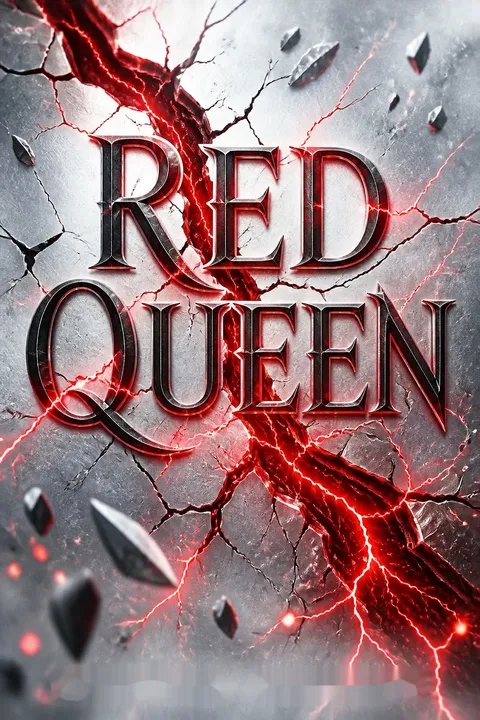


Plot Summary
A Warning in the Arena
Mare Barrow, a seventeen-year-old Red pickpocket from the Stilts, watches the monthly Feats with her fisherman friend Kilorn Warren. Reds are conscripted into the endless war when they turn eighteen, and Mare expects the same fate because she has no apprenticeship.
The arena makes the division between Reds and Silvers, whose supernatural abilities and silver blood mark them as rulers, brutally visible. Strongarm Cantos Carros seems certain to defeat the smaller Samson Merandus.
Instead, Samson enters Cantos's mind and forces him to stab himself. The crowd sees a Silver power that can invade thought, while Mare sees the first crack in the story that Silvers are invulnerable. She still has no way out of conscription, and Kilorn is about to lose his.
The Feats make hierarchy a public performance: the Reds are compelled to watch power displayed as entertainment, then must return to lives where that power governs them. Mare's refusal to cheer is small, but it distinguishes her from Kilorn, who tries to turn Silver bloodshed into proof that the elite can be hurt. Samson's control of Cantos introduces a more unsettling form of dominance than strength: the capacity to take over another person's agency. That image quietly prepares Mare's later struggle to keep ownership of her mind, choices, and identity.
A Price for Escape
Kilorn arrives beneath Mare's stilt house in tears: his master has died, ending his apprenticeship just as he turns eighteen. Without a recognized job, he will be conscripted within a week. Mare refuses to accept his resignation and asks Will Whistle, the old black-market trader, to smuggle them away. Will introduces her to Farley, an armed organizer of the Scarlet Guard.
Farley agrees to move Mare and Kilorn, but demands a fortune for each of them within two days. Mare cannot pay, so she wakes her younger sister Gisa and persuades her to help reach Summerton, where Silver customers carry enough wealth to make a rescue possible. Gisa risks her own standing to get Mare through the guarded market gates.
Mare's first political act is not a conversion to a cause but an attempt to save one person. Her instinct is practical and intimate: she steals because wages cannot meet her family's needs, and she approaches the underground because Kilorn's conscription feels like a death sentence. Farley's price exposes the limits of that instinct. Survival has become a transaction in which even escape is rationed by wealth. Gisa's assistance also complicates Mare's self-image as the family's reckless failure. Her sister's quieter labor is no less courageous, though Mare has been slow to recognize its cost.
The Market Turns Violent
Before Mare can steal enough for Farley's fee, the Scarlet Guard claims responsibility on a hijacked broadcast for bombing government buildings in Archeon. Silver shoppers turn on nearby Reds, and a nymph drowns a man in the street. Mare escapes a water attack with Gisa's help, but at the gate Gisa tries to steal from a fleeing Silver.
The man multiplies into copies of himself, revealing himself as Ptolemus Samos, and Security officers punish Gisa by crushing her sewing hand. Mare takes her home, then runs from her family's grief. At a roadside inn, she tries to steal from Cal, a well-dressed stranger who catches her, gives her money instead, and walks with her toward the village as she confesses what happened.
The riot makes political violence immediate without making it clean. Mare is glad to see the Silver capital wounded, yet the first consequences fall on ordinary Reds who had no part in the bombing. Gisa's injured hand carries a particular cruelty: the work that might have supported the family is damaged by the very class that profits from it. Cal's unexpected generosity does not erase his privilege, but it unsettles Mare's habit of sorting people into fixed moral categories. The scene begins the novel's most persistent problem: a humane gesture can coexist with a system that remains profoundly inhumane.
Lightning Under Red Skin
After Mare's father repairs a broken electrical box, Mare touches its wires and somehow restores the household lights. The next morning, a royal servant summons her to Summerton. Cal's kindness has secured her a serving position, but she discovers the man who helped her is Prince Tiberias, the crown prince.
During Queenstrial, the High Houses' daughters demonstrate their powers to compete for royal marriages. Evangeline Samos, who controls metal, tilts the serving platform and sends Mare through the arena's electrified shield.
Mare survives and answers Evangeline's attack with lightning of her own. The king's guards pursue her, but the palace cannot treat her as an ordinary Red after hundreds of Silvers have witnessed her impossible power.
Mare's power arrives in two stages: first as an almost private correction to a household failure, then as a spectacle that makes secrecy impossible. The contrast matters. At home, electricity is a scarce utility that her family cannot reliably afford; in the arena, it becomes a force no Silver can explain. Queenstrial presents power as proof of a girl's worth to a ruling family, but Mare's lightning interrupts that controlled display. She is not performing for a prince. Her body has become evidence that the categories organizing the kingdom may be false.
A Princess Made of Lies
Queen Elara probes Mare's memories and confirms that the Red servant possesses an ability the Silver order cannot account for. Rather than kill her in public, King Tiberias claims she is Mareena Titanos, the lost daughter of a dead Silver general and noblewoman. He orders her to marry his younger son Maven, making her a royal bride and a public symbol meant to draw Reds away from the Scarlet Guard.
Mare must hide her blood beneath Silver makeup and learn court behavior while living under surveillance. At the same ceremony, Cal chooses Evangeline as his future queen. Mare understands that the palace has not rescued her: it has given her a new name, taken her freedom, and placed her usefulness above her safety.
The royal solution is political fabrication. Instead of accepting Mare's existence as a challenge to the Red and Silver divide, the king absorbs her into the very hierarchy her body unsettles. The invented Titanos lineage turns an anomaly into a reassuring fairy tale of lost nobility, while the arranged engagement gives the story a dynastic purpose. Mare's disguise is therefore more than clothing or etiquette. It is a state-managed identity, designed to make her legible to the court and harmless to the public. Her private knowledge of being Red becomes both the basis of her resistance and the threat that could destroy her.
Julian Names the Difference
Mare's history tutor, Julian Jacos, recognizes that the royal explanation of her parentage does not account for her power. He arranges lessons beyond the queen's camera network and helps Mare discover how to call electricity from within herself, not merely manipulate a source nearby. Her first deliberate bolt destroys a stone bookcase and convinces Julian that her ability breaks the rules governing Silver powers.
Before she can make sense of that finding, Cal takes her back to the Stilts. Mare reunites with her family and learns that Shade, the brother whose letters gave them hope, was executed for desertion after trying to flee. At Will's wagon, she tells the Scarlet Guard she wants to fight for change, not only for revenge.
Julian offers Mare a rare form of recognition: he does not force her into a reassuring category before studying what she can do. The distinction between generating electricity and manipulating an existing element gives her power a political resonance. Mare is not simply an exception admitted into Silver society; she challenges the rules by which that society defines ability. Shade's execution transforms her motive. The Guard becomes more than a route out of conscription, but her decision remains emotionally tangled. She wants justice for her brother, yet already understands that a cause can demand sacrifices from people who never agreed to become symbols.
The Guard Recruits a Prince
Mare's court lessons continue alongside secret training, and she struggles to keep the Scarlet Guard's cause separate from her feelings for the princes. Cal teaches her to dance before leaving for a command of his own legion; their closeness ends in a kiss neither can safely acknowledge. At a clandestine meeting, Farley tests Maven with a gun before accepting his offer to join the Guard.
Maven says his time at the front, especially witnessing the death of a Red soldier named Thomas, convinced him the war and its hierarchy are wrong. He and Mare agree to help Farley strike at the royal Parting Ball. Kilorn also joins the Guard, despite Mare's efforts to keep him out of danger, and becomes part of the operation.
This section makes trust a tactical resource as well as an emotional need. Farley does not accept Maven because he is a prince with good intentions; she demands that he prove conviction under immediate threat. Mare, meanwhile, is drawn toward both brothers for different reasons: Cal offers warmth and candor, while Maven appears to understand the cost of being overlooked. Her attempt to protect Kilorn repeats the pattern that brought her into the story, but he now rejects the role of rescued friend. Their conflict marks a shift from Mare acting on behalf of others to the harder recognition that they must choose their own risks.
The Parting Ball's Bloodshed
At the Parting Ball, Mare and Maven carry out the Guard's plan while servants and recruits position themselves above the crowd. Mare drinks from a glass that signals the attack, then uses her power to extinguish the ballroom lights. Four shots strike the selected targets: Reynald Iral, Colonel Macanthos, Belicos Lerolan, and Ptolemus Samos.
Ptolemus survives, but the others die; a bullet also ruptures a gas line, and Cal's fire ignites it, causing an explosion that kills and injures additional guests. Mare sees the bodies and realizes the disaster has exceeded the planned shootings. Cal and Security hunt the attackers. Mare is taken underground, where she learns the captured Guard members include Kilorn, Farley, Walsh, and Tristan.
The attack converts a clandestine plan into public catastrophe. Mare's control of the lights gives the Guard cover, but it also makes her an active participant rather than a distant sympathizer. The accidental explosion exposes how fragile the distinction between intended and unintended violence becomes once a political operation enters a crowded room. Maven's careful target list has treated named officials as strategic pieces; Mare sees the additional victims as people with families. The novel does not let revolutionary necessity cancel moral cost. The operation may weaken the court, but it also gives the monarchy a powerful spectacle with which to define its enemies.
A Prisoner Becomes a Rescuer
In the dungeon, Cal interrogates Farley while Sentinel Gliacon tortures her by freezing her blood. Ptolemus breaks into the cell and kills the wounded Tristan with a metal bar. When he threatens Kilorn, Mare shocks Ptolemus and stops him. Later, she admits the escape plan to Julian, who uses his mind-influencing singing ability on Lucas Samos, Mare's guard, to reach the prisoners.
Mare distracts the remaining Sentinels, but a healer recognizes the deception and shoots her in the stomach. Julian compels the healer to treat her, then sends Farley, Walsh, and Kilorn out in stolen uniforms. Mare stays behind, wounded and exposed. The blood left in the cell can be matched through the kingdom's database, making her Red birth easier to uncover.
Mare's rescue succeeds through abilities that mirror the coercion she fears: Julian can bend another person's behavior, and Mare must deceive armed guards while relying on that power. The escape is not a clean victory. Tristan is dead, Mare is wounded, and the blood database turns a trace of her body into state evidence. Her intervention to protect Kilorn is instinctive, but it also changes her from protected asset into someone who directly acts against the palace. The costs are material and relational. She owes Julian and Lucas more, while the monarchy gains a way to identify the secret she has been trained to conceal.
A Speech Written by Kings
The royal court moves to Archeon, and Mare is ordered to appear beside Maven after the ball's deaths. King Tiberias announces the Measures, then makes Mare deliver a broadcast portraying Silver rule as merciful.
The new laws impose a sunset curfew on Reds, double security forces, make even minor Red crimes punishable by execution, lower conscription age to fifteen, and reward informants with family waivers. Mare's tutor Julian leaves her a hidden book containing the names of twenty-seven Red soldiers whose deaths were concealed after unusual blood tests.
He explains that their blood shared a marker with Mare's, suggesting others possess a related Red and Silver condition. The list turns her private anomaly into a network of people the Guard must find before the king does.
The speech reveals propaganda as an extension of physical force. Mare's face lends credibility to a policy designed to punish the people she was raised among, and her forced performance becomes part of the machinery she hopes to disrupt. The Measures do more than intensify repression. By offering conscription exemptions for informants, the state converts hunger and fear into tools for dividing Red communities. Julian's list reverses the logic of the blood database: a system built to track Reds becomes a map toward others like Mare. Knowledge now carries an urgent obligation, not merely the comfort of explanation.
The Ruins Hide an Army
Mare and Maven slip away from a public tour of Archeon and meet Will Whistle, who leads them through the old theater into the Guard's hidden Undertrain. Farley takes them south to Naercey, the ruined city the Silver radiation detectors falsely mark as uninhabitable. Reds have rebuilt parts of it into a refuge.
Mare gives Farley Julian's list of people with the unusual blood marker and proposes finding them before the crown can. The group also studies Archeon: the royal government, War Command, and the king all sit behind the Bridge and the western city's defenses. Maven proposes a coup rather than a battlefield war, arguing that Cal's command of the Shadow Legion could decide whether the Guard can seize the capital.
Naercey changes the rebels' scale of possibility. The Guard is not only a collection of isolated operatives; it has technical knowledge, hidden infrastructure, and a population the Silver state cannot accurately perceive. The false radiation readings show how dependence on official information can make power vulnerable to the people it exploits. Mare's list offers a possible future force, while Maven's coup plan offers an immediate route to the throne. These strategies pull in different directions: patient recruitment promises a broader transformation, but the coup concentrates hope in Cal's choice and in a narrow window of political opportunity.
The Bridge Becomes a Trap
Before the planned coup, Walsh is captured near the tunnels and kills herself with a concealed poison rather than reveal the Guard. At dawn, Maven's faction destroys the Bridge connection to West Archeon, cutting the royal district off from the rest of the city. Mare steps into the square and asks Cal to use his legion to end the Silver order without a larger war.
Cal refuses, believing the Guard's rebellion will bring mass death. He recognizes the tunnel escape route and orders his men to pursue Farley and the rebels. Mare and Maven are arrested. The failed coup leaves the Guard exposed, while Cal's refusal confirms that his sense of duty to the crown outweighs his feelings for Mare.
The bridge's destruction is both a military maneuver and a test of Cal's political imagination. Mare offers him a chance to turn command into reform, but he interprets the choice through the risk of collapse and civilian deaths. His caution is not simply cowardice; it is the moral framework of a soldier trained to preserve the state. Yet preservation also protects an unjust system. Walsh's death sharpens the contrast between the Guard's willingness to sacrifice itself and the royal army's obedience. The coup fails because its planners mistake private attachment for a reliable political force.
The Crown Chooses a Killer
Queen Elara searches Mare's memories and exposes the conspiracy to the king. Maven admits he helped plan the attack, but Elara controls Tiberias and Cal with her whisper ability. She reveals that she manipulated the king's first wife, Coriane, before her death, then forces Cal to take the king's sword and kill his father.
Cameras record the scene as Elara performs grief and Maven accuses Cal of regicide, making the heir appear guilty. Mare breaks free when Elara's control loosens, and she and Cal flee through the palace. They cannot escape the soldiers, however. Captain Tyros arrests them, while gunfire below confirms that the Guard's escape through the tunnels has been crushed.
The public image of power is more decisive than the private truth. Elara's mental control turns Cal into the instrument of a murder he resists, then cameras transform coercion into apparent guilt. The scene completes the novel's critique of spectacle: a recorded image can function as political evidence even when it conceals the event's actual cause. Mare has spent months learning to perform a false identity, but Elara's staging reveals that the rulers are more practiced at controlling what the kingdom sees. Cal's refusal to betray his father in the square cannot protect him from being made to do so in secret.
Maven Drops the Mask
Imprisoned with Cal in the Bowl of Bones, Mare learns that Maven's apparent rebellion was a calculated route to power. He selected the ball's targets for personal political advantage, used Mare's trust to draw her into the Guard, and helped Elara conceal her tracks until the coup could be blamed on her. Maven now plans to execute Mare and Cal as traitors.
He also threatens Mare's family and reveals that Lucas, Julian, and Sara Skonos have been captured. Mare rejects his offer to save her, telling him that his betrayals cannot be undone by a crown. The confrontation destroys her belief that Maven's kindness represented a path to change, leaving her allied with Cal only through their shared hatred of the new king.
Maven's betrayal works because it exploits genuine needs rather than inventing them. Mare wants to protect Kilorn, avenge Shade, and believe that a Silver prince can choose justice; Maven offers himself as proof that these desires are not foolish. His political intelligence is inseparable from a hunger to escape his brother's shadow, and the Guard becomes a means of eliminating rivals as well as a movement to manipulate. Mare's grief is therefore double: she loses a friend and must reconsider her own ability to judge character. Her refusal to choose either prince marks a first step toward defining loyalty on her own terms.
Lightning Breaks the Arena
Maven stages Mare and Cal's execution before a Silver crowd, using edited security footage to portray Mare as the Red manipulator who corrupted the prince. Lucas is shot first. In the arena, Cal fights Evangeline, Ptolemus, a strongarm, a shadow wielder, and Lord Osanos while Mare, stripped of her lightning by Instructor Arven, dodges their attacks.
A thrown spear meant for Mare strikes Arven and kills him, releasing her power. Mare electrifies the arena shield, kills the strongarm and Osanos, and helps Cal defeat the Samos siblings; Evangeline escapes. Maven orders the soldiers to fire, but rebel gunmen hidden below the arena shoot through the floor and pull Mare and Cal into the water beneath it.
The arena brings the novel back to its opening image, but Mare is no longer a spectator watching power define the limits of her life. She survives by using the executioners' own violence to remove the force suppressing her, then turns the arena's protective technology into a weapon. Her victory is physical, not political: the Guard has rescued her, but Maven still controls the story broadcast to the kingdom. Cal's refusal to kill Ptolemus also matters. Even after being betrayed and nearly executed, he does not entirely surrender his own moral limits to the logic of retaliation.
Epilogue
Mare wakes aboard the Guard's Undertrain beside Cal, still a prisoner, and learns that Kilorn survived the slaughter. Then Shade appears alive. His unusual ability to move faster than sight allowed him to escape the execution that the army reported as death.
Mare's parents and siblings are safe, but the Guard distrusts Cal and keeps him shackled. Farley still has Julian's list of people with Mare's blood marker. Maven now knows the same secret and can hunt them through the blood database. Mare chooses a new purpose: find the others before the king does, and eventually confront Maven.
The revelation of Shade's survival turns a family loss into a warning about the state's power to manufacture facts. His execution was recorded as final, yet his body escaped the story the army told. That reversal offers hope without undoing Mare's grief or the costs of the failed coup. The Undertrain carries the survivors forward, but it also exposes their new fractures: Cal is an ally only in the immediate aftermath, and the Guard sees him as a dangerous Silver prisoner. Mare's next mission grows from the book's most important discovery, that she is not alone, and from the knowledge that Maven can reach the same people through state records.
Analysis
Red Queen makes identity both intimate and administrative. Mare knows herself as a Red because her work, hunger, family, and conscription all locate her there. The court's claim that she is a lost Silver lady does not merely rename her; it supplies a socially acceptable explanation for a body that unsettles the hierarchy. Her new identity is a political instrument, not a liberation. The regime can display her as proof of its benevolence while silencing the experiences that make her useful to Reds.
The novel's recurring spectacles, the First Friday Feats, Queenstrial, royal speeches, and executions, show how power depends on controlling what people are permitted to witness. Yet public images are not reliable records. Elara manipulates minds, Maven manipulates events, and the palace edits footage into a story that makes Mare responsible for the king's death. In this world, the question is not simply who has power, but who can make a version of events endure.
Mare's relationships test the same problem on a personal scale. She repeatedly tries to save Kilorn, even when he insists on choosing his own risks. She is drawn to Cal's kindness while rejecting his defense of the system, and to Maven's apparent empathy before learning how expertly he has made it serve ambition. These attachments are not distractions from politics. They are where political beliefs become emotionally credible, and where betrayal can do its deepest work.
The story refuses an easy division between righteous resistance and innocent consequences. The Guard's actions provoke a response that hurts Reds, and Mare cannot separate planned deaths from the catastrophe at the ball. At the same time, the kingdom's stability rests on conscription, surveillance, and inherited domination. The novel's central pressure is therefore not whether change is costly, but who has been forced to pay for the unchanged world. Mare's final resolve grows from that question: she cannot undo the deaths or trust the institutions around her, but she can use what she knows to find others the state has tried to erase.
Review Summary
Red Queen receives mixed reviews, with some praising its engaging plot twists and world-building, while others criticize its similarities to other popular YA dystopian novels. Readers appreciate the complex characters and political intrigue but find the romance and protagonist less compelling. The book's pacing and action scenes are generally well-received. Many reviewers note the blend of fantasy and dystopian elements, comparing it to works like The Hunger Games and X-Men. Despite its flaws, many readers found the book entertaining and are interested in continuing the series.
People Also Read





Characters
Mare Barrow
The Red-born lightning wielderMare is a quick-handed thief raised in the Stilts, where an empty stomach and approaching conscription make caution feel like a luxury. She helps her family through theft, but she measures her worth against her talented younger sister Gisa and often mistakes self-reliance for being a burden. Her sharp eye for people and exits becomes useful in the palace, even as her bluntness makes court life dangerous. Mare's deepest drive is protection: first of Kilorn and her family, then of the wider Red population. That impulse gives her courage, but it also tempts her to make decisions for others. Her journey tests whether she can turn survival instincts into political judgment without letting grief or affection decide every risk.
Kilorn Warren
Mare's stubborn oldest friendKilorn is a fisherman and war orphan whose apprenticeship is his only protection from conscription. Mare fed him when they were children, and their friendship has the teasing familiarity of people who have fought beside each other since they were small. He is a capable swimmer, sailor, and thief, but he is not content to remain the person Mare rescues. Kilorn's fear of the war does not make him submissive; he wants agency even when his choices frighten Mare. His loyalty is fierce, though it can turn into anger when he believes she is deciding his future for him. He represents the human cost of treating Red lives as expendable manpower.
Cal
The soldier princeCal, the crown prince and heir to Norta, is a trained soldier who builds machines, studies military strategy, and sneaks away from palace life to see how ordinary people live. His instinct is to act where others hesitate, but his sense of duty binds him to the kingdom he is expected to rule. He can be warm and observant in private, yet ruthless in combat, and Mare struggles to reconcile those qualities. Cal believes that abrupt change could trigger a wider war, a conviction shaped by military service and responsibility for his people. His relationship with Mare forces him to confront the gap between caring for individuals and defending a system that harms them.
Maven
The overlooked younger princeMaven is the younger royal son, quieter and more watchful than his older brother. He has lived in Cal's shadow and under the influence of Queen Elara, while his father expects him to find a purpose of his own. His politeness can make him seem safer than the rest of the court, and he is skilled at noticing what others need to hear. He shares Mare's sense of being overlooked, which creates a powerful emotional bond between them. Beneath his careful manner is a complicated need for recognition and control. Maven's role in the royal family makes him both intimate with power and vulnerable to the comparisons that shape it.
Gisa Barrow
The gifted younger sisterGisa is Mare's fourteen-year-old sister, an accomplished embroiderer apprenticed to a seamstress who serves Silver customers. Her skill offers the family a rare path toward financial stability, and she carries that responsibility with more discipline than her age should require. Unlike Mare, Gisa is careful, polished, and trusted by people who would distrust her sister. Their differences sometimes breed envy, but affection runs underneath their friction. Gisa has learned to navigate the Silver world without confusing access with acceptance. Her craft is both a talent and a form of labor shaped by class: beautiful work that may improve her family's chances, while keeping her close to the people who benefit from Red service.
Shade Barrow
Mare's absent soldier brotherShade is Mare's older brother, a Red soldier whose letters bring news and humor back to the family from the war front. He is observant and practical, but his affection comes through in the effort he makes to keep his siblings connected to him. Mare treasures his correspondence because it offers evidence that someone she loves remains alive beyond the Choke. His absence shapes the family: each sibling carries a small shared reminder of those who have gone to war. Shade's bond with Mare gives her both a source of comfort and a measure of what she risks losing when she chooses a larger cause.
Farley
The Guard's hard-edged commanderFarley is a young, disciplined officer of the Scarlet Guard, a Red resistance movement that fights Silver rule through clandestine operations. She bargains without sentiment and treats security, timing, and political leverage as necessities rather than ideals. Her directness clashes with Mare's impulsive compassion, especially when a mission requires accepting danger to bystanders or allies. Farley believes that public attention can turn a hidden movement into a force, but she understands that every visible act invites retaliation. She is not interested in being admired; she wants the Red population to have a future beyond service and conscription. Her hardest decisions emerge from the tension between protecting people now and making change possible later.
Julian Jacos
The royal family's historianJulian is a scholar and tutor, connected to the royal family through his late sister, Queen Coriane. He values old books, maps, and evidence, and he approaches Mare's strange ability as a question to investigate rather than a threat to suppress. His patience gives Mare room to understand herself outside the palace's official story. Yet Julian is not neutral: his knowledge of the court's past is shaped by grief, anger, and a long memory of injustice. His loyalty to Mare grows from both curiosity and recognition of how the ruling family controls history. He believes knowledge can expose hidden structures, though his caution reflects the danger of speaking openly in a kingdom where truth has consequences.
Queen Elara
The mind-controlling queenElara is Queen of Norta, a member of House Merandus whose ability allows her to enter and influence other people's minds. She presents herself as composed and dutiful, but she uses psychological pressure as deliberately as others use weapons. Elara understands that court power depends on managing private loyalties and public appearances, and she is alert to any person who could disrupt the royal order. Her relationship with her son Maven is protective in its own way, yet her influence also shapes his understanding of love, obedience, and ambition. She sees people as variables in a political design, a worldview that makes her formidable and isolates her from genuine trust.
King Tiberias
The reigning Silver monarchTiberias is Norta's king, a powerful burner who inherits both the crown and a country at war. He values stability, military strength, and the continuation of Silver rule, believing that abrupt political change could fracture the kingdom. His public confidence conceals anxieties about the Scarlet Guard and the loyalty of the High Houses. As a father, he is more complicated than his formal speeches suggest, but his affection does not erase his willingness to preserve a system built on Red labor. Tiberias embodies a ruler who can sincerely believe he is preventing catastrophe while perpetuating the conditions that produce resistance.
Evangeline Samos
The metal-wielding court favoriteEvangeline is the daughter of House Samos and a formidable magnetron, able to control metal with precision and force. She approaches courtship and politics as contests in which weakness invites attack. Her confidence is carefully displayed, reinforced by a family that expects her to rise in the royal hierarchy. She is hostile to Mare not simply because Mare threatens her standing, but because Mare's unexplained power unsettles a world in which Evangeline has trained to be exceptional. Her discipline, ambition, and capacity for violence make her dangerous in public and private. Beneath her polished composure is a fierce investment in status and the security that status provides.
Lucas Samos
Mare's guarded palace escortLucas is a Security officer from House Samos assigned to watch Mare. He has military experience and a dry sense of humor, but he treats Mare with more fairness than the palace expects from him. His position forces him to balance personal judgment against orders from the royal family. Lucas understands that kindness can be mistaken for weakness among Silvers, yet he does not entirely surrender to that culture. His connection to Mare begins as a guard's duty and develops through the uneasy trust created by shared danger.
Will Whistle
The Stilts' black-market guideWill is an elderly trader who moves contraband through the Stilts and serves as a link between Mare and the Scarlet Guard. He has known Mare since she was a child bringing him stolen goods, and he combines affection with a clear view of the dangers she is choosing. Will's wagon is a meeting place, a shop, and a doorway into a larger underground network. He does not romanticize rebellion, but he believes that people must act for those who cannot safely act themselves.
Tristan
Farley's armed lieutenantTristan is one of Farley's lieutenants, a tall, armed member of the Scarlet Guard who is quick to distrust Silver involvement. He sees the monarchy as an enemy too powerful to bargain with and judges allies by what they are prepared to risk. His suspicion of Maven reflects the Guard's understandable reluctance to trust a prince, while his willingness to follow Farley's orders reveals discipline beneath his anger.
Walsh
The palace servant in hidingWalsh is a Red servant from Mare's village who knows the palace's back passages and the rules that keep its workers invisible. She helps Mare navigate royal service and carries messages for the Scarlet Guard without abandoning her cover. Her experience gives her a practical understanding of how servants can move through spaces designed to exclude them. Walsh is cautious, but her loyalty to the cause is not merely symbolic; she accepts real danger to keep its members connected.
Ptolemus Samos
Evangeline's forceful brotherPtolemus is Evangeline's older brother, a powerful magnetron and commander associated with the security of Archeon. He is physically imposing, proud of House Samos, and quick to answer perceived insults with force. His confidence rests on both personal ability and a family position near the center of royal power. Ptolemus treats authority as something to enforce rather than question, making him a clear expression of the court's martial culture.
Sara Skonos
The silent skin healerSara is a skin healer and an old friend of Julian and the late Queen Coriane. She moves through the palace with a quietness that others mistake for passivity, though her silence has been imposed by the court. Her healing ability makes her useful to people who possess far more power than she does, but it cannot undo the punishment that shaped her life. Sara's relationship with Julian carries the weight of shared history and unspoken grief.
Ara Iral
The retired Silver spyAra Iral, known as the Panther, is the head of House Iral and a former intelligence operative. Age has not dulled her sharp attention to inconsistencies, and she studies Mare's claimed history with the precision of someone trained to detect deception. Ara's granddaughter Sonya participated in Queenstrial, giving her family a personal stake in the court's shifting alliances. She represents the political memory that makes Mare's false identity difficult to maintain.
Colonel Macanthos
The skeptical war officerColonel Macanthos is a decorated military officer whose scar and blunt manner distinguish her from the polished court. She questions the royal account of the Scarlet Guard's attacks and understands that official explanations can serve political ends. Her military experience gives her authority, but her willingness to challenge the queen makes her uneasy among courtiers who prefer a reassuring version of events.
Ruth and Daniel Barrow
Mare's wounded parentsRuth and Daniel Barrow raise Mare and her siblings in the Stilts, where war and poverty shape nearly every family decision. Daniel returned from the front badly injured and depends on a mechanical device to breathe; Ruth works to keep the household together while enduring the repeated departures of her sons. They love Mare, but their hopes for her can become entangled with comparisons to Gisa and fear about conscription. Their family life gives Mare both her deepest attachment and the ordinary world she is repeatedly forced to leave.
Plot Devices
Red and Silver blood
A visible class boundaryIn Norta, blood color marks the political divide: Reds serve, labor, and fight, while Silvers rule through inherited abilities and noble houses. The distinction is taught as natural fact, enforced through conscription, work assignments, and public spectacle. Mare's red blood and unexplained lightning challenge that division, while the court's invented noble identity attempts to make her exception fit the existing order. The color system is not only a biological detail. It is a social shorthand that determines whose suffering counts, whose abilities are treated as legitimate, and who is expected to obey.
Mare's electricity
Power that creates itselfMare can sense and generate electricity, then direct it as sparks, bolts, or wider surges. Julian distinguishes this from ordinary Silver abilities, which manipulate something already present, such as water, fire, or metal. The power first appears under extreme stress and becomes more reliable through training. It can protect Mare, disable opponents, disrupt surveillance, and interfere with electric barriers. Because the palace cannot explain it within its accepted categories, the ability becomes both her means of resistance and the reason the court tries to control her identity.
The bloodbase
A registry turned mapThe government stores blood samples from Reds and uses them to track people through cities and checkpoints. The system is presented as administration, but it turns biological information into a mechanism of surveillance. Julian uses its records to compare Mare's blood with soldiers whose deaths were concealed, then finds a shared marker and identifies more samples with the same trait. The Guard can use the resulting names to locate people like Mare, while the crown could use the same database to hunt them. The registry is therefore both a tool of control and a dangerous source of knowledge.
The Scarlet Guard
Resistance beyond the palaceThe Scarlet Guard is an underground Red resistance movement that uses smugglers, servants, hidden routes, and targeted attacks to challenge Silver rule. Its members can move through places where Reds are usually ignored, making invisibility a practical advantage. The Guard's operations draw public attention but also provoke retaliation against ordinary Red communities. Mare's connection to it begins with a personal attempt to save Kilorn and grows into a broader commitment. The movement is not unified in its methods: Farley favors decisive action, while Mare worries about collateral damage and the consequences for people who did not choose to fight.
The Bowl of Bones
Power staged as punishmentThe arena where Mare watched Silver champions fight becomes the site where the monarchy stages public executions. The spectacle turns punishment into political messaging, allowing rulers to present their enemies as threats and their own violence as justice. A shield protects the audience while containing the combatants, and the crowd's presence makes every injury part of a public story. Mare's return to the arena reverses her position from powerless witness to active opponent, but the crown still controls the cameras and the account broadcast beyond the walls.
FAQ
Synopsis & Basic Details
What is Red Queen about?
- Divided by blood color: In a dystopian society, the color of one's blood determines their social status and abilities. Silvers, with silver blood, possess supernatural powers and rule over the Red-blooded commoners.
- Red thief gains power: Mare Barrow, a Red, discovers she has powers, a phenomenon unheard of, and is brought into the Silver world under false pretenses.
- Navigating a deadly court: Mare is forced to navigate the treacherous Silver court while secretly aiding a Red rebellion, all while grappling with her feelings for two Silver princes.
Why should I read Red Queen?
- Unique power system: The concept of abilities tied to blood color offers a fresh take on dystopian power structures, creating visually striking and strategically complex conflicts.
- Intense romantic tension: The love triangle between Mare and the two princes, Cal and Maven, adds emotional depth and moral ambiguity to the political intrigue.
- Fast-paced action and twists: The story is full of unexpected betrayals, thrilling battles, and shocking revelations that keep readers engaged and guessing until the very end.
What is the background of Red Queen?
- Dystopian society: The setting is a kingdom called Norta, a technologically advanced society built on the backs of a Red underclass, reminiscent of historical class systems and labor exploitation.
- Generational war: Norta is engaged in a century-long war with the Lakelands, a conflict fueled by resources and power, reflecting real-world geopolitical struggles.
- Silver abilities: The Silvers' superhuman abilities, ranging from telekinesis to elemental manipulation, are presented as a biological advantage that justifies their dominance, echoing social Darwinist ideologies.
What are the most memorable quotes in Red Queen?
- "Anyone can betray anyone.": This quote encapsulates the pervasive atmosphere of distrust and political maneuvering, highlighting the moral compromises characters make for survival and power.
- "I am Red, and I have always been Red.": This declaration of identity underscores Mare's struggle to reconcile her newfound abilities with her loyalty to her people, emphasizing the theme of self-discovery.
- "We are the Scarlet Guard, and we stand for the freedom and equality of all people—starting with the Reds.": This quote defines the Scarlet Guard's mission and ideology, serving as a rallying cry for rebellion against the Silver regime.
What writing style, narrative choices, and literary techniques does Victoria Aveyard use?
- First-person perspective: The story is told from Mare's point of view, allowing readers to intimately experience her thoughts, emotions, and struggles, creating a strong sense of empathy.
- Fast-paced and action-oriented: Aveyard employs a dynamic writing style with frequent action sequences, plot twists, and cliffhangers to maintain a high level of suspense and reader engagement.
- Foreshadowing and symbolism: Aveyard uses subtle foreshadowing and recurring symbols, such as blood, color, and weather, to hint at future events and deepen the thematic resonance of the story.
Hidden Details & Subtle Connections
What are some minor details that add significant meaning?
- Earrings as a symbol: The earrings Mare and Gisa share, given by their brothers before going to war, represent family bonds and the sacrifices made by Reds, later contrasting with the Silvers' opulent displays.
- The ticking lung: The mechanical lung that keeps Mare's father alive highlights the Reds' reliance on scavenged technology and the Silvers' disregard for their well-being, emphasizing the theme of inequality.
- The Hall of the Sun's name: The palace's name, seemingly innocuous, gains significance as Mare, a "lightning girl," becomes a source of power that rivals the sun, foreshadowing her challenge to the Silver order.
What are some subtle foreshadowing and callbacks?
- Shade's letters: Shade's recurring phrase "Red as the dawn" in his letters foreshadows his involvement with the Scarlet Guard and the coming revolution, adding a layer of tragic irony to his fate.
- Kilorn's swimming skills: Kilorn's emphasis on his swimming abilities foreshadows his escape and future role in lake combat, highlighting his resilience and adaptability.
- Gisa's sewing talent: Gisa's skill in embroidery, initially presented as a means of survival, later symbolizes her potential to create a new future for her family and community, contrasting with Mare's destructive abilities.
What are some unexpected character connections?
- Julian and Coriane: The revelation that Julian was the brother of Queen Coriane adds depth to his character, explaining his disillusionment with the Silver court and his desire to help Mare.
- Walsh and the Barrows: Walsh's connection to Mare's brothers, having known them in the Stilts, creates a sense of shared history and loyalty, making her betrayal of the Silver cause more believable.
- Maven and Thomas: Maven's confession about witnessing the death of a Red soldier named Thomas adds a layer of complexity to his character, suggesting a hidden empathy that contrasts with his later actions.
Who are the most significant supporting characters?
- Julian Jacos: As Mare's mentor and a historian, Julian provides crucial information about the past and the nature of Silver abilities, guiding her understanding of the world and her own powers.
- Farley: As the leader of the Scarlet Guard, Farley represents the Red rebellion and its commitment to fighting for equality, influencing Mare's decisions and shaping the course of the revolution.
- Kilorn Warren: As Mare's childhood friend and confidant, Kilorn provides emotional support and a connection to her Red roots, grounding her amidst the chaos of her new life and reminding her of what she's fighting for.
Psychological, Emotional, & Relational Analysis
What are some unspoken motivations of the characters?
- Cal's guilt: Cal's actions are often driven by a deep-seated guilt over his privilege and the injustices faced by Reds, leading him to protect Mare and question the Silver regime, even when it conflicts with his duty.
- Maven's need for validation: Maven's betrayal stems from a desire for validation and recognition, fueled by his mother's manipulation and his feelings of being overshadowed by Cal, leading him to seek power at any cost.
- Elara's fear of losing control: Elara's ruthlessness is motivated by a fear of losing control and the Silver order being disrupted, driving her to manipulate events and eliminate threats, even if it means sacrificing her own son.
What psychological complexities do the characters exhibit?
- Mare's survivor's guilt: Mare struggles with survivor's guilt, feeling responsible for the suffering of her family and friends, leading her to make reckless decisions in an attempt to protect them, even at her own expense.
- Cal's internal conflict: Cal experiences a constant internal conflict between his duty to his family and his growing empathy for the Reds, leading to indecisiveness and a struggle to reconcile his beliefs with his actions.
- Maven's manipulative tendencies: Maven exhibits manipulative tendencies, using charm and deception to gain trust and control others, masking his true intentions and making him a dangerous and unpredictable character.
What are the major emotional turning points?
- Mare's display of power: Mare's unexpected display of Silver abilities at the arena is a major turning point, forcing her to confront her identity and accept her role in a larger conflict.
- Shade's death: Shade's death serves as a catalyst for Mare's commitment to the rebellion, solidifying her resolve to fight against the Silver regime and avenge her brother's murder.
- The betrayal at the ball: The betrayal at the ball shatters Mare's trust in Maven and forces her to confront the true nature of the Silver court, leading her to embrace her Red identity and dedicate herself to the revolution.
How do relationship dynamics evolve?
- Mare and Cal: The relationship between Mare and Cal evolves from initial distrust to a forbidden romance, marked by shared values and a growing understanding of each other's burdens, ultimately tested by their conflicting loyalties and the weight of their responsibilities.
- Mare and Maven: The relationship between Mare and Maven transforms from a seemingly genuine connection to a manipulative facade, as Maven's true nature is revealed, leaving Mare feeling betrayed and questioning her own judgment.
- Mare and Farley: The relationship between Mare and Farley develops from a reluctant alliance to a bond of mutual respect and shared purpose, as they navigate the challenges of leading a rebellion and fighting for Red freedom.
Interpretation & Debate
Which parts of the story remain ambiguous or open-ended?
- The extent of Elara's influence: The full extent of Elara's power and influence over the Silver court remains ambiguous, leaving readers to speculate about the true scope of her control and the potential for future manipulations.
- The origins of Mare's abilities: The origins of Mare's abilities are not fully explained, leaving open the possibility of further revelations about the nature of Red and Silver powers and the forces that govern their world.
- The future of the revolution: The ending leaves the future of the revolution uncertain, with the Scarlet Guard scattered and the Silver regime strengthened, raising questions about the challenges and sacrifices that lie ahead in the fight for equality.
What are some debatable, controversial scenes or moments in Red Queen?
- Mare's relationship with Cal: Mare's romantic entanglement with Cal, a member of the oppressive Silver regime, is a source of debate, with some readers questioning her judgment and others seeing it as a complex exploration of love and loyalty.
- Maven's betrayal: Maven's betrayal is a controversial moment, with some readers viewing it as a shocking twist and others finding it predictable, sparking discussions about the nature of power and the corrupting influence of ambition.
- The use of violence by the Scarlet Guard: The Scarlet Guard's use of violence, including bombings and assassinations, is a source of debate, with some readers questioning the morality of their methods and others seeing it as a necessary evil in the fight against oppression.
Red Queen Ending Explained: How It Ends & What It Means
- Maven's victory: Maven's successful coup and consolidation of power represent a temporary setback for the rebellion, highlighting the challenges of overthrowing an entrenched regime and the potential for even greater oppression.
- Mare's escape: Mare's escape with the Scarlet Guard offers a glimmer of hope, suggesting that the fight for Red freedom is far from over and that new strategies and alliances will be needed to challenge the Silver regime.
- The list of newbloods: The list of newbloods represents a potential turning point in the war, offering the Scarlet Guard a new source of power and challenging the established order of Red and Silver abilities, setting the stage for future conflicts and alliances.
Red Queen Series
About the Author
Other books by Victoria Aveyard



Download PDF
Download EPUB
.epub digital book format is ideal for reading ebooks on phones, tablets, and e-readers.








