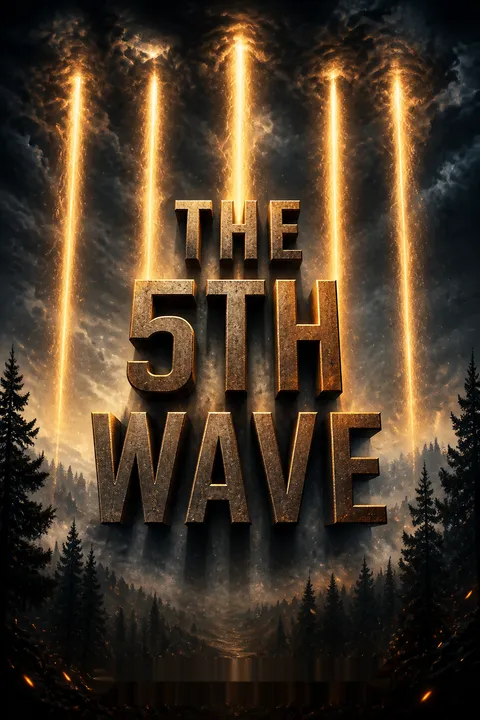


Plot Summary
Prologue
In 1995, an unseen intruder enters a sleeping pregnant woman’s home and settles inside her unborn child. The woman dreams of an owl watching from the darkness, then forgets the dream.
Years later, she sees the same owl at a zoo without understanding why it unsettles her. The intruder remains dormant through the boy’s birth and childhood, waiting for the moment it will awaken.
The brief intrusion gives the invasion a private beginning, long before the mothership appears in the sky. By placing the alien presence inside a child before he can speak or remember, the story turns the familiar home into the first compromised territory. The owl is not merely an eerie image; it is a memory the mother cannot interpret, while the child carries a history he cannot know. This opening also plants a structural question: if an invader can grow alongside its host, where does one identity end and the other begin?
The Mothership Arrives
When the enormous ship appears above Earth, Cassie Sullivan is twelve, worrying about school, her hair, and the boy she likes. Her father, Oliver, expects the visitors might help humanity; Cassie is less convinced, but neither can imagine what is coming. For ten days, the family keeps its routines while the silent ship hangs overhead.
Then a vast electromagnetic pulse kills power, communications, and vehicles across the planet. Cassie leaves school on foot with Oliver, passing stalled cars and a fallen airliner. His explanations and reassurances cannot restore the world they have lost. The invasion has begun without a landing, a message, or a battle anyone knows how to fight.
The first rupture is not a spectacular attack so much as the sudden removal of infrastructure that made ordinary life feel dependable. Cassie’s family continues its routines because familiarity is easier to inhabit than uncertainty, while Oliver’s confidence reflects a generational faith in institutions and technological progress. The pulse makes that faith materially untenable: phones, cars, and power vanish together. The mothership’s silence also denies people a clear opponent or purpose. Before anyone can organize resistance, the world has been pushed into confusion, and the family’s private habits become the last evidence that life once felt predictable.
Three Waves of Ruin
The next attacks expose how little the survivors understand. The Others drop immense metal rods onto fault lines, triggering tsunamis that erase coastal cities and drive the remaining population inland. Then birds spread an engineered disease: the Pestilence, which causes infected people to bleed to death and infect others around them.
The illness kills Cassie’s mother, Marika, while Oliver keeps the family barricaded at home. He tends to his wife and cares for Cassie and her little brother, Sammy, until Marika dies. The family’s losses arrive faster than anyone can make sense of them. Cassie and Oliver survive the first three waves, but survival now means leaving home and trusting strangers.
The attacks exploit the systems that once supported human life: coastlines become mass-casualty zones, and birds turn everyday contact with nature into a delivery network for disease. The strategy is frightening partly because it offers no battlefield where courage or superior tactics could matter. At home, Marika’s illness makes the catastrophe intimate. Oliver’s care cannot cure her, but it preserves a small sphere of dignity amid collapse. Cassie’s survival is therefore not a triumph over danger; it is an inheritance of obligation. She must carry forward both her mother’s absence and her father’s effort to protect the children.
Ashpit Becomes Home
After Marika’s burial in the family’s rose bed, Oliver takes Cassie and Sammy to Camp Ashpit, a former field hospital in the woods. The camp offers food, weapons, rainwater, and the prospect of rescue, though its residents have little reliable news. Oliver distrusts the idea that guns can defeat technology far beyond their own, while the camp’s retired Marine leader, Hutchfield, prepares for a conventional fight.
Cassie watches the adults debate whether to wait or move toward Wright-Patterson Air Force Base. Sammy clings to her and his teddy bear, still young enough to treat the camp as an adventure. For a short while, community seems possible, even as fear and grief shape every conversation.
Camp Ashpit is both refuge and rehearsal for the social order that follows collapse. Hutchfield sees safety in weapons and command; Oliver sees the limits of those tools but still seeks a place where surviving institutions might remain. Cassie distrusts the camp’s easy confidence, yet its routines give Sammy something close to childhood. Her role as his protector grows through small acts of care rather than any formal authority. The camp’s temporary solidarity matters because the next attack will exploit exactly what its residents have begun to trust: the belief that armed adults and recognizable uniforms mean protection.
Sammy Boards the Bus
A convoy from Wright-Patterson reaches Camp Ashpit with soldiers in gas masks and three yellow school buses filled with children. The soldiers claim they can take the children to safety, then return for the adults. Cassie refuses to let Sammy go without her, but the corporal will accept only the boy.
Oliver decides that the base is safer than the camp and persuades Cassie to let Sammy board. She tells her brother she will follow, and Sammy gives her his battered teddy bear to keep her company. The bus pulls away with him inside. Cassie remains with Oliver, believing their separation will last only a little while, though the promise gives her no way to know what comes next.
The bus turns trust into a physical choice. Cassie recognizes the danger of separation, but Oliver must weigh that fear against the possibility of military protection, and Sammy’s confidence makes the decision harder to resist. The scene uses ordinary objects and gestures to make the choice legible: a school bus, a child’s hand, a teddy bear passed between siblings. Those signs of normality persuade the family more effectively than any argument could. Cassie’s promise is emotionally sincere but strategically powerless. It becomes the measure she will use to judge every later choice, including choices that cannot guarantee she will reach her brother.
Camp Ashpit Is Betrayed
After the buses leave, the remaining survivors gather for a military briefing. Cassie notices that a boy from camp, Crisco, is missing, so Oliver sends her with Corporal Branch to fetch him from the ash pit. There, Branch shoots Crisco, then turns his weapon on Cassie. She fires first and kills him.
As she runs back, armed soldiers attack the camp; Oliver is shot, and Colonel Vosch executes him in the open. Cassie escapes into the woods and hides beneath the ash-covered remains of the dead. When the soldiers leave, she returns for her rifle and Sammy’s bear. A glowing green device detonates, obliterating the camp, but Cassie reaches a ravine and survives the blast.
The betrayal is devastating because the soldiers perform rescue before revealing their purpose. Cassie’s decision to shoot Branch is not a sudden conversion into a warrior; it is a terrified response to an immediate threat, followed by the knowledge that she has killed a person. Oliver’s death then destroys the authority she once relied on to interpret danger. Hiding among the dead makes survival depend on suppressing instinct and remaining still. Yet the teddy bear pulls Cassie back toward responsibility when escape alone would be easier. The camp’s destruction erases a community, while her return to it preserves the promise that community once made possible.
The Crucifix in the Store
Months later, Cassie survives in the woods by scavenging water and guarding her M16. During one supply run, she finds a wounded young soldier in a gas station’s back room. He lowers his pistol and raises his empty hand, but Cassie cannot tell whether his distress is real or bait.
When he reveals that his other hand holds a crucifix, she misreads the glinting object as a weapon and shoots him. The dead man’s faith makes the mistake harder to bear, but it does not settle her fear that he might have been dangerous. With winter approaching and her promise to Sammy still binding her, Cassie packs light and leaves the forest for the highway.
The Crucifix Soldier scene shows how the Fourth Wave succeeds even without an alien appearing. Cassie’s threat assessment is shaped by the camp massacre and by the possibility that any human face may conceal an enemy. Her mistake is tragic because she wants evidence before acting, yet the encounter gives her no safe way to obtain it. The crucifix becomes a test she fails under pressure, not proof that she is cruel. By carrying the guilt forward instead of denying it, Cassie preserves a distinction between survival and moral certainty. Her departure marks an attempt to act despite knowing that judgment may still be wrong.
The Highway Sniper
On the road toward Sammy, Cassie finds three fresh bodies and spots a drone above them. A hidden sniper shoots her through the leg before she can reach cover. She crawls under a Buick, ties a strip of cloth around the wound, and realizes the shooter can simply wait for her to bleed or starve.
When she finally drags herself into view and calls out the hunter, he keeps his rifle trained on her but cannot fire. He turns away instead. Cassie collapses in the snow, badly wounded and close to freezing. The hunter later finds her and carries her to a farmhouse, where she wakes in a bed with her leg bandaged and her teddy bear nearby.
The attack compresses Cassie’s survival logic into a cruel arithmetic: staying hidden and attempting escape both seem likely to kill her. Her choice to rise is not confidence but refusal to let the enemy decide how her story ends. The sniper’s unexplained hesitation complicates the simple opposition between hunter and prey before Cassie even knows who he is. Her rescue does not undo the violence; it creates a new dependence on a stranger she has every reason to distrust. The injury also makes care unavoidable. Cassie must accept help before she can determine whether accepting it is safe.
Ben Becomes Zombie
At the same time, Ben Parish is dying of the Pestilence in a refugee camp near Wright-Patterson. His memories reveal an earlier attack on his family: looters killed his father, and Ben ran from home after losing his baby sister, Sissy. He has kept her locket and carries the guilt of having fled.
Soldiers retrieve Ben during an assault on the camp and treat him at the base, where he survives the illness. Doctors use a program called Wonderland to map his memories and discover an alien presence inside a fellow refugee, Chris. Ben is ordered to press the button that kills Chris. Colonel Vosch then persuades the recovering teenager that grief can be turned into a weapon.
Ben’s transformation begins not with strength but with an unresolved failure. He believes he abandoned Sissy, so Vosch can redirect his guilt toward military service and call obedience a form of repair. Wonderland makes memory both evidence and a tool of control: Ben’s past is exposed to authorities even as he is told his future belongs to the war. Killing Chris marks his first coerced act against someone he knows as a person. The episode establishes how the camp will shape its recruits: by taking private loss, naming it weakness, and offering violence as the only acceptable way to regain agency.
Wonderland Trains the Children
After Ben recovers, the base assigns him to a recruit squad and gives him the nickname Zombie. Sergeant Reznik trains the children through exhaustion, humiliation, and live-fire drills, insisting that their only purpose is to kill the enemy. Ben becomes squad leader after defending a frightened five-year-old recruit, Sammy Sullivan, whom the squad calls Nugget.
He helps the child endure camp life and recognizes how closely Nugget’s faith in his sister resembles Ben’s own need to believe Sissy might still matter. A gifted new recruit, Ringer, joins the squad and challenges Ben’s authority. Her marksmanship lifts their ranking, and her coaching gradually improves his aim.
The training camp treats childhood as raw material, and Reznik’s cruelty is presented as preparation rather than abuse. Ben’s resistance begins when he protects Nugget, an act that risks his position but reconnects him to the kind of care he had been taught to suppress. Nugget’s belief in Cassie echoes Ben’s own attachment to Sissy, giving the squad a fragile emotional center. Ringer’s competence complicates Ben’s leadership without reducing their conflict to rivalry: she knows survival requires control, while Ben is beginning to value responsibility toward others. Their unit learns to function, but its purpose remains hidden behind slogans and rankings.
The Green Signal Lies
On their first mission near Dayton, Ben’s squad spots several figures glowing green through military eyepieces. When a rooftop sniper fires at them, Ringer suspects their implant system is misleading them. She removes her tracking chip and discovers that the lens now marks her as green.
Ben understands the reversal: the eyepieces identify people without implants, not aliens. Camp Haven has trained children to kill untagged human survivors. The sniper is Reznik, monitoring the squad, and Ringer shoots him before he can use a device linked to the recruits’ implants.
Flintstone grabs the device and activates its kill switch, dying instantly. Ben sends the others away, then lets Ringer shoot him so he can return to base wounded and conceal what they learned.
The revelation dismantles the recruits’ entire moral framework through one small physical experiment. Ringer’s removed implant changes what the lens shows, exposing that the technology does not detect alien identity at all. The device has converted a lack of surveillance into evidence of guilt. Reznik’s presence confirms that the lesson was not accidental, while Flintstone’s death demonstrates that the command system can punish doubt instantly. Ben’s choice to return alone is a strategic sacrifice: he risks being captured to buy Nugget a chance. The scene marks a shift from fighting an invisible enemy to recognizing that their own training has made them instruments of the purge.
A Farmhouse Offers Shelter
The sniper who spared Cassie is Evan Walker, a young man living alone on his family’s farm. He found her in the snow, removed the bullet, and cared for her until she could sit up and eat. As she heals, Evan cooks, washes her hair, and helps her rehabilitate her injured leg.
Cassie teaches herself to shoot more accurately under his guidance, while both avoid speaking plainly about their dead families. She learns that Evan lost his parents and siblings, including his youngest sister, and that his girlfriend, Lauren, died by suicide. Their closeness grows alongside Cassie’s suspicion: Evan’s soft hands and his evasive answers do not fit the hunter she remembers.
The farmhouse offers safety through intimate, repeated acts rather than through walls or weapons. Evan’s care restores Cassie’s bodily agency, but dependence unsettles her because trust has already been used against her. Their shared grief makes closeness possible while also making each vulnerable to the other’s secrets. Cassie’s suspicion is not simply paranoia; it is an adaptive response to a world where kindness can be staged. Evan, meanwhile, seems to find purpose in caring for her, though his reasons remain unclear. The relationship develops as a negotiation between tenderness and evidence, with neither character able to make the other’s risk disappear.
The Rifle in the Barn
When Evan leaves for one of his nightly hunts, Cassie searches the farmhouse and finds her missing M16 hidden in the barn. She confronts him with her Luger drawn, expecting proof that he is the sniper who shot her. Evan explains that he found the rifle on the highway and kept it for her. He does not reach for her weapon, and Cassie lowers it.
She admits she cannot make herself believe in him, but decides she can allow trust. Evan asks to accompany her to Wright-Patterson, where she believes Sammy was taken. Cassie agrees, though she insists the mission is hers. Before they leave, they pack supplies and burn Evan’s farmhouse to create a diversion.
The rifle turns an unresolved fear into a concrete test. Cassie has the power to kill Evan, but his restraint and explanation give her enough evidence to choose trust without pretending certainty. That distinction matters: she does not become secure, she becomes willing to act alongside another person. Evan’s request to join her is also a bid for meaning after losing his family. Burning the farmhouse makes their decision costly and irreversible; the refuge that supported their recovery is surrendered to a plan with no guaranteed destination. Their partnership begins not when doubt vanishes, but when both accept that they must move while doubt remains.
Evan Reveals the Fifth Wave
Near the obliterated remains of Camp Ashpit, four armed young soldiers attack Cassie and Evan. Evan kills them, but a grenade leaves him badly wounded. Cassie discovers that the children were only slightly older than Sammy and demands to know how Evan became so lethal. He admits that he shot her on the highway and killed other people because he feared they were not human.
He also explains that he is an alien consciousness placed inside the human Evan before birth, then awakened years later. His faction lost a debate over coexistence, and the child recruits are being prepared for the invasion’s Fifth Wave. Cassie runs from him, then returns because he knows what awaits Sammy.
Evan’s confession does not resolve the moral problem; it makes it impossible to simplify. He has protected Cassie and also tried to kill her, and both actions came from fear shaped by his divided identity. The dead child soldiers reveal the cost of the enemy’s strategy from another angle: children are being armed and conditioned on both sides. Cassie’s flight is a necessary refusal to absorb the revelation too quickly. Her return is not forgiveness, but a decision to prioritize Sammy’s rescue over the comfort of a clean judgment. The Fifth Wave is terrifying because the enemy’s presence cannot be separated neatly from human bodies or human choices.
Ben Turns Against Camp Haven
After Ringer removes the tracker, Ben’s squad learns that Camp Haven’s technology has turned the untagged into targets. They kill Reznik, discover the kill switch, and lose Flintstone when he activates it. Ben cannot abandon Nugget, so he returns toward the base with Ringer’s help; she shoots him to make his story credible.
In the hospital, Ben tells Vosch that the others turned against him and claims he escaped them. Vosch questions him, then announces that Cassie may have infiltrated the base and that she will be subjected to Wonderland. Ben realizes the danger and prepares to act, even though he is wounded and under surveillance. His old loyalty to command has been replaced by a promise to Nugget.
Ben’s return to Camp Haven is a controlled deception built on the same machinery that once controlled him. He must perform loyalty convincingly enough to remain near Nugget, while suppressing the instinct to expose everything he knows. Ringer’s decision to wound him is an act of tactical trust, not tenderness, and it leaves Ben physically vulnerable at the moment he most needs freedom of movement. Vosch’s announcement raises the stakes by making Cassie’s infiltration a countdown. Ben’s moral center has shifted: the institution no longer deserves his obedience, but the child who depends on him does.
Cassie Enters Camp Haven
Cassie reaches the base disguised as a twelve-year-old survivor named Lizbeth and enters with a busload of children. At processing, she knocks Dr. Pam unconscious, removes her own tracker, and tries to find Sammy through Wonderland. The system rejects the search, and Dr. Pam wakes and uses a control device that kills her.
Cassie flees into the underground corridors, eventually finding the room where children are being held. There she locates Sammy and reunites with Ben, who has also reached the safe room. Before they can escape, Vosch intercepts the three of them and takes them to the execution chamber, where Sammy is strapped into a chair and wired for another Wonderland scan.
Cassie’s disguise exploits the same assumptions that once made the bus seem safe: children are categorized, processed, and moved along before anyone truly sees them. Her attempt to use Wonderland against the base fails, leaving her with improvisation rather than a clean rescue plan. The reunion with Sammy is emotionally powerful but incomplete; the base still controls their movement, and Ben’s appearance introduces another layer of uncertainty. Vosch’s capture turns the chamber into a concentrated image of the regime: care language, medical procedure, and lethal authority occupy the same room. Finding her brother is only the midpoint of the rescue, not its completion.
The Execution Room Breaks
Vosch threatens to kill Ben and Sammy unless Cassie reveals who helped her enter. He activates the execution program, but the screen returns an error because Evan has hacked into the base system. While Vosch leaves to respond, Cassie and Ben overpower a guard. Evan appears through the ventilation shaft and kills another soldier before Cassie shoots Sammy’s captor.
The three escape the chamber, and Evan cuts the base’s power to confuse their pursuers. He guides Cassie, Ben, and Sammy toward the surface, then stays behind to activate the Eyes and destroy Camp Haven. The others crawl through wreckage and reach the open ground as the base collapses around them.
The climax brings together the story’s central forms of resistance: technical sabotage, trained skill, and personal loyalty. Evan disables the machinery that mapped and controlled the children, while Cassie and Ben act without waiting for institutional permission. Sammy is no longer only the reason for the mission; his survival depends on the coordinated choices of people whom the system tried to divide. Evan’s decision to stay behind is both sacrifice and a final assertion of agency over the invasion’s infrastructure. The escape remains physically costly and emotionally unresolved, but the base’s destruction breaks the machinery that had converted rescue into recruitment and surveillance.
The Survivors Reach Dawn
As the Eyes detonate and the ground opens beneath Camp Haven, Cassie, Ben, and Sammy run across the ruined landscape. A falling drone explodes nearby, and Cassie’s injured leg gives way. Ben reaches her instead of fleeing with Sammy, then throws her toward a Humvee driven by Ringer and the surviving recruits.
The vehicle escapes the advancing crater. By dawn, Dumbo treats the wounded under a highway overpass while the group watches fires burn in the distance. Evan is missing, and the falling light in the sky offers no certainty about his fate. Ben kisses Cassie, and Sammy rests with her as the sun rises over the survivors.
The ending answers the opening’s destruction of ordinary life with a small, concrete act of continued attachment: Ben turns back for Cassie, and Cassie holds Sammy while the group tends its wounds. The rescue is collective rather than heroic in the solitary sense; Ringer’s return, Ben’s choice, and Dumbo’s care all matter. Evan’s absence prevents the ending from becoming a simple victory, while the dawn offers possibility without promising safety. Cassie’s world is not repaired, but her idea of survival has changed. It now includes keeping people close, even when closeness cannot guarantee that they will remain.
Analysis
The novel’s invasion is designed less as a sequence of battles than as a sequence of assaults on human coordination. Infrastructure fails first, then cities, then bodies, then trust. Each wave narrows the conditions under which people can help one another, until survival itself seems to require isolation. Camp Haven completes that logic by teaching children to interpret the absence of surveillance as proof of alien danger. Its most effective weapon is not the implant or the eyepiece but the story attached to them.
Cassie and Ben become opposing answers to that pressure. Cassie begins with a promise to Sammy and learns that instinct can keep her alive while also making her harm the innocent. Ben begins with guilt and is offered violence as a substitute for repair. Both are vulnerable to systems that convert love into leverage. Their development does not erase fear or injury; it changes what they choose to protect while afraid. Evan’s divided identity makes the problem harder still, because the boundary between human and alien is no longer a reliable moral boundary. His presence asks whether personhood depends on origin, intention, or the relationships one chooses.
The novel’s objects and technologies sharpen these questions. Wonderland maps memory, trackers turn identity into a signal, and the teddy bear and locket preserve private obligations that no military system can measure. The story refuses an uncomplicated victory: Camp Haven falls, but Evan’s fate remains uncertain, and the survivors have no secure world to return to. What they gain is the ability to choose each other without mistaking that choice for safety. Against an enemy that treats people as a population to be reduced, the insistence that one person matters becomes both an ethical claim and a practical act of resistance.
Review Summary
The 5th Wave received mostly positive reviews, with readers praising its engaging plot, well-developed characters, and intense action. Many found the alien invasion premise compelling and enjoyed the multiple perspectives. Critics appreciated Yancey's writing style and world-building. Some readers disliked the romance elements and found certain plot points predictable. Overall, the book was considered a page-turner that kept readers on edge, though opinions varied on its originality and execution. The novel's exploration of humanity and trust in a post-apocalyptic setting resonated with many readers.
People Also Read









Characters
Cassie Sullivan
The promise-bearing survivorCassie is a sharp, observant teenager who measures danger quickly and uses sarcasm to keep fear from ruling her. Before the invasion, she thinks of herself as ordinary; after losing her mother and father, she becomes Sammy’s protector and carries his teddy bear as a reminder of their bond. Her instincts keep her alive, but they also make trust difficult, especially after she kills a wounded stranger by mistake. Cassie’s strength comes less from fearlessness than from continuing to act while afraid. She wants to save her brother, yet her deeper struggle is to remain capable of attachment in a world designed to make every stranger seem lethal.
Ben Parish
The soldier shaped by griefBen begins as a popular, talented high school athlete whose confidence hides a strong attachment to his family, especially his baby sister. After the invasion, he loses the life that once defined him and is renamed Zombie in military training. He is resourceful, protective, and capable of leading, but his guilt over fleeing his family leaves him vulnerable to anyone who offers a purpose. Caring for Nugget draws out a gentler form of leadership than the camp’s brutal discipline allows. Ben’s central tension is whether survival requires him to become the cold weapon others demand or whether responsibility to another person can remain a source of strength.
Evan Walker
The guarded farm survivorEvan is a reserved young man who lives alone on his family’s farm and finds structure in hunting, grooming, and caring for the property. He has endured repeated losses and keeps much of his grief beneath a calm exterior. His gentleness with Cassie contrasts with his skill using a rifle, making him difficult for her to read. He notices small changes in other people and often communicates through practical actions rather than explanations. Evan’s relationship with Cassie becomes a test of whether affection can survive fear, secrecy, and conflicting loyalties. He is both protective and private, and his restraint can look like kindness or concealment.
Sammy Sullivan
The child Cassie must findSammy is Cassie’s little brother, a young child whose teddy bear and simple rituals preserve a sense of home after their family is shattered. He trusts adults more readily than Cassie can, partly because he still expects promises to hold. His imagination gives him ways to endure fear, while his tenderness makes him attentive to other children who have lost their families. Sammy is not simply a vulnerable person to be rescued; his belief in Cassie gives her a reason to keep moving. His innocence is powerful, but it also exposes how easily adults and institutions can turn a child’s trust into leverage.
Colonel Vosch
The architect of obedienceVosch commands the military operation at Wright-Patterson with polished certainty and a manner that makes frightened survivors want to believe him. He is perceptive about grief and uses that knowledge to recruit and shape young people, presenting violence as a necessary response to helplessness. His attention to Ben suggests that he values potential as much as obedience. Vosch does not rely only on force; he builds systems, stories, and tests that lead people to participate in their own control. His calm authority makes him especially dangerous because he can make cruelty sound like responsibility.
Ringer
The squad’s unblinking strategistRinger is an exceptionally skilled marksman with a controlled manner and little patience for displays of bravado. She questions authority and plans several moves ahead, treating survival as a problem of evidence, probability, and discipline. Her reserve can seem cold, but she is attentive to what others overlook and will take risks for people she considers part of her unit. Ringer challenges Ben’s leadership and helps the squad improve, while their disagreements expose different approaches to uncertainty. She prefers preparation to hope, yet her loyalty becomes visible through action rather than reassurance.
Oliver Sullivan
Cassie’s book-loving fatherOliver is Cassie and Sammy’s father, a thoughtful man who believes that civilization can be rebuilt and tries to protect his family without surrendering hope. He gathers books even as practical supplies become scarce and questions whether conventional weapons can meet the threat. His care for his wife and children is steady, though his decisions sometimes clash with Cassie’s instincts. Oliver represents the adult effort to preserve a future beyond immediate survival.
Marika Sullivan
The family’s lost motherMarika is Cassie and Sammy’s mother, remembered through domestic routines and the care she gives her children. When she becomes ill, she urges Oliver to put the children’s safety ahead of her own. Her absence shapes Cassie’s protective role and Sammy’s understanding of loss. Marika’s final concern is less for herself than for the family she knows will have to continue without her.
Dr. Pam
The reassuring military doctorDr. Pam treats survivors at Wright-Patterson and presents frightening procedures with patience and warmth. She explains medical tests in a way children can understand and works within the base’s systems without appearing cruel. Her soothing manner makes the medical rooms feel safer than they are, which is part of the story’s unsettling contrast between care and institutional control. She is skilled, composed, and attentive to the people in her care.
Sergeant Reznik
The brutal drill instructorReznik trains the child recruits through relentless physical punishment, humiliation, and tightly enforced rules. He believes pressure reveals who can endure, and he uses personal grief as another instrument of discipline. His methods make him a hated figure in Ben’s squad, but they also teach the recruits to obey under stress. Reznik embodies a military culture that mistakes emotional suppression for strength.
Sissy Parish
Ben’s missing baby sisterSissy is Ben’s younger sister, remembered through a heart-shaped locket and the promise he carries from their family life. She is very young when the invasion destroys the world around them, and Ben’s memories of her are bound to his sense of responsibility. The locket gives his grief a physical form and repeatedly pulls his attention back to the people he could not protect.
Crisco
The camp’s uneasy scavengerCrisco is a thirteen-year-old at Camp Ashpit who scavenges valuables from the ash pit and imagines that wealth will restore his social power. His swagger masks loneliness and fear, though he is capable of apologizing after behaving badly toward Cassie. He shows how quickly old status games return, even when the world that supported them has collapsed.
Chris
Ben’s doomed tentmateChris shares a tent with Ben in the refugee camp and checks on him when the Pestilence leaves him weak. He speaks in theories and rumors because certainty has vanished, but he stays with Ben despite the danger of infection. His presence gives Ben a rare connection before the military base turns personal relationships into tests of loyalty.
Lizbeth Morgan
Cassie’s remembered friendLizbeth is Cassie’s best friend from before the invasion. Their brief friendship anchors Cassie to her lost school life and to the person she was before survival became her daily work.
Lauren
Evan’s childhood sweetheartLauren grew up near Evan and became his girlfriend as they reached adolescence. Their long history gives Evan a deep personal loss beyond the death of his family and helps explain his guardedness.
Hutchfield
Camp Ashpit’s armed leaderHutchfield is a retired Marine who organizes security and weapons at Camp Ashpit. He trusts military structure and firepower, offering a sharp contrast to Oliver’s doubts about fighting a technologically superior enemy.
Parker
The school-bus medicParker is a young medic who accompanies the children on the buses. His friendly manner and practical care help the children feel safe, making him a persuasive face of the military evacuation.
Megan
The frightened bus passengerMegan is a sick, grieving girl who rides the bus with Sammy. Her fear of being separated from the people around her makes Sammy confront how differently children respond to promised safety.
Squad 53
Ben’s battered recruit unitBen’s squad includes Flintstone, Tank, Dumbo, Oompa, Poundcake, and Teacup. They are children renamed by the camp and trained to compete, obey, and fight. Their varied temperaments create friction, but shared hardship gradually gives them a fragile sense of belonging. Their nicknames conceal their former identities, reflecting the camp’s attempt to replace personal histories with military roles.
The Mother at Camp Ashpit
The camp’s prayerful survivorA devout older woman at Camp Ashpit, she prays aloud during the survivors’ nights of fear. Her presence gives the camp a voice of religious hope, set against other residents’ skepticism and Cassie’s uncertainty.
Plot Devices
The Five Waves
An invasion in stagesThe waves give the attack a recognizable pattern while steadily undermining human assumptions about warfare. The first destroys electrical infrastructure, the second devastates coastlines, and the third spreads plague through birds. The Fourth Wave makes people fear one another, while the Fifth turns survivors into weapons against the untagged. Each stage changes not only the population but the conditions under which people can trust, organize, and defend themselves. The sequence matters because it makes the invasion feel planned: every catastrophe prepares people to accept the next one.
Wonderland
A map of the mindWonderland uses a person’s memories to create a map of their cognitive life. At Wright-Patterson, the military presents it as a way to understand the enemy and to assess recruits. Its invasive process forces Ben and Sammy to relive formative memories, making private experience available to the people controlling the base. The program also carries a deeper danger: it can make institutional claims appear scientific, even when the system using it is built on deception. Wonderland links memory, identity, and surveillance, showing how knowledge of a person can be used both to understand and to manipulate them.
Trackers and Eyepieces
Surveillance disguised as safetyThe base implants small tracking devices in survivors and recruits, presenting them as protection and a way to locate people. Special lenses display a green signal that the recruits are told marks an alien presence. Ringer discovers that the signal actually marks people without implants. The equipment therefore does more than monitor movement: it supplies a false category that encourages children to kill untracked survivors. A separate control device can activate the implants’ lethal function. Together, the trackers and lenses turn care, identification, and command into a single apparatus of coercion.
The Green Eyes
A weapon of erasureThe gray-green globes called Eyes are powerful explosive devices used to destroy camps and bases. At Camp Ashpit, one is placed in the compound after the massacre, forcing Cassie to flee into a ravine as it detonates. Later, Evan uses the same weapons against Camp Haven. Their familiar green glow connects separate stages of the invasion and makes a visual sign of alien power impossible to mistake. The Eyes are not simply bombs: they erase evidence, communities, and the places where survivors might gather, while forcing characters to decide whether escape or rescue matters more.
The Bear and Locket
Promises made tangibleSammy’s battered teddy bear and Sissy’s heart-shaped locket carry intimate obligations through a landscape of mass death. Sammy gives Cassie the bear when he boards the bus, asking her to keep it safe; Ben keeps Sissy’s locket as a reminder of the sister he could not protect. The objects appear in moments when fear threatens to narrow each character’s world to self-preservation. They help Cassie and Ben remember that a promise is not merely a feeling but a reason to act. Their emotional force comes from their ordinary scale: neither can defeat an army, but each keeps one person from disappearing into the statistics.
FAQ
Synopsis & Basic Details
What is The 5th Wave about?
- Alien invasion decimates Earth: The story follows the aftermath of a devastating alien invasion, where humanity is targeted through a series of "Waves" designed to dismantle civilization.
- Survival and resistance: It focuses on the struggle of a few survivors, particularly Cassie Sullivan, as they navigate a world where trust is scarce and danger lurks at every turn.
- Search for hope and family: The narrative centers on Cassie's desperate search for her younger brother, Sammy, and her fight to maintain her humanity in the face of overwhelming odds.
Why should I read The 5th Wave?
- Unique alien invasion narrative: It offers a fresh take on the alien invasion genre, focusing on psychological warfare and the breakdown of human society rather than traditional sci-fi tropes.
- Compelling character development: The story features complex characters like Cassie, Evan, and Zombie, whose internal struggles and transformations are as captivating as the external conflict.
- Exploration of human nature: The book delves into the depths of human nature, exploring themes of trust and betrayal, love, and sacrifice in the face of unimaginable adversity.
What is the background of The 5th Wave?
- Post-apocalyptic setting: The story is set in a near-future, post-apocalyptic world where an alien invasion has decimated human civilization through a series of strategic attacks.
- Technological and societal collapse: The background includes the collapse of modern technology and societal structures, forcing survivors to adapt to a world without electricity, communication, or established order.
- Psychological warfare: The Others employ psychological tactics, such as the use of human-like infiltrators and the manipulation of trust, to further destabilize and control the remaining human population.
What are the most memorable quotes in The 5th Wave?
- "Aliens are stupid.": This opening line, spoken by Cassie, sets the tone for the novel, highlighting the human tendency to underestimate the true nature of the threat.
- "How do you rid the Earth of humans? Rid the humans of their humanity.": This quote encapsulates the Others' strategy, emphasizing their focus on psychological manipulation and the erosion of human values.
- "If I am the last one, then I am humanity. And if this is humanity's last war, then I am the battlefield.": This powerful quote from Cassie embodies her determination and resilience, highlighting her role as a symbol of human resistance.
What writing style, narrative choices, and literary techniques does Rick Yancey use?
- Multiple perspectives: Yancey employs multiple points of view, shifting between Cassie, Evan, and Zombie, providing a multifaceted understanding of the conflict and its impact on different characters.
- Non-linear storytelling: The narrative is non-linear, using flashbacks and fragmented memories to reveal the characters' pasts and the events leading up to the present crisis.
- Introspective and philosophical: The writing style is introspective, delving into the characters' thoughts and emotions, and exploring philosophical themes about the nature of humanity, trust, and survival.
Hidden Details & Subtle Connections
What are some minor details that add significant meaning?
- The recurring image of the owl: The owl, first appearing in a dream, foreshadows the Others' presence and their ability to infiltrate human consciousness, symbolizing their hidden influence.
- The significance of names: Cassie's full name, Cassiopeia, connects her to a mythological figure punished for vanity, hinting at her internal struggles with self-worth and her role in the larger conflict.
- The use of code names: The use of code names like "Zombie" and "Ringer" highlights the dehumanizing effects of war and the loss of individual identity in the face of a collective threat.
What are some subtle foreshadowing and callbacks?
- The mention of Christopher Columbus: The quote from Stephen Hawking at the beginning foreshadows the destructive nature of the alien arrival, comparing it to the colonization of the Americas.
- The recurring phrase "You're going to be okay": This phrase, often used by characters to comfort each other, becomes increasingly ironic as the story progresses, highlighting the false sense of security and the inevitability of loss.
- The significance of the crucifix: The crucifix held by the dying soldier foreshadows the religious undertones of the conflict and the struggle between good and evil, human and Other.
What are some unexpected character connections?
- The connection between Evan and the Silencers: Evan's true nature as a Silencer, yet his defiance of their programming, reveals the complex and often contradictory nature of the Others.
- The shared experience of loss: The characters, despite their different backgrounds and allegiances, are connected by their shared experiences of loss and trauma, highlighting the universal impact of the invasion.
- The mirrored relationships: The mirrored relationships between Cassie and Evan, and Ben and Ringer, reveal the complex dynamics of trust and betrayal, and the blurred lines between human and Other.
Who are the most significant supporting characters?
- Sergeant Reznik: As Ben's drill instructor, Reznik embodies the brutal training and dehumanization that the Others inflict on human recruits, highlighting the loss of innocence and the harsh realities of war.
- Dr. Pam: As a seemingly kind doctor at Camp Haven, Dr. Pam represents the deceptive nature of the Others, masking their sinister intentions behind a facade of care and concern.
- Major Bob: As the leader of Camp Haven, Major Bob embodies the manipulative tactics of the Others, using a friendly demeanor to control and exploit the children under his care.
Psychological, Emotional, & Relational Analysis
What are some unspoken motivations of the characters?
- Cassie's need for control: Cassie's determination to find Sammy is driven by a need to regain control in a world where she feels powerless, and to fulfill a promise she made to her mother.
- Evan's desire for redemption: Evan's actions are motivated by a desire to atone for his past as a Silencer and to find meaning in his existence by protecting Cassie.
- Zombie's struggle for identity: Zombie's transformation is driven by a need to find purpose and identity in a world where his old life has been destroyed, and to prove his worth as a soldier.
What psychological complexities do the characters exhibit?
- Cassie's internal conflict: Cassie grapples with the psychological toll of the invasion, struggling with feelings of fear, grief, and the burden of responsibility for her brother's safety.
- Evan's dual nature: Evan's internal conflict between his Silencer programming and his human emotions highlights the psychological complexities of his character and the struggle for identity.
- Zombie's emotional detachment: Zombie's emotional detachment and reliance on violence reflect the psychological damage he has suffered, and his struggle to reconcile his past with his present.
What are the major emotional turning points?
- Cassie's father's death: The death of Cassie's father marks a major emotional turning point, forcing her to confront the harsh realities of the invasion and to take on the responsibility of protecting her brother.
- Evan's confession: Evan's confession of his true nature as a Silencer and his love for Cassie marks a major emotional turning point, forcing her to question her trust and her understanding of the world.
- Zombie's encounter with Sissy's locket: Zombie's encounter with Sissy's locket triggers a flood of memories and emotions, highlighting his internal struggle and his desire to find meaning in his life.
How do relationship dynamics evolve?
- Cassie and Evan's complex bond: The relationship between Cassie and Evan evolves from distrust to a deep connection, highlighting the power of love and the possibility of redemption.
- Cassie and Sammy's sibling bond: The bond between Cassie and Sammy is a driving force in the narrative, highlighting the importance of family and the lengths to which people will go to protect their loved ones.
- The squad's camaraderie: The camaraderie between the members of Squad 53, despite their differences, highlights the importance of teamwork and loyalty in the face of adversity.
Interpretation & Debate
Which parts of the story remain ambiguous or open-ended?
- The true nature of the Others: The true nature and motivations of the Others remain ambiguous, leaving readers to question their origins and their ultimate goals.
- The extent of human collaboration: The extent to which humans have collaborated with the Others is left open to interpretation, raising questions about the nature of betrayal and the limits of human loyalty.
- The fate of humanity: The ultimate fate of humanity is left uncertain, leaving readers to ponder the possibility of survival and the future of the human race.
What are some debatable, controversial scenes or moments in The 5th Wave?
- The use of child soldiers: The use of child soldiers at Camp Haven raises ethical questions about the exploitation of innocence and the moral implications of using children in warfare.
- The graphic violence: The graphic violence and brutality depicted in the story may be disturbing to some readers, raising questions about the limits of acceptable content in young adult fiction.
- The portrayal of the Others: The portrayal of the Others as both human and alien raises questions about the nature of identity and the blurred lines between good and evil.
The 5th Wave Ending Explained: How It Ends & What It Means
- The destruction of Camp Haven: The destruction of Camp Haven symbolizes the collapse of the Others' plan and the beginning of a new phase in the fight for survival.
- Evan's sacrifice: Evan's sacrifice highlights the power of love and the possibility of redemption, even for those who were once enemies.
- The uncertain future: The ending leaves the future uncertain, emphasizing the ongoing struggle for survival and the need for continued resistance against the alien threat.
The 5th Wave Series


Download PDF
Download EPUB
.epub digital book format is ideal for reading ebooks on phones, tablets, and e-readers.








