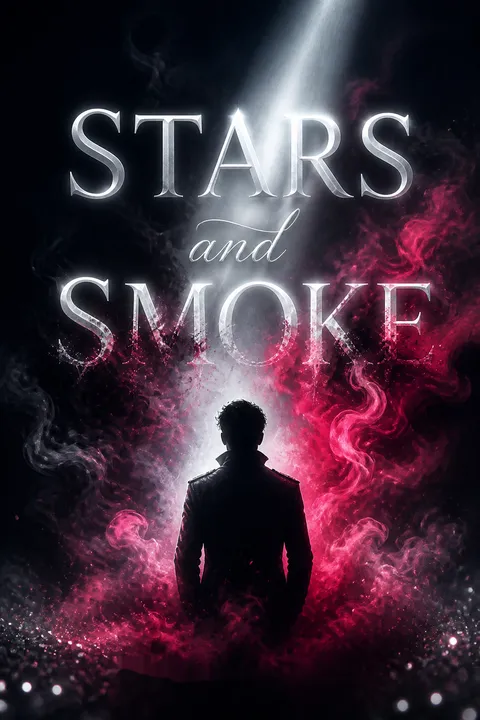


Plot Summary
Prologue
Before Winter Young knows that his life is about to change, two Panacea Group agents debate recruiting the world’s biggest pop star for a mission. One doubts a celebrity can handle espionage; the other argues that Winter’s fame is precisely what could get them through Eli Morrison’s guarded doors. Their uneasy agreement sets the story’s terms: the spotlight that has made Winter lonely may also become a way into the shadows.
The opening mission log gives the novel a brisk, comic frame while planting its central contradiction. Winter’s fame appears to disqualify him from covert work, yet it is the very thing that makes him useful. The agents’ banter also establishes Panacea as an institution that bends convention, but not without friction or risk. Before Winter enters the story, the reader is asked to see celebrity not simply as spectacle, but as a tool that can redirect attention. The joke carries a warning: a useful performance may still expose its performer to real danger.
The Wrong Black SUV
After a sold-out concert, Winter slips away from his security team and climbs into a waiting SUV, expecting to find his manager. Instead, Panacea agents Sauda Nazari and Niall O’Sullivan explain that they need him to enter the circle of billionaire Eli Morrison, whose daughter is a devoted fan. They want evidence that can expose Morrison’s trafficking network and stop an illegal shipment.
Winter refuses until Sauda connects the offer to his older brother, Artie, whose death during Peace Corps work still troubles him. She hints that Winter does not know the whole story. His hunger for a worthwhile life wins over his fear, and he agrees to hear Panacea out, asking that his mother and staff be protected.
Winter’s choice grows from a wound celebrity cannot close. The crowd gives him immediate adoration, but its love arrives in scheduled bursts and disappears when the show ends. His mother’s distance and Artie’s death have left him unsure how to measure his own worth. Sauda recognizes that vulnerability and uses it to recruit him, an ethically uneasy act that the story does not disguise as pure inspiration. Yet Winter is not simply manipulated: he chooses a mission because the possibility of service answers a question his fame cannot. His request to protect others shows that care, not thrill seeking, is the first instinct he brings to espionage.
Artie’s Secret File
At Panacea’s concealed headquarters beneath a Saint Paul hotel, Winter meets Sydney Cossette, the young operative assigned to pose as his bodyguard. The agents explain that Morrison’s latest shipping ledger could prove he is moving Paramecium, a devastating chemical weapon, toward Cape Town.
Their route to the records runs through Morrison’s daughter, Penelope, and her financial adviser, Connor Doherty. Winter then recognizes a phrase Niall uses as one Artie’s brother once repeated.
Sauda reveals that Artie was a Panacea field agent. Niall explains that Artie died disobeying orders to rescue a hostage during a failed exchange. Winter absorbs the truth beside the agency’s lethal gadgets, realizing his brother entered the same hidden world he is now choosing.
Artie’s revelation changes the meaning of Winter’s grief without dissolving it. The brother Winter idealized was neither merely a saint nor a distant memory: he made dangerous choices inside an institution that asks people to weigh individual lives against public safety. That knowledge gives Winter a model of purpose, but also a burden of comparison. Panacea’s weapons and suicide toxins make the cost tangible before the mission begins. Sydney’s presence complicates the lesson: she is already trained in the realities Winter romanticizes. The scene therefore withholds easy inheritance. Winter may share Artie’s concern for others, but he must discover what that concern demands in his own life.
A Knife Between Them
Sydney trains Winter in simulated London streets, teaching him to watch without looking back, adapt when a plan breaks, and earn trust without offering his own.
Winter’s dance training lets him absorb a self-defense move almost immediately, surprising Sydney; he also notices her measured breathing and realizes she has a lung condition she has concealed from Panacea. He promises not to expose her. Their mutual scrutiny sharpens into an uneasy trust, though they keep provoking each other.
Before leaving, Winter visits his mother with tulips and money. She confuses his past with Artie’s and barely asks about his life, renewing the loneliness that sent him toward Panacea. On the flight to London, Winter carries that ache beside Sydney’s wary presence.
The training scenes turn the spy’s central skill, observation, into an intimate danger. Sydney reads Winter’s insecurity as a potential weakness; Winter reads her breathing as evidence of a secret. Each gains leverage over the other, yet Winter’s refusal to report her condition is a small act of trust that interrupts the lesson’s cold rule. His visit to his mother reveals why that trust matters: he has learned to offer care without certainty that it will be returned. Sydney’s professional self-protection and Winter’s hunger for recognition are different responses to abandonment, but both are attempts to control what other people can see.
A House Under Watch
In London, Winter, Sydney, manager Claire, and dancers Leo and Dameon arrive at Morrison’s lavish estate. Eli welcomes them with a gracious manner that makes Sydney more wary, not less. His daughter Penelope is visibly thrilled to meet Winter, while Eli tests Sydney’s cover by probing her invented background.
Sydney scans the house and finds surveillance devices in its shared rooms, so she and Winter communicate cautiously. When she makes a routine supply drop, a watcher forces the Panacea contact to abort it. Sydney returns with no package, but the black car outside confirms that Morrison’s people are tracking her. The operation has not yet begun in public, and already their cover is being measured.
The estate’s comfort is part of its threat. Morrison can make surveillance feel like hospitality because his power is built into the architecture, the staff, and the guests’ behavior. Sydney’s failed drop proves that technical preparation cannot guarantee control when the target owns the surrounding environment. Her restraint matters: she does not disable the bugs or reveal what she knows. Winter, meanwhile, enters a world where his celebrity genuinely belongs, but belonging does not mean safety. The difference between their forms of visibility becomes stark. He is watched because everyone recognizes him; she is watched because someone suspects she may be more than she appears.
A Ring for Connor
At Penelope’s elaborate concert, Sydney retrieves Panacea’s listening earrings, a recording pin, and the meteorite ring designed to attract Connor’s attention. She meets Penelope privately in a bathroom and sees how frightened the heiress is of her father’s guards.
Winter’s performance gives Penelope a rare moment of delight, then he follows her to a private after-party where Connor Doherty finally appears. Connor recognizes the meteorite in Winter’s ring, accepts it, and invites him to view his collection.
Winter also notices that Penelope and Connor’s flirtation switches off too neatly to be genuine. As Penelope takes Winter away from the party, Sydney spots Eli leaving with associates. Connor’s urgent exchange with Eli has already suggested that a consequential meeting cannot wait.
Performance functions here as both access and emotional contact. Winter’s concert is designed to win Penelope’s attention, but his altered birthday gesture gives her a moment that feels personal inside a celebration controlled by her father. Sydney sees the cost of that control in Penelope’s anxious retreat. Winter’s ability to read staged romance is a practical skill drawn from celebrity culture, not formal spy training; it lets him question Panacea’s assumptions about Connor and Penelope. The ring works because its value is real, not merely technological. Trust is purchased through taste, intimacy, and apparent generosity, which makes the operation effective but morally unstable.
The Tycoon Dies First
While Winter leaves with Penelope, Sydney follows Eli’s car through London and across the Thames to his yacht. Hidden beneath the pier, she records Corcasian men accusing Eli of shorting their deliveries. They force a glowing sample of Paramecium into his mouth, and a guard’s blow breaks the cube, killing Eli in front of Sydney.
She steals one attacker’s wallet and identifies him as a buyer Panacea has tracked. The murder destroys the original plan: their target is dead, the shipment remains active, and the Corcasians may now turn on Penelope. At her flat, Winter and Penelope survive a sniper’s shot through the window. Sydney returns and tells Winter what happened, while Panacea orders them to leave London.
The weapon’s first on-page use collapses the distance between intelligence briefing and bodily fact. Paramecium is no longer a hypothetical threat to a distant city; Sydney watches it destroy a person in minutes. Eli’s death does not produce relief because it removes the legal target while leaving the dangerous system intact. The scene also denies Sydney the clean agency she expects from a successful operation: she can record and identify, but cannot prevent the murder. Winter’s separate brush with the sniper makes the threat personal before the pair can understand who is moving against them. The failed mission becomes a moral problem, not simply an operational setback.
The Mission Goes Rogue
Sydney and Winter share what they learned, then refuse to abandon London while the cargo ship still carries Paramecium. They find that the jeweled hairpin Penelope left behind contains an encrypted mini-drive, evidence Sydney sends to Panacea.
To delay their extraction and protect Penelope from another attack, they anonymously leak news that Winter was shot at. Fans gather outside the Kensington house, making a discreet airport departure impossible.
Using footage from Connor’s bugged ring, the pair watch him enter a hidden chamber in his museum collection. Sydney identifies the entrance as a likely vault for Morrison’s records. Claire, Leo, and Dameon arrive amid the growing crowd, unaware that the mission has shifted beyond Panacea’s orders.
Going rogue begins as a refusal to accept the agency’s boundary between achievable justice and unacceptable political risk. Winter and Sydney are not suddenly free of authority; they use Winter’s fame to manipulate the same public attention that usually constrains him. The fan crowd becomes a practical obstacle to extraction and a shield for Penelope, though it also exposes civilians to danger. The hairpin and ring footage show how small objects carry competing forms of access: one holds data, another turns a gift into surveillance. Their decision is emotionally compelling, but the chapter keeps its costs visible. Improvisation can rescue a mission, yet it can also widen the circle of people at risk.
A Warning in Whiskey
After Claire and the dancers leave the crowded house, Leo’s hurried warning reaches Winter too late to stop Sydney from sipping a spiked drink. Winter carries her into the indoor pool, fetches her antidote, and keeps her conscious until the nerve agent begins to clear. In the aftermath, their fear breaks into a kiss, but Winter stops before they can mistake the poisoned, exhausted moment for a clear decision.
Sydney tests the glass and identifies the toxin. They conclude that Leo was forced to help, since he warned Winter rather than letting the poison take effect. Winter refuses to flee London and calls Penelope to arrange a meeting, while Sydney heads toward the museum alone. The two split to pursue their separate leads.
The rescue reverses their usual roles: the trained operative is incapacitated, and the performer must apply what he has learned. Winter’s attention to the antidote and his refusal to exploit Sydney’s altered state mark a significant shift from charm as performance toward care as responsibility. Their kiss is real in its longing, but the decision to pause recognizes that fear and poison have compromised their judgment. Leo’s warning prevents a simple betrayal narrative; coercion is plausible, though not yet proven. The pair’s separation follows from both practical necessity and emotional self-defense. Each wants to protect the other, and each initially interprets protection as leaving alone.
The Birthday Bullet
At the Victoria and Albert Museum, Sydney triggers a fire alarm, evades a guard, and uses crushed candy dust to reveal the laser grid protecting Connor’s collection. Winter’s earrings project Connor’s face to open the concealed room. Inside, Sydney finds paper ledgers and digital drives, but Connor catches her before she can send the files to Panacea and locks her in the dark.
Meanwhile, Winter meets Penelope at her birthday reception and tells her that Eli has been killed. He tries to persuade her to leave with him, but before they can escape, a sniper shoots him in the chest. Penelope’s people take him away in an ambulance that never reaches a hospital. He wakes tied aboard a cargo ship bound for Cape Town, beside crates of Paramecium.
The parallel action gives the mission its sharpest structural reversal: Sydney reaches the evidence but loses the means to transmit it, while Winter reaches Penelope but loses control of his own movement. Their earlier reliance on performance and disguise has brought them close to the truth, yet neither skill can guarantee escape. Winter’s shooting also turns his celebrity into a weapon used against him: the public will expect a familiar story about an attack, while his actual location stays hidden. The cargo ship makes the threat brutally concrete. The records matter because they can stop the chemical shipment, but the agents are now physically trapped beside the very cargo they meant to intercept.
The Heiress Unmasked
Penelope appears beside Winter on the ship and admits that she knew Panacea sent him. She arranged the mission to make the agency seem responsible for Eli’s death, while using its access to conceal her own plan. She tells Winter that Eli abused and killed her mother when Penelope was five, then used his influence to erase the evidence.
Her revenge is also financial: she intends to claim the fortune that would otherwise be seized and direct it toward her mother’s family. Connor and the guards bring Sydney in and demand the hairpin’s data. Penelope’s grief is genuine, but she will still send the Paramecium shipment onward. Winter realizes the supposed fan and frightened heiress has been steering them from the start.
Penelope’s revelation refuses the comfort of a clean villain. Her history explains the rage behind her plan, but it does not absolve her decision to move a weapon capable of killing civilians. The inheritance gives revenge a material structure: she wants not only to punish her father, but to reclaim wealth that she believes belonged to her mother. That claim is understandable and still cannot justify the shipment. Winter recognizes the gap between motive and consequence because he has spent the story searching for meaningful action. Penelope’s careful performance also mirrors his own public persona, making their encounter a confrontation between two people who know how to appear harmless while concealing pain.
Flare Above the North Sea
When Penelope threatens to force Paramecium into Winter’s mouth, he works his wrists loose and tricks her into giving him an opening. Sydney frees herself, and the pair trade a knife and the chemical cube.
To stop Connor from taking it, Sydney smashes the cube against a wall; the released agent incapacitates the men nearby, though Connor later pursues them. Winter and Sydney split across the ship, one climbing the container grid and the other cutting through the lower decks. Both are injured, and Sydney’s lungs begin to fail under the strain.
At the bridge, she fights Penelope and her guards, breaks a window, and reaches the signal flares. Winter survives a gunman’s shot with Panacea’s hidden pin, then returns as she fires a flare. Panacea’s helicopters arrive.
The climax pays off tools and traits established well before the ship: Winter’s quick learning, Sydney’s improvisation, the concealed pin, and the flare as a last link to help. Their escape depends on cooperation rather than either hero’s exceptional competence alone. Sydney’s choice to break the cube is especially costly: she turns the weapon against their captors because every safer option has vanished, exposing herself and Winter to the same danger they sought to prevent. Their separate routes test the belief that solitude is safer. Winter can climb, Sydney can fight, but neither can secure survival without the other returning. The flare makes rescue possible without making it effortless or certain.
The Family You Find
Panacea seizes the cargo ship and its chemical weapons, while Winter and Sydney recover in separate hospitals. Leo visits Winter under guard and explains that Morrison’s people threatened his family and promised the poisoned drinks would only cause sleep.
Winter forgives his fear, though Leo must still face the investigation. Dameon reminds Winter that he does not have to carry every secret alone. Claire stays close, and Winter’s mother finally visits; she admits that grief over Artie made her retreat from Winter, then tells him she is proud of him.
Sydney returns to Panacea expecting punishment for disobeying orders and concealing her lung disease. Sauda tells her the agency already knew and had adapted her training, then supports her move toward full operative status.
The aftermath replaces the mission’s spectacular dangers with less visible forms of repair. Winter’s response to Leo refuses to confuse culpability with freedom from coercion, while still recognizing that Leo’s choice hurt him. His mother’s admission cannot undo years of neglect, but it gives Winter a clearer account of the distance between them. Sydney’s revelation is equally important: she believed concealment was the price of belonging, only to learn that Sauda and Niall had already made room for her limits. The agency’s care is imperfect and institutional, yet it contradicts Sydney’s conviction that she must survive alone. Both protagonists begin to accept support without pretending that old wounds have vanished.
Sunset at Kew
Before returning to Panacea, Sydney meets Winter at Kew Gardens. Claire has arranged a quiet exit from the hospital, and the pair walk through the grounds while they talk about their separate lives. Sydney gives Winter a hotel card that can connect him to Panacea if he needs help, and he asks her to make sure Leo’s coercion is understood.
They dance briefly in the twilight, admit they will miss each other, and kiss before she leaves. Neither asks the other to abandon the life that gives them purpose. Winter watches Sydney depart, then reflects on all the words he did not say. Their goodbye is tender but unresolved, shaped by duty and the fear of demanding too much.
The farewell resists the romance convention of treating love as a solution that cancels vocation. Winter and Sydney have learned to trust one another, but trust does not erase the structures that govern their lives or the risks each has chosen to bear. The hotel card is a restrained form of hope: it offers access, not a promise of reunion. Their dance gives the relationship a private language distinct from Winter’s public performances, while the final kiss acknowledges desire without claiming permanence. Winter’s unspoken regrets show that restraint protects people but also costs them. The scene leaves the choice open rather than presenting sacrifice as proof that their feelings were unreal.
Epilogue
One year later, Winter has recovered, returned to the studio, and broken an album sales record. Sydney appears in the dance studio as a Panacea operative with another mission. Their reunion makes clear that the year apart has not erased their attraction. Winter agrees to hear the assignment, accepting that Sydney will be his partner again.
The reunion revises the apparent finality of the Kew farewell without pretending the intervening year was easy. Winter’s public success continues, but it no longer contains his entire sense of identity; he can feel the absence of the hidden world and the person associated with it. Sydney’s return is not a rescue from her work or a surrender of her independence. She arrives as an operative with a new assignment, and Winter chooses to enter that work knowingly. Their renewed partnership turns the story’s sun-and-moon image from a fixed separation into an imperfect possibility: timing can change, even when their lives remain difficult to reconcile.
Analysis
Stars and Smoke treats celebrity and espionage as neighboring forms of performance. Winter’s career teaches him to command a crowd, read a room, and alter his presentation in real time; those skills become intelligence tools when Panacea sends him toward Eli Morrison. Yet performance has a cost. Winter’s fame supplies attention without intimacy, while Sydney’s undercover identities offer safety at the price of personal exposure. Both protagonists survive by controlling what others see, and both discover that control can become isolation.
The novel’s moral conflict refuses an easy equation between good intentions and good outcomes. Penelope’s revenge grows from genuine childhood trauma and an understandable desire to restore what her mother lost. Her willingness to send Paramecium onward nevertheless endangers people who had no part in that history. Winter’s search for purpose helps him recognize the distinction between understanding a person and endorsing their choices. Sydney’s judgment is shaped by her own experience of violence, but she must still act within uncertainty, without knowing whether her intervention will save or endanger others.
The relationship between Winter and Sydney develops through reciprocal observation. At first, each treats the other as a problem to manage: she sees an untested celebrity, he sees a guarded agent who refuses his charm. Their trust begins when they notice what each is hiding and choose not to exploit it. Winter protects Sydney’s medical secret; she teaches him skills without mistaking his talent for expertise. Their intimacy grows from that mutual respect, but the story does not claim that affection dissolves the demands of their work.
Family is likewise presented as care imperfectly given. Winter’s mother cannot undo her withdrawal, yet her admission allows him to understand its source without denying its effects. Sydney learns that Panacea has known about her limitations and trained around them, challenging her belief that belonging requires concealment. By the end, neither protagonist is cured of grief or loneliness. They are simply less convinced that meaningful work, love, and vulnerability must exclude one another.
Review Summary
Stars and Smoke by Marie Lu receives mixed reviews, averaging 3.69/5 stars. Readers praise the fast-paced spy plot featuring pop star Winter Young and agent Sydney Cossette on an undercover mission. Many enjoyed the action sequences, character backstories, and role-reversal bodyguard romance. However, criticisms include predictable plot twists, weak chemistry between leads, a YA tone despite NA marketing, and inaccurate "enemies-to-lovers" labeling. Some found character descriptions overly detailed and the romance underdeveloped. Fans appreciate Lu's signature writing style, though several note it feels dated compared to contemporary releases.
People Also Read









Characters
Winter Young
Restless global pop starWinter is a nineteen-year-old Chinese American singer whose carefully managed fame brings him adoration without the steady intimacy he craves. He writes songs, performs with extraordinary physical precision, and uses charm as both craft and armor. His older brother Artie’s death and his mother’s emotional distance leave him uncertain that he matters beyond his audience. Winter is not naïve about performance; he understands how to direct attention and read the emotional temperature of a room. What he lacks is experience with danger outside the stage. His pull toward purposeful work grows from genuine concern for other people, though he must learn that being needed is not the same as being loved.
Sydney Cossette
Brilliant shadow operativeSydney is a nineteen-year-old Panacea associate, trained in surveillance, combat, languages, and improvisation. She prizes self-sufficiency because her childhood taught her that safety and affection could disappear without warning. A compulsive urge to steal gives her a private struggle with control, while a chronic lung condition makes her determined to hide any sign of weakness. Her intelligence is practical and observant: she studies a room, a face, or a pause, then turns those details into options. Sydney’s apparent coldness protects a fiercely loyal center. She wants work that matters, but has trouble believing that other people can choose to stay beside her without making her less capable.
Penelope Morrison
Sheltered billionaire heiressPenelope is the only child of shipping magnate Eli Morrison, raised among lavish parties, attentive staff, and close surveillance. Publicly, she is shy and earnest, with an intense interest in Winter’s music and a private love of books. Her relationship with her father is complicated by his protectiveness and her need for an identity beyond his expectations. Penelope’s gentleness should not be mistaken for helplessness: she has learned to manage how others see her and to conceal difficult feelings behind good manners. Her desire for independence is bound to grief for her mother and to questions of inheritance, loyalty, and what a life of privilege ought to make possible.
Eli Morrison
Smiling shipping magnateEli is a wealthy shipping magnate whose cultivated generosity and social ease make him welcome among influential people. He is also a careful, controlling presence, accustomed to testing those around him and arranging circumstances to his advantage. His devotion to his daughter gives his public image an intimate warmth, but that affection exists alongside a desire to manage her life. Eli’s power is not merely financial: it depends on political connections, loyal staff, and the assumption that other people will accept his version of events. His polished manners make him more unsettling than open bluster would.
Sauda Nazari
Panacea field strategistSauda is a composed Panacea agent who recruits Winter and helps direct the Morrison operation. She thinks quickly, speaks plainly about danger, and knows how to identify the desire beneath a recruit’s stated reasons. Her methods can be forceful, especially when she believes lives are at stake, but her discipline includes care for the people she trains. Sauda understands that the agency operates between political caution and moral urgency, and she accepts that neither side offers a perfect answer. Her steady mentorship gives Sydney a model of competence that does not require emotional numbness.
Niall O’Sullivan
Gruff intelligence mentorNiall is Panacea’s blunt, observant analyst and a veteran mentor to Sydney. He is skeptical of risky plans, especially when they endanger young agents, yet he notices potential even in people who resist authority. His gruff manner hides a protective loyalty and an ability to offer practical guidance without demanding confession. Niall’s relationship with Sauda carries a quiet tenderness that both keep subordinate to agency rules. To Sydney, his consistency matters because he gives care without asking her to perform gratitude or pretend her past has not shaped her.
Claire Richardson
Winter’s protective managerClaire discovered Winter when he was an unknown dancer and built a career beside him as his manager. She is organized, sharp, and difficult to intimidate, often balancing his impulsive choices with practical concern for his health. Their relationship is more intimate than a standard business partnership: Claire knows when he is exhausted, lonely, or trying to hide hurt behind charm. She does not always understand the parts of his life he keeps private, but she remains a reliable source of affection and steadiness.
Leo Medina Santiago
Warm-hearted dance partnerLeo is one of Winter’s backup dancers and longtime friends, known for his humor, energy, and closeness with his family. He teases Winter freely but can also sense when a joke should give way to encouragement. His easy warmth helps make the touring crew feel like a chosen family. Leo’s loyalty is powerful because it is rooted in affection rather than professional obligation, though the people he loves can also become a source of pressure.
Dameon Carter
Quietly perceptive confidantDameon is Winter’s other close dance partner, a patient and attentive presence who notices changes in Winter’s mood before Winter names them. He and Winter once shared a private relationship that ended without destroying their friendship. Dameon understands that closeness does not require possession, and his calm presence often gives Winter room to be honest. He is also protective of the crew and able to read when humor is masking a more serious concern.
Artie Young
Purpose-driven older brotherArtie is Winter’s much older half-brother, remembered for his optimism, steadiness, and belief that a person’s worth does not depend on fame. He once offered Winter a model of goodness that the younger boy could admire but not yet understand. Artie’s work with the Peace Corps took him away from home for long stretches, and his absence shaped both Winter’s longing and his mother’s grief. In memory, he remains a brother Winter loves and a standard he is still learning how to interpret.
Winter’s mother
Grieving, distant parentWinter’s mother is a stylish, restless woman whose grief and mental health struggles have made sustained closeness difficult. She can be warm in brief gestures, calling Winter an affectionate childhood name or accepting the flowers he brings, yet often misses the details of his life. Her distance is tied to her painful history with Winter’s father and to the loss of Artie. She is not indifferent so much as overwhelmed, and Winter’s desire for her attention persists even when he understands why she withdraws.
Connor Doherty
Discreet financial adviserConnor is a young adviser responsible for Penelope’s finances and a collector of rare jewelry and meteorites. He keeps a low public profile and presents himself as restrained, observant, and difficult to impress. His work places him close to the Morrison household without making him a familiar face at its public events. Connor’s taste provides Winter and Sydney with an opening, while his careful manner makes it hard to tell where business ends and personal loyalty begins.
Sydney’s mother
Ailing childhood anchorSydney’s mother is a loving but seriously ill presence in her daughter’s childhood. During brief, tender outings by the river, she offers Sydney a glimpse of a life beyond their troubled home. Her illness and death leave Sydney grieving, frightened of inherited vulnerability, and desperate to escape the town where she grew up.
Sydney’s father
Violent hometown shadowSydney’s father works long hours at a slaughterhouse and returns home with alcohol, anger, and little patience for his daughter’s ambitions. His violence helps make home feel unsafe and strengthens Sydney’s determination to leave. He represents the life Sydney fears she will be trapped in if she cannot choose a different future.
Matt
Cruel older brotherMatt is Sydney’s brother, who joins their father in belittling her rather than protecting her. His presence deepens her sense that she has no dependable ally at home and reinforces her urgency to find a way out.
Plot Devices
Winter’s celebrity cover
Fame as covert accessPanacea recruits Winter because Morrison’s daughter is a devoted fan and will give him access to exclusive celebrations and influential guests. Winter does not need to invent a false identity; his real public self is the cover. His stage instincts help him redirect attention, improvise when plans change, and appear at ease among people who underestimate a pop star’s intelligence. The device also carries risk: Winter’s fame makes him easy to track, and the same crowds that can protect him can become dangerous or obstruct an escape.
Panacea’s spy technology
Tools hidden in luxuryPanacea disguises surveillance and defensive equipment as objects that fit the agents’ covers. Winter receives earrings that record conversations and a meteorite ring containing a recorder and infrared camera, while Sydney carries a blade hidden in a hotel pin and a phone that can manipulate alarms and signals. The objects turn ordinary gestures into intelligence gathering, letting the agents record Eli’s murder, monitor Connor, and create a path into his museum vault. Their usefulness depends on concealment and timing, so losing or exposing one can change the mission at once.
The jeweled hairpin drive
A clue inside an heirloomPenelope’s jeweled hairpin appears to be an accessory tied to her relationship with Connor, but Sydney discovers a small data drive hidden beneath its ornament. The file is encrypted, so it cannot immediately explain Penelope’s full role. Its importance grows when Penelope demands it back aboard the cargo ship, confirming that the information threatens her plan. The hairpin therefore links the heiress’s public appearance, her private dealings, and the evidence Panacea needs, while its small size makes it easy to conceal and easy to overlook.
Paramecium
A weapon made portableParamecium is a lab-grown chemical weapon shipped in small, pale cubes that can kill when inhaled or when the cube breaks in the mouth. The substance turns a corporate cargo ledger into an urgent threat to whole populations. Sydney witnesses it kill Eli, and later she and Winter smash a cube on the ship to disable their captors and escape. That choice is dangerous to everyone nearby, including the protagonists, and makes the weapon’s physical form central to the climax rather than an abstract piece of intelligence.
The flare and hidden pin
Last signals, last defensesPanacea issues concealed defensive tools and teaches agents to use their surroundings when communication fails. Winter’s hotel pin contains a hidden blade, which lets him survive a gunman when his strength is nearly gone. On the cargo ship, Sydney reaches the signal flares after the bridge’s phone has been cut, creating a visible distress signal for Panacea’s helicopters. Both devices are modest beside the scale of the crisis, but their earlier introduction makes the rescue earned rather than sudden.
Stars and Smoke Series

About the Author







Download PDF
Download EPUB
.epub digital book format is ideal for reading ebooks on phones, tablets, and e-readers.








