


Plot Summary
Prologue
A year after the events on Heimdall, BeiTech executive Leanne Frobisher faces a tribunal investigating the company’s attack on the Kerenza mining colony and the station. She denies knowing about either operation and attacks the credibility of Hanna Donnelly and Nik Malikov, whose accounts have entered evidence as the Illuminae Files.
The prosecutor begins reviewing those records in her presence. The hearing frames the story as an argument over who controls the record: a corporation with the power to bury its crimes, or survivors whose testimony can make them visible.
The courtroom opening makes documentation part of the conflict rather than a neutral container for it. Frobisher’s corporate authority lets her dismiss witnesses by attacking their status and character, while the tribunal’s acceptance of their files gives testimony a fragile institutional foothold. The framing also primes readers to distrust official accounts without treating every witness as infallible. The central question is not merely what happened on Heimdall, but who gets to define what happened after the powerful have tried to erase it.
Heimdall Keeps Its Secrets
Jump Station Heimdall is preparing for Terra Day while its engineers schedule dangerous maintenance on the wormhole at its center. Station commander Charles Donnelly is pressing for answers about Kerenza, where the Wallace Ulyanov Consortium’s mining colony has gone strangely silent.
Unknown to him, BeiTech operative Sam Wheaton has been suppressing reports. Hanna Donnelly, Charles’s sharp, martial-arts-trained daughter, juggles her boyfriend, junior officer Jackson Merrick, with flirtatious meetings to buy dust from Nik Malikov, a young House of Knives dealer.
Nik works for his uncle, Mikhail, who breeds parasitic lanima in cows to harvest their psychoactive toxin. Nik recoils from implanting the larvae, while his cousin Ella, confined by illness to her computer, watches the station’s digital web.
The setup places ordinary adolescent negotiations beside systems of extraordinary violence. Hanna’s party planning, Nik’s drug sales, and the station’s maintenance calendar all seem local and manageable, yet each is entangled with concealed institutional choices. Nik’s discomfort with the larvae complicates the easy label of criminal, while Ella’s dependence on machines gives her both vulnerability and reach. Heimdall’s central wormhole is literal infrastructure and a pressure point: everyone relies on it, few understand its risks, and corporate secrecy has already narrowed the choices available to its residents.
The Shipment Opens
Wheaton discovers Nik’s connection to Hanna and uses it to force him into a covert delivery. On Terra Day, Nik and his uncle’s remaining crew accept a sealed medical biotainer from the freighter Mao, unaware that it contains personnel tubes for a BeiTech assault team.
Once the container is aboard, the team kills the House of Knives crew and cuts the station cameras. Meanwhile, Charles gathers Heimdall’s residents for his holiday address. The invaders storm the atrium, disable security, and kill him in front of his staff before demanding surrender.
Hanna and Nik are elsewhere when the attack begins. They cannot reach their families or friends through the station network, and the occupiers’ first broadcast leaves them with minutes to choose whether to hide or comply.
Nik’s compromised delivery turns a private weakness into a breach in collective security. He is not a willing architect of the invasion, but his criminal work gives Wheaton leverage, and the difference between coercion and complicity becomes one of the story’s hardest questions. The attack then converts public ceremony into enforced submission: Charles’s speech gathers the people who will be controlled, and his killing demonstrates that rank offers no protection. By severing cameras and communications first, BeiTech attacks not only bodies but the station’s ability to know itself.
Vents Become Lifelines
Hanna refuses to join the captives and moves through service passages, trying to locate her father while BeiTech trackers close in. She hides above a security break room, then slips into the infirmary for a scalpel and access to the locator registry.
The assault team catches her there, but she escapes through an elevator and tricks four pursuers into an airlock, using a decoy locator to make the safety system misread her position. In Docking Bay 17, Nik finds his uncle and friends dead beside the emptied container.
His cousin Ella reports that the station network is being cut apart, then loses contact as BeiTech hackers attack her system. In the hidden reactor room, the unattended lanima larvae begin hatching inside their cow hosts, turning the station’s illicit farm into an uncontained threat.
The survivors’ first advantage is not superior force but intimate knowledge of overlooked spaces. Hanna’s use of vents, locator beacons, and airlock protocols turns architecture into a tactical language. Nik’s return to the bay, by contrast, makes the cost of his coerced bargain undeniable: the people he meant to protect are dead. The hatchlings add a second danger produced by human greed, one that neither side can fully command. The station’s hidden spaces preserve life and conceal consequences at the same time.
The Little Spider Connects
Ella reaches Hanna through the private palmpad Nik gave her, and the two begin coordinating outside the compromised station network. Hanna disables a pursuing medic, steals her weapon and headset, and survives a chase led by BeiTech sergeant Fleur Russo, called Kali.
Ella uses hacked cameras and improvised programs to track the occupiers, while Hanna learns that her father has been killed. Nik escapes Bay 17 by climbing into an actuator-assisted loader suit and striking two soldiers hard enough to reach the vents.
He cannot bring his dead crew back, but he can still help Ella reopen access to Heimdall. Their separate routes begin to converge around one purpose: discover why BeiTech seized the station before the invaders can finish sealing it off.
Hanna and Ella form an alliance through complementary kinds of competence. Hanna can move through physical danger and make rapid decisions; Ella can see patterns across systems that leave everyone else blind. Neither woman is reduced to the role assigned by the other: Hanna is more than a protected commander’s daughter, and Ella’s sharp humor does not erase her grief or dependence on life-support technology. Their partnership also shifts the novel’s idea of power. Control of information and control of a corridor become equally consequential forms of resistance.
The Angel’s Cost
Hanna asks Nik about the angel tattoo at his throat after BeiTech uses his sealed criminal record to turn her against him. Nik tells her the tattoo marks a killing for the House of Knives, but the truth is more complicated than the record suggests.
At fifteen, he confessed to murdering Dmitri Balashov and Dmitri’s twelve-year-old daughter, Oksana, after his younger brother Erik committed the murders on their father’s orders. Nik accepted prison and the cartel’s mark to keep Erik from being destroyed by the family’s criminal world.
A later confession from Erik cleared Nik, but the experience left him estranged from his father and convinced that protecting family means carrying consequences himself. Hanna recognizes that she has mistaken the public record for the whole person.
Nik’s history distinguishes responsibility from guilt without pretending they are cleanly separable. He chose to protect Erik, but that choice involved taking on a false identity and enabling a violent father to escape accountability. His tattoo makes the body a public archive of a private sacrifice, while the official file reduces the sacrifice to a conviction. Hanna’s struggle is not simply deciding whether Nik is trustworthy; it is learning how easily her confidence in visible evidence can be manipulated. Intimacy begins when she asks what his symbols mean and stays to hear the answer.
Kerenza Comes Into View
Ella gains a view of BeiTech commander Travis Falk’s papers and finds the motive behind the takeover. BeiTech attacked the illegal WUC hermium operation on Kerenza, and the surviving science vessel Hypatia is approaching Heimdall with refugees and witnesses.
A BeiTech assault fleet is due from the opposite direction. Falk’s team intends to destroy the Hypatia, then eliminate Heimdall’s population so no one can expose the company’s crimes. Hanna, Nik, and Ella decide they cannot simply hide.
They plan to use Heimdall’s narrow wormhole route as a bottleneck, sabotage the station’s systems, and send warnings outward. The first wormhole activation catches Nik’s shuttle near its horizon, producing a violent surge that distorts communications and leaves the station’s damaged systems increasingly unstable.
The discovery expands the stakes from personal survival to the deliberate manufacture of silence. BeiTech’s violence is not an accidental excess of warfare; it is a cleanup strategy meant to erase witnesses, records, and the people who carry them. The trio’s response borrows its shape from Hanna’s military history lessons: they cannot overpower a fleet, so they must exploit a chokepoint and the enemy’s timetable. The wormhole surge complicates that plan by making the infrastructure itself unpredictable. Their battlefield is both political and physical, and the latter is beginning to buckle.
A Farm Becomes a War
The lanima hatchlings grow rapidly in the reactor’s heat, feeding on the brain activity of the people BeiTech sends to search for missing operatives. Their venom leaves engineers and soldiers disoriented, and the creatures spread through passages the station’s schematics do not show.
Hanna and Nik reach the reactor to interfere with wormhole operations, but a lanima attacks Hanna’s suit before Nik pulls it off and shoots it. Ella, still fighting the enemy hacker, is attacked at her workstation and disappears from contact.
At the same time, the group uses a burst of freezing coolant, alarms, and noise to lure the creatures toward the BeiTech squad hunting them. The resulting clash costs both sides lives and gives Hanna and Nik a narrow chance to escape the reactor’s lower levels.
The lanima are the material consequence of an economy that treats living hosts as equipment. Their feeding mechanism blurs the boundary between intoxication and injury: victims appear calm while their minds are being consumed. That makes the creatures an unnerving mirror of BeiTech’s methods, which also disable perception before taking control. The humans’ attempt to weaponize cold, noise, and the reactor’s layout is resourceful but morally distinct from the original farm: they are trying to interrupt a threat they did not create. Ella’s lost signal sharpens the cost of treating her digital presence as guaranteed safety.
The Boyfriend Was Rapier
Hanna’s boyfriend, Jackson Merrick, is exposed as Samuel Maginot, the BeiTech operative who has spent months monitoring Heimdall’s communications. Falk uses Jackson to pressure Hanna into surrender, while the occupiers begin purging station sectors and threaten residents trapped inside.
Hanna refuses to accept the choice Falk offers. She rigs the maintenance-closed mess hall with sugar and damaged light fixtures, then triggers a blast that incapacitates Kali’s squad when they enter.
With Ella’s help, she opens internal air routes and warns residents in the entertainment complex to put on emergency suits. Fifty-seven people in the habitat sector are nevertheless killed by Falk’s purge. Hanna cannot undo that loss, but her warning protects others and turns a scattered group of captives into potential allies.
Jackson’s betrayal wounds Hanna because it uses the language of intimacy as camouflage for surveillance. His role is not identical to Falk’s, but his obedience has made private trust serve corporate power. Hanna’s trap shows her refusing the invader’s preferred moral frame, in which any resistance can be blamed for the violence that follows. Yet the deaths in the habitat sector prevent her strategy from becoming a fantasy of total control. Her agency matters, but it cannot make her responsible for Falk’s decision to kill civilians.
The Station Splits in Two
In one strand of events, Kali shoots Nik on a grav-rail platform after he stops to retrieve Hanna’s journal. Hanna defeats Kali with dust and a stolen rifle, but Nik dies from his wounds.
Then Hanna receives a transmission from the Hypatia that changes the meaning of the disaster: the ship is also hearing from Nik, who claims Hanna is dead. Captain Syra Boll and Kady Grant compare the two conversations and identify a Gemina field, created when the damaged wormhole linked two parallel realities.
Nik and Hanna have been exchanged across those realities, as have their shuttles. When the BeiTech fleets enter the crossed wormholes, matching drone fleets collide instead of reaching their intended targets. The anomaly has spared the Hypatia, but both universes are still destabilizing.
The revelation turns earlier discrepancies into evidence rather than error. The corsage, the changed messages, and the conflicting accounts of who survived are not tricks by a single liar; they are traces of two realities pressing against each other. The multiverse concept gives emotional loss a precise, dangerous form: Hanna is speaking to the person she loves, yet the Nik beside her belongs to another timeline. The fleets’ collision also exposes the limits of BeiTech’s mechanized certainty. Automated weapons can follow coordinates perfectly and still be undone by a reality their planners never considered.
A Crossing Keeps Them Alive
AIDAN explains that the exchanged Niks and shuttles must return to their own realities at the same moment or the Gemina field will destroy both universes. Hanna carries the dead Nik and the jasmine corsage toward the wormhole, while the surviving Nik in the other strand prepares his Betty Boop for the matching passage.
In the parallel outcome, Jackson, now known as Rapier, chooses not to shoot Ella; he keeps the wormhole open long enough for her, Hanna, and Nik to escape on the Boop after the Mao carries Heimdall’s civilians toward Kerenza. The crossings restore the displaced counterparts and let survivors reach the Hypatia. A year later, Hanna appears at the tribunal to expose the false report that declared them all dead.
The resolution binds cosmic repair to intimate recognition. The jasmine corsage is a small object, but its movement between versions of Nik makes a private promise legible as evidence of the larger exchange. AIDAN’s solution requires Hanna to act despite grief, while the parallel Rapier faces a choice that cannot be made by protocol alone. His decision matters because he finally treats actions, not affectionate claims or corporate orders, as the measure of loyalty. The survivors’ testimony completes the counter-operation: the company’s effort to erase witnesses becomes the reason their evidence must be preserved.
Epilogue
At the tribunal, Frobisher insists that the survivors’ account is fabricated and that the station’s records prove everyone died. Hanna hijacks the courtroom’s public-address system and identifies herself. She explains that Rapier’s report was designed to make BeiTech believe its cleanup succeeded, giving the survivors time to assemble evidence.
The tribunal questions how she can be present when the official record says Heimdall was destroyed. Hanna treats that impossibility as one more obstacle they have already overcome and offers to tell the court what happened next.
The courtroom return converts survival into a public act of authorship. Rapier’s false report is not merely a lie that protects the heroes; it is a countermeasure tailored to BeiTech’s assumption that dead witnesses cannot contest the story. Hanna’s appearance breaks that assumption before a body of officials capable of acting on evidence. Her sardonic composure also signals a shift from defending herself against immediate violence to choosing how the survivors’ history will be told. The ending refuses a neat closure: justice has begun, but the survivors’ future remains open.
Analysis
Gemina makes information a survival resource and a battleground. BeiTech’s original crime on Kerenza succeeds because the company can suppress messages, misdirect authorities, and treat witnesses as disposable. Heimdall’s takeover repeats that strategy at smaller scale: cameras are looped, networks are cut, and inhabitants are sorted into controllable spaces. Hanna, Nik, and Ella answer with imperfect counter-systems, using the station’s vents, hacked cameras, private devices, and public-address channels to restore people’s ability to know what is happening. The novel’s documentary form reinforces this struggle. Chats, reports, logs, and recordings are not just stylistic fragments; each format has different blind spots, and the reader must assemble causality from competing records.
The central relationships test the difference between loyalty and obedience. Nik inherits the House of Knives’ language of family, but his past shows how that language can demand a child’s sacrifice to protect an abusive father. Hanna begins by trusting the polished officer closest to her and distrusting the criminal who teases her. Her judgments change as she learns that official records and intimate appearances can both be manipulated. Ella’s bluntness repeatedly punctures self-serving stories, while her technical competence makes her indispensable without making her invulnerable. Together, the three expose the limits of individual heroism: their skills matter, but survival depends on trusting people whose lives and histories do not resemble their own.
The alien parasites and the wormhole crisis make human exploitation physically visible. The lanima are cultivated as commodities until they escape human control; the wormhole is treated as infrastructure until neglected maintenance turns it into a threat to reality. In both cases, systems built for profit or convenience conceal the costs of risk. The Gemina field then literalizes the novel’s concern with incomplete knowledge: incompatible accounts can both be true because they belong to different realities. The ending does not erase grief or restore a simple home. Instead, it turns survival into testimony, insisting that the people who endured corporate violence must also contest the story told about it.
Review Summary
Gemina is widely praised as an exciting and unique sci-fi sequel. Readers love the clever formatting, intense action, and mind-bending plot twists. Many find it even better than Illuminae, with new characters Hanna and Nik winning fans. The audiobook receives high praise. Some criticize the romance and character development. Overall, most reviewers are blown away by the creative storytelling, illustrations, and suspenseful plot, eagerly anticipating the final book in the trilogy.
People Also Read



Characters
Hanna Donnelly
Commander’s stubborn daughterHanna is the teenage daughter of Heimdall’s commander, raised among military history, strategy games, and martial-arts training. Her confidence can look like entitlement, especially when she expects others to accommodate her, but she is observant and quick to revise her assumptions. She has a complicated connection to both Jackson Merrick, her boyfriend, and Nik Malikov, the dealer who needles her and sees past her polished image. Hanna’s drawing journal gives her a private way to process emotions she struggles to say aloud. Her defining drive is to make decisions for herself, even when authority figures insist they know what is safest for her.
Nik Malikov
Cartel heir with a conscienceNik is a young House of Knives member, dealer, and nephew of the cartel leader on Heimdall. He hides unease behind jokes, swagger, and flirtation, habits that help him survive in a family where vulnerability can be used against him. His teasing bond with Hanna begins in part as pursuit, but it grows as he listens to her and lets her see the guilt he carries. Nik’s sense of loyalty is fierce and often self-punishing: he believes protecting family means accepting costs others should bear. His struggle is to distinguish the family he chooses from the criminal inheritance he was given.
Ella Malikova
The station’s hidden spiderElla is Nik’s fifteen-year-old cousin, a gifted hacker who spends most of her time connected to Anansi, the powerful computer system she built and named. The lysergia plague left her physically impaired, but she refuses to let others reduce her to illness or pity. Her abrasive humor protects a deep attachment to her father and cousin, while her technical skill gives her reach across a station she cannot easily traverse in person. Ella distrusts polished authority and values competence, loyalty, and being treated as capable. Her isolation is real, but it never makes her passive.
Jackson Merrick
Hanna’s charming officerJackson is Hanna’s boyfriend and a junior Heimdall security officer whose easy charm helps him move comfortably between personal and professional life. He is attentive to Hanna, but his work places him under pressures she cannot see, and he tends to rely on secrecy and controlled appearances. The contrast between his public warmth and his disciplined service makes him difficult to read. Jackson wants to believe he can keep his private attachments separate from his obligations, a belief the crisis tests relentlessly. His relationship with Hanna is shaped by attraction, shared routines, and an imbalance in what each knows.
Isaac Grant
Wormhole’s wary engineerIsaac Grant is Heimdall’s chief engineer, a careful professional who knows the station’s wormhole systems are more dangerous than their routine maintenance schedules suggest. He worries about his family on Kerenza and understands how corporate pressure can turn necessary safeguards into budget disputes. His practical knowledge makes him an essential guide to Hanna, but he is also wounded and constrained during the crisis. Grant’s loyalty is divided between the people in front of him and those he cannot reach, a tension that makes his technical work intensely personal.
Kady Grant
A hacker in recoveryKady is Isaac Grant’s daughter, a capable young hacker who serves aboard the Hypatia after surviving the attack on Kerenza. She is direct, persistent, and accustomed to solving problems with whatever equipment is available. Her bond with her father gives the station’s struggle a personal line of communication to the refugees beyond the wormhole. Kady is also a bridge between technical evidence and human trust: she compares messages carefully rather than accepting either alarming account at face value.
Syra Boll
Hypatia’s scientist captainSyra Boll commands the Hypatia while carrying the burden of an overcrowded refugee ship and the loss of her previous command. Her background in hyperspatial theory helps her interpret the impossible communications coming from Heimdall. She is cautious because a mistaken decision could endanger thousands, but she can revise her position when evidence demands it. Boll’s skepticism is not cowardice; it is a form of responsibility exercised under extreme uncertainty.
AIDAN
A damaged ship intelligenceAIDAN is the artificial intelligence associated with the destroyed battlecarrier Alexander, surviving in a damaged and restricted form. It communicates through text and analysis, and its intelligence can be helpful without becoming comforting or easy to trust. AIDAN’s relationship with Kady gives it a personal point of contact, but its history makes every offer of assistance morally charged. It reasons in terms of outcomes and probabilities, often exposing how human decisions look when stripped of reassuring language.
Charles Donnelly
A watchful station commanderCharles commands Heimdall and is Hanna’s protective, sometimes overinvolved father. He takes the station’s technical and political responsibilities seriously, but his relationship with Hanna includes warmth, teasing, and the awkwardness of watching a child become independent. Their shared military games and tactical lessons give her tools she later applies under pressure. Charles’s presence is a steady measure of what Hanna values about home: trust, instruction, and the right to make her own choices.
Travis Falk
A smiling occupation leaderFalk leads BeiTech’s seizure team with deliberate composure and an unsettling fondness for controlling a room before he acts. He treats people as obstacles to a corporate objective, and his professionalism makes his violence more frightening, not less. He studies his opponents and uses their relationships as leverage, particularly when he can turn care into a vulnerability. Falk believes order is something imposed through fear, a belief that makes him Hanna’s most immediate human threat.
Fleur Russo
A vengeance-driven soldierFleur Russo, known as Kali, is a highly trained BeiTech sergeant and a formidable physical opponent. She is fiercely attached to her fellow operative Petyr and increasingly lets personal anger shape her pursuit of Hanna. Her combat skill is matched by discipline, but grief narrows her judgment and makes her eager to turn the chase into a contest. Kali embodies the danger of confusing emotional intensity with moral purpose.
Leanne Frobisher
BeiTech’s damage controllerFrobisher is BeiTech’s acquisitions director, a polished executive responsible for containing the consequences of the company’s failed operation. She sees public disclosure as an existential threat to the institution and treats personnel as pieces in a larger calculation. Her command of corporate language lets her describe atrocity as a reputational problem. Frobisher’s composure reflects a worldview in which accountability is less urgent than preserving the organization that caused the harm.
Mikhail Malikov
Nik’s cartel uncleMikhail, called Handsome Mike, leads the House of Knives contingent on Heimdall and runs its illegal lanima operation. He is a hardened cartel veteran who expects obedience from Nik, yet his roughness coexists with affection for the family and even for the animals used in the farm. He represents the criminal world Nik knows intimately but does not fully accept.
Sam Wheaton
A compromised comms officerWheaton works in Heimdall’s communications department and knows how to exploit the station’s information systems. He is condescending toward Hanna and willing to use private information as leverage. His small bureaucratic authority becomes dangerous because it grants access to channels others assume are secure.
Plot Devices
Heimdall’s wormhole
A route and fault lineThe wormhole at the station’s center connects distant sectors, making Heimdall vital to ordinary travel and to BeiTech’s plan to reach Kerenza. Its complex maintenance becomes a vulnerability when the occupiers seize the station before repairs are complete. A shuttle, a live hermium fuel rod, corrupted systems, and unsafe activation combine to produce the larger spatial crisis. The wormhole is therefore both the strategic chokepoint Hanna hopes to use and the unstable mechanism that makes the crisis exceed BeiTech’s plans.
Lanima and dust
A weapon born from farmingLanima are predatory parasites whose venom immobilizes hosts and produces the drug called dust when processed. The House of Knives breeds them inside cows in a hidden, humid room above Heimdall’s reactor, intending to harvest their secretions. The larvae grow quickly in the station’s crowded environment, and the invasion leaves them unattended. Their sensitivity to cold and loud noise becomes crucial when Hanna and Nik try to redirect the creatures toward the soldiers pursuing them. The drug also connects Nik’s criminal livelihood to the physical threat created by his uncle’s operation.
Anansi and the palmpad
A hidden resistance networkElla’s Anansi system gives her extraordinary reach through Heimdall’s computers, cameras, and communications, but BeiTech’s hacker eventually cuts her off from the main grid. Nik’s private palmpad then lets Hanna and Ella continue coordinating beyond ordinary station channels. The two tools provide alternate routes around surveillance, allowing the trio to share intelligence, manipulate systems, and warn residents. Their vulnerability matters as much as their power: every connection can be detected, jammed, or lost at the worst moment.
Lexi Blue malware
A song inside the systemsA marketing virus replaces station audio files with a pop song and spreads through Heimdall’s systems. At first it is an irritating joke that Hanna and Charles notice in elevators and alarms. During the siege, it complicates BeiTech’s attempts to repair the network and repeatedly broadcasts through corrupted public-address functions. The malware contributes to the station’s technical instability, while its persistence gives scenes of danger an absurd, recognizable sound. It is a small piece of software that outlasts the people trying to control the station.
The Gemina field
Two realities cross wiresWhen Heimdall’s wormhole activates under dangerous conditions, it links two parallel versions of the station and Hypatia. The resulting field causes communications to cross between realities and exchanges nearby counterparts, including Nik and the Betty Boop. It also sends matching BeiTech drone fleets toward the same destination, where they collide rather than completing their missions. The field explains contradictory reports of who lives or dies, but it threatens both universes until the displaced people and objects return to their proper realities. This device is the central revelation and resolution mechanism.
The Illuminae Files Series
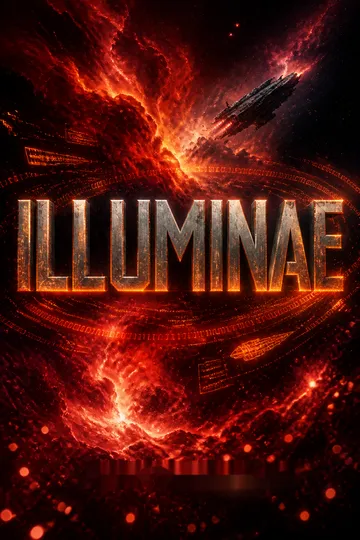
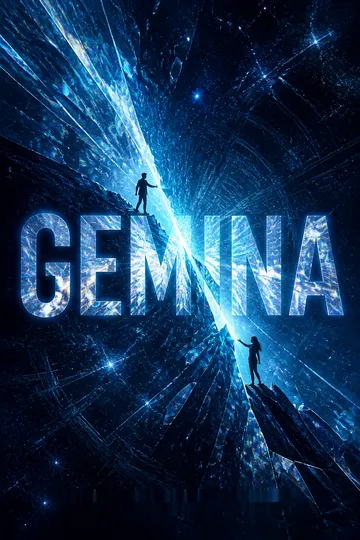
About the Author



Download PDF
Download EPUB
.epub digital book format is ideal for reading ebooks on phones, tablets, and e-readers.








