


Plot Summary
Prologue
An unnamed narrator presents Mia Corvere as a feared killer whose life has ended and whose violence helped destroy the Itreyan Republic. The narrator claims to have known and loved her, but warns that the stories told about Mia have blurred the person beneath the legend.
That promise frames the novel as both a confession and a correction: the coming account will show how a bereaved child became an assassin, while leaving open whether anyone, even someone who loved her, can truly explain what she was.
The frame makes reputation part of the plot before Mia appears. She is already a ruinous public figure, yet the narrator insists that fame has distorted her into a usable story. This creates a tension between confession and myth: the account promises intimacy but begins after the catastrophe, when its subject can no longer answer back. The narrator's affection may humanize Mia, but it cannot make the coming violence innocent. From the outset, the reader must hold both versions together, the girl shaped by political cruelty and the killer responsible for what she does with that shaping.
A Father Hanged
At ten, Mia Corvere watches the Senate execute her father, Darius, a general condemned for joining a rebellion against the Republic. Consul Julius Scaeva announces the sentence while the crowd jeers, and Mia's mother, Alinne, forces her daughter to keep watching. Darius dies before Mia can understand the charges or the politics behind them.
Scaeva then claims the Corvere estates and orders Alinne arrested, along with Mia's baby brother, Jonnen. When Alinne begs him to spare Mia, Scaeva appears to agree, but his men carry the child away to be drowned. The family that once sheltered Mia is dismantled in public and in private, leaving revenge as the first shape her grief can take.
The execution is not merely a family tragedy. It is a civic performance designed to make power visible and dissent frightening. Mia's mother compounds the injury by insisting that her daughter witness it, turning survival into an act of forced attention. The lesson Mia receives is therefore double: institutions can rename political defeat as treason, and private feeling offers no protection from public violence. Her later fixation on remembering is not simple vengeance. It is an attempt to resist the official version of events, even as the very act of memory binds her to the violence she wants to answer.
The Shadow Intervenes
As guards carry Mia away in a barrel to kill her, darkness gathers around her and her mother's gravebone dagger appears inside the confined space. Mia grips it and stabs one guard through the eye when the men open the barrel. She escapes into Godsgrave's crowded lower streets, where a shadow creature begins following her and drinking down her fear.
After thieves beat her and steal her family brooch, the assassin Mercurio intervenes, takes her in, and offers a way to survive. He trains her for six years in stealth, weapons, languages, and poisons, insisting that she give up the safety of her old identity. Mia grows into a disciplined apprentice, though the shadow at her feet remains her most intimate and unsettling ally.
Mercurio's rescue gives Mia a future, but not a return to childhood. His apprenticeship translates helplessness into skills while preserving the violence that caused her need for those skills. The shadow creature provides another kind of aid: it reduces fear, making action possible before Mia understands the cost of relying on it. Together, mentor and shadow become competing models of safety. Mercurio teaches control through practice; the creature offers courage through dependence. Mia's later struggle to distinguish strength from borrowed fear begins here, in the moment survival first feels like power.
A First Ending
At sixteen, Mia returns to the man who executed her father: Augustus Scipio, the Senate's hangman. Before carrying out the killing, she pays a sweetboy to share her first sexual experience, wanting to know desire before she risks dying. The encounter is awkward and painful, but it gives her a brief sense of choosing something for herself.
She then enters Scipio's room under a cloak of shadows and kills him, taking his teeth as a trophy for the Red Church. Mercurio returns her gravebone dagger and directs her to a ship bound for Ashkah, where the Church is hidden. Mia leaves him with affection and uncertainty, carrying the first completed step toward the revenge that has organized her life.
Mia's paired acts of intimacy and murder make agency feel newly available, but neither experience matches the meanings she imagined for it. Sex is not a transformation into adulthood, and killing is not a clean moral payment for her father's death. Both leave her with bodily evidence rather than certainty. Her decision to leave for the Red Church follows from that mismatch: she has learned that desire alone cannot protect her, and that one successful killing will not reach the powerful men behind the execution. Training becomes the bridge between private grievance and political ambition.
Last Hope's Wrong Tithe
On the voyage to Ashkah, Mia threatens a sailor who harasses her, then uses her shadow and knife to throw him and his accomplice overboard. The captain decides she is dangerous enough to leave alone. At Last Hope, Mia brings Scipio's teeth to the innkeeper, Fat Daniio, believing she has reached the Red Church's entrance. Daniio has no idea what she means, and the ship sails without her.
While she waits, a young traveler named Tric arrives carrying his own offering for the same goddess. He is short for a Dweymeri and bears rough tattoos, but his alertness and sword skill impress Mia. After he catches her watching him, they recognize that both are seeking the Church and agree to search the Whisperwastes together.
The mistaken tithe punctures Mia's belief that preparation can make institutions legible. She has followed Mercurio's directions carefully, yet a difference in language and custom leaves her stranded. Her response is not to retreat but to observe, test, and recruit. Tric enters as both potential partner and rival, another outsider whose visible difference complicates the Republic's categories of belonging. Their early rapport is built less on trust than on mutual competence: each sees that the other might be useful, and each is curious enough to risk cooperation.
The Desert's Test
Mia and Tric track a supply caravan across the Whisperwastes, where a sand kraken attacks and nearly drags away Mia's stolen stallion. Mia drives the beast off with a jar of Fat Daniio's punishing chili, and the two travelers continue toward the mountains. A veiled woman named Naev ambushes Tric, tests Mia in a knife fight, and identifies her shadow-working as dangerous in the desert because it attracts krakens.
When the creatures pursue them, Mia turns back to rescue Naev, while Tric brings the wounded woman to safety. Naev points them toward an unremarkable peak. Her guidance brings them to the Red Church's hidden mountain, but not before she is mauled and left near death.
The desert makes Mia's talent costly in a literal, ecological sense: the Dark is not private power but a signal that draws predators. Her rescue of Naev is therefore a choice against easy self-preservation, while Tric's return shows that their partnership is already more than a contest of skills. Yet reaching the Church requires accepting a world where mercy and danger arrive together. Naev becomes their guide precisely because Mia refuses to treat her as disposable, foreshadowing the conflict between the Church's instrumental morality and Mia's remaining capacity for care.
Names Beneath the Mother
At the Quiet Mountain, Mia and Tric submit their trophies and pass a test designed to turn them against each other through rage and desire. The Church admits them as acolytes beneath the statue of Niah, the Night Mother, where Mia vows to serve. She meets Jessamine, another child of the failed rebellion, who blames Darius for her family's ruin and rejects Mia's attempt at solidarity.
The next morning, the Dweymeri novice Floodcaller is found with his throat cut. Tric had fought him at the first meal, so suspicion falls quickly on him, but the Ministry offers no clear answer. The acolytes learn that only a few will become Blades; the rest must compete for survival and status inside the mountain.
The Church transforms political injury into institutional selection. Nearly every novice carries a private history of violence, but the school treats those histories as raw material rather than reasons for compassion. Jessamine's hostility is especially consequential because it reveals that shared oppression does not automatically produce solidarity; competing accounts of the rebellion divide the children it orphaned. The unexplained murder of Floodcaller makes the school's rules feel unstable from the start. Mia has reached the refuge she sought, only to discover that it reproduces the uncertainty and coercion from which she hoped to escape.
The Price of Shadows
In her first sword lesson, Mia uses the Hall's shadows to immobilize Shahiid Solis and nick his cheek. The blind instructor breaks free, disarms her, and cuts off her left arm for bringing shadow-working into a lesson about blades. Sorcerii Adonai and Marielle keep her alive and restore the limb, though it remains bruised and painful.
The Revered Mother explains that the siblings' Ashkahi magic carries its own costs: Adonai hungers for blood, while Marielle's flesh-weaving damages her own body. Mia later visits Marielle with Aalea, who has her face subtly altered so she can attract attention when useful and disappear when not. The Church's gifts arrive inseparable from pain, bodily change, and obedience.
The severed arm turns Mia's confidence into a material limit. Her gift can win a moment, but it cannot replace the discipline she has neglected, and Solis makes that distinction public through injury. The sorcerii complicate any simple equation between power and freedom: their abilities are impressive precisely because their costs are visible and ongoing. Mia's altered face introduces another form of institutional authorship, as the Church reshapes identity for professional use. The body becomes both instrument and evidence, something its owner may negotiate but never wholly control.
The Blood Walk
Aalea's contest sends the girls to Godsgrave in search of secrets, and Adonai transports them through a pool of blood using the Church's hidden Blood Walk. On Mia's first outing, she meets Mercurio near the Luminatii headquarters. A centurion recognizes the dagger she used to escape as a child, and soldiers seize her before she can return to the Church.
Confessors drown and beat her, demanding to know how she reached Godsgrave. Mia refuses to reveal the Red Church. When they leave her chained for further torture, she discovers she can harden the darkness inside herself enough to turn the manacles' bolts. Cassius then appears and reveals the ordeal was a Church loyalty test. Mia returns battered, but unbroken.
The test converts loyalty from an abstract virtue into a bodily limit: Mia must decide what pain she will accept rather than disclose. Her escape depends on a deeper relation to the Dark, one she cannot yet explain or fully command. Yet the Church's method is ethically compromised, since it manufactures a real danger and calls survival proof of fitness. Mercurio's presence outside the test also exposes the cost of secrecy between mentor and pupil. Mia trusts him, but he has allowed her to enter a system that tests her by deception.
A Masquerade in Godsgrave
At Great Tithe, Aalea gives the acolytes fine clothes and invitations to a masquerade at Praetor Marconi's palazzo. Mia dances with Tric and briefly experiences the city of her childhood as something other than a place of loss. The guests toast Scaeva, and the moment is broken when Luminatii soldiers identify the Church's masks and move to arrest the novices.
Mia, Tric, Ashlinn, and the others fight their way through the ballroom and escape by carriage and canal. Back at the Church, Aalea explains that the celebration was a reminder, not a reprieve: the acolytes may mingle with ordinary life, but the Church expects them to remember what they serve. One novice, Tovo, does not return alive.
The masquerade briefly restores Mia's access to a former self: she can dance, recognize luxury, and feel the pull of belonging. The raid collapses that possibility without making it meaningless. The contrast shows how a polished civic order depends on exclusion and surveillance, especially when the Luminatii can identify and seize anyone marked as an enemy. Aalea's lesson is manipulative, but its cruelty has a precise function: she teaches the novices that pleasure is permitted only as a temporary instrument, never as an alternative allegiance.
The Light Finds Mia
Jessamine steals Mouser's sanctified Trinity medallion and uses its light to make Mia collapse in pain. Mister Kindly flees for the first time, leaving Mia exposed to fears he has long consumed for her. She and Tric search the forbidden athenaeum for answers about darkin, encounter a many-headed bookworm, and learn from Chronicler Aelius that the library contains books lost, burned, or never written.
Mia later seeks Tric's company after a nightmare, and their attraction turns intimate. Her choice to face fear without Mister Kindly marks a change in their bond, though neither can promise that desire will survive the Church's demands.
The Trinity is more than an anti-magic weapon: it reveals that Mia's dependence on Mister Kindly has sheltered her from emotions she has never learned to metabolize. His departure makes fear newly legible, but also forces her to experience it as her own rather than as a substance to be removed. Tric offers a different kind of support, grounded in touch and mutual vulnerability. The contrast is important: one relationship manages Mia's inner life by subtraction, the other invites her to remain present inside it.
Carlotta's Bloodied Notebook
Carlotta, a former slave and Mia's fellow poison scholar, is found dead at her workbench with her throat cut. Jessamine had threatened her, but the Revered Mother finds Carlotta's blood on Mia's bed linen and notes that the killer was left-handed. Mia is confined and accused of murdering the rival whose work she hoped to surpass.
Tric could clear her by admitting he spent the night in Mia's room, but that would expose him to punishment for breaking curfew. He speaks anyway. The Ministry suspends Mia's sentence but orders both acolytes scourged. Marielle tears open their backs while Adonai restores the blood, and Mia refuses Mister Kindly's help so she can endure the pain herself.
The accusation exposes how easily the Church's rhetoric of universal suspicion can become a tool for deciding who deserves protection. Evidence against Mia is circumstantial, yet the institution initially prefers discipline to careful inquiry. Tric's testimony is an act of care that carries a real price, while Mia's refusal of supernatural relief turns endurance into self-knowledge rather than spectacle. Still, the punishment is not redemptive. The Church forces intimacy and pain into its training regime, making loyalty to one another both emotionally meaningful and institutionally dangerous.
The Prison She Broke
During the scourging, Mia relives the truedark when she was fourteen and tried to rescue her mother and Jonnen from the Philosopher's Stone. She finds Alinne alive but broken by years of imprisonment, and learns Jonnen has died. When Alinne mistakes Mia for a demon, she runs from her daughter and is fatally stabbed by another prisoner.
Mia's grief releases a storm of shadow-power. She destroys much of the prison and crosses Godsgrave to attack the Basilica Grande, where Scaeva, Cardinal Duomo, and Remus are protected by holy light. She kills soldiers and breaks the statue of Aa, but the Trinity and Remus's sunsteel drive her away. Her first direct assault on her enemies ends in failure and more deaths.
The memory reinterprets Mia's apparent fearlessness as an adaptation with a cost. Mister Kindly has not erased the trauma of the Stone; the episode shows how rage can suppress fear until grief overwhelms the distinction between protection and destruction. Mia's mother's death is especially devastating because the rescue she imagined cannot restore the person she hoped to save. Her attack on the Basilica is politically legible as vengeance, but psychologically it is also a failed attempt to make public power answer a private loss. The scale of her magic grows as her self-command collapses.
Mia Learns to Lose
As initiation approaches, Mia secretly trains with Naev and hides how much her sword skill has improved. She also works to solve Spiderkiller's deadly antidote puzzle. During the Hall of Songs contest, Mia defeats several opponents, then plants a false antidote for Diamo after he and Jessamine have obstructed her work. Diamo tests it and dies in agony.
Mia defeats Jessamine, but loses the final to Tric after provoking him with the insult that wounded him most. He wins Solis's favor, while Mia preserves her chance to finish top of Truths. Tric realizes she manipulated the match for his benefit and ends their relationship. Mia has gained a strategic advantage, but the intimacy she hoped to protect has become another thing she has used.
Mia's competence now includes deception, and the novel refuses to present that skill as morally neutral. She retaliates for Carlotta's murder through a poisoned experiment, then engineers a loss in a contest so Tric can advance. The two acts differ in motive, but both reveal her growing willingness to control other people through information and emotion. Tric's anger is not a misunderstanding; he recognizes that affection has become one more lever in Mia's repertoire. Her success in the Church's terms therefore produces a relational defeat that no contest can repair.
The Contest's Final Tricks
Hush gives Mia Carlotta's coded notebook, allowing her to finish Spiderkiller's antidote and earn top place in Truths. In the same gathering, he defeats Ashlinn for Pockets by presenting a flawless clay copy of the Revered Mother's key, then breaking the duplicate to prove he stole the real one. Ash loses the contest she expected to win.
Mia, Hush, and Tric are summoned as likely initiates, and Ash arrives with Aalea's favor after securing a secret of her own. Yet the final trial is not another contest of skill. Drusilla presents Mia with a bound, innocent boy and demands that she kill him to become a Blade. The Church has brought Mia to the threshold of the role she wanted, then made obedience its price.
The contests reward distinct forms of intelligence: chemical inference, silent observation, and social manipulation. Hush's key trick demonstrates that the school's measures of success are themselves vulnerable to performance, while Mia's victory depends partly on another person's work and trust. The surprise of Ash's advancement also unsettles the assumption that competitive rank can fully predict belonging. Drusilla's final demand then strips away the game's safety. The Church stops asking whether Mia can kill and asks whether she will surrender her own judgment when ordered.
Mia Refuses the Blade
Mia accepts the dagger Drusilla offers but refuses to kill the bound boy, deciding that revenge cannot justify murdering someone innocent. The Church denies her initiation, and Mercurio takes her back to Godsgrave to reconsider her future.
Once Mia has left, Ashlinn kills Tric on the Sky Altar and joins her brother Osrik in a plot to capture the Church's leaders. They intend to use Carlotta's poison to incapacitate the initiation feast, then guide Remus's Luminatii through the Blood Walk.
Ash's betrayal reaches beyond her rivalry with Mia: she is willing to sacrifice the Church, Tric, and the people who trusted her to avenge her father. The choice Mia makes to remain merciful leaves her outside the institution just as its most dangerous crisis begins.
Mia's refusal is not a declaration that violence is always wrong; she has already killed many people. It is a narrower, harder boundary: she will not make a blameless child pay for the injuries inflicted on her family. That distinction costs her the professional identity she has pursued for years. Ash's decision supplies a dark counterpoint. Both girls are shaped by bereavement, but Ash converts grief into permission to sacrifice others, while Mia finally rejects that logic. The contrast turns their shared history into a moral divergence rather than a simple contest between rivals.
The Betrayal at the Porkery
At Mercurio's shop, Mia notices a coded impression in Carlotta's notebook and recognizes a large dose of Swoon, then returns to the Porkery to warn the Church. She finds Remus's Luminatii already crossing through Adonai's blood pool, with Osrik holding the injured Marielle hostage.
Mia stays hidden until the troops move upstairs, then attacks the guards, frees Adonai, and captures Osrik. Under questioning, he confirms Ash poisoned the feast and used Carlotta's work; Mia also learns Ash was responsible for Tric's death.
She lets Adonai take Osrik into the blood pool and escape with Marielle, then heads into the Mountain alone. The invasion has turned Mia's failed initiation into the only chance to prevent the Church's leaders from being carried away.
The notebook turns a piece of forensic residue into political intelligence: Carlotta's work, once treated as a competition, becomes the means to expose a coup. Mia's return also reverses her exclusion from the Church. The institution rejected her moral judgment, but its survival now depends on that judgment and on her ability to act without its authority. Learning that Ash killed Tric gives the mission a personal charge, yet Mia first secures Adonai and Marielle. Her priorities are no longer reducible to vengeance, even when grief would make that reduction tempting.
The Mountain Runs Red
Mia fights upward through the Quiet Mountain, using shadow-work and wyrdglass to kill Luminatii before they can remove Cassius and the Ministry. She rallies Naev and Jessamine, who set aside their hostility to stop Remus escaping through the desert.
When the soldiers leave with their captives, Mia hides beneath a wagon and cuts its couplings, feeding the rear contingent to pursuing sand krakens. She catches up with the lead train, but Remus's archers kill her camels and overturn her wagon.
In Last Hope, Mia poisons the Luminatii at Fat Daniio's inn, climbs the garrison tower, and releases Cassius and the Ministry. Ash returns with the Trinity, weakening Mia and Cassius. A soldier mortally wounds Cassius; Mia then kills Remus by stepping through his shadow.
The assault makes the novel's supernatural systems operational rather than ornamental. Mia uses darkness to control bodies and space, while the Church's blood route and the desert's predators shape the armies' choices. Yet her survival depends equally on improvised material tactics: severed wagon couplings, poison in a meal, and a terrain others underestimate. The battle also tests whether Mia can fight for a community she has been rejected by. She does, but the victory is not clean: Cassius dies before answering her questions, and Remus's death cannot return her family or Tric.
An Oath Without Answers
Before dying, Cassius marks Mia's face with his blood, completing the anointing she had expected to receive at initiation. The Ministry survives, and Mia returns to the Quiet Mountain with Naev and the remaining Church members. The dead are remembered in the Hall of Eulogies, where Mia carves Tric's name into an otherwise blank tomb despite knowing his body is lost.
Marielle later restores Naev's face, repaying the debt Mia incurred by saving her. Mia is formally a Blade, but the questions she carried into the Church remain unanswered. The final gift from Chronicler Aelius offers a new lead rather than closure: an ancient book describing darkin, hunger, and a vanished city marked where Godsgrave now stands.
Mia receives the identity she pursued, but it arrives through loss rather than institutional welcome. Cassius's blood recognizes her as a Blade while withholding the explanation she wanted most, making initiation both achievement and bereavement. The carved name for Tric resists the Church's practice of leaving its dead anonymous; Mia makes remembrance a small act of refusal. Naev's restored face further suggests that repair is possible without undoing harm. The book's arrival shifts the ending from resolution to inquiry, granting Mia a path forward while denying the comfort of a final answer.
Epilogue
In Dweym, Mia finds Swordbreaker, Tric's grandfather, alone and kills him with a slow poison, honoring the promise she made to Tric. She then returns to the Red Church, where the surviving disciples memorialize their dead and accept her as a Blade. Naev has her face restored, and Aelius sends Mia an ancient volume called The Hungry Dark.
Its strange illustrations and maps suggest that darkin may be drawn to one another, and that a vanished Ashkahi city and the site of Godsgrave are tied to a mystery neither Mister Kindly nor Eclipse can explain. Mia has gained a place in the Church, but the book opens a far larger question about what she and her shadow truly are.
The epilogue gives Mia a form of closure that remains morally uneasy. Killing Swordbreaker fulfills a promise to Tric, but it also continues the chain of retaliatory violence that has shaped her since childhood. The act is intimate rather than political: she does not overthrow a regime, she answers one person's cruelty to someone she loved. The book then refuses to let revenge serve as the story's final meaning. Its maps and images widen the scale from personal history to a buried cosmology, suggesting that Mia's identity is not only a product of trauma, training, or choice. Knowledge remains possible, but not yet secure.
Analysis
Nevernight makes revenge both Mia's engine and its central danger. The Republic's violence is concrete: a public execution, a confiscated estate, a mother imprisoned, and a child left to convert grief into skill. Mia's response is not treated as a simple moral correction to injustice. She kills people who have harmed her, then increasingly learns to manipulate allies and competitors as efficiently as enemies. The narrative repeatedly asks whether a worthy target can make any method harmless, and Mia's refusal to kill an innocent child is the point at which she finally draws a line the Church will not draw for her.
The Red Church is a refuge from Scaeva's order, but it is not an ethical alternative to that order. Both institutions use tests, secrecy, and exemplary violence to secure obedience. The Church's rituals can even turn care into leverage: Tric's loyalty saves Mia from punishment, while Mia's strategic choices later damage the same intimacy. Their relationship matters because it gives her a form of recognition not based on performance, then shows how readily she can sacrifice that recognition to secure another person's future.
Light and darkness work as material conditions, religious ideologies, and psychological states. The Trinity's light injures Mia, but Mister Kindly's removal of fear does not cure her trauma. Her power grows when she confronts the darkness within, yet its greatest release is also destructive. Magic thus has no clean moral direction; it amplifies need, grief, and choice. By ending with Mia accepted as a Blade but still ignorant of what she is, the novel refuses to equate institutional success with self-knowledge. The final book promises an explanation while widening the mystery, leaving Mia's next task not simply to avenge the dead, but to decide what kind of person her power permits her to become.
Review Summary
Nevernight receives mostly positive reviews, praised for its dark, gritty world-building, complex characters, and intricate plot. Readers appreciate the unique writing style, though some find it initially challenging. The story of Mia Corvere, a young assassin seeking revenge, captivates many with its blend of violence, humor, and unexpected twists. While the graphic content and footnotes divide opinions, most reviewers consider it a standout fantasy novel, eagerly anticipating the sequels.
People Also Read







Characters
Mia Corvere
shadow-marked apprenticeMia is a quick-minded, observant girl whose childhood privilege collapses when the Republic executes her father and imprisons her family. Mercurio trains her as an assassin, while her shadow companion gives her an uncanny ability to use darkness and blunt fear. She is not naturally cold: she notices humiliation, remembers kindness, and forms attachments even when she claims not to need them. Her central conflict is between revenge as a source of purpose and the possibility that pursuing it will remake her into the kind of person she hates. Mia's sharp humor and strategic intelligence help her survive, but her hardest choices concern what those strengths are allowed to serve.
Tric
wounded Dweymeri heirTric is a skilled, guarded young Dweymeri whose small stature and mainlander name invite questions about where he belongs. He is physically capable, perceptive, and notably sensitive to humiliation, though he often masks vulnerability with irritation and humor. His bond with Mia grows from practical cooperation into attraction and trust, making their competition at the Red Church emotionally consequential. Tric's story is shaped by his effort to define himself beyond the violence and inherited judgments attached to his parentage. He seeks respect not as a favor but as proof that other people do not get to determine his worth.
Mercurio
hard-bitten mentorMercurio is an aging assassin and antiquities dealer who finds Mia after she escapes the men sent to kill her. He trains her through practical lessons, riddles, and trials that teach patience as much as violence. His gruffness conceals deep affection, though he often withholds information because the Red Church demands secrecy. Mercurio sees Mia's potential clearly, but his faith in her toughness sometimes leaves her to face dangers without warning. He represents care expressed through preparation: he cannot undo what happened to her, so he equips her to survive what comes next.
Mister Kindly
fear-eating shadowMister Kindly is a shadow creature who attaches himself to Mia when she is a child in danger. He speaks with a dry, teasing wit and can consume her fear, allowing her to act with unnerving calm. His presence is protective, intimate, and never fully understood, even by Mia. He often warns her when anger or desire is clouding her judgment, though she does not always listen. Their bond raises a difficult question: whether fearlessness gained by removing fear is genuine strength, or a dependence that postpones learning how to endure terror on one's own.
Ashlinn Järnheim
clever apprentice rivalAshlinn is a lively, resourceful acolyte who excels at theft, social improvisation, and reading a room. She is the daughter of a former Church Blade and carries both his training and the weight of his sacrifice. Her humor makes her easy company, while her pride and ambition are visible whenever a contest tests her abilities. Ashlinn becomes one of Mia's closest companions in the Mountain, offering friendship without asking Mia to soften her edges. Her relationship with her brother and father shapes how she thinks about loyalty, inheritance, and what it means to repay a family's losses.
Osrik Järnheim
watchful older brotherOsrik is Ashlinn's older brother, a careful observer who tends to assess danger before acting. He is capable, disciplined, and more restrained than his sister, though his concern for their father's legacy gives him a strong stake in the Church's future. He notices alliances forming among the acolytes and often understands the social temperature before others do. Osrik's composure can make him seem distant, but it is also a means of managing the enormous expectations placed on him and Ashlinn as children trained to continue their father's work.
Jessamine
vengeful fellow orphanJessamine is a fierce, disciplined acolyte whose father was executed after the Kingmaker Rebellion. She holds Mia's family responsible for the deaths and losses her own family suffered, turning shared grief into open hostility. Jessamine is a gifted fighter, ambitious, and unwilling to show weakness in a school where hesitation can be fatal. Her anger is not baseless, but it narrows her ability to distinguish Mia from the political decisions of Mia's father. She embodies the way state violence can keep its victims fighting each other long after its authors have secured power.
Naev
scarred Church HandNaev is a Red Church Hand who guides novices through the Whisperwastes and keeps the Church supplied. Her face bears severe damage, but her movements and judgment remain precise. She tests Mia and Tric rather than offering easy trust, then becomes a valued source of practical knowledge and sword training. Naev understands how institutions can hollow people out, and she warns Mia to protect whatever remains of her identity. Her continued love for Adonai, despite the pain bound up in it, reveals a capacity for attachment that coexists uneasily with the Church's ruthless customs.
Julius Scaeva
smiling republican tyrantScaeva is the charismatic consul who presides over Darius Corvere's execution and consolidates extraordinary political power after the rebellion. His polished manner disguises a ruthless appetite for control; he understands that public ceremony, religious language, and fear can make coercion appear legitimate. To Mia, he is the face of the system that destroys her family. To the Republic, he presents himself as the guarantor of order. That gap between public image and private brutality gives Mia's revenge a political dimension, even when her motives remain intensely personal.
Marcus Remus
wolfish legion commanderRemus commands the Luminatii, the Republic's elite military order, and helped enforce the Senate's defeat of the Kingmaker rebellion. Large, disciplined, and politically shrewd, he treats violence as an instrument of public stability. His authority rests not only on military strength but on the conviction that the Republic's enemies deserve whatever is done to them. Remus's past actions make him a personal target for Mia, but he is more than a single villain: he represents a state that claims moral purity while using force to preserve its own hierarchy.
Darius Corvere
executed rebel fatherDarius is Mia's father, a general and political participant in the Kingmaker rebellion. His public execution becomes the defining wound of Mia's childhood, though the novel makes clear that he was involved in an attempt to overthrow the Senate. Mia remembers his strength and affection, while the Republic brands him a traitor. That contrast matters: Darius is neither a spotless martyr nor the monster his enemies proclaim. His choices helped shape the conflict that destroys his family, and his memory becomes the ground on which Mia builds both her loyalty and her revenge.
Alinne Corvere
unyielding motherAlinne is Mia's mother, a politically astute woman whose fierce will is matched by a severe approach to protection. After Darius's execution, she tries to secure Mia's safety by bargaining with Scaeva, but the bargain cannot free her from the Republic's power. Before the family's fall, she teaches Mia discipline, memory, and the need to master her own mind. Her choices leave Mia with both a model of strength and painful questions about what protection can mean when a parent has almost no power.
Jonnen Corvere
Mia's infant brotherJonnen is Mia's baby brother, too young to understand the political violence surrounding his family. His presence gives Mia a tender responsibility during the aftermath of Darius's execution, and his fate becomes one of the losses she struggles to face. He represents the ordinary future Mia believes she might still rescue, not a political symbol of his own making.
Lord Cassius
enigmatic Blade masterCassius leads the Red Church and is known as one of the Republic's most dangerous assassins. He is controlled, elusive, and sparing with personal truths, even when Mia asks about their shared nature as darkin. His authority comes from both skill and a refusal to explain himself. Cassius treats the Church's survival as more important than an acolyte's comfort, but he recognizes competence when he sees it. Mia's curiosity about him is mixed with unease, because his presence produces a hunger and fear she cannot explain.
Revered Mother Drusilla
Church matriarchDrusilla governs the Red Church with the warmth of a stern caretaker and the authority of a veteran killer. Her gentle manner can make novices feel protected, but she applies the Church's rules without sentiment when survival or secrecy is at stake. She believes the institution must shape its students into dependable instruments, even when that process is cruel. Drusilla's tension between maternal presentation and lethal judgment captures the Church's central contradiction: it offers belonging while demanding that its members surrender ordinary moral protections.
Shahiid Solis
blind sword instructorSolis is the Church's Shahiid of Songs, a blind master of weapons and a brutal teacher. His own past as a survivor of the Philosopher's Stone has left him with a harsh understanding of what it takes to outlast violence. He punishes pride and carelessness with immediate force, believing that a novice who cannot withstand pain will fail in the field. His lessons make Mia confront the difference between a supernatural advantage and earned craft, though his methods blur teaching with abuse.
Shahiid Mouser
theft and disguise tutorMouser teaches the acolytes pickpocketing, disguise, and the social misdirection that can make violence unnecessary. His humor and ease conceal a highly observant mind; he can identify what students have taken before they realize he noticed. Mouser presents theft as theater, a contest of attention in which fingers matter less than understanding what another person expects to see. His lessons broaden Mia's conception of assassination beyond blades and poison.
Shahiid Aalea
masks and seduction mentorAalea teaches the use of charm, beauty, and emotional attention as tools for gathering information. She understands that attraction can create access where force would create suspicion, and she treats self-presentation as a skill rather than a gift. Her own striking appearance has been shaped by Marielle, giving her teaching a personal history of transformation. Aalea is generous in manner but clear-eyed about the gendered power structures her students must navigate.
Shahiid Spiderkiller
poison masterSpiderkiller teaches chemistry, toxins, and the close attention required to handle them safely. Her lessons are dangerous by design, forcing acolytes to think under pressure rather than merely memorize recipes. She values precision and accepts no comforting distinction between knowledge and its consequences. Carlotta and Mia's skill in her hall reveals that intellectual discipline can be as consequential as physical strength, while Spiderkiller's severity shows how the Church turns expertise into a test of nerve.
Carlotta Valdi
runaway poison scholarCarlotta is a former educated slave who carries her knowledge and self-possession into the Red Church. She speaks little, observes closely, and excels at poisonwork, relying on discipline rather than charm. Her branded past shapes how she understands ownership, dignity, and the identities imposed by others. Carlotta's dry humor and careful intelligence make her a natural ally to Mia, even though the Church's contests place them in direct competition.
Hush
silent, observant noviceHush is a pale, beautiful acolyte who communicates through gestures and a writing board. His silence makes him difficult for the other novices to read, but he notices more than most and moves with exceptional stealth. His guardedness has roots in an earlier life of exploitation, though he rarely shares his history. Hush's actions suggest a personal code that survives even in the Red Church's competitive atmosphere, making kindness, observation, and self-interest difficult to separate.
Speaker Adonai
blood-speaking sorcererAdonai is an Ashkahi sorcerer who uses blood to move people through the Church's hidden routes and to influence those whose blood he possesses. His beauty and languid manners obscure a self-centered nature and an endless physical hunger. He is devoted to his sister Marielle, though his relationships beyond her are far less tender. Adonai's magic makes the Church's reach possible, while its cost shows how power can become a form of permanent appetite.
Weaver Marielle
flesh-weaving sorceressMarielle can reshape flesh with extraordinary precision, mending wounds or changing faces without ordinary tools. Her own body bears the damage caused by that art, and she takes pleasure in provoking fear and pain in others. Her bond with Adonai is close and fiercely protective, but her treatment of Naev reveals how possessiveness can become cruelty. Marielle embodies the cost of power in its most literal form: she can alter everyone else's body while losing control over her own.
Swordbreaker
Tric's unforgiving grandfatherSwordbreaker is the bara of the Threedrake clan and a powerful authority in Dweymeri society. He prizes lineage, strength, and conformity, judging people by inherited categories rather than their individual choices. His rejection of Tric is part of the wound that drives the younger man's search for recognition. Swordbreaker represents the family authority that can be as coercive as the Republic's political institutions, especially when tradition becomes an excuse to deny someone their humanity.
Fat Daniio
hapless innkeeperDaniio runs the Old Imperial in Last Hope, where Mia mistakenly believes the Red Church's entrance can be found. He is practical, self-interested, and often confused by the travelers who arrive in his inn. His misunderstanding delays Mia's progress, while his food and lodging later become useful parts of her improvised plans.
Plot Devices
The Three Suns
light as hostile powerItreya's three suns make true darkness rare, shaping sleep, religion, architecture, and the balance of Mia's magic. She can gather shadows, hide within them, and eventually move between them, but her power is strongest where sunlight has never reached. The Light is not merely an environmental obstacle: sanctified objects such as the Trinity medallion can cause her physical pain and drive Mister Kindly away. This cosmology gives political and psychological force to the conflict between Aa and Niah, while making every patch of darkness a resource with limits.
Mister Kindly
fear traded for courageMister Kindly is a shadow creature attached to Mia from childhood. He drinks her fear, helping her remain calm in danger, and grows stronger through that exchange. His presence also provides companionship and a running counterpoint to Mia's bravado. When he is driven from her, she discovers that the terror he consumed has not disappeared; it has only been kept at a distance. The device therefore makes courage a relationship rather than a fixed trait, asking whether protection that removes fear can also delay a person's ability to face it.
The Blood Walk
secret passage through bloodSpeaker Adonai can use his blood, placed in pools at Church sites, to transport authorized disciples across the Republic. A traveler enters one pool and emerges from another, making the Red Church far more connected than its hidden mountain suggests. Because the route depends on Adonai and the secrecy of the pools, it is both a logistical miracle and a strategic vulnerability. Mia's use of the Walk takes her to Godsgrave, while the Luminatii's knowledge of it later enables their invasion of the Church.
The Red Church
school as survival contestThe Red Church trains assassins through separate disciplines: weaponry, theft, poison, and masks. Each Shahiid sets a contest that rewards the top novice, while dangerous lessons and a shrinking cohort teach the acolytes that failure can mean death or permanent service. This structure provides the novel's central setting and a sequence of practical tests, but it also produces its moral pressure. Students learn to treat one another as rivals even as they form genuine attachments, making the Church both a refuge from political oppression and an institution that reproduces its logic of expendability.
The Trinity
sanctified light exposes MiaThe Trinity is a symbol of Aa's three suns, worn by priests and those who draw authority from the Light. A genuinely blessed medallion overwhelms Mia and destabilizes her shadow companion, revealing that her gift is vulnerable to the faith and power of Aa's worshippers. Jessamine uses the medallion to threaten Mia, and Ashlinn later carries it into the final confrontation. Its changing role ties religious symbolism to tangible force: the Republic's theology is not only propaganda, but a weapon that can make Mia's own nature a liability.
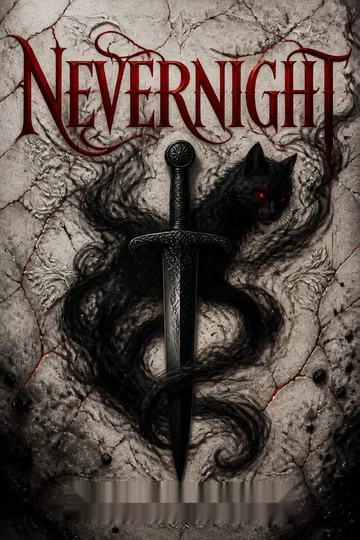
The Nevernight Chronicle Series
About the Author
Other books by Jay Kristoff






Download PDF
Download EPUB
.epub digital book format is ideal for reading ebooks on phones, tablets, and e-readers.








