


Plot Summary
Prologue
On a failing farm beside the poisoned deadlands, ten-year-old Hikita waits outside while his mother gives birth. He resents the new child, whose father abandoned the family, and knows another mouth may mean hunger. When the baby cries, his younger brother Tetsuo rushes inside.
Hikita stays among the blood-lotus plants and sees a small, blue-skinned demon emerge from the crop, red eyes fixed on him. The newborn’s arrival and the demon’s appearance coincide beneath a shaking, contaminated island, making birth feel less like a beginning than a breach.
The prologue places human poverty and supernatural horror in the same landscape, refusing to let either explain the other away. Hikita’s resentment is not abstract cruelty: he fears that scarce soil and food cannot sustain another child. The oni arrives as the world quakes, but the surrounding damage is already man-made, produced by the Guild’s industry and poisoned cultivation. Birth therefore carries two meanings at once: vulnerable life entering a violent world, and the possibility that something long buried is beginning to return. The opening prepares the novel’s final crisis without yet explaining its cause.
The Rebellion Splits
At the Kagé stronghold, Yukiko wakes from a vision of the twins she carries, then finds the surviving rebels arguing over how to answer Daichi’s capture. She urges them to seek Fox protection and work with a dissident faction inside the Lotus Guild. Kaori, Daichi’s scarred daughter, rejects both proposals, blaming Yukiko’s trust in Kin and insisting the rebels must stand alone.
When a Guild surveillance drone is discovered, Kaori wants the dissidents exposed over the radio. Yukiko warns that this will get them killed. Their argument nearly becomes a sword fight before Buruu and Kaiah intervene. Yukiko leaves for Yama with anyone willing to come, refusing to make revenge the rebellion’s law.
The split is not simply a clash between a forgiving leader and a vengeful lieutenant. Kaori’s distrust grows from an immediate, intimate wound: her father has been captured, and the person she associates with that loss was once Yukiko’s beloved. Yukiko’s decision to leave is therefore both ethical and strategic. She recognizes that a movement can reproduce the coercion it opposes when pain becomes a license to harm the uninvolved. Her departure makes that principle costly: she gives up authority over the original Kagé rather than demand obedience to her conscience.
Kin Faces the Trigger
In a Lotus Guild cell, Daichi endures beatings and worsening blacklung while Kin, newly welcomed back and promoted, is ordered to execute him. Kensai and the Inquisitors want proof that Kin has severed his ties to the Kagé. Kin aims the Guild’s iron-thrower at Daichi, but the weapon clicks empty. His public hesitation keeps Daichi alive for the moment, though neither man can acknowledge what it means.
Meanwhile, Ayane slips into Kin’s quarters hoping to see him, only to be found by Inquisitors. They beat her to death for having experienced intimacy and attachment outside Guild control. Kin’s promotion thus offers no safety: the Guild tests loyalty through violence, and its masters watch him as closely as his former allies do.
The scene makes obedience a performance demanded by institutions that do not trust their own members. Kin must appear willing to kill Daichi, while the empty weapon reveals how little the Guild’s ritual proves about genuine belief. Ayane’s death sharpens the cost of that performance: the Inquisition treats desire and bodily autonomy as contamination, then calls its punishment a form of care. The chapter also creates uncertainty around Kin without resolving it. His silence can look like guilt, fear, or strategy, and that ambiguity becomes a pressure point for everyone who once trusted him.
Hiro Marches North
After Aisha’s funeral, Hiro turns his grief into a vow to destroy Yukiko and the Kagé. The Guild’s Second Bloom, Kensai, plans a fifteen-day march toward the Iishi with the Earthcrusher, a towering war machine built to crush the rebellion.
Hiro wants speed and revenge; Kensai insists the Fox and Dragon clans must be brought under Guild influence as well. Hiro’s parents arrive before his departure. His father praises the coming death as the only honorable response to failure, while his mother cannot bring herself to endorse it.
Hiro leaves without accepting her plea to reconsider, still measuring his worth by his father’s code. The prosthetic arm the Guild gave him becomes a constant reminder that his power depends on the same masters he serves.
Hiro’s grief is real, but the language available to him turns grief into an obligation to die. His father’s approval reinforces a model of masculinity in which feeling is shameful and self-destruction restores status. Kensai exposes the contradiction beneath Hiro’s authority: the Daimyo can command soldiers only while the Guild supplies fuel and machinery. Hiro nevertheless clings to revenge because it gives him a purpose that feels more solid than the life he might have chosen. The Earthcrusher externalizes that bargain, immense and impressive, yet dependent on a system that owns its operator.
Hana Takes Flight
Hana and her brother Yoshi arrive at the stronghold carrying the injuries and losses of Kigen: Hana has lost an eye, Yoshi has a head wound, and both mourn Jurou and their cat Daken. Hana reaches through the Kenning to Kaiah, the female thunder tiger, and discovers that the beast can answer her. When Yukiko explains that the Kagé are splitting, she asks the siblings to come to Yama with her.
Hana agrees, unwilling to return to the gutters after seeing a cause worth fighting for. Yoshi follows aboard the sky-ship Kurea, while Hana rides Kaiah through the clouds for the first time. Their flight gives her a new kind of belonging, though Kaiah warns her that Buruu carries a history of betrayal.
Hana’s bond with Kaiah grows through an awkward but emotionally revealing exchange: the tiger understands pack loyalty, while Hana is trying to name friendship and grief. Neither needs to become human for the connection to matter. The flight also shifts Hana’s sense of scale. She has lived by surviving the next alley, meal, or threat; from above, she sees both the beauty of Shima and the damage hidden by city streets. Her decision to join Yukiko is not a simple rescue. Hana chooses participation, and the choice begins to make her visible to a world that has spent years telling her she is no one.
Yama Burns Red
As Yukiko’s group reaches Yama, the Guild chapterhouse is already under attack. Kaori has broadcast the rebels’ existence and named Misaki, destroying years of secrecy. Loyalist Guildsmen pursue their own dissidents through the streets while the Fox forces try to contain the fire.
Yukiko and Hana identify rebels by the red paint on their armor and help them escape to the Kurea. During the fighting, a Guild dissident destroys the flagship Lotus Eater by blowing up its gas-filled envelope, killing the Second Bloom aboard and sacrificing himself.
Yukiko gathers the remaining rebels, including Misaki, but their losses make her apology inadequate. The attack has turned internal resistance into a public war and deepened the divide between Yukiko and Kaori.
The broadcast demonstrates how exposing a truth can still be an act of violence when the exposed have no control over the consequences. Kaori believes public pressure may force the Guild’s hidden dissidents to fight; instead, it gives their enemies targets, including children and families. Yukiko’s rescue work is practical rather than rhetorical: she distinguishes the rebels in the smoke and offers them a ship. Yet the Lotus Eater’s destruction shows the terrible cost of resistance when a person’s only available weapon is self-annihilation. The scene complicates the idea that shared enemies automatically produce trustworthy allies.
A Fox’s Bargain
Yukiko brings her refugees and Guild dissidents to Kitsune-jō, where Daimyo Isamu challenges her responsibility for Yama’s bloodshed and for Yoritomo’s death. She does not claim innocence. Instead, she points to the Guild’s control of fuel and its plan to install Hiro as Shōgun, then offers to defend the Fox capital when the Earthcrusher arrives.
Isamu accepts sanctuary for her allies, partly because he refuses to kneel to Hiro and partly because Yukiko appeals to his pride as a ruler. At court, the surviving Guild rebels reveal that the Inquisition, marked by serpent tattoos, may control the Guild from within. Isamu’s agreement gives the fragmented resistance a fortress, an army, and a chance to meet the coming invasion together.
Isamu’s bargain rests on overlapping motives rather than sudden moral conversion. He resents the Guild’s control and Hiro’s claim, while Yukiko needs his defenses and fleet. Her refusal to swear allegiance to his throne keeps the alliance from becoming another exchange of obedience for protection. The disclosure about the Inquisition introduces a deeper enemy within the institution the rebels thought they understood. It also changes the meaning of Guild doctrine: what presents itself as purification may be serving a concealed political and religious purpose. Cooperation begins here as a contingent pact, not a guarantee of trust.
Kawa Falls
Before the allies can prepare, a Morcheban fleet attacks Kawa, capital of the Dragon clan. Aleksandar Mostovoi leads the invaders through the poisoned rain and takes part in the brutal assault on the fortress.
He faces a Dragon samurai commander who fights to protect his people, then kills him with a tactical feint rather than a straightforward contest of strength. The man’s family portrait and flag make the victory personal in a way Aleksandar cannot dismiss.
At Yama, the news confirms that the old war has returned with new force: thousands of gaijin have landed, and the Dragon leadership may be gone. Piotr identifies the unified Morcheban ruler as the Imperatritsa, but the Shiman council has little time to learn more before deciding whether to fight the invading army or Hiro’s forces first.
Aleksandar’s victory does not resemble clean revenge. He wins, but the dying opponent’s portrait reveals an ordinary family behind the enemy uniform, and Aleksandar covers the corpse with its flag. His order to continue slaughtering shows how insight alone cannot immediately undo a soldier’s inherited purpose. The battle also prevents the Shiman characters from treating the gaijin war as distant history. They have helped create the conditions for the invasion through conquest and enslavement, yet the Morcheban army arrives with its own appetite for vengeance. The novel makes the political choices urgent without granting either side moral simplicity.
The Inquisitor Sees
Yukiko and the Kitsune investigate a captured Inquisitor, hoping to learn what the serpent tattoo means. The prisoner is in lotus withdrawal, so the group gives him his smoke breather and asks questions. He recognizes Yukiko and claims to see her dead father, then warns that her twins will soon be old enough to run.
When the withdrawal and interrogation turn him violent, he shifts like smoke through the room and attacks the guards. Yukiko restrains his mind long enough for the others to stop him, but he destroys his own eyes before they can learn more. His words leave Yukiko frightened that her children are tied to the Guild’s hidden plans. The encounter turns an abstract conspiracy into a threat aimed at her family.
The Inquisitor is both a source of information and a demonstration of what the Guild’s doctrine does to a person. His dependence on lotus has hollowed out ordinary identity, while his apparent visions blur genuine knowledge and delusion. Yukiko’s first instinct is to protect the vulnerable, yet the prisoner’s warning makes that instinct vulnerable to fear. The threatened twins become more than a private concern: their existence seems connected to an approaching catastrophe. The scene’s failure to provide a clear explanation is productive. It replaces confidence with dread, forcing the characters to act without knowing whether prophecy, manipulation, or both are at work.
Two Departures
Yoshi cannot endure the quiet at Yama while Jurou’s killers remain alive, so he steals a weapon and leaves for Kigen to find the yakuza boss called the Gentleman. Around the same time, Kaori’s anger drives Michi away from the original Kagé camp, while Yukiko and Buruu decide to seek help from the thunder tigers’ homeland.
Before they leave, Kaiah confronts Buruu over the name Kinslayer. She shows Yukiko that Buruu once killed his own brothers after their father was murdered, then accepted exile rather than claim the Khan’s place through bloodshed.
Yukiko chooses to believe in her friend without excusing what he did. Their departure makes room for the truth, but also leaves Hana and the remaining allies to face the approaching armies without their strongest pair.
The departures are parallel responses to unbearable grief. Yoshi wants an action that promises immediate relief, while Yukiko seeks a larger resource that might save many lives. Buruu’s past complicates the story’s central bond: unconditional love does not erase responsibility, and loyalty is not the same as declaring every act justified. Yukiko offers companionship without pretending the murder was harmless. Kaiah’s refusal to forgive him preserves the cost of the past, while her decision to remain in Shima shows that anger need not dictate every future choice. Each character is choosing what kind of consequence to carry.
Buruu Claims the Storm
On the flight to Everstorm, Buruu reveals how his father refused to avenge Esh’s blinded eye because war might destroy their already dwindling race. Years later, Buruu killed his brothers in a rage after they murdered their father, then accepted exile as Kinslayer. In Everstorm, the usurper Torr rules the surviving pack.
Buruu challenges him, wins a brutal aerial duel, and claims the Khan’s authority. Yukiko learns that Buruu has a mate, Shai, and a young son, Rhaii, whom he had never expected to see again. He gathers the surviving males to aid Shima but keeps the females behind to preserve the species. Yukiko’s appeal awakens the ancient sea dragons, giving the coming war another possible weapon.
Buruu’s claim to leadership is not a clean redemption. He gains the title by defeating Torr, but the memory that defines him remains the moment he became what he condemned. His father’s restraint and his own revenge form two competing models of justice: preserve a fragile future, or answer violence with violence. Returning to Shai and Rhaii gives him a life beyond Yukiko, yet he chooses to help her because Shima’s destruction would repeat the abandonment that shaped his exile. The awakening of the dragons expands the scale of the conflict, but it does not remove the need for human choices.
Hana Finds Her Blood
Hana travels with Piotr to the Morcheban army, seeking an explanation for her glowing eye. Aleksandar recognizes the stag pendant her mother gave her and realizes Hana is his sister’s daughter, descended from a line of women called the Zryachniye, or Sighted. The revelation gives Hana a family and a possible role in persuading the invaders to reconsider their war.
Back in Yama, she and Akihito finally act on their feelings and become lovers. At the dawn ritual meant to awaken Hana’s Sight, her eye no longer glows. Sister Katya declares her spoiled, then kills Akihito. Hana kills the Holy Mother Natassja while escaping on Kaiah, and the gaijin command interprets the deaths as betrayal.
Hana’s discovery offers belonging, but it arrives with conditions. Her maternal family sees her as the continuation of a sacred bloodline, not merely a young woman deciding what she wants. The failed ritual exposes that tension brutally: the Zryachniye make her sexual history a measure of religious worth, and Katya turns that judgment into violence against Akihito. Hana’s response is not a victory over her past so much as a refusal to let others define its meaning. She loses the alliance her new identity might have secured, yet gains a clearer claim to her own body and loyalties.
Yoshi Pays the Debt
In Kigen, Yoshi uses his Kenning with rats to track the Gentleman, the yakuza boss who tortured Jurou and maimed Hana. He invades the man’s home, kills him with the same hammer and pliers used on Jurou, and finds the Gentleman’s infant surrounded by corpse-rats. The terrified mother sees Yoshi as another monster.
Rather than kill the child, Yoshi frees her and hands the baby back, recognizing that the boy might grow up seeking revenge for his father. The act does not restore Jurou or heal Yoshi’s grief, but it interrupts the cycle he came to complete. He then turns toward the Guild’s persecution of people with the Kenning, taking his anger back into the wider struggle.
Yoshi’s confrontation forces revenge to meet its future victim. The Gentleman’s infant makes the cost of retaliation visible before Yoshi can disguise it as justice. He has already killed the man responsible for Jurou’s torture, but discovers that continuing would make him the origin story of another bereaved child. Returning the baby is not absolution; it is a decision to stop transmitting the wound. Yoshi’s choice marks a different kind of courage from battlefield heroism. He gives up the fantasy that violence can repay a death and begins asking what his remaining life can protect.
First House Falls
Isao contacts Kaori and reveals that Kin’s apparent defection was a plan made with Daichi. Kin had discovered that Ayane sabotaged the Kagé weapons, faked Isao’s death with his help, and let the Guild believe Daichi had been betrayed so he could enter the Earthcrusher. Kaori rejects the explanation at first, then leads a small team through a fuel pipeline into First House.
There she joins Misaki’s rebels and learns Daichi is being held near Tojo, the First Bloom. Tojo explains that the Guild’s founders serve Izanami and have used lotus cultivation, war, and pollution to prepare a new breach into Yomi. Daichi refuses Tojo’s demand that he kill him. Kaori arrives and beheads Tojo, then escapes with her father as First House explodes.
The revelation recasts Kin’s betrayal as a tactic, but not a painless one: the deception has produced real deaths and fractured the people it was meant to protect. Kaori’s initial refusal reflects how little evidence can repair trust after loss. She eventually chooses action, yet the rescue does not grant her control over its cost. Tojo’s account makes the environmental disaster part of a deliberate plan, but Daichi rejects the fatalism at its heart. He chooses not to kill Tojo simply because the First Bloom predicts it, while Kaori’s blade ends the scene on her own terms.
Yama Under the Crusher
As the assault on Yama begins, Kensai discovers the rebels aboard the Earthcrusher and executes Bo and Maseo. Kin admits responsibility, so Kensai wounds him and restores control of the machine. Isamu rams the Lucky Fox into the Earthcrusher to buy time for the city, dying in the collision.
Michi boards Hiro’s flagship and fights him, but Guild marines shoot her before she can finish him. Yukiko reaches Hiro and kills the remaining Elite by crushing their minds through the Kenning, then confronts him over the deaths his revenge has caused.
She refuses to kill him immediately, wanting him to understand that his campaign has achieved nothing. First House’s explosion interrupts them, but it also opens the deadlands and sends the first demons into the world.
The battle strips away the protective stories the characters tell themselves. Isamu’s sacrifice is not an appeal to samurai glory; he gives his life to defend a city whose people need time to escape. Michi’s death demonstrates that skill cannot guarantee control in a chaotic war. Yukiko’s use of the Kenning saves her from the Elite but carries the danger of turning power into indiscriminate judgment. Her confrontation with Hiro is unfinished because the larger catastrophe arrives, showing that personal vengeance has become a distraction from a threat neither of them can command.
The Deadlands Split
The destruction of First House triggers an earthquake that tears open the Stain and releases oni. Yoshi, riding a train toward Yama, is nearly swallowed by the collapsing earth but is rescued by the thunder tigers. In Kigen, he had already interrupted a Purification ceremony and followed the Guild’s test: blood from a Kenning-bearer makes the supposed ashes in a metal box react, revealing ordinary soil beneath.
His blood produces the same effect on the deadlands, proving that the Purifiers have been eliminating the very people who can restore poisoned earth. At Yama, Yukiko learns that the captured Inquisitor has been buried in the quake. Her allies must face the rising demons without the answers he might have given them.
The Purification ritual’s reveal turns a doctrine of contamination inside out. The Guild has labeled Kenning-bearers impure while secretly targeting a capacity that can repair the land. Yoshi discovers the truth through observation rather than prophecy, then tests it at personal risk. His finding reframes the long history of executions as both political control and ecological sabotage. Yet the discovery does not offer a simple cure: the gate is already open, the Inquisitor is lost, and the soil’s recovery cannot stop demons already emerging. Knowledge matters, but only when someone can act on it in time.
Enemies Choose Together
Yukiko asks the Morchebans to join the defense, but Katya refuses after Hana’s failed ritual and Akihito’s death. Aleksandar nevertheless leads his own troops south, following the same road without formally defying his ruler.
Yoshi returns to Yama with Kagé and Guild rebels, and Kaori reunites with him and learns that Kin’s plan was real. Kin and the surviving rebels begin dismantling the Guild’s hierarchy; Kensai, confronted with the truth of the Inquisition and his own complicity, cannot bear the revelation and kills himself.
Hiro offers the Tora forces to the coalition, acknowledging that revenge has blinded him to the country’s future. Yukiko accepts the partnership without pretending past injuries are repaired, and the allied armies set out for the Stain.
The coalition forms through partial, imperfect acts of trust. Katya’s refusal preserves the Morcheban command’s grievance, while Aleksandar finds a way to protect Hana without claiming that grievance has vanished. Hiro’s change is not forgiveness from Yukiko; it is a new decision made after he recognizes the consequences of his old one. The Guild rebels’ rejection of rank and doctrine offers a political alternative to replacing one hierarchy with another. Kensai’s suicide shows the psychological cost of learning that one’s identity was built inside a lie, even when the truth creates a chance to choose differently.
The Last Charge
At the Stain, the allies face a vast Yomi host and the Endsinger’s song. Yukiko enters the darkness and meets Izanami, who claims maternal love while insisting humanity made its own ruin. Yukiko understands that closing the gate requires a yōkai-blooded sacrifice, not a battle inside Yomi. Buruu refuses to let her die and knocks her from his back; Sukaa catches her.
Yoshi then rides with Buruu toward the breach, choosing to die beside the friend who once challenged his revenge. The Earthcrusher’s crew evacuates while Kin stays at the controls, drives the machine past safe limits, and ignites its chi reserves. Its explosion burns demons around the gate as Buruu and Yoshi plunge into the darkness, sealing the breach with their lives.
The climax refuses the easy distinction between sacrifice and self-destruction. Yukiko believes she must pay for the world with her own life, but Buruu and Yoshi make choices that deny her the right to decide their deaths for them. Their act is loving and devastating, not proof that death is the only meaningful form of courage. Kin’s last stand is different: he remains at the controls long enough to clear others from the Earthcrusher, then escapes the blast. The gate closes through a convergence of bodily sacrifice, collective defense, and engineered force, not through one chosen hero acting alone.
Ashes Give Way
Yukiko wakes among ash and wreckage, grieving Buruu and Yoshi, while the surviving thunder tigers withdraw to Everstorm under Sukaa. Kaiah stays with Hana. Kin survives the Earthcrusher’s destruction, though badly burned, and later persuades the remaining Guildsmen to abandon their sealed ranks and join the people they once judged.
Hiro and the Tora fight beside the other clans, while Kaori assumes leadership of the Tiger court. Ten years later, Yukiko has spent years restoring deadlands with her blood, and the former Lotus Guild has become a more open, collaborative machine works.
At a public ceremony, Yukiko and Hana spill blood onto the last poisoned ground. The soil responds, and their appeal asks the crowd to choose what kind of world they will make.
The resolution makes repair slow and collective rather than magical. Yukiko’s blood can transform damaged soil, but a decade of travel and labor is needed to reclaim the land; the people must also change the institutions that produced the damage. The Guild’s reorganization, Kaori’s leadership, and the mixed clan banners represent political work that continues after the battlefield victory. Yukiko’s speech rejects the comforting idea that a goddess or destined hero will keep people from repeating old harms. The final public choice places responsibility where the novel has repeatedly located it: in ordinary acts of looking, naming, and refusing.
Epilogue
Ten years after the war, Yukiko sits alone beneath a storm, still grieving Buruu. A thunder tiger descends through the rain, and she recognizes Rhaii, Buruu’s son, now grown and leading a returning pack. He knows her through the bond and memories inherited from his father.
Rhaii tells her that Sukaa is gone and that he is Khan now. Yukiko reaches toward him, finding not Buruu returned but a living continuation of the bond she thought she had lost forever. When Rhaii asks who she is, she answers with the name that has always been hers.
The epilogue offers renewal without reversing the sacrifice. Rhaii is not Buruu restored, and Yukiko’s grief is not erased; she recognizes a new person who carries traces of the one she loved. That distinction keeps the ending from treating death as a temporary inconvenience. The returning pack also answers the war’s extinction fears with a future that belongs to the young rather than the old order. Yukiko’s final recognition of herself completes an arc that began under the weight of a public title. She is not only the Stormdancer the nation remembers, but a person capable of making a new bond after loss.
Analysis
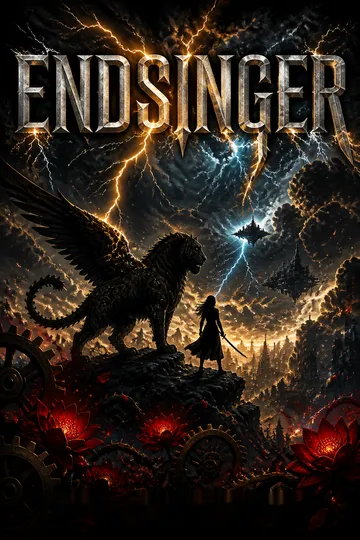
Endsinger connects political violence to environmental ruin without treating the two as separate crises. The Guild’s system gives Shima useful machines, but chi dependence also centralizes power, fuels conquest, and makes poisoned land appear like an acceptable price for prosperity. The Inquisition’s language of Purity then converts ecological and political control into moral doctrine, marking the Kenning as contamination even though Yoshi discovers it can restore dead soil. The lie is effective because it offers simple categories in a world that depends on complicated compromises.
The novel’s repeated conflicts over revenge examine how grief becomes a social inheritance. Yoshi’s decision to return the Gentleman’s baby interrupts one cycle; Kaori must decide whether loyalty means punishing everyone who resembles the guilty; Buruu carries the consequences of killing his brothers; Hiro confuses honor with a death he has been taught to welcome. None of these characters becomes free of anger. Their growth lies in refusing to let anger make every next choice for them.
Prophecy and heroic legend are also treated skeptically. Tojo’s What Will Be turns prediction into an excuse for passivity, while Yukiko’s public image threatens to make her responsible for every life at risk. The novel answers with choices made by people who are neither omniscient nor pure: Daichi refuses Tojo’s script, Kin dismantles the Guild’s ranks, and ordinary soldiers join hands before the final battle. The sacrifice that closes the gate is devastating, not triumphant. The world survives, but its survival demands mourning, repair, and continued work rather than a clean return to what came before. The ten-year aftermath makes restoration measurable: the land heals slowly, and the institutions that damaged it must be remade by people who choose not to repeat their predecessors’ harm.
Review Summary
People Also Read




Characters
Yukiko
Kenning-born rebelA young Kitsune woman who can speak mind to mind with animals, Yukiko became known as the Stormdancer after bonding with Buruu. Her power is intimate rather than merely tactical: she senses the lives around her, and the growing force of that awareness both helps her and threatens to overwhelm her. She is fiercely protective, but not naturally certain of her own judgment. The pressure of being treated as a symbol often clashes with her wish to remain a flawed person among friends. Yukiko is driven by a refusal to accept cruelty as inevitable, even when her own choices have helped deepen conflict.
Buruu
Exiled thunder tigerBuruu is an arashitora, a winged tiger-eagle, and Yukiko’s closest companion. Proud, blunt, and capable of dry humor, he understands loyalty through the language of pack and law. His relationship with Yukiko gives him a perspective beyond instinct, while her trust gives him a place to belong despite the shame he carries from his past. He is protective without being gentle in every moment, and his concern can become a struggle over who gets to choose the risks. Buruu is motivated by loyalty, the survival of his kind, and the hope that his past need not dictate every future act.
Hana
Gutter-born stormdancerHana is a Burakumin girl raised in Kigen’s streets beside her brother Yoshi. She has a Kenning for animals, an injured eye with an unusual glow, and a sharp humor that survives poverty and violence. Admiring Yukiko does not mean Hana wants to become a copy of her; she must discover what her own inherited identity means and what she wants to do with it. Her bond with Kaiah gives her both a partner and a demanding teacher, while her attraction to Akihito offers the possibility of tenderness she has rarely known. Hana’s instinct is to protect those she loves, even when grief makes that instinct dangerous.
Yoshi
Rat-speaking street survivorHana’s older brother is a thief and survivor who speaks through the Kenning to rats. Yoshi uses jokes and swagger to keep other people from seeing how deeply he feels, especially after losing Jurou, the boy he loved. His loyalty to Hana is fierce, but he resists being assigned a heroic purpose by people with more power or status. He trusts practical evidence more than official stories and notices what others overlook in Kigen’s streets. Yoshi’s central struggle is whether action can answer grief without becoming another link in the violence that caused it.
Kin
Guild-born artificerKin is a gifted Artificer raised inside the Lotus Guild, where machinery, rank, and ritual shaped his understanding of the world. His engineering talent gives him unusual power, but his deeper conflict is between the identity his institution assigned him and the conscience he is trying to claim for himself. He is guarded and often appears emotionally distant, especially when fear or guilt might reveal too much. His bond with Yukiko exposes a hope for a life beyond service and machinery, while his relationship with Kensai ties him to the Guild’s past. Kin is driven by love, shame, and a desire to make his skills serve people rather than control them.
Kaori
Scarred Kagé commanderKaori is Daichi’s daughter and a formidable fighter whose scar records the violence of Yoritomo’s rule. She values discipline, loyalty, and the obligations owed to those who have suffered for the rebellion. Her protectiveness can harden into suspicion, especially when she believes others are minimizing the cost paid by her family and comrades. Kaori’s relationship with Yukiko is shaped by love, rivalry, and competing ideas about what justice requires. She is not indifferent to a better future, but she fears that mercy offered too soon may simply expose the vulnerable to another betrayal.
Hiro
Grieving Tiger DaimyoHiro is the Tiger clan’s young Daimyo, a former lover of Yukiko and a product of the Kazumitsu court. He has been taught to equate honor with obedience, emotional restraint, and readiness to die for his lord. That code gives him purpose, but it also leaves him vulnerable to people who can offer status and a target for his anger. His prosthetic arm is a physical reminder of what he has lost and of the power the Guild can grant or withhold. Hiro is motivated by loyalty and grief, though he has difficulty separating duty from the wish to punish those who hurt him.
Daichi
Kagé leader and fatherDaichi leads the Kagé and is Kaori’s father, a former member of the Kazumitsu Elite who turned against the regime. Blacklung has weakened his body, but years of command have made him patient, observant, and difficult to bend. He carries guilt over the violence he once served, even as he fights the system that shaped him. Daichi’s affection for his daughter is profound, though his instinct to protect her can lead him to keep painful decisions from her. He believes that resistance must serve a future beyond the satisfaction of revenge.
Michi
Kagé swordmasterMichi is a skilled fighter who once served as Lady Aisha’s maid and confidante. She combines precision with a dry wit, and her years in court taught her how patience and performance can be tools of survival. She loves the Kagé, but she also questions whether their anger can build anything worth living in afterward. Her loyalty is personal as well as political, tied to Aisha, Daichi, Kaori, and the people she has chosen as family. Michi writes down the war because she believes ordinary witnesses matter, even when history tends to preserve only rulers and victories.
Akihito
Loyal hunter and friendAkihito is a former Imperial Court hunter and Yukiko’s longtime friend. Large, physically imposing, and burdened by an old leg injury, he is gentler than his size suggests. His instinct is to protect others, sometimes so strongly that he struggles to recognize when they have grown beyond needing rescue. He offers Hana steady kindness without treating her hardship as a debt she must repay. Akihito’s loyalty is practical: he shows up, carries what others cannot, and tries to make a home for people who have lost theirs.
Kensai
Earthcrusher’s Guild designerKensai is the Guild’s Second Bloom in Kigen and the chief designer of the Earthcrusher. He prizes engineering achievement and has long imagined himself as a future leader of the Guild. Kin is his former ward and the closest thing he has to family, making their conflict personal as well as political. Kensai’s faith in rank and institutional order gives him purpose, but also narrows what he can recognize as wrong. He is an intelligent man whose ambition and affection are entangled with the machinery he helped create.
Misaki
Guild rebel and motherMisaki is a False-Lifer and a leader of the Lotus Guild’s internal rebellion. Her mechanical body conceals a deeply personal life: she is a mother and has loved someone who died fighting the Guild. She approaches resistance as a promise made to her child, not as an abstract claim to power. Misaki can be wary and severe, particularly after her people are exposed, but she recognizes the value of allies who take responsibility for harm. Her determination is shaped by the future she wants her daughter to inherit.
Kaiah
Grieving female arashitoraKaiah is a female thunder tiger with a formidable mind and a painful history with Buruu. At first she sees humans as small, reckless creatures and regards Buruu as a murderer. Her bond with Hana allows her to learn human grief without pretending to share every human custom. Kaiah’s loyalty is fierce once given, but she does not surrender judgment simply because others expect reconciliation. She values her lost mate and cubs, the survival of her species, and the possibility that a pack can choose a future beyond vengeance.
Daimyo Isamu
Proud Fox clanlordIsamu is the elderly Daimyo of the Fox clan, a veteran of war who has lost much of his family to conflict. Proud and sharp-tongued, he resists any ruler who expects him to submit, especially Hiro and the Guild. His skepticism toward Yukiko is earned by the destruction that follows her rebellion, but he is capable of recognizing shared purpose when it is offered without demands for obedience. Isamu’s experience makes him wary of glorious causes, even as he remains willing to defend the people and city entrusted to him.
Aleksandar Mostovoi
Morcheban field commanderAleksandar is a Morcheban Kapitán whose life was shaped by Shiman conquest and the loss of his family. He has built himself into a disciplined soldier through years of combat, carrying anger as both armor and purpose. When he encounters an enemy who resembles the people he has lost, he cannot easily dismiss that resemblance, though recognizing it does not instantly make him stop fighting. His connection to Hana pulls him toward a more complicated view of the war. He remains loyal to his people while confronting what revenge may cost them.
Piotr
Gaijin doctor and guidePiotr is a Morcheban doctor with a damaged leg and a face marked by old injuries. His Shiman speech is awkward, but his intentions are usually clear in his actions. A promise to carry a dead Guild rebel’s message brings him into the Kagé’s orbit, and his knowledge helps Hana understand her maternal heritage. He is loyal to the people who have trusted him, even when that loyalty crosses political lines. Piotr’s humor and patience make him a quiet bridge between groups that would rather see each other as enemies.
Shai
Buruu’s Everstorm mateShai is a strong, perceptive female arashitora and Buruu’s mate. She knows the cost of his exile and does not mistake affection for forgetfulness. Her loyalty to Buruu coexists with a fierce commitment to the survival of their pack, especially their son. Shai’s presence reveals a life Buruu had left behind and gives him a reason to imagine a future after the conflict. She is not simply a romantic figure: she is a leader with her own judgment and a claim to the safety of her people.
Sukaa
Ambitious black thunder tigerSukaa is a black arashitora whose history with Buruu is shaped by an old contest and the death of his father. He is proud, aggressive, and alert to weakness, but he also understands the authority of the Khan and the obligations of the pack. His hatred of Buruu is not a simple personal grudge; it is bound to inherited ideas of justice and succession. Sukaa represents the danger of turning old wounds into permanent law, while remaining a formidable presence among the thunder tigers.
Tojo
First Bloom of the GuildTojo is the ancient First Bloom of the Lotus Guild, sustained by machinery and connected to the Guild through its systems. He believes the future is predetermined and treats the suffering of others as part of a design too large for them to challenge. His conflict with Daichi turns on whether a person can refuse the role assigned by prophecy. Tojo’s power rests not only in his body’s technology but in the institution and history that make his claims seem inevitable.
Ayane
False-Lifer torn between worldsAyane is a member of the Guild’s False-Lifer sect who has experienced life outside its strict bodily and emotional controls. Her attachment to Kin puts her between the institution that raised her and a desire for closeness it forbids. She is vulnerable to manipulation, but also capable of taking risks to shape events around her.
Aisha
The court’s quiet conspiratorAisha is Yoritomo’s sister and a member of the Kazumitsu line. She is politically perceptive and secretly sympathetic to the rebellion, while her position at court requires her to maintain a composed public face. Her relationship with Michi is built on trust and shared knowledge of the dangers around them.
Yoritomo
Tyrant ShōgunYoritomo is the Shōgun whose rule binds the clans to the Lotus Guild. He is feared for his cruelty and uses authority to demand personal as well as political obedience. His treatment of Kaori and his rule over Hiro’s clan shape the motives of several characters before the novel begins.
Hikita
Farm boy at the StainHikita is a ten-year-old boy whose family farms the poor soil at the edge of the deadlands. He worries about hunger and resents the absent father responsible for another child. His encounter with an oni places ordinary scarcity beside the supernatural danger gathering in Shima.
Tetsuo
Hikita’s younger brotherTetsuo is Hikita’s younger brother. Frightened by their mother’s labor, he seeks comfort outside, then runs inside when the baby arrives. His small, immediate responses give the prologue’s family crisis a child’s perspective.
Plot Devices
The Kenning
Connects minds across speciesThe Kenning lets Yukiko, Hana, and Yoshi sense or communicate with animals, though each uses it differently. Yukiko’s bond with Buruu grows so powerful that she can touch human minds and feel the life around her as a shared current. Hana’s connection to Kaiah helps her understand loyalty, grief, and the newly discovered meaning of her eye. Yoshi relies on rats to gather information in Kigen’s streets. The gift is both a practical tool and a moral test: it can create understanding across difference, but it can also be used to control, overwhelm, or destroy another mind.
Blood Lotus and Chi
Powers machines while poisoning landThe Lotus Guild processes blood-lotus seeds into chi, the fuel that runs Shima’s engines, armor, and sky-ships. The crop poisons the soil, while the Guild’s use of gaijin blood as fertilizer deepens the violence behind the system. This dependency lets the Guild control rulers who need fuel for their armies. The public Purification ritual appears to identify people tainted by the spirit world, but Yoshi discovers the supposed test can reveal restorative soil beneath the deadlands. The device links industrial convenience, political power, environmental collapse, and the persecution of those who might help repair the damage.
The Earthcrusher
Turns Guild power into a weaponThe Earthcrusher is a three-hundred-foot mechanical colossus designed by Kensai to crush the Kagé and dominate the land. Its eight legs, scythe-like arms, and iron-throwers make ordinary defenses nearly useless. It depends on Guild engineering, a trained pilot, and a steady supply of chi, which gives the rebels a chance to sabotage it from within. The machine’s immense scale also shapes the battle’s moral stakes: defeating it may save Yama, but destroying it near the city risks killing the very people the rebels are trying to protect.
The Chamber of Smoke
Makes fate feel inevitableGuild initiates undergo an Awakening in the Chamber of Smoke and receive visions called the What Will Be. Some visions are fragmentary, while others appear to show a defining future with certainty. The Inquisition uses this belief to support its authority and to shape how Guildsmen understand their choices. Kin’s vision of becoming First Bloom terrifies him because he does not want the role. Daichi challenges Tojo’s claim that prophecy determines action, arguing that a predicted future only occurs if people choose to make it real. The device tests whether foreknowledge can coexist with moral agency.
The Yomi Gate
Turns pollution into an invasionThe hellgate is a breach between Shima and Yomi, the underworld where Izanami and the oni dwell. The Inquisition has used lotus cultivation, pollution, war, and bloodshed to prepare its return, though the final rupture opens prematurely when First House is destroyed. The gate weakens the Kenning’s life-filled warmth and releases demons into the deadlands. The characters initially assume that closing it requires a hero to fight through Yomi, but the story’s older legend and the nature of the breach suggest that blood and sacrifice are the actual cost. Its opening transforms a civil war into a struggle for every living person on the islands.
The Lotus Wars Series
About the Author
Other books by Jay Kristoff



Download PDF
Download EPUB
.epub digital book format is ideal for reading ebooks on phones, tablets, and e-readers.








