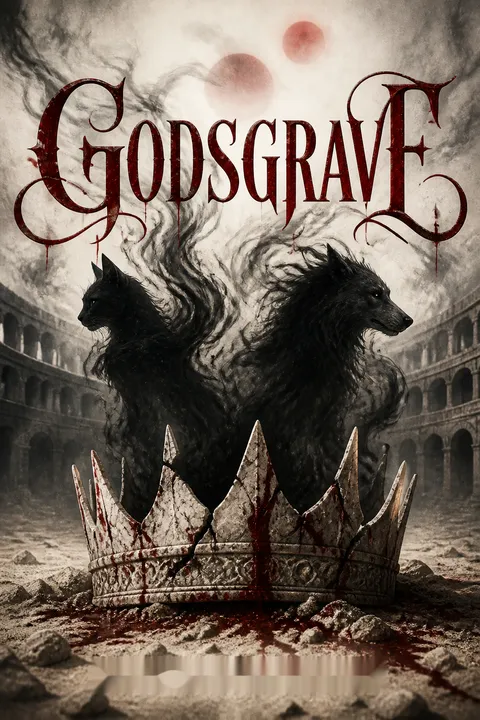


Plot Summary
Firemass in Red
At a Firemass masquerade in Galante, Mia Corvere, a young assassin of the Red Church, reaches Senator Aurelius's son, Gaius, by playing the part of a flirtatious guest. She poisons him with a kiss, then fights her way through his guards when his companion raises the alarm.
Her Hand, Dove, dies covering her escape, and Mia flees wounded into the city's necropolis. There, a cloaked, inhuman stranger slaughters the guards who corner her. It knows her name and warns that vengeance blinds her, then points her toward a moon crown. Mia leaves with blood on her clothes, a new mystery in her thoughts, and her family's killers still alive.
The opening makes revenge both Mia's engine and her impairment. Her success depends on intimate deception, but the escape costs her the life of a subordinate who trusted her plan. The stranger's warning introduces a countercurrent to her certainty: Mia may be pursuing the right targets for reasons that conceal a larger truth. Crucially, the rescue does not make her grateful or reflective for long. She converts danger into another step forward, showing how thoroughly she has learned to treat survival as permission to continue.
A Cage by Design
Several months later, a slaver named Teardrinker finds Mia beside a wrecked caravan, with the dead buried and the attackers buried too. Teardrinker chains her and plans to sell her at the Hanging Gardens, where human beings are traded as market stock. Mia has chosen the captain precisely because her prisoners are not abused before sale, and because her route leads to the gladiator pits.
When raiders attack the caravan, Mia picks the cage lock, kills their archer, and helps drive them off. Rather than take freedom or Teardrinker's offer of a share, she asks to be sold to the Lions of Leonides, hoping the arena will bring her close to her targets.
Mia's self-imposed captivity exposes the cold arithmetic beneath her bravery. She can escape, yet refuses because a direct route to power matters more than immediate freedom. Her intervention in the raid complicates that calculation: she risks herself for other captives, then treats the rescue as leverage toward her own objective. The scene refuses an easy division between altruism and manipulation. Mia can recognize another person's danger and still organize the moment around revenge, a contradiction that will become harder to contain as she learns the lives of those around her.
The Church Calls Her Back
The Red Church recalls Mia from Galante to the Quiet Mountain after her latest sanctioned kills. Its depleted leadership gives her a new assignment in Godsgrave: kill the Dona, leader of the Toffs, and recover an Old Ashkahi map her patron wants. The Church refuses to name the client.
Mia recognizes that the capital offers a chance to approach Julius Scaeva and Cardinal Duomo, the men tied to her family's ruin, but the Reverend Father Solis forbids her to target Scaeva. Before leaving, she consults the dead library's chronicler, Aelius, about the darkin journal that mentioned the moon crown. A blood journey takes her to Godsgrave, where her former rival Jessamine becomes her assigned Hand.
The Church offers Mia the appearance of advancement while narrowing her freedom. Its command sends her toward the very men she wants to kill, then explicitly bars her from touching one of them. This tension makes institutional obedience feel less like a moral code than a system for managing risk and clients. Aelius's unreadable library and the journal's moon crown widen the story beyond political revenge, but Mia is not ready to redirect her attention. She takes the capital posting as a means to an end, even as the evidence accumulates that the Church's ends may not be hers.
The Dona's Exploding Deal
Mia and Jessamine trace the Dona to the Dog's Dinner, a braavi den where she expects a map buyer. Mia enters disguised as a courtesan, then watches a hooded seller remove her veil. The woman is Ashlinn Järnheim, Mia's former friend, whose betrayal helped devastate the Red Church.
When the Dona reveals that Cardinal Duomo ordered Ashlinn's capture, Ashlinn exposes a hidden explosive in the map case and detonates it. Mia uses a smoke globe to cover their escape, then chases Ashlinn across Godsgrave's rooftops. The pursuit ends at the Basilica Grande, where Ashlinn's holy trinity leaves Mia doubled over in pain and Jessamine arrives to attack.
The map exchange joins private betrayal to public power: the Church, the cardinal, the braavi, and Ashlinn are all pursuing the same object for different reasons. Mia's disguise works because the criminal world has rules she can exploit, while Ashlinn's bomb turns a negotiated sale into an ambush. The trinity at the basilica reverses Mia's usual advantage. Her darkness cannot protect her from a symbol that makes her body suffer, and the scene makes her vulnerability physical rather than abstract. Jessamine's arrival also converts a mission into a personal reckoning that Mia cannot control.
A Ledger of Betrayals
Jessamine and Ashlinn fight on the basilica roof until Jessamine tears away the trinity, then Ashlinn kills her. Mia captures Ashlinn instead of killing her, hoping to learn where the map went. Ashlinn claims the Red Church's ledger proves Scaeva and Duomo both paid for protection, and that the Church helped deliver Mia's father to the Senate.
At the chapel, Bishop Mercurio confirms Scaeva's patronage, while the carved name of her father's freed majordomo, Andriano Varnese, supports Ashlinn's account of the rebellion's betrayal. Mia realizes her employers helped destroy the family she seeks to avenge. She and Mercurio ally with Ashlinn, concealing their plan from the Ministry.
This revelation breaks the moral arrangement that has sustained Mia: she believed the Church was the instrument through which she could avenge her family, only to learn it profited from the family's destruction. The ledger transforms suspicion into documentary evidence, while Varnese's name makes the betrayal intimate and specific. Mia's choice to spare Ashlinn is not forgiveness; it is a strategic refusal to lose the only witness who can explain the conspiracy. Her alliance with Mercurio marks a change in loyalty from institution to person, although her desire to kill Scaeva and Duomo remains intact.
The Pit's Chosen Blade
Mia's long route toward the arena begins with a brutal sale at the Hanging Gardens. In the Pit, she kills two professional fighters with a wooden sword and challenges three more, forcing the blood masters to notice her. She expects Sanguila Leonides to buy her, but his daughter Leona outbids him by a single silver piece and claims Mia for her new Remus Collegium.
Leona's scarred, one-legged executus, Arkades, doubts the purchase, while the administratii brands Mia as a military gladiator. On the voyage to Crow's Nest, Mia suffers the whip and the absence of her shadow companions. The fortress is her childhood home, now marked with the crest of Marcus Remus.
The purchase turns Mia's chosen strategy into a loss of control. She has won attention, but not the buyer she selected, and the arena route now runs through the daughter of a man connected to her family's dispossession. The brand makes that loss permanent in the body's own language: Mia is not merely pretending to be property. Her memories of Crow's Nest sharpen the humiliation, since the familiar home has been recast as a prison. Her talent still gives her agency, but each new stage of the plan requires her to accept constraints she cannot simply outfight.
A Rival in the Shadows
At Crow's Nest, Arkades drills Mia, Matteo, and Sidonius for the Winnowing, the trial that decides who may fight as a gladiator. Mia meets the champion, Furian the Unfallen, and feels an inexplicable hunger as their shadows reach toward one another. When she confronts him privately, he rejects any connection to her darkness and clings to his faith in Aa.
Mia's night escapes reveal the cruelty of the stable: Butcher humiliates the recruits, while the young healer Maggot stitches their wounds. At Blackbridge, the Winnowing recreates a siege. Matteo is killed by a ballista bolt, but Mia and Sidonius survive the burning fortress and earn places among Leona's gladiators.
The stable gives Mia a second education, this time in vulnerability rather than technique. The recruit's death makes the spectacle's cost immediate, while the other gladiators become more than obstacles as their routines and injuries accumulate. Furian unsettles Mia for a different reason: he reflects a possible kinship that he refuses to recognize. His religious self-conception conflicts with the evidence of their moving shadows, creating a psychological split between identity as chosen and identity as embodied. Mia's victory at Blackbridge advances her plan, but grief and appetite begin to coexist in ways her strategy cannot easily separate.
A Name Earned in Blood
Leona's stable reaches Stormwatch short of the laurels needed to qualify for the Magni. Ashlinn and Mia secretly arrange for the other gladiators to be weakened with a laxative, leaving Mia as Leona's only fit fighter when a retchwyrm enters the arena. The chained monster vomits corrosive flesh across the sand, then breaks free after Mia's shadow magic enrages it.
She hides explosive red wyrdglass in its wound and lets the creature swallow it. When the beast attacks the spectators, Mia steps through its shadow to escape its digestive spray, climbs its body, and drives in her sword. The retchwyrm dies, and the crowd makes Mia's new arena name, Crow, a chant heard across the city.
Mia's victory fuses ingenuity with a willingness to gamble other people's safety. The sabotage is designed to preserve her plan, yet the retchwyrm's escape threatens spectators who never consented to become part of the contest. Her decisive advantage is not strength but the ability to read the arena as a system of shadows, mechanisms, and audience expectation. The crowd's naming of her offers a seductive substitute identity: public acclaim can briefly drown out her private grief. But the triumph also deepens the contradiction between the savior celebrated by strangers and the assassin still working toward a concealed political killing.
The Falcon's Fractures
Mia's victory secures Leona public attention, but not financial stability. Leona's father, the wealthy Leonides, buys up her debts and demands repayment, using business pressure to control his estranged daughter. Mia learns that Leona's pride conceals a childhood shaped by her father's violence and her mother's death.
Arkades loves Leona, while Furian serves as her secret lover, and each relationship complicates the collegium's chain of command. Mia also discovers Furian is darkin like her, though he treats that fact as a threat to his faith. When Ashlinn and Mia grow closer, Mia learns Ash has tattooed the map's directions into her skin through arkemical branding, ensuring it cannot be taken from her without destroying it.
The collegium is a small model of the Republic's larger power structure: Leona owns fighters, Leonides owns her debts, and affection moves through unequal relationships. Mia recognizes Leona's wounds without absolving her conduct, a difficult form of empathy for someone who has spent years treating vulnerability as a danger. Furian's refusal to name his darkness parallels Mia's own dependence on revenge as an identity. Ashlinn's map tattoo makes information inseparable from bodily risk, while their growing intimacy challenges Mia's habit of treating every bond as a tool.
The Twins Lose Everything
At Whitekeep, the equillai race offers Leona's twins, Bryn and Byern, a chance to win another laurel. Their chariot leads near the finish, but a collision with Stonekiller and Armando's wreck sends Byern crashing into a burning barricade. Bryn can still cross the line and claim victory; instead, she runs to her brother and finds him dead.
The officials declare no winner, and the crowd boos the loss of its expected spectacle. Leona's stable then faces Leonides's silkling champion, Ishkah, in a deadly team match. Mia, Furian, and Bladesinger fight together, using weakened obsidian blades, but Ishkah nearly kills them. Furian finally uses shadow magic to trap her, and Mia decapitates the silkling.
The race makes the audience's appetite for victory collide with a sister's refusal to treat her brother as a scoring opportunity. Bryn's choice costs the collegium a laurel, but it asserts a value the contest cannot measure. The crowd's boos expose the violence of a system that calls itself honorable while making grief an inconvenience. The later victory over Ishkah depends on cooperation, including Furian's forbidden use of darkness. Mia's final blow is hers, yet the survival of the team rests on shared skill, undermining the solitary heroism the arena sells.
The Price of Survival
Ishkah's venom leaves Furian critically ill, and Mia helps Maggot treat him with medicines and larvae that consume infected flesh. On the return voyage, Leona's concern for Furian becomes unmistakable. At Crow's Nest, poisoned stew then strikes the entire stable. Mia identifies Elegy and prepares an antidote, but Maggot and Otho die before it can save them.
Evidence planted in Arkades's room, including Leona's undergarment and a vial of poison, leads Leona to accuse the executus of the murders and drive him away. Mia suspects a deeper plot but cannot prove it. With Leona short of money and preparing to sell more gladiators to Pandemonium, Sidonius begins urging a revolt.
The poisoning makes care and expertise both precious and insufficient. Mia can diagnose the toxin and save most of the stable, but Maggot's death reveals the limit of competence against speed and chance. The planted evidence turns private intimacy into a weapon, letting suspicion destroy the relationship between Leona and Arkades without establishing the truth. Mia's effort to keep Furian alive also binds her to people she intended to use. The planned revolt forces a choice between her long-term revenge and the immediate lives of the gladiators, exposing the moral cost of keeping her plan intact.
The Rebellion That Wasn't
Leona plans to sell Sidonius, Bryn, Bladesinger, and other fighters to the lethal underground arena Pandemonium. Mia listens as Sidonius argues that rebellion is their only alternative, then eventually agrees to help. She enters the barracks at night, knocks out the guards, and releases the prisoners. The group steals armor and heads for the harbor, where a young admirer recognizes Mia and draws the city watch toward them.
Before the gladiators can escape, Mia knocks Bryn unconscious and seals them in the ship's hold. Leona appears with waiting guards. Mia has secretly arranged the revolt and its capture, preserving the group for a staged execution and a covert escape. Sidonius understands the betrayal only after the hatch shuts.
Mia's deception is morally costly because it uses the trust she has finally earned. She refuses to let the gladiators choose a dangerous escape, but also refuses to let the authorities actually kill them. Her plan depends on making betrayal look complete enough to persuade Leona, the guards, and the public. This is not a clean rescue; it is a coercive act performed in the name of survival. Sidonius's hurt matters because it gives the strategy a human consequence that Mia cannot dissolve by calling it necessary.
The Dead Walk Away
At Godsgrave Arena, Leona presents Mia as executioner for the captured rebels, then sends seven former Falcons onto the sand as condemned prisoners. Mia kills them in a carefully staged bout, while bladders of chicken blood make the apparent deaths convincing. Before the Magni begins, Mercurio and Ashlinn enter the mortuary, wake the supposedly dead gladiators, and lead them through a servants' passage.
A girl named Belle, once helped by Mia at a brothel, drives the escape wagon. The freed group heads over the aqueduct toward Teardrinker, who can help them secure legal freedom. Mia remains in the arena, outwardly alone, while the people she betrayed are finally beyond the Republic's immediate reach.
The fake deaths complete Mia's most difficult compromise: she uses violence as theater to protect the people she could not openly save. The arena's own machinery supplies the cover, turning its appetite for convincing slaughter against the state that stages it. Belle's reappearance shows that an earlier moment of compassion can return as practical solidarity, not as sentimental reward. Yet the plan leaves Mia behind, separated from the people she has rescued and committed to a final contest where no staging can guarantee the outcome.
The Sea Inside Godsgrave
The Magni begins with hundreds of gladiators divided among four collegia, then the arena floor floods to recreate the Battle of Seawall. Warships rise from beneath the sand, the Republic's machinery releases seawater, and stormdrakes prowl below the decks. Mia and Furian start on the same ship and fight off Leonides's Lions before fire forces them onto the keep's battlements.
Their shadows fuse, letting each feel the other's pain and purpose, though neither understands the change. As the field narrows to the last combatants, Furian finds Mia's gravebone dagger and uses it against Ragnar. The spring-loaded blade snaps shut, leaving Mia exposed to Worldeater, who knocks her down and presses her toward death.
The arena turns historical violence into civic entertainment, flooding the capital with an artificial sea so spectators can consume a nation's conquest as spectacle. Mia and Furian's shared shadow briefly makes them capable of mutual perception, not just mutual attraction or rivalry. That connection does not erase their opposed desires, and the broken dagger makes trust materially dangerous. Furian's attempt to use it shows that even an intimate bond cannot overcome the habits each has built around survival, faith, and victory.
One Victor Stands
Mia kills Worldeater and reaches Furian as he struggles with Ragnar, but she cannot stop the Unfallen from trying to win. When Furian attacks her, their shadows tear apart, and Mia's blade cuts his throat. She asks her shadow passengers to ease his final fear, then stands as the Magni's sole survivor.
The crowd chants Crow, but Mia's victory brings a vision unlike the three burning suns: a pale sphere above a black, star-filled sky. A voice links many becoming one, and Mia's shadow settles darker than before. She has won the freedom that should bring her within reach of Scaeva and Duomo, but Furian's death leaves her with a victory stained by the bond she could not preserve.
The final duel makes the arena's rule, one survivor, collide with the fragile recognition Mia and Furian achieved. She does not kill a stranger or a simple enemy; she kills someone whose feelings and pain have become partly legible to her. The vision after his death suggests that this intimacy has altered her powers, while withholding an explanation. Public triumph and private loss arrive in the same breath. Mia wins the means to enact revenge, but the victory does not restore what the game demanded she sacrifice.
A Brother in the Arena
As the cardinal prepares to grant Mia her freedom, she recognizes a darkin-like hunger in Scaeva's young son. The boy resembles Mia's mother and the baby brother she was told had died, making him almost certainly Jonnen. Mia waits until Duomo strips off his blessed trinity, then cuts the cardinal's throat with her mother's gravebone dagger.
She lunges for Scaeva, who throws Jonnen at her as a shield. Mia catches the child, stabs Scaeva through the chest, and leaps with Jonnen over the battlement. The crowd cannot agree whether she escapes through the flooded arena or vanishes into shadow. Scaeva's body appears among the dead, and the Republic believes its consul has been assassinated.
Mia's revenge becomes more complicated at the instant it seems complete. Jonnen is not merely evidence of Scaeva's private life; he is a living connection to the family Mia believed lost. Catching him rather than striking through him forces a choice between vengeance and protection, however brief. The leap refuses the ceremonial ending the Republic planned for its champion. Her apparent assassination of the consul overturns the public order, but the uncertain escape and Jonnen's identity leave the personal and political consequences unresolved.
The Consul's Double
Ashlinn returns to the Red Church chapel expecting to meet Mercurio, but finds the Ministry waiting with a living Julius Scaeva. She realizes that the man Mia killed in the arena was a double, fashioned to look like the consul. Scaeva explains that Duomo's public murder will help him claim emergency powers by presenting the Republic as under attack.
The Church intended Mia to kill its protected cardinal while appearing to betray the order, preserving the Church's reputation and advancing Scaeva's rule. Ashlinn refuses to submit and detonates a bomb hidden in her pack, blasting the room apart. Poisoned and pursued through the necropolis, she is saved by a shadow-cloaked figure whose face resembles Tric, the friend she believed dead.
The apparent victory is recast as another managed spectacle. Scaeva has converted even his supposed death into political theater, using a carefully chosen double and a real cardinal's murder to consolidate power. The revelation does not merely undo Mia's achievement; it shows how effectively institutions can absorb rebellion and sell it back as a reason for greater control. Ashlinn's bomb interrupts that script without settling the outcome. The Tric-like rescuer opens a new uncertainty, joining personal grief to the book's expanding mystery of the darkin.
Epilogue
The closing narrator addresses the reader directly, insisting that Mia's story has not reached its end. Scaeva's survival, Jonnen's disappearance, Ashlinn's poisoning, and the stranger who resembles Tric remain unresolved.
The narrator frames this book as the second part of a three-part tale and asks the reader to wait for the next movement. The final promise is not a resolution but a pause: the city has changed, the conspirators are exposed, and the consequences have only begun.
The coda makes the novel's incompleteness part of its design. Its narrator acknowledges the reader's frustration while refusing the comfort of a closed moral ledger. Mia has accomplished her stated revenge, yet its political target survives, her brother is missing, and Ashlinn's rescue has opened a supernatural question rather than answered one. The appeal to patience echoes Mia's own discipline, but also tests it: readers are left with the same divided knowledge as the characters, able to recognize the scale of the plot without yet seeing its shape.
Analysis
Godsgrave asks what happens when a person trained to see every relationship as leverage begins to care about the people she uses. Mia's revenge is not a mistaken desire: Scaeva and Duomo helped destroy her family, and the institutions that should oppose them profit from their power. The problem is that her chosen method reproduces the violence she wants to end. She enters a slave system by choice, but her companions cannot simply choose their way out. Their confinement makes Mia confront the difference between personal escape and collective freedom.
The arenas sharpen that problem by converting history into entertainment. The Republic stages conquest, punishment, and even a naval battle as spectacles whose machinery hides the labor and death beneath them. Mia learns to manipulate that machinery, but the crowd's acclaim cannot make its violence just. Her victory over the retchwyrm and the Magni earns public power while requiring the deaths of people she has come to know. The novel's moral pressure lies in this gap between achievement and repair: winning gives Mia access to the powerful, not a way to undo what she has done.
Its relationships resist easy redemption. Furian seeks absolution through obedience and combat; Mia rejects his theology but shares his need to make past violence mean something. Ashlinn's love is real enough to unsettle Mia, yet their shared habits of deception keep intimacy precarious. Sidonius offers a different ethic, grounded in conscience rather than victory, though Mia cannot follow it without risking her plan. The final reversals extend the same logic into politics: Scaeva turns apparent assassination into an excuse for more authority, while the shadow mystery grows beyond Mia's understanding. The book ends with revenge achieved in appearance, family recovered in uncertainty, and freedom still contested. Its central question is not whether violence can defeat tyranny, but whether a victory built from violence can become anything other than another instrument of rule.
Review Summary
People Also Read





Characters
Mia Corvere
Assassin turned gladiatorMia is a young assassin shaped by the execution of her father and the loss of her mother and baby brother. She is a darkin, able to command shadows, and travels with two shadow daemons that consume her fear. Her discipline makes her patient when patience advances a plan, but her revenge can narrow her attention until other people become instruments. She is attracted to danger, beauty, and difficult questions, yet distrusts tenderness when it might make her vulnerable. Her combat skill and strategic imagination keep her alive, while her capacity for loyalty repeatedly complicates the ruthless identity she has built.
Mister Kindly
Fear-eating shadowcatMister Kindly is a shadow daemon who takes the shape of a cat and has accompanied Mia since childhood. He consumes her fear, helping her act decisively in situations that would overwhelm most people. His dry sarcasm makes him seem less like a servant than an old, argumentative companion, and his warnings often expose the recklessness Mia prefers not to examine. He is loyal but not uncritical: he worries that his own presence may be changing her by removing the fear that normally limits dangerous choices. Their bond gives Mia strength, while raising questions about what strength costs.
Eclipse
Loyal shadowwolfEclipse is a shadow daemon shaped like a wolf, once bound to Lord Cassius before becoming Mia's companion. She is blunt, protective, and more inclined than Mister Kindly to answer danger with force. Her loyalty to Mia is fierce, though her frequent clashes with Mister Kindly reveal a possessiveness neither admits plainly. Eclipse's bond to a former master gives her attachment a history beyond Mia, and she carries that past without making it the center of her identity. Her presence helps Mia read and use darkness, while her unquestioning support can make violence feel easier than reflection.
Ashlinn Järnheim
Rebel with a hidden mapAshlinn is Mia's former friend from the Red Church and the daughter of a retired assassin. She is clever with traps, disguises, locks, and explosives, and she treats trust as something that must be earned through action rather than claimed with words. Her revenge for her father has made her dangerous to nearly everyone around her, including those she loves. Ashlinn and Mia share history, attraction, and a capacity for betrayal, so their intimacy is never free of strategic suspicion. Beneath her bravado, Ashlinn wants to be seen as more than the sum of her schemes, but she rarely risks asking for that openly.
Furian
Faithful arena championFurian, known as the Unfallen, is the champion of Leona's Remus Collegium and a formidable fighter. His public identity rests on discipline, faith in Aa, and an uncompromising ideal of earned victory. He resists acknowledging his connection to darkness because he believes it threatens the person he has chosen to become. That conviction is not mere vanity: he seeks redemption for a brutal past and wants his arena success to make him human again. His attraction to Mia is tangled with rivalry, shame, and an intimacy he cannot reconcile with his beliefs.
Leona
Indebted gladiator patronLeona is a wealthy-born woman who establishes the Remus Collegium and takes pride in proving herself against her father, Sanguila Leonides. She is capable of generosity toward her fighters, but her need for status and her poor financial judgment put them at risk. Her polished public manner conceals a childhood shaped by her father's violence and her mother's suffering. She uses authority and appearance as armor, sometimes confusing control with care. Her relationships with Arkades and Furian reveal competing kinds of intimacy: one rooted in long loyalty, the other in desire and dependence.
Sidonius
Veteran with a conscienceSidonius is a broad, sharp-tongued gladiator whose rough humor masks a serious moral history. He once served in the Luminatii Legion under Darius Corvere and was branded a coward after refusing to support a rebellion he believed would kill thousands for one man's crown. His loyalty to Mia grows from respect for her father, but it becomes a personal bond as he recognizes her grief and her uncertainty. Sidonius is not easy to idealize: he can be crude and combative. Yet his refusal to confuse obedience with honor gives Mia a living alternative to revenge.
Mercurio
Mia's gruff mentorMercurio is a retired assassin, information broker, and Mia's former guardian, now serving as bishop of the Godsgrave chapel. His gruffness hides a deep attachment to the girl he once took in from the streets. He believes in the Red Church, but his loyalty to Mia eventually forces him to question the institution's demands. Mercurio is practical, experienced, and often more protective than he admits. He understands that affection can create risks, yet chooses to help Mia despite the danger to himself. His relationship with her offers a model of care that does not require ownership or obedience.
Tric
Mia's former loverTric is a Red Church acolyte of mixed Itreyan and Dweymeri heritage, and one of the few people with whom Mia has shared an uncomplicated tenderness. Their bond gives her a memory of being wanted without needing to perform as an assassin or a weapon. Tric is gentle in ways that contrast with the Church's brutal training, but he is not naïve about the danger surrounding them. His place in Mia's past continues to shape how she understands loyalty, grief, and the possibility of intimacy.
Jonnen Corvere
Mia's missing brotherJonnen is Mia's infant brother, separated from her during the political collapse that destroyed the Corvere family. Mia has long been told that he died with their mother in the Philosopher's Stone, and his absence has become one of the griefs underpinning her revenge. The memory of him is especially powerful because it belongs to the future Mia never got to share: a sibling growing up beside her rather than becoming another casualty of state power.
Julius Scaeva
Republic's entrenched consulScaeva is the ambitious consul who presided over the defeat of the Kingmaker rebellion and the execution of Mia's father. He has remained in power beyond the Republic's ordinary limits, presenting himself as a protector of stability and a servant of the people. Beneath that public appeal lies a politician who understands patronage, spectacle, and fear as tools of rule. He is both Mia's personal enemy and the center of the political order she resents. His confidence comes from assuming that institutions and stories can be managed as effectively as people.
Francesco Duomo
Powerful cardinal of AaDuomo is the grand cardinal of the Church of Light and one of the Republic's most powerful religious officials. His public piety gives him moral authority, while his political maneuvering places him in competition with Scaeva. He is protected by a holy trinity that causes Mia physical agony, making him difficult for her to approach directly. Duomo's power rests on more than faith: he understands how religious legitimacy and state ambition can reinforce or threaten each other. His polished presence conceals a willingness to use covert means when his interests demand it.
Arkades
Scarred former championArkades is Leona's executus, a former gladiator whose missing leg and facial scar record the cost of his arena career. He trains fighters with severe discipline because he knows how quickly overconfidence becomes death. His methods can be cruel, but he is not indifferent to the people under his command. Arkades's loyalty to Leona is complicated by love he cannot comfortably express and by the history he shares with her father. He embodies a fighter's code while living inside a system that routinely turns loyalty into property.
Maggot
Young healer of the stableMaggot is a young, highly capable healer who stitches wounds, sets bones, and treats infection with knowledge learned from her mother. Her nickname reflects the unorthodox methods she uses to clean damaged flesh. She is frank, mischievous, and perceptive about the cost of taking lives, asking questions older fighters avoid. Although she lives as a slave, her skills and judgment make her a source of authority among the gladiators. Her matter-of-fact courage contrasts with Mia's tendency to turn every moral question into a calculation.
Bladesinger
Dweymeri arena fighterBladesinger is a Dweymeri gladiator whose name reflects the path chosen for her by the religious tradition that named her. She was once a novice at a temple and still carries a thoughtful, disciplined bearing beneath the brutality of arena life. Her long, fully tattooed body and saltlocks make her visually unmistakable, while her skill with blade and shield makes her essential in a team. She values solidarity but will confront Mia when ambition puts the group at risk. Her courage is practical: she wants to survive without surrendering the person she was.
Bryn and Byern
Vaanian equillai twinsBryn and Byern are twins from Vaan whose abilities complement each other on the equillai track. Bryn is an astonishing archer, able to shoot with unusual precision and dexterity; Byern is a skilled charioteer who protects and positions them. Their easy teasing conceals the discipline of siblings who have endured enslavement together. They come from a village punished for resisting Itreyan authority, and their experience gives them a sharp understanding of the Republic's cruelty. Their partnership is both a competitive advantage and the emotional center of their lives.
Wavewaker
Warrior with a stage dreamWavewaker is a powerful gladiator with a deep singing voice and an enduring love of theater. He once worked around a troupe in Godsgrave and hoped to perform, but was enslaved after defending an actress from assault. His physical strength makes him formidable on the sand, yet he retains a performer’s sensitivity to rhythm, story, and an audience. Wavewaker's life illustrates how the Republic punishes people who act according to conscience, while his humor and artistry keep him from being reduced to the role his owner assigns him.
Jessamine Gratianus
Mia's resentful Church HandJessamine is a Red Church Hand and the daughter of a centurion executed after the Kingmaker rebellion. She blames Mia's family for her father's fate, making their partnership in Godsgrave tense from the outset. Jessamine is capable, disciplined, and proud of her training, but resentment keeps her alert to every advantage Mia receives. Her hostility has a personal logic: she sees Mia as the inheritor of a family's political choices, not merely as a fellow assassin. The Church's hierarchy forces them to work together despite their unresolved grievance.
Aelius
Chronicler of the deadAelius maintains the Red Church's vast athenaeum, a library containing books destroyed or never written in the living world. He is old, sardonic, and more comfortable offering riddles than direct answers. His knowledge gives Mia access to Cleo's diary, one of the few records of other darkin and the moon crown. Aelius does not promise that learning will make her feel secure. He understands that information can enlarge a mystery as readily as resolve it.
Drusilla
Leader of the Red ChurchDrusilla is the Church's formidable senior leader, outwardly an elderly woman and inwardly a deadly servant of Niah. She has little patience for Mia's independence and expects obedience to preserve the institution's authority. Her decisions reflect the Church's central tension: it claims devotion to a goddess while operating through money, secrecy, and political patronage. Drusilla is neither simply a mentor nor merely an enemy; she represents a system that can nurture Mia's abilities while attempting to direct the purpose for which she uses them.
Solis
Blind master of steelSolis trains Red Church acolytes in combat and later becomes the Church's senior male leader. Blind and imposing, he relies on discipline and authority rather than visible sight. His history with Mia includes mutual injury, leaving their relationship edged with resentment. Solis insists that Church Blades serve approved contracts rather than personal vendettas, a rule he treats as necessary to institutional survival. His rigid certainty makes him an effective commander, but also a poor judge of motives that do not fit the Church's hierarchy.
Anthea
Leona's lifelong caretakerAnthea, called Magistrae, manages Leona's household and has cared for her since infancy. She combines the habits of a servant with the protectiveness of a parent, but she never forgets the limits imposed by her station. Her long familiarity gives her insight into Leona's fears and moods that no fighter can match. Anthea's loyalty is sincere, yet the household's class structure shapes what she can say and what authority she may exercise. She often serves as the quiet mediator between Leona's private pain and public command.
Leonides
Leona's calculating fatherLeonides is a wealthy and influential sanguila who owns one of the Republic's most successful gladiator collegia. He treats competition as both entertainment and business, using money, political access, and public embarrassment to maintain his advantage. His relationship with Leona is marked by a long struggle over independence and recognition. Leonides can appear genial among other patrons, but his warmth rarely obscures his appetite for control. He understands that a public contest is also a negotiation, and that winning outside the arena can matter as much as winning on the sand.
Marielle
Master of flesh weavingMarielle is an albino sorcerer of the Red Church who can reshape and repair human flesh. Her skill has helped Mia and others survive injuries, but the power leaves Marielle's own body disfigured and beyond her ability to alter. She is fiercely attached to her brother Adonai and rarely extends concern beyond him. Marielle's work makes bodily appearance both a source of power and a reminder of cost: beauty can be constructed, while pain cannot always be undone.
Adonai
Blood-speaking sorcererAdonai is the Red Church's Blood Speaker, able to manipulate human vitus and facilitate the blood journeys that move Mia between distant chapels. His handsome appearance is Marielle's crafted work, a contrast to her own damaged flesh. He is politically guarded and often communicates through promises rather than explanations. His debt to Mia for saving him and his sister gives her a potential ally inside the Ministry, though he does not reveal the full extent of what he knows.
Plot Devices
Darkin shadows
Fearless power with a costDarkin can command and move through shadows, and their passengers are daemons that take animal forms. Mister Kindly and Eclipse consume Mia's fear, making her unusually fearless, while shadow-stepping lets her cross short distances and hide in darkness. The power weakens under the three suns and grows strongest in truedark. When Mia meets Furian, their shadows respond to each other, suggesting that darkin are connected in ways neither understands. Their eventual entanglement intensifies both fighters' strength and their emotional awareness, but it also unsettles Mia's sense of where her self ends. The ability is therefore not simply a weapon: it is a changing relationship between fear, identity, and connection.
The Red Promise
Contracts govern the killersThe Red Church's rules require secrecy, one employer at a time, approved targets, and an unbroken record of fulfilled contracts. A patron who pays the Church may be protected from its blades, which makes the principle of Sanctity a political shield as well as a professional rule. Mia's assignment to kill the Dona and retrieve an Old Ashkahi map appears to be ordinary Church business, but the patron's identity is concealed. The rules also limit Mia's access to Scaeva and Duomo, forcing her to consider whether the Church's idea of loyalty serves its goddess, its clients, or its leaders. The Promise structures the conspiracy and gives characters a reason to conceal their motives.
Blood journeys
Distance collapses through bloodThe Blood Speaker Adonai uses the Red Church's blood pools to transport Mia between distant chapels. Mia emerges from the pools naked and covered in blood, carrying only objects capable of crossing the magical passage. The journeys let the Church move its Blades rapidly across the Republic, but they do not answer the questions Mia has about her darkin nature or the forces behind the Church. They also reinforce the story's recurring link between movement and bodily cost: every shortcut leaves her disoriented, vulnerable, and dependent on the institution she increasingly distrusts.
Arkemical tools
Marks, poisons, and escapeArkemical craft gives the Republic and the Red Church practical forms of power. A slave brand binds a person's status into skin and bone, while toxins such as Elegy, Swoon, and mishap can kill, incapacitate, or create a diversion. Colored wyrdglass produces smoke, sleep-inducing gas, or explosions. Mia uses her knowledge of poisons and the Church's tools to assassinate, escape, and survive, while Ashlinn uses explosives and a branded map to protect information. These devices make bodies and information vulnerable to deliberate alteration. Their effectiveness depends on knowledge, timing, and the willingness to accept collateral danger.
The engineered arena
History becomes public slaughterThe venatus arenas use hidden mekwerk to raise fortresses, shifting platforms, ships, water, weapons, and monsters from below the sand. Each event turns an old battle or natural horror into a controlled spectacle for spectators and patrons. The contests determine a collegium's reputation and access to the Venatus Magni, while enslaved fighters risk death for their owners' profit. Mia learns to treat the machinery, crowd, and rules as parts of the battlefield. The arenas also stage the Republic's preferred history, presenting conquest and punishment as communal entertainment. By the Magni, the spectacle's mechanics have become a means for Mia to reach the men who control the state.
The Nevernight Chronicle Series
About the Author
Other books by Jay Kristoff





Download PDF
Download EPUB
.epub digital book format is ideal for reading ebooks on phones, tablets, and e-readers.








