


Plot Summary
Dreams Leave Fingerprints
Ronan Lynch has learned that his father, Niall, returned from his travels with impossible things. Blood and strange blue flowers once marked Niall’s face after a dream, and Ronan understood that the gifts came from his father’s sleeping mind.
Years later, Ronan dreams Gansey’s forbidden Camaro keys into his hand. Now, on a summer search for the Welsh king Glendower, Ronan proves the talent in front of his friends by bringing a tiny dream-plane into the waking world. It flies without an engine or battery, scattering grass seeds over the group.
Blue Sargent, whose family has foreseen that she may kill the boy she loves, watches the raven-haired friends celebrate. The impossible has become their evidence, and Ronan’s private inheritance is no longer safely hidden.
The opening makes magic intimate before it makes it spectacular. Ronan’s power comes from a father he loves but cannot trust, so every miracle carries the risk of repeating Niall’s life. The plane’s public flight changes the secret from private burden into shared possibility, but Ronan remains emotionally guarded even as his friends marvel. Blue’s prophecy adds a second kind of foreknowledge: where Ronan can make dreams tangible, Blue is forced to anticipate consequences she cannot control. The group’s excitement therefore begins under two different pressures, creation and fatal prediction.
The Gray Man Arrives
A polished stranger known as the Gray Man tracks down Declan Lynch, Ronan’s older brother, at Aglionby Academy. He beats Declan, threatens his family, and demands the Greywaren, an artifact his employer believes can bring objects out of dreams. Declan cannot identify its location, but agrees to search after the Gray Man makes clear that refusal will not protect his brothers.
The Gray Man reports to Dr. Greenmantle, the professor funding the hunt, who warns that rival seekers are already converging on Henrietta. Rather than find a trail to the relic, the Gray Man’s instruments register chaotic energy throughout town. His search has begun, but the place itself resists being read, and the danger now reaches beyond Ronan’s circle.
The Gray Man’s arrival turns Ronan’s gift into a marketable object in someone else’s imagination. Greenmantle treats the Greywaren as a collectible, while Declan responds as a brother responsible for keeping danger away from Matthew and Ronan. The Gray Man’s violence is controlled rather than theatrical, which makes the threat feel procedural: the family has become a problem to solve. His faulty instruments also establish Henrietta as more than a backdrop. Its energies scramble the hunter’s methods, suggesting that whatever he wants is entangled with a living place and cannot be separated cleanly from it.
The Box That Translates
After the plane’s flight, Ronan wakes from a dream holding a wooden puzzle box covered in moving letters. He shows it to Gansey, Adam, Noah, and Blue, and they test its gears with dictionaries at Nino’s restaurant. The box translates English into several ancient languages, but one script remains unfamiliar, and its Greek side has no word for blue.
Ronan reacts badly when Blue guesses he knows more about that language than he admits. Gansey intervenes, drawing a line around how Ronan may treat her. The box gives the friends a new mystery, while its unknown script hints that Ronan’s dreams contain knowledge he cannot yet explain, even to the people closest to him.
The box externalizes a problem Ronan usually manages through silence: he possesses knowledge before he can consciously name it. Translation makes language into a physical mechanism, but the unrecognized script marks a boundary that dictionaries cannot cross. Blue’s insistence that Ronan knows something exposes her own observational intelligence, while Gansey’s defense of her unsettles the group’s familiar hierarchy. Their closeness is not simply camaraderie; it includes tests of trust, protection, and the right to challenge one another. The box’s blankness around blue becomes a small emblem of what the friends cannot yet interpret about themselves.
Kavinsky Picks a Fight
Joseph Kavinsky, an Aglionby student notorious for forged documents, drugs, and reckless driving, taunts Gansey on the highway in his white Mitsubishi. Ronan wants to race, but Gansey refuses to risk the Camaro. At Nino’s, Kavinsky singles Ronan out with a gift of wristbands matching the leather ones he wears, then dismisses Blue as if she were invisible.
The gesture leaves Ronan tense because it proves Kavinsky has studied him. Later, Ronan dreams Kavinsky’s sunglasses and leaves the convincing copy in the Mitsubishi. The two race, and Ronan wins by anticipating Kavinsky’s familiar mistake in shifting gears. The victory excites him, but the strange accuracy of the glasses suggests their rivalry reaches beyond ordinary competition.
Kavinsky recognizes Ronan through imitation and provocation, not affection. The copied wristbands make attention feel invasive, while the dream-made sunglasses turn that attention into a private exchange only the two boys can understand. Ronan’s race victory offers clean pleasure because it depends on skill and timing, unlike the disorder he carries from home. Yet Kavinsky’s presence complicates that satisfaction: he appears to know the shape of Ronan’s secrets. The scene sets up a dangerous attraction to someone who shares Ronan’s appetite for risk, while Gansey’s refusal to race shows how differently the friends define excitement and harm.
Adam Loses His Balance
Adam Parrish, living alone above a church and working several jobs, receives notice that Aglionby tuition is rising by exactly the amount his rent has unexpectedly fallen. He assumes Gansey arranged the rent reduction to cover the increase, and his refusal to accept help turns into a furious argument with Blue.
He kicks a box across his room without realizing how violently he moved it. Meanwhile, he begins seeing apparitions and catching images that do not belong to ordinary sight.
At a discount store, Noah vanishes when the ley line briefly fails, then returns shaken and cold. The group suspects the newly awakened line is surging unevenly. Adam’s bargain with Cabeswater has begun to alter him, but neither he nor his friends understands the cost.
Adam’s crisis is not simply financial. He experiences unsolicited help as a threat to the selfhood he has built through work, endurance, and refusal. His anger is frightening partly because it resembles the violence he has survived, making independence feel morally precarious rather than purely admirable. The box’s movement and his new visions suggest that the bargain with Cabeswater has already crossed into his body and perception. Noah’s disappearance widens the consequence from one boy to the group: a revived power source can fail as unpredictably as it surges. The novel links private instability to environmental instability without making either one reducible to the other.
Ronan’s Nightmare Escapes
Ronan dreams of his father’s wooden mask and sees Adam transformed into a monstrous, tooth-filled figure. He wakes with the mask in his hands and blood on it, then hears a scraping creature loose in Monmouth Manufacturing. When the night horror breaks into his room, Ronan and Gansey fight it with a crowbar and a box cutter.
Gansey is wounded, and Ronan kills the creature by cutting its throat. Ronan explains that similar birdlike monsters have repeatedly attacked him in dreams, though this one has crossed into waking life. The old injuries on his arms show that the nightmare has been hurting him before. One more creature is missing, leaving Ronan’s private terror loose in the world.
The nightmare’s escape makes the distinction between imagination and responsibility impossible to maintain. Ronan’s mind does not merely produce symbols; it creates bodies capable of injuring the people he loves. The mask scene also makes his fear of Adam’s transformation a projection of Ronan’s own fear that power will strip away recognizable personhood. Gansey’s willingness to enter the room and fight beside him is a form of intimacy grounded in danger rather than confession. Yet Ronan has concealed earlier injuries and let Gansey misread a past incident as a suicide attempt, revealing how secrecy can protect him from shame while imposing fear on others.
The Barns Are Dreaming
To bury the dead night horror, Ronan takes Gansey, Adam, and Blue to the Barns, the Lynch farm he is forbidden to enter. The fields hold cattle and a bird frozen in sleep, while a mouse remains alert in Ronan’s hand. Inside the farmhouse, the friends discover objects that work without ordinary power, revealing how thoroughly Niall’s dreams shaped the home.
Ronan finds his mother, Aurora, still breathing but unresponsive. Blue recognizes the same unnatural sleep in her that they saw in the animals. Calla later explains that Aurora was dreamed into existence and can only awaken through a dream. Ronan decides he must bring Cabeswater back, because he believes it may be the place where his mother can live again.
The Barns changes Ronan’s understanding of home from a lost refuge into an archive of his father’s imagination. The discovery does not make the place less beloved; it makes its comfort more precarious, because ordinary objects and family history share the same uncertain origin. Aurora’s stillness forces Ronan to confront the moral cost of treating dreams as private possessions. If she is a dream, that does not make his attachment unreal, but it does mean her survival depends on a world beyond his control. His wish to restore Cabeswater is therefore both a quest for the group and an attempt to recover a mother.
A Killer Finds Company
While tracing the Greywaren, the Gray Man visits 300 Fox Way and meets Maura Sargent, Blue’s clairvoyant mother, along with Calla and Persephone. Their readings identify him with violence, but Maura allows him to return after he admits that he is a hit man. He and Maura grow close, each recognizing the loneliness beneath the other’s practiced composure.
During a later visit to the Barns, the Gray Man enters while Ronan and Matthew are hiding from a night horror. He studies Aurora, takes Ronan’s translating box, and leaves without finding the Greywaren. Soon afterward, he tells Ronan that he killed Niall on Greenmantle’s orders. Ronan attacks him, then hears the Gray Man’s plan to deceive Greenmantle and run.
The Gray Man’s connection with Maura complicates the role he has assigned himself. He is trained to regard people as problems of access and risk, yet Maura’s attention makes him experience the possibility of being known without being reduced to his work. His theft of the box and confession to Ronan expose the costs of his employment, but his claim that the murder was not personal cannot erase its personal consequence. Ronan’s assault insists on that distinction. Their uneasy exchange begins a shift from hunter and target toward two men trapped by powerful employers, though trust remains impossible to grant on demand.
The Lake Gives Evidence
Gansey rents a boat and sonar equipment to search the man-made lake that blocked the group’s route toward Cabeswater. Blue dives into the murky water and retrieves a shield boss stamped with three ravens, a possible trace of Glendower’s company. She also brings up a wheel from Gansey’s Camaro, weathered as if it had rested underwater for centuries.
The objects make time feel less like a straight line and more like a road with hidden entrances. Blue takes them to Calla, whose psychometry suggests Glendower’s men left the shield behind while struggling through a punishing journey. The discoveries offer Gansey evidence that his search is real, but they do not reveal where the king is now.
The lake gives Gansey the kind of evidence he trusts, physical traces that can be handled, dated, and argued over. But the Camaro wheel refuses to stay within historical logic, forcing him to admit that the ley line has altered the relationship between past and present. Blue’s dive is an assertion of agency in a group where her role is often defined by what she cannot do. Calla’s reading then restores interpretive authority to a form of knowledge Gansey cannot obtain through instruments. The scene makes the quest collaborative by showing that each character sees a different layer of the same mystery.
Washington Splits the Friends
Gansey brings Adam to a Washington fundraiser, hoping the gathering will open doors to internships and future opportunities. Adam feels out of place among wealthy donors, while visions and his unstable memory blur the room around him.
During a power failure, a chorus sings in Latin about the Raven King, confirming that the ley line is reaching beyond Henrietta. Later, Adam and Gansey argue over Adam’s decision to awaken the line without him; Adam insists he acted because the quest mattered and demands to be treated as an equal.
The next day, Adam disappears and is found walking beside an interstate, unable to retain new memories for more than moments. Gansey’s family brings him in, but Adam’s condition shows how badly the bargain has unsettled him.
Washington places Adam inside the social world he hopes to enter, but the party’s polished performance intensifies his sense that he is impersonating a future rather than inhabiting one. The Latin song cuts through that performance with evidence that cannot be bought or curated. His argument with Gansey concerns more than credit for the quest: Adam fears becoming a grateful dependent, while Gansey believes care should entitle him to participation. The memory episode then literalizes Adam’s fear of losing ownership of himself. Both boys are trying to protect the friendship, but their methods of protection, control and refusal, drive them farther apart.
Blue Risks the Truth
While Gansey and Adam are away, Blue kisses Noah, the dead friend who offers himself as a safe exception to her family’s warning that kissing her true love will kill him. The kiss brings tenderness and grief, but no certainty about whom she will love. When Adam returns, he presses her to explain why she refuses to kiss him.
Blue admits the prophecy and tells him she does not believe he is her true love. Adam leaves hurt, then chooses to accept Persephone’s help rather than let anger decide what he becomes. Later, Blue and Gansey drive into the mountains, acknowledge their attraction without kissing, and stop short of crossing the boundary their friendship and Adam’s feelings would make painful.
Blue’s prophecy has functioned as a rule imposed on her future, but her choices show that the rule cannot substitute for self-knowledge. Kissing Noah tests the boundary in a context that feels emotionally safe, yet the experience exposes how much she longs for intimacy rather than resolving the prophecy. Her honesty with Adam is painful because it arrives late, after he has mistaken restraint for uncertainty about himself. The later closeness with Gansey is not a triumphant romantic payoff. It is an act of mutual restraint, shaped by loyalty and by the recognition that desire does not automatically justify action.
Adam Becomes the Magician
Persephone guides Adam through a dangerous scrying ritual, where he revisits the violence of his childhood and enters Cabeswater through a drop of water. Spirits try to speak through him, but a false guide offers translation and wounds him when he refuses to surrender his judgment. Adam rejects the idea that his bargain means giving Cabeswater his mind.
He accepts its presence without ceasing to be himself, and Persephone’s tarot reading gives him the Magician as a sign of his capacity to make connections. At the ley line, he learns to feel its energy and discovers that stones, wells, water, and damaged ground are draining it at many points. With Persephone, he begins locating and repairing those breaks.
Adam’s ritual is a negotiation over the meaning of consent. His vow to serve Cabeswater has been treated as though it required him to disappear into the thing he serves, echoing the way poverty and abuse have taught him that survival means surrender. Refusing the false guide establishes a different model of power: perception without possession, connection without erasure. The Magician card does not confer effortless mastery; it names a practice of seeing relations others miss. Adam’s new ability becomes useful precisely because he retains a boundary between himself and the ancient force he helps.
The Camaro Comes Back
Ronan takes the Camaro out of a dream and challenges Kavinsky to race, but Kavinsky’s suddenly impossible speed leaves him beaten. Night horrors attack the damaged car, and Kavinsky saves Ronan with a weapon created in sleep. He reveals that he, too, can bring dreams into the waking world, then trains Ronan with pills that make lucid dreaming dangerously forceful.
Ronan first produces a Camaro without an engine, learning that an image is not the same as a complete memory. He stops trying to steal the car from the dream forest and instead recalls its real weight, heat, worn vinyl, and stubborn engine. The exact Camaro returns. Ronan also realizes that his and Kavinsky’s dreaming is draining the ley line that sustains Cabeswater.
Kavinsky offers Ronan recognition without intimacy: he sees the ability clearly, but frames it as a technique for taking whatever one wants. His lessons sharpen Ronan’s power while exposing the violence in treating dreams as a warehouse. The imperfect Camaro is a crucial failure because it reveals the difference between copying an object and remembering a relationship with it. Ronan restores the car through attention to its flaws, the very things that make it Gansey’s. The return marks a shift from possession toward care, even as the ley line’s decline warns that private acts of creation have collective costs.
Matthew Becomes the Leverage
On the Fourth of July, Ronan discovers that Matthew is missing and receives messages from Kavinsky threatening to drug him unless Ronan brings something spectacular to the party. Ronan, Gansey, and Blue search the drag strip as the family-friendly gathering transforms into Kavinsky’s notorious night event.
Adam and Persephone hurry to repair the ley line, carrying stones gathered from its weak points. At the strip, Kavinsky has hidden Matthew inside the trunk of one among a fleet of identical Mitsubishis. He takes a fatal pill and enters the dream world to create a vast fire creature. Ronan follows him into the failing forest, where Cabeswater’s trees initially refuse to help a dream thief.
Kavinsky’s threat converts a rivalry built on attention into coercion. Matthew is not simply a hostage; he is the person Ronan most fears losing, a living reminder that the Lynch family still contains tenderness as well as damage. The party’s shift from public celebration to private danger mirrors Kavinsky’s own double life, where spectacle conceals despair. Meanwhile, Adam’s repair work makes the climax depend on a separate, less visible labor. Ronan cannot solve the crisis by becoming the stronger dreamer. He needs the line restored, the trees willing to trust him, and the ability to distinguish himself from the boy who treats everything as prey.
The Ley Line Ignites
As Kavinsky’s fire creature rises, Adam uses a stone and the approaching lightning to drive the ley line back into motion. Cabeswater returns enough strength to answer Ronan, who finally admits that he has mistaken himself for a thief and asks the trees for help. The forest gives him a night horror, and he sends it against Kavinsky’s dragon while Gansey and Blue search the cars.
The creatures battle above the party, then crash among the vehicles. Ronan finds Matthew in the trunk and pulls him clear as the fire dragon strikes Kavinsky. Kavinsky dies in the destruction he created. Ronan’s nightmare creature flies away, and Ronan no longer treats it as proof that he is monstrous.
The climax makes self-acceptance operational rather than sentimental. Ronan can call on the night horror only after he stops defining himself through the violence it represents. Adam’s restoration of the line supplies the material condition for that choice, so no single character owns the victory. Kavinsky’s death is not a moral punishment that simplifies him; it is the final consequence of making destruction his only reliable form of agency. Ronan survives by protecting Matthew and accepting help, not by mastering every force around him. The spectacle becomes most meaningful at the intimate scale of a brother held safely in his arms.
The Gray Man Turns Back
The Gray Man tries to escape Henrietta with the rival artifact hunters behind him and his own brother tracking him from Boston. When the restored ley line floods his instruments with energy, he realizes the readings no longer identify Ronan; they point everywhere. He stops at a truck stop, persuades the rival hunters that he has no relic, and draws his brother into an unmonitored parking area.
The Gray Man shoots him twice, ending the threat that has governed his life, then continues driving. He has chosen to remain in the world he found with Maura rather than return to Greenmantle or submit to his brother. His escape is not a clean victory, but for once he acts before fear can choose for him.
The Gray Man’s subplot reaches its decisive point when he refuses to confuse professional competence with obedience. His brother has shaped him through years of calculated cruelty, while Greenmantle has treated him as a weapon; both relationships depend on the Gray Man believing he has no alternative. Killing his brother is morally severe, not a simple liberation, but the scene gives him authorship over an action he once would have deferred or endured. His choice to return toward Maura suggests that belonging can become a reason to risk danger, rather than another vulnerability for an exploiter to use.
Cabeswater Opens Again
Ronan dreams a revision to Niall’s will that allows the brothers to return to the Barns, and the friends carry Aurora into restored Cabeswater. She wakes and recognizes her sons, while Declan is absent. Adam then leads them to a newly opened cavern beside the dreaming tree, a discovery he refuses to enter until it can be made safer.
Back at 300 Fox Way, they find the Gray Man waiting with Calla, but Maura is gone. A knocked-over scrying bowl and her note reveal that she believes Glendower is underground and that she has gone there too. The immediate family crisis has eased, but the king’s location opens a new danger beneath the forest.
The ending grants Ronan a form of homecoming, but not a return to the old family arrangement. Aurora wakes in Cabeswater, Matthew is present, and the amended will loosens Niall’s prohibition; Declan’s absence leaves the brothers’ divisions unresolved. Adam’s cavern gives the restored forest a new depth, suggesting that repair has uncovered rather than exhausted its mysteries. Maura’s disappearance redirects the story from recovery toward pursuit. The final note links her fate to Glendower without explaining the connection, preserving uncertainty as a shared problem rather than a private secret. Each character has gained agency, but none has gained complete safety.
Analysis
The novel’s central question is not whether dreams can become real, but what obligations follow when they do. Ronan’s gift makes imagination materially powerful, yet the story refuses to equate creation with freedom. His dream objects can delight his friends, injure them, or drain the ley line on which Cabeswater depends. The Camaro’s restoration offers the clearest distinction: Ronan succeeds not by making a flawless copy, but by remembering the car’s worn surfaces and unreliable engine, the details that belong to Gansey’s actual life.
That emphasis on relation extends to the other characters. Adam’s bargain initially threatens to dissolve the boundary between service and self-erasure. His ritual becomes meaningful when he learns that he can listen to Cabeswater without surrendering his own mind. Blue faces a different danger: other people’s predictions threaten to make her future feel pre-decided. Her choices matter because she treats prophecy as information, not permission for others to control her. Gansey’s care, meanwhile, becomes strained when his resources tempt him to solve problems on behalf of friends who need to retain agency.
The Gray Man and Kavinsky provide opposed answers to the problem of inheritance. The Gray Man has been shaped by violence but slowly recognizes that his trained role is not his entire identity. Kavinsky turns power into spectacle and possession, making destruction the only form of contact he trusts. Ronan’s movement toward self-acceptance does not make him harmless; it lets him direct his power toward protecting Matthew and his friends. The ending keeps this growth unfinished. Cabeswater returns, Aurora wakes, and the cavern opens, but Maura disappears toward Glendower. Recovery restores the possibility of a home, not certainty about what waits inside it.
Review Summary
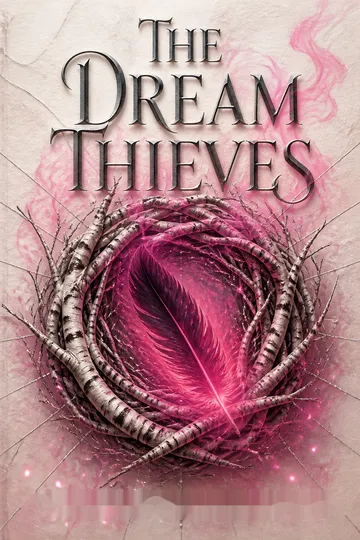
The Dream Thieves is praised for its complex characters, particularly Ronan Lynch, and beautiful writing. Readers appreciate the focus on character development and relationships, though some find the plot slow. Many consider it better than the first book, with compelling dream magic and intense emotions. The series is noted for its atmospheric setting, intricate symbolism, and ability to inspire deep reader attachment. Some criticize Blue's reduced role and occasional confusion in the narrative, but overall, fans are captivated by the unique blend of magic and reality.
People Also Read




Characters
Ronan Lynch
The dreaming rebelRonan is the middle Lynch brother, a fierce, darkly funny student whose anger often speaks more readily than his tenderness. He is intensely loyal to Gansey, protective of younger brother Matthew, and locked in a difficult rivalry with older brother Declan. His father Niall remains a powerful presence in his imagination, both beloved and mistrusted. Ronan’s ability to bring dream objects into waking life makes him unusually capable, but also afraid of what his mind might create. He tests boundaries through cars, fights, and deliberate provocation, while quietly longing for home and for someone to understand him without trying to control him.
Blue Sargent
The unsighted catalystBlue is the non-clairvoyant daughter in a family of psychics. She cannot foresee events as her mother and aunts do, but her presence intensifies other people’s abilities, and her sharp intelligence makes her an active investigator rather than a passive observer. A prophecy about kissing the person she truly loves has made intimacy feel dangerous before she has had a chance to choose it freely. Blue is direct, resourceful, and alert to the ways boys underestimate her. Her loyalty to the Raven boys grows alongside her insistence that friendship requires honesty and that being useful to others cannot be her only form of significance.
Richard Gansey III
The king-seeking idealistGansey is a wealthy Aglionby student pursuing the sleeping Welsh king Glendower along Henrietta’s ley line. His social ease and resources make him a natural organizer, but his quest comes from a deep hunger to find proof that the impossible is real. He treats research as both discipline and refuge, filling journals, maps, and models with evidence. Gansey loves his friends and often tries to protect them by managing their problems, a habit that can confuse care with authority. His confidence conceals a private awareness of mortality, and his bond with Ronan and Adam is central to how he understands home.
Adam Parrish
The self-made seekerAdam is a brilliant, hardworking scholarship student at Aglionby who pays his way through school with several jobs. He has escaped an abusive household and fiercely guards the independence he has built, making assistance feel dangerously close to control. His friendship with Gansey offers belonging but also exposes the difference in their resources and assumptions. Adam is attracted to Blue, though his difficulty asking what she wants reflects how much of his own life has been spent anticipating other people’s needs. His bargain with Cabeswater intensifies his struggle to remain himself while accepting a power larger than his individual ambitions.
The Gray Man
The scholarly hit manKnown only by his chosen alias, the Gray Man is a calm, highly trained professional hired to locate supernatural artifacts. He is as comfortable studying Old English poetry as entering a room by force, and he prefers careful observation to needless violence. His years of service to Greenmantle have made him skilled at suppressing emotion, but his interest in Maura and the Lynch family unsettles that practiced detachment. The Gray Man’s reserve is not emptiness: beneath it lie a history of fear, an attachment to scholarship, and a complicated wish to stop being defined by the work that pays his bills.
Joseph Kavinsky
The reckless dreamerKavinsky is an Aglionby student whose white Mitsubishi, forged identities, drugs, and street racing make him a conspicuous threat in Henrietta. He uses mockery and spectacle to control how others see him, but his attention to Ronan suggests a more private recognition between them. Kavinsky is drawn to risk and to the power of getting what he wants immediately. He treats creation as permission to dominate rather than as a responsibility shared with others. His apparent fearlessness is difficult to separate from self-destruction, and his influence forces Ronan to examine whether shared abilities create kinship or merely a more dangerous rivalry.
Declan Lynch
The guarded elder brotherDeclan is the eldest Lynch brother, polished and socially adept, with a strong instinct for managing risks around his family. Since Niall’s death, he has carried legal and practical responsibilities that leave him wary of Ronan’s defiance. He is often treated as the family’s liar or antagonist, yet his vigilance suggests someone who has spent years anticipating danger. His relationship with Ronan is strained by resentment and unspoken knowledge, while his affection for Matthew remains less openly expressed.
Matthew Lynch
The trusting youngest brotherMatthew is the youngest Lynch brother, warm, earnest, and easy to like. He brings uncomplicated affection to a family shaped by secrecy and conflict, and both Declan and Ronan rely on him more than they admit. Matthew is less guarded than his older brothers, which makes him a source of comfort but also leaves him vulnerable to their choices. His memories of Niall and Aurora offer Ronan clues that the family’s past is not as settled as it seems.
Noah Czerny
The vanishing friendNoah is a gentle, slouching member of Gansey’s circle who is already dead, though the ley line lets him appear remarkably solid at times. He uses quiet humor to soften tense situations and often notices emotional truths the others avoid. His connection to the group is both affectionate and precarious, since his presence depends on forces the boys do not fully understand. Noah’s persistent longing for ordinary life gives his jokes an undertow of sadness.
Maura Sargent
Blue’s psychic motherMaura is Blue’s mother and one of the clairvoyants who run the household at 300 Fox Way. She combines warmth with authority, treating psychic practice as a skill to study rather than a source of unquestionable truth. Maura is protective of Blue without fully understanding how much her daughter wants a life beyond being useful to others. Her curiosity and openness draw her toward the Gray Man, even as she remains attentive to the danger surrounding him.
Calla
The blunt psychic boxerCalla is a large, forceful psychic with a gift for sensing the histories and destinations attached to objects. She speaks bluntly, boxes regularly, and is more comfortable challenging people than soothing them. Her practical skepticism makes her a useful counterweight to the group’s romantic ideas about magic. Calla is loyal to Maura and Blue, though her affection often arrives disguised as impatience.
Persephone
The quiet ritualistPersephone is a soft-spoken psychic who interprets dreams and guides difficult rituals. Her small manner can make her seem distant, but she is alert to what people conceal from themselves. She approaches Adam with patience while refusing to flatter his belief that endurance alone can solve every problem. Persephone’s care is deliberate and sometimes unsettling, because she understands that helping someone may require leading them toward truths they would rather avoid.
Niall Lynch
The absent dreamer fatherNiall is the dead father of Declan, Ronan, and Matthew, remembered as charming, unreliable, and difficult to read. He brought wealth and strange gifts into the family but left behind rules that continue to govern his sons. Ronan loved him intensely, though Niall’s stories and silences made trust complicated. Even in absence, Niall shapes the brothers’ competing ideas of responsibility, loyalty, and what it means to inherit something.
Aurora Lynch
The quiet Lynch motherAurora is the Lynch brothers’ mother, remembered by Ronan as gentle and affectionate. Her quiet presence contrasts with Niall’s charisma and with the brothers’ sharply different temperaments. Ronan associates her with the Barns and with a version of family life he cannot easily recover. Her importance to him is expressed less through conversation than through the memories and hopes he attaches to home.
Dr. Colin Greenmantle
The collecting employerGreenmantle is the professor who funds the Gray Man’s search for supernatural artifacts. He is impatient, possessive, and accustomed to treating rare objects as acquisitions for a collection. His influence rests on money, information, and the ability to make other people fear what he may do next. Greenmantle’s interest in the Greywaren exposes the collision between scholarship and ownership: he wants the impossible, but not necessarily to understand it.
Orla
The flamboyant psychic cousinOrla is Blue’s older cousin, a clairvoyant who works the family’s psychic hotline and enjoys being noticed. She is sociable, theatrical, and comfortable using her appearance to command attention. Her presence occasionally sharpens Blue’s insecurity, but Orla is not simply a rival. She represents another way of inhabiting the family’s unusual gifts, without Blue’s resistance to being defined by them.
Helen Gansey
Gansey’s capable sisterHelen is Gansey’s older sister, poised and efficient in the demanding world of their family. She helps manage the practical details of their mother’s political life and can read her brother’s distress beneath his polished manner. Helen’s teasing often exposes what Gansey is trying not to say, but her care is concrete: she makes room for his friends and steps in when a crisis exceeds his ability to manage it alone.
Roger Malory
Gansey’s Welsh mentorMalory is an elderly British academic who has advised Gansey on ley lines and Welsh history. He shares Gansey’s appetite for research but approaches the subject with the looseness of a scholar who enjoys following an unexpected clue. His eccentric interests, including competitive pigeons, make him an amusing presence, while his knowledge helps Gansey consider that Cabeswater may depend on a stable source of energy.
Plot Devices
Ronan’s dreammaking
Dreams become physicalRonan can bring objects from dreams into waking life, a capacity inherited from his father and central to the Greywaren mystery. The power first appears through small, convincing objects, then grows dangerous when nightmares cross the same boundary. Its limits depend not only on imagining an object but on understanding and remembering it. The ability becomes more ethically charged as Ronan learns that dreammaking can drain the ley line sustaining Cabeswater. It connects his private inheritance to the group’s public quest and makes the difference between creation and theft a practical question.
The Henrietta ley line
Magic’s unstable power sourceThe ley line is an invisible route of spiritual energy running through Henrietta and the forest of Cabeswater. Gansey follows it in search of Glendower, while Adam’s bargain lets him feel its condition directly. When its energy surges, electrical systems fail and supernatural effects intensify; when it is depleted, Cabeswater and Noah become unstable. Adam discovers that stones, wells, streams, and damaged ground are diverting the line. The ley line ties the quest’s geography to the characters’ actions, turning exploration into a question of maintenance and shared responsibility.
The Greywaren
A person mistaken for an artifactGreenmantle’s agents search for the Greywaren as if it were a portable antique, something they can locate, seize, and add to a collection. The search brings the Gray Man to the Lynch family and turns Ronan’s unusual ability into a target. The name itself points to the gap between what the hunters think they understand and what the power actually is. It also drives the story’s central conflict between treating magic as property and recognizing that it is bound to a person, a place, and the relationships around them.
Tarot and scrying
Intuition becomes a working methodThe psychics at 300 Fox Way use tarot, object-reading, and scrying to investigate hidden histories and uncertain futures. These practices do not provide simple answers; they require interpretation, trust, and a willingness to accept risk. Persephone uses a scrying ritual to help Adam encounter Cabeswater within himself, while Calla reads the shield boss and Camaro wheel for traces of the past. Tarot gives Adam a framework for recognizing his capacity to connect clues, but the visions remain open to error and manipulation.
The night horrors
Nightmares cross into waking lifeThe birdlike night horrors are creatures from Ronan’s recurring nightmares. They attack him in sleep and eventually appear in the physical world, making his fear dangerous to his friends as well as to himself. Their presence links Ronan’s hidden trauma to his dreammaking ability, while their claws and beaks supply a recurring threat during the climax. Ronan’s changing relationship to them matters: he first understands them only as enemies, then learns that his own shame has shaped how he sees them and what he believes they mean.
FAQ
Synopsis & Basic Details
What is The Dream Thieves about?
- Secrets and Dream Power: The story follows Ronan Lynch, who can pull objects from his dreams, as he grapples with his abilities and family secrets.
- Prophecy and Love: Blue Sargent navigates a prophecy that she will kill her true love if she kisses him, while her feelings for the Raven Boys grow.
- A Quest and a Threat: The group continues their quest for the Welsh king Glendower, while a mysterious hitman, the Gray Man, seeks a powerful artifact.
Why should I read The Dream Thieves?
- Intricate Character Dynamics: The novel explores complex relationships and internal struggles of its characters, offering a deep emotional experience.
- Unique Magical System: The blend of dream manipulation and ley line magic creates a captivating and original fantasy world.
- Intriguing Mystery: The quest for Glendower and the secrets surrounding the Greywaren keep readers engaged and guessing.
What is the background of The Dream Thieves?
- Mythological and Historical: The story draws from Welsh mythology, particularly the legend of Owen Glendower, and incorporates elements of ley lines and ancient magic.
- Psychological and Emotional: The characters' internal struggles with identity, family, and destiny are central, adding a psychological depth to the narrative.
- Contemporary Setting: The story is set in a modern-day rural Virginia town, blending the mystical with the mundane.
What are the most memorable quotes in The Dream Thieves?
- "A secret is a strange thing.": This opening line sets the tone for the novel, highlighting the importance of secrets and their impact on the characters' lives.
- "Those who dream by night in the dusty recesses of their minds wake in the day to find that it was vanity: but the dreamers of the day are dangerous men, for they may act their dreams with open eyes, to make it possible.": This quote emphasizes the power and danger of dreams and the potential for action.
- "I'm not going to be a sidekick.": Blue's declaration reflects her desire for agency and her refusal to be defined by her lack of psychic abilities.
What writing style, narrative choices, and literary techniques does Maggie Stiefvater use?
- Lyrical Prose: Stiefvater employs a poetic and evocative writing style, rich in imagery and sensory details, enhancing the mystical atmosphere.
- Multiple Perspectives: The narrative shifts between different characters' points of view, providing a multifaceted understanding of the story and their internal conflicts.
- Foreshadowing and Symbolism: The novel is filled with subtle foreshadowing and recurring symbols, adding layers of meaning and complexity to the plot.
Hidden Details & Subtle Connections
What are some minor details that add significant meaning?
- The recurring mention of the number three: This number appears in various contexts, such as the three kinds of secrets, the three Lynch brothers, and the three ravens on the shield boss, hinting at a deeper significance.
- The descriptions of the cars: The details about the cars, especially the Pig and Kavinsky's Mitsubishi, reflect the characters' personalities and their relationship to power and control.
- The use of Latin: The Latin phrases and words that appear in Ronan's dreams and on the puzzle box hint at the ancient and mystical nature of his abilities.
What are some subtle foreshadowing and callbacks?
- The mention of the hornets: The reference to the hornets that killed Gansey in a previous dream foreshadows the danger and violence that the characters will face.
- The description of the dreaming tree: The recurring descriptions of the dreaming tree in Cabeswater foreshadow its significance as a source of power and connection to the ley line.
- The repeated phrase "It's not my job to tell other people's secrets": This phrase, used by both Noah and Ronan, highlights the theme of secrets and the burden of knowledge.
What are some unexpected character connections?
- The Gray Man and Maura Sargent: Their connection is unexpected, as it reveals a shared understanding of loss and a mutual attraction that transcends their different worlds.
- Ronan and Kavinsky: Their shared ability to pull objects from dreams creates a complex dynamic, blurring the lines between rivalry and understanding.
- Adam and Cabeswater: Adam's connection to Cabeswater is more profound than initially thought, as he becomes a conduit for its power and a key to its restoration.
Who are the most significant supporting characters?
- Orla: Blue's cousin, a psychic who provides a contrasting perspective on the psychic world and offers a glimpse into Blue's family dynamics.
- Declan Lynch: Ronan's older brother, whose strained relationship with Ronan and hidden knowledge of their father's secrets add tension to the plot.
- Persephone: A psychic who helps Adam understand his connection to the ley line and provides guidance on his journey.
Psychological, Emotional, & Relational Analysis
What are some unspoken motivations of the characters?
- Ronan's desire for control: Beneath his tough exterior, Ronan struggles to control his dream powers and his fear of losing control over his life.
- Blue's need for agency: Blue's desire to be more than just a sidekick stems from her need to define her own identity and not be limited by her lack of psychic abilities.
- Gansey's fear of death: Gansey's obsession with Glendower is driven by his fear of his foretold death and his desire to find a way to cheat fate.
What psychological complexities do the characters exhibit?
- Ronan's self-destructive tendencies: Ronan's internal conflict and self-loathing manifest in his reckless behavior and his struggle to accept his abilities.
- Adam's internal conflict: Adam's struggle with his past and his desire for independence create a complex character who is both vulnerable and fiercely independent.
- Gansey's hidden vulnerability: Beneath his confident exterior, Gansey hides a deep-seated fear of death and a need for control, which are revealed through his interactions with the others.
What are the major emotional turning points?
- Ronan's acceptance of his powers: Ronan's decision to use his dream powers to save his brother and fight Kavinsky marks a turning point in his acceptance of his abilities.
- Blue's confession to Adam: Blue's revelation about the prophecy and her feelings for Gansey is a major emotional turning point, highlighting her internal conflict.
- Adam's realization of his connection to Cabeswater: Adam's understanding of his role as the Magician and his connection to the ley line marks a shift in his character development.
How do relationship dynamics evolve?
- Ronan and Gansey's bond: Their relationship deepens as they navigate the challenges of their quest and their shared experiences, revealing a complex bond of loyalty and understanding.
- Blue and Adam's relationship: Their relationship is tested by Blue's prophecy and Adam's internal struggles, leading to a painful but necessary separation.
- The Gray Man and Maura's connection: Their relationship evolves from a professional encounter to a deeper connection, as they find solace and understanding in each other's company.
Interpretation & Debate
Which parts of the story remain ambiguous or open-ended?
- The true nature of the Greywaren: The exact nature and purpose of the Greywaren remain ambiguous, leaving room for interpretation and speculation.
- The extent of Ronan's powers: The limits of Ronan's dream powers are never fully defined, leaving the reader to wonder about their potential and consequences.
- The future of the ley line: The long-term effects of the ley line's awakening and the disappearance of Cabeswater are left open-ended, hinting at future challenges.
What are some debatable, controversial scenes or moments in The Dream Thieves?
- The fight between Adam and Gansey: Their argument about control and agency raises questions about power dynamics and the nature of friendship.
- Ronan's treatment of Kavinsky: Ronan's violent actions towards Kavinsky spark debate about the morality of his actions and the consequences of his powers.
- Blue's decision to not kiss Adam: Blue's decision to not kiss Adam, despite her feelings, raises questions about the nature of fate and free will.
The Dream Thieves Ending Explained: How It Ends & What It Means
- Cabeswater's Return: The ley line is restored, and Cabeswater reappears, but the characters are forever changed by their experiences.
- Ronan's Acceptance: Ronan embraces his dream powers and his role as a Greywaren, but the future remains uncertain.
- A New Path for Adam: Adam accepts his role as the Magician and begins to understand his connection to the ley line, setting him on a new path.
The Raven Cycle Series
About the Author




Download PDF
Download EPUB
.epub digital book format is ideal for reading ebooks on phones, tablets, and e-readers.








