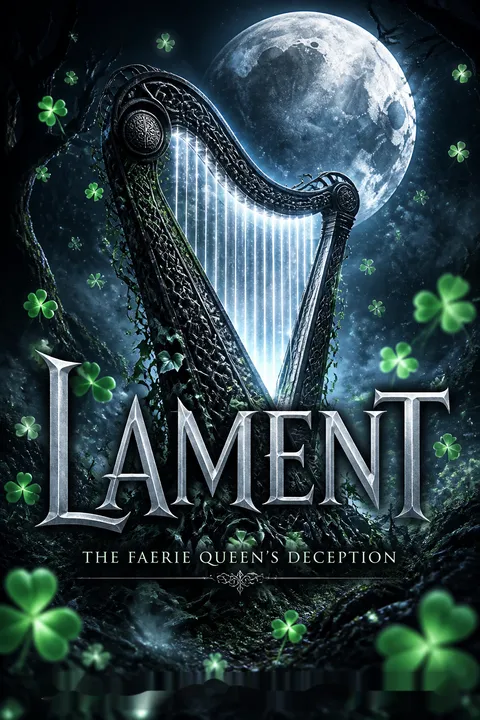


Plot Summary
Prologue
A boy clings to the stones of a well while hounds search the night above him. In a distant chamber, a golden woman burns a caged dove, and each flame makes the boy's heart falter until he sinks beneath the water.
The Hunter pulls him out before he can die and puts him back to work. The scene offers no explanation for the boy's imprisonment, but makes its terms unmistakable: someone else controls his body, and pain reaches him through a fragile bird.
The prologue makes captivity physical before the novel has named its politics. The boy's body is hidden in cold water, yet his suffering is governed by what happens to the dove elsewhere. That separation turns the bird into more than a symbol: it is a vulnerable second body through which power can punish its captive. The Hunter's rescue is not liberation, only the return of a useful prisoner to his task. This distinction prepares the reader to recognize how apparent protection can preserve the very system that causes harm.
Luke Joins the Competition
Sixteen-year-old Deirdre Monaghan arrives at a regional music competition bracing for her usual bout of stage fright. After she rushes to the bathroom to vomit, a pale, unfamiliar flutist named Luke Dillon helps her recover, carries her harp outside, and challenges her to improvise rather than hide behind a perfected arrangement.
Deirdre finds a new melody while they play together, then performs it with him before the judges. The music gives her a confidence she has never felt onstage, and the crowd rises to applaud. Luke disappears backstage before she can learn why he sought her out, leaving her with a performance that felt less like a test than an opening door.
Deirdre's first change is not a discovery of supernatural power but a shift in authorship. She has spent years perfecting music that other people can assess, while Luke pushes her to make a choice in real time. Improvisation matters because it converts disciplined skill into self-directed action. His presence is both enabling and unsettling: he seems to know which part of her is waiting to emerge, yet she does not know him well enough to judge his intentions. The applause rewards her, but the more consequential result is her brief experience of being artistically visible on her own terms.
The Clover-Scented Stranger
At the festival reception, Deirdre slips away from her demanding aunt Delia and finds a four-leaf clover in the grass. A handsome, freckled stranger appears, circles her, and comments on her scent before Luke arrives and takes her away. The stranger vanishes, leaving only an herbal smell.
Luke dismisses what Deirdre saw, then introduces her to Eleanor, a dazzling blond woman who praises Deirdre's performance and promises to keep watch. A conservatory representative offers Deirdre and Luke a chance to apply, and the festival announces them as grand-prize winners. Luke asks Deirdre to meet him again; she agrees, unaware that the praise, the clovers, and the stranger's attention are connected.
The reception turns public success into exposure. Deirdre has gained recognition, but she cannot control who notices her or what they want from her. The freckled stranger's circling makes attention feel predatory, while Eleanor's gracious praise disguises a similar imbalance beneath social polish. Luke intervenes, but his refusal to explain the stranger leaves Deirdre dependent on his interpretation. The repeated clovers function as an invitation she does not yet understand. Her acceptance of another meeting is emotionally credible because Luke has made her feel seen, even as the scene plants evidence that being seen may carry a cost.
A Birthday Moves Clover
The next morning, Luke appears at Deirdre's home without explaining how he found it and takes her for ice cream. When he throws away a four-leaf clover she has been carrying, he gives her an old iron key as a private token. Her grandmother, Granna, sees Luke and reacts with alarm, then gives Deirdre an heirloom iron ring without explaining its purpose.
After Luke leaves, Deirdre tells her best friend James what happened. James admits he sometimes has psychic hunches and asks her to test whether she can move the clover. It skitters into her hand without a breeze. James recognizes the act as telekinesis, and Deirdre's ordinary life becomes impossible to defend.
This sequence makes Deirdre's new power verifiable rather than merely atmospheric. She and James test it together, so the discovery gains the intimacy of shared evidence rather than the authority of Luke's claims. The iron objects carry a second kind of knowledge: Granna and Luke both protect Deirdre, but neither gives her the whole reason. Their secrecy mirrors the control she resents at home, even when it is motivated by care. James's willingness to believe her matters psychologically; he gives her a witness who does not demand that she choose between affection and skepticism.
The World Behind Clover
After Luke returns at twilight, Deirdre spots the freckled stranger again, but Luke's arrival drives the figure away. The following day, Luke takes her to Richmond and finally explains that four-leaf clovers help people see faeries, who seek to torment or abduct humans. He says Deirdre is learning to see them without the clovers and confirms that the strange hounds belong to the hidden world.
In a church, she demonstrates her growing ability by making a rosebud bloom in her hands. Luke reacts with distress, then later admits he does not know what to do with her. The revelation deepens their closeness, but Deirdre sees that her power frightens him as much as it attracts him.
The supernatural explanation does not settle Deirdre's uncertainty; it relocates it. Her talent, once a private artistic discipline, now makes her legible to beings who treat attention as possession. Luke's warning is useful, but his distress at the blossoming rose reveals that he understands more than he can safely explain. Deirdre's demonstration is a bid for honesty between them, not merely proof of magic. His reaction frustrates her because intimacy has begun to depend on a knowledge he withholds. The church offers temporary safety, yet the rose's sudden life makes clear that no familiar place can keep her gift contained.
The Cat in the Birches
While waiting beneath the birches after a wedding gig, Deirdre smells the same rotten herbal scent and sees a huge, long-bodied cat flicker into view. It knocks her down and bites her arm. Luke arrives in time to seize the beast and kill it with a dagger, moving with the calm efficiency of someone who has done this before.
Granna collects Deirdre and listens as she recounts the attack. She explains that iron wards off faeries, that the clovers are drawing them near, and that Luke appeared unchanged when she saw him years earlier. Granna believes Luke belongs to the faerie world. Deirdre refuses to accept that judgment, clinging to the fact that he saved her.
The attack forces Deirdre to confront the practical stakes of knowledge withheld: without the iron ring she has accidentally lost, she is physically vulnerable. Luke's rescue is real, but his practiced killing makes his protection difficult to separate from danger. Granna offers a coherent explanation and still cannot explain everything, so Deirdre must weigh an elder's warning against her own experience. Her loyalty to Luke is not simple denial. He has acted as her protector, while the family members who might keep her safe have spent years deciding what she can know. The scene makes trust an active, risky judgment.
The Bodies in Luke's Mind
At night, Deirdre and Luke enter an iron-fenced cemetery so she can test whether she can read his mind. As he lets her look, she sees flashes of bodies, a knife, and Luke's own bloodied hands. She understands that he has killed many people, and rejects his attempt to explain or ask forgiveness.
On their way home, Eleanor appears in the mist with a bone knife and pressures Luke to finish his assignment by killing Deirdre. Luke refuses and admits he loves her. Eleanor vanishes after draining Deirdre's strength, leaving her so exhausted that Luke carries her home. The revelation has changed their closeness into a bond marked by both tenderness and evidence she cannot forget.
Mind-reading collapses the distance Deirdre has relied on to love Luke safely. She does not receive a polished confession but involuntary images of victims, which makes knowledge feel like a secondhand trauma rather than information. Her anger protects a moral boundary: affection cannot erase the dead. Yet Eleanor's arrival complicates the apparent choice between monster and protector, since Luke is also being ordered to kill Deirdre. His declaration of love arrives under pressure, not as a clean resolution. The chapter's emotional force comes from incompatible truths held together: Luke has committed terrible acts, and he is now trying to refuse another one.
Granna Falls Silent
James repeatedly calls Deirdre because he senses something has happened to Granna. The warning proves true: Granna lies in a hospital coma with no clear medical cause. At the hospital, Deirdre overhears her mother Terry and Delia arguing over strange childhood experiences, suggesting the family has faced the faeries before.
James has also investigated Thornking-Ash, a conservatory recruiting unusually gifted musicians; its director believes musical talent often accompanies psychic abilities.
At work, the freckled faerie returns, but James drives him away with an iron fireplace shovel. Luke then confirms that the faeries attacked Granna. Deirdre must absorb the danger at her doorstep while her family continues to hide the history that might explain it.
Granna's coma makes the supernatural threat intimate and cumulative: the danger is no longer aimed only at Deirdre, and family knowledge has not prevented injury. The hospital's ordinary procedures cannot name what has happened, while James's intuition and Thornking-Ash's research offer partial frameworks. Neither is enough to restore control. Terry and Delia's argument exposes a family habit of converting frightening memories into silence, a habit Deirdre is now forced to break. James's defense at the ice-cream shop shows that loyalty can become practical action, not simply reassurance. The section widens the story from a romance into a struggle over who gets to interpret unusual experience.
Luke's Heart Burns
Luke arrives at Deirdre's house carrying Granna's recovered iron ring and lets her see the deep scars around the gold torc on his arm. When she touches the scar across his chest, she experiences a memory of him stabbing himself in an attempt to die. Soon after, his body convulses as the torc glows: the Faerie Queen is punishing him for refusing to kill Deirdre.
Deirdre can sense the pain and might be able to stop it, but Luke warns that doing so would reveal her power. She stays beside him and lets the punishment run its course. On the drive to a scheduled party, he carefully explains that the Queen's victim was once human and that his gift and hers are connected.
Luke's scars change his secrecy from romantic mystery into evidence of coercion. His past attempt to destroy himself suggests that obedience has been more than a role he could simply abandon. Deirdre's decision not to stop the punishment is a painful form of restraint: she respects Luke's assessment of the danger even while witnessing his suffering. This is not passive devotion, because she remains present and makes the cost visible. Their growing intimacy depends on a difficult distinction between rescuing someone and overriding their judgment. The Queen's control makes that distinction urgent, since any act of care can become another route by which she finds Deirdre.
A Queen's Old Crime
A mistaken party date leaves Deirdre and Luke alone at the Warshaw estate, where music draws two members of the Daoine Sidhe, Brendan and Una, from the thorn trees. Deirdre trades Brendan an original tune for Luke's history. He explains that the Faerie Queen stole Luke's soul after he refused her advances, then forced him to kill under threat of destroying that soul.
Luke's refusal to kill Deirdre has made him disobedient again. Deirdre gives Una a tear in exchange for a future favor. Afterward, Luke takes Deirdre to dinner, where she briefly discovers she can start his car with her mind. Her mother then calls her home: Granna has died, and James is missing after a car crash.
Brendan's account reframes Luke's violence without absolving it. The Queen's coercion explains how a person who once refused killing became an assassin, but Deirdre still inherits the knowledge of the victims and their deaths. Her bargain with Una shows her adapting to faerie etiquette by offering something personal rather than assuming help is free. The brief car-starting experiment gives her power a moment of playful possibility, immediately overtaken by losses she cannot control. Granna's death and James's disappearance arrive together, converting a story about Luke's past into a present emergency. Deirdre's emotional attachment now competes with obligations to the people who have sustained her ordinary life.
Blood on Dun Lane
Peter tells Deirdre that James's car struck a tree and that searchers have found blood but no body. Her parents refuse to take her to the site, so Sara drives her along Dun Lane. Deirdre finds Luke's eye drops and a blood-spattered phone in the undergrowth. Una appears and says both James and Luke are alive, held by the Queen, then gives Deirdre a clue pointing her toward Thomas Rhymer and promises a favor.
Deirdre later enters Luke's abandoned car through a memory and finds Granna's jar of protective herbal mixture. A strange, tailed faerie passes nearby. With James's fate uncertain and Luke's belongings at the wreck, Deirdre has to seek help beyond her human circle.
The crash site turns absence into a physical landscape: a lost mirror, blood, and a phone that still rings. Deirdre refuses the certainty others impose on her, but her hope is not baseless; Una supplies information at a price and offers a path forward. Sara's presence matters because she is no longer simply a coworker watching Deirdre's unusual life from the edge. The discovery of the protective mixture demonstrates Deirdre's growing ability to use Luke's memories as tools, though the experience also blurs emotional boundaries. Each clue gives her agency while confirming that both boys are already inside the Queen's reach.
Delia Opens the Hunt
Delia catches Deirdre researching the solstice, takes Granna's iron ring, and admits that a faerie bargain shaped her life and voice. She shoves Deirdre outside after burning thyme to summon the Hunter. A pack of identical white hounds charges after Deirdre, who runs through fields and over fences until she reaches a mushroom ring.
Thomas Rhymer waits inside it and explains that cloverhands attract faeries because their energy resembles the Queen's; the Queen wants Deirdre dead because she cannot tolerate a rival center of power. As the hounds break through the ring, Thomas confirms that the Queen also holds James. Deirdre's family secrets have become part of the pursuit, not protection from it.
Delia's betrayal is especially destabilizing because she has occupied the familiar role of an irritating relative, not an obvious supernatural agent. Her disclosure links family advantage to an earlier bargain, showing how a benefit can conceal a cost paid by someone else. The chase strips Deirdre of time for explanation; she has to run before she can decide whom to trust. Thomas gives the pursuit a political logic: the Queen fears a rival source of power, not merely an unusually gifted girl. The mushroom ring offers temporary protection, but its failure prevents knowledge from becoming a substitute for action.
The Hunter's Bone Dagger
When the Hunter reaches Deirdre, she uses her growing power to pull his bone dagger into her own hand and shove him away, then collapses. She wakes at night among tiny faeries, who give her the name O'Brien and point her toward the place where her story began. Deirdre steals Delia's car and Granna's remaining protective mixture.
At the high school, she finds eyeless faeries tormenting a huge water bull and throws the mixture at one, which withers before her. The others retreat, and the bull escapes. Deirdre has learned that her power can do more than protect herself; by freeing one of the Sidhe's creatures, she earns the favor that may help her reach James and Luke.
Deirdre's defense against the Hunter marks a change from survival by luck to deliberate use of power. She does not overpower him through strength alone; she turns his weapon against his immediate purpose and buys herself time. The faeries' gift of O'Brien supplies a piece of naming magic without explaining all its consequences. Her decision to free the water bull is ethically significant because she acts for a creature that cannot repay her in any ordinary way. That choice also creates a reciprocal obligation among the Sidhe. Her growing agency is therefore relational: power becomes consequential when she uses it to protect someone beyond herself.
The School Becomes a Stage
At the high school auditorium, Deirdre finds James badly wounded and Aodhan wearing his bloodstained shirt. Eleanor stages a cruel imitation of Deirdre's song, showing that Luke's soul remains trapped in a dove and that restoring it could kill him. The Queen appears and drains Deirdre's power by using her name.
Aodhan hangs Deirdre upside down and takes her iron key, but she drives a nail through his cheek; flowers erupt from the wound and consume him. Luke enters, summons the Daoine Sidhe, and refuses the Queen's orders. Deirdre recognizes the name O'Brien as the Queen's human name and speaks it aloud, confronting her with the truth of her former humanity. The faerie court turns on its ruler and crowns Eleanor.
The auditorium makes the conflict a performance in which the Queen attempts to dictate every role: Deirdre as ordinary girl, Luke as obedient killer, James as disposable body. Deirdre's refusal to accept those parts begins with a physical act against Aodhan, using the iron nail already made dangerous by the faeries' vulnerability. Naming the Queen counters her authority by recovering the human identity she has disowned. Yet the Queen's defeat is not Deirdre's triumph over the faerie world; the court's violence reveals that power can change hands without becoming humane. Eleanor's elevation leaves the future unstable rather than neatly purified.
A Life for a Life
The new Queen, Eleanor, returns Luke's soul in its cage, while Brendan and Una bring James back from the auditorium alive. The Sidhe offer Deirdre one life in return for the water bull she saved. Though she longs to spend the favor on Luke, she chooses James, whose body is failing. Then Deirdre opens Luke's cage and guides the dove back into him.
Luke is restored, but he cannot return to an ordinary human life; Brendan and Una welcome him among the Sidhe, bound to music. He and Deirdre share one last night together before he must leave. James lives, Eleanor rules, and Deirdre loses the future she wanted with Luke while preserving his freedom.
The resolution tests whether Deirdre's love means possession or the ability to choose another person's good when it costs her. She saves James with the favor because his life is immediately at stake, then releases Luke's soul without pretending that restoration guarantees a shared future. Luke's belonging among the Sidhe offers freedom from the Queen's direct control, but not a return to ordinary life. The ending therefore grants each character something partial: James survives, Luke regains himself, and Deirdre keeps her agency, yet the romance remains a loss. The novel closes on choice rather than a conventional reward.
Analysis
Lament makes artistic talent the first sign of a deeper vulnerability. Deirdre's music earns her recognition, but recognition also draws beings who interpret beauty as something to possess. Her early stage fright is therefore more than a personal obstacle: it shows how difficult it is for her to occupy public space without feeling judged. Luke's challenge to improvise gives her a first experience of choosing rather than merely performing, a capacity that later becomes essential when she must act without a reliable authority to follow.
The novel's central moral tension is its refusal to make love erase harm. Deirdre sees Luke's victims directly through his memories, so his history cannot be softened into a vague tragic past. The Queen's coercion explains his obedience but does not make the deaths disappear. Luke, in turn, is not freed by Deirdre simply loving him. His soul must be recovered, and he must choose a life beyond the Queen's command. Their romance matters because it creates a reason to resist, not because it guarantees a conventional shared future.
Power in the story is relational and conditional. Iron wards off some faeries, names can establish leverage, music summons allies, and favors create obligations. Deirdre grows strongest when she combines observation with deliberate choice: she protects herself, frees the water bull, and gives the Sidhe a reason to help. The climactic choice of James over Luke is the clearest measure of her development. She does not let longing decide whose life matters more. By choosing James and then returning Luke's soul, she refuses the Queen's logic that people are interchangeable pieces in a game. The ending grants freedom and survival, but not possession. Its bittersweetness comes from treating love as an act of release rather than a claim on another person's future.
Review Summary
Lament received mixed reviews, with an average rating of 3.66 out of 5. Some readers praised Stiefvater's lyrical writing and the intriguing faerie lore, while others criticized the instant romance and predictable plot. The main character, Deirdre, was polarizing, with some finding her relatable and others considering her unrealistic. Luke, the love interest, was generally well-received. Many readers appreciated the musical elements and the bittersweet ending. Some felt the book had potential but fell short, while others thoroughly enjoyed the story and characters.
People Also Read

Characters
Deirdre Monaghan
Harpist with hidden powerDeirdre is a gifted sixteen-year-old harpist whose disciplined preparation masks intense stage fright and a long habit of feeling invisible at school. She notices details others overlook, listens closely, and often turns uncertainty into a problem she can study. Her talent has been praised so frequently that she longs to be valued for more than performance. James is her closest friend, while Luke's arrival draws her into an unfamiliar intimacy and a dangerous hidden world. Deirdre's central struggle is not simply learning what she can do; it is deciding when to trust her own perceptions and how to use power without surrendering judgment to people who claim to know what is best.
Luke Dillon
Flutist with old secretsLuke is a pale, self-contained young flutist who appears unexpectedly at Deirdre's music competition. He is observant, musically accomplished, and quick to recognize a capacity in her that she has not yet tested. His careful manner and dry humor make him feel intimate, but he keeps crucial facts about himself hidden. He carries the bearing of someone accustomed to danger and watches the world for threats even while flirting with Deirdre. Their shared music gives him a way to connect that words cannot provide. Luke's appeal lies partly in his gentleness, partly in the sense that his restraint is hard-won, making Deirdre's attraction inseparable from her questions about who he is.
James
Deirdre's loyal best friendJames is Deirdre's witty, dependable best friend, a piper who treats humor as both entertainment and a way to lower the pressure in difficult moments. He knows her habits well enough to recognize when something is wrong, and he does not dismiss her unusual experiences simply because they sound impossible. His own intuitive hunches give him a personal stake in the supernatural revelations. James offers Deirdre a history and emotional safety that differ from Luke's intensity, while his teasing keeps their friendship from becoming solemn. Beneath the jokes is a young man who wants to be taken seriously and who repeatedly shows that loyalty means showing up, even when the danger is beyond anything he understands.
Granna
Keeper of family safeguardsDeirdre's grandmother is practical, spiritually curious, and difficult to fluster. She knows more about the faeries than she initially tells Deirdre, and she uses iron and herbal remedies as protections. Her calm can seem like indifference, but it is also a defense formed by years of dealing with dangers she cannot fully control. Granna understands that young women in her family attract unwanted attention, yet her protective instincts do not prevent her from withholding explanations. Her relationship with Deirdre is affectionate but marked by the older generation's familiar instinct to manage risk through silence.
Terry
Deirdre's controlling motherTerry is Deirdre's mother, a capable caterer who plans carefully and pushes her daughter toward a successful musical future. She expresses care through preparation, food, and expectations, but often fails to ask what Deirdre wants. Her relationship with her sister Delia carries old competition and unspoken disappointment. Terry's emotional restraint keeps household life orderly until family history and supernatural danger make that order impossible to maintain. She is neither simply an obstacle nor an ideal confidante; her good intentions are real, but Deirdre experiences them as control when they leave no room for her own decisions.
Delia
Aunt with polished edgesDelia is Deirdre's aunt and Terry's glamorous, demanding sister. She is a professional singer who judges other people's talent and presentation with practiced confidence. Her sharp comments make her an easy target for Deirdre's private irritation, while her history with Terry reveals that their rivalry is older and more painful than their banter suggests. Delia values control, status, and the advantages her life has brought her. Her polished public image contrasts with the family secrets she keeps, making her difficult to read even when she is physically present in the room.
The Faerie Queen
Monarch who commands obedienceThe Faerie Queen is an ancient, beautiful ruler whose authority reaches from the hidden realm into the human world. She values obedience and treats people as pieces in a game she has the power to arrange. Her beauty is not merely decorative; it helps make domination appear seductive, even benevolent, to those who have not yet seen its costs. She is fascinated by talent and resistant to anyone whose gifts might rival her influence. The Queen's treatment of Luke and her interest in Deirdre expose a ruler who confuses being loved with being obeyed, and who uses spectacle to hide the coercion beneath her courtly power.
Eleanor
The Queen's beautiful emissaryEleanor is an unnervingly beautiful faerie who first appears in human social spaces, where her compliments and polished manners conceal her allegiance to the Queen. She is perceptive, theatrical, and adept at turning another person's expectations into a trap. Her interactions with Luke suggest a long familiarity, but not the safety of friendship. Eleanor enjoys the power of appearances: a gracious smile, a graceful entrance, a performance that makes cruelty look like entertainment. She is dangerous precisely because she can make menace feel like good manners.
Aodhan
Predatory faerie courtierAodhan is the freckled, handsome faerie who circles Deirdre at the festival and returns to provoke her. He uses charm as a hunting tactic, treating other people as objects to be sampled or claimed. His effortless physical grace and conspicuous beauty make him appear almost human, but his appetite and contempt for boundaries expose a more dangerous nature. Aodhan enjoys games in which he controls the rules and his target does not know what is at stake. His presence gives Deirdre an early, concrete example of the difference between attention that recognizes her and attention that wants to possess her.
The Hunter
Relentless supernatural pursuerThe Hunter is a strange, restrained figure associated with a pack of faerie hounds. He pursues his quarry without the theatrical delight shown by other members of the court, making his calmness more unnerving than open rage. His connection to Luke reaches back through memories of captivity, pursuit, and work imposed under threat. The Hunter represents the machinery of the Queen's power: relentless, impersonal, and difficult to bargain with. He follows orders and treats a chase as a task, which makes him frightening in a different way from faeries who openly relish cruelty.
Una
Playful, perilous SidheUna is one of the Daoine Sidhe, a music-loving faerie whose playful manner never makes her safe. She dances, teases, and speaks in riddles, but she understands the bargains and dangers surrounding Deirdre better than she lets on. Una treats human emotion as both a curiosity and a possible source of power, especially when she asks for Deirdre's tear. Her relationship with Brendan is affectionate and argumentative, and her mischief often conceals useful information. She is not a simple ally: her help comes through faerie rules, personal favors, and a delight in watching humans try to keep up.
Brendan
Sidhe musician and storytellerBrendan is a Daoine Sidhe musician who plays the fiddle and values musical skill enough to accept Deirdre's original tune as payment for a story. He is formal, proud, and more cautious than Una, though her teasing frequently punctures his dignity. Brendan knows Luke's history and understands the Queen's power, but he does not volunteer dangerous truths without a fair exchange. His attention to etiquette reflects a culture in which words, gifts, and names can carry consequences. Music gives him a language for recognizing kinship that ordinary human categories cannot explain.
Thomas Rhymer
Truth-bound faerie scholarThomas Rhymer is a human scholar living close to the faerie world, known for a truth-binding gift and a history of disagreement with the Queen. He is intelligent and willing to explain the hidden order of events, but his knowledge does not make him a reliable protector. Thomas understands how faeries gather around power and why Deirdre's presence threatens the Queen. His measured manner contrasts with Una's playful riddling, although both speak from within a world whose rules remain perilous. He offers Deirdre a framework for understanding her situation, not a solution that can spare her from choosing what to do.
Sara Madison
Coworker turned allySara works with Deirdre at Dave's Ice and begins as a talkative, flirtatious coworker who can be tactless about Deirdre's social life. Her confidence is partly a performance, and moments of quiet reveal a more reflective young woman than Deirdre first assumes. Sara accepts Deirdre's account of the faeries after witnessing an encounter herself, then helps her travel when her parents will not. Their relationship grows from awkward workplace familiarity into practical trust, suggesting that recognition can develop between people who have not previously known how to speak honestly.
Rye
Deirdre's watchful houndRye is Deirdre's old white dog with red ears, a familiar presence in her home and on her walks. He is affectionate and loyal, but reacts warily to Luke in a way Deirdre cannot explain. His habits connect the family's ordinary life to the supernatural danger gathering around it. Rye offers no exposition and cannot make decisions for Deirdre, yet his instincts provide an early warning that human appearances are not always trustworthy.
Deirdre's father
Quiet family anchorDeirdre's father is a gentle, understated presence beside Terry's more forceful parenting and Delia's loud certainty. He speaks with Deirdre more easily because he does not turn every conversation into a lesson about her future. His instinct is to protect her from distress, even when she wants the freedom to act for herself. He represents a quieter form of care that is affectionate but not always responsive to what Deirdre says she needs.
Peter
James's protective older brotherPeter is James's older brother, a musician who has pursued a future with his band. He is protective of James and delivers difficult news to Deirdre with the bluntness of someone trying not to collapse under it himself. Their shared worry establishes the depth of James's place in his family and gives Deirdre another ally who wants him found.
Mr. Hill
Deirdre's music teacherMr. Hill is Deirdre's high-school music teacher and an early mentor who recognizes her unusual ability. He supports her musical future and offers practical advice before she performs. His brief uncertainty around Luke hints that the flutist is not as unfamiliar to the world as Deirdre assumes.
Gregory Normandy
Thornking-Ash recruiterGregory Normandy leads Thornking-Ash, a school seeking unusually gifted young musicians. James learns that Normandy links musical ability with other kinds of unusual talent and believes such students need support. His institution broadens the story beyond Deirdre's personal crisis, suggesting that gifts can isolate their bearers and that some adults are trying to understand them.
Plot Devices
Four-leaf clovers
A gateway to faerie sightThe clovers repeatedly appear around Deirdre, first as apparently lucky finds and later as evidence that unseen beings are trying to make themselves visible to her. Luke explains that clover can help some people see faeries, though Deirdre eventually begins to see them without it. The plant also connects Deirdre's emerging ability to the larger supernatural force that draws faeries toward her. Its harmless appearance is misleading: each clover marks a shift in what Deirdre can perceive and in how vulnerable she is to the hidden world.
Iron protections
A fragile supernatural boundaryGranna's heirloom ring and Luke's old key protect Deirdre because iron repels many faeries. Their practical value is established before Deirdre understands why both people insist she carry them. Iron also limits some faeries' ability to touch her, but it is not an absolute defense: powerful beings can approach, threaten, or wait for the protection to be removed. The objects turn family inheritance and a private romantic token into safeguards, while their loss repeatedly exposes how quickly protection can become a liability.
The soul dove
A life held outside its ownerLuke's soul takes the form of a dove trapped in a cage, and harm done to the bird can be transmitted to his body. The image first appears in the prologue as an unexplained mechanism of suffering, then becomes central when Deirdre sees the cage in Luke's memories and learns what the Queen has withheld from him. The dove makes his survival conditional and gives the Queen leverage over his actions. Its release is not a simple cure: Luke must face what his soul's return will mean for his future.
Names and bargains
Words that confer leverageThe faeries treat names as sources of power and favors as obligations rather than casual kindness. Luke's name is difficult for many people to remember, while the name O'Brien becomes crucial to Deirdre's confrontation with the Queen. Una's favor is secured by a tear, and Brendan expects a song in exchange for Luke's story. These exchanges teach Deirdre to ask carefully, offer something meaningful, and listen for what is hidden in a faerie's wording. Language is not merely description in this world; it can create access, protection, and debt.
Music and the solstice
A summons across worldsMusic is both Deirdre's vocation and a force that attracts faeries. Her harp and voice first draw Luke into collaboration, then call the Daoine Sidhe from the thorn trees. The solstice intensifies the connection between worlds, allowing faeries to appear more fully and making Deirdre's abilities stronger as night deepens. Music also gives characters a means of recognition and belonging that is not based on human age or status. The motif turns performance into action: a melody can summon allies, expose feeling, and alter who is able to gather in a place.
FAQ
Synopsis & Basic Details
What is Lament: The Faerie Queen's Deception about?
- A Musician's Unveiling: Sixteen-year-old Deirdre Monaghan, a gifted harpist plagued by performance anxiety, discovers she is a "cloverhand," able to perceive the hidden world of faeries, a gift that thrusts her into an ancient conflict. Her ordinary life is irrevocably altered as she grapples with newfound telekinetic abilities and the terrifying reality of supernatural beings.
- Forbidden Faerie Romance: Deirdre becomes entangled with Luke Dillon, a mysterious and alluring flute player who seems to know more about her and the faerie world than he lets on. Their intense connection is complicated by Luke's own dark secrets and his unwilling servitude to the tyrannical Faerie Queen, who views Deirdre as a threat.
- Survival in a Hidden War: As the summer solstice approaches, thinning the veil between worlds, Deirdre must navigate a treacherous landscape of faerie politics, ancient bargains, and personal betrayals. With her best friend James and grandmother Granna caught in the crossfire, Deirdre must embrace her extraordinary powers to protect those she loves and confront the malevolent Queen.
Why should I read Lament: The Faerie Queen's Deception?
- Rich Irish Folklore: Dive into a world steeped in authentic Irish mythology, where faeries are not whimsical sprites but dangerous, ancient beings with complex rules and cruel games. The novel offers a fresh, darker take on traditional faerie lore, making it a compelling read for fans of urban fantasy and Celtic mythology.
- Deep Emotional Resonance: Experience a coming-of-age story that explores themes of identity, self-acceptance, and the courage to embrace one's true self, even when it's "extraordinary." Deirdre's journey from shy invisibility to powerful agency, coupled with a poignant, star-crossed romance, provides a powerful emotional core.
- Stiefvater's Lyrical Prose: Maggie Stiefvater's distinctive writing style, characterized by evocative imagery, musicality, and sharp wit, draws readers into Deirdre's sensory world. The narrative seamlessly blends the mundane with the magical, creating an immersive experience that lingers long after the final page.
What is the background of Lament: The Faerie Queen's Deception?
- Suburban Virginia Setting: The story is primarily set in Woodbury, Minnesota, and Richmond, Virginia, grounding the fantastical elements in a familiar, contemporary American landscape. This contrast highlights the insidious way the faerie world encroaches upon ordinary human lives, making the supernatural feel more immediate and threatening.
- Ancient Faerie History: The narrative reveals a deep, cyclical history of faerie interaction with humanity, particularly through "cloverhands" like Deirdre and the Faerie Queen herself. This background establishes a long-standing conflict and a pattern of human-faerie relationships, where power, music, and names hold immense significance.
- Irish Mythological Roots: The book draws heavily from Irish folklore, featuring creatures like the Daoine Sidhe, the gallowglass, and allusions to legends like Deirdre of the Sorrows and Thomas Rhymer. This rich cultural tapestry provides a complex framework for the faerie world's rules, motivations, and ancient grudges, enriching the world-building beyond typical fantasy tropes.
What are the most memorable quotes in Lament: The Faerie Queen's Deception?
- "You're a baby. You don't know how much trouble I can get into." (Luke, Chapter 6): This quote encapsulates Luke's protective yet self-deprecating nature, hinting at the immense, violent past he carries. It foreshadows the depth of his suffering and the dangerous world he inhabits, while also revealing his tender concern for Deirdre's innocence.
- "I'm going to hell no matter what happens. Let me have my pathetic hopeless love while I can. Just—let me pretend it will turn out all right." (Luke, Chapter 15): This desperate plea from Luke reveals the profound tragedy of his existence and the depth of his love for Deirdre. It highlights the theme of sacrifice and the idea that even a brief moment of genuine connection is worth eternal damnation for a soul-bound assassin.
- "You are still not strong enough to control the fey. You are weak unless it is full dark. But we don't have to do battle … I can teach you. I can teach you how to find the darkness that hides in the corners of rooms. To harness the night that is caught beneath the tangled branches of a tree. To find the darkness that's in you all the time. I can make you more than you are." (The Queen, Chapter 20): This chilling offer from the Queen to Deirdre directly challenges Deirdre's identity and power, tempting her with a darker path. It underscores the central theme of embracing one's inner strength and choosing one's own destiny, rather than succumbing to external influence or power.
What writing style, narrative choices, and literary techniques does Maggie Stiefvater use?
- Sensory-Rich, Lyrical Prose: Stiefvater employs highly descriptive language that appeals to all five senses, particularly sound and smell, to immerse the reader in Deirdre's experience. Phrases like "the familiar smell of my high school... pricked my nerves" (Chapter 1) or the "faintly musky odor—nothing like an herb, nothing like any high-school boy" (Chapter 2) for Luke, create a vivid, almost synesthetic connection to the narrative, enhancing the magical realism.
- First-Person, Introspective Voice: The story is told from Deirdre's perspective, allowing for deep insight into her anxieties, burgeoning powers, and emotional turmoil. Her internal monologue, often self-deprecating yet observant, makes her a relatable protagonist, while her "Dee TV" moments (Chapter 16) provide a unique meta-commentary on her own unfolding drama, highlighting her detachment and eventual re-engagement with her emotions.
- Subtle Foreshadowing and Symbolism: Stiefvater masterfully weaves in subtle clues and recurring motifs that gain significance later, enriching the reader's interpretive experience. The moon in the daytime sky (Chapter 1), the repeated appearance of four-leaf clovers, and the symbolic "dove" representing Luke's soul (Prologue, Chapter 14) are not just plot points but layers of meaning that hint at deeper truths and the interconnectedness of the human and faerie worlds.
Hidden Details & Subtle Connections
What are some minor details that add significant meaning?
- Luke's Eyedrops and Scars: Luke's use of eyedrops to "see everything tonight" (Chapter 1) and the numerous scars on his body, particularly the "huge, white, amorphous shape near his heart" (Chapter 14), are subtle indicators of his non-human nature and past suffering. The eyedrops suggest a constant struggle to perceive the faerie world, while the scars, especially the self-inflicted one, reveal the depth of his torment and attempts to escape his servitude, hinting at his gallowglass identity long before it's explicitly stated.
- Rye's Crimson Ears: Deirdre's dog, Rye, is described as having a "chalky white body and crimson red ears" (Chapter 3), a unique detail that subtly links him to the faerie hounds, who are also white. This detail foreshadows Rye's true nature as a faerie hound and his connection to the supernatural world, suggesting that Deirdre's family has long been intertwined with faerie elements, even in their pets.
- Delia's "Soundless" Approach: Delia's ability to approach Deirdre "soundless" (Chapter 16) is a fleeting detail that hints at her faerie-enhanced abilities and her deeper connection to the faerie world. This seemingly minor observation foreshadows her later betrayal and reveals that her "gift" of voice came with other, more sinister, faerie traits, making her a more formidable and less human antagonist than initially perceived.
What are some subtle foreshadowing and callbacks?
- Deirdre's "Deirdre of the Sorrows" Name: The dream sequence in Chapter 16 explicitly links Deirdre to the Irish legend of "Deirdre of the Sorrows," whose name means "sorrow" and whose story ends in tragedy. This foreshadows the difficult choices and heartbreak Deirdre will face, suggesting a predetermined, tragic path, while also setting up her eventual defiance of this fate by choosing her own name.
- Luke's Car, Bucephalus: Luke naming his old Audi "Bucephalus" (Chapter 6), after Alexander the Great's untamable horse, subtly foreshadows his own untamable nature and his eventual defiance of the Faerie Queen. The car, like Luke, is an "ordinary" vessel with an extraordinary, wild spirit, hinting at his deep-seated resistance to control and his longing for freedom.
- Granna's "Mistook Him" Comment: Granna's assertion that she "mistook him for someone else" (Chapter 3) when referring to Luke, after claiming to have seen him twenty years prior, is a subtle callback to the faerie's unchanging nature. This detail hints at Luke's immortality and his long history of interaction with Deirdre's family, suggesting a deeper, generational connection to the faerie world than Deirdre initially realizes.
What are some unexpected character connections?
- Deirdre and the Faerie Queen's Shared Name: The revelation that the Faerie Queen's true name is "Deirdre O'Brien" (Chapter 20) creates a profound and unexpected connection between protagonist and antagonist. This shared name, and the Queen's past as a "cloverhand" like Deirdre, establishes a parallel between their destinies, highlighting the Queen as a cautionary tale of what Deirdre could become if she succumbs to unchecked power and bitterness.
- Delia's Faerie Bargain and Mom's Past: Delia's confession that her voice and life were a result of a faerie bargain (Chapter 17), and Mom's cryptic remarks about "wet feet" and "dreams" (Chapter 13), reveal a deeper, generational entanglement with the faerie world within Deirdre's family. This connection explains their musical talents and Granna's protective measures, showing that Deirdre's "gift" is not an isolated incident but a recurring pattern in her bloodline.
- James's Latent Psychic Abilities: James's "spidey sense" and "weird feelings" (Chapter 3), which allow him to sense Deirdre's distress and Granna's trouble, reveal his own latent psychic connection to the faerie world. This unexpected ability elevates him beyond a mere sidekick, making him a "freak" in his own right and deepening his bond with Deirdre, as they both navigate their extraordinary gifts.
Psychological, Emotional, & Relational Analysis
What are some unspoken motivations of the characters?
- Luke's Desire for Redemption: Beneath his stoic demeanor, Luke is driven by a profound, unspoken desire for redemption from the "blood on his hands" (Chapter 15). His fascination with Deirdre stems not just from attraction, but from her inherent goodness and the possibility she represents for his own salvation, a chance to "make it mean something" (Chapter 22) after centuries of forced cruelty.
- Deirdre's Longing for Authenticity: Deirdre's initial shyness and desire for "invisibility" mask a deep longing to be seen and valued for her true self, beyond her musical talent. Her frustration with being called "ordinary" (Chapter 5) by Sara, and her subsequent assertion of her "fascinating" nature, reveals a core motivation to define her own identity and worth, independent of external validation.
- The Queen's Fear of Irrelevance: The Faerie Queen's relentless pursuit of Deirdre and her obsession with control are rooted in an unspoken fear of losing her power and becoming irrelevant. Her scornful dismissal of Deirdre as "nothing" (Chapter 20) betrays her own insecurity, as Deirdre's burgeoning power and human capacity for love directly challenge the Queen's ancient, loveless existence.
What psychological complexities do the characters exhibit?
- Deirdre's Katagelophobia and Empowerment: Deirdre's severe katagelophobia (fear of public humiliation), manifesting as vomiting before performances, highlights her deep-seated anxiety and struggle with vulnerability. Her journey involves confronting this fear, not by curing it, but by transforming it into a source of power and defiance, as seen when she "felt like kicking some music-geek ass" (Chapter 1) on stage with Luke.
- Luke's Traumatic Detachment: Luke exhibits profound psychological trauma from centuries of forced assassinations, leading to a detached, almost nihilistic view of his own existence. His "dead expression" (Chapter 14) when recalling his past and his self-inflicted wounds reveal a deep self-loathing and a struggle to reconcile his actions with his inherent humanity, making his love for Deirdre a desperate anchor.
- The Queen's Paranoid Narcissism: The Faerie Queen's character is a study in paranoid narcissism, driven by an insatiable need for adoration and control. Her inability to tolerate rivals ("She kills anyone else who pulls Them like she does," Chapter 17) and her belief that her subjects "love" her despite her cruelty, reveal a distorted self-perception and a profound psychological isolation born of her immortality and power.
What are the major emotional turning points?
- Deirdre's First Improvisation: The moment Deirdre improvises on stage with Luke, feeling "a decision to take control and make the tune my own" (Chapter 1), marks a significant emotional turning point. It's her first conscious act of agency, breaking free from her ingrained performance anxiety and setting her on a path of self-discovery and empowerment, fueled by Luke's encouragement.
- Luke's Confession of Love: Luke's flat, matter-of-fact declaration, "I love her" (Chapter 12), to Eleanor, despite the dire consequences, is a pivotal emotional climax. This act of defiance, born of genuine affection, breaks his centuries-long servitude to the Queen and reveals the depth of his humanity, transforming his relationship with Deirdre from one of fascination to profound, sacrificial love.
- Deirdre's Choice to Save James: Faced with the impossible choice between saving Luke's soul and James's life, Deirdre's decision to save James (Chapter 21) is a powerful emotional turning point. This selfless act, prioritizing her friend's life over her own romantic desires, demonstrates her growth, compassion, and the true measure of her heroism, solidifying her identity as a protector rather than a pawn.
How do relationship dynamics evolve?
- Deirdre and James: From Best Friends to Unrequited Love: Their relationship evolves from a comfortable, platonic best friendship, where James provides comic relief and emotional support, to one complicated by James's unspoken love for Deirdre. His text message, "d. i love u." (Chapter 15), and his willingness to risk his life for her, reveal the depth of his feelings, adding a layer of poignant sacrifice to their bond.
- Deirdre and Her Mother: From Control to Confrontation: Deirdre's relationship with her mother shifts from passive acceptance of her mother's "overbearing fashion" (Chapter 3) and control, to open confrontation. Deirdre's outburst, "I'm tired of doing everything your way" (Chapter 14), marks her assertion of independence, forcing her mother to acknowledge her agency and the emotional distance between them.
- Luke and the Queen: From Enslavement to Defiance: The dynamic between Luke and the Faerie Queen is initially one of absolute power and unwilling servitude, where Luke is her "gallowglass" and "hound" (Chapter 15). His love for Deirdre, however, transforms this into open defiance, culminating in his declaration, "I'm done doing your bidding" (Chapter 20), breaking the ancient bond and choosing freedom, even at the cost of his soul.
- Deirdre and Luke: From Fascination to Sacrificial Love: Their relationship rapidly deepens from initial mutual "fascination" (Chapter 3) and flirtation to a profound, sacrificial love. Luke's willingness to die for Deirdre and Deirdre's choice to save James, knowing it means losing Luke, demonstrate a love that transcends personal desire, becoming a powerful force against the Queen's loveless tyranny.
Interpretation & Debate
Which parts of the story remain ambiguous or open-ended?
- Luke's Ultimate Fate and Future: While Luke's soul is freed and he joins the Daoine Sidhe, his long-term future remains ambiguous. The text states, "You're one of us now. You're bound by music. Music owns you. Music is your life" (Chapter 22), implying a new form of servitude, albeit a willing one. It's unclear if he will ever truly be free of the trauma of his past or if his new existence with the Daoine Sidhe offers genuine happiness beyond his love for music.
- Eleanor's True Intentions as the New Queen: Eleanor's ascension to the Faerie Queen leaves her true motives and the nature of her reign open to interpretation. Her "ambiguous" (Existing Summary) character, capable of both "kindness and cruelty" (Existing Summary), suggests that while the old Queen is gone, the faerie world's inherent capriciousness and danger may persist under new leadership, leaving readers to wonder if Eleanor will be a benevolent or equally manipulative ruler.
- **Deirdre's Future as a Clover
Books of Faerie Series
About the Author





Download PDF
Download EPUB
.epub digital book format is ideal for reading ebooks on phones, tablets, and e-readers.








