


Plot Summary
Prologue
Blue Sargent has grown up among women who read cards, dreams, and the dead. They all give her the same warning: if she kisses her true love, he will die. She decides the safest answer is never to fall in love.
Then her mother’s half-sister Neeve arrives in Henrietta and tells Blue that this is the year she will. The prediction makes the old warning feel newly immediate, though Blue still has no idea who the boy might be.
The opening turns romance into a question of agency before Blue has even met its possible object. Because the warning comes from several trusted seers, she cannot dismiss it as one relative’s superstition, yet its lack of details leaves her no practical way to act on it. Her decision not to fall in love is less a belief than a defensive rule, one that lets her feel in control of a future already described for her. Neeve’s arrival disrupts that compromise: a vague danger becomes a deadline.
The Boy on the Corpse Road
On St. Mark’s Eve, Blue keeps watch at a ruined church with Neeve, filling a notebook with the names of people expected to die within the year. The spirits usually remain invisible to her, but one young man wanders away from their procession and appears in an Aglionby sweater, soaked by rain that has not yet fallen.
Blue approaches him and gets the name Gansey before he fades into the church. Neeve explains that a non-seer sees a spirit that night only if he is her true love or if she caused his death. Blue returns home with both possibilities lodged in her mind, and with a name she cannot forget.
The encounter gives Blue an unusual form of sight, but it does not grant her understanding. She can see Gansey and record his name, yet the two explanations Neeve offers turn that knowledge into a trap: love and violence are both possible, and neither can be tested safely. Blue’s notebook makes her useful to the family’s work, while her direct contact with Gansey makes the warning personal. The scene begins the story by making perception consequential. What Blue sees cannot be treated as a curiosity, because it appears to describe a future she may help create.
Gansey Hears Himself
Gansey has spent eighteen months in Henrietta hunting a ley line, an invisible path of spiritual energy that he believes can lead him to the sleeping Welsh king Owain Glendower. On St. Mark’s Eve he records hours of silence outside a church, then hears his own voice on the playback, answering an unknown girl.
When Ronan and Adam collect him beside his broken Camaro, the recording confirms that something happened even though Gansey remembers saying nothing. Adam suggests consulting a psychic, and Gansey agrees to find out who was on the tape. His friends, Ronan and Adam, and their quiet roommate Noah have already become his partners in a search driven by his need to discover a purpose larger than privilege.
Gansey’s investigation is fueled by a mixture of historical curiosity and personal need. He treats a faint recording as evidence because the search has taught him to build conclusions from scraps, but his certainty also protects him from the possibility that years of effort lead nowhere. The boys’ friendship gives his quest a social structure: Adam tests his ideas, Ronan shares his belief in magic, and Noah inhabits their shared space. The voice on the tape changes the hunt from solitary research into a question involving another person, pulling Gansey toward the same future Blue has already glimpsed.
The Journal at Nino’s
While working at Nino’s, Blue meets Gansey when he awkwardly offers to compensate her for leaving her shift to talk to Adam. She rejects the offer, convinced the privileged boy has mistaken conversation for a transaction. Later, Adam finds her alone in the parking lot, apologizes for Gansey’s presumption, and admits he wanted to speak with her himself.
Blue gives him her family’s phone number. A customer leaves Gansey’s leather research journal behind, and Blue discovers its pages are crowded with notes about ley lines, Glendower, and a symbol she has seen her mother and Neeve draw. She assumes the book belongs to Adam, but its contents make her suspect the boys’ search is tied to the churchyard vision.
The meeting lets class difference appear as behavior rather than explanation. Gansey’s money makes him assume he can repair an awkward moment by paying for Blue’s time; Blue’s refusal protects her dignity, while Adam’s apology offers a different kind of approach. Her interest in Adam begins not with easy flirtation but with his willingness to acknowledge harm without claiming good intentions erase it. The journal then links that small social encounter to Blue’s supernatural world. She is drawn in by evidence, but also by the possibility that the boys’ research might let her witness a kind of magic she has never experienced for herself.
Death Drawn Three Times
Gansey arrives at 300 Fox Way with Adam and Ronan, seeking insight into ley-line energy. The psychics find the boys’ presence unusually overwhelming and switch to a brief reading for each. Ronan refuses to draw until Calla uses her gift of reading objects to reveal that a secret is connected to his father’s death.
When Gansey draws the Death card, Blue recognizes the image as confirmation of the spirit she saw, though the women cannot agree on what it means. Gansey asks Maura about ley lines; she admits she knows something but will not help him. Maura then warns Blue to stay away from the boys, while Blue realizes that Gansey is the owner of the journal and the dead boy from the churchyard.
The reading makes the women’s knowledge powerful but not omniscient. The cards offer patterns, Calla’s touch produces a specific and painful insight, and Maura chooses withholding over guidance. Blue is caught between a mother trying to protect her and a group of boys whose presence seems to amplify the house’s psychic noise. The Death card does not settle whether Gansey is doomed; it makes the uncertainty harder to ignore. By refusing to help, Maura also leaves Blue with a choice that feels like her own, even though prophecy and family secrecy have already narrowed the available paths.
A Raven Cut in Earth
Blue secretly joins the boys on an aerial search, bringing Gansey’s journal and a map to the ruined church where she saw his spirit. From the helicopter, she traces the line toward the mountains and helps them spot a gigantic raven shape laid into a hillside with oyster shells.
The boys land nearby and follow an energy reading into a forest where clocks stop, fish change color under Gansey’s attention, and Blue sees a vision of herself grieving over him. Gansey’s vision is different: he sees Glendower asleep in a tomb. The signs convince them that the ley line is real, and Blue’s ability to strengthen psychic energy has become essential to the search.
Blue’s first expedition gives her access to the extraordinary, but it also unsettles the boundary between observing a future and participating in it. Her vision of loving Gansey echoes the prophecy without proving that the future is fixed; meanwhile, Gansey’s vision transforms his historical obsession into something physically encountered. The landscape responds to attention, especially to Blue’s amplifying presence and Gansey’s focused expectations. Their abilities are complementary but not interchangeable. Blue helps reveal the line, while Gansey supplies the interpretive framework, and the group’s success depends on trusting experiences that no one can yet explain.
Cabeswater Says Their Names
When the friends return on foot, the forest carries them through changing seasons, and they find Latin writing in Ronan’s handwriting on a rock. The message names the place Cabeswater and says its trees speak Latin. Gansey and Ronan hear the trees; Noah can hear them too, while Adam and Blue initially cannot.
The trees say the ley line is asleep and promise a debt if the group wakes it. They direct the boys through the woods to a red Mustang buried under pollen and leaves. The car bears an Aglionby decal and contains a dowsing rod, evidence that someone else searched here. Noah becomes violently ill at its sight, leaving his friends with a clue they do not yet understand.
Cabeswater behaves less like a site to be explored than a place with its own memory and rules. The seasonal shifts make ordinary time unreliable, while the handwriting turns Ronan’s identity into evidence of a connection that has not yet been explained. The trees recognize people, but their promise of debt complicates any assumption that waking the line is purely beneficial. The abandoned car introduces a human history beneath the magical one. Noah’s reaction signals that the group’s discovery is also a return to something painful, though the others still lack the facts to read his fear.
The Roommate in the Grave
Following the ley line with Blue, Gansey finds a skeleton in the woods wearing an Aglionby patch. A driver’s license among the remains identifies the boy as Noah Czerny, their roommate. At Monmouth, Gansey confronts the others with the discovery, and Noah appears to confirm that he has been dead for seven years.
He remembers that he and Latin teacher Barrington Whelk once attempted a ritual to wake the ley line. Whelk had lost his family fortune and was desperate for power; during the ritual, he killed Noah, who had trusted him as a friend. The failed attempt nearly awakened Cabeswater, and Noah’s body had remained on the line, sustaining his ghostly presence.
The revelation changes the meaning of the group’s domestic life without making its affection false. Noah’s quietness and odd absences had been treated as personality, so discovering his body exposes how easily friendship can coexist with not asking enough questions. His account also reframes the supernatural quest as a history of human exploitation: Whelk treats a friend as a tool for access to power. Noah’s continued presence is both comfort and injury, since the boys have shared a home with someone the world has already lost. Knowing the truth gives them a new purpose, but not yet a way to help him.
Whelk Brings a Gun
Whelk searches Gansey’s school notebooks and learns how close the boys are to Cabeswater. After Gansey’s car breaks down, Whelk corners him beside the road with a pistol and demands his phone and journal, blaming him for drawing police attention to Noah’s disappearance. Gansey hands over the journal, then knocks the gun away and hides behind the Camaro until Whelk flees.
He retrieves the weapon but breaks his thumb in the struggle. Back at 300 Fox Way, the group explains that Whelk killed Noah and has now threatened Gansey. The police are looking for the teacher, but no one knows where he has gone or whether he will try to reach the ley line first.
Whelk’s violence grows from the same entitlement that once made him believe a ritual and another person’s life were resources for his ambition. The gun turns Gansey’s open research into a liability: knowledge he had shared freely can now be taken by force. Yet Gansey’s response is not simply heroic confidence. He bargains, gives up the journal, and survives by using a defensive skill Ronan taught him. His broken thumb is a small physical cost beside the threat, but it marks how the search has left the realm of intellectual risk. The group must now decide what to protect and whom to trust.
Neeve’s Borrowed Invitation
Blue and Calla search Neeve’s attic and use Calla’s psychometry to read her tools. Neeve had accepted Whelk’s invitation to locate a ley line, then concealed that purpose by telling Maura she was helping find Blue’s absent father. Maura admits that Blue’s father, Artemus, appeared after a ritual years ago and vanished when Blue was born; she suspects he may be trapped in Cabeswater.
Neeve returns with her own plan: she has captured Whelk and intends to use him in a ritual to wake the line. The revelation leaves Blue facing a family history entwined with the same place Gansey seeks, while the adults’ competing secrets make protection feel increasingly like exclusion.
The household’s secrecy is not simple deceit. Maura withholds painful history to spare Blue, while Neeve conceals ambition beneath a family pretext; both actions deny Blue the ability to judge risk for herself. Calla’s reading turns objects into testimony, but even that evidence arrives in fragments that require interpretation. Artemus’s disappearance gives Blue’s search an intimate dimension beyond curiosity, without supplying a neat answer. The episode therefore makes knowledge relational: who tells the truth, when, and for whose supposed benefit matters as much as whether the supernatural facts are accurate.
Adam Chooses His Cost
Adam’s father attacks him after discovering his factory pay stubs, and Ronan intervenes; Adam presses charges, loses much of his hearing in one ear, and leaves home for Monmouth. The move strains his friendship with Gansey, whose offers of help Adam fears will make him dependent.
When Gansey learns that Malory’s attempt to wake another ley line stripped skin from his colleague, he refuses to risk the ritual. Adam sees delay as surrendering the search to Whelk and as another person deciding what he may do. He takes his father’s gun and leaves alone for Cabeswater, believing that waking the line could give him the freedom and future he cannot secure by waiting.
Adam’s insistence on self-determination is both strength and vulnerability. Having endured abuse, he experiences help through the lens of ownership: accepting Gansey’s money could feel like exchanging one authority for another. His choice to leave alone is therefore not mere impatience; it is an effort to make the decisive act belong to him. Yet trauma has narrowed his idea of agency into a choice between acting dangerously and being acted upon. The failed ritual warning offers concrete evidence of risk, but it cannot resolve the deeper conflict over who gets to decide what Adam owes himself and his friends.
The Ley Line Wakes
Adam finds Whelk in Cabeswater, where Whelk has overpowered Neeve and arranged another sacrifice. Gansey, Blue, and Ronan arrive as Whelk turns his gun on them. Adam steps into the ritual’s center and offers himself, making a sacrifice grounded in his own will rather than Whelk’s violence.
The ley line erupts into an earthquake, and a herd of strange white-horned creatures surges through the forest. Whelk fires at Adam, but the bullet does not wound him; the creatures trample Whelk outside the circle. Once the ground settles, the trees speak to the group and reveal that a king may be buried along the road, perhaps the king Gansey has spent years seeking.
The climax distinguishes sacrifice from victimization. Whelk’s ritual treats another body as a means to power; Adam’s act is voluntary, though made under pressure and shaped by his fear of losing control over his future. Cabeswater answers that choice with force rather than moral reassurance. The failed bullet and the forest’s intervention suggest Adam has entered a relationship with the ley line that the group cannot yet define. Gansey gains confirmation of his quest, but the cost is not simply physical danger. The friends must confront a power that can enforce its own version of justice, including the death of a man they had known as a teacher.
Noah Comes Home
After the police finish examining Noah’s remains, his friends attend the burial and Blue delivers his private apology to his mother for drinking her birthday schnapps. Then the boys steal Noah’s bones from the family plot and rebury them at the ruined church on the ley line, hoping the location will restore his strength.
Noah appears there more solidly than before and joins them as they leave. In the weeks between the awakening and the funeral, Gansey quits rowing, Ronan scrapes through his exams, and Adam moves into a room at St. Agnes rather than remain under Gansey’s roof. Ronan ends the gathering by revealing that Chainsaw, his raven, came from one of his dreams.
The ending offers a practical act of care rather than a complete explanation. The friends cannot undo Noah’s murder, but they can choose where his remains lie and give him a place connected to the energy that sustained him. Blue’s message to Noah’s mother briefly carries grief across the boundary between the living and the dead, while the illicit reburial turns loyalty into action. Their arrangements remain unsettled: Adam preserves distance, Ronan remains difficult, and Gansey’s search continues. The raven’s dream origin signals that the group has crossed into a world where imagination can produce consequences, not merely interpret them.
Analysis
The novel places different kinds of knowing in productive tension. Gansey builds a case from maps, artifacts, and historical records; Blue encounters spirits and intensifies other people’s psychic gifts; the women at Fox Way read cards, dreams, and objects. None of these methods supplies complete control. The central discoveries arrive as fragments, and each character must decide whether to trust evidence that cannot yet be verified. This structure makes uncertainty more than atmosphere: it is the condition under which the characters form relationships and take risks.
The search for Glendower also exposes the unequal meanings of freedom. Gansey has money and mobility but worries that his life has no earned purpose. Adam has intelligence and ambition but experiences assistance as a possible debt, because dependence has already been used to control him. Ronan rejects the social structures that Gansey can navigate, while Blue resists being treated as a tool for other people’s insight. Their conflicts are not interchangeable versions of teenage rebellion. Each is shaped by a distinct material condition, and the novel lets care sometimes help and sometimes wound.
The supernatural plot sharpens these personal tensions. Whelk’s ritual makes another person expendable in pursuit of power; Adam’s sacrifice asserts that his body and choices belong to him, even when that assertion is dangerously costly. Cabeswater does not simply reward virtue or punish cruelty according to human expectations. Its own agency remains partly opaque, so the characters cannot reduce justice to a clean moral equation. Noah’s return, enabled by his friends’ decision to place his bones back on the corpse road, offers a more intimate counterweight to the quest for a king: they use what they have learned not to gain power, but to care for one of their own.
The book’s deepest question is therefore not whether destiny exists, but what people do with knowledge that may be true. Prophecy can protect, paralyze, or mislead; friendship can sustain someone while also pressing against their autonomy. The characters move forward by accepting incomplete understanding and by learning that loyalty is not the same as deciding for another person.
Review Summary
The Raven Boys garnered mostly positive reviews for its atmospheric writing, complex characters, and intriguing plot involving psychics and a quest for a dead Welsh king. Readers praised the found family dynamic between Blue and the Raven Boys, as well as Stiefvater's lyrical prose. Some criticized the slow pacing and confusing plot elements. Many readers became emotionally invested in the characters and world-building, eagerly anticipating the next books in the series. Overall, it was praised as a unique and captivating young adult fantasy.
People Also Read




Characters
Blue Sargent
The amplifier without sightBlue is the daughter of Maura Sargent and the only member of her household who cannot directly read the future or speak with spirits. Her unusual gift strengthens other people’s psychic abilities, leaving her both useful to the women around her and hungry for an experience that feels distinctly her own. She is observant, resourceful, and proudly eccentric, but her rules about boys and romance are also defenses against a prophecy she cannot verify. Blue’s attraction to Adam and her curiosity about Gansey’s search pull her beyond the safe role of assistant. She wants to participate in the strange world around her without surrendering her judgment to predictions or to other people’s plans.
Richard Gansey III
The relentless king-hunterGansey is a wealthy Aglionby student who has spent years investigating the disappearance of the Welsh king Owain Glendower. He gathers maps, artifacts, testimonies, and obscure historical clues with a scholar’s discipline and a pilgrim’s urgency. His polished manners and confidence can obscure how intensely he doubts the value of a life cushioned by privilege. Gansey wants Glendower’s promised favor, but more deeply he wants his existence to matter beyond family wealth and expectation. He cares fiercely for his friends and often tries to protect them by taking responsibility for their choices. That generosity is real, yet it can become controlling when he assumes he knows what is best.
Adam Parrish
The self-made scholarAdam is an Aglionby scholarship student whose intelligence and careful presentation conceal the pressure of poverty and an abusive home. He works multiple jobs while protecting his academic future, because achievement matters to him only if he can claim it as his own. Gansey’s wealth offers safety and opportunity, but Adam fears that accepting too much help will make him indebted and dependent. His quietness is not passivity: he studies people closely, weighs consequences, and resists being defined by his circumstances. His friendship with Gansey and growing connection with Blue expose the tension between needing others and preserving the right to choose for himself.
Ronan Lynch
The dangerous dreamerRonan is a volatile Aglionby student shaped by the violent death of his father and the fracture of his family afterward. He treats school rules, polite conversation, and most people with contempt, but his hostility is paired with an uncompromising loyalty to those he considers his own. Ronan understands grief less through explanation than through action, often protecting friends before he can admit that he is afraid for them. His fascination with ravens and his instinctive acceptance of the supernatural set him apart even within Gansey’s unusual circle. Under the aggression is a young man trying to discover what remains of himself after the loss that altered his life.
Noah Czerny
The watchful roommateNoah shares Monmouth Manufacturing with Gansey and Ronan, usually occupying the edge of the room rather than its center. He is shy, awkward with newcomers, and often overlooked beside his louder friends, yet he notices more than they assume. His dry humor and quiet loyalty make him a stabilizing presence in the group. Noah’s connection to Aglionby and to the boys’ search gives him a history that the others have not fully understood, while his gentleness contrasts with Ronan’s sharper forms of care.
Maura Sargent
The protective seerMaura is Blue’s mother and a working psychic whose readings favor practical help over spectacle. She shares a crowded home with relatives and friends, and her affectionate, irreverent parenting gives Blue unusual freedom. That freedom has limits when Maura believes danger is near. She withholds information not because she is indifferent to Blue, but because she is trying to manage risks that her daughter cannot yet see. Her struggle is to protect without turning care into control, especially as Blue becomes increasingly determined to take part in the supernatural events around Henrietta.
Neeve
The hungry celebrity psychicNeeve is Maura’s half-sister, a publicly known psychic whose television appearances and books have made her more visible than the women at 300 Fox Way. She arrives in Henrietta with a composed manner, an unsettling stare, and a strong interest in the town’s unusual energy. Neeve is ambitious and confident in her abilities, but her certainty can make her underestimate the consequences of entering forces she does not understand. Her presence unsettles Blue’s home and exposes the difference between performing insight and living responsibly with what one discovers.
Calla
The blunt psychometristCalla is one of Maura’s closest friends and a psychic who can read histories and impressions through physical objects. She is sharp-tongued, skeptical of pretension, and more protective than her abrasive manner first suggests. Calla speaks with unusual directness when others would soften a truth, which makes her valuable in crises and difficult in ordinary conversation. Her work with Blue helps turn hidden objects into evidence, while their conspiratorial exchanges give Blue an adult ally who respects her appetite for answers.
Persephone
The elusive card readerPersephone is Maura’s other close friend, a dream interpreter and tarot reader whose quiet speech and drifting attention make her difficult to read. She seems gentle and absent-minded, yet her observations often arrive with unnerving precision. Persephone is less likely than Calla to force a conclusion, preferring to leave room for uncertainty and interpretation. Her calm presence helps balance the crowded Sargent household, and her readings offer Blue a glimpse of how psychic knowledge can be both meaningful and incomplete.
Barrington Whelk
The fallen Latin teacherWhelk teaches Latin at Aglionby and is young enough to remember the ease and status he once enjoyed as a student there. His family’s public financial collapse left him resentful, isolated, and fixated on the supernatural quest he began with a friend years earlier. He carries his losses as evidence that the world has taken something from him, and this grievance shapes how he views the boys’ search. His academic knowledge and private history make him a dangerous presence around Gansey’s investigation.
Declan Lynch
The keeper of the LynchesDeclan is Ronan’s older brother and the most controlled of the Lynch siblings. He manages practical responsibilities after their father’s death and tries to keep the family’s remaining structure intact. His polished manners and political ambitions put him at odds with Ronan’s open defiance, though both brothers are shaped by the same loss. Declan’s efforts to impose order can look calculating, especially to people who distrust his motives, but he believes responsibility requires him to manage risks his brothers would rather ignore.
Helen Gansey
The capable older sisterHelen is Gansey’s older sister, a confident pilot who handles complicated logistics with brisk competence. She teases Gansey freely and recognizes the habits of their wealthy family, but she also worries about him and expects him to take responsibility. Her practical nature contrasts with his enthusiasm for supernatural possibilities. When she lends her helicopter to the search, she becomes a concrete link between Gansey’s privileged resources and the dangerous, uncertain terrain he is trying to understand.
Niall Lynch
The charismatic fatherNiall is the Lynch brothers’ father, remembered as charismatic, wealthy, and difficult to pin down. He taught his sons music and boxing, leaving them with skills and habits that outlast his presence. His death reshapes the brothers’ family life and gives Ronan and Declan sharply different ideas about loyalty, responsibility, and what it means to carry his name.
Matthew Lynch
The youngest LynchMatthew is the youngest Lynch brother. He appears briefly through the family’s shared routines, including the brothers’ Sunday visits to church. His presence reminds the older boys that their conflict is part of a family structure larger than the struggle between Ronan and Declan.
Roger Malory
The distant ley-line scholarMalory is an elderly British authority on ley lines and one of the first scholars to take Gansey seriously. His phone calls supply research, theories, and warnings that the boys cannot get from local sources. He treats the supernatural as a field of inquiry rather than a matter of faith, though his experiments show that scholarship does not make the energy safe.
Robert Parrish
The violent household authorityRobert is Adam’s father, a volatile man whose control of the household is enforced through intimidation and violence. He resents Adam’s ambitions and treats his son’s work and education as challenges to his authority. His behavior helps explain Adam’s fierce need for independence and his suspicion of help that could become another form of control.
Mrs. Parrish
The guarded motherAdam’s mother is worn down by life with Robert and often tries to keep conflict contained within the family. Her silence protects the household’s fragile routine, but it also leaves Adam to manage danger largely on his own. She cares for her son, even when fear and dependence make it difficult for her to intervene.
Artemus
Blue’s absent fatherArtemus is Blue’s father, a man whose brief relationship with Maura remains an unresolved part of the family’s history. Blue has grown up without knowing him and has imagined many versions of who he might be. Maura remembers him as kind and thoughtful, but his disappearance leaves questions that neither mother nor daughter can answer easily.
Orla
The flamboyant cousinOrla is Blue’s cousin and one of the many relatives and friends who fill 300 Fox Way. She runs a psychic phone line, enjoys attention, and brings comic disorder to the household’s crowded routines. Her confidence and social appetite contrast with Blue’s more searching independence.
Plot Devices
The true-love prophecy
Romance under threatBlue has been warned that kissing her true love will kill him, a prediction repeated by the psychics in her family. It shapes her rules about boys before she knows Gansey or Adam and makes ordinary attraction feel like a decision with lethal consequences. The prophecy is not an instruction manual: it gives no timetable or explanation, leaving Blue to interpret every encounter without knowing whether caution can prevent the outcome. It binds romance to the novel’s larger question about fate, while making Blue’s choices emotionally consequential.
The corpse road
Pathway to hidden powerThe corpse road is Henrietta’s ley line, an underground route of supernatural energy associated with spirits and spiritual places. Gansey tracks it through research, dowsing tools, unusual readings, and aerial clues. Its energy affects time, perception, and communication, and Cabeswater lies along its course. The road links the search for Glendower to Noah’s history and to the abilities of Blue and Ronan. Waking it offers a possible way to find the king, but the failed experiments and warnings make clear that contact can injure or alter people.
Gansey’s journal
A map of obsessionGansey’s leather journal gathers his research on Welsh history, ley lines, artifacts, and legends of sleeping kings. Its crowded pages show how a long search becomes a way of life: notes contradict, maps accumulate, and each clue points toward another. Blue recognizes a symbol in its pages from drawings made by her mother and Neeve, making the book a bridge between the boys’ scholarship and the women’s psychic knowledge. Whelk’s desire to take the journal turns private research into a source of danger.
Cabeswater
A forest that answersCabeswater is a strange wood on the ley line where time shifts, the landscape responds to thought, and trees communicate in Latin. It is not passive scenery: it recognizes Blue and Ronan, directs the group through its changing seasons, and appears to act according to rules the boys are only beginning to learn. Its power makes the search for Glendower tangible, while its unpredictable responses complicate the idea that discovery equals control. The forest is also connected to Noah’s lingering presence and to the ritual that can awaken the line.
The awakening ritual
Power demands a priceThe ritual is an attempt to wake the dormant ley line by making a symbolic sacrifice at a place of concentrated energy. Whelk previously attempted it with deadly consequences, and Malory’s later experiment demonstrates that even a carefully arranged version can physically harm a participant. Neeve believes the sacrifice need not be a death, while Gansey refuses to proceed without understanding the danger. The ritual brings the group’s competing ideas of agency and responsibility into direct conflict. Adam’s choice to offer himself changes its meaning from imposed violence to deliberate self-sacrifice, though the line’s response remains beyond human control.
FAQ
Synopsis & Basic Details
What is The Raven Boys about?
- Psychic girl meets boys: Blue Sargent, from a family of psychics, is told she will kill her true love with a kiss. Her life is disrupted when she meets four wealthy boys from Aglionby Academy, known as the Raven Boys.
- Quest for a sleeping king: The Raven Boys, led by Gansey, are searching for a lost Welsh king, Glendower, and a powerful ley line, a supernatural energy path.
- Supernatural mystery unfolds: Blue is drawn into their quest, despite her family's warnings, and discovers her own unique connection to the supernatural, setting the stage for a dangerous and magical adventure.
Why should I read The Raven Boys?
- Unique blend of genres: The book combines elements of paranormal, mystery, and young adult fiction, creating a compelling and original story.
- Intriguing characters: The characters are complex and well-developed, each with their own motivations and secrets, making them relatable and engaging.
- Atmospheric and immersive: Maggie Stiefvater's writing style is evocative and descriptive, creating a vivid and immersive world that draws the reader in.
What is the background of The Raven Boys?
- Small-town setting: The story is set in Henrietta, Virginia, a small town with a history of psychic activity and a mysterious connection to the supernatural.
- Aglionby Academy: The presence of the elite Aglionby Academy, an all-boys school, adds a layer of social and economic contrast to the story.
- Welsh mythology: The quest for Glendower, a legendary Welsh king, introduces elements of Welsh mythology and history into the narrative.
What are the most memorable quotes in The Raven Boys?
- "If Blue was to kiss her true love, he would die.": This quote encapsulates the central conflict and the ominous prophecy that drives much of Blue's actions and fears.
- "There are only two reasons a non-seer would see a spirit on St. Mark's Eve, Blue. Either you're his true love, or you killed him.": This quote highlights the ambiguity and danger surrounding Blue's connection to Gansey.
- "I didn't say anything, Ronan. All night long, I didn't say anything. So what's my voice doing on the recorder?": This quote underscores the mystery of the ley line and Gansey's connection to it, hinting at the supernatural forces at play.
What writing style, narrative choices, and literary techniques does Maggie Stiefvater use?
- Evocative prose: Stiefvater employs rich, descriptive language to create a vivid and atmospheric setting, immersing the reader in the world of Henrietta and its mysteries.
- Multiple perspectives: The story is told from multiple points of view, allowing the reader to gain insight into the thoughts and motivations of different characters.
- Foreshadowing and symbolism: Stiefvater uses subtle foreshadowing and recurring symbols to create a sense of unease and anticipation, hinting at future events and deeper meanings.
Hidden Details & Subtle Connections
What are some minor details that add significant meaning?
- The color blue: The color blue is a recurring motif, from Blue's name to the blue house at 300 Fox Way, symbolizing her connection to the supernatural and her unique role in the story.
- The raven emblem: The raven emblem on the Aglionby uniforms foreshadows the boys' connection to the Raven King, Glendower, and their involvement in the supernatural quest.
- The mint scent: Gansey's minty scent, often associated with his presence, becomes a subtle marker of his connection to the spirit world and his impending death.
What are some subtle foreshadowing and callbacks?
- The shower door drawing: Maura's drawing of three intersecting lines on the shower door foreshadows the ley line and the interconnectedness of the characters' fates.
- The pizza receipts: Gansey's collection of pizza receipts, all with the same order, hints at his obsessive nature and his dedication to his research.
- The phrase "That's all there is": The phrase "That's all there is," spoken by Gansey's spirit, becomes a recurring motif, foreshadowing his impending death and the finality of his fate.
What are some unexpected character connections?
- Neeve and Whelk: The connection between Neeve and Whelk, revealed later in the story, highlights the hidden forces at play and the complex web of relationships surrounding the ley line.
- Adam and Blue: The unexpected connection between Adam and Blue, despite their different backgrounds, reveals a deeper understanding and mutual respect that transcends their initial differences.
- Ronan and Noah: The bond between Ronan and Noah, though often unspoken, is a powerful force in the story, highlighting the depth of their friendship and the impact of Noah's death.
Who are the most significant supporting characters?
- Neeve: As Blue's aunt, Neeve's arrival disrupts the status quo, bringing new information and challenges to the Sargent family and the ley line quest.
- Calla and Persephone: Maura's friends, Calla and Persephone, provide insight and support, often acting as a sounding board for Maura's concerns and offering their own unique perspectives on the supernatural.
- Helen: Gansey's sister, Helen, is a complex character who provides both practical assistance and emotional support, highlighting the importance of family in the story.
Psychological, Emotional, & Relational Analysis
What are some unspoken motivations of the characters?
- Gansey's need for purpose: Gansey's relentless pursuit of Glendower stems from a deep-seated need to find meaning and purpose beyond his privileged background.
- Adam's desire for independence: Adam's resistance to Gansey's help is rooted in his desire for independence and his fear of being seen as a charity case.
- Ronan's fear of vulnerability: Ronan's volatile behavior and his rejection of help stem from a deep-seated fear of vulnerability and his inability to cope with his father's death.
What psychological complexities do the characters exhibit?
- Blue's internal conflict: Blue struggles with her desire for independence and her fear of fulfilling the prophecy, creating a complex internal conflict that drives her actions.
- Gansey's savior complex: Gansey's need to help others and his tendency to take on responsibility for his friends reveal a savior complex that stems from his own insecurities.
- Adam's self-destructive tendencies: Adam's self-destructive tendencies and his inability to accept help highlight his deep-seated trauma and his struggle to overcome his past.
What are the major emotional turning points?
- Blue's first sight of Gansey's spirit: Blue's first sight of Gansey's spirit in the churchyard is a major emotional turning point, solidifying her connection to him and setting her on a path that defies her family's warnings.
- Adam's sacrifice: Adam's decision to sacrifice his autonomy to awaken the ley line is a major emotional turning point, highlighting his desperation and his willingness to risk everything for his friends.
- The discovery of Noah's body: The discovery of Noah's body is a major emotional turning point, forcing the characters to confront the reality of death and the consequences of their actions.
How do relationship dynamics evolve?
- Blue and Gansey's connection: Blue and Gansey's relationship evolves from a wary curiosity to a deep connection, as they navigate their shared destiny and the dangers of the ley line.
- Adam and Ronan's friendship: Adam and Ronan's friendship is tested by their different backgrounds and personalities, but their shared experiences and loyalty to Gansey ultimately strengthen their bond.
- The Raven Boys' dynamic: The Raven Boys' dynamic is complex and ever-evolving, as they navigate their individual struggles and their shared quest, highlighting the importance of friendship and loyalty.
Interpretation & Debate
Which parts of the story remain ambiguous or open-ended?
- The nature of Cabeswater: The true nature of Cabeswater and its connection to the ley line remains ambiguous, leaving the reader to wonder about its origins and purpose.
- The extent of Blue's abilities: The extent of Blue's abilities and her role in the supernatural world remain open-ended, leaving the reader to speculate about her potential and her future.
- The true meaning of the prophecy: The true meaning of the prophecy and the nature of Blue's true love remain ambiguous, leaving the reader to question whether fate can be changed.
What are some debatable, controversial scenes or moments in The Raven Boys?
- Adam's sacrifice: Adam's decision to sacrifice his autonomy to awaken the ley line is a controversial moment, raising questions about the nature of free will and the consequences of desperation.
- Whelk's death: Whelk's death is a controversial moment, raising questions about justice and the morality of taking a life, even in self-defense.
- The nature of Noah's spirit: The nature of Noah's spirit and his continued presence in the story is a controversial element, raising questions about the afterlife and the boundaries between life and death.
The Raven Boys Ending Explained: How It Ends & What It Means
- The ley line is awakened: The ley line is awakened through Adam's sacrifice, setting the stage for future events and the search for Glendower.
- Noah's spirit finds rest: Noah's bones are reburied, allowing his spirit to find peace, highlighting the importance of closure and remembrance.
- The characters' fates remain uncertain: The characters' fates remain uncertain, leaving the reader to wonder about the future and the challenges they will face in the next installment of the series.
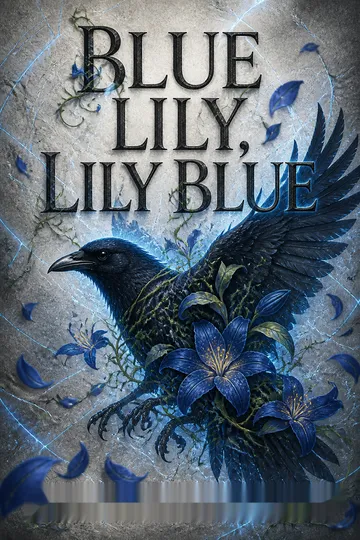
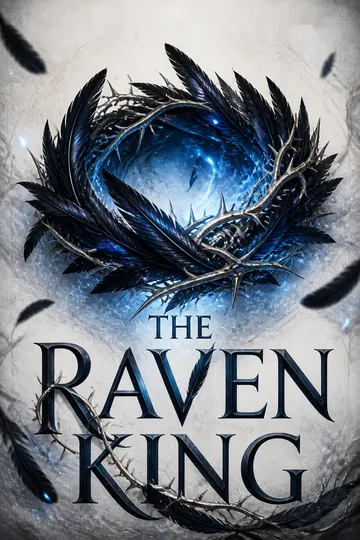
The Raven Cycle Series
About the Author




Download PDF
Download EPUB
.epub digital book format is ideal for reading ebooks on phones, tablets, and e-readers.








