


Plot Summary
Prologue
Richard Gansey has heard all his life that he is destined for greatness. Years ago, he died from a hornet sting and returned to life after Noah Czerny, dying on the same ley line, whispered that Glendower would explain his survival.
Now Gansey keeps vigil on St. Mark’s Eve, hoping the ley line will show him who is fated to die. The recording captures his own name. As autumn brings the Raven Cycle’s friends back into danger, Gansey understands what the omen means: this is the year he is expected to die.
The opening makes destiny feel less like a promise than a debt. Gansey has been taught to interpret privilege as evidence of purpose, but his vigil gives that belief a frighteningly personal shape: the voice naming him is his own, and the future he has pursued may end with his death. His search for Glendower is therefore also a search for an explanation of survival. The prologue builds suspense by letting Gansey recognize the likely answer without being ready to say it. His delay is psychologically credible: knowledge of mortality does not immediately make a person capable of living with it.
Five Towers Fall
At 300 Fox Way, Blue Sargent’s mother, Maura, and the other psychics attempt a reading of the danger gathering around Henrietta. Every woman draws a version of the Tower, and their larger spread links a spreading darkness to Artemus, the withdrawn Welshman recently rescued from a cave.
The women conclude that they cannot solve the crisis alone: Gansey, Ronan Lynch, Adam Parrish, and Blue must work together, even though Gansey’s death seems difficult to prevent. Maura also sees that the danger reaches beyond the ley line, where their own sight fails. The reading gives the friends a task but no clear enemy, turning their scattered magical troubles into one looming emergency.
The reading works as both supernatural evidence and a portrait of Fox Way’s limits. These women are skilled, experienced, and emotionally entangled with the crisis, yet proximity has blurred the distinction between observing danger and being part of it. Their cards do not grant control; they expose dependence. The requirement that the younger group cooperate is especially pointed because each member has been using power differently, often in isolation. The reading therefore changes the problem from a puzzle Gansey might solve through research into a collective responsibility. Its uncertainty is not a failure of the women’s knowledge so much as a warning that knowledge without coordinated action cannot protect anyone.
Ronan Dreams a Child
While Gansey and Adam worry about Ronan’s absences from Aglionby, Ronan returns to the Barns to work on a dream object meant to protect Gansey from another fatal sting. His dream turns into a forest of roots and ley line energy, where he finds the Orphan Girl, a creature he has known in dreams for years.
She helps him escape a creeping blackness that erases whatever it touches, but the protective skin he brings back is torn and useless. When Ronan wakes, a living Orphan Girl is hiding beneath the furniture at Monmouth Manufacturing. His private dream has entered the group’s shared world, and Adam realizes that Ronan’s dreaming has drained power from the ley line.
Ronan’s attempted protection reveals the contradiction at the heart of his gift. He wants to make something useful, even loving, but his creative process opens a path into a place where his own creations are vulnerable. The Orphan Girl is not a polished fantasy companion. She arrives frightened, difficult to manage, and dependent on the person who dreamed her. That makes her a test of responsibility rather than proof of mastery. The blackness also introduces a threat that is not simply violent: it removes the conditions that allow things to exist. Ronan’s talent can make worlds, but he cannot yet guarantee that those worlds are safe.
Noah Shows His Bones
During her one-day school suspension, Blue meets Noah Czerny, the dead Aglionby student who has become one of her closest friends. Gwenllian, Glendower’s daughter, forces Noah to stop drawing energy from Blue and reveal what he has become: a skeletal, decaying spirit, no longer convincingly human.
Blue is frightened, especially because she has loved him, but she embraces him anyway and promises to keep treating him as Noah. He admits that he is not ready to leave. Later, Blue’s family comforts her about school, her wish to travel, and her growing attachment to the boys. When Gansey arrives, she gets into the car with him, Adam, and Ronan, who has brought his strange dream child along.
Blue’s response to Noah separates care from idealization. She does not pretend his condition is harmless, nor does she confuse his appearance with the whole of his personhood. Her willingness to embrace him is an act of recognition that does not require certainty about how long he can remain. The scene also gives Blue’s coming-of-age conflict a concrete shape: she loves the people and house that formed her, yet wants a life beyond Henrietta. Her family’s support cannot choose for her. In both relationships, Blue practices a difficult form of loyalty: staying present without surrendering the possibility of change.
Cabeswater Bleeds Black
The group carries the Orphan Girl into Cabeswater, where Ronan hopes his mother, Aurora, can care for her. Instead, Aurora shows them a tree leaking unnatural black sap. Three distorted figures wearing versions of Blue’s face emerge from the woods and demand passage for the Raven King. Adam recognizes them as a nightmare shaped by his own fears, amplified by the corrupted tree.
As the figures close in, Blue grabs Gansey’s hand and draws on her power to amplify him. Gansey commands Cabeswater to make the place safe, and the figures collapse into water. The forest quiets, but the encounter confirms that the corruption can turn their own memories and fears against them.
The false Blues make internal experience materially dangerous. Adam’s fear is not merely private once it enters Cabeswater, and the diseased tree magnifies it until memory behaves like an attacker. The scene also clarifies the group’s unusual division of power: Blue amplifies, Adam interprets and navigates, Ronan creates, and Gansey’s authority can make a command take hold. None of them understands the full mechanism, which is why their success is both real and unsettling. Gansey saves the group by acting before he can explain himself. His emerging power is not a crown he has chosen, but an obligation that becomes visible under pressure.
Raven Day Tilts
At Aglionby’s Raven Day, Gansey’s childhood death returns as a sensory panic among the school’s handmade birds. Henry Cheng, a wealthy exchange student who has noticed Gansey’s distress, gives him cold water and brings him back to the present. Elsewhere, Adam’s eye begins moving independently in a school bathroom as blackness spreads from a stall; Cabeswater breaks through the mirror with water and washes the darkness away.
Maura follows a foreboding feeling to the Greenmantles’ former rental and finds Noah contorting on the floor. She brings him to 300 Fox Way, where Calla touches him and glimpses fragments of his murder and his fear for his friends. The supernatural threat is no longer confined to the forest.
These parallel incidents make ordinary institutions feel permeable. A school assembly, a bathroom mirror, and a rental house become passageways through which the ley line’s crisis enters daily life. Gansey’s panic is not cured by argument; Henry uses physical sensation and companionship to interrupt it. Adam, meanwhile, survives because the forest he bargained with still recognizes him and can reach him through a reflected surface. The contrast matters: one boy is steadied by another person, the other by a magical bond that may also endanger him. Both scenes reject the fantasy that competence eliminates vulnerability. Their abilities offer help, not immunity.
A Party Opens Doors
Before Henry’s toga party, Adam visits Blue at work, where they argue over her secret relationship with Gansey and the danger posed by Blue’s prediction that a kiss will kill her true love. Adam’s hurt comes from being excluded, not simply from jealousy, and Blue cannot make the omission seem harmless.
At Litchfield House, Gansey and Blue find a freer kind of company among Henry’s Vancouver friends, and their growing affection becomes visible without the strain of secrecy. Meanwhile, Ronan drives Adam to the trailer where Adam’s abusive father lives. He does not force Adam to confront him; he stays beside him until Adam chooses to leave. The night exposes how badly all three relationships need truth.
The two scenes test intimacy through different kinds of consent. Adam has a legitimate claim to honesty, but not to control over Blue’s romantic choices. Ronan, by contrast, offers Adam presence without demanding disclosure or a performance of recovery. Henry’s party creates a social space where Blue can imagine belonging without having to flatten her opinions. These moments complicate the group’s idea of loyalty: closeness is not automatic, and shared danger does not excuse withholding the truth. The characters begin to learn that care is not the same as managing another person. It means allowing the other person to act while remaining answerable for the harm caused.
Noah Turns Against Them
At 300 Fox Way, the darkness that has been stalking Noah takes control of his body. He hums with a force that distorts time and threatens to reach Gansey, then attacks Blue, clawing open her face and damaging her eye. Gansey grips Blue’s hand and draws on her amplified energy to command the entity to leave Noah. The room falls silent, and Noah returns to himself.
At urgent care, Blue learns that she will keep the eye. The immediate danger strips away the last excuse for secrecy: Gansey admits to Adam and Ronan that he and Blue have been seeing each other. Adam accepts the belated honesty, though the hurt remains, and the friends agree they can no longer afford to act as if the crisis is separate from them.
The possession makes a crucial distinction between Noah and the violence carried through him. Blue refuses to abandon her friend, but her affection does not make the attack less real; Gansey must intervene decisively. His command again works without offering him a theory of why, so authority arrives before self-understanding. The confession afterward is not a romantic resolution but an ethical consequence of danger. Gansey recognizes that he cannot demand truth from his friends while concealing his own life. Adam’s response is restrained rather than instantly forgiving, preserving the cost of the omission. The group’s cohesion improves not because conflict disappears, but because each person becomes more accountable for it.
The Lynches Choose Sides
Henry reveals that the elaborate robotic bee he carries is a magical artefact made by Niall Lynch and acquired by Henry’s mother, Seondeok. Its ability to follow thought makes it a tool and a visible sign that Henry’s family belongs to the dangerous trade gathering around Henrietta. Declan tells Ronan that he has been quietly managing their father’s artefact business and keeping buyers away from the Barns.
Rumours now promise a major sale, so Declan urges Ronan and Matthew to leave town. Ronan refuses to abandon his home, while Matthew will go with Declan. As the brothers prepare for separation, Ronan kisses Adam. Their growing intimacy does not erase the danger, but it gives Ronan another reason to stay and fight.
The bee links Henry’s apparently separate school life to the criminal economy surrounding the Lynch family. Its elegance conceals a history of concealment, just as Declan’s polished manner conceals years spent managing threats. The brothers’ argument is therefore not simply about ambition. Declan treats departure as protection; Ronan treats the Barns as a home worth protecting. Neither position is emotionally simple. Ronan’s kiss with Adam makes that choice more consequential: staying means risking a new attachment as well as an old family inheritance. The section reframes magical objects as commodities that attract violence, while showing how intimacy can create reasons to resist escape without making resistance automatically wise.
Ronan Remembers the Forest
As Ronan and Adam investigate the sick forest, Ronan finally admits that he recognized Cabeswater as a place he had dreamed into physical form. The forest existed in another state before him; his dreaming gave it a shape, language, and presence on the ley line. The revelation explains why Cabeswater calls him Greywaren and why its sickness infects his dreams.
The Orphan Girl warns them just before the ley line buckles and she slides down a rock face into a pool. Ronan dives after her, believing the water is acid. Adam uses Cabeswater’s remaining power to raise vines that lift them out. Their rescue proves Adam can still act through the forest, but the blackness begins to spread through it.
Ronan’s revelation does not make him the sole author of Cabeswater; he gave an existing power a form it could inhabit. That distinction protects both the forest’s agency and Ronan’s sense of responsibility. He is neither an ordinary visitor nor an omnipotent creator. Adam’s rescue makes the same point from another angle: the bargain that makes him Cabeswater’s hands and eyes can be dangerous, but it also enables a meaningful choice. Their cooperation is intimate without being uncomplicated. The forest is simultaneously a shared home, a psychic landscape, and a vulnerable body. Its corruption threatens the relationships built around it because those relationships are already woven into its substance.
A Demon Goes to Market
Piper Greenmantle, once near death, makes a pact with a sleeper buried near the ley line and uses its favour to regain her life. The sleeper is a demon whose power unmakes the forest, and Piper treats it as a route to independence and status. After killing her husband, Colin, she enlists her father’s antiquities network to arrange a sale.
Neeve tries to warn Fox Way and is killed for interfering. At the Barns, Ronan and Adam encounter the destruction in their dreams, including the loss of Aurora, while the Gray Man discovers one Laumonier brother intruding and shoots him. At the public demonstration, the demon overwhelms the buyers; Laumonier shoots Piper, and the awakened creature continues its assault.
Piper’s ambition is presented as a form of self-authorship, but the demon turns that desire into dependence. She imagines that access to power will let her escape the roles imposed by marriage and family, yet she cannot control what the power wants. The sale translates a metaphysical disaster into the language of prestige and profit, exposing how readily a market can reframe danger as opportunity. Neeve’s attempt to intervene and the Gray Man’s violent choice reveal two different responses to complicity: warning from within the system and imposing force against it. Neither stops the damage immediately. The demon’s spread is fueled by human choices, but it is no longer reducible to them.
The Tree-Light Explains
Gwenllian sees the forest’s destruction in the mirrors left by Neeve and tries to force Artemus out of his hiding place in a beech tree. Blue intervenes and uses Ronan’s language puzzle to communicate with him. Artemus explains that he belongs to the tree-lights, beings who live with trees, and that he once helped protect the Welsh king, Owain Glendower.
Blood spilled on a spirit road allowed the demon to grow; it later unmade the Welsh forest and drove the tree-lights away. Artemus says the demon can be stopped only by a willing death on the corpse road. When Gansey asks whether Glendower’s favour could offer another way, Artemus vanishes back into the tree without answering.
Artemus’s history makes the present disaster an afterlife of older violence. The demon did not arrive as a random invader; it grew from bloodshed within a place of power, then survived the destruction of its original landscape. The tree-lights embody a different relation to place, one based on shared habitation rather than possession. Blue’s persistence brings Artemus into communication, but not into easy usefulness. His answer offers a rule, not a solution, and his disappearance leaves the group with knowledge they cannot turn into certainty. This is a turning point because the crisis now has a possible price. Knowing the price does not tell them who should pay it.
The Raven King Is Dead
After Gwenllian urges him to act, Gansey commands the ley line to reveal Glendower’s location. A white beast appears, followed by a flock of birds that leads him from Henrietta to the Green House, where he once died from hornet stings. His Camaro fails, so Henry arrives with the magical bee and drives him onward.
Ronan dreams a small glowing tracker, and Adam uses his connection to Cabeswater to find Gansey; the group catches up with him underground. Beyond a newly opened entrance, they find a raven-carved tomb and Glendower’s body. When Gansey removes the helmet, centuries-old bones are all that remain. The favour he has pursued cannot be asked, and his survival has no explanation he can claim.
Gansey reaches his goal only to discover that the goal cannot perform the work he assigned it. The tomb confirms that his quest was not foolish, but it dismantles the bargain he imagined at its end. His friends’ arrival matters as much as the discovery: he had set out alone, yet they follow, each contributing a specific ability or act of care. The episode thus shifts the meaning of kingship away from finding an ancient authority who will solve his life. Gansey’s leadership has already been enacted through dependence, not command. The dead king offers no favour, but the living court has come for Gansey himself.
The Ley Line Demands Blood
With Glendower dead, Gansey accepts that his own predicted death may be the price Artemus described. Adam proposes a way to satisfy the ley line without losing Gansey permanently: let him die briefly in Cabeswater, then use Adam’s scrying and Blue’s amplification to call him back before time moves on. Before they can attempt it, the demon takes control of Adam’s hands and eyes and drives him to attack Ronan and Blue.
The others restrain Adam, who is terrified by what his body has done. Ronan tries to dream a tracker to find Gansey when the flock draws him away, but the demon corrupts his dream and begins unmaking him. At the blood-covered road, the group must decide whether their desperate plan is still worth attempting.
The proposed sacrifice turns the group’s magical skills into an ethical problem. Adam’s bargain has never meant that his body belongs to the forest, yet the demon exploits the wording and makes his hands instruments of violence. His terror comes from being present while agency is stolen, not from any hidden wish to harm his friends. Ronan’s effort to make a tracker likewise shows how creation can become a battleground when the dreamer is exhausted and grieving. Their plan for Gansey is not confident heroism; it is an improvised response to a rule none of them fully understands. The scene insists that hope can require action without pretending that action guarantees safety.
A Forest Gives Its Life
As Ronan is slowly unmade, Gansey decides the group cannot wait for a safer chance. Blue kisses him, and the ley line takes the life that her family’s prediction had always threatened. Gansey directs that death against the demon, which is destroyed. Noah, whose earlier death made Gansey’s first return possible, reaches the moment of the original hornet attack to explain that he intervened so Gansey could live.
But Gansey remains dead in the present. Ronan asks Cabeswater to give its life for him. Blue amplifies the request, and the forest uses its remaining substance to make Gansey a new life, gathering the group’s grief, love, and memories into it. The last trees fall; Gansey wakes, and Cabeswater is gone.
The climax refuses a clean distinction between sacrifice and rescue. Gansey chooses to die, but his friends reject the idea that a foretold death must be accepted as final. Blue’s kiss fulfills the prediction while redirecting its force toward the demon. Cabeswater’s intervention is not restoration of the old order: the forest spends itself to make Gansey anew, and its disappearance is a real loss. The act also gathers the group’s emotional history into its creation, treating memory as part of what makes a person. Gansey’s survival is no longer a favour from a king. It is a gift made by friends and a place that have chosen him.
Epilogue
After graduation, Adam returns to his parents’ trailer and asks whether they can build a more ordinary relationship before he leaves for college. His father offers no easy apology, but Adam names the harm plainly and leaves without surrendering his future to it.
Ronan stays at the Barns and gives Blue, Gansey, and Henry a matching Camaro with no engine beneath its hood, a dream car built to run anyway. Later, Ronan finds an old Camaro wheel on the ley line, evidence that their adventures are not finished. He returns to the Barns, looks toward the sky, and begins dreaming again.
The ending gives survival a future tense. Gansey is alive, but the friends do not return to the life they had before: Adam must face the family he left, Ronan must imagine a home after Cabeswater, and Blue is free to travel beyond Henrietta. The impossible Camaro makes this shift tangible. It carries the group forward without an ordinary engine, as if their next movement will depend on invention and trust rather than inherited machinery. The wheel on the ley line keeps the story open, but not unresolved. They have lost a world and made room for another, with no guarantee that it will resemble the first.
Analysis
The Raven King treats fate as a story people inherit, revise, and sometimes mistake for a command. Gansey’s belief that Glendower will explain his survival gives him a reason to pursue the king, but it also delays the harder question of what he wants from a life that may be short. When the tomb reveals that Glendower is dead, the quest loses its promised reward. Gansey’s response is not to abandon purpose, but to locate it among the people who have followed him.
The novel’s magic repeatedly turns private inner life into shared consequence. Ronan’s dreams become creatures and landscapes; Adam’s bargain makes his body a channel for Cabeswater; Blue’s presence intensifies the power around her. These abilities make the characters more capable, but also expose them to violation. The demon’s possession of Noah and Adam is especially disturbing because it attacks the difference between intention and action. The body can act while the self resists. The friends’ response is not to confuse harm with guilt, but to restrain the danger while continuing to recognize the person inside it.
The book also challenges the idea that love is protection from loss. Blue’s prediction makes tenderness frightening, and Gansey’s fear of death cannot be cured by romance. Yet intimacy changes what the characters are willing to risk and for whom. Cabeswater’s final act is powerful because it is not a return to the original world. The forest gives up its form to create a future for Gansey, gathering the group’s memories and affections into something new.
Across the story, home is not simply where a character began. Adam must revisit the trailer without accepting his father’s version of him. Ronan chooses the Barns while allowing others into his life. Blue loves Fox Way without agreeing to remain there. Gansey survives by accepting that he is not the sole author of his meaning. The ending’s hope is therefore neither escape nor restoration. It is the difficult freedom to continue after inherited stories have broken.
Review Summary
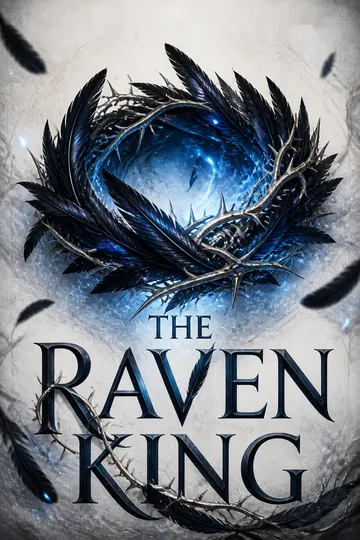
The Raven King concludes The Raven Cycle series with mixed reactions. Many readers praise the character development, relationships, and Stiefvater's poetic writing style. The book's darker tone and intense emotional moments resonate with fans. However, some criticize the rushed ending, unresolved plot points, and treatment of certain characters. Despite these issues, most readers find the conclusion satisfying, particularly regarding the main characters' arcs and relationships. The series leaves a lasting impact on many, with readers expressing a deep connection to the characters and world Stiefvater created.
People Also Read




Characters
Richard Gansey III
The king in searchGansey is an Aglionby student from a wealthy Virginia family who has spent years searching for the sleeping Welsh king, Owen Glendower. A childhood death and mysterious return have left him convinced that Glendower can explain why he survived. He is courteous, curious, and skilled at making powerful people feel at ease, yet his polish can conceal how frightened and uncertain he is. Gansey treats friendship as a form of stewardship: he tries to provide resources, direction, and protection. His instinct to help can become controlling when he assumes he knows what others need. Beneath his inherited confidence, he is searching for a purpose that belongs to him rather than his family name.
Blue Sargent
The psychic amplifierBlue is the nonpsychic daughter of Maura Sargent, raised among the clairvoyants of 300 Fox Way. She cannot read futures as her family can, but her presence amplifies other people’s abilities. Blunt, politically alert, and wary of privilege, Blue has built her identity partly around refusing the world of Aglionby boys. Friendship with Gansey, Adam, Ronan, and Noah complicates that certainty. She wants to travel and make a difference, yet she is deeply attached to her mother and the home that raised her. A prediction about her future makes intimacy frightening, but Blue’s defining strength is her willingness to remain emotionally present when certainty is impossible.
Adam Parrish
The stubborn magicianAdam is an ambitious Aglionby student who works for his education and lives apart from the abusive father he has struggled to escape. Practical, observant, and fiercely self-reliant, he often treats school and work as routes toward a life no one else can take from him. His bargain with Cabeswater gives him a connection to the ley line, but it also forces him to question what he has surrendered. Adam’s intelligence is not merely academic; he notices patterns others miss and can turn them into action. He wants independence without isolation, a difficult balance when accepting help can feel like returning to dependence. His relationships with Blue, Gansey, and Ronan test that balance.
Ronan Lynch
The dangerous dreamerRonan is an Aglionby student whose anger, loyalty, and disdain for convention make him hard to approach and difficult to ignore. He dreams objects and creatures into reality, a power tied to his father Niall and to the family home, the Barns. Ronan often uses provocation to keep others from seeing how much he fears losing them. His devotion to his brothers, his raven Chainsaw, and the strange creatures he creates reveals a tenderness that rarely appears in ordinary conversation. School feels like a cage to him, while the Barns offers a life shaped by his own hands. His gifts bring beauty and danger in equal measure.
Noah Czerny
The lingering dead friendNoah is a dead Aglionby student who remains close to Blue and the boys, appearing with an ease that makes his presence both comforting and uncanny. He is gentle, awkward, and often funny, though his friendship with the living is shaped by the instability of his existence. The others know that he is not simply a boy who happens to be invisible; his connection to the ley line affects how fully he can appear and how much of himself he can share. Noah’s longing to remain near his friends sits beside his awareness that death has changed him. He is a companion whose affection carries the weight of a past he cannot fully recover.
Maura Sargent
Blue’s clairvoyant motherMaura is Blue’s mother and one of the psychics who live and work at 300 Fox Way. Warm but practical, she takes visions seriously without pretending they provide simple answers. Her history with Artemus and her relationship with the Gray Man draw her into dangers that overlap with Blue’s life. Maura wants to protect her daughter while recognizing that protection can become confinement. She offers guidance, but admits when she does not know what comes next.
Calla
The blunt psychic readerCalla is one of the psychics at 300 Fox Way, known for her directness and her ability to read a person through touch. She brings a practical skepticism to the household’s rituals and is rarely impressed by people who expect special treatment. Her loyalty to Maura and Blue is expressed through sharp counsel as much as affection. Calla’s readings help connect past events to the dangers now gathering around the ley line.
Gwenllian
The unruly king’s daughterGwenllian is the daughter of Owen Glendower, recovered from a long burial in a magical cave. Tall, volatile, and given to songs and riddles, she resists being treated as a historical relic. Her psychic power makes her valuable to the women of Fox Way, though her hostility toward Artemus and disregard for social rules make cooperation difficult. She carries a vivid memory of the past and an instinct to act before anyone has agreed on a plan.
Artemus
The hidden tree-lightArtemus is a Welshman from Maura’s past whose connection to Glendower and the ley line gives him knowledge the others need. Tall, anxious, and inclined to withdraw when conflict grows, he has difficulty translating what he knows into useful action. His reserve frustrates the psychics, particularly Gwenllian, but it is also bound to an old and complicated relationship with the natural world. He is a reluctant source of history rather than a straightforward guide.
Henry Cheng
The inventive new allyHenry is an Aglionby student from Vancouver, energetic and theatrical, with an intelligence that moves easily between technology, business, and emotion. His family’s connection to magical artefacts makes him more than a charming new acquaintance. Henry uses humour and spectacle to manage vulnerability, but he is capable of meeting another person’s fear with unusual care. His friendship with Gansey begins in curiosity and becomes a test of whether secrets can be offered without being used as leverage.
The Gray Man
The remorseful mercenaryThe Gray Man is a former hired killer whose earlier work tied him to the Lynch family and the magical artefact trade. He has begun to form attachments in Henrietta, especially to Maura, and those attachments complicate his old habit of treating violence as an ordinary tool. Controlled, observant, and difficult to surprise, he sees danger before most people do. His struggle is not to become harmless, but to decide what responsibility requires when force is the only language his former world respects.
Declan Lynch
The wary eldest brotherDeclan is Ronan and Matthew’s older brother, a political aide who dresses and speaks with polished restraint. He has spent years managing the practical consequences of their father’s magical business, often without telling Ronan what he was doing. His caution can look like coldness, but it is rooted in the belief that survival requires planning and secrecy. Declan loves his brothers while resenting the dangers their family has inherited. He is a protector who has learned to act from a distance.
Matthew Lynch
The sunny younger brotherMatthew is the youngest Lynch brother, cheerful, affectionate, and apparently untroubled by the tension around him. He brings an uncomplicated warmth to Ronan and Declan’s guarded relationship. His easy acceptance of his brothers can make him seem sheltered, but he is more perceptive than his playful manner suggests. Matthew is one of the few people who can draw gentleness out of Ronan without asking him to explain himself.
Piper Greenmantle
The ambitious artefact dealerPiper is Colin Greenmantle’s wife, a forceful woman who refuses to be content with the status assigned to her. She is socially agile, ambitious, and quick to convert a setback into a new plan. Her interest in magical power is bound to a desire for independence and recognition, but confidence often outruns knowledge. Piper’s charm can make risk look like opportunity, both to herself and to the people she recruits.
Neeve Mullen
The ambitious clairvoyantNeeve is a talented psychic whose career has taught her to crave influence as well as recognition. She is drawn toward Henrietta by its supernatural power and has a complicated history with the women of Fox Way. Her ambition makes her vulnerable to dangerous bargains, even as her conscience remains active.
Seondeok
The dealer with a beeSeondeok is Henry’s mother and a powerful figure in the international trade of magical artefacts. Her psychic gifts and business sense have made her formidable, but she is also deeply protective of her children. She treats risk as a cost of her chosen life, a calculation that does not always keep danger away from her family.
Laumonier
The wary artefact brokerLaumonier is the shared name used by a family of triplets who deal in magical objects. Their similar appearance and habit of speaking under one surname make them difficult to distinguish. They balance caution, aggression, and negotiation, but business rivalry has taught them to distrust nearly everyone around them.
Persephone
The absent psychic mentorPersephone was one of the psychics who helped shape 300 Fox Way and taught Adam how to move beyond literal thought while scrying. She is remembered for a patient, unconventional approach to teaching. Her absence leaves a practical and emotional gap among the women who shared their lives with her.
Aurora Lynch
The Barns’ gentle presenceAurora is closely associated with Ronan and the Lynch family’s dreamlike refuge at the Barns. Warm, affectionate, and easily delighted by the people around her, she offers a gentler counterpoint to the family’s guardedness. She welcomes Ronan’s friends and responds to each of them in her own attentive way.
Niall Lynch
The father who dreamedNiall is the father of Declan, Ronan, and Matthew, a charismatic maker of stories and magical objects. His love for the Barns and his appetite for risk shaped the lives his sons inherited. He remains a powerful presence in their memories, though each brother understands a different part of the man he was.
Helen Gansey
The politically astute sisterHelen is Gansey’s older sister, capable of reading family politics and public consequences with precision. She is protective of her mother’s political ambitions and unafraid to challenge Gansey when his generosity creates risks. Her affection usually arrives disguised as sharp analysis.
Plot Devices
The ley line
A road through timeThe ley line is a supernatural current running through Henrietta and other places of power. It strengthens psychic abilities, distorts time, and connects events that ordinary chronology would keep separate. The group uses it to travel through Cabeswater, read signs, and make magic work, but its energy can also be drained or corrupted. The recurring 6:21 time marker signals that the line is disrupting ordinary time, while the St. Mark’s Eve vigil links the ley line to Gansey’s fear of his own death.
Cabeswater
A forest made tangibleCabeswater is a sentient, shifting forest on the ley line. Its paths, language, and relationship to time respond to the people who enter it. Adam can sense and navigate it through a bargain, Blue can amplify its power, and Ronan’s dreaming has given it a physical form. As the story progresses, the forest becomes both a refuge and a vulnerable landscape, making its condition inseparable from the group’s choices.
Ronan’s dreaming
Thought given a bodyRonan can bring objects and creatures from his dreams into waking life. The ability requires him to remember how a thing feels and behaves, and the results may be beautiful, useful, frightening, or difficult to control. It allows Ronan to create companions and tools for the group, but his dreams are increasingly affected by Cabeswater’s corruption. His gift makes imagination materially consequential and gives the story a way to test the boundary between creator and creation.
Blue’s prediction
Love under a warningBlue has been told that a kiss with her true love will kill him. The prediction shapes how she approaches intimacy, especially as her relationship with Gansey deepens. It is not merely a romantic obstacle: Blue’s ability to amplify magic makes her physical closeness powerful, and the group must decide whether prophecy is a fixed sentence or a force whose meaning can be changed. The prediction becomes central to the climax.
The willing sacrifice
A life against unmakingArtemus explains that the demon can be killed only by a willing death on the corpse road. Gansey’s earlier death, Noah’s death, and the unstable timing of the ley line establish the rules the group tries to use. Adam proposes that Gansey might die briefly and be called back, while Cabeswater offers a different, irreversible form of intervention. The device forces the friends to distinguish a meaningful sacrifice from a death they merely accept as inevitable.
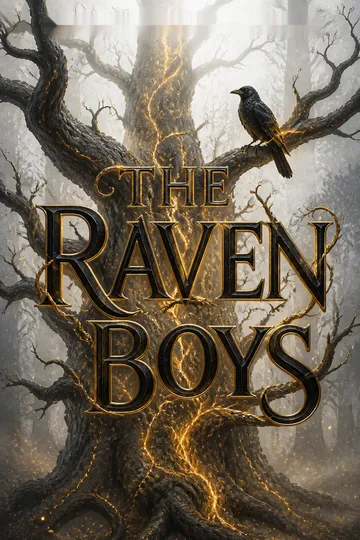
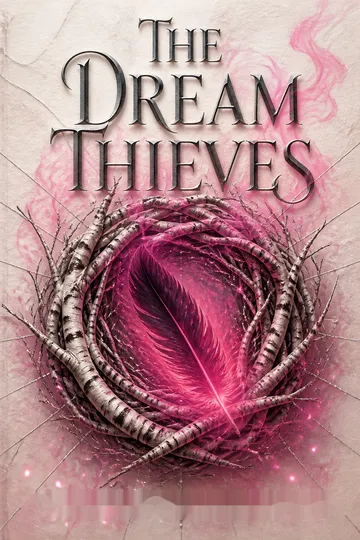
The Raven Cycle Series
About the Author



Download PDF
Download EPUB
.epub digital book format is ideal for reading ebooks on phones, tablets, and e-readers.








