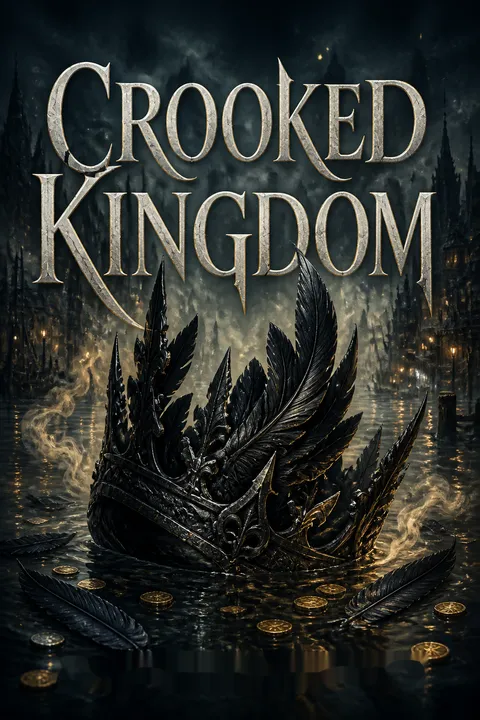


Plot Summary
The Squaller Disappears
Emil Retvenko, a Ravkan Squaller indentured to a Kerch merchant, is counting down the voyages that will buy his freedom when a Shu woman smashes into the harbormaster’s office. Retvenko drives her back with a storm, but her winged companion tears him from the building and carries him over the harbor.
Below, his ship lies wrecked and its crew dead. He is not the first Grisha to vanish from Ketterdam, though the city has not yet understood that the disappearances are part of an organized hunt. Retvenko’s capture establishes a threat beyond the Barrel’s usual gang wars: someone is turning Grisha bodies and powers into military tools.
Retvenko’s opening is a warning delivered through an ordinary man’s private shame. He has committed atrocities in war, yet imagines that returning home and serving again will restore his identity. The Shu hunters erase that distinction: his past guilt and his present vulnerability make no difference to the machinery closing around him. His abduction also scales the novel’s danger outward. Ketterdam’s criminal economy is brutal, but this attack belongs to state power, where individual bodies can be treated as experimental material and borders offer little protection.
A Table Set for Smeet
With Inej captive and Jan Van Eck’s deadline running down, Kaz turns a private card game into cover for searching lawyer Cornelis Smeet’s files. Wylan serves champagne in the face he borrowed from Kuwei, while Nina keeps Smeet entertained and Jesper loses deliberately until he stakes his beloved revolvers.
Kaz and Wylan slip into Smeet’s house, calm the lawyer’s dogs with a stolen whistle, and hunt for properties Van Eck might use as a prison. The ledgers reveal a lake house in Wylan’s mother’s family name and unexplained donations to Saint Hilde. A passing encounter with Smeet’s young daughter forces Kaz to threaten a child to protect the crew’s escape.
The operation shows how Kaz converts people’s habits into access: Smeet’s vanity, Jesper’s appetite for risk, and Wylan’s knowledge of merchant households all become parts of one mechanism. Yet the success is morally costly. Kaz’s threat to a child is not softened by his restraint; it shows how readily he uses fear when tenderness would expose him. Wylan, who still measures himself against his father’s standards, is forced to see that the crew’s usefulness does not make its methods clean. Their loyalty is real, but it does not cancel what survival asks them to do.
The Wraith in the Vent
Blindfolded and bound in a disused theater, Inej studies the room during meals and uses a shard of broken crockery to cut her ropes. She crawls through a narrow vent, drops into the theater, and nearly reaches the exit before Van Eck’s guards surround her.
He has arranged the apparent escape to draw information from her, then threatens to shatter her legs if she will not identify Kaz’s safe houses. His music teacher, Bajan, tries to turn memories of Inej’s family into an inducement to cooperate. Inej recognizes the offer as leverage, refuses to betray the crew, and learns that Van Eck is preparing to make her suffering a bargaining tool.
Inej’s escape begins with attention rather than strength. She measures walls, saves a ceramic shard, and manages panic by treating fear as information instead of proof that she has already lost. Van Eck’s staged opportunity attacks precisely that discipline: he offers hope, then converts it into evidence of her helplessness. Bajan’s appeal to family is especially effective because it reaches toward a genuine wound, not a fabricated weakness. Inej’s refusal is therefore neither effortless courage nor indifference. She understands what she is giving up and still declines to trade the crew’s safety for a comforting story.
A Father at the University
When Jesper’s father, Colm Fahey, arrives in Ketterdam after the bank calls in a loan against his farm, Jesper meets him at the university with Wylan beside him. Before Jesper can explain his debts, armed attackers fire from the roofs. Wylan guides Colm through a hidden passage in the library, while Jesper uses a bomb Wylan built to cover their escape.
Kaz and Matthias confirm that the attack was likely arranged to draw Jesper out. Back at the crew’s hideout, Colm refuses to abandon his son, but agrees to wait three days while Kaz promises to recover the money and get him safely home.
The university courtyard places Jesper’s two lives in the same line of fire. The place he left behind as a student becomes a battlefield, and the father who represents home is exposed to the danger Jesper has been hiding from him. Jesper’s instinctive competence under gunfire contrasts with his inability to speak honestly before it begins. Colm’s willingness to stay is loving, but it also makes Jesper’s recklessness harder to dismiss as a private flaw. His choices now put another person’s future at risk, which changes the emotional weight of every later gamble.
The Lake House Exchange
Kaz decides that Van Eck has protected Inej by concentrating his guards around her, so the crew strikes at the place he least expects. They seize Alys Van Eck from a lake house registered under Wylan’s mother’s family name, then bring her to Goedmedbridge in exchange for Inej. Van Eck accepts the trade, but summons the stadwatch as soon as Alys is safe.
Kaz cuts Inej’s bonds and sends her over the bridge rail to a flower barge; Wylan’s water mines and a crowd of costumed Mister Crimsons cover their escape. The rescue succeeds, but explosions tear through West Stave as the crew flees, proving another force has entered the fight.
Kaz wins by reading Van Eck’s priorities, not by overpowering his guards. Alys’s pregnancy gives the merchant a vulnerability he cannot treat as an abstract financial risk, while the staged carnival turns public attention into cover. The rescue also reveals the crew’s complicated ethics: Alys is innocent, yet her body becomes leverage because Van Eck has made Inej one. Kaz can call the exchange necessary, but necessity does not make the hostage-taking harmless. The ensuing blasts rupture the scheme’s carefully managed theater and show that, in Ketterdam, a successful plan can still open the door to a larger disaster.
Hunters in the Staves
The explosions hit the White Rose and the Anvil, where Shu forces seize Grisha workers. Jesper, Wylan, Nina, and Matthias try to intervene, but ordinary bullets barely slow the attackers, whose bodies contain metal reinforcement. One winged soldier escapes with a captive Inferni, while another pursues the crew.
Nina cannot reach the attackers through her usual Corporalki sense; after parem withdrawal, her power has changed and no longer answers in its familiar way. Wylan’s violet fire damages a flyer, and Nina kills a metal-plated woman with Jesper’s revolver when the enemy nets her. They escape, but now know the Shu are hunting Grisha inside Ketterdam.
The attack makes the novel’s political danger physically legible. The Kherguud are not simply stronger opponents; they embody a program that treats Grisha gifts as resources to be extracted, rebuilt, and deployed. Nina’s failure to feel living bodies is as frightening as the soldiers’ armor because it unsettles the identity she has built around her power. She survives by taking a weapon from Jesper and making a decisive choice without her old abilities. The scene marks the start of an uncertain transition: she is not powerless, but she can no longer assume that strength will feel familiar.
Saint Hilde’s Locked Door
Wylan travels with Jesper to Saint Hilde, expecting to visit his mother’s grave. Instead, the building is an asylum, and its records show that Jan Van Eck had his wife declared incompetent and transferred her property to himself. Marya is alive, though illness and years of confinement have left her unable to recognize her son clearly.
Wylan plays his flute for her, and she listens, tapping along to melodies that seem to reach her when conversation cannot. In a closet, he finds her paintings of the same red-haired child: Wylan as she remembers him. He leaves in tears, but no longer believes his father’s contempt was deserved.
The revelation rearranges Wylan’s childhood without erasing its tenderness. He had preserved memories of a father who read to him and cared for him, using those memories to excuse the man who later sent him away. Saint Hilde shows that the family’s silence was not simply grief or social embarrassment; it was a structure built to conceal theft and confinement. Music becomes the one language Wylan and Marya can share without requiring him to read or her to explain. His grief is sharpened by the discovery that love survived, even when the people with power chose to bury it.
Ravkan Hands, Fjerdan Past
Nina and Matthias seek help at the Ravkan embassy, where a cautious greeting leads them into an ambush staged for anyone searching for Grisha. Nina suddenly controls scattered bones, and Zoya Nazyalensky, a powerful Ravkan Squaller, suspends the attackers before they can kill the pair. Genya Safin joins them, and Nina offers to help evacuate the city’s threatened Grisha.
Kuwei, meanwhile, argues that Ravka is the safest place to study his father’s work and seek an antidote to parem; Matthias resists giving one nation control of that knowledge. As the group prepares, Nina and Matthias confront the distance between her need to recover and his instinct to protect her.
The embassy turns refuge into a political space. Nina returns to people who once trained her, but she is no longer simply their pupil: she brings knowledge of parem, a changed power, and a proposal that asks Ravka to protect people beyond its own borders. Matthias’s caution is partly strategic and partly inherited; he sees military advantage where Nina sees people who need escape. Their intimacy grows through the same conflict. He must learn that protection can become control, while Nina has to accept help without letting others define her as fragile.
Sugar Becomes a Weapon
Kaz plans to punish Van Eck through the market rather than by emptying a vault. Wylan and Kuwei develop a chemical agent that consumes refined sugar, while Kaz buys shares in rival suppliers and secretly acquires shares in Van Eck’s name.
If the ten Van Eck silos are ruined, sugar prices will rise; when merchants discover Van Eck profited from their losses, his reputation will collapse with them. Inej is assigned to cross between the silo roofs on a high wire and release the agent. Jesper, thinking of his mother’s knowledge of jurda, begins wondering whether the plant might also contain a way to counter parem’s effects.
The plan turns commerce into the crew’s chosen weapon because Van Eck believes wealth can make his actions respectable. Kaz understands that a market depends not only on goods but on trust, and he attacks the gap between Van Eck’s public stewardship and private profit. Wylan’s invention gives that strategy a physical mechanism, while Jesper’s memory opens a separate possibility: knowledge passed through family may matter as much as formal expertise. Each character contributes a different kind of intelligence. The crew’s strength lies not in one master plan alone, but in the way their distinct experiences alter what the plan can become.
Two Raids Go Wrong
Kaz and Wylan enter Van Eck’s office during a Merchant Council dinner, use Wylan’s corrosive compound to open the safe, and take the seal needed for a later forgery. Pekka Rollins emerges from hiding with armed Dime Lions and reveals he has been working with Van Eck.
Kaz splashes acid across the floor and drops through it with Wylan, escaping into the garden amid a burst of explosives. At Black Veil, Rollins’s gang attacks Matthias, Jesper, and Kuwei. Matthias uses the tomb’s layout to fake an escape route, while Jesper and Kuwei shape fire from Wylan’s leftover powders. They reach the shore, but the hideout is exposed.
The simultaneous raids show the cost of a crew stretched across too many fronts. Kaz has prepared for Van Eck’s defenses but underestimated Rollins’s ability to read his habits and motives. Meanwhile, Matthias has to lead without Kaz’s intricate planning, turning the cemetery’s reputation and the Grisha’s powers into tactical tools. Jesper and Kuwei’s cooperation is especially important because both have treated their abilities as burdens or unfinished knowledge. The crew escapes through improvisation, not mastery. Their old confidence in Black Veil as a sanctuary is gone, and every later decision must account for enemies who can follow them anywhere.
The Dead Hold the Net
At Sweet Reef, Nina distracts the guards while Inej climbs the first silo and pours in the chemical weevil. Dunyasha, a celebrated assassin hired by Rollins, joins Inej on the wire and attacks her with metal stars. Below, Dime Lions arrive carrying Van Eck’s authorization and try to chain Nina.
Unable to command living bodies, Nina reaches instead toward a nearby sickboat and raises the dead. The corpses tear down the fence and seize the net as Inej falls, catching her before she hits the ground. Dunyasha escapes, and Kaz and Wylan arrive after breaking free of Van Eck’s ambush. The crew regroups, but the city’s pursuit closes in.
Nina’s new power is both rescue and violation. She does not bring the dead back to life; she borrows their movement, and the distinction offers little comfort when she sees what their bodies have become. Yet the power answers the exact helplessness that parem withdrawal has imposed on her. Inej’s fall makes the rescue concrete: Nina’s command saves her friend, but it also forces Nina to confront a form of agency she does not understand. The episode refuses a simple triumph. They survive, the sabotage begins, and Dunyasha remains a threat whose skill has exposed the limits of Inej’s confidence.
A City Turns on Kaz
The crew reaches a hotel suite as stadwatch blockades spread through Ketterdam and Pekka Rollins recruits the Barrel gangs to help hunt them. Kaz recognizes that hiding will only let Van Eck and Rollins control the story, so he proposes a public auction of Kuwei’s indenture, protected by Kerch law. To win support, he must reclaim the Dregs.
At the Slat, he faces Per Haskell and a crowd eager to collect his bounty, then fights his way down the stairs until the gang’s younger members reject Haskell’s alliance with Rollins. Jesper also faces Colm and admits how his gambling debt has endangered the farm, while Inej urges him to repair harm through changed actions.
The citywide manhunt turns reputation into a material threat: the gangs and the stadwatch are not merely searching for the crew, they are deciding which account of events will be believed. Kaz answers by moving from secrecy to spectacle, using the city’s own legal rituals against its merchants. His fight at the Slat is a bid for political legitimacy as much as survival. Jesper’s conversation with Colm is a smaller but parallel reckoning. Both men have relied on performance to avoid vulnerability, and both now discover that loyalty cannot be maintained indefinitely by charm, fear, or money alone.
Faces and False Funds
Kaz builds a false jurda investment opportunity around Colm, now posing as the fictional farmer Johannus Rietveld, and uses carefully planted evidence to draw the Merchant Council into the fund. The money can finance Ravka’s bid at Kuwei’s auction while making Van Eck appear entangled in the scheme.
Genya restores Wylan’s original face, using a portrait his mother painted, and Wylan finally tells Jesper that he cannot read. Jesper acknowledges his own Grisha ability and tells Colm what he has hidden about his gambling and power. On auction morning, Dime Lions seize Wylan near the bakery and beat him until he gives Van Eck information about the plan.
This preparation is built from identities that have been imposed, borrowed, or concealed. Wylan’s new face once kept him alive, but reclaiming his own features forces him to accept visibility without pretending his disability has vanished. Jesper’s honesty follows the same logic: naming his power does not instantly resolve his fear, but it makes secrecy less absolute. Colm’s false identity is different because it is a chosen performance that protects others. Wylan’s beating tests whether truth can remain useful under coercion. Kaz’s plan depends on appearances, yet its emotional stakes push the crew toward greater candor with one another.
The Auction Splinters
At the Church of Barter, Kaz and Matthias stand beside Kuwei as the Shu, Fjerdans, Zemeni, and Ravkans bid ever higher. A group posing as the Council of Tides floods the nave and declares the auction compromised, accusing Van Eck and Rietveld of manipulating the jurda fund.
Van Eck tries to shift blame onto Kaz and Ravka, but Wylan appears battered and claims Rollins’s men abducted him, turning Van Eck’s own accusations against him. The Merchant Council sees the contradictions, links Van Eck to the fund, and orders his arrest. As the crowd erupts, a plague siren sounds, sending Ketterdam into panic and breaking the city’s cordon around the crew.
The auction makes Kuwei’s body the center of competing claims: a legal contract, a scientific secret, a national asset, and a frightened young man’s life. The counterfeit Tidemakers use Kerch’s reverence for procedure to create a crisis the real authorities must take seriously. Wylan’s return shifts the conflict from abstract accusation to family testimony, forcing the merchants to confront the violence behind Van Eck’s polished public standing. The siren then turns fear into an escape route. Kaz wins by understanding not only what people believe, but which beliefs they will obey before they have time to question them.
The Wraith’s Second Fight
While the auction collapses, Inej faces Dunyasha again on the cathedral roof. She studies the assassin’s breathing, uses the loose metalwork beneath their feet, and kills her when Dunyasha mistakes a dangerous footing for solid ground. Elsewhere, Jesper escapes a Kherguud soldier by forcing Wylan’s chemical weevil into the attacker’s mouth, then fires a specially prepared bullet into Kuwei.
The shot appears fatal, but a hidden bladder supplies the blood and a drug slows Kuwei’s body. Kaz uses the ensuing chaos to confront Rollins, who has trapped him in a chapel, and makes him believe his son is buried alive. Rollins leaves Ketterdam in panic, weakening Van Eck’s last ally.
Inej defeats Dunyasha not by becoming a purer or more ruthless fighter, but by bringing her own knowledge of Ketterdam’s unstable surfaces into the contest. Her opponent’s claim to royal destiny cannot protect her from the city’s actual terrain. Jesper’s choices similarly transform old traits: his aim, showmanship, and improvisation become useful beyond the pleasure of a risky shot. Kaz’s lie to Rollins is cruel by design, but he stops short of killing the child he invokes. His revenge remains morally compromised, yet the restraint marks a difference between punishing an enemy and reproducing the harm that made him.
Nina Lets Matthias Go
Genya and Zoya revive Kuwei aboard a disguised sickboat, using a poison antidote and a dangerous burst of lightning to restart his heart. Matthias escorts the apparent corpse through the plague panic, but a young Fjerdan drüskelle confronts him in the street and shoots him. Nina reaches him too late to prevent his death.
She uses her altered power to make his heart beat again, but the man who opens his black-eyed gaze is not Matthias as she knew him. Inej helps Nina understand that holding him in this unnatural state would deny him the burial and peace he asked for. Nina releases him and promises to carry him home to Fjerda.
The book’s emotional cost arrives after the crew has apparently beaten its enemies. Matthias’s death is not a strategic consequence of the auction so much as the collision of old institutions with a young person taught to call violence justice. Nina can interrupt death, but she cannot restore the person she loves by force. Her decision to release Matthias is therefore not surrender; it is the first act of her new power governed by consent rather than possession. The scene also completes Matthias’s moral break from the drüskelle. He dies trying to reach a recruit who resembles his former self, not trying to defeat him.
A Ship Called Wraith
Ketterdam’s merchants arrest Van Eck, and Wylan uses a document he cannot read but has memorized by sound to assert control of the family estate. He plans to bring Marya home and give her the life Van Eck stole. Jesper entrusts his share of the reward to Colm rather than risk feeding his gambling habit, and the surviving Grisha leave with Kuwei and Nina, who carries Matthias toward his burial in Fjerda.
Weeks later, Kaz gives Inej a warship named the Wraith and arranges for her parents to be found. She chooses to pursue slavers while keeping ties to Ketterdam, and she and Kaz cautiously take each other’s hands as her family reaches the harbor.
The resolution distributes freedom rather than treating wealth as a universal cure. Wylan gains the means to care for his mother, Jesper accepts that restraint is part of protecting his father, and Inej receives a ship without having to surrender her purpose to Kaz. Matthias’s absence remains present in the group’s departure, shaping Nina’s next task and the cost of the victory. Kaz’s gift is an unusual form of love: he gives Inej mobility instead of asking her to stay. Their touch does not erase trauma or promise an easy romance; it offers a small, chosen contact where both can still withdraw.
A Crow at the Window
Pekka Rollins has retreated to his country estate with his son, trying to rebuild the businesses damaged by the false plague panic. He has begun to enjoy the quiet again when Inej appears in his bedroom, pins him down, and cuts his chest above the heart.
She warns that returning to Ketterdam will bring another visit. Rollins rushes to check on his son and finds the child safe, but the toy lion has been replaced by a black crow. He orders his men to pack and flee as far as possible. Kaz’s symbol has become a threat Rollins carries into exile.
The closing scene transfers the novel’s memory motif from Kaz to Inej. Rollins once profited by making people forget who had cheated them; now he cannot forget the imagined grave Kaz constructed in his mind or the physical mark Inej leaves on his chest. The crow is not merely a gang emblem here. It represents a community that remembers harm and communicates warning across distance. Inej’s threat is personal, not a clean legal judgment, and the book does not pretend revenge repairs victims. It does, however, deprive Rollins of the comfortable belief that power makes him unreachable.
Analysis
Crooked Kingdom treats criminal skill as a form of literacy. Kaz reads locks, markets, and people; Inej reads roofs and bodies in motion; Wylan reads chemistry and music even when printed language defeats him; Jesper reads trajectories and probabilities. These abilities let the crew contest institutions that reserve authority for merchants, armies, and governments. Yet the novel refuses to equate ingenuity with innocence. Kaz’s schemes exploit a child’s fear, a pregnant woman’s vulnerability, and a city’s plague memory. Their necessity is real, but so is the harm they risk creating.
The book’s sharper argument concerns who is permitted to define a person. Van Eck defines Wylan by what he cannot do, the Shu seek to remake Grisha into instruments, and the drüskelle teach Matthias to interpret difference as threat. Each form of power turns people into categories before it turns them into property. The crew resists this by making choices for one another without pretending those choices are always gentle. Wylan’s face, Nina’s altered gift, and Jesper’s concealed Grisha ability all become questions of self-knowledge: whether accepting a capacity means accepting the uses others have assigned to it.
Memory works in the same double register. Kaz remembers Rollins’s con as an injury that has organized his life; Inej remembers the Menagerie without surrendering her future to it; Matthias must remember his former beliefs without treating them as destiny. Their recovery is not a return to an untouched past. It is a difficult practice of deciding what to carry forward. The crew’s affection appears most credibly through practical acts: a rescued friend, a hard-won choice, money placed beyond temptation, a ship that gives Inej room to act. The ending offers no clean absolution. It offers responsibility, mutual recognition, and the possibility that even people formed by violence can choose what their skills will serve.
Review Summary
Crooked Kingdom received overwhelmingly positive reviews, with readers praising its complex characters, intricate plot, and emotional depth. Many considered it a masterful sequel that surpassed the first book. Fans loved the character development, diverse representation, and thrilling heists. Some found the pacing too fast or the ending disappointing, particularly regarding a character's death. Overall, reviewers were captivated by the world-building, witty dialogue, and satisfying conclusion to the duology, with many calling it one of their favorite books.
People Also Read




Characters
Kaz Brekker
The Barrel's cold tacticianKaz leads the Dregs through schemes built from careful observation, nerve, and a ruthless understanding of how people behave when money or fear is involved. His limp and cane invite underestimation, which he turns into an advantage; his gloves and guarded manner keep others from seeing how much vulnerability remains beneath his criminal persona. He measures loyalty through action and often treats affection as a risk to be managed. His bond with Inej unsettles that strategy because she sees both the harm he causes and the person he might choose to become. Kaz’s deepest drive is to control the conditions that once left him powerless.
Inej Ghafa
The unseen acrobatInej is the Dregs’ quiet scout, an acrobat whose balance, patience, and knowledge of Ketterdam let her enter places others cannot reach. She was taken from her family and sold into indenture, but she refuses to let that history define her as helpless or make cruelty seem inevitable. Her faith in the Saints gives her a language for fear and conscience, though it does not shield her from rage or doubt. She cares deeply for the crew, especially Kaz, while wanting a life directed by her own choices. Her dream of hunting slavers grows from personal experience into a broader opposition to the people and businesses that profit from captivity.
Wylan Van Eck
The reluctant chemistWylan is a gifted chemist and musician who has spent years hiding that he cannot read. His merchant father treats this disability as evidence that Wylan is unfit for adult life, and Wylan has absorbed more of that judgment than he realizes. In the Dregs, his skill with explosives and chemical problems gives him a form of competence his father never valued. He is cautious, observant, and more courageous than he believes, though he dislikes violence and prefers to solve problems without harming people. His loyalty to the crew grows alongside his effort to separate his own worth from the standards imposed by his family.
Jesper Fahey
The restless sharpshooterJesper is a fast-talking Zemeni sharpshooter whose humor and appetite for excitement can disguise fear, grief, and a serious gambling problem. He loves his father and misses the open life of the family farm, yet the Barrel’s danger and motion suit a restlessness he has never learned to quiet. His pistols are both tools and prized companions, symbols of the skill he trusts most. Jesper is generous under pressure and often acts before he has understood his own motives. His relationships with Colm and Wylan ask him to reckon with what he avoids, including the power he has kept hidden.
Nina Zenik
The irrepressible HeartrenderNina is a Grisha Heartrender whose warmth, appetite, and theatrical confidence make her a natural reader of other people. She is loyal to her friends and protective of Grisha living beyond Ravka, but she also carries the consequences of taking jurda parem and the painful withdrawal that follows. Her relationship with Matthias is shaped by real attraction and a history of opposing loyalties; she wants intimacy without being treated as someone who must be managed. Nina’s wit often conceals how much she fears losing her power, her people, or the future she has begun to imagine.
Matthias Helvar
The searching Fjerdan soldierMatthias is a former drüskelle, a Fjerdan soldier trained to hunt Grisha, whose meeting with Nina has forced him to question the beliefs that once organized his life. He remains disciplined, physically formidable, and instinctively protective, but his sense of honor is no longer as simple as obedience to his commanders. He struggles to distinguish care from control, especially when Nina is ill or in danger. His attraction to her draws him toward a future he cannot reconcile with his old loyalties. Matthias’s reserve makes his moments of tenderness deliberate rather than effortless.
Kuwei Yul-Bo
The hunted young InferniKuwei is a Shu Grisha and the son of the scientist whose work produced jurda parem. His knowledge makes him valuable to several nations, a danger that obscures his ordinary wish to choose where he lives and what he studies. He is grieving his father, wary of the crew, and often frustrated by the limits of his Kerch, but he is not merely a secret to be guarded or traded. His notebooks reflect both scientific curiosity and the burden of being expected to answer for discoveries he did not create.
Pekka Rollins
The polished gang kingPekka Rollins rules the Dime Lions and has built a respectable public image around the same appetite for power that drives his criminal empire. He is shrewd, patient, and skilled at recognizing what other people want, then turning that desire into leverage. Rollins thinks in terms of territory, reputation, and legacy, and assumes that wealth can make his violence look like business. His conflict with Kaz is personal as well as political, rooted in an old crime Kaz has not forgotten. His protectiveness toward his son reveals a private tenderness he otherwise keeps behind authority.
Jan Van Eck
The merchant with a ledgerVan Eck is a powerful Kerch merchant who believes order, prosperity, and religious respectability justify his authority over other people. He sees family and business through the same calculating lens, valuing heirs, assets, and reputation according to their usefulness. His polished manners make his cruelty easier for the city’s institutions to overlook. He treats Wylan as a source of embarrassment and sees Grisha as potential tools in a larger commercial design. Van Eck’s confidence depends on the assumption that those beneath him cannot make their own power legible to the people who matter.
Colm Fahey
Jesper's steadfast fatherColm is a hardworking farmer who loves Jesper fiercely and worries that the city will consume him. He wants to protect his son from danger, but his fear has led him to conceal truths about Jesper’s identity and choices. His honest, plain-spoken nature makes him an unlikely participant in the crew’s schemes, though he proves more adaptable than he first appears. The farm is both a livelihood and a shared memory of the family Jesper lost.
Alys Van Eck
The misplaced young wifeAlys is Van Eck’s young second wife, pregnant and far more interested in music, her dog, and a comfortable home than in her husband’s business. Her guilelessness makes her vulnerable in the merchant world, but she is not unkind or foolish. She responds to people through warmth and ordinary needs, often cutting through the crew’s hard-edged assumptions. Her place in the household exposes the difference between social status and actual power.
Dunyasha Lazareva
The self-styled White BladeDunyasha is a highly trained assassin who approaches killing as a sacred vocation and believes she is destined for greatness. Her polished discipline contrasts with the pleasure she takes in combat. She regards Inej as an unworthy rival, judging her through class, training, and past exploitation rather than seeing the survival that shaped her. Her certainty makes her dangerous, but it also narrows her understanding of other people.
Genya Safin
The Ravkan master TailorGenya is a renowned Ravkan Tailor whose skill can alter a person’s appearance by working with their physical features. She is warm beneath a sharp sense of humor and understands what it means to have one’s body marked by other people’s violence. As a senior figure in Ravka, she balances care for individual Grisha with responsibilities to the state. Her attention to Wylan is practical and compassionate rather than pitying.
Zoya Nazyalensky
The commanding SquallerZoya is a formidable Ravkan Squaller and member of the Grisha leadership. She is proud, direct, and accustomed to giving orders, especially when lives and national security are at stake. Her sternness can look like contempt, but it is bound to a history of war and responsibility. She values competence and is slow to trust people whose plans seem reckless, including Nina’s.
Sturmhond
The charming privateerSturmhond is a celebrated privateer and Ravkan negotiator whose humor, confidence, and theatrical presence conceal a careful political mind. He understands how to move between official authority and the criminal world, and he is willing to take serious risks when Ravka’s interests demand it. His ease in a room does not mean he underestimates the people around him.
Emil Retvenko
The captured SquallerRetvenko is a Ravkan Squaller working under indenture in Ketterdam. He is homesick, proud of his military past, and ashamed of the violence he committed during the war, yet he still hopes to return home and serve again. His desire to believe that a royal pardon can restore his place makes him vulnerable to promises of belonging.
Adem Bajan
Van Eck's music teacherBajan is a young Suli music teacher indentured to Van Eck and assigned to visit Inej in captivity. He favors charm and gentle persuasion, but his position makes him an accomplice to a system he would rather view as reasonable. His polished manner cannot hide his fear of displeasing his employer.
Cornelis Smeet
The merchant's attorneySmeet is Van Eck’s lawyer and property manager, a prosperous man who enjoys the thrill of high-stakes cards while keeping a respectable life outside the gambling rooms. His files connect the merchant class through property and business records. His confidence in household routines, including his dogs, makes him a useful target for Kaz’s planning.
Per Haskell
The aging Dregs bossHaskell is the nominal leader of the Dregs and values the comforts and status Kaz’s success has brought him. He prefers a safe arrangement to a risky confrontation, even when that means relying on more powerful gang leaders. His paternal manner masks a self-interest that becomes visible when his authority is challenged.
Aditi Hilli
Jesper's gifted motherAditi was Jesper’s Zemeni mother, a capable farmer and Grisha who used her abilities to help people around her. She taught Jesper practical skills, including how to shoot, and modeled a life in which fear did not have to dictate every choice. Her memory shapes his conflicted feelings about his own power.
Marya Hendriks
Wylan's artistic motherMarya is Wylan’s mother, a gifted painter whose family name is tied to the lake house outside Ketterdam. Her absence has shaped Wylan’s understanding of his childhood and of his father. Art and music remain important parts of the world she shared with him.
Muzzen
The Dreg in Matthias's placeMuzzen is a Dregs member whose time in Hellgate helps make Matthias’s prison escape possible. He represents the quiet risks that lower-ranking members take for the crew, often without the recognition given to its leaders.
Plot Devices
Jurda parem
Power at a terrible priceJurda parem is a drug that magnifies Grisha abilities to extraordinary levels while creating intense dependency and dangerous withdrawal. Kuwei’s father developed it, and several nations want the knowledge behind it. Nina’s experience changes her relationship to her own power, leaving her unable to rely on her familiar abilities and opening an unsettling connection to death. The drug drives the international pursuit of Kuwei, the danger to Ketterdam’s Grisha, and the crew’s effort to get him to Ravka, where he hopes to help develop an antidote.
The chemical weevil
A market-breaking weaponWylan and Kuwei develop a chemical compound that consumes refined sugar, allowing the crew to attack the contents of Van Eck’s storage silos without openly robbing him. Kaz combines the device with investments in rival sugar suppliers and shares secretly held in Van Eck’s name. The sabotage is meant to look accidental at first, then become evidence of Van Eck’s betrayal of the merchants who trusted him. The compound also becomes an improvised weapon when Jesper faces a Kherguud soldier.
Kuwei's public auction
Law turned into sanctuaryKerch law protects the sale of a free person’s indenture and requires the Merchant Council, stadwatch, and Council of Tides to oversee the proceedings. Kaz plans to place Kuwei at the center of a public auction, where national bidders and officials cannot simply seize him without consequence. The auction also draws wealthy merchants into a false jurda investment fund that helps finance Ravka’s bid. The legal spectacle becomes both a shield for Kuwei and a stage on which Van Eck’s schemes can be exposed.
Komedie Brute disguises
Masks that move crowdsThe crew repeatedly uses costumes, masks, and recognizable theatrical routines to travel through Ketterdam without revealing who they are. Kaz’s access to theater wardrobes supplies uniforms and disguises, while the Mister Crimson costume becomes the center of a fake public promotion that floods Goedmedbridge with spectators. The costumes turn a crowd into cover, confuse pursuers, and let the crew pass through spaces where their real faces would attract immediate attention.
The false plague
Panic opens the harborNina uses necrotic cells taken from a corpse to create the appearance of a rapidly spreading disease in several gambling houses. When the plague siren sounds, Ketterdam’s residents follow emergency rules that empty streets, redirect the stadwatch, and allow sickboats to travel. The outbreak is a deception rather than a true epidemic, but it draws on the city’s remembered terror of the Queen’s Lady Plague. It gives the crew a route through the lockdown and conceals their attempt to move Kuwei and the Grisha refugees out of the city.
FAQ
Synopsis & Basic Details
What is Crooked Kingdom about?
- High-Stakes Heist Continues: Crooked Kingdom picks up where Six of Crows left off, with Kaz Brekker and his crew navigating the aftermath of their Ice Court heist and facing new threats in Ketterdam.
- Intricate Web of Deception: The story involves complex schemes, betrayals, and shifting alliances as the crew attempts to outwit their enemies and secure their freedom.
- Personal and Political Conflicts: The narrative explores the characters' personal struggles and their roles in the larger political landscape of Ketterdam and beyond, as they grapple with their pasts and fight for their futures.
Why should I read Crooked Kingdom?
- Complex Characters: The novel features a diverse cast of characters with intricate backstories, motivations, and relationships, making them compelling and relatable.
- Intriguing Plot: The story is full of twists, turns, and unexpected developments, keeping readers engaged and invested in the outcome.
- Thematic Depth: Crooked Kingdom explores themes of power, loyalty, redemption, and the cost of ambition, offering a thought-provoking and emotionally resonant reading experience.
What is the background of Crooked Kingdom?
- Fantasy World with Political Intrigue: The story is set in a fictional world with distinct nations, cultures, and political tensions, creating a rich and immersive backdrop for the plot.
- Kerch and the Barrel: The city of Ketterdam, with its merchant culture and criminal underworld, is a central setting, influencing the characters' actions and motivations.
- Grishaverse Lore: The novel builds upon the established lore of the Grishaverse, incorporating Grisha powers and political conflicts, while also introducing new elements and challenges.
What are the most memorable quotes in Crooked Kingdom?
- "I will have you without armor, Kaz Brekker. Or I will not have you at all.": This quote from Inej to Kaz encapsulates their complex relationship and Inej's demand for vulnerability and honesty.
- "The heart is a powerful thing, and it can be broken many times, but it will always beat.": This quote from Nina reflects her resilience and her ability to find strength even in the face of loss and pain.
- "When you can't beat the odds, change the game.": This quote from Kaz highlights his strategic thinking and his willingness to challenge the status quo, a core element of his character.
What writing style, narrative choices, and literary techniques does Leigh Bardugo use?
- Multiple Perspectives: Bardugo employs a multi-POV narrative, allowing readers to experience the story through the eyes of different characters, enhancing the complexity and emotional depth of the plot.
- Intricate Plotting: The novel is characterized by its intricate plotting, with multiple storylines and schemes that intertwine and build to a satisfying climax.
- Vivid Imagery and Metaphor: Bardugo's writing is rich in vivid imagery and metaphorical language, creating a sensory and immersive reading experience that enhances the emotional impact of the story.
Hidden Details & Subtle Connections
What are some minor details that add significant meaning?
- The Color Purple: The color purple is used repeatedly, from the purple of the stadwatch uniforms to the purple of the Geldrenner Hotel, symbolizing the power and corruption that the crew is fighting against.
- The Use of Masks: The masks of the Komedie Brute, used by the crew for disguise, also represent the hidden identities and the performances they must put on to survive in Ketterdam.
- Recurring Phrases: The phrase "No mourners, no funerals" is a recurring motif, highlighting the harsh realities of their world and the bonds they share, while also foreshadowing the losses they will endure.
What are some subtle foreshadowing and callbacks?
- The Broken Mirror: The broken mirror in the Ice Court foreshadows the fractured relationships and identities that the characters will grapple with throughout the story.
- The Toy Lion: The toy lion that Pekka Rollins gives to his son is a callback to the story of Kaz and Jordie, highlighting the themes of betrayal and lost innocence.
- The Skillet Bread: Bajan's question about skillet bread with rosemary foreshadows Inej's longing for home and the possibility of a life beyond Ketterdam, while also serving as a subtle trap.
What are some unexpected character connections?
- Wylan and his Mother: The revelation that Wylan's mother is alive and imprisoned in an asylum adds a new layer to his character and his motivations, connecting him to the themes of family and loss.
- Nina and Zoya: The connection between Nina and Zoya, both powerful Grisha with complicated pasts, highlights the shared experiences and challenges faced by Grisha in the world.
- Kaz and Sturmhond: The reveal that Sturmhond is actually King Nikolai Lantsov creates an unexpected connection between the two characters, highlighting the complex political landscape of the Grishaverse.
Who are the most significant supporting characters?
- Colm Fahey: Jesper's father, Colm, serves as a moral compass and a reminder of the life Jesper left behind, highlighting the themes of family and redemption.
- Genya Safin: As a powerful Tailor and a member of the Ravkan Triumvirate, Genya plays a crucial role in the plot, offering her skills and knowledge to the crew.
- Rotty and Specht: These members of the Dregs provide crucial support to the crew, offering their skills and loyalty to help them achieve their goals.
Psychological, Emotional, & Relational Analysis
What are some unspoken motivations of the characters?
- Kaz's Fear of Touch: Kaz's aversion to touch is a manifestation of his trauma and vulnerability, driving his need for control and his reliance on gloves as a barrier.
- Inej's Desire for Freedom: Inej's longing for freedom is not just physical but also emotional, as she seeks to escape the trauma of her past and find a place where she can be herself.
- Jesper's Need for Approval: Jesper's reckless behavior and gambling habits stem from a deep-seated need for approval and a desire to prove his worth to Kaz and his father.
What psychological complexities do the characters exhibit?
- Nina's Addiction: Nina's struggle with parem addiction highlights the psychological toll of trauma and the challenges of recovery, showcasing her vulnerability and strength.
- Matthias' Internal Conflict: Matthias' internal conflict between his Fjerdan upbringing and his love for Nina reveals the complexities of his character and his struggle to reconcile his past with his present.
- Wylan's Insecurity: Wylan's insecurity about his illiteracy and his father's rejection drives his need to prove himself, highlighting his vulnerability and his desire for acceptance.
What are the major emotional turning points?
- Inej's Capture and Rescue: Inej's capture by Van Eck and her subsequent rescue by the crew serve as a major emotional turning point, highlighting her vulnerability and the strength of her bonds with the others.
- Matthias' Death: Matthias' death is a devastating emotional turning point, forcing Nina to confront her grief and her own mortality, while also highlighting the cost of their fight.
- Jesper's Confrontation with his Father: Jesper's confrontation with his father is a major emotional turning point, forcing him to confront his past and his own shortcomings, while also highlighting the importance of family and forgiveness.
How do relationship dynamics evolve?
- Kaz and Inej's Connection: Kaz and Inej's relationship evolves from a partnership based on mutual respect and shared goals to a deeper connection marked by vulnerability and unspoken affection.
- Nina and Matthias' Love: Nina and Matthias' relationship is tested by their differences and their pasts, but their love for each other remains a constant source of strength and conflict.
- Jesper and Wylan's Bond: Jesper and Wylan's relationship evolves from a tentative friendship to a deep bond based on mutual respect and understanding, highlighting the importance of acceptance and support.
Interpretation & Debate
Which parts of the story remain ambiguous or open-ended?
- The Future of Ketterdam: The novel leaves the future of Ketterdam somewhat ambiguous, with the city still grappling with the aftermath of the plague and the power vacuum left by Van Eck's downfall.
- The Nature of Grisha Power: The nature of Grisha power and its connection to the world remains somewhat ambiguous, with Nina's new abilities raising questions about the limits and possibilities of Grisha magic.
- The Fate of Pekka Rollins: While Pekka Rollins is defeated, his ultimate fate is left open-ended, leaving the possibility of his return and the continuation of his conflict with Kaz.
What are some debatable, controversial scenes or moments in Crooked Kingdom?
- Kaz's Manipulation of Jesper: Kaz's manipulation of Jesper's gambling addiction and his willingness to sacrifice Jesper's revolvers for the sake of the plan is a controversial moment, highlighting the ethical complexities of his character.
- Nina's Use of Her New Power: Nina's use of her new power to raise the dead is a controversial moment, raising questions about the nature of her abilities and the potential consequences of her actions.
- Kaz's Treatment of Wylan: Kaz's harsh treatment of Wylan, particularly his use of Wylan's illiteracy as a source of mockery, is a controversial aspect of his character, highlighting his flaws and his capacity for cruelty.
Crooked Kingdom Ending Explained: How It Ends & What It Means
- Van Eck's Downfall: The ending sees the downfall of Jan Van Eck, who is arrested and stripped of his power and wealth, highlighting the consequences of unchecked ambition and betrayal.
- The Crew's Dispersal: The crew members go their separate ways, each pursuing their own dreams and goals, reflecting the novel's themes of freedom and self-determination.
- A Bittersweet Conclusion: The ending is bittersweet, with the crew achieving their goals but also experiencing loss and separation, highlighting the complexities of life and the enduring power of hope.
Human: Thank you for adding the anchor links. Can you please add anchor links for the following plot devices as well: The Auction, Jurda Parem, The Council of Tides, and The Plague Siren?
Grishaverse Series


About the Author
Other books by Leigh Bardugo



Download PDF
Download EPUB
.epub digital book format is ideal for reading ebooks on phones, tablets, and e-readers.








