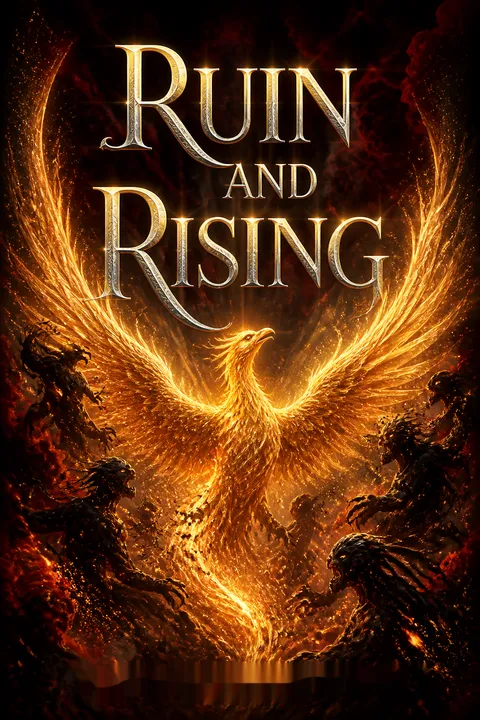


Plot Summary
Prologue
Before the story begins, Alina lies sick and imprisoned in the White Cathedral, where the Apparat has turned her into a living Saint. Mal, her oldest friend, brings her stories to keep her company, but armed guards eventually drag him away in chains.
Alone in the underground sanctuary, Alina must hide her weakness behind the role her followers have given her. The tale of a girl swallowed by a monster becomes the shape of her captivity: the priest’s flock sees a holy figure, while the real Alina waits for a chance to escape.
The prologue establishes the gap between Alina’s public image and private condition before the main plot resumes. Mal’s stories preserve their childhood intimacy, but his removal shows how the Apparat uses religious devotion to isolate her. The monster tale makes captivity feel both physical and psychological: Alina has not merely been hidden underground, she has been enclosed by the identity others impose on her. Her eventual escape will require reclaiming agency from both the priest and the Saint he has constructed.
The Saint in the Cage
Two months after the battle at the Little Palace, Alina Starkov remains frail and unable to summon sunlight. The Apparat keeps her underground, displays her before worshippers using reflected Inferni fire, and insists that she is too precious to risk aboveground. He also controls her access to the surviving Grisha.
At the training grounds, Alina sees Mal Oretsev teaching recruits to fight and persuades the Apparat not to mark the children as soldiers. In the archives, Fabrikator David secretly slips a message into salve prepared for Genya. When the Apparat's guards storm the kitchens and arrest Mal, David, and two Squallers, Alina realizes the message may be the signal for a plan already in motion.
Alina’s weakness is real, but the Apparat turns it into a political instrument: he controls where she goes, whom she sees, and what her followers believe. Her staged miracles make her an image rather than an actor. The scene with the unmarked children complicates that role. By opposing their recruitment, Alina uses the Saint’s authority to protect vulnerable people, even while resenting the performance that gives her influence. Her first act of leadership is therefore both constrained and consequential.
Light Through the Flue
The Apparat accuses Mal and the Grisha of plotting to drug Alina, abduct her, and collapse the White Cathedral. Alina sees through the accusation when Mal signals toward the master flue, the kitchens’ only opening to the surface. She uses her remnant shadow power to distract the guards as Mal fires a stolen pistol into David’s carefully placed blasting powder.
The blast opens the flue, and sunlight reaches Alina for the first time in months. Her power returns; she drives back the guards, forces the Apparat to release the others, and bans child soldiers. At services, she orders the priest to keep the flock safe while she leaves to find the firebird, the last amplifier she hopes can defeat the Darkling.
The escape depends on collaboration, not a solitary miracle. David’s engineering, Mal’s tracking, the twins’ combat skill, and Alina’s recovered light each solve a different part of the problem. Yet victory also exposes the danger of her new authority: Alina brands a guard to secure his loyalty and threatens the Apparat into compliance. She is learning to wield the symbols of power without pretending they are harmless. Her leadership begins in a morally compromised world where protection and coercion can occupy the same gesture.
The Darkling's Throne
Before leaving, Alina reaches the Darkling through the unnatural bond left by their battle. She finds him healthy and ruling from the Grand Palace, and learns that he can sense her visits. Their exchange confirms that he still believes he could make her his equal, but Alina rejects his promise of shared rule because his version of equality depends on obedience.
She returns to her body with a new way to unsettle him, then leads the Grisha and a small group of followers out of the White Cathedral. Pilgrims press food and gifts into their hands. Alina accepts their care, though she fears the hope they place in her, and follows Mal into the tunnels toward Ryevost to seek Nikolai.
The mind-link changes Alina’s relationship to the Darkling from one-sided haunting into a dangerous channel she can use herself. His offer of partnership draws on a real loneliness they share, but she distinguishes recognition from trust: being understood does not make his control acceptable. Leaving the Cathedral also forces her to confront the human cost of symbolic leadership. The pilgrims’ gifts make their faith tangible, and Alina begins to recognize that accepting responsibility means carrying people’s hopes without claiming ownership of them.
A Pelican in the Sky
The tunnel journey tests the band before they reach the surface. Explosions collapse passages, trapping Sergei and Stigg beneath rubble until the Grisha work together to find and free them.
At a cemetery exit, the group emerges beneath the stars, only to be surrounded the next morning by an armed militia led by Mal’s former commander. The militia plans to sell Alina to the Darkling. Nikolai Lantsov’s men attack before the capture can be completed, and Nikolai arrives by dropping from the trees.
His experimental cargo airship, the Pelican, lifts the group out of a barley field while Mal and the twins fight the militia below. Alina kills a pursuing soldier with the Cut, her first deliberate human killing, then joins Nikolai at his mountain base.
The journey turns a collection of survivors into a working crew. The cave-in makes their varied abilities interdependent, while the rescue forces Alina to see what her restored power costs in an immediate, human form. Her first kill is not abstractly heroic; it leaves her sick and frightened by how quickly violence can feel effective. Nikolai’s airship offers a different model of power from the Darkling’s: invention, money, and alliances can move people beyond the reach of fear, though none of them can guarantee safety.
A King Without a Crown
At Nikolai’s hidden stronghold, the Spinning Wheel, Genya must face the former King, whose body she poisoned after he abused her. Nikolai rejects the King’s demand for her execution and forces his parents toward abdication and exile. Alina then resumes lessons with Baghra, who pushes her to cut the peak from a distant mountain, revealing how far her power can reach.
When Alina asks what Morozova left unfinished, Baghra tells her that she is Morozova’s daughter and the Darkling’s mother. She recounts how her childhood sister died after Baghra struck her with the Cut, and how Morozova used forbidden power to bring the girl back. The story deepens the mystery of the third amplifier and warns Alina that its cost may be a life.
Genya’s confrontation exposes the violence hidden beneath courtly rank, while Nikolai’s decision marks a shift from princely charm to the burden of rule. Baghra’s history then reframes the amplifier hunt as a family wound passed through generations. She does not offer a clean moral lesson: Morozova’s love for his child and his obsession with power coexist in the same act of resurrection. Alina recognizes that her own desire to save Ravka may reproduce the very appetite she fears in the Darkling.
The Spinning Wheel Falls
After Alina discovers that the Darkling may use David’s heatless artificial sunlight to enter the Fold, the group prepares to leave for the southern mountains. Sergei betrays their location, and the Darkling attacks the Spinning Wheel with his shadow creatures. He kills Sergei and infects Nikolai with darkness that turns him into a winged, predatory creature.
Baghra confronts her son and draws the nichevo’ya toward herself, then falls from the mountain with them to give the others time to escape. In the scramble to launch the Bittern, Adrik loses an arm, Tamar and Mal are wounded, and several defenders are left behind. Alina’s group escapes into the storm, carrying grief, injuries, and a new fear for Nikolai.
The attack makes private history an immediate battlefield. Baghra’s final choice is an act of love, but not a claim that love can repair the harm she helped create. Nikolai’s transformation gives the Darkling a weapon more intimate than an army: he turns a trusted ally into a threat Alina cannot simply fight. The survivors escape, yet survival feels less like triumph than a debt. Their injuries and losses force Alina to lead while she is still learning how to grieve.
The Firebird Turns Away
The wounded group reaches Dva Stolba and divides before Alina, Mal, Zoya, Tolya, and Harshaw search the Sikurzoi for the firebird. They cross the eerie ashwood and reach the golden falls, where Mal follows signs that other trackers would miss. When the enormous firebird attacks, Alina slips over the cliff and Mal catches her.
Their hands meet, and the surge of power makes the truth unavoidable: Mal is the third amplifier. The bird recognizes them and flies away rather than letting Alina kill it. Alina understands that Morozova’s resurrected daughter passed her unnatural life down Mal’s family line. The power she wants would require Mal’s death, and the discovery turns their quest into a choice neither of them can evade.
The firebird’s refusal interrupts the familiar logic of the hunt: the creature is not a resource waiting to be claimed. Instead, the sought-after power is embodied in Mal, making the amplifier system inseparable from love and sacrifice. Alina’s desire becomes ethically specific. She is no longer weighing abstract power against an ancient beast, but victory against the life of the person who has been her home since childhood. The revelation also unsettles their intimacy by making destiny seem capable of impersonating choice.
The Bloodline's Price
On the return through the mountains, Mal begins treating each ordinary sight as precious, while Alina struggles to face the cost of what they have learned. When she accuses him of accepting death too calmly, he admits that he wants to live. She kisses him, and they spend the night together before continuing toward Dva Stolba.
There, Tamar reports that the Darkling has attacked West Ravka and burned Keramzin, killing its teachers and Alina’s former guardian, Ana Kuya. He has taken twenty-three Grisha children as hostages and gives Alina five days to surrender. Rather than trade herself for them, she gathers her friends around a plan to infiltrate his glass skiff, rescue the children, and attack him unseen.
The tenderness between Alina and Mal does not erase the threat of sacrifice; it makes that threat unbearable and therefore impossible to treat as destiny. Mal’s wish to live resists the heroic convention that turns a loved one into a willing instrument. The news from Keramzin then widens their private crisis into a public one. The Darkling targets the place that formed Alina, betting that grief will make her surrender. Her answer is not stoicism, but a plan built with the people who share her losses.
An Invisible Crossing
David and Genya propose bending light around people as Alina once did around the Bittern, making an approach to the Darkling’s skiff possible. The plan requires glass containers of lumiya, marksmen, and a way to shield the team from the volcra.
At the edge of the Fold, Nikolai appears in his monstrous form and asks Alina to use her light on him. It briefly pushes back the darkness, but the curse returns and he flies into the Fold. Alina then crosses with the Soldat Sol, whose faith in her steadies them as she shelters the group in light.
At the abandoned Tomikyana farm, the crew makes weapons and tests its invisibility technique. A dozen followers of Alina escape the Apparat’s control and join them, though the priest himself sends no army.
The plan uses the same light that once made Alina a spectacle as a tactical instrument, converting visibility into concealment. Its success depends on knowledge shared across disciplines, especially David’s inventions and Genya’s practical insight. Nikolai’s failed healing attempt shows the limits of Alina’s power and the danger of confusing affection with mastery. The Soldat Sol bring genuine courage, but their faith also increases Alina’s responsibility: she must not mistake devotion for consent to spend their lives carelessly.
The Knife and the Light
Inside the Fold, Alina’s hidden fighters ambush the Darkling’s glass skiff, shooting his guards while she bends light around their bodies. A second wave of skiffs turns the fight, and Alina is shot before she can reach the captive children. The Darkling reveals that the children were never aboard; he used them to draw her out.
When Mal finds her in the darkness, he forces her hand to drive a knife into his chest, completing the amplifier bond. Alina’s power vanishes, but light ignites in ordinary people across the Fold, unraveling the darkness. She kills the Darkling with a shadow-coated blade. His nichevo’ya disappear, Nikolai returns to human form, and Mal breathes again after the Fold’s destruction, though Alina remains powerless.
The climax overturns the premise that power must concentrate in one exceptional person. Mal’s death releases the amplifiers’ force across ordinary people, making collective capacity the answer to the Darkling’s solitary supremacy. Alina’s loss of power is not a reward or a punishment so much as the end of her appointed role. Her final act against the Darkling is deliberately small beside the mass of light: she uses the remnant he left in her, not a grand divine weapon, to end a cycle built on domination.
A Saint's Second Burial
Alina and Mal are taken from the Fold while the soldiers believe Alina has died. To protect them from the public cult gathering around her, her allies stage a funeral using Ruby’s body disguised as Alina’s, with the Darkling’s body beside it on the pyre. Nikolai returns to Kribirsk and assumes command of Ravka, while the Fold’s destruction leaves newly empowered Summoners among the population.
Alina gives Genya, David, and Zoya responsibility for leading the Second Army across its orders, and Genya receives a royal pardon. Though the country celebrates its survival, Alina and Mal choose anonymity over court or sainthood. They leave with Misha, carrying grief for those they lost and no longer bearing the power that defined them.
The false funeral separates Alina from the institution built around her image. Her disappearance is not a rejection of public responsibility so much as a refusal to let her body and story remain tools of political authority. She transfers leadership to Grisha who can govern themselves, while Nikolai takes up the work of rebuilding the state. The ending does not erase the dead or promise a repaired Ravka. It makes room for a life in which Alina’s identity is not exhausted by what she can summon.
Keramzin Rebuilt
Alina and Mal marry quietly in a coastal chapel, using assumed names and relying on Misha and a familiar orange cat as witnesses. They later rebuild Keramzin as an orphanage rather than a grand estate. Its doors stay open, its rooms welcome noisy children, and its lessons include practical trades as well as books and art.
Mal teaches the children to hunt and farm; Alina fills the house with maps, paintings, and stories. Their Grisha friends visit with winter gifts, and the household keeps its place in the lives of the people who survived the war. Alina and Mal still carry grief, especially for the power and friends they lost, but their days now belong to ordinary work, companionship, and chosen family.
The final home reverses the conditions that shaped Alina and Mal as children. Keramzin once disciplined orphans through locked rooms, deprivation, and fear; the rebuilt house offers food, light, education, and room to choose a future. Their anonymity protects a private life, but the orphanage is not withdrawal from the world. It is a concrete political response to the world’s habit of making children pay for adult wars. Their modest routines become a form of repair.
Epilogue
At a quiet chapel on the coast, Alina and Mal marry under false names, witnessed only by Misha and Oncat. They settle at a rebuilt Keramzin, now an open orphanage where children can study, learn trades, skate, and keep a lantern burning at night.
Friends from the war return each winter with food and gifts, including a blue kefta that reminds Alina she still belongs to the Grisha. Nikolai rules Ravka, while Alina and Mal build a life out of ordinary acts: teaching, tending children, sharing tea, and making space for the grief that remains.
The epilogue measures victory by the conditions created for the next generation, not by a throne or a restored magical order. Keramzin’s open larder, lit dormitories, and practical education answer the deprivation Alina and Mal experienced there. Their chosen names protect privacy, while their friends’ visits preserve belonging. Grief remains part of the household rather than a wound that must be declared healed. The ending makes care a daily practice, one that resists the machinery of war without pretending war has ended everywhere.
Analysis
Ruin and Rising asks whether power can be separated from the story people tell about deserving it. Alina is called a Saint, the Darkling presents himself as Ravka’s necessary ruler, and Nikolai turns royal identity into a tool for resistance. Each image carries real force, but each can also conceal coercion. Alina’s struggle is to use the authority others grant her without confusing devotion with permission to control them.
The amplifier plot sharpens this question by making power relational. Alina’s strength depends on lives and histories beyond herself, and the final amplifier is not a distant creature but Mal, the person whose loyalty predates her fame. Their bond makes the cost of power intimate. Alina cannot solve the crisis by wanting hard enough or by accepting a destiny designed by someone else. The decisive change occurs when power spreads among ordinary people, breaking the assumption that Ravka needs one exceptional savior.
The novel also treats grief as a political fact. Sergei’s trauma, Genya’s injuries, Baghra’s history, and the destruction of Keramzin show how war persists inside survivors and institutions. Victory does not restore those losses. The rebuilt orphanage offers a narrower but more durable answer: children receive food, education, choice, and protection from the systems that made Alina and Mal vulnerable. The ending values shared care over spectacle. It does not claim that one good home will end war, only that people can refuse to reproduce its cruelties in the lives entrusted to them.
Review Summary
Ruin and Rising received mixed reviews from readers. Many praised the character development, world-building, and Bardugo's writing style. However, some were disappointed with the ending, feeling it undermined Alina's character growth. The Darkling remained a compelling antagonist, though some wanted more scenes with him. Nikolai was a fan favorite. Critics found the plot slow-paced at times. Overall, readers were divided on the conclusion, with some finding it satisfying and others feeling let down by the final character pairings and outcomes.
People Also Read







Characters
Alina Starkov
Reluctant Sun SaintAlina is Ravka’s Sun Summoner, a young woman whose extraordinary power has made her a military asset, a religious symbol, and a target. She is driven by loyalty to her friends and by the need to stop the Darkling, but she distrusts the authority others build around her. Her instinct to protect the vulnerable can coexist with anger, ambition, and a growing willingness to use force. Alina’s central struggle is not simply how much power she can wield, but how to remain answerable to people when they begin treating her as more than human.
Malyen Oretsev
Alina's steadfast trackerMal is Alina’s childhood companion, a gifted tracker and practical soldier who often sees danger before the Grisha around him do. His loyalty is profound but not uncomplicated: he wants to protect Alina, yet fears becoming only a tool in the future she is being asked to build. He leads through attention, competence, and an ability to keep frightened people moving. His affection for Alina is inseparable from shared history, and he struggles to make room for his own desires when duty keeps demanding sacrifice.
The Darkling
Ravka's shadow rulerThe Darkling is an ancient Grisha whose mastery of shadow and political patience have made him a formidable ruler. He wants to secure Ravka and elevate the Grisha, but his fear of vulnerability has turned those aims into a justification for domination. He recognizes Alina as a rare equal in power and loneliness, then repeatedly treats that recognition as permission to control her. His charisma and apparent self-command make his cruelty more dangerous, not less.
Nikolai Lantsov
Inventive outlaw princeNikolai is a resourceful prince who has built a resistance through ships, money, technical ingenuity, and personal charm. He treats problems as puzzles and often uses humor to keep fear at a distance. Beneath the confidence is a serious commitment to Ravka and a keen understanding of how leadership depends on both spectacle and practical work. His friendship with Alina is affectionate but politically complicated, because each knows that the country’s needs may shape their private choices.
Baghra
Alina's severe mentorBaghra is an elderly Grisha teacher who trains Alina without soothing her pride or sparing her discomfort. Her bluntness comes from a lifetime of loss, secrecy, and hard-earned knowledge about power. She is fiercely protective in ways that can look like cruelty, and she distrusts grand promises of redemption. Her complicated bond with the Darkling gives her lessons a personal cost: she understands how a loving intention can help create a dangerous legacy.
Genya Safin
Scarred court survivorGenya is a skilled Corporalnik whose years at court taught her how beauty, service, and access can become forms of leverage. She is witty and attentive, but the damage done to her body has left her wary of being treated as something to repair. Her friendship with Alina is rooted in shared danger and hard-won trust. Genya’s intelligence spans healing, alteration, and craft, and she is determined to define herself beyond the roles powerful people assigned her.
Zoya Nazyalensky
Proud Squaller allyZoya is a formidable Squaller, sharp-tongued and proud of her skill. She initially follows Alina with reservations, and her confidence can read as vanity or contempt. Beneath that armor is a soldier who has endured loss and understands that survival requires discipline as much as talent. She is not naturally gentle, but she proves capable of loyalty, cooperation, and humor when the people around her earn her respect.
David Kostyk
Brilliant FabrikatorDavid is a Fabrikator whose mind is most comfortable among mechanisms, materials, and experiments. He can seem distracted or socially awkward, but his inventions repeatedly solve problems that strength alone cannot. Knowledge is his great appetite, which makes him both useful and vulnerable to overlooking consequences. His connection with Genya draws him into emotional territory he cannot reduce to a formula, while his loyalty to Alina gives his technical work a human purpose.
Tamar Kir-Bataar
Ax-wielding HeartrenderTamar is a Heartrender and experienced fighter who relies on direct action rather than ceremony. She is Tolya’s twin and shares his loyalty to Alina, though she expresses it with a practical edge and a readiness to challenge others. Her axes and tactical judgment make her dangerous in close combat. Tamar is also attentive to the emotional ties within the group, particularly her growing closeness with Nadia.
Tolya Yul-Bataar
Poetic fighterTolya is Tamar’s twin, a towering Heartrender whose formidable build contrasts with his love of poetry and epic stories. He is devoted to his sister and guided by a spiritual faith that shapes how he interprets Alina’s role. Tolya is a disciplined fighter, but his tenderness appears in practical care for injured companions and in his willingness to stand between danger and the people he loves.
Nadia Zhabin
Steady SquallerNadia is a capable Squaller who has survived the loss of people close to her without withdrawing from the work ahead. She is quieter than Zoya, but her steadiness becomes essential when the group is under pressure. Her bond with her brother Adrik and her affection for Tamar reveal a warmth she does not often put on display. Nadia’s courage is measured less by bravado than by her ability to continue when exhausted.
Adrik Zhabin
Eager young SquallerAdrik is Nadia’s younger brother, a determined Squaller who wants to prove he belongs among experienced fighters. His eagerness sometimes outruns his judgment, but he is brave and quick to learn. He looks to Zoya as a model of power and confidence, even when she teases him. Adrik’s youthful ambition makes him especially sensitive to being dismissed or treated as fragile.
Harshaw
Unpredictable InferniHarshaw is a powerful Inferni with a restless streak, a taste for small fires, and an attachment to his orange cat, Oncat. His eccentric manner can unsettle the others, but he is a capable fighter and a persistent companion. His history outside Ravka gives him a personal understanding of the danger Grisha face beyond its borders. Beneath the odd jokes is someone who has chosen to stay and fight for a cause larger than his own escape.
The Apparat
Priest of the Sun SaintThe Apparat is a priest and political operator who turns popular devotion into a source of influence. He believes faith can unite people more strongly than royal command, but his concern for Alina is tangled with a desire to direct her. Patient, calculating, and practiced at appearing benevolent, he is most dangerous when he presents control as protection. His plans reveal how readily hope can be organized into power.
Sergei
Grieving HeartrenderSergei is a powerful Heartrender whose experience at the Little Palace left him frightened and unstable. He carries the trauma of losing Marie and struggles to feel safe among people who are themselves surrounded by danger. His grief often makes him withdraw, while the others do not always know how to reach him. Sergei represents the lasting psychological cost of battle, beyond wounds that a Healer can see.
Misha
Young sword studentMisha is a child living under Baghra’s care, separated from his mother and hungry for company. He is small, observant, and eager to learn how to fight, though adults often underestimate what he understands. Alina and Mal try to give him responsibility without forcing him to grow up too quickly. His wooden sword marks both his wish to belong and the childhood that war keeps interrupting.
Ruby
Former infantry recruitRuby once served in the First Army alongside Alina and Mal. Cheerful and flirtatious before the war, she arrives at the White Cathedral bearing the mark of the Sun Saint and the caution of a soldier who has seen combat. Her presence gives Alina a glimpse of how ordinary people transform the Saint into a source of hope.
Vladim Ozwal
Newly loyal guardVladim is a young Priestguard who becomes caught between religious obedience and his doubts about the Apparat. He is impressionable, earnest, and hungry for a cause that feels larger than the archives and its rules. His willingness to serve Alina reflects how powerfully a leader’s actions can redirect someone’s faith.
Oncat
Harshaw's orange catOncat is an orange tabby who follows Harshaw through the underground refuge, the airship, and the group’s travels. She is independent, sharp-clawed, and entirely unimpressed by military plans. Her small, stubborn presence gives the battered group moments of comfort and absurdity.
The former King
Disgraced Ravkan rulerThe former King is a weak and entitled ruler whose authority depends on rank rather than respect. He treats servants as possessions and cannot accept that his decisions have made him unfit to govern. His belief that status excuses harm makes him a sharp contrast to Nikolai’s more accountable vision of leadership.
Ana Kuya
Keramzin's stern guardianAna Kuya raised Alina and Mal at Keramzin, enforcing rules while providing the closest thing they had to a parent. Her strictness could feel harsh to the children, but she gave them structure in a world that had already taken their families. Alina’s memories of her remain tied to the orphanage and to the fragile safety of childhood.
Plot Devices
Morozova's amplifiers
Power with a human costThe stag’s antlers and sea whip’s scales amplify Alina’s power, while the final amplifier appears to be a firebird. Their hunt drives the journey through Ravka and the Sikurzoi. The amplifiers are not merely magical upgrades: they connect power to sacrifice, inheritance, and the danger of treating living beings as tools. The final truth overturns the assumption that the third amplifier must be an animal.
The Shadow Fold
A country divided by darknessThe Fold is a vast band of darkness populated by volcra, separating Ravka and limiting its trade and military movement. The Darkling’s ability to manipulate it makes the landscape itself a weapon. It also embodies the consequences of forbidden power, and the final battle turns on whether Alina’s light can protect people long enough to cross or destroy it.
Alina and the Darkling's bond
A dangerous line of sightThe connection forged through their shared wounds allows Alina to enter the Darkling’s awareness and see the world around him. It gives her access to his location and intentions, but also carries emotional danger because their shared isolation can feel like intimacy. The link becomes a tactical opening during the final confrontation, when Alina uses it to misdirect him.
Lumiya and the glass skiff
Artificial sunlight in the FoldDavid develops lumiya, a contained source of light that can protect people from the Fold’s creatures. Its use in a glass skiff gives the Darkling a way to move forces through the darkness. The invention also gives Alina’s group a target and forces them to devise a countermeasure, including glass canisters and a plan to approach unseen.
Bending the light
Invisibility through redirectionRather than creating darkness, Alina learns to redirect light around an object so it does not reflect toward an observer. David first suggests the method for hiding the Bittern, then Genya applies the principle to the soldiers. The technique turns Alina’s familiar power into concealment and makes a surprise attack possible, though the moving, crowded battle tests its limits.
FAQ
Synopsis & Basic Details
What is Ruin and Rising about?
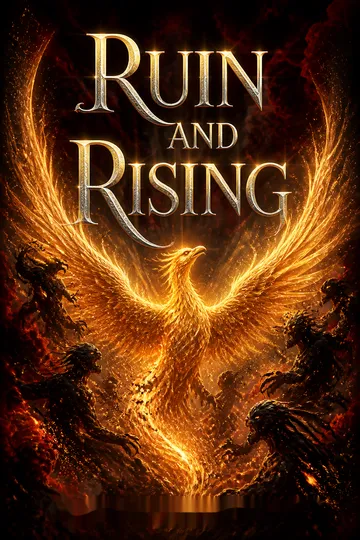
- Synopsis: Ruin and Rising concludes Alina Starkov's journey as she fights to defeat the Darkling and destroy the Shadow Fold. It involves her escape from the White Cathedral, her quest for the firebird amplifier, and the final battle against the Darkling, all while grappling with her own power and identity.
- Not Spoilers: The story focuses on Alina's struggle to unite Ravka against the Darkling, her search for the final amplifier, and the sacrifices she and her allies must make. It explores themes of power, love, and the cost of war, without revealing the ultimate outcome.
- Character Driven: The narrative is driven by Alina's internal conflicts and her relationships with Mal, Nikolai, and the other Grisha, as well as her complex connection to the Darkling.
Why should I read Ruin and Rising?
- Epic Conclusion: It provides a satisfying and emotional conclusion to the Grisha trilogy, tying together the plot threads and character arcs established in the previous books.
- Complex Themes: The book delves into complex themes of power, sacrifice, and identity, offering a thought-provoking exploration of morality and the consequences of war.
- Character Development: Readers will witness significant character development, particularly in Alina, Mal, and Nikolai, as they grapple with their roles and make difficult choices.
What is the background of Ruin and Rising?
- Political Turmoil: The story is set against a backdrop of political turmoil in Ravka, with the Darkling having seized power and the nation divided. This political instability drives much of the plot and character motivations.
- Magical System: The Grishaverse's unique magical system, based on the Small Science, plays a crucial role in the story, with the amplifiers being central to the conflict. The history of the Grisha and their relationship with the otkazat'sya is also explored.
- Cultural Influences: The book draws inspiration from Russian culture, with its architecture, clothing, and language adding depth to the world-building. The religious and mythological elements also contribute to the story's rich tapestry.
What are the most memorable quotes in Ruin and Rising?
- "You're going to be a queen someday, Alina. The less blood on your hands, the better.": This quote, spoken by Mal, highlights his understanding of Alina's destiny and his desire to protect her from the harsh realities of power. It also foreshadows the sacrifices she will have to make.
- "I am ancient, Alina. I know things about power that you can barely guess at.": This quote from the Darkling reveals his arrogance and his belief in his own superiority. It also underscores the vast difference in their understanding of power and its consequences.
- "I am not ruined. I am ruination.": Genya's defiant words showcase her transformation from a victim to a powerful force. It highlights her resilience and her refusal to be defined by her past.
What writing style, narrative choices, and literary techniques does Leigh Bardugo use?
- First-Person Perspective: The story is told from Alina's first-person perspective, allowing readers to deeply connect with her thoughts, emotions, and internal conflicts. This creates a sense of intimacy and immediacy.
- Foreshadowing and Symbolism: Bardugo uses subtle foreshadowing and recurring symbols to create a sense of unease and anticipation. The recurring motifs of light and darkness, as well as the significance of certain objects, add layers of meaning to the narrative.
- Emotional Depth: The writing style is characterized by its emotional depth, exploring the characters' vulnerabilities and their complex relationships. The use of vivid imagery and sensory details enhances the reader's immersion in the story.
Hidden Details & Subtle Connections
What are some minor details that add significant meaning?
- The Watch: David's pocket watch, which he constantly fiddles with, serves as a subtle reminder of the passage of time and the limited time Alina has to find the firebird. It also symbolizes David's meticulous nature and his reliance on logic and order.
- The Cat: Harshaw's cat, Oncat, is more than just a pet. It acts as a barometer for Harshaw's emotions and often seems to have a mind of its own, adding a touch of unpredictability to the story.
- The Names: The names of the locations, such as Dva Stolba and the Cera Huo, hint at their significance and the history of the Grishaverse. They also add a layer of mystery and intrigue to the story.
What are some subtle foreshadowing and callbacks?
- The Master Flue: The master flue in the White Cathedral's kitchen, initially presented as a means of escape, foreshadows the importance of fire and light in Alina's final confrontation with the Darkling. It also serves as a callback to the importance of the hearth in her childhood.
- The Beetle: David's use of a beetle in the blasting powder pouch is a subtle callback to Mal's tracking skills and his ability to find his way even in the dark. It also foreshadows the importance of tracking in their quest for the firebird.
- The Shadows: Alina's ability to manipulate shadows, a remnant of her connection to the Darkling, foreshadows her growing understanding of merzost and her willingness to use any means necessary to defeat him.
What are some unexpected character connections?
- Baghra and Morozova: The revelation that Baghra is Morozova's daughter adds a new layer of complexity to her character and her relationship with the Darkling. It also highlights the cyclical nature of power and the consequences of obsession.
- Mal and Morozova: The reveal that Mal is the third amplifier, a descendant of Morozova's other daughter, creates a surprising connection between him and the source of the Grisha's power. It also underscores the importance of otkazat'sya in the Grishaverse.
- Genya and David: The relationship between Genya and David, initially presented as an unlikely pairing, evolves into a deep and meaningful connection. It highlights the importance of acceptance and the power of inner beauty.
Who are the most significant supporting characters?
- Tolya and Tamar: These twins are not just loyal protectors but also complex characters with their own histories and motivations. Their connection to Sturmhond and their faith in Alina make them crucial to the story's outcome.
- David: David's brilliance and his ability to create and invent make him an invaluable ally. His relationship with Genya adds emotional depth to the story and highlights the importance of intellect and creativity.
- Zoya: Zoya's character arc, from a reluctant ally to a fierce protector, is one of the most compelling in the series. Her strength and her willingness to challenge Alina make her a vital part of the group.
Psychological, Emotional, & Relational Analysis
What are some unspoken motivations of the characters?
- The Darkling's Loneliness: Beneath his desire for power, the Darkling is driven by a deep-seated loneliness and a longing for connection. His interactions with Alina reveal his desire for an equal, someone who can understand his power and his burden.
- Mal's Self-Sacrifice: Mal's willingness to sacrifice himself is not just an act of love for Alina but also a way to reclaim his own identity and purpose. He struggles with his role as an otkazat'sya and his inability to protect Alina in the same way that Grisha can.
- Alina's Fear of Power: Alina's fear of her own power and her struggle to control it stem from her desire to remain human and to avoid becoming like the Darkling. She is constantly grappling with the temptation of merzost and the consequences of using it.
What psychological complexities do the characters exhibit?
- Alina's Internal Conflict: Alina is torn between her desire for power and her fear of its corrupting influence. She struggles with her identity as the Sun Summoner and her longing for a normal life.
- The Darkling's Obsession: The Darkling's obsession with power and his belief in his own superiority stem from his deep-seated loneliness and his desire to be understood. His inability to connect with others on an emotional level drives his actions.
- Mal's Insecurity: Mal's insecurity about his lack of Grisha power and his fear of losing Alina to someone more powerful drive his actions. He struggles with his role as a protector and his desire to be more than just an ordinary tracker.
What are the major emotional turning points?
- Mal's Sacrifice: Mal's death is a major emotional turning point, forcing Alina to confront the true cost of her power and the sacrifices required to defeat the Darkling. It also serves as a catalyst for her transformation and her acceptance of her own strength.
- Baghra's Revelation: Baghra's revelation about her past and her connection to Morozova and the Darkling adds a layer of tragedy to her character and forces Alina to confront the cyclical nature of power and the consequences of obsession.
- Nikolai's Transformation: Nikolai's transformation into a monster is a devastating emotional turning point, highlighting the Darkling's cruelty and the fragility of hope. It also underscores the importance of choice and the power of love and friendship.
How do relationship dynamics evolve?
- Alina and Mal: Their relationship evolves from a childhood friendship to a deep and complex love. They struggle with their changing roles and the sacrifices they must make for each other. Their final moments together highlight the enduring power of their bond.
- Alina and Nikolai: Their relationship is characterized by mutual respect and admiration. They are both leaders who understand the burden of power and the need for sacrifice. Their connection is based on shared goals and a deep understanding of each other's strengths and weaknesses.
- Alina and the Grisha: Alina's relationships with the other Grisha evolve from a sense of isolation to a deep bond of loyalty and friendship. They become her chosen family, supporting her through her struggles and fighting alongside her in the final battle.
Interpretation & Debate
Which parts of the story remain ambiguous or open-ended?
- The Nature of Merzost: The true nature of merzost and its long-term consequences remain ambiguous. While Alina uses it to defeat the Darkling, the full extent of its power and its impact on the world are left open to interpretation.
- The Future of Ravka: The future of Ravka and its relationship with the other nations is left open-ended. While the Darkling is defeated and the Shadow Fold is destroyed, the long-term political and social implications of these events are not fully explored.
- The Fate of Nikolai: Nikolai's transformation into a monster and his subsequent disappearance leave his fate ambiguous. While he is seen flying into the Shadow Fold, his ultimate destiny is left to the reader's imagination.
What are some debatable, controversial scenes or moments in Ruin and Rising?
- Mal's Death: Mal's death is a controversial moment, with some readers feeling that it was unnecessary and that it undermined the importance of his character. Others argue that it was a necessary sacrifice that allowed Alina to fully embrace her power.
- Alina's Choice: Alina's decision to give up her power and live a normal life is also a point of debate. Some readers feel that she should have embraced her role as a leader, while others believe that she deserved a chance at peace and happiness.
- The Darkling's Redemption: The Darkling's final moments, where he asks Alina to speak his true name, have been interpreted in different ways. Some readers see it as a sign of his humanity and his desire for redemption, while others view it as a final act of manipulation.
Ruin and Rising Ending Explained: How It Ends & What It Means
- The End of the Shadow Fold: The destruction of the Shadow Fold symbolizes the end of the Darkling's reign of terror and the beginning of a new era for Ravka. It represents the triumph of light over darkness and the potential for healing and renewal.
- Alina's Sacrifice: Alina's sacrifice of her power and her decision to live a normal life highlight the importance of self-discovery and the desire for a meaningful existence beyond extraordinary abilities. It also underscores the idea that true power lies not in magic but in love and connection.
- A New Beginning: The ending of Ruin and Rising is not a simple happily ever after but a new beginning. It leaves the reader with a sense of hope and the possibility of a better future, while also acknowledging the sacrifices and losses that were necessary to achieve it.
Grishaverse Series


About the Author
Other books by Leigh Bardugo




Download PDF
Download EPUB
.epub digital book format is ideal for reading ebooks on phones, tablets, and e-readers.








