


Plot Summary
Prologue
Alina and Mal cross the True Sea after escaping Ravka, hoping Novyi Zem will hide them from the Darkling. On the voyage, Mal regains his strength and finds work among the sailors; Alina stays below deck, haunted by dreams of the Darkling using her power through the stag’s collar. When they reach shore, the unfamiliar land offers a chance to begin again, but not yet a sense of home.
The crossing offers physical distance without emotional escape. Mal can turn survival into work, making a place for himself among sailors, while Alina’s power and fear keep her bound to the enemy they left behind. Their contrasting responses establish the pressure that will shape their relationship: Mal seeks a life beyond Ravka, while Alina cannot separate herself from what she can do or from the damage already done. Their hope of finding safety is genuine, but the dreams make clear that hiding is not the same as freedom.
Cofton’s False Safety
In Cofton, Alina and Mal earn just enough money to leave their crowded boardinghouse and settle farther west. Alina hides Morozova’s collar beneath a scarf, while nightmares and the strain of going without her power leave her weak. Their fragile routine ends when the Darkling’s Grisha seize them in their room. He has traced their journey through a golden hairpin they used to pay for passage.
Mal is held at knifepoint, preventing Alina from attacking. When she and Mal try to escape in a burst of light, the Darkling unveils the nichevo’ya, living shadow creatures that survive her attack. One bites Alina’s shoulder, leaving a wound that will not heal, and she loses consciousness as the Darkling claims his new power.
Cofton looks like the ordinary life Alina wants, but her body cannot yet inhabit it comfortably: she hides the collar, fears discovery, and grows ill without using her power. The golden pin turns their attempt to buy safety into the means of their capture, making each small survival choice carry a cost. The Darkling’s new creatures also alter the terms of the conflict. Alina has faced his shadows before, but now he can give them bodies that resist her light. Her wound makes that change personal and lasting, while Mal’s hostage status turns their intimacy into leverage the Darkling can use.
Aboard the Whaler
Alina wakes after a week of forced unconsciousness aboard a whaling ship, chained and far from Novyi Zem. Genya tends her, while Ivan guards her and the Darkling controls the voyage. Mal is alive but held apart, and the Darkling allows only brief glimpses to keep Alina compliant.
She learns that several soldiers survived the previous disaster, but many others died, and that Genya helped suppress letters Alina had sent Mal. Genya insists she chose the Darkling’s cause because she believes he can protect Ravka and the Grisha.
The ship belongs to the privateer Sturmhond, whose crew resent the Darkling’s treatment of them. Alina sees that the captain’s apparent indifference may conceal another purpose, but she has no proof and no freedom to act.
Captivity here is managed through controlled access: Alina is given enough information to remain afraid, but not enough to make a plan. The separation from Mal turns their attachment into a mechanism of restraint, while Genya’s presence complicates the simple division between friend and enemy. Her choice is not presented as a clean betrayal; she has found security and status in a system that once denied her both. Alina’s discovery about the unsent letters makes the emotional damage older than the current imprisonment. The ship’s uneasy crew hints that power over a vessel is not the same as loyalty from the people aboard it.
The Bone Road Hunt
As the whaler enters the dangerous waters of the Bone Road, Alina realizes the Darkling seeks another of Morozova’s amplifiers. He confirms that it is a sea creature called Rusalye, the sea whip, and intends to join its power to Alina’s stag collar. Mal doubts the creature exists, but the Darkling forces him to search by threatening to have Alina cut and healed repeatedly.
Mal accepts the task to stop the threat, then follows signs in the ice and water that the crew cannot read. On the sixth day, he identifies a likely location. With the crew lowering harpoon boats and the Darkling watching, Mal and Alina steal a brief moment together. Rusalye breaks the surface nearby, proving Mal’s tracking right and bringing the hunt within reach.
The Darkling turns Mal’s most valued skill into a weapon against him: tracking, once an expression of independence, becomes coerced labor under threat to Alina. His expertise still matters, however, because no amount of force can substitute for the close attention he gives to the world around him. Alina is trapped between opposing fears. Finding Rusalye may strengthen the person who holds her captive, but refusing may expose her to torture. The creature’s arrival does not resolve this dilemma; it makes the moral cost visible. The sea whip is not merely a source of power but a living being about to be treated as a resource.
Sturmhond Turns Coat
Before the Darkling’s men can secure Rusalye, Sturmhond launches a surprise attack from a second ship. His crew turns on the whaler, and the twins, Tamar and Tolya, reveal themselves as Heartrenders while helping Mal and Alina escape. Ivan dies fighting Tolya. Genya remains with the Darkling, unable to follow Alina despite her plea.
Sturmhond’s crew captures the wounded sea whip, and Mal helps end its suffering so Alina can take its golden scales as an amplifier. A stolen copy of the Lives of Saints shows the sea whip beside a white stag and a firebird, suggesting a third creature completes Morozova’s design. Sturmhond admits he was paid to bring Alina back to Ravka, though he does not identify his client.
The mutiny shifts the story from enforced helplessness to a precarious alliance, but freedom arrives through violence rather than rescue without cost. Ivan’s death and Genya’s decision to stay prevent the escape from feeling clean or triumphant. Alina’s hesitation over the sea whip distinguishes taking power from simply wanting it: she recognizes that the amplifier is made available through the creature’s suffering. Mal’s help is intimate but painful, because he acts where Alina cannot. The saint’s book supplies a structure for the next pursuit, while its religious imagery makes Morozova’s experiments look less like folklore than a buried history with real consequences.
The Fetter of Scales
A Fabrikator fuses Rusalye’s scales into a cuff around Alina’s wrist. When Alina summons light, the combined amplifiers unleash far more power than she can control: the sea blazes, the air heats, and the ship trembles.
Mal pulls her back to herself, and she finally releases the light without destroying the vessel. The experience leaves her exhilarated and frightened by how strongly she wants more. Sturmhond points out that the Darkling can hunt them while he lives, and that Ravka remains vulnerable.
Alina decides she cannot simply disappear again. She agrees to hear the privateer’s client and return to Ravka, but insists she will decide her own course. The choice begins a new struggle over who directs her power and what she will use it to protect.
The second amplifier makes power feel less like a tool than a force that changes the person using it. Alina’s first response is not mastery but appetite: she experiences the pleasure of immense capability at the same time as its threat. Mal’s intervention restores her sense of embodied self, anchoring her in a relationship rather than an abstract ideal of strength. Yet choosing Ravka complicates that anchor. Alina is no longer simply fleeing with Mal; she accepts responsibility for people she may never meet. Her insistence on making her own decision marks an important shift from being carried between powerful agendas to negotiating with them.
The Prince Takes Flight
Sturmhond transfers Alina and Mal to the Hummingbird, a flying craft he designed, then steers it into the Shadow Fold without fully warning them. Alina’s light protects the ship, while its guns tear through a flock of volcra. Mal tracks the creatures to the wreckage of the Darkling’s old skiff, where the crew discovers a nest and bombs it.
Alina hears the volcra’s cries as disturbingly human. A vision of the Darkling startles her, and the Hummingbird loses control before crashing into a lake. Once ashore, Sturmhond sheds his disguise and reveals himself as Nikolai Lantsov, the king’s younger son. He has returned to claim a role in Ravka’s survival, and announces that he has brought the Sun Summoner home.
The Hummingbird represents a different kind of power from the amplifiers: invention, engineering, and cooperation between Grisha and non-Grisha. Its use in the Fold offers a glimpse of a future not organized solely around magical elites. Yet the attack on the volcra unsettles that confidence. Alina cannot keep the enemy neatly categorized as monstrous when their cries sound human, and her perception interrupts the crew’s exhilaration. The crash strips away the captain’s disguise at the exact moment the group loses control of the machine. Nikolai’s revelation recasts his earlier jokes and risks as political strategy, showing that performance can conceal service as well as self-interest.
A Queen Refused
Nikolai explains that Ravka is near collapse: the Fold is expanding, the armies are fractured, and the Darkling remains a threat. He wants Alina beside him as queen, using her public influence to unite Ravka and strengthen his claim to rule. Alina refuses marriage as a political solution, but agrees to return to Os Alta and consider helping him.
She demands command of the Second Army rather than a ceremonial place at court. Nikolai accepts the bargain if she helps him win support. Mal objects, then admits he will accompany her, though he fears the life she is choosing will leave no place for him. Their return is not a homecoming so much as an entry into a political struggle neither can control.
The proposal exposes the difference between being valued and being granted agency. Nikolai sees Alina’s symbolic reach as politically useful, but she rejects the role of royal ornament and asks for the institution that would let her act. Her demand is both practical and psychological: she is tired of being treated as a prize exchanged among men. Mal’s objection is not simply jealousy; he senses that the partnership they formed while fleeing may not survive a life structured by duty and rank. His agreement to return reveals loyalty, but it does not erase the growing mismatch between their visions of a future.
The Broken Golden Dome
Nikolai brings Alina through Ravka, presenting her to communities that have begun to worship her as a Saint. At the capital, the King grants her temporary command of the Grisha but sentences Mal to dishonorable discharge for desertion.
Alina returns to the Little Palace and announces that she will lead the Second Army. Sergei challenges her authority, while Zoya unexpectedly supports her. When the Grisha question her loyalty and accuse her of helping the Darkling, Alina nearly uses the Cut against Sergei.
She redirects the attack into the golden dome, splitting it open, then demands obedience or departure. The display secures attention, but it leaves Alina shaken by how close she came to killing someone and how easily fear can make command look like force.
Alina’s first act as commander is inseparable from the danger of becoming the kind of leader she opposes. The cracked dome is a demonstration of power and a record of her nearly uncontrolled anger. It gets the Grisha’s attention, but it cannot by itself create trust or competence. Her reception also exposes the competing stories already being built around her: Saint, traitor, weapon, political ally. The King’s conditional appointment and Mal’s discharge place her authority inside a fragile structure, granted by a monarch who distrusts her. To lead, Alina must make people follow before she has earned their confidence, then find a way to turn obedience into cooperation.
Morozova’s Dangerous Legacy
Alina tries to reorganize the Little Palace and learns how few experienced Grisha have remained. Baghra, whom the Darkling has blinded, refuses to help locate the firebird and warns that the amplifiers are unnatural and will consume Alina if she pursues all three.
David, the Fabrikator who made the stag collar, later tells Alina that Ilya Morozova created the amplifiers through merzost, the forbidden power that can make something from nothing. Morozova’s records were destroyed after the Fold was created, leaving the book of Saints as one of the few clues.
Alina also begins seeing the Darkling where he cannot be, but hides the visions from Mal. The more she seeks command and strength, the more she fears she is changing into something she cannot reverse.
The warning from Baghra and the confession from David make power’s history inseparable from its ethics. The amplifiers were not natural discoveries but deliberate acts of creation, and the Fold stands as evidence that such acts can rupture the world. Baghra’s refusal is painful partly because Alina wants her to be a source of absolution as well as information. David offers facts, but his complicity cannot be undone by regret. Meanwhile, the visions of the Darkling make Alina’s inner life feel compromised. She conceals them to protect Mal, yet secrecy repeats the very pattern that has already damaged their trust.
The Apparat’s Hidden Door
While tensions grow between Alina and Mal, they slip into a lavish party disguised as Suli fortune-tellers. A staged brawl creates confusion, and the Apparat uses the distraction to draw Alina into a courtyard.
He claims his followers form an army devoted to her and offers to reveal more if she joins him. Alina rejects his religious title for her and demands to know about the firebird. The Apparat admits he does not know its location, but says the Darkling left important things behind when he fled the Little Palace, including Morozova’s journals.
Tamar pursues him but cannot catch him. Back at the palace, Mal questions how the Apparat knew where Alina would be. The meeting leaves Alina with a possible lead and Mal with fresh reason to distrust her choices.
The Apparat’s offer converts Alina’s public image into a political instrument. His followers may provide numbers, but they are organized around a sanctified version of her that she neither chose nor can safely inhabit. His claim about Morozova’s journals gives the encounter practical value, yet it also makes his motives harder to dismiss. The party’s disguise allows Alina and Mal a brief return to playfulness, but the staged chaos turns that escape into a trap. Their disagreement afterward reflects a wider conflict: Alina tends to pursue information even when it carries risk, while Mal experiences each secret as another sign that she is moving beyond his reach.
A Sunbeam Made Weapon
David completes two enormous mirrored dishes designed to focus Alina’s light into a weapon. Their demonstration succeeds spectacularly: a concentrated beam slices through treetops and scorches a trench to the lakeshore, giving the Grisha and Nikolai’s officers a defense against the nichevo’ya.
Alina joins the celebration, but Mal returns bruised and refuses to share the moment, choosing another card game instead. Earlier, Nikolai had nearly kissed her, then stopped when he recognized that she was using him to dull the pain of her distance from Mal.
Alina is left with both a military breakthrough and a personal failure. The new weapon proves that ingenuity can enlarge her power, but its success cannot repair the relationship she has neglected.
The mirrored dishes translate Alina’s immense but difficult power into a collective technology. David’s design depends on careful craft and cooperation, making the weapon a counterpoint to the Darkling’s solitary use of forbidden creation. Its success briefly gives the defenders a future they can imagine surviving. Yet Alina’s private life does not move in step with the military project. Mal’s absence from the demonstration is more than a missed celebration; it shows how thoroughly the cause has displaced the relationship. Nikolai’s restraint further complicates the triangle by demonstrating that political charm can give way to genuine consideration, even when Alina cannot reciprocate.
The Tracker’s Breaking Point
That night, Alina finds Mal fighting Eskil, a Squaller, in an illegal brawl at the training barn. Mal wins by closing the distance and preventing Eskil from summoning, but then kisses Zoya as the crowd celebrates. In the woods, Mal tells Alina he feels reduced to a guard and wants the ordinary life they once shared. She admits she will not give up her power or leave the Little Palace.
When she reveals that she has been seeing the Darkling, Mal withdraws. Later, the Darkling appears in Mal’s likeness and touches Alina before revealing himself, confirming that the visions are real intrusions. Alina leaves the palace before dawn, unable to tell whether the Darkling’s access to her mind is a threat, a bond, or both.
Mal’s fight is a bid to recover agency in a world where his military identity has been stripped away. His victory depends not on magic but on reading Eskil’s limits and using his body, a form of competence the Grisha crowd can recognize. The kiss with Zoya wounds Alina, but their confrontation reveals that both have been asking the other to return to an earlier self. Alina cannot become powerless again; Mal cannot become content with being an accessory to her destiny. The Darkling’s impersonation then makes intimacy itself unsafe. He exploits Alina’s longing for Mal, collapsing the boundary between desire, fear, and magical coercion.
Two Mills in the Crowd
Alina walks beyond Os Alta’s walls and joins the pilgrims at sunrise, hoping their devotion might mean something to her. When her scarf slips, the crowd recognizes the collar and surges around her, grabbing at her clothes and hair. Tolya and Tamar pull her free, revealing they have been quietly connected to the Sun Soldiers.
Back at the palace, Alina matches the pilgrims’ name for her, Daughter of Two Mills, to the ruins depicted behind Sankt Ilya in the saint’s book. She concludes the arch may stand in the valley where she and Mal were born. She decides Mal should search for the firebird, and he agrees to go with Tolya or Tamar. Alina lets him leave, though she knows the separation may be permanent.
The pilgrims’ devotion becomes physically dangerous because they see Alina as a vessel for their need rather than as a person. Her near capture is not an attack by an enemy army but the result of an idealized image that has grown beyond anyone’s control. Tolya and Tamar’s connection to the Sun Soldiers shows that their loyalty has included hidden commitments, complicating Alina’s trust even as their intervention saves her. The clue to the firebird emerges through the collision of public myth and private memory. By sending Mal after it, Alina makes a strategic choice that also acknowledges his need for purpose beyond guarding her.
Ravka’s Birthday Ambush
At Nikolai’s birthday dinner, Vasily announces that he has secured Fjerda’s support and reopened northern roads that had served as Ravka’s warning line. Nikolai recognizes the agreement as a trap: the Fjerdans are cooperating with the Darkling, whose forces may already be close.
Warning bells sound, then the nichevo’ya smash through the palace windows. In the chaos, one kills Vasily while Alina and Mal protect the royal family and flee toward the Little Palace. They find the palace under attack and one of David’s mirrored dishes destroyed, with Paja dead beneath it.
The remaining weapon briefly clears a path through the shadow army, but it too is knocked down. Alina, Mal, Zoya, David, and a handful of Grisha retreat into the sealed hall as the Darkling’s creatures pound at the doors.
The ambush turns a political miscalculation into immediate bodily cost. Vasily’s desire to secure prestige through a diplomatic shortcut destroys the early-warning system that might have protected the capital. The attack also tests the distinction between spectacle and preparation: the defenders possess a formidable weapon, but one damaged component and one exposed position are enough to undo their advantage. Paja’s death makes technological progress feel vulnerable rather than triumphant. Inside the hall, Alina’s authority is no longer an argument among factions. It is a matter of keeping a small, frightened group alive while the institutions she was trying to rebuild collapse around them.
The Chapel’s Last Bargain
Tolya and Tamar arrive with the Sun Soldiers and drive the nichevo’ya back long enough to lead the survivors through a concealed passage into the chapel. The Darkling follows and offers to spare them if Alina surrenders. He brings forward Genya, whose body bears deep, permanent wounds from the shadow creatures.
Believing she can save the others, Alina accepts his terms and orders the group to escape, but Mal remains. As Alina joins the Darkling, she uses the bond of Morozova’s collar to seize control of his power and create nichevo’ya of her own. The effort drains both of them and tears at her body. Mal pulls her away before she can die, and her creatures collapse the chapel around the Darkling.
Alina’s apparent surrender is both sacrifice and tactical intimacy: she enters the bond that once allowed the Darkling to control her, then reverses its direction. The act fulfills the story’s central danger, that power shared through the amplifiers can become a form of possession. Her new monsters do not arrive as a clean triumph; each one exacts a physical price, and she is willing to die to finish the Darkling. Genya’s wounds embody the cost of choosing survival under his rule, while Mal’s intervention prevents Alina from treating her own death as an acceptable solution. The chapel becomes the site where love, domination, and power converge in irreversible violence.
The White Cathedral
Tolya, Tamar, and the surviving Grisha dig Alina and Mal from the collapsed passage and carry them through tunnels beneath Ravka. Mal recovers first; Alina remains badly injured and exhausted. The group travels toward the White Cathedral, where the Apparat has gathered thousands of followers.
Alina confronts Tolya and Tamar about their concealed allegiance to the Sun Soldiers, then orders them to protect the people with her rather than serve the priest.
In the cathedral, she sees her reflection: her hair has turned white, her face is gaunt, and her power will not come when she calls. The Apparat presents her as a living Saint, but she is now dependent on the very underground movement she distrusts, with the Darkling still an unresolved threat.
The aftermath denies Alina the easy meaning of victory. She survives the chapel, but survival has changed her body and appears to have severed her from the power that defined her public role. The White Cathedral offers shelter through devotion, yet its vastness and the Apparat’s authority make it feel less like refuge than a new form of confinement. Alina’s demand that the twins serve her is an attempt to reclaim command, but she cannot be certain how much their allegiance belongs to her rather than the cause surrounding her. Her altered reflection turns the cost of power into visible evidence, while the absent light leaves the central conflict unresolved.
Epilogue
Alina remains hidden beneath Ravka while the Darkling survives and rules from a throne of shadow. His guards search churches and monasteries for her, and the Apparat surrounds her with followers who call her a Saint. Alina sees their hope as a queue of future dead, while Mal recognizes the White Cathedral as a prison disguised as sanctuary.
Her power has not returned, but she understands that burial and invisibility are not the same as defeat. With the collar at her throat and the scales at her wrist, she begins to imagine a reckoning rather than another escape.
The ending refuses to equate survival with safety. Alina has escaped immediate death, but the underground refuge gathers new forms of control around her: the Apparat’s religious authority, the followers’ expectations, and the Darkling’s continued rule aboveground. Her inability to summon light leaves her stripped of the capacity on which her public identity depends, yet the final shift is psychological. She stops imagining herself only as a hunted girl or a failed Saint and begins to treat what has been buried as a source of force. The book closes not with restored power, but with a decision to rise despite uncertainty about what that will require.
Analysis
Siege and Storm examines the cost of turning a person into a solution. Alina is successively treated as a weapon, a royal alliance, a military commander, and a Saint. Each role offers a way to act, but each also narrows the space in which she can be uncertain, private, or simply loved. Her conflict with Mal is therefore not a side romance detached from politics. It dramatizes the human cost of a public identity that keeps expanding while the ordinary life they shared contracts.
The book also contrasts different forms of power. The Darkling uses forbidden creation to make an army that is obedient and difficult to kill. Nikolai and David build machines that depend on cooperation, expertise, and material limits. Alina’s own light can protect people, but the amplifiers make that capacity increasingly difficult to separate from hunger and domination. The question is not whether power is good or evil in itself, but what relationships and institutions shape its use, and who bears its cost. Religious devotion, military hierarchy, and monarchy all compete to interpret Alina. The Apparat’s movement offers hope to people abandoned by the state, yet it risks replacing political agency with worship. Nikolai’s public performances can mobilize support, but they too simplify the person being displayed. Alina’s attempts to command the Grisha expose how old divisions persist even when a common enemy threatens them all.
The ending refuses a clean victory. Alina survives the confrontation but loses access to her light, while the Darkling remains alive and the Apparat’s followers become her new surroundings. The final promise to rise is not proof that she can win. It is a rejection of the idea that capture, injury, or loss of power has settled what she is allowed to become.
Review Summary
Siege and Storm receives mixed reviews, with many praising the introduction of new characters, especially Nikolai, and the development of Alina's character. However, some find the middle section slow and the romance subplot unsatisfying. Readers appreciate the expanded world-building and Bardugo's writing style but criticize the predictable plot structure. The Darkling remains a popular villain, while opinions on Mal are divided. Overall, fans of the first book generally enjoy this sequel, though some feel it suffers from middle book syndrome.
People Also Read






Characters
Alina Starkov
The reluctant Sun SummonerAlina is a young Grisha whose ability to summon light has made her a military asset, a political symbol, and an object of public faith. Beneath those roles, she is an orphan who measures herself against Mal’s ease and competence, and who fears that power may separate her from the people she loves. Her guilt over the Fold’s victims makes her resist both triumph and authority, even as she accepts responsibility for Ravka’s survival. She is perceptive about other people’s motives but often conceals her own fear, especially from Mal. Her central struggle is not simply how much power to claim, but how to use it without letting ambition or desperation define her.
Mal Oretsev
The tracker beside herMal is Alina’s lifelong friend and a gifted tracker whose instincts can find creatures others dismiss as legend. He is adaptable, sociable, and physically capable, but those strengths conceal how much he depends on having a purpose of his own. His loyalty to Alina is profound, though he does not always understand the scale of what her power and responsibilities demand. He wants a life in which they can belong to each other without becoming symbols or weapons. When his soldier’s future disappears, he struggles with resentment and displacement rather than openly naming his grief. His love is steadfast, but not limitless enough to erase the need for agency.
The Darkling
The shadow-making adversaryThe Darkling is an immensely powerful Grisha leader who believes Ravka needs a single will strong enough to end its wars and control the Shadow Fold. He is patient, strategic, and skilled at reading the loneliness of others, especially Alina’s. His conviction that shared power and shared identity justify domination makes him more dangerous than a simple conqueror. He can show tenderness without surrendering control, and he interprets resistance as evidence that others do not understand what is necessary. His vision of safety is inseparable from obedience, a contradiction that gives his promises their emotional pull and their threat.
Nikolai Lantsov
The foxlike strategistNikolai is an inventive, politically ambitious Ravkan leader who prizes action over the comfort of inherited privilege. He uses humor, fashion, and performance to manage how others see him, but his practical knowledge of ships, weapons, and military command is real. He wants to repair a country weakened by war and failed leadership, while also seeking the authority to make that repair possible. His charm can conceal calculation, yet he is capable of restraint and of recognizing when another person must choose for herself. He treats politics as engineering: a system of pressures, incentives, and alliances that can be redesigned, though never without risk.
Genya Safin
The beauty with divided loyaltiesGenya is a gifted Tailor whose talent has long been used to shape appearances and serve powerful people. Her friendship with Alina was genuine, but so was her willingness to follow the Darkling, who gave her protection and a place above the servant status she once endured. She is witty, composed, and acutely aware of how beauty can function as both currency and armor. Genya’s choices resist easy judgment because they emerge from a history of being controlled by others. Beneath her polished manner lies a person trying to claim safety and belonging in a world that has repeatedly made both conditional.
Baghra
The unforgiving teacherBaghra is an ancient Grisha instructor whose harsh methods are matched by an unusually clear understanding of power’s limits. She once trained Alina to stop shrinking from her own abilities and warned her about the Darkling’s ambitions. Her severity protects a deep, painful attachment to her son and to the possibility that he might choose differently. Baghra distrusts sentiment when it becomes an excuse for inaction, and she values survival over heroic gestures. Her knowledge is immense, but it cannot undo the choices already made by those she tried to guide.
Sturmhond
The daring sea captainSturmhond is a flamboyant privateer who commands loyalty through competence, nerve, and an irrepressible taste for spectacle. He treats danger as a problem to be engineered around, whether by building an experimental flying craft or by outmaneuvering a stronger enemy. His jokes keep others off balance, but his decisions show that he understands the cost of leadership. He is motivated by both personal ambition and a belief that Ravka deserves better than its current disorder. Trusting him is difficult because he keeps information close, yet his crew’s devotion suggests he has earned more than fear.
Tamar Kir-Baatar
The armed HeartrenderTamar is a disciplined fighter and Heartrender who carries an arsenal of weapons and reads danger quickly. She is more expressive and socially nimble than her twin brother, though her humor never softens her readiness to act. Tamar values chosen loyalties over the institutions that once claimed Grisha as soldiers. She teaches Alina practical combat skills and becomes a guard whose judgment often matters as much as her strength. Her independence is rooted in a life spent outside Ravka’s rigid hierarchies, and she expects trust to be earned through action.
Tolya Yul-Baatar
The towering HeartrenderTolya is Tamar’s twin, a massive Heartrender whose size and quiet presence can make him seem simpler than he is. He is a skilled fighter, a reader of religious texts, and a man whose loyalty is expressed through physical protection rather than easy reassurance. He distrusts the Second Army’s old power structures and values a life in which Grisha are not owned by rulers. Beneath his intimidating manner is a serious, contemplative person who takes vows and spiritual ideas deeply. He is often blunt, but his judgment can be unexpectedly perceptive.
The Apparat
The priest of Alina’s imageThe Apparat is a priest and political operator who understands that belief can mobilize people more effectively than military orders. He turns Alina’s survival and power into a story of sainthood, gathering followers who need hope amid Ravka’s collapse. His devotion is difficult to separate from ambition; he may believe in the cause he promotes while still using it to build authority. He speaks in the language of salvation but treats information as leverage. His plans rely on making Alina an emblem, even when she resists the role.
Zoya Nazyalensky
The proud SquallerZoya is a powerful Squaller, proud of her skill and accustomed to being among the Darkling’s favored Grisha. She can be cutting, vain, and socially formidable, traits that protect her from appearing vulnerable. Her ambition is real, but so is her attachment to Ravka and to people endangered by its wars. Zoya does not offer easy affection or trust; she respects strength and expects others to withstand her scrutiny. Her presence forces Alina to confront the difference between personal dislike and political usefulness.
David Kostyk
The brilliant FabrikatorDavid is a Durast whose extraordinary technical intelligence is paired with social awkwardness and a habit of focusing on objects rather than faces. He creates devices that can change the balance between Grisha and ordinary soldiers, and he is fascinated by the craft behind impossible things. His work for the Darkling leaves him burdened by what his inventions enabled, even though he sees himself primarily as a maker. He is cautious about speaking, particularly when knowledge could be dangerous. David’s loyalty is shaped less by ideology than by his craft, his guilt, and his attachment to Genya.
Vasily Lantsov
The complacent heirVasily is the elder Lantsov prince, accustomed to privilege and confident that birthright should settle questions of authority. He enjoys horses, status, and courtly recognition, but has little patience for the work of governing. His rivalry with Nikolai exposes the gap between inherited rank and earned command. Vasily is not especially attentive to the strategic consequences of his choices, a weakness made more dangerous by the scale of the crisis around him.
Fedyor Kaminsky
The returning HeartrenderFedyor is a high-ranking Heartrender who once helped Alina and later leads Grisha away from soldiers who turn against them. He values restraint, often emphasizing that flight can be wiser than revenge. His loyalty is directed toward the Grisha as a people, not merely toward the leadership that claims them. Fedyor brings experience and credibility to Alina’s attempt to rebuild the Second Army, while remaining alert to the political dangers surrounding her.
Sergei
The tradition-bound HeartrenderSergei is a senior Heartrender who believes the Corporalki should retain their traditional authority within the Second Army. He is confident in hierarchy and suspicious of Alina’s lack of military experience. His resistance is partly political and partly a defense of the order that has given his Grisha status. Sergei represents the institutional habits Alina must challenge if the army is to change.
Marie
A hesitant SummonerMarie is an Etherealki and one of the familiar young Grisha at the Little Palace. She is cautious in public and strongly attached to her friends, particularly Sergei and Nadia. Her reluctance to support Alina reflects how intimidating a sudden change in authority can feel to someone with little power of her own.
Nadia
The protective sisterNadia is an Etherealki who cares deeply for her younger brother, Adrik. She is gentle and hesitant, but her concern for his safety forces her to make difficult judgments. Her protectiveness gives her a perspective on command grounded in the lives of individual people rather than military numbers.
Adrik
The eager young SquallerAdrik is Nadia’s younger brother, a student who believes he is ready to fight for the place he considers home. He is determined and impatient to prove himself, with more courage than experience. His insistence on staying illustrates how war draws even the young into choices that adults must weigh for them.
Botkin
The scarred combat instructorBotkin is an old mercenary who trains Grisha in physical combat. Blunt and unsentimental, he measures people by their willingness to endure hard practice rather than by their status. He is delighted by practical skill and has little interest in the social divisions that shape the Little Palace.
Plot Devices
Morozova’s amplifiers
Power with a priceThe amplifiers are made from powerful creatures and intensify a Grisha’s abilities. Alina already wears the stag’s antlers as a collar when she takes the sea whip’s scales and has them fashioned into a wrist cuff. A children’s book links the stag, the sea whip, and a firebird, suggesting a third amplifier may complete the pattern. The amplifiers strengthen Alina but also connect her to the Darkling through the collar and intensify her appetite for power. Their origin in Morozova’s forbidden making means they are not neutral tools: each one carries a history of unnatural creation and the possibility of catastrophic cost.
The nichevo’ya
The Darkling’s living shadowsThe nichevo’ya are creatures the Darkling creates through forbidden power. Unlike ordinary shadows, they have bodies, claws, wings, and mouths, and they can withstand weapons that would kill ordinary enemies. Alina’s light can destroy them, while bullets and blades only slow them. Their need to remain near the Darkling offers the defenders a strategic limitation, but their numbers make them devastating in close combat. The bite one gives Alina leaves a permanent wound and appears connected to the visions through which the Darkling reaches her. They make his power visible, mobile, and personal.
The Lives of Saints
A map hidden in mythThe red book of saints seems at first to be a collection of religious stories, but its illustrations preserve clues about Morozova’s amplifiers. A page depicting Sankt Ilya places the stag, the sea whip, and a firebird within the same image. Later, Alina compares the image’s stone arch with a place-name and landscape from her childhood. The book links religious folklore to Grisha history and gives the Apparat, the Darkling, and Alina different reasons to value the same object. Its apparent simplicity conceals knowledge that official Grisha histories have erased.
The mirrored dishes
Light focused into artilleryDavid builds enormous mirrored dishes that gather and concentrate Alina’s light into a beam powerful enough to cut through trees and destroy nichevo’ya. Nikolai helps refine the design, while Grisha operate the apparatus alongside the Fabrikators. The device turns an individual gift into a coordinated defense and allows Grisha and ordinary soldiers to contribute to the same effort. Its success gives the defenders a plausible weapon against the Darkling’s creatures, but it is vulnerable to damage and requires Alina’s power to function. Its destruction during the attack on the Little Palace shows how quickly technical advantage can be lost.
The Sun Saint movement
Faith becomes an armyThe Apparat spreads the story that Alina died on the Fold and returned as a Saint, drawing pilgrims and soldiers who believe she can save Ravka. Their devotion gives her influence beyond the Second Army, but it also strips away her private identity and creates expectations she cannot fulfill. Some followers organize as the Sun Soldiers, prepared to fight under her image. Alina distrusts the Apparat’s manipulation, yet she cannot ignore the hope his movement gives people abandoned by the monarchy. The movement becomes both a potential source of protection and a force capable of overwhelming the person it claims to honor.
FAQ
Synopsis & Basic Details
What is Siege and Storm about?
- Fugitive Grisha on the run: Alina and Mal are fleeing across the True Sea, seeking refuge from the Darkling, but are soon captured, forcing Alina to confront her destiny.
- Political intrigue and power: The story involves complex political maneuvering as Nikolai seeks to unite Ravka, while Alina grapples with her role as the Sun Summoner and the power she wields.
- Escalating conflict and new threats: The Darkling's new powers and the emergence of shadow creatures called nichevo'ya create a terrifying new threat, pushing Alina to seek a way to defeat him.
Why should I read Siege and Storm?
- Intricate character development: The novel delves deeper into the motivations and complexities of its characters, particularly Alina, Mal, and the Darkling, exploring their relationships and inner conflicts.
- High-stakes political drama: The story is filled with political intrigue, betrayals, and shifting alliances, creating a compelling narrative that keeps readers engaged.
- Intense action and magical battles: The book features thrilling action sequences and magical battles, showcasing the power of the Grisha and the terrifying nature of the nichevo'ya.
What is the background of Siege and Storm?
- Ravkan political landscape: The story is set in Ravka, a country divided by the Fold and ruled by a weak king, with a history of conflict between the Grisha and the otkazat'sya.
- Grisha power system: The Grisha are individuals with the ability to manipulate matter, divided into three orders: Corporalki, Etherealki, and Materialki, each with unique powers and roles in society.
- Mythological and religious elements: The story incorporates elements of Ravkan mythology and religion, including the concept of Saints and the legend of Morozova's amplifiers, which are central to the plot.
What are the most memorable quotes in Siege and Storm?
- "You leave a very expensive trail.": The Darkling's chilling line highlights Alina's vulnerability and the cost of her power, emphasizing the relentless pursuit she faces.
- "They're just the beginning.": The Darkling's ominous words about the nichevo'ya foreshadow the escalating threat and the terrible power he has gained, creating a sense of dread.
- "I'm not really interested in defending your honor.": Mal's playful yet sincere line reveals his deep affection for Alina, showing that his loyalty is rooted in love, not duty.
What writing style, narrative choices, and literary techniques does Leigh Bardugo use?
- First-person perspective: The story is primarily told from Alina's point of view, allowing readers to experience her inner thoughts, emotions, and struggles, creating a sense of intimacy and immediacy.
- Foreshadowing and symbolism: Bardugo uses subtle foreshadowing and recurring symbols, such as light and shadow, to hint at future events and deepen the thematic layers of the story.
- Fast-paced and action-oriented: The narrative is fast-paced, with frequent action sequences and cliffhangers, keeping readers engaged and eager to know what happens next.
Hidden Details & Subtle Connections
What are some minor details that add significant meaning?
- The Istorii Sankt'ya: The children's book about the lives of Saints, given to Alina by the Apparat, becomes a key to understanding Morozova's amplifiers and the firebird, revealing hidden connections between myth and reality.
- The golden pins: Genya's golden pins, used to pay for passage, become a symbol of Alina's vulnerability and the Darkling's ability to track her, highlighting the cost of her escape.
- The broken nose: Sturmhond's broken nose, initially presented as a minor detail, becomes a clue to his true identity as Prince Nikolai, adding a layer of intrigue to his character.
What are some subtle foreshadowing and callbacks?
- The sea whip's song: The sea whip's mournful song foreshadows its tragic fate and the cost of power, echoing the sacrifices made by Grisha and the creatures they seek to control.
- Baghra's warnings: Baghra's warnings about the Darkling's ambition and the dangers of power foreshadow the events that unfold, highlighting her wisdom and the tragic consequences of ignoring her advice.
- The talking dog: Sturmhond's repeated joke about a talking dog foreshadows his true identity as a prince, a figure who is both powerful and playful, defying expectations.
What are some unexpected character connections?
- Nikolai and Sturmhond: The revelation that Sturmhond is actually Prince Nikolai creates a complex character with multiple layers, blurring the lines between pirate and prince, and highlighting his strategic mind.
- Tolya and Tamar's Grisha heritage: The twins' Heartrender abilities, initially hidden, reveal their true nature and their connection to the Grisha world, adding depth to their characters and their loyalty to Alina.
- David and Genya's past: The subtle hints of a past connection between David and Genya add emotional complexity to their characters, highlighting the personal costs of the Darkling's actions.
Who are the most significant supporting characters?
- Tolya and Tamar: The twins serve as both protectors and allies to Alina, providing her with strength and support, and their unique background adds depth to the Grisha world.
- David: The Fabrikator's knowledge of Morozova's work and his creation of the mirrored dishes make him a key figure in the fight against the Darkling, highlighting the importance of innovation and skill.
- Fedyor: The Heartrender's loyalty to Alina and his knowledge of the southern border make him a valuable ally, representing the Grisha who are willing to fight for a better future.
Psychological, Emotional, & Relational Analysis
What are some unspoken motivations of the characters?
- Nikolai's desire for legitimacy: Nikolai's actions are driven by a desire to prove himself worthy of the throne, seeking to unite Ravka and establish his own legacy, while also trying to escape his family's shadow.
- Mal's fear of losing Alina: Mal's actions are motivated by a deep-seated fear of losing Alina to her power and the Darkling, leading him to make choices that ultimately push her away.
- The Darkling's need for control: The Darkling's pursuit of power is driven by a need to control not only the Fold but also Alina, seeking to possess her and her abilities, highlighting his deep-seated insecurities.
What psychological complexities do the characters exhibit?
- Alina's internal conflict: Alina struggles with her identity as the Sun Summoner, torn between her desire for power and her fear of becoming like the Darkling, highlighting her internal battle with her own nature.
- Mal's identity crisis: Mal grapples with his place in Alina's life, feeling increasingly inadequate as her power grows, leading him to question his own worth and purpose.
- The Darkling's vulnerability: Despite his power, the Darkling exhibits a deep-seated vulnerability, driven by a need for connection and a fear of being alone, revealing the human side of his monstrous ambition.
What are the major emotional turning points?
- Alina's decision to use the sea whip's scales: Alina's decision to embrace a second amplifier marks a turning point in her character arc, highlighting her growing acceptance of her power and her willingness to take risks.
- Mal's rejection of Alina: Mal's decision to distance himself from Alina after their argument in the woods marks a major emotional turning point, highlighting the strain on their relationship and the growing divide between them.
- The Darkling's vulnerability: The Darkling's display of vulnerability when he reveals his fear of being alone marks a turning point in his character, highlighting the human cost of his ambition and the loneliness of his power.
How do relationship dynamics evolve?
- Alina and Mal's growing distance: The relationship between Alina and Mal is strained by their differing paths, with Alina embracing her power and Mal struggling to find his place, leading to a growing distance and resentment.
- Alina and Nikolai's complex alliance: The relationship between Alina and Nikolai evolves from a political alliance to a complex partnership, with hints of attraction and mutual respect, but also a deep-seated mistrust.
- Alina and Genya's fractured friendship: The friendship between Alina and Genya is tested by betrayal and conflicting loyalties, highlighting the personal costs of the Darkling's actions and the difficulty of forgiveness.
Interpretation & Debate
Which parts of the story remain ambiguous or open-ended?
- The nature of Morozova's power: The true nature of Morozova's power and the origins of the amplifiers remain ambiguous, leaving readers to question the limits of Grisha abilities and the potential consequences of tampering with ancient forces.
- The Apparat's true motives: The Apparat's true motives and his role in the events of the story remain unclear, leaving readers to question his loyalty and the extent of his influence.
- The firebird's significance: The firebird's true nature and its connection to Sankt Ilya remain ambiguous, leaving readers to speculate about its power and its role in the future of Ravka.
What are some debatable, controversial scenes or moments in Siege and Storm?
- Alina's decision to use the sea whip's scales: Alina's decision to embrace a second amplifier is controversial, raising questions about the ethics of power and the potential consequences of her actions.
- Nikolai's manipulation of Alina: Nikolai's use of Alina as a political tool is debatable, raising questions about his true motives and the extent to which he values her as a person rather than a symbol.
- Mal's treatment of Alina: Mal's decision to distance himself from Alina and his harsh words raise questions about his understanding of her struggles and his ability to accept her power.
Siege and Storm Ending Explained: How It Ends & What It Means
- Alina's sacrifice and the Darkling's defeat: Alina's decision to embrace the Darkling's power and create her own shadow army, while ultimately leading to his defeat, also results in her own loss of power and a deep sense of loss.
- The collapse of the Little Palace: The destruction of the Little Palace symbolizes the end of an era and the beginning of a new one, highlighting the need for change and the potential for a new order to emerge.
- The uncertain future of Ravka: The ending leaves the future of Ravka uncertain, with the Darkling defeated but the country still vulnerable, highlighting the ongoing struggle for power and the need for a new leader to guide the nation.
Grishaverse Series

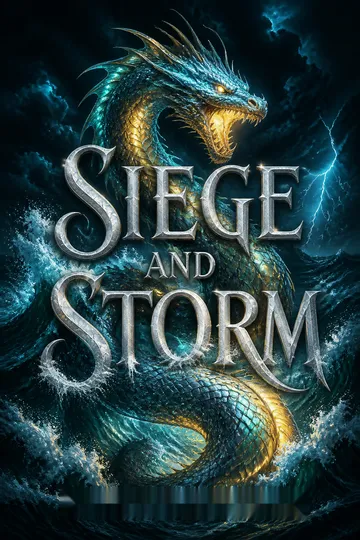

About the Author
Other books by Leigh Bardugo




Download PDF
Download EPUB
.epub digital book format is ideal for reading ebooks on phones, tablets, and e-readers.








