
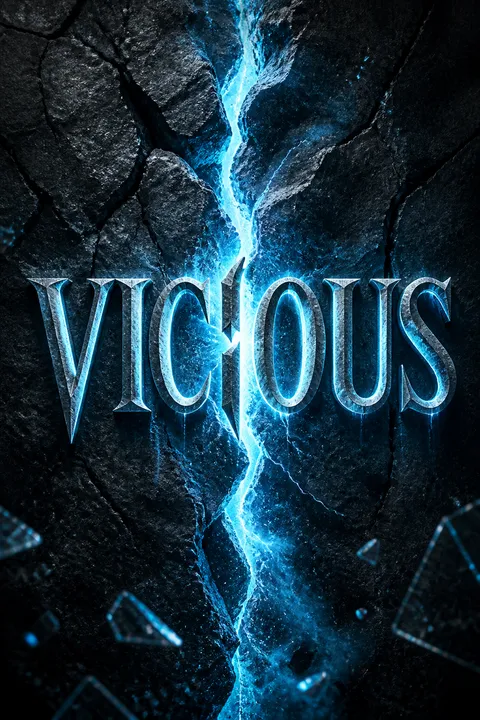


Plot Summary
Lockland's Dangerous Question
At Lockland University, Victor Vale,1 a guarded pre-med student and son of famous self-help authors, finds an unlikely friend in his charming roommate, Eli Cardale.2 Victor1 quietly turns his parents’ books into blacked-out poems; Eli2 studies the possibility of ExtraOrdinary people, or EOs, whose bodies change after near-death experiences.
Their interests converge when Eli2 suggests death may trigger extraordinary abilities. Victor1 sees the theory as more than academic: he wants to participate, not remain the clever observer of Eli’s2 discoveries.
He challenges Eli2 to test the idea on themselves, despite the chance they will not survive. Their friendship has always carried competition beneath its warmth, and now that rivalry gives a lethal experiment its first push.
The thesis gives the friends a language for desires they have not admitted plainly. Eli wants evidence that the world contains something beyond ordinary limits; Victor wants to be indispensable to the person whose attention he values most. Their scientific framing makes a reckless act appear orderly, but the experiment is also an intimacy test: each entrusts the other with his life. Victor’s habit of crossing out his parents’ advice anticipates his deeper impulse to revise the rules imposed on him, while Eli’s belief in transcendence gives danger a moral and spiritual gloss.
Two Deaths, Two Gifts
Victor1 first overdoses in their apartment, but Eli2 calls for medical help before the experiment can take him near death. After Victor1 recovers, Eli2 uses an ice bath, warming pads, epinephrine, and Victor’s1 CPR to stop his own heart and bring it back.
A cut in the street soon closes on Eli’s2 palm, revealing his regenerative power. Victor,1 jealous and unwilling to become Eli’s2 assistant, attempts a second trial alone. Angie Knight,6 their gifted engineering friend and Victor’s old unspoken love,6 helps him use electrical equipment to trigger his transformation.
Victor can now alter pain, turning it off in himself or imposing it on others. When he cannot control the force, Angie6 dies. Victor1 leaves the laboratory with a power, a corpse, and no way to undo what he has done.
The abilities emerge through different relationships to suffering. Eli’s regeneration makes him feel chosen and protected, while Victor’s control of pain becomes both refuge and weapon. Yet the experiments do not deliver mastery: Victor cannot regulate his new power well enough to spare Angie, and Eli’s survival does not restore what death has taken from him. Angie’s death is not simply an accident that interrupts the plot. It exposes the gap between technical competence and ethical control, and turns an intimate rivalry into a contest with a body count.
Lockland's First Betrayal
After Angie’s6 death, Victor1 returns to their apartment and attacks Eli2 with a knife, discovering that Eli2 cannot heal while the blade remains embedded. Eli2 shoots Victor1 three times, reports him to the police, and presents his friend1 as a dangerous killer.
Victor1 survives, but the case sends him to Wrighton Penitentiary, where he spends ten years. Eli2 leaves Lockland under a new surname and begins identifying and killing people he believes became EOs. He uses the research of Professor Lyne,11 who has continued studying the phenomenon, until Lyne11 discovers Eli’s2 ability.
Eli2 kills Lyne,11 destroys his research, and later kills the janitor who could connect him to the crime. Each cover-up tightens Eli’s2 conviction that he is fulfilling a duty, while his old friendship with Victor1 becomes the origin story he uses to justify it.
The betrayal is not a clean division between innocent and guilty men. Victor has killed Angie and attacks Eli; Eli answers with both self-preservation and calculated accusation. Their powers intensify traits already present: Victor’s detached problem-solving grows more dangerous when pain no longer restrains him, while Eli’s need for moral certainty turns into a private system of execution. His killings of Lyne and the janitor show that the supposed mission already requires him to violate the order he claims to defend. The central conflict begins as a dispute over what they have become, then hardens into competing stories about who deserves to live.
Serena Turns the Hunter
Years into his campaign, Eli2 targets Serena Clarke,4 a University of Merit student whose influence over other people makes them follow her directions. She turns his intended killing into a conversation, and her power draws him into a relationship despite his resistance.
Serena4 recognizes that Eli’s2 certainty masks self-loathing, while Eli2 sees her as a possible exception to his rule against EOs. She helps him find targets by persuading Detective Mark Stell9 and Officer Frederick Dane10 to share police records with him.
The officers come to treat Eli2 as a hero and provide a searchable list of suspected EOs. Serena’s influence makes the partnership efficient, but it also unsettles Eli:2 he cannot always tell whether he is acting from conviction or because she has bent his will.
Serena does not merely assist Eli’s mission; she alters its conditions. Her power turns consent, obedience, and affection into unstable categories, including within her own relationship. Eli benefits from the efficiency she provides while resenting his dependence on her, a contradiction that mirrors his self-image as an agent of absolute moral choice. Their alliance also expands private violence into institutional violence: police records and officers give Eli’s personal judgment the appearance of public authority. The people around him follow orders, but that compliance cannot establish that his cause is just.
Sydney Dies Twice
Sydney Clarke, Serena’s4 twelve-year-old sister, nearly drowns with Serena4 when the ice breaks beneath them. Both girls revive, but Sydney remains cold and grows unusually slowly. In the hospital, she accidentally touches a dead body and brings it back to life; later, she confirms the ability in the morgue. Serena4 urges her to keep the secret.
Months afterward, she invites Sydney to Merit, where Eli2 asks to see the power. Sydney revives a stolen cadaver, and Eli2 shoots the man dead again before turning his gun on her. Serena4 hesitates, but does not stop him. Sydney strikes Eli2 with a branch and escapes into the woods with a bullet wound. The girl who once relied on Serena4 now has reason to distrust both her sister4 and the man beside her.2
Sydney’s power is bound to the wish that defined her near-drowning: she wants those lost to have another chance. That instinct is neither abstract benevolence nor simple control; it makes her responsible for bodies and choices she cannot fully understand. Serena’s betrayal hurts precisely because Sydney’s dependence is emotional as well as practical. Eli interprets resurrection as an offense against nature, while Sydney experiences it as restoration. The disagreement is not only about what her power does, but about who has the authority to decide whether a life is worth returning.
Rain Brings the Rivals Together
After ten years inside Wrighton, Victor1 escapes with his cellmate, Mitchell Turner,5 a huge, quick-minded man who has learned to use his imposing appearance as cover. A newspaper photograph of a civilian hero leads Victor1 to recognize Eli,2 still looking as young as the day he betrayed him.
In Merit, Victor1 spots Sydney walking in the rain with a gunshot wound and stops to help. His ability lets him remove her pain, not heal the injury, and he brings her to a hotel with Mitch.5
Sydney hides the full story of her shooting, but Victor1 learns enough to understand that Eli2 is in the city and has tried to kill them both. For Victor,1 the rescue becomes a route to his long-awaited confrontation. For Sydney, it is a precarious first step toward trusting strangers.
The meeting joins two people whose bodies carry different consequences of survival. Victor can suppress pain but cannot mend wounds; Sydney can restore life but pays for the act with cold and exhaustion. Neither gift makes its owner whole or safe. Their partnership begins through necessity, not moral agreement: Victor sees Sydney as useful to his pursuit, while Sydney accepts his help because she has nowhere else to go. Mitch’s presence complicates the pair, bringing a practical loyalty that Victor rarely offers and a steadiness Sydney can observe before she can trust.
Barry Lynch Leaves His Grave
Victor1 learns that Eli’s2 newspaper fame followed a suspicious bank incident: the supposed robber, Barry Lynch,8 had been killed, while Eli2 emerged as an untouched civilian hero. A dying dog in an alley gives Victor1 an idea.
He shoots it so Sydney can revive it, then uses the returned animal to recognize the tactical value of her gift. At Merit Cemetery, Victor1 and Sydney exhume Barry’s8 fresh grave. Sydney restores him, but Barry’s8 flickering power fails to work properly, and Victor1 keeps him trapped in the coffin until he agrees to carry a message.
Barry8 explains that Eli2 recruited him for a staged hero demonstration, then killed him when the robbery was over. Victor1 now has proof that Eli2 manufactures public heroism to hide executions, and a living messenger to make sure Eli2 hears from him.
Victor turns Sydney’s compassionate gift into a communication system, converting resurrection into leverage. Barry’s imperfect return shows that Sydney’s ability is not a simple reset: bringing someone back can leave their powers altered, and the person may not return as expected. Victor treats that uncertainty as useful, while Sydney must bear its bodily and emotional cost. The cemetery scene also reverses Eli’s public narrative. The man praised as a rescuer has staged the danger himself, making the distinction between hero and killer a matter of presentation rather than action.
Merit's Police Join the Hunt
Barry8 carries Victor’s1 signal back into public view by appearing alive at another bank, calling for Eli2 and driving the police into a new confrontation. Eli2 arrives too late to prevent Barry’s8 death and finds a drawing of Victor1 beside Sydney, confirming that both are near.
Serena4 realizes Sydney survived the shooting and goes looking for her. Meanwhile, Mitch’s5 searches uncover a trail of suspected EOs in police records, many crossed out because they are dead.
The pattern suggests that Eli2 has been killing them with help from the very officers assigned to identify them. The discovery turns Victor’s1 private revenge into a wider case: Eli2 is not simply hunting Victor,1 but using Merit’s institutions to locate and eliminate people like Sydney.
The staged bank rescue becomes unstable once its victim returns. Eli’s public image depends on controlling what witnesses see, but Barry’s second appearance makes the old performance impossible to contain. At the same time, Mitch’s records transform scattered deaths into a pattern, giving Victor evidence beyond personal grievance. The story’s institutions are not neutral observers: they help produce Eli’s authority because Serena can influence officers and because the city prefers a clean hero narrative to an unfamiliar threat. The dead profiles make that cost concrete, even before their individual lives can be known.
The Dead Repeat Serena
Victor1 abducts Officer Dane10 to learn how Eli2 is using the police database. When Sydney revives Dane after Victor1 kills him, the officer10 still insists that Eli2 is a hero, even though Serena4 is nowhere near him. Victor1 concludes that Serena’s influence survives her victims’ deaths.
The finding explains how Eli2 gained a police force that obeys him, and it gives Victor1 a reason to move before the network closes around him. Eli,2 meanwhile, gathers officers and presents Victor1 as a dangerous EO who has abducted Sydney and killed Dane.10
He orders the city searched and the roads blocked, relying on Serena’s influence to make the officers act. Each man now claims to protect the public, but the police are being used as instruments in their private war.
Dane’s return turns Serena’s power from an interpersonal threat into a problem of memory and agency. The officer does not merely obey a command in the moment; his conviction appears to have been rewritten deeply enough to persist beyond death. Victor’s test is strategically useful, but it forces Sydney to participate in another killing and revival she does not want. Eli’s police address then shows how easily compelled belief can masquerade as consensus. A room full of officers repeating a claim does not make the claim true, especially when their assent has been engineered.
Dominic Walks Through Shadows
As Eli2 and Serena4 continue their search, Victor1 identifies Dominic Rusher,7 an ex-soldier whose near-death experience left him in chronic pain and able to move through a shadowed interval between moments. Victor offers to remove Dominic’s pain in exchange for help against Eli.2
Dominic7 accepts, and his ability proves crucial when he carries Victor1 through the crowded Three Crows Bar without being seen. Eli2 recognizes Mitch5 there, follows him into the restroom, and shoots him, believing the vest beneath his coat will not save him.
Dominic7 and Victor1 reach Mitch5 in time; Victor takes away his pain, and the three escape. Their alliance gives Victor1 a way to move through Eli’s2 police cordon, but it rests on a bargain backed by the threat that Victor can restore Dominic’s suffering.
Dominic’s recruitment clarifies Victor’s method of building loyalty: he identifies a need and offers relief, while keeping coercion close at hand. The arrangement differs from Serena’s power, yet both relationships raise the same question about consent under pressure. Dominic’s shadow-walking also literalizes the novel’s fascination with the spaces between life and death, making concealment a physical passage rather than a metaphor. Mitch’s apparent vulnerability matters because Victor’s plan depends on people whose survival he cannot guarantee. The group becomes a team through chosen risk, but not through uncomplicated trust.
Midnight's False Surrender
Eli2 kills Zachary Flinch13 before the deadline, ending the miner’s suffering without allowing Serena4 to learn what his ability does. At the hotel, Serena4 finds Sydney and brings her toward the parking garage with a gun. She cannot make herself shoot her sister.
Instead, she gives Sydney the weapon and orders her to find safety. Sydney runs to the abandoned Falcon Price high-rise, where Victor1 has arranged the final meeting. Mitch5 waits in the yard as a decoy. Serena4 arrives and uses her power to force him to turn his gun on himself, but the weapon has no bullets.
Victor1 and Dominic7 emerge from the shadows, and Victor1 kills Serena4 before she can command anyone else. Sydney, already inside the building, hears Eli2 approaching and prepares to face him without knowing what has happened outside.
Serena’s final choice is not a clean redemption. She has spent years using control to make other people yield, and even her attempt to save Sydney begins as an order. Yet at the crucial moment, she gives her sister a chance to choose where to go. Mitch’s empty gun exposes the limits of her power when other people have planned around it, while Victor’s killing of Serena makes clear that the siblings’ survival is being decided by a third party. The title of safety shifts from Serena’s command to Sydney’s own difficult judgment.
The High-Rise Execution
Inside the unfinished tower, Sydney shoots Eli2 in the jaw, but his regeneration closes the wound. He shoots Dol, and the dog collapses. Dominic pulls Sydney into his shadowed world before Eli2 can kill her, while Victor1 appears behind Eli2 and fires into his chest.
Victor1 stabs and tortures his old friend, but Eli2 heals through each injury and counters with razor wire, binding Victor1 to a chair and cutting his wrists. Outside, Sydney reaches Dol and revives him again. Victor’s1 wounds worsen as police sirens approach.
Eli2 drives a knife into Victor’s1 chest, and Victor’s1 allies feel the pain Victor had suppressed return to them. Eli2 believes he has finally killed his rival. The officers rush in and arrest him, while Sydney, Mitch,5 and Dominic7 are forced to flee without knowing whether Victor1 can come back.
The climax strips away the public roles both men have claimed. Eli’s regeneration does not make him invulnerable to pain, and Victor’s power does not make him immune to blood loss or restraint. Sydney’s rescue of Dol offers a counterpoint to their duel: she spends herself to restore a life rather than to prove a theory or enforce a verdict. Yet the escape exacts a price. Victor’s pain returns to his companions, showing that his control has bound their bodies to his choices. The fight resolves neither man’s moral claim; it exposes the violence beneath both.
Death Cannot Keep Victor
Eli’s2 arrest exposes his murders, though the authorities do not understand the full reality of his power. Sydney, Mitch,5 and Dominic7 learn from the news that Eli2 is being treated as a murderer rather than a hero. Two nights later, they return to Merit Cemetery with shovels and dig up Victor’s1 grave. Sydney has chosen not to accept his death as final, despite the cost of reviving Dol and the danger of using her ability again.
She reaches through the cold that comes with her power and finds Victor’s1 heartbeat. He opens his eyes. The story ends with the same practical act that has shaped Sydney’s life throughout: she refuses to let a body’s apparent ending be the last word, even when she cannot know what the returned person will become.
The ending answers the cemetery opening with an act of deliberate care. At first, digging up a body served Victor’s revenge; now Sydney chooses the grave herself, and the purpose has changed. Her decision does not settle whether Victor deserves another chance, nor does it erase what he did. Instead, it shows her claiming authority over her own gift after others repeatedly tried to dictate its meaning. The reopened grave leaves the moral problem alive: resurrection can restore a person, but it cannot guarantee that the person will use the second life well.
Analysis
Vicious treats extraordinary ability less as a gift from beyond than as a pressure test for traits already present. Victor’s power gives his detachment a physical reach; Eli’s2 regeneration lets him mistake survival for divine endorsement; Serena’s influence turns her need for connection into control; Sydney’s ability makes compassion consequential and exhausting. Their abilities do not create their moral identities so much as amplify the methods they already use to meet fear.
The novel’s central conflict is therefore not a simple contest between hero and villain. Eli2 commits murders while claiming to protect the public, then recruits police officers and stages a rescue to make his violence legible as heroism. Victor1 opposes him, but treats people as leverage, tortures an officer,10 and uses Sydney’s gift to send a message. His opposition may be necessary without being virtuous. The book asks readers to judge deeds rather than titles, while showing how readily institutions accept a compelling story when evidence is inconvenient or frightening.
Death also fails to settle the question of personhood. The EOs return altered, but the story offers no single reliable measure of what has been lost. Eli2 calls them broken because that belief supports his mission; Sydney’s choices complicate his claim, while Serena4 and Victor1 reveal different forms of damage that cannot be reduced to a missing soul. Resurrection restores bodies, not innocence or trust. The final grave scene leaves this distinction unresolved: Sydney can give Victor1 another life, but neither she nor the reader can know what he will do with it. A second chance is an opening, not a verdict.
Review Summary
Vicious receives overwhelmingly positive reviews, with readers praising its complex characters, morally ambiguous themes, and exploration of heroism and villainy. Victor and Eli's rivalry captivates readers, who find themselves rooting for morally grey characters. The fast-paced plot, compelling writing style, and unexpected twists keep readers engaged. Many consider it a standout in the superhero genre, appreciating its subversion of tropes and thought-provoking narrative. While some found the middle sections less engaging, the majority lauded the book as a gripping and unforgettable read.
People Also Read




Characters
Victor Vale
The pain-wielding strategistVictor is a brilliant, observant former pre-med student whose controlled manner conceals a hunger to matter to the people he chooses. Raised by celebrated self-help authors, he rejects their public lessons and privately alters their books, preferring to remake words rather than accept them. His friendship with Eli2 is marked by fascination, rivalry, and the need to be seen as an equal. Victor studies people as carefully as he studies bodies, often treating both as systems to manipulate. His capacity for loyalty is real, but it rarely arrives without calculation, and his desire for control can turn protection into coercion. He is most unsettled when someone else defines his role.
Eli Ever
The self-appointed hunterEli is Victor’s1 former roommate, a gifted student whose warmth and easy charm conceal an intense appetite for certainty. His Christian faith gives him a framework for interpreting extraordinary events, but it can also make doubt feel like moral failure. Eli wants to believe that power has purpose and that his own survival means something. He is perceptive about other people, yet his judgments become rigid when their lives challenge his beliefs. His connections with Victor1 and Serena4 expose different kinds of dependence: intellectual rivalry with one, emotional and psychological entanglement with the other. Eli’s polished public manner helps him pass as ordinary even as his private convictions grow extreme.
Sydney Clarke
The reluctant life-giverSydney is a small, sharp-eyed girl whose closeness to her older sister Serena4 has shaped how she sees herself. She is curious, direct, and more observant than adults often expect, though her need for affection can make her vulnerable to people she loves. Sydney’s experiences leave her wary of both trust and stillness, and she struggles to understand what responsibility comes with an ability she did not choose. Her compassion is not naïve: she questions whether the dead deserve another chance and recognizes when others use her gift for their own purposes. Her changing relationships with Serena4 and Victor1 force her to distinguish love from obedience.
Serena Clarke
The persuasive sisterSerena is Sydney’s older sister, an English student with an effortless social presence and a talent for drawing people toward her. She loves her sister, but that attachment exists alongside resentment, avoidance, and a powerful need to control the people around her. Serena’s ability makes ordinary resistance difficult, leaving her isolated from genuine disagreement and unsure whether anyone’s closeness is freely given. Eli2 fascinates her because he can sometimes resist her influence, while Sydney represents an older bond she cannot simply replace. Serena is intelligent about other people’s motives, yet she often uses that insight to steer them rather than meet them as equals.
Mitchell Turner
Victor's steadfast accompliceMitch is Victor’s1 prison cellmate and partner after their escape. His size and tattoos invite people to underestimate his intelligence, while his skill with computers and his dry humor give him other ways to move through the world. He is loyal, though not blindly so; he watches Victor1 closely and occasionally challenges him when his plans become cruel or reckless. Mitch’s history of being blamed for deaths he did not cause has left him wary of fate and inclined to protect people who seem doomed. His attachment to simple comforts, especially chocolate milk, makes him unexpectedly gentle beside Victor’s1 calculated severity.
Angie Knight
The brilliant engineerAngie is a gifted engineering student and Victor’s1 close friend, admired for her curiosity, confidence, and technical skill. She and Victor1 once shared an easy intimacy, but she chose Eli2 as her partner, leaving Victor1 to manage jealousy he rarely admits. Angie is practical enough to understand the risks of Victor’s1 experiment, yet her affection leads her to help him despite her objections. She serves as a link between the academic world and the private emotional rivalries that drive the story.
Dominic Rusher
The shadow-walking veteranDominic is an ex-soldier whose injuries and chronic pain have made daily life a struggle. He is guarded and proud, with the stubborn endurance of someone accustomed to surviving what others cannot see. Victor1 approaches him with relief from pain and a dangerous bargain, while Dominic’s unusual way of moving through the world makes him valuable to the group. His willingness to help is shaped by both self-preservation and a soldier’s instinct to act when someone is in danger.
Barry Lynch
The staged bank robberBarry is an impulsive man with an unstable, flickering ability and a history of theft. Eli2 recruits him for what Barry believes is a chance to prove himself, but Barry’s hunger to belong makes him easy to exploit. Even in a crisis, he is abrasive and self-protective, using bravado to cover fear.
Detective Mark Stell
The EO case detectiveStell is a seasoned detective assigned to incidents involving suspected EOs. He is skeptical without being careless, and his experience makes him attentive to inconsistencies other officers might dismiss. His past connection to Victor1 and Eli2 gives him reason to question the stories they tell, even when powerful people are shaping what others believe.
Officer Frederick Dane
The compromised investigatorDane is Stell’s9 protégé and a police officer trained to recognize signs of EO activity. He follows the chain of authority readily, which makes him useful to those who can direct his beliefs. His role reveals how official procedure can become a tool for private agendas.
Professor Lyne
The ambitious adviserLyne teaches Lockland’s thesis seminar and values bold research when it promises significant results. He encourages Eli’s2 unusual project and becomes invested in what the research might reveal. His faith in scientific discovery makes him an important counterweight to Eli’s2 later insistence that the subject should remain unexplored.
Beth Kirk
The blue-haired studentBeth is a student at Ternis College whose blue hair conceals a history of severe trauma. She is attentive and friendly, with little reason to suspect that a classmate has been studying her. Her vulnerability shows how ordinary routines can make a person accessible to someone who has mistaken observation for moral authority.
Zachary Flinch
The haunted minerZachary is a miner who survives a tunnel collapse but returns to a life marked by isolation and distress. His home and strained relationships suggest that survival has not restored his former stability. He wants relief from what he experiences, making him especially vulnerable to someone who confuses ending suffering with having the right to end a life.
Plot Devices
Near-death transformation
Death as a triggerEli’s2 thesis proposes that an intense near-death experience can produce lasting abilities, and he and Victor1 test the theory on themselves. Their experiments establish the story’s central mechanism while also revealing its limits: surviving death does not guarantee control, healing, or emotional wholeness. The theory drives the characters’ research, rivalry, and later moral arguments about whether EOs should exist. It is not presented as a dependable formula, since the circumstances of each return shape different abilities and consequences.
Pain as an instrument
Control through sensationVictor1 can alter pain, muting it in himself or imposing it on others. The ability first helps him survive his own transformation, then becomes a tool for intimidation, interrogation, and bargaining. It also creates practical danger: Victor1 can fail to notice injuries when he turns sensation down, and his power can spill onto people near him when he loses control. The same gift that offers relief can therefore become coercion, making Victor’s1 treatment of pain a measure of how he understands power and responsibility.
Sydney's second chances
Resurrection with a costSydney can restore the dead through touch, but the act leaves her cold and depleted, and its results are not always predictable. Her power brings back ordinary people and later an EO whose abilities return altered. It fuels Victor’s1 scheme against Eli2, exposes the difference between saving someone and controlling them, and gives Sydney repeated opportunities to choose how she will use a gift others want to claim. The story never treats resurrection as a simple erasure of death: the returned person remains vulnerable, and the person who restores them bears the cost.
Serena's influence
Obedience disguised as choiceSerena4 can make people follow her directions, a power that reaches into her relationship with Eli2 and her dealings with the police. It gives Eli2 access to officers and information, but also complicates every act of affection or cooperation around her. Victor’s1 experiment with Officer Dane10 shows that her influence can persist after death, raising the stakes beyond a spoken command. The device lets the novel test whether an action counts as consent when the person performing it may not be acting freely.
Dominic's shadow passage
Movement between momentsDominic7 can step into a dark interval where the world appears still and move through it by walking, though the passage resists him and takes effort. He can carry other people with him, making his ability a means of escape and concealment rather than simple teleportation. Victor1 recruits him by relieving his pain, and Dominic’s power lets the group bypass the police cordon and reach the high-rise. The shadow world also gives the climax a literal space between seconds, where an apparent danger can be escaped but not necessarily undone.
FAQ
Synopsis & Basic Details
What is Vicious about?
- A Dark Tale of Power: Vicious explores the complex relationship between two brilliant college students, Victor Vale and Eli Ever, who become obsessed with the idea of gaining superpowers through near-death experiences.
- Obsession and Betrayal: The story follows their journey from friends to enemies, as their experiments lead to the creation of EOs (ExtraOrdinary people) and a bitter rivalry fueled by envy, betrayal, and a thirst for control.
- Revenge and Morality: Years later, after a prison escape, Victor seeks revenge on Eli, who has become a self-proclaimed hero hunting down EOs, blurring the lines between good and evil as they clash in a battle of wills and powers.
Why should I read Vicious?
- Unique Superpower Concept: Vicious offers a fresh take on the superhero genre, exploring the dark side of power and the complex morality of those who possess it, moving beyond typical tropes.
- Intricate Character Dynamics: The novel features compelling characters with complex motivations, particularly the intense and evolving relationship between Victor and Eli, making their conflict deeply personal and engaging.
- Fast-Paced and Thought-Provoking: With its non-linear narrative, morally ambiguous characters, and exploration of themes like ambition, betrayal, and the nature of good and evil, Vicious is a gripping and thought-provoking read.
What is the background of Vicious?
- Contemporary Setting with Sci-Fi Elements: The story is set in a contemporary world, but with the addition of EOs, individuals who have gained extraordinary abilities through near-death experiences, blending science fiction with a modern setting.
- Academic and Research Focus: A significant portion of the story takes place at Lockland University, a prestigious institution where Victor and Eli conduct their research, highlighting the academic and scientific origins of their powers.
- Urban and Gritty Atmosphere: The narrative moves between the sterile environment of the university and the gritty, urban landscapes of Merit, creating a contrast that reflects the characters' internal conflicts and the moral ambiguity of their actions.
What are the most memorable quotes in Vicious?
- "Life—the way it really is—is a battle not between Bad and Good, but between Bad and Worse.": This quote, from the epigraph, encapsulates the morally gray world of Vicious, where characters often make choices between undesirable options.
- "Everything starts with belief... with faith.": This quote, spoken by Eli, highlights his reliance on faith and belief, contrasting with Victor's more scientific approach, and foreshadowing their diverging paths.
- "I want to believe that there's more. That we could be more. Hell, we could be heroes.": This quote, from Victor, reveals his initial desire for something beyond the ordinary, a desire that ultimately becomes twisted and corrupted by his envy and thirst for power.
What writing style, narrative choices, and literary techniques does Victoria E. Schwab use?
- Non-Linear Narrative: Schwab employs a non-linear narrative structure, shifting between past and present timelines, which builds suspense and gradually reveals the complex history and motivations of the characters.
- Multiple Perspectives: The story is told from multiple points of view, primarily Victor's and Eli's, allowing readers to understand their individual motivations and the events that led to their conflict, creating a nuanced and morally ambiguous narrative.
- Dark and Atmospheric Tone: Schwab's writing style is characterized by a dark and atmospheric tone, using vivid descriptions and evocative language to create a sense of unease and tension, reflecting the morally gray world of the story.
Hidden Details & Subtle Connections
What are some minor details that add significant meaning?
- Victor's Sharpie Habit: Victor's habit of blacking out words in his parents' self-help books is not just a quirk but a symbolic act of rebellion and a way for him to rewrite his own narrative, foreshadowing his desire to control his own life and the lives of others.
- Eli's Scars: The faded scars on Eli's back, a result of childhood abuse, are a subtle detail that hints at the trauma underlying his self-righteousness and his need to control his own narrative, mirroring Victor's own troubled past.
- The Recurring Use of Water: The recurring motif of water, from the rain-soaked road where Victor finds Sydney to the icy lake where she dies, symbolizes the fluidity of fate and the transformative power of near-death experiences, connecting seemingly disparate events.
What are some subtle foreshadowing and callbacks?
- The "Save Me" Code: The "save me" code that Victor and Angie create in college foreshadows the desperate need for rescue that will later define Victor's actions, and the way he uses others to achieve his goals.
- Eli's "God" Complex: Eli's early reliance on religion and his belief that his powers are divinely granted foreshadows his later self-righteousness and his twisted sense of justice, as well as his need to control his own narrative.
- The Broken Mirror: The cracked mirror in the frat house bathroom, after Victor's failed attempt at death, foreshadows the fractured nature of his psyche and the broken relationships that will define his future.
What are some unexpected character connections?
- Victor and Sydney's Shared Trauma: Both Victor and Sydney have experienced profound trauma and near-death experiences, creating an unspoken bond between them, and making them more alike than they initially appear.
- Eli and Serena's Twisted Partnership: Eli and Serena's relationship is not just romantic but also a twisted partnership based on their shared desire for control and their ability to manipulate others, highlighting the dark side of power.
- Mitch's Unlikely Loyalty: Mitch's loyalty to Victor, despite his initial reservations, reveals a deeper connection based on shared experiences and a mutual understanding of the world's harsh realities, making their alliance more than just a means to an end.
Who are the most significant supporting characters?
- Mitch Turner: Mitch is more than just a sidekick; his hacking skills and loyalty are crucial to Victor's plans, and his moral compass provides a counterpoint to Victor's ruthlessness, making him a complex and essential character.
- Serena Clarke: Serena's influence on Eli and her conflicted loyalties make her a significant player in the story, highlighting the complexities of power and the blurred lines between good and evil.
- Professor Lyne: Professor Lyne's role in the development of Victor and Eli's theories, and his later death, underscores the dangerous consequences of their obsession with power and the ethical implications of their research.
Psychological, Emotional, & Relational Analysis
What are some unspoken motivations of the characters?
- Victor's Need for Control: Beyond revenge, Victor is driven by a deep-seated need for control, stemming from his troubled childhood and his parents' neglect, which manifests in his desire to manipulate and rewrite his own narrative.
- Eli's Fear of Powerlessness: Eli's self-righteousness masks a deep-seated fear of powerlessness, stemming from his childhood abuse, which drives his need to control and eliminate anything he perceives as a threat to his worldview.
- Sydney's Search for Belonging: Sydney's willingness to follow Victor is driven by a desperate search for belonging and a desire to understand her own powers, as well as a need to find a place where she is not seen as a monster.
What psychological complexities do the characters exhibit?
- Victor's Detachment and Envy: Victor exhibits a complex mix of detachment and envy, using his ability to manipulate pain to control others while simultaneously envying Eli's seemingly effortless power, highlighting his internal conflict.
- Eli's Self-Righteousness and Fear: Eli's self-righteousness masks a deep-seated fear of his own power and the potential for corruption, leading him to justify his actions as necessary for the greater good, revealing his internal struggle with morality.
- Sydney's Trauma and Resilience: Sydney's trauma from her near-death experience and her sister's betrayal manifests in her wariness and her need for control, but also in her resilience and her determination to use her powers for good, showcasing her complex emotional landscape.
What are the major emotional turning points?
- Angie's Death: Angie's accidental death is a major emotional turning point, shattering the friendship between Victor and Eli and setting them on a path of revenge and destruction, highlighting the devastating consequences of their actions.
- Victor's Overdose: Victor's near-fatal overdose is a turning point, revealing his desperation to gain power and his willingness to risk everything, and highlighting his internal struggle with his own mortality.
- Sydney's Betrayal: Sydney's betrayal by her sister, Serena, is a major emotional turning point, forcing her to confront the dark side of power and the complexities of her own relationships, and leading her to seek a new path.
How do relationship dynamics evolve?
- Victor and Eli's Twisted Bond: The relationship between Victor and Eli evolves from a close friendship to a bitter rivalry, highlighting the destructive nature of envy and the corrupting influence of power, and showcasing the complex nature of their bond.
- Victor and Sydney's Unlikely Partnership: The relationship between Victor and Sydney evolves from a pragmatic alliance to a complex bond based on shared trauma and a mutual understanding of their powers, highlighting the potential for connection in a morally ambiguous world.
- Eli and Serena's Manipulative Dynamic: Eli and Serena's relationship is characterized by manipulation and control, as they both use their powers to influence each other, highlighting the dark side of power and the complexities of their twisted partnership.
Interpretation & Debate
Which parts of the story remain ambiguous or open-ended?
- The Nature of EO Powers: The exact nature and origin of EO powers remain ambiguous, leaving readers to question whether they are a result of science, fate, or something else entirely, and highlighting the limits of human understanding.
- The True Extent of Serena's Influence: The true extent of Serena's power and her motivations remain ambiguous, leaving readers to wonder if she is a victim of Eli's manipulation or a willing participant in his twisted crusade, and highlighting the complexities of her character.
- The Long-Term Consequences: The long-term consequences of Victor's actions and the future of EOs are left open-ended, leaving readers to ponder the lasting impact of their choices and the potential for both good and evil in the world.
What are some debatable, controversial scenes or moments in Vicious?
- Victor's Torture of Officer Dane: Victor's torture of Officer Dane is a controversial scene, raising questions about the morality of his actions and the extent to which his desire for revenge justifies his cruelty, and highlighting the blurred lines between good and evil.
- Eli's Justification for Killing EOs: Eli's self-righteous justification for killing EOs is a controversial aspect of his character, forcing readers to confront the ethical implications of his actions and the dangers of unchecked power, and challenging the traditional notions of heroism.
- The Ending's Ambiguity: The ending, with Victor's resurrection and the uncertain future of EOs, is open to interpretation, sparking debate about the nature of justice, the consequences of power, and the possibility of redemption.
Vicious Ending Explained: How It Ends & What It Means
- Victor's Resurrection: The ending sees Victor resurrected by Sydney, highlighting the cyclical nature of life and death, and the power of their connection, but also leaving his future uncertain and open to interpretation.
- Eli's Capture and Downfall: Eli's capture and imprisonment mark the end of his reign of terror, but also raise questions about the nature of justice and the possibility of redemption, and highlighting the consequences of his actions.
- The Uncertain Future of EOs: The ending leaves the future of EOs ambiguous, suggesting that the battle between good and evil is far from over, and that the world will continue to grapple with the implications of their existence, and highlighting the ongoing nature of the conflict.
Villains Series

About the Author
Other books by V.E. Schwab


Download PDF
Download EPUB
.epub digital book format is ideal for reading ebooks on phones, tablets, and e-readers.








