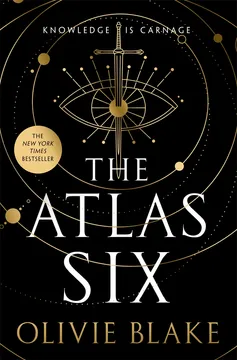


Plot Summary
Prologue
The Library of Alexandria did not simply vanish in a fire. Its keepers hid its knowledge, building the Alexandrian Society to protect an archive of magic and human learning from rulers who would use it to control the world.
Every decade, six exceptional medeians are invited to train for a year; only five are meant to join. Caretaker Atlas Blakely tells the newest candidates they are competing for a place among the Society’s elite. He does not explain what the sixth person’s fate will be.
The history makes secrecy feel less like a neutral safeguard than a political choice. The Society preserves knowledge by restricting who may use it, and its selective admissions turn intellectual excellence into a form of authority. Atlas’s presentation of the invitation as a prize invites the candidates to accept the Society’s logic before they understand its costs. The missing explanation about the sixth initiate is therefore not a gap in the system. It is the first instrument the system uses.
Graduation's Unwanted Invitation
At NYUMA graduation, physicists Libby Rhodes and Nico de Varona resume the quarrel that has defined their studies. They are tied as top students, but Libby is still stung that Nico received the research fellowship she wanted. Caretaker Atlas Blakely interrupts their parting argument with an offer: both are among six candidates competing for five places in the Alexandrian Society.
Nico accepts first, treating the challenge as another contest he intends to win. Libby resists until Nico’s choice makes refusal feel like losing to him again. She accepts, though she does not know what the Society does. Her boyfriend, Ezra Fowler, cannot see Atlas, and Libby leaves graduation having chosen a secretive opportunity over the life she had planned.
The invitation works because it arrives through the wound Libby and Nico have already opened in each other. Their rivalry makes the Society’s secrecy feel temporarily secondary: each is more concerned with not yielding ground to the other than with asking why the offer is so opaque. Libby’s acceptance is therefore both ambitious and reactive. Nico’s confidence disguises dependence on competition, while Libby’s effort to prove herself keeps her from recognizing how neatly the institution can recruit her. The Society does not create their insecurities; it offers them a stage on which those insecurities become useful.
Five More Rare Gifts
Atlas finds the remaining candidates separately. In Osaka, naturalist Reina Mori, whose plants grow through her as much as at her command, accepts after he shows her a lost manuscript associated with Circe. In London, analyst Tristan Caine joins after Atlas argues that his ability to see through illusion is only a fraction of his potential.
South African heir Callum Nova accepts because the gathering promises people as unusual as he is, while telepath Parisa Kamali chooses the chance to study a powerful institution she can already enter through other people’s minds. Each arrives with private doubts and an appetite for something different: books, purpose, power, or leverage. None knows why six invitations will produce only five initiates.
The recruits do not share a single ideal of knowledge. Reina wants access without being claimed by the needs of the natural world; Tristan wants a talent that might finally have a name; Callum wants stimulation; Parisa wants information she can turn into agency. Atlas’s recruitment succeeds because he recognizes these distinct hungers and offers each candidate a version of the same promise. Their specialties make them valuable to the Society, but their motives also make them vulnerable to its invitation. The group begins as a collection of separate bargains, not a community.
The House Under Siege
The candidates arrive at the Society’s London headquarters, where Dalton Ellery, an existing initiate, explains that they must protect the archives as well as study them. They argue over whether to disclose their specialties, then an assault interrupts them.
Armed intruders enter through several points; Nico and Reina fight attackers in the gallery, while Libby helps Tristan distinguish real gunmen from an illusionist’s false targets. Callum and Parisa take another team, and the six discover that their different abilities work better together than alone.
Atlas later explains that the attacks were expected and that the Society deliberately exposed the arrival date to test its recruits. Two Forum agents escape, leaving the candidates with proof that their new home has enemies beyond its walls.
The attack turns an abstract competition into a practical problem of dependence. The candidates cannot protect themselves by guarding their specialties or insisting on individual merit; Libby’s force magic needs Tristan’s sight, and the others must coordinate under pressure. Yet the Society’s use of real danger as an assessment also establishes its moral style: it treats risk as useful data and assumes that survival justifies the method. The recruits have demonstrated teamwork, but they have not consented to the terms under which it was tested. Their first shared accomplishment is inseparable from their first experience of being used.
An Alliance Takes Shape
As lessons move from physical magic toward space, Nico and Libby form a cautious alliance because either could be eliminated as the obvious member of their paired specialty. They investigate wormholes and manage a small one, while Nico notices that Reina can lend him unusual energy.
His private reason for seeking further access is Gideon, his vulnerable friend, whose dream-walking abilities and uncertain status as a creature leave him exposed. When Gideon’s mother, Eilif, finds a way into Nico’s sink and demands access to her son, Nico’s secrecy becomes urgent.
Later, when he overexerts himself repairing flaws in the Society’s wards, Libby joins her power to his and helps finish the work. Their partnership repairs both the house’s defenses and some of the trust Nico’s secrecy had damaged.
The alliance reveals that competence in this world is relational: power changes when it is shared, and a supposedly self-sufficient specialist can become more exact through cooperation. Nico’s protective instinct toward Gideon is both generous and controlling. He keeps information from friends because he believes that shielding Gideon is his responsibility alone. Libby’s help exposes the cost of that habit without making their rivalry disappear. Their bond develops through action rather than confession, with each learning that accepting another person’s strength need not mean surrendering one’s own.
Parisa Finds the Price
Parisa pursues Dalton, both attracted to him and suspicious of his fear. When she enters his thoughts through their intimacy, she discovers that the previous initiate class was also forced to choose someone to die. Dalton admits he killed a fellow candidate, though he insists the Society’s magic required sacrifice. He warns Parisa that the current group faces the same demand and that she may be in danger.
Rather than leave, she remains and presses him for more. Her questions uncover how much the Society hides behind its language of initiation, while Dalton’s personal guilt makes the threat more than institutional rumor. The five-place limit is no longer an academic selection rule. It is a demand for a death among the six.
Parisa’s skill makes intimacy an investigative method, but the discovery complicates her confidence in controlling others. She gains the truth by entering Dalton’s private mind, yet finds that he is not merely an obstacle to be read. His guilt and fear attach a human history to the Society’s ritual. Her decision to stay is not ignorance or simple ambition; she understands that the institution is dangerous and judges the knowledge worth the danger. The scene also makes the Society’s euphemisms ethically legible. Elimination is not a clean administrative process when the person excluded is killed.
The Forum Names Their Wounds
During the winter break, Forum representatives approach Reina and Libby outside the Society’s protections. Reina hears the Forum’s case against the Society’s control of knowledge but refuses to trade one powerful institution for another.
Libby’s recruiter invokes her sister Katherine and suggests that restricted magical research might have saved her. The claim reopens Libby’s old grief, but she rejects the recruiter’s pressure and returns to London. Her fight with Ezra over secrecy and protection ends their relationship.
At the Society, she finds Parisa and Tristan together, drinking after their own encounters with the Forum, and joins them. The three share a night of intimacy that leaves Libby newly conscious of her independence, even as the others’ influence over one another becomes harder to untangle.
The Forum’s challenge is persuasive because it does not begin with policy; it begins with a person’s private loss. Libby refuses to let grief be converted into proof that the Society could have saved her sister, but the encounter exposes how strongly she wants access to knowledge that might answer an unanswerable question. Her breakup with Ezra marks a shift from being protected to choosing for herself, though that autonomy is not yet free of influence. Parisa and Tristan offer closeness without the familiar demands of Libby’s old relationship, but their intimacy also deepens a web of desire and leverage.
A Moment Held Still
While the group studies time, Libby asks Tristan to examine a ball she freezes and reverses. He sees a subtle difference in the motion, and realizes his unusual perception may let him identify time’s underlying structure. By following the rhythm he detects, he guides Libby until she stops time for a brief instant.
The discovery gives Tristan evidence that his ability is more than seeing through illusion, and gives Libby a new field of magic to explore. Their collaboration also changes their intimacy: after the winter night with Parisa, Libby and Tristan become lovers, though she later insists they need not define what happened. Meanwhile, Parisa warns Tristan that Callum is shaping his perceptions by confirming his existing cynicism.
The breakthrough depends on a form of trust neither character finds easy. Tristan must accept that his perception, long treated as a defect or narrow specialty, can reveal what others cannot see. Libby must let someone else guide her power instead of measuring herself only against Nico. Their discovery is intellectually consequential, but its emotional consequence is more destabilizing: collaboration becomes bodily intimacy, and neither can retreat to their previous assumptions. Parisa’s warning about Callum adds a second uncertainty. The characters are learning to manipulate time while struggling to know whether their choices and attachments are wholly their own.
The Mind as Battleground
Callum and Parisa agree to demonstrate their different powers before the others. Callum draws on Parisa’s memories and vulnerabilities, constructing an experience in which he leads her to a rooftop and she appears to jump to her death. The watching candidates believe the scene is real until Parisa ends it: they have been inside Nico’s mind, not the physical house.
She declares Callum the winner, but he understands too late that she engineered the contest to reveal what his power can do. Callum can turn a person’s own pain and beliefs against them without touching them. The demonstration leaves the group shaken and confirms Parisa’s fear that Callum’s ability is dangerous even when he believes himself to be acting with compassion.
The contest refuses a simple distinction between victim and strategist. Parisa allows Callum to reach real vulnerabilities, then uses the staged death to make the others experience the force of his magic. She wins information rather than the declared result. Callum, meanwhile, mistakes access to pain for understanding and treats emotional destruction as a form of care. The episode gives the group a concrete reason to fear him, while showing that Parisa’s own mind-reading and manipulation are not ethically innocent. Their conflict is not between power and restraint, but between competing accounts of what power permits.
A Sacrifice Is Chosen
As the candidates study intent and curses, Libby finally asks Atlas what initiation requires. He confirms that five of the six must choose one person to die, an ancient sacrifice meant to bind the survivors to the Society and its magic.
The group argues over whether the ritual is necessary, but none leaves. Parisa proposes Callum because his power threatens them; Libby insists that vengeance would corrupt the purpose of the sacrifice. They decide the act must fall to someone who genuinely cares about its target, making Tristan the person most likely to pay a real emotional price.
Tristan accepts the burden. The choice exposes how far the candidates have already moved from their former lives: they are no longer debating whether the Society’s bargain is acceptable, but who should bear it.
The sacrifice is framed as a magical transaction, but the group’s argument turns it into a test of moral authorship. Libby does not defend Callum’s safety; she objects to disguising retaliation as necessity. Her distinction gives the ritual a psychological logic: the cost must alter the person who pays it. Tristan’s selection is therefore not simply tactical. The others choose him because his attachments and doubts make the act consequential. Their agreement shows how institutions can transform moral resistance into a procedure, asking people to preserve their conscience by choosing the most painful way to violate it.
The Knife Stays Down
Tristan meets Callum alone with a knife concealed in his pocket, but Callum has already read the danger in their relationship. He admits he has influenced Tristan and explains that his magic can intensify or redirect emotion.
Callum argues that Tristan’s distrust has not protected him from being shaped. Tristan cannot bring himself to stab him. Callum then reveals that the Society’s records contain predictions about each candidate and that he has studied their likely choices. He believes the others chose Tristan to kill him, but says Tristan will not do it.
Instead, Callum tells him he will kill Tristan. Their confrontation breaks off when a scream sounds elsewhere in the house, leaving the threatened murder unresolved and the group’s plan suddenly overtaken by a new danger.
Callum’s confession does not restore Tristan’s autonomy; it makes the problem harder to solve. Tristan now has evidence that Callum has manipulated him, but cannot separate his own genuine attraction and loyalty from that influence. Callum’s claim to know the group’s predicted choices further reduces people to expected patterns, even as he insists he understands their inner lives. Tristan’s failure to strike is not simple cowardice. It is a collision between moral reluctance, emotional entanglement, and fear that his will is already compromised. The scream interrupts the confrontation before either man can turn a threat into a final act.
Libby Vanishes from the House
The scream leads the group to Libby’s room, where they find a bloody, lifelike image of her body. Most see a corpse; Tristan sees no body at all, only traces of magic, so he insists it is neither Libby nor an ordinary illusion. Dalton identifies it as an animation, a magical imitation with a residue of life. Libby herself has disappeared.
Callum senses betrayal in the scream and believes the attacker was someone she knew. Atlas mobilizes the Society’s resources, but no tracking effort finds her. Nico searches desperately, while the others confront the possibility that their conflict and their choice of Callum have left Libby exposed. The group has lost its most powerful partner without knowing whether she is alive.
The false body attacks the group’s ability to agree on reality. Tristan’s sight, usually a source of isolation, becomes the only reliable evidence that the scene is not what it appears to be. Yet knowing the corpse is artificial does not answer the more urgent question of Libby’s fate. The animation is especially cruel because it imitates the social function of death: it forces the survivors to respond to absence before they can establish what happened. Callum’s reading of betrayal also shifts the crisis inward. The danger may not be an anonymous enemy but someone Libby trusted.
Five Continue Without Her
After a week of searching produces no trace of Libby, the remaining five are offered initiation, though Dalton says that the missing candidate has disrupted the usual process. Their next lesson concerns death through the case of Viviana Absalon, a woman mistakenly recorded as mortal whose body stopped aging in early adulthood.
A recent accident killed Viviana, leaving the Society unable to determine how long she might otherwise have lived. The case introduces the possibility of hidden longevity and forces the candidates to study death without the ritual they expected to perform. Nico refuses to look at Libby’s empty place. Her absence changes the group’s work, but it does not release them from the institution’s demand for commitment.
Viviana’s body offers a quieter, more disturbing counterpoint to the staged corpse. Her life suggests that magical potential can remain unrecognized, while her accidental death prevents the Society from knowing what her longevity might have meant. The candidates are asked to treat her as evidence, but Libby’s empty seat makes that abstraction difficult to sustain. Their training continues because the Society can absorb disruption without stopping its procedures. Nico’s refusal to look at her place shows the cost of that continuity: the institution proceeds, while the people inside it must carry the missing person as an unresolved fact.
Ezra Opens the Past
Ezra’s perspective reveals that he can move through time by opening doors between moments. He met Atlas decades earlier, and the two planned to assemble an ideal group of specialists around the Society.
Ezra once intended to join them, but a glimpse of Atlas’s later plan changed his allegiance: Atlas wants the power to destroy the failing world and create another. Ezra abducted Libby to keep her from Atlas and left an animated likeness in her room to disguise her disappearance.
He has hidden her outside the ordinary flow of time, where the Society cannot easily search. To oppose Atlas, Ezra gathers leaders from the Society’s rival organizations, including the Forum. His rescue attempt is also a betrayal: he has used Libby’s trust and made her a prisoner without consent.
Ezra’s revelation recasts apparent protection as another form of control. He believes he is preventing Atlas from using Libby, yet repeats the paternal logic that has already damaged their relationship: he decides what is safe for her and acts before she can choose. His temporal power makes that decision unusually absolute, allowing him to remove her from the world where others might help. The history with Atlas also complicates the Society’s conflict. Its apparent opposition is not simply between custodians and rebels; former collaborators have split over whether to preserve the world or replace it. Ezra’s motives may be protective, but his methods make trust a central casualty.
Five Bind Themselves to Rescue
Before accepting initiation, Nico demands that the others help recover Libby. Reina, Callum, and Tristan agree, and Parisa joins after making clear that the promise depends on Libby being findable. Dalton does not block the bargain. The five commit themselves to the Society’s oath while carrying a second obligation that its rules did not provide: they will not treat Libby’s absence as a completed loss.
Their initiation gives them access to a larger body of knowledge, but the ceremony also binds them to one another and to the consequences of what they have done. The group begins its next phase short one member, with the search for Libby now part of its shared purpose.
The ending resolves the opening’s numerical bargain while refusing to make it feel complete. Five candidates take the places promised to five initiates, but Nico’s condition prevents the Society from defining success solely as admission. His demand turns a private attachment into a collective obligation, forcing rivals and uneasy allies to acknowledge Libby as more than the missing sixth. The oath expands their access and narrows their freedom at the same time. Their new unity is genuine but provisional, founded not on trust alone but on a promise whose fulfillment remains uncertain.
Analysis
The novel treats knowledge as both an intellectual good and an addictive form of power. The Society’s archive promises access to lost histories and new magical possibilities, but its secrecy creates a political hierarchy: the people who control knowledge also decide who may benefit from it. The candidates are not simply students choosing a career. They are being drawn into an institution whose rules make access conditional on complicity.
The six specialists also function as different models of agency. Libby and Nico discover that power becomes more precise when shared, yet both struggle to distinguish collaboration from dependence. Reina resists being treated as a resource, while Parisa turns intimacy into a method of reading and influence. Callum’s empathy does not make him compassionate; it makes other people’s emotions available to him as instruments. Tristan’s perception exposes gaps between appearance and reality, but his distrust of himself leaves him unsure how to act on what he sees. Their talents are not moral identities. They intensify habits the characters already possess.
The sacrifice requirement makes that distinction unavoidable. The candidates can describe the ritual as tradition, necessity, or magical exchange, but each description risks concealing a choice made by living people. Libby’s insistence that motive matters challenges the easy conversion of violence into procedure. At the same time, the group’s willingness to remain shows how ambition can make an immoral institution feel like the only place where one’s abilities can reach their full scale.
The staged corpse and Ezra’s temporal escape sharpen the book’s concern with control. A false body manipulates what the group believes, while Ezra’s attempt to protect Libby repeats the very paternalism she rejects. The Society and its opponents both claim to know what must be done for the greater good. The ending offers no clean escape from that conflict. The five bind themselves to the Society, but Nico forces them to carry a promise beyond its rules: they must find Libby. Their new power is inseparable from the question of who gets to decide what another person’s life is for.
Review Summary
The Atlas Six received mixed reviews, with some praising its dark academia vibes, complex characters, and intriguing magic system. Others criticized its slow pacing, lack of plot, and pretentious writing style. Many readers found the characters morally ambiguous and difficult to like. The book's philosophical discussions and character dynamics were highlights for some, while others felt the world-building and magic system were underdeveloped. Despite its flaws, the novel garnered a dedicated fanbase and sparked intense debates among readers.
People Also Read



Characters
Libby Rhodes
The relentless physicistA scholarship student from Pittsburgh, Libby has built her identity through discipline, academic achievement, and the effort to stand beside Nico as an equal. Her physical magic is formidable, but her confidence is less secure than her ability. She measures herself against other people’s judgments, especially Nico’s, and often mistakes self-doubt for evidence that she has not earned her place. Her attachment to her sister’s memory gives her ambition a painful private dimension: success is entangled with questions she cannot easily settle. Libby is curious and principled, yet she is not untouched by the seductions of power. Her growth lies in learning to claim agency without needing another person to certify her worth.
Nico de Varona
The irrepressible physicistNico is a Cuban-born prodigy from a wealthy medeian family, accustomed to being admired and challenged in equal measure. Restless, charming, and often reckless, he uses competition with Libby as both entertainment and a way to test his own limits. Beneath his swagger is a fierce loyalty to the small circle of people he considers his responsibility, especially Gideon. He tends to protect by withholding information and taking risks on others’ behalf, even when they have not asked him to. Nico’s physical magic is powerful, but his most consequential strength is his instinct for connection: he can recognize when another person’s abilities complete his own, though he is slower to admit that he needs them.
Reina Mori
The unwilling naturalistReina is a Japanese scholar who left Tokyo for a freer education in Osaka and works in a cafe rather than accept a life organized around agricultural companies’ demands. Nature responds to her with overwhelming intimacy, making her gift feel less like a tool than a constant claim on her energy. She prefers ancient literature, rigorous thought, and solitude to the role of savior others project onto her. Reina can be blunt and difficult to approach, but she is observant and pragmatic about alliances. Her interest in the Society’s archives is sincere, as is her suspicion of anyone who frames self-sacrifice as a moral duty. She wants access to knowledge without surrendering ownership of herself.
Tristan Caine
The wary truth-seerTristan is a London investment analyst who has worked hard to distance himself from his criminal father and enter the respectable Wessex business world. He is polished, perceptive, and so practiced at suspicion that hope feels to him like a likely trap. His ability to see through illusion has made him useful in practical settings but left him unsure what his real specialty is. He tends to describe himself through deficits, especially when comparing himself with powerful or charismatic people. Tristan’s sharp intelligence lets him detect flaws in other people’s stories, while his difficulty trusting his own value makes him vulnerable to the attention of people who appear to understand him.
Callum Nova
The unsettling empathCallum is the heir to a global magical media family, raised amid wealth and accustomed to having his way. His talent lets him perceive and influence emotional states, but he treats human behavior as a source of entertainment more readily than as a responsibility. Boredom, rather than a clear moral or political cause, drives much of his movement through the world. He is incisive about other people’s weaknesses and evasive about his own, often presenting emotional distance as proof that he cannot be hurt. Callum’s charm is genuine in its effects even when his intentions are strategic. He is capable of attachment, but his belief that he understands another person can become a justification for overriding them.
Parisa Kamali
The calculating telepathParisa is a Tehran-born, Paris-educated telepath who treats beauty and intelligence as tools rather than virtues. She values independence, material security, and the ability to read what others leave unsaid. Her confidence is not the same as invulnerability: she has learned to make desire useful because dependence has rarely seemed safe. Parisa approaches intimacy strategically, but she is also genuinely curious about people who resist her expectations. She distrusts conventional morality when it asks her to carry other people’s burdens, yet she is not indifferent to the harm power can cause. Her sharpest conflicts arise when she recognizes a resemblance between her own methods and those she condemns in others.
Atlas Blakely
The Society's recruiterAtlas is the Society’s polished Caretaker, a skilled recruiter who can make an extraordinary institution sound like the natural destination for extraordinary people. He knows how to identify what each candidate wants and shape his approach accordingly. His genial manner masks a strong conviction that the Society’s methods serve a purpose larger than any one person’s comfort. Atlas values order, knowledge, and the Society’s survival, but he does not always distinguish care from control. He understands the candidates’ talents and weaknesses better than they understand his own position. His calm assurances invite trust even when he is withholding the information that would let others make a fully informed choice.
Dalton Ellery
The exacting guideDalton is a recent initiate who teaches and guides the new candidates through the Society’s subjects and procedures. He is precise, reserved, and deeply invested in the institution’s work, though he often seems preoccupied by matters beyond the lesson at hand. His academic manner gives him authority without making him emotionally transparent. Dalton is wary of Parisa’s attention and careful about what he reveals, yet he is not untouched by the people he is assigned to guide. His position places him between the candidates and the Society’s older traditions, making him both an interpreter of its rules and a person shaped by their consequences.
Ezra Fowler
Libby's protective partnerEzra is Libby’s boyfriend and a project manager whose affection often takes the form of reassurance and concern for her safety. He wants to be supportive, but his protectiveness can slide into deciding what Libby should be allowed to do. Their relationship is built on real tenderness and ordinary domestic habits, yet the Society’s secrecy strains the trust between them. Ezra’s understated manner makes it easy for others to underestimate the complexity of his life. He is tied to Libby’s sense of a possible future outside the Society, which gives their disagreements emotional weight beyond the immediate question of whether she should accept a dangerous opportunity.
Gideon
Nico's dream-walking friendGideon is Nico’s closest friend, a gentle and dryly humorous young man with an unusual condition that leaves him vulnerable outside the magical institutions that educated him. He can move through dreams and other regions of the subconscious, but his abilities do not make him secure in ordinary life. Nico’s fierce protectiveness often frustrates him because Gideon wants to be treated as a partner rather than a problem to solve. Their friendship is marked by old affection, private jokes, and the mutual fear that one of them may be left behind.
Max Wolfe
Nico's shapeshifting housemateMax is one of Nico and Gideon’s housemates, a wealthy and irreverent shapeshifter who often appears as a black dog. He values comfort, resists practical effort, and punctures tense moments with blunt humor. His relaxed attitude contrasts with Nico’s vigilance and Gideon’s vulnerability, though he is more connected to their lives than his laziness suggests.
Eden Wessex
The heiress fiancéEden is the daughter of investor James Wessex and Tristan’s fiancée. She is socially polished and accustomed to having her image and influence treated as assets. Her relationship with Tristan is tied to the security and status he hopes to gain through the Wessex family, rather than to a deep mutual understanding.
Adrian Caine
Tristan's criminal fatherAdrian is Tristan’s estranged father and the head of a magical criminal organization. He is forceful, ruthless, and accustomed to judging people by their usefulness. His influence remains present in Tristan’s choices even when Tristan is trying to build a life far from him.
Eilif
Gideon's dangerous motherEilif is Gideon’s mermaid mother, volatile and careless with the boundaries he needs. She has connections to people who can reach across magical protections and tends to view her son in terms of what he can do for her. Her appearances make clear why Nico treats Gideon’s safety as an urgent concern.
Aiya Sato
The returning Society memberAiya is a wealthy Japanese medeian and technology executive who was initiated shortly before the current class. She gives Reina a glimpse of what life after initiation can offer, while her knowledge of the Society’s traditions hints at the weight its candidates will eventually face.
Nothazai
The Forum's recruiterNothazai approaches Reina on behalf of the Forum, arguing that the Society’s secrecy protects a privileged few. He is articulate and persistent, but Reina sees no reason to assume the Forum’s intentions are purer than the Society’s.
Williams
The Forum's grieving provocateurWilliams is a Forum representative who approaches Libby and uses the history of her sister’s illness to challenge her trust in the Society. Her pointed appeal forces Libby to confront a question she has spent years trying to put aside.
Katherine Rhodes
Libby's beloved sisterKatherine is Libby’s older sister, remembered as a cherished presence in the family. Her illness shaped Libby’s childhood and remains connected to Libby’s guilt, grief, and questions about what magical knowledge might have changed.
Plot Devices
The Alexandrian Society
Knowledge behind locked doorsThe Society preserves the hidden archives of Alexandria and grants access through selective training. Its candidates are asked to protect the collection, study increasingly powerful subjects, and prove themselves worthy of further knowledge. The institution organizes the plot by giving each character a reason to stay, while its secrecy and layered permissions create suspicion about who controls what they learn. Its structure also turns scholarship into a source of wealth, prestige, and political power. The Society is both a refuge for rare talent and a mechanism that limits who may use it.
The Initiation Sacrifice
Five places, one deathSix candidates are invited, but the Society admits five. The candidates initially understand this as competition; the concealed requirement is that one must die for the others to proceed. The ritual links magical power to loss and forces the group to decide whether their ambitions justify killing someone they have come to know. It is not merely a final exam. It makes the initiates complicit in the Society’s ancient practices and binds their moral identities to the choice.
Temporal Doors
Movement beyond the presentEzra can open passages between moments in time, allowing him to experience events out of sequence and to hide someone beyond ordinary temporal reach. Tristan’s developing ability to perceive time gives the others a separate way to study and briefly manipulate it. Together, these powers challenge the assumption that the present is a fixed location. They also make rescue and pursuit difficult: a missing person may not simply be somewhere else, but somewhere else in time.
Illusion and Animation
False appearances with consequencesIllusions alter what observers believe they see, while animation creates a magical imitation with a residue of life. Tristan’s ability to perceive magic differently helps distinguish the two. The difference matters when a lifelike likeness of Libby appears in her room: it convinces most of the candidates that she has been killed, even though Tristan sees no body. The device makes perception itself a source of danger and prepares the later revelation that someone used the false corpse to conceal an abduction.
The Society's Wards
Protection with hidden openingsThe headquarters is surrounded by layered magical defenses created and maintained by the initiates. The wards can detect or repel many forms of entry, and the candidates learn to divide responsibility for protecting them. Yet the defenses contain vulnerabilities, including routes that do not behave like ordinary physical entry. Their limits invite the initiates to believe the house is secure just before an intruder finds a way through. The wards embody the Society’s broader problem: a system may appear complete while remaining blind to the dimensions it has not learned to perceive.
The Atlas Series

About the Author
Other books by Olivie Blake



Download PDF
Download EPUB
.epub digital book format is ideal for reading ebooks on phones, tablets, and e-readers.








