



Plot Summary
Prologue
Before the Society gives Atlas Blakely7 a title, it gives him an invitation. He is the gifted son of a professor and a mother whose brilliant mind is collapsing, raised amid poverty, neglect, and books that let him glimpse the person she used to be. He accepts the Society’s offer of knowledge and power because he cannot find a larger purpose elsewhere.
Years later, as its Caretaker,7 Atlas7 will recruit six new initiates, including Ezra Fowler,9 a fellow orphan of a damaged family who can travel through time. Their fragile friendship becomes the first link in a chain of choices neither man can control.
The opening makes Atlas’s ambition legible without making it innocent. His childhood deprivation and his mother’s illness explain why power feels like a possible cure, but the story also shows how explanation can become self-exoneration. Books give him a language for care, yet he mistakes knowledge for the ability to repair what hurts. Ezra offers human connection, but Atlas’s hunger for purpose will increasingly treat people as pieces in a design. The prologue therefore frames the novel’s central danger: a desire to make suffering meaningful can turn into permission to impose suffering on others.
Eilif’s Last Gamble
At Grand Central, Eilif,11 a mermaid who has bargained away pieces of her freedom, spots Callum Nova6 and mistakes him for Nico de Varona.2 She needs to deliver someone from the Society to the creditor known as the Accountant, so she turns a hunting team against Callum.6 His empathic magic freezes the street and bends his attackers’ feelings, letting him escape.
Eilif11 learns he believes he has only six months to live, but her own remaining bargains are spent. The Accountant claims her life and inherits the curse she places on him. Meanwhile, Nico2 and his friend Gideon Drake8 are summoned to Society offices after a violent escape in Paris. Nico’s2 demands secure Gideon8 a monitored job at the manor house instead of memory alteration.
The opening makes magical power look less like mastery than a desperate negotiation with time. Eilif’s bargains keep her moving, but each one narrows her freedom until even a successful hunt cannot save her. Callum’s effortless control is not safety either: he escapes while leaving his mortality untouched. Nico’s demand for Gideon exposes another kind of leverage, the loyalty that makes institutional rules negotiable. The Society treats danger as paperwork, while its recruits experience danger as a body beside them. The contrast establishes a world where survival depends on who can force an exception and what that exception costs.
Libby Comes Back
A year after disappearing, physicist Libby Rhodes1 reappears in Paris, having escaped from 1989 by setting off a nuclear weapon and opening a wormhole through time. Nico2 and Gideon8 find her after assassins attack Nico;2 their flight across Paris leaves dead attackers and a damaged bridge behind.
Once they reach Nico’s2 apartment, Libby1 explains that Atlas7 recruited the six initiates for an experiment capable of destroying the world. She also says the Society’s archives may kill them because their group has not fulfilled its initiation terms. The choices she sees are grim: kill one of their own or return to the house and keep working for the library. Nico2 chooses the house, and insists Gideon8 come with him.
Libby’s return is both rescue and evidence of harm. She has crossed decades to warn her friends, but the nuclear energy that makes her return possible may have injured people in the past and future. Her certainty gives the others a reason to act, yet she withholds parts of her experience, leaving them unable to judge the danger for themselves. Nico responds by choosing proximity to the people he loves, even when the institution they return to may be exploiting them. The scene turns survival into a moral problem: getting home is not the same as being safe, and warning others does not erase the price already paid.
The Archive’s Debt
At the manor house, the six initiates remain alive despite the Society’s elimination clause, which expects their cohort to sacrifice one member. Libby1 fears the sentient archives will enforce the terms, while Nico2 argues that staying and contributing may buy them time.
Gideon’s8 supposedly temporary placement makes him an outsider inside the house, but his dream-walking and quiet attention expose what the initiates overlook: missing staff, withheld food, and a Caretaker7 who has vanished.
The archive’s rules are not the Society’s rules, and neither necessarily match Atlas’s7 private plan. As the group debates whether to kill someone or attempt Atlas’s world-making experiment, their shared curiosity pulls them toward the very danger Libby1 came back to stop.
The elimination clause converts academic ambition into a coercive economy: the Society offers knowledge, then makes its recruits prove their worth through violence. The archives intensify that pressure because they behave like a living institution without offering the reciprocity of a person. Gideon’s outsider status matters psychologically. He notices practical dependencies the initiates treat as invisible, from meals to missing administrators, because he has never been trained to mistake privilege for nature. Their debate is not simply about whether murder is wrong. It is about whether a promise of greatness can make coercion feel voluntary.
Atlas’s First Betrayal
Years earlier, Atlas7 discovers that initiation requires a murder. He and Ezra,9 who can open passages through time, fake Ezra’s9 death rather than kill anyone, intending to outwit the Society and eventually change it. Their deception does not satisfy the archives.
Neel17 and Folade18 begin dying and returning, while Ivy19 is left dead as Atlas7 and the necromancer Alexis16 test whether the library will accept a sacrifice. Atlas7 hides what he knows, including that Ezra9 is alive and that the old cohort is paying for their refusal.
Grief and exhaustion eventually distort his original aim: instead of only overthrowing the Society, he begins imagining a new universe where his losses might be undone. His attempt to master the cost becomes another way of shifting it onto others.
Atlas’s rebellion begins as an ethical refusal, but secrecy corrupts its premise. He avoids one murder while allowing the consequences to fall on friends who do not know what they are being asked to endure. The repeated deaths make the archive’s power tangible, yet Atlas responds by treating the pattern as a problem he can solve alone. His later world-making ambition grows from grief, but grief does not make the plan benign. The novel distinguishes intention from consequence without pretending they are unrelated: Atlas wants to spare people, then increasingly uses them to pursue a solution only he can define.
Parisa Loses Nasser
Outside the manor house, Parisa Kamali4 travels with Dalton Ellery10 while a Forum task force hunts the initiates. She tries to meet her estranged husband, Nasser Aslani,13 after he warns that she may be in danger, but he never arrives. Society records reveal that the Forum killed him during its effort to locate her.
The loss forces Parisa4 to admit that her past with Nasser13 was neither simple rescue nor uncomplicated love: she had needed his help, but also felt trapped by what he believed she owed him. While she evades more assassins, Parisa4 bargains with Forum leader Nothazai14 to halt attacks and learns that Dalton10 can create living forms from an unknown source. His power makes the proposed experiment more dangerous than she had understood.
Parisa’s grief breaks through the defenses she has built around beauty, control, and independence. Nasser’s death matters not because their marriage was ideal, but because it leaves unresolved the difference between gratitude and consent. Her past cannot be reduced to either a debt she must repay or a wrong she can dismiss. Dalton’s creative power offers a tempting scale of possibility, yet his unclear source of life makes that possibility ethically unstable. Parisa is forced to confront a truth her usual strategy avoids: being the most capable person in a room does not mean she can control what power costs.
Reina’s Living Revolution
Reina Mori5 leaves the Society with Callum6 and tries to alter the world directly. She and Callum6 influence crowds and political decisions, while Reina5 searches for a larger intervention than small victories can provide. At a Maryland rally for Congressman Charlie Baek-Maeda, gunmen shoot the candidate and agents seize Reina5 amid the panic.
She nearly dies trying to protect a young oak, then gives the tree what remains of her strength. The exchange opens a grove where pomegranates grow, and the attackers disappear. The miracle does not spare Reina5 the grief of Baek-Maeda’s death, but it changes how she understands her gift: she can nurture life without controlling every person who lives in the world she hopes to repair.
Reina’s political project is sincere, but it risks turning care into governance by force. She wants people to choose better, then uses Callum’s influence to push them toward the choices she prefers. The rally exposes the limit of that strategy: public opinion cannot shield a body from a bullet, and a symbol of hope can be killed in front of the people who need it. Reina’s grove emerges only after she stops treating nature as an instrument and gives rather than commands. The result is not political victory. It is a more intimate recognition that her power can sustain life without owning its choices.
Libby’s Costly Return
The truth Libby1 has concealed is that Ezra9 returned and tried to stop Atlas’s plan. When he threatened her and the world, Libby1 killed him in Atlas’s7 office. She then killed Atlas,7 convinced that removing him would prevent the catastrophe he was building toward.
Back in the house, she seeks the archives’ initiation ritual, hoping recognition will settle her doubts, but the library’s mental trial turns her insecurities into attacks by Nico,2 Callum,6 Reina,5 and finally a version of herself. She fails. The ordeal exposes how much she still measures her worth by proving she is exceptional. Yet failure does not end her ambition; instead, she decides that only she can determine what the group should do next.
Libby’s actions are neither cleanly heroic nor simply selfish. She kills to prevent a predicted catastrophe, then discovers that eliminating the person she calls the problem does not erase his influence or her own motives. The failed ritual is a psychological audit: its attackers voice her fear that achievement is only a substitute for feeling worthy. Her failure does not make her harmless. It leaves her with more power and less trust in the moral framework that once restrained her. The unsettling shift is not that Libby becomes cruel, but that she begins to treat conviction as sufficient evidence that her choices are right.
Parisa Changes the Board
Parisa4 turns her attention from survival to leverage. She disables the Forum’s computer network and offers Nothazai14 a bargain: stop hunting her cohort, and she will help him become Caretaker of the archives. She also uses her Society appointment to learn what happened to Nasser13 and discovers the Forum’s role in his death.
When she meets Sharon,23 the Society logistics officer, Parisa4 learns Sharon’s23 daughter Maggie has cancer and arranges for Nothazai14 to treat her in exchange for information about Atlas.7 Meanwhile, Dalton10 demonstrates that he can animate a living copy of Parisa,4 though he cannot explain where its life comes from. Parisa4 recognizes that the experiment may consume more than the participants expect and breaks away from Dalton.10
Parisa’s bargains reveal both the reach and the limits of her power. She can move institutions by identifying what their representatives want, and she can secure a cure for Maggie, but neither act resolves the system that made the bargain necessary. Her choice to leave Dalton follows a more personal insight: intimacy has given her access to his ambition, not mastery over it. The animated copy makes the abstract experiment bodily and unsettling. Life appears before anyone can explain its source. Parisa’s response marks a change from winning the game to recognizing that some games are built so that every victory conceals a new victim.
The Door Opens
Nico2 and Libby1 combine their physics, Tristan3 prepares to perceive and open a path through reality, and Dalton10 supplies the animation needed to make a new world. Gideon8 stays nearby as support. Their powers fuse in the manor’s painted room, and Tristan3 sees other worlds as the experiment reaches its threshold. Libby1 realizes that the energy cannot simply be withdrawn without a vessel to absorb it.
She reverses the process before the new reality can stabilize, saving the existing world from an outcome she now understands as catastrophic. The returning force kills Nico.2 Libby’s1 decision prevents one apocalypse but imposes an intimate, irreversible cost on Gideon,8 who had trusted her and is left holding Nico’s2 body.
The experiment makes the novel’s ethical question physical: creation is not a thought experiment when energy, bodies, and consequence are in the room. Nico’s optimism and Libby’s technical ability let the group approach the impossible, but neither guarantees that they understand what the impossible requires. Libby’s reversal is an act of judgment, yet it is not a clean rescue. She saves a world by sacrificing a person who trusted her. The tragedy refuses the comforting idea that correct action produces a morally intact actor. A decision can be necessary and still leave its maker responsible for what it destroys.
Gideon Enters the Dream
After Libby1 stops the experiment, Dalton10 tries to recover Nico’s2 magic and becomes violent. Callum6 arrives with Parisa,4 who is trying to surrender herself as the cohort’s required sacrifice. Wessex-backed operatives breach the manor’s telepathic defenses through Dalton’s10 damaged consciousness, forcing Parisa4 and Gideon8 into the dream realm.
Gideon8 has opened the way, hoping to stop the attackers, and gives Parisa4 a weapon from her own buried memory. Together they fight through the ruined landscape toward Dalton,10 while Gideon8 uses his dream-making ability to trap their enemies. Back in the reading room, Libby1 punches Callum6 but refuses to shoot him. Callum6 then shoots Dalton,10 ending the attempt to rebuild Nico2 through force.
Gideon’s dream-world skill turns an apparent weakness into a form of agency, but it does not give him control over grief. He and Parisa cooperate because each understands what it means to be trapped inside another person’s design. Callum’s intervention against Dalton is decisive, though not a clean restoration of what was lost. Libby’s refusal to kill Callum matters because she recognizes that another death will not repair the damage she has done. The scene replaces the fantasy of one hero saving everyone with a fragile alliance among people who remain wounded, implicated, and capable of choosing restraint.
No Future Comes Clean
Tristan3 confronts his father, Adrian Caine,22 who has Callum6 in his office and offers Tristan3 a place in the family business. The chapter branches through possible outcomes before Tristan3 rejects his father’s22 terms and takes control of the choice before him.
Libby1 seeks out Belen,12 now a professor under investigation, and visits her childhood home, where Katherine’s24 diary reveals that her sister24 loved her despite their last bitter fight. Reina5 returns to Parisa,4 who stops her from giving away her power in despair.
Gideon8 later encounters a version of Nico2 in a dream and accepts the comfort without proof that it is real. At the house, new Caretaker14 Nothazai14 is denied the knowledge he seeks, while the archives offer Libby1 an answer about her sister.24
The closing movements deny each character a tidy cure. Tristan can refuse his father’s definition of power, but the branching scenarios keep the consequences unsettled. Libby receives a small human correction to her self-image through Katherine’s diary, not the absolution she hoped to find from Belen. Reina accepts companionship without surrendering her agency, and Gideon accepts a dream without demanding certainty. The archives’ final offer is especially pointed: knowledge remains available, but wanting an answer does not make it harmless. The novel ends not with a solved universe, but with a choice about whether to keep asking.
Epilogue
The closing narrator returns to Atlas’s7 origin and to the reader, framing his death as neither a final moral verdict nor a cosmic solution. People inherit pain, make choices with uneven knowledge, and leave consequences for others to carry.
The book rejects the idea that one answer can redeem every loss, while still urging its characters to keep learning and to take another step. Libby1 is warned away from searching the archives for a perfect explanation. The temptation remains, however: the library has finally offered to answer whether she could have saved Katherine.24
The ending makes the reader’s desire for explanation part of the story’s machinery. Libby’s question about Katherine is emotionally understandable, but the archives offer knowledge without promising healing. Atlas’s framing likewise refuses to let his account become a self-issued pardon. The novel’s final ethic is modest but demanding: neither cosmic purpose nor perfect certainty is required before acting with care. Yet the open offer prevents that ethic from becoming a comforting conclusion. Libby must decide whether to accept an answer whose price she cannot know in advance.
Analysis
The novel’s central conflict is not whether these characters can acquire godlike power, but whether power can make their choices morally legible. The Alexandrian Society claims to preserve knowledge, yet its initiation ritual converts learning into a market where human lives are payment. The sentient archives sharpen that contradiction: they can answer questions while withholding the context that would let a person judge what an answer will do.
Atlas,7 Libby,1 and Reina5 each respond to a damaged world differently. Atlas7 wants another world, where grief might be rewritten. Libby1 wants certainty that her sacrifices matter. Reina5 wants to change the conditions that produce harm. Each begins with an intelligible desire, then risks turning that desire into authority over other people. Parisa4 and Callum6 reveal a related problem through mind magic: influencing a person may change a decision, but it cannot guarantee a better life or make consent irrelevant.
Relationships offer no clean escape from this machinery. Nico’s2 bond with Gideon,8 Libby’s1 attachment to Nico2 and Tristan,3 and Parisa’s4 shifting connection with Reina5 are real precisely because they cannot be reduced to utility. Yet love does not prevent betrayal, and a necessary choice does not erase the person who pays for it. Gideon’s8 grief gives the book its sharpest resistance to abstract reasoning: Nico2 is not a replaceable source of magic, even if the archives might claim to reproduce him.
The ending therefore refuses both nihilism and easy redemption. The world continues, but continuation is not proof that everything was justified. The archives can offer Libby1 an answer about Katherine,24 while the novel leaves open whether knowledge will console her or deepen her hunger. Its clearest lesson is practical rather than triumphant: meaning is made through imperfect care, shared risk, and the next choice, not awarded as a final prize for being powerful enough.
Review Summary
The Atlas Complex received mixed reviews, with many readers expressing disappointment in the finale. Critics found the plot lacking, character development inconsistent, and the ending unsatisfying. Some praised the intricate character studies and thematic exploration of power and responsibility, while others felt the series lost its way after the first book. Fans of certain character pairings were particularly vocal in their dissatisfaction. Despite the criticism, some readers appreciated the philosophical elements and Blake's writing style, though many felt the series failed to live up to its initial promise.
People Also Read



Characters
Libby Rhodes
The relentless physicistA gifted physicist shaped by the long illness and death of her sister Katherine24, Libby is cautious, intellectually ambitious, and acutely sensitive to the consequences of a choice. Her rivalry with Nico2 is built on shared ability and a habit of measuring herself against him. She has a complicated attachment to Tristan3, whose physical magic complements her own, and a history with Belen12 that keeps her moral self-image unsettled. Libby is driven by the need to understand what happened and to prove that her life has value. Her strength is also her risk: she can mistake relentless responsibility for a right to decide what others must bear.
Nico de Varona
The restless physicistA Cuban-born physicist with formidable control over the earth and matter, Nico meets every obstacle with curiosity, bravado, and a willingness to improvise. He is close to Gideon8, whose quieter temperament steadies him, and shares with Libby1 a rivalry that often disguises how deeply they shape each other. Nico wants knowledge not as a status symbol but as a project that gives his life direction. His confidence can make him reckless, especially when he treats danger as a puzzle with a clever solution. Beneath the humor is a person who needs connection more than he readily admits, and who understands love as something larger than a single conventional partnership.
Tristan Caine
The skeptical quantum mageTristan is the estranged son of Adrian Caine22, a crime boss, and a former protégé of the wealthy James Wessex21. Trained in illusion but gifted at altering matter, he is a sharp observer who hides uncertainty behind sarcasm and self-control. His history with Libby1 is intimate and difficult, while his connection to Callum6 is tangled with rivalry, attraction, and shared recognition. Tristan resists being defined by his father22, his former fiancée Eden20, or Atlas’s7 plans, yet he often waits for others to name what he wants. His arc is driven by the difference between seeing possible outcomes and accepting responsibility for a choice in the present.
Parisa Kamali
The formidable telepathParisa is a highly skilled telepath who can read desire, expose hidden motives, and make people feel the force of their own thoughts. Her beauty gives her social leverage, but also makes her wary of being treated as an object rather than a person. She has a complicated past with her husband, Nasser13, and a volatile intellectual connection with Dalton10. Parisa prizes independence and often treats relationships as negotiations because dependence has felt dangerous. Beneath her composure is a persistent anger at being controlled or underestimated. Her development turns on recognizing that survival and victory are not identical, and that accepting help need not mean surrendering herself.
Reina Mori
The earth’s chosen voiceA naturalist raised by her grandmother in Japan, Reina hears nature and can coax life from the earth. She studies classics and mythology rather than treating her gift as a career, partly because she resists being reduced to what others need from her. Reina is reserved, principled, and impatient with human systems that injure the vulnerable. Her partnership with Callum6 lets her test how influence can change public choices, though she remains suspicious of his cynicism and privileged ease. She wants to repair the world but must learn that care cannot become ownership. Her connection with Parisa4 carries rivalry, curiosity, and a difficult mutual recognition.
Callum Nova
The dangerous empathA billionaire heir and powerful empath, Callum can alter the emotional currents that guide other people’s actions. He is polished, provocative, and accustomed to using humor to keep intimacy at arm’s length. His fixation on Tristan3 is inseparable from their history of antagonism, while Reina5 becomes his partner in attempts to influence politics and public opinion. Callum distrusts grand projects because he has seen how briefly a feeling can last, yet his own interventions can still cause lasting harm. He is neither simply a villain nor a hidden idealist: he understands the limits of control, but often uses that understanding to excuse his refusal to care.
Atlas Blakely
The burdened CaretakerAtlas is a telepath, former Society initiate, and current Caretaker whose childhood was shaped by poverty and his mother’s deteriorating mental health. He sees more of other people’s thoughts than he can safely understand, a talent that encourages him to mistake access for wisdom. Atlas seeks meaning through books, intellectual work, and the belief that a sufficiently powerful plan can answer grief. He is drawn to Ezra9 as both friend and collaborator, but keeps secrets even from those he loves. His central contradiction is that he wants to protect people while repeatedly deciding what they should risk without their informed consent.
Gideon Drake
The dream-walking outsiderGideon is Nico’s2 closest companion, an observant dream-walker whose magic works through the astral realms and the shapes he can imagine. Raised around his mother Eilif’s11 dangerous bargains, he understands poverty, debt, and vulnerability in ways the other initiates often miss. Gideon is quiet, dryly funny, and reluctant to treat his own safety as important. He serves as an outsider inside the Society, noticing mundane failures that its privileged members overlook. His loyalty to Nico2 is profound, but it does not make him passive: Gideon can recognize when a person’s choices are harming others, even while grieving the people he loves.
Ezra Fowler
The time-traveling physicistA gifted but private physicist, Ezra can open passages through time and space. He and Atlas7 share intellectual intimacy and a resistance to the Society’s demand for murder. Ezra’s concern for other people gives him a strong moral center, but his knowledge of possible futures also burdens him with choices that are difficult to explain.
Dalton Ellery
The maker of lifeDalton is a Society researcher whose animation magic can create living forms. His precise academic manner conceals an ambition he does not fully understand, and his relationship with Parisa4 mixes desire, dependence, and intellectual fascination. He sees the experiment as a purpose written into his existence.
Eilif
Gideon’s bargaining motherA mermaid and compulsive gambler, Eilif survives by making bargains that promise immediate relief and create larger debts later. Her love for Gideon8 exists alongside self-interest and instability. She is perceptive about desperation because she has spent much of her life bargaining from it.
Belen Jiménez
Libby’s former partnerBelen is a professor, activist, and Libby’s1 former girlfriend. She is intellectually sharp, politically committed, and unwilling to soften her judgments merely to comfort someone. Her relationship with Libby1 reveals how ambition and fear can wound even genuine love.
Nasser Aslani
Parisa’s estranged husbandNasser is a wealthy medeian energy executive and the man who helped Parisa4 when she was young. Their marriage carries both genuine care and an imbalance of obligation that neither can easily resolve. He remains an important presence in Parisa’s4 understanding of love, gratitude, and freedom.
Nothazai
The Forum’s idealistA biomancer and public advocate for the Forum, Nothazai presents himself as a defender of open knowledge and human rights. He is intelligent, ambitious, and sincerely frustrated by entrenched inequality, but his confidence in his own moral purpose can obscure the compromises he makes.
Aiya Sato
The Society’s pragmatistAiya is a Japanese Society member with immense naturalist power and a cool understanding of what privilege can and cannot buy. She offers Reina5 a counterpoint to grand plans for universal change, valuing material security and personal choice over promises of salvation.
Alexis Lai
The cohort’s necromancerAlexis is a reserved necromancer from the earlier Society cohort, capable of speaking with the dead. Her dry humor and impatience with sentiment make her difficult to read, but she is a perceptive judge of Atlas7 and the costs he refuses to acknowledge.
Neel Mishra
The star-reading divinistThe youngest member of Atlas’s7 original cohort, Neel reads signs in the stars and speaks with cheerful certainty. His gift lets him glimpse possible outcomes, though not always how to interpret or prevent them.
Folade Ilori
The religious atomistA physicist from Atlas’s7 first cohort, Folade is a poet, a believer, and a disciplined observer of the material world. Her faith gives her a kind of calm that her brilliant, often directionless colleagues lack.
Ivy Breton
The dangerous biomancerIvy is a wealthy, sunny member of Atlas’s7 original cohort whose viral biomancy carries frightening scale. Her cheerful manner sits uneasily beside the destructive potential of her specialty.
Eden Wessex
The corporate heiressEden is James Wessex’s21 daughter and Tristan’s3 former fiancée. She is politically astute and accustomed to being underestimated as an ornamental heir. Her ambition and complicated history with Tristan3 shape how she navigates power within her family.
James Wessex
The corporate patriarchJames is a billionaire industrialist whose company develops magical technologies and whose influence reaches far beyond its boardroom. He values control, legacy, and strategic patience, treating people as assets when their abilities can serve his plans.
Adrian Caine
Tristan’s crime-boss fatherAdrian runs a magical crime syndicate and regards family loyalty as something enforced through power. His relationship with Tristan3 is shaped by estrangement, intimidation, and competing ideas of what a son owes his father.
Sharon Ward
The Society’s logistics officerSharon manages the Society’s ordinary administration, a bureaucratic world of files, permissions, and personnel. Her devotion to her daughter gives her private stakes that the initiates rarely notice.
Katherine Rhodes
Libby’s absent sisterKatherine is Libby’s1 older sister, whose long illness shaped Libby’s1 childhood. Her humor, impatience, and desire to live fully complicate the idealized memory Libby1 has carried of her.
Plot Devices
The elimination clause
Knowledge demands a sacrificeThe Society’s initiation terms require a cohort to kill one of its members. The clause turns recruitment into a moral trap: the initiates accept extraordinary knowledge while being told that their group must pay for it in blood. Atlas’s7 earlier refusal to carry out the demand helps trigger the old cohort’s repeated deaths, while the current six face the same unresolved obligation. The clause is not merely a ritual rule. It gives the archives a way to exert pressure on living people and makes every later choice about sacrifice feel both personal and institutional.
The sentient archives
A library that watchesThe Society’s archive of lost knowledge behaves as a powerful, partly conscious institution. It tracks magical output, grants or withholds access, and appears able to model the people who enter its orbit. Its motives remain difficult to separate from those of the Society and its Caretaker7. The archives make knowledge feel less like a neutral resource than a relationship with an entity that can demand payment, deny requests, and tempt a researcher with exactly the answer they most want. Their final offer to Libby1 keeps the central question unresolved: whether an answer is worth the consequences of receiving it.
Time travel
A way home through dangerEzra9 and Libby1 approach time through different forms of magic. Ezra9 can open passages through time and space, while Libby1 uses a nuclear detonation to create a wormhole from 1989 back to her own era. These crossings let characters return from apparently impossible situations, but they do not erase what happened while they were away. Libby’s1 return carries possible consequences for people exposed to the blast, and Ezra’s9 ability to see across time does not guarantee that he can change what he fears. Time travel expands the plot while underlining its limit: knowledge of another moment is not the same as control over it.
Mental manipulation
Influence without consentThe story’s telepaths and empaths can enter, redirect, or reshape other people’s mental lives. Atlas7 can rearrange thought, Parisa4 can read and influence minds, and Callum6 can intensify existing emotions or desires. Their abilities make social power literal: a person’s apparent choice may have been quietly altered by someone else. The consequences are not always predictable, and the manipulators cannot reliably dictate what a changed desire will produce. This device exposes a central tension in the characters’ relationships: knowing someone intimately can become a form of care, but it can also become a method of control.
The world-making experiment
Creation with unknown costsAtlas’s7 theory requires the two physicists, Nico2 and Libby1, to generate and direct enormous energy; Tristan3 to perceive and open the passage; and Dalton10 to animate what lies beyond. Reina5 can provide further natural power, while Parisa4 can influence the people needed to assemble the plan. The experiment explores whether dark matter or the void can supply energy for another universe. Its danger is not simply that it might fail. The characters cannot know whether creating one world will destroy another, or where the energy will go if they reverse the process. The unknown cost becomes the climax’s decisive problem.
FAQ
Synopsis & Basic Details
What is The Atlas Complex about?
- A group of gifted individuals: The story follows six uniquely talented individuals who are part of the Alexandrian Society, a secret organization dedicated to preserving and exploring lost knowledge.
- Moral and ethical dilemmas: The characters grapple with complex moral and ethical dilemmas as they navigate their relationships, ambitions, and the potential consequences of their actions.
- A quest for power and meaning: The narrative explores the characters' individual quests for power and meaning, as they navigate a world of magic, secrets, and the potential for both creation and destruction.
Why should I read The Atlas Complex?
- Intricate character relationships: The book delves into the complex relationships between the characters, exploring their loyalties, rivalries, and the ways in which they influence each other's choices.
- Exploration of complex themes: The story tackles profound themes such as power, morality, ambition, and the nature of reality, prompting readers to question their own beliefs and values.
- Unique blend of genres: The book seamlessly blends elements of fantasy, thriller, and philosophical fiction, creating a captivating and thought-provoking reading experience.
What is the background of The Atlas Complex?
- Magical and academic setting: The story is set within a world where magic is real and intertwined with academic pursuits, creating a unique blend of intellectual and fantastical elements.
- Secret societies and lost knowledge: The Alexandrian Society is a secret organization dedicated to preserving and exploring lost knowledge, adding a layer of mystery and intrigue to the narrative.
- Contemporary and historical influences: The book draws on contemporary and historical influences, creating a world that feels both familiar and fantastical, with references to real-world locations and concepts.
What are the most memorable quotes in The Atlas Complex?
- "When an ecosystem dies, nature makes a new one.": This quote, spoken by Atlas's mother, highlights the cyclical nature of life and death, and the potential for renewal even in the face of destruction.
- "Beware the man who faces you unarmed.": This quote serves as a warning about the dangers of underestimating those who appear vulnerable, and the power that can be found in unexpected places.
- "I shouldn't have asked for power when what I really wanted was meaning.": This quote reveals Atlas's internal conflict and his realization that the pursuit of power may not lead to true fulfillment.
What writing style, narrative choices, and literary techniques does Olivie Blake use?
- Introspective and philosophical: Blake's writing style is introspective and philosophical, delving into the characters' inner thoughts and motivations, and exploring complex themes through their experiences.
- Non-linear storytelling: The narrative employs non-linear storytelling techniques, shifting between different perspectives and timelines, creating a sense of mystery and intrigue.
- Metaphorical language and symbolism: Blake uses metaphorical language and symbolism to enhance the story's themes and create a rich and layered reading experience, with recurring motifs and imagery.
Hidden Details & Subtle Connections
What are some minor details that add significant meaning?
- The recurring motif of mirrors: Mirrors appear throughout the book, symbolizing the characters' internal reflections, their dual natures, and the distorted realities they inhabit.
- The significance of names: The characters' names often carry symbolic weight, hinting at their personalities, destinies, or the roles they play in the larger narrative.
- The use of specific colors: Colors are used symbolically to represent different emotions, themes, and character states, adding a subtle layer of meaning to the story.
What are some subtle foreshadowing and callbacks?
- Recurring phrases and images: Certain phrases and images recur throughout the book, foreshadowing future events and creating a sense of interconnectedness between different storylines.
- Character habits and quirks: Seemingly minor character habits and quirks often foreshadow their future actions or reveal deeper aspects of their personalities.
- Subtle hints about the archives: The archives are often described in ways that hint at their sentience and their potential to influence the characters' actions, foreshadowing the dangers they pose.
What are some unexpected character connections?
- The mirrored relationship between Atlas and Ezra: The relationship between Atlas and Ezra is mirrored in other relationships, highlighting the themes of love, betrayal, and the cyclical nature of history.
- The parallel between Libby and Eilif: Libby and Eilif share a similar drive for survival and a willingness to make difficult choices, creating an unexpected connection between their stories.
- The connection between Parisa and Alexis: Parisa and Alexis, despite their differences, share a similar sense of disillusionment with the world and a desire to find meaning in their own way.
Who are the most significant supporting characters?
- William Astor Huntington: Atlas's Caretaker, who is more than just a mentor, and whose actions have a lasting impact on the story.
- Wyn Cockburn: Adrian Caine's enforcer, whose presence highlights the dangerous world of magic and crime.
- Sharon Ward: The Society's logistics officer, who provides a glimpse into the bureaucratic workings of the organization and its hidden agendas.
Psychological, Emotional, & Relational Analysis
What are some unspoken motivations of the characters?
- Atlas's desire for control: Beneath his intellectual pursuits, Atlas is driven by a deep-seated desire for control, stemming from his traumatic past and his fear of losing power.
- Libby's need for absolution: Libby's actions are often driven by a need for absolution, as she grapples with the consequences of her past choices and seeks to find meaning in her suffering.
- Callum's search for validation: Despite his manipulative tendencies, Callum is driven by a deep-seated need for validation, seeking recognition and acceptance from those he admires.
What psychological complexities do the characters exhibit?
- Atlas's savior complex: Atlas exhibits a complex savior complex, driven by a desire to fix the world and save those he cares about, often at the expense of his own well-being.
- Libby's moral rigidity: Libby's moral rigidity stems from her desire to control her own actions and to make sense of a world that often feels chaotic and unpredictable.
- Callum's self-destructive tendencies: Callum's self-destructive tendencies are rooted in his deep-seated insecurities and his inability to form genuine connections with others.
What are the major emotional turning points?
- Libby's return to the Society: Libby's return to the Society is a major emotional turning point, as she is forced to confront her past actions and the potential consequences of her choices.
- Atlas's realization of his own limitations: Atlas's realization of his own limitations is a major emotional turning point, as he is forced to confront the fact that he cannot control everything and that his actions have consequences.
- Nico's acceptance of his feelings: Nico's acceptance of his feelings for both Libby and Gideon is a major emotional turning point, as he grapples with the complexities of love and loyalty.
How do relationship dynamics evolve?
- The shifting power dynamic between Atlas and Ezra: The power dynamic between Atlas and Ezra shifts throughout the story, as they both grapple with their own ambitions and the potential consequences of their choices.
- The growing tension between Libby and Tristan: The relationship between Libby and Tristan is marked by growing tension, as they both struggle with their past actions and the potential for betrayal.
- The complex bond between Nico and Gideon: The bond between Nico and Gideon is tested by the events of the story, as they both grapple with their feelings for each other and the challenges they face.
Interpretation & Debate
Which parts of the story remain ambiguous or open-ended?
- The true nature of the archives: The true nature of the Alexandrian Society's archives remains ambiguous, leaving readers to question whether they are a source of knowledge or a force of destruction.
- The ultimate fate of the characters: The ultimate fate of the characters is left open-ended, leaving readers to wonder what will become of them and the choices they have made.
- The meaning of the multiverse: The meaning of the multiverse and its potential impact on the characters' lives remains ambiguous, leaving readers to ponder the nature of reality and the consequences of their actions.
What are some debatable, controversial scenes or moments in The Atlas Complex?
- Libby's use of a nuclear weapon: Libby's use of a nuclear weapon to return to her time is a controversial moment, raising questions about the morality of her actions and the potential consequences of her choices.
- Atlas's manipulation of his cohort: Atlas's manipulation of his cohort is a controversial aspect of his character, raising questions about his motivations and the extent of his ambition.
- The nature of power and control: The book's exploration of power and control is a source of debate, as readers are challenged to consider the ethical implications of wielding such influence.
The Atlas Complex Ending Explained: How It Ends & What It Means
- The characters' fates are left uncertain: The ending of "The Atlas Complex" leaves the characters' fates uncertain, with no clear resolution to their conflicts or the larger plot.
- The cycle of power and ambition continues: The ending suggests that the cycle of power and ambition will continue, with no easy answers to the questions raised by the story.
- The importance of choice and consequence: The ending emphasizes the importance of choice and consequence, as the characters are forced to grapple with the impact of their actions and the potential for both creation and destruction.
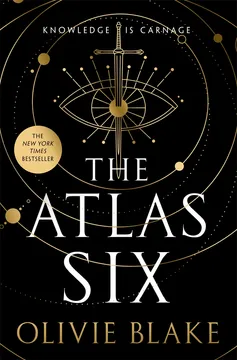
The Atlas Series

About the Author
Other books by Olivie Blake


Download PDF
Download EPUB
.epub digital book format is ideal for reading ebooks on phones, tablets, and e-readers.








