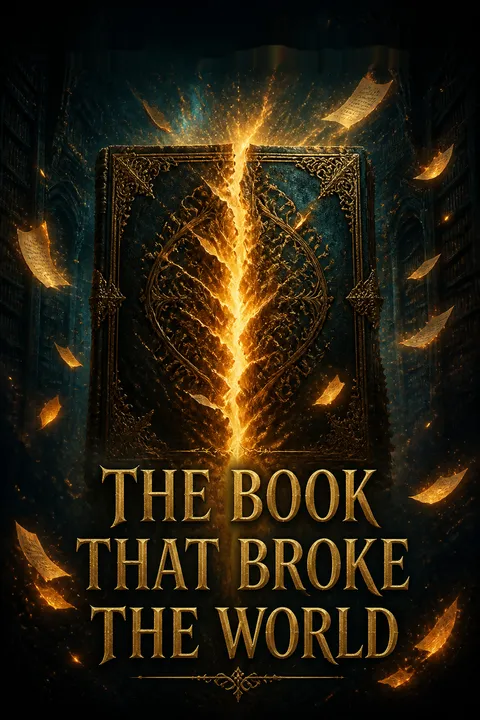


Plot Summary
A Library Under the Dust
At the Arthran dig, Celcha and her brother Hellet have spent their lives enslaved by humans, digging up the remains of buried cities. Years earlier, Hellet took the blame when Celcha opened a book, and the overseers’ whipping left him scarred and inwardly changed. Now he follows two unseen presences, Maybe and Starve, whose guidance has sharpened his mind and steered the work south.
When Hellet breaks through a wall into an intact chamber of books, he calls it a means to an end. The discovery brings the siblings’ old crime back into view, but this time Hellet does not hide his knowledge. He has found something powerful enough to disturb the order that has kept them chained.
The opening makes literacy both a forbidden appetite and a form of leverage. Hellet’s punishment does not extinguish his curiosity; it teaches him to conceal it, so his apparent submission becomes a survival skill rather than surrender. Celcha’s guilt is more intimate: she knows Hellet suffered for a choice she made, and that knowledge binds her love to a protective vigilance. The books are not simply precious objects. They expose the difference between the masters’ story about slaves and the intelligence the masters work to suppress.
The Slaver Loses Control
When Librarian Sellna arrives to inspect the recovered books, Myles Carstar discovers that his authority has limits. Hellet reconstructs the original shelf arrangement from memory, earning Sellna’s confidence and forcing the slavemaster to supervise the work under his direction.
The change is dangerous: Celcha expects Myles to punish them as soon as the librarian leaves. Instead, Sellna buys the siblings’ service and takes them to the library in Krath.
They walk into a city far larger and stranger than the dig, where humans and canith share the streets and librarians prize the books Hellet can open. At the entrance, the white assistant Yute recognizes the pair and welcomes them, while Maybe and Starve become clearer to Celcha in the library’s light.
Sellna’s intervention is a genuine escape, but not yet freedom. The siblings exchange a visible manacle for a subtler dependence on an institution that wants their unusual access to the library. Celcha notices that even kindness arrives inside a hierarchy: people can treat her better while still regarding her as an instrument. Hellet, by contrast, moves comfortably into the role of expert. His skill unsettles those who expected a slave to be ignorant, and the library’s welcome opens a door without answering who controls what lies beyond it.
The Giant Wakes
Evar has just found the Assistant and the Soldier destroyed, and believes Livira and Malar died with them. His siblings Clovis and Kerrol lead him away from the skeer, but a huge metal figure shaped like a golden-furred creature rises among the shelves and charges after him. The chase tears through books and timber, separating Evar from Kerrol and driving Evar and Clovis through a door into another chamber.
There an assistant halts the construct and orders the skeer to withdraw. Evar asks whether it can see ghosts, hoping for news of Livira. The assistant warns him away from the dead instead. It gives the siblings a direction toward the outside, leaving Evar alive but still ignorant of whether the woman he loves survived.
Evar’s grief turns escape into a hollow victory: the world beyond his chamber offers not freedom but danger without Livira. The automaton gives that danger a personal shape, pursuing him through the library as if his existence itself were an offense. The assistant’s warning about ghosts deepens the separation rather than resolving it. Evar is forced to move forward on incomplete knowledge, a pattern that tests whether his devotion can become action without becoming a claim to control the person he hopes to find.
The Book Becomes a Loop
Livira and Malar follow the siblings as ghosts until the assistant seizes them and pulls them away from Evar. It explains that Livira’s book has become a loop, circling through time and weakening the boundaries between the Mechanism and the world. To reunite with Evar in the same present, Livira must bring the book forward.
The assistant opens a portal, but Malar enters it alone, desperate to regain a body and the ability to touch. Livira follows him through the Exchange, choosing a path back to Evar’s chamber. When she finds Evar holding her book, she reaches for it and is drawn into one of its stories, where her old friends and Evar appear in roles she does not remember writing.
The book’s danger grows directly out of Livira’s desire to preserve and communicate experience. Her writing has become more than a record: it now alters the conditions under which its characters and readers can meet. The assistant frames this as damage, while Livira’s own memories make it feel like an extension of her life with Evar. Malar’s impatience supplies a counterpoint. For him, ghosthood is not an abstract metaphysical state but the loss of agency in a body defined by action.
A Refuge on the Plateau
After following the assistant’s directions, Evar, Clovis, and Kerrol force their way out of the library into the desert. Skeer pour from the mountains behind them, and the exhausted siblings run toward a signal fire. Its keepers are Arpix, Meelan, Jella, Salamonda, and other survivors of the library fire, who have spent four years growing beans on the Arthran Plateau.
A hidden force holds the skeer outside their camp, so the humans shelter the newcomers even as Clovis threatens them for the supposed weapon protecting them. Arpix recognizes Evar from Livira’s past and learns that she may be dead. The uneasy alliance begins in grief, thirst, and a shared need to survive the approaching swarm.
The plateau makes isolation look like safety: a small, fertile enclosure preserved by an unexplained defense, but surrounded by a world that can still reach it. Arpix’s decision to light a signal fire is an act of moral risk, not optimism detached from experience. His group has been robbed and attacked by previous strangers, yet he judges that refusing every newcomer would also refuse the only possible change. Clovis immediately tests that hospitality by treating the humans as potential enemies, exposing how trauma turns protection into possession.
The Door Closes Behind Them
At the library, Celcha learns that ganar can open doors no human or canith can, making her and Hellet useful to the librarians. She joins an expedition into a vast, ruined ganar settlement inside the library, where fire has left homes and public spaces empty. The human trainee Lutna befriends her, but Hellet finds two books hidden in the rubble and recognizes that the expedition has been guided toward them.
On the return journey, the ganar door refuses to open. Yute appears and explains that Celcha and Hellet are anomalies, able to perceive ghosts, and that they may either submit to being made into assistants or be altered by a cure that might destroy who they are. He leaves the choice to them.
The burned settlement turns ancestry into evidence. Celcha sees not an abstract history of her people but the scale of a society that existed before the current order reduced ganar to labor. At the same time, Yute’s warning recasts Hellet’s visions and Celcha’s glimpses as a threat to reality itself. His offer is troubling because it makes institutional safety sound like a cure while admitting the cure may erase the patient. Celcha’s suspicion is not mere fear of change. It is a defense against being defined by those who claim authority over her.
Hellet Chooses the Gas
Celcha asks Hellet to dismiss Maybe and Starve, and he does so. Afterward, he studies the black book he found in the ganar ruins and quietly gathers equipment, cinnabar, and quicksilver. He takes Celcha through hidden tunnels beneath Krath, where she learns his plan: introduce the metal into the city’s gas supply so the gas changes into a nonflammable substance that will put humans and canith to sleep, while ganar remain unaffected.
Hellet wants to place the city’s masters at the mercy of the enslaved and let the ganar decide what comes next. Celcha doubts the scheme and fears its consequences, but she carries the fragile flasks with him. They reach the intake, and Celcha pours the quicksilver into the gas flow.
Hellet’s rebellion is built around choice, but its method temporarily removes choice from everyone else. That contradiction is the plan’s moral fault line. Celcha understands the enslaved need leverage, yet she also recognizes how easily a corrective act can reproduce the coercion it opposes. Their estrangement from the ghosts makes the danger more concrete: they have rejected guidance without fully understanding the machinery they are using. Still, Celcha acts because the ganar have never been offered a meaningful decision about their own lives.
Krath Falls Silent
The gas reaches Krath, but its effects are not sleep. Celcha discovers bodies throughout the city, including ganar who died trying to escape their workrooms. Humans, canith, and ganar have been killed together by the substance she and Hellet released.
At the library entrance, assistants tear away their white bodies and reveal two living white children beneath. Hellet is among them, transformed into an assistant; Celcha runs after the pair as they descend toward the city. She later wakes in the Exchange, where the assistant who pulled her there reveals himself as Hellet.
He cannot explain all he has become, but tells Celcha that the library is responsible for what happened and cannot be destroyed from outside. The siblings are separated again, this time by her pursuit of the ghosts she blames.
The catastrophe makes intention an inadequate measure of responsibility. Hellet and Celcha sought to give the enslaved power, but their incomplete knowledge turns that power into mass death, including the deaths of the people they meant to liberate. Celcha’s grief attaches to specific people, especially Lutna, rather than remaining a political abstraction. Hellet’s transformation offers safety at the cost of time and identity. Their separation shows how guilt can masquerade as justice: Celcha pursues the ghosts partly to punish them, and partly because finding someone to blame is easier than living with uncertainty.
A Weapon Beneath Arthran
On the plateau, skeer release seven cratalacs inside the camp’s protective boundary. Clovis attacks one and is badly wounded, while Arpix discovers that mercury from the local cinnabar can poison the creatures. When the survivors retreat underground, a giant cat named Wentworth kills the cratalacs and saves Salamonda. Later, Evar recognizes the carved queen’s statue as Carlotte, a friend lost in the library fire.
The group tests a fallen skeer’s remains and finds that its fluids drift away from a buried source of protection. Following that clue, the humans dig out an iron orb. When the skeer approach again, the orb pushes them back, allowing the injured and exhausted survivors to leave the plateau and enter the library together.
The plateau shifts from sanctuary to a problem that can be investigated. Arpix’s use of mercury turns observation into a practical defense, while the orb converts the group’s old mystery into a portable, limited form of protection. These discoveries do not make the survivors invulnerable; they give them tools that require judgment and cooperation. Carlotte’s likeness in stone further unsettles their sense of time, suggesting that the Exchange’s crossings leave consequences far beyond the travelers who make them.
Livira Takes Her Story
Inside her book, Livira first tries to take hold of the story by inhabiting its characters, but breaking from their roles ejects her. She succeeds when she refuses the tale’s expected rescue and lets its heroine choose an independent life.
A white child interrupts her again, and Livira recognizes her as Yolanda, Yute’s daughter who vanished in the library. The recognition lets Livira seize the book and return to the Exchange.
There, Mayland argues that the library’s accumulated knowledge keeps civilizations repeating their destruction, while Malar refuses to choose a grand ideology over loyalty to Livira. An assistant sends them into the library. Livira arrives among King Oanold’s starving survivors, carrying the book but still unaware of the danger it has created.
Livira succeeds by refusing the story’s familiar division between rescuer and rescued. Instead of waiting for Evar to solve her character’s predicament, she chooses a life beyond the marriage plot. That decision is both a thematic breakthrough and a practical way to claim her book. Yolanda’s intervention complicates the victory: the child is not merely an obstacle but someone with her own judgment about the damage Livira’s writing has caused. Mayland’s argument then offers a political version of the same question: whether inherited narratives preserve wisdom or trap people in inherited failures.
Malar Makes the Last Stand
King Oanold’s group has turned the healing circle into a butcher’s resource, keeping victims alive while they consume them. The king and Lord Algar decide Livira can open a door back to Crath, and Jons, the soldier who once helped bring her from the Dust, helps restrain her. Malar reaches her, kills two guards, and confronts Jons, but Jons shoots him with an arrow-stick.
Livira helps bring Jons down, yet Malar’s wound proves fatal. Yolanda arrives and helps Livira escape the king’s immediate grasp. Elsewhere, Evar and his companions reach Yute’s refugee group, and Wentworth guides them toward Livira. When Evar finds her, the reunion is joyful but brief: Oanold’s soldiers are already hunting the group.
Malar’s death closes the gap between the protective role he has played for Livira and the cost of protecting her in a world where violence is routine. His refusal to abandon her is not a clean heroic gesture; it leaves Livira with grief and with the knowledge that she cannot command the price others pay for her safety. Jons’s return is equally pointed. A man who once helped her escape now obeys the king because survival has narrowed his moral horizon. The reunion with Evar restores connection but cannot restore the world they have lost.
The Library’s Three Visions
The reunited group enters the Mechanism, where Arpix is summoned before Irad and Jaspeth, the figures associated with the library’s creation and destruction. Irad offers universal access to every recorded work; Jaspeth argues that knowledge without earned wisdom makes civilizations more dangerous; Yute defends a changeable compromise.
Jaspeth shows Arpix what happened when Yute led refugees through the Exchange: King Oanold and Lord Algar’s people massacred an unarmed canith community, including children.
Yute had not intended the slaughter, but his late arrival failed to prevent it. When the group emerges, Oanold’s forces attack and capture Yute’s people. Evar, Livira, and the others are pulled into a conflict whose abstract arguments now carry the weight of identifiable victims.
The three visions are political structures, but the book refuses to let any of them become morally spotless. Irad’s access risks giving powerful tools to unprepared societies; Jaspeth’s clean slate risks erasing the very evidence that could prevent repetition; Yute’s compromise creates room to adapt but can also hide responsibility inside procedure. The massacre makes this debate visceral. Yute’s intentions cannot absolve him of consequences, yet assigning him sole blame would simplify the choices made by Oanold, Algar, and the soldiers who carried out the killings.
The King Takes Prisoners
Oanold’s troops seize Yute’s people as they leave the Mechanism, and Evar kills a guard to keep Livira from being taken. A blast and thick smoke scatter the attackers, but Arpix, Salamonda, and Neera are captured. Clovis pursues the soldiers; Evar follows, despite his fear that the fighting will cost him Livira again.
Among the metal shelf-towers, Clovis cuts through the king’s forces while Evar uses Starval’s stealth training to strike from above and between the aisles. Lord Algar shoots Evar and orders his eye removed. Clovis returns for him instead of continuing her revenge, then drags him toward the Mechanism. She chooses her wounded brother over the chance to kill the men who destroyed her family.
The battle forces Clovis to confront the difference between revenge as a private promise and care as a present obligation. She has spent years imagining a reckoning with the soldiers who killed her family, yet when Evar is dying she abandons the victory she has rehearsed. Evar’s own attack is similarly costly: his commitment to Livira and Arpix draws him into human violence he does not want to normalize. Algar’s command to mutilate him turns the abstract dangers of power into bodily terror, making Livira’s earlier vulnerability newly legible to him.
Celcha’s Hunters Arrive
A vast automaton modeled on Celcha reaches the Mechanism, hunting Evar and Livira. Hellet, now an assistant, holds it back, while Kerrol uses the orb and Starval launches the heated sphere into the machine’s mouth.
The blast destroys the automaton, but Hellet is smashed to pieces and Meelan dies pushing Livira out of its strike. Celcha, watching through the Exchange, recognizes the ghosts who once guided her and Hellet as Mayland and Starval, and understands that Mayland shaped the chain of events that led to the city’s destruction.
As the survivors split among three portals, Yolanda chooses Irad, Kerrol chooses Yute, and Livira follows Evar with Mayland. Clovis joins them. Celcha cannot alter the past, but Hellet appears beside her as a ghost.
The climax turns inherited decisions into bodies and choices that cannot be revised. Celcha’s automata embody a century of guilt converted into delayed violence; they can punish the targets she imagined, but cannot restore those she lost. Hellet’s death and Meelan’s sacrifice expose the human cost of these grand designs without reducing either act to a simple moral lesson. The divided portals give the competing visions practical consequences. No faction wins the argument outright, and the survivors must live with their allegiance rather than resolve the conflict through debate.
The Book Cracks the Floor
Celcha and Hellet meet again in the Exchange, both ghosts, and begin searching for their bodies and whatever freedom remains to them. The story then turns to rain falling across the Dust in a passage from Livira’s book, where she and Evar imagine a landscape returning to life. In the library, Lord Algar reads the same book while his faction remains trapped and hungry.
As he reads, cracks spread across the library floor and follow the volume when he moves it. Algar realizes the book, not the earlier light or weapons, is creating the damage. He finds Arpix among his prisoners and demands an explanation. The novel ends with Algar holding the dangerous book and Arpix battered but alive, while the damage to the library has only begun.
The ending denies the comfort of treating Livira’s book as either innocent art or a simple weapon. Its hopeful vision of rain and renewal exists alongside a physical threat that Algar can exploit, and the same story that helped Livira reclaim herself now fractures the library around its readers. Algar’s discovery leaves the danger in the hands of someone whose assumptions have already produced cruelty. Arpix’s captivity makes the final image personal rather than merely cosmic: the fate of an immense institution turns on what one frightened, ambitious man will do with a book he does not understand.
Analysis
The novel’s central conflict is not simply whether knowledge is good or dangerous, but who controls its timing, distribution, and interpretation. Irad’s universal library promises access; Jaspeth’s blank slate promises release from inherited catastrophe; Yute’s compromise permits adjustment but can disguise consequential failures as manageable tradeoffs. The book refuses to let any position remain abstract. Celcha and Hellet use partial knowledge to challenge slavery, and their plan kills the very people it was meant to empower. Yute tries to protect refugees, yet his passage through the Exchange enables a massacre. Livira’s book creates intimacy across time and also fractures the library that shelters its readers. These failures are not equivalent in motive or scale, but each shows that good intentions cannot replace accountability for consequences.
The characters’ relationships offer a counterweight to the grand ideologies. Evar learns that loving Livira does not grant him control over her choices. Clovis abandons a long-awaited revenge to protect her brother, while Arpix moves from cautious observation to dangerous responsibility. Malar’s loyalty is personal rather than doctrinal, and Celcha’s guilt shows how harm can persist even when blame is distributed across many hands. Memory, in this book, is neither salvation nor poison by itself. It is a capacity that must be joined to judgment, humility, and care. The final crack beneath Algar’s book leaves the problem unresolved: stories can preserve lives, but their power does not make their authors wise, or their readers safe.
Review Summary
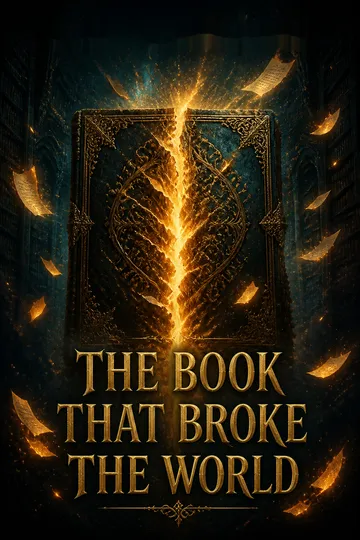
The Book That Broke the World receives mixed reviews, with an overall 4.01/5 rating. Many readers praise Mark Lawrence's imaginative worldbuilding, philosophical depth exploring knowledge versus ignorance, and emotional character development. The sequel shifts from the character-driven first book to focus more on ideological conflict and complex timelines. Several reviewers appreciate the expanded cast and mind-bending plot twists, calling it brilliant and thought-provoking. However, critics note the book feels overly focused on themes at the expense of character development, becomes confusing with multiple POVs and time travel elements, and suffers from pacing issues. The ending divides readers—some find it devastating and masterful, others feel it's an unsatisfying cliffhanger.
People Also Read


Characters
Livira
The restless librarianA human from the Dust, Livira is a librarian whose curiosity repeatedly takes her beyond the limits assigned to her. She notices what others dismiss, remembers what most people lose, and treats books as living connections between minds rather than ornaments of authority. Her affection for Evar develops across impossible crossings of time, while her friendships with Arpix, Meelan, Jella, and Malar keep her tied to ordinary human needs. Livira’s strength is imaginative persistence, but it can also make her underestimate the consequences of what she creates. She is most herself when refusing the role others write for her, yet her choices force her to ask whether personal freedom can be separated from responsibility to everyone affected.
Evar
The freed canithEvar is a young canith raised in a sealed library chamber by two assistants who were, in truth, Livira and Malar in altered forms. He is physically capable and trained to survive, but his deepest struggle is emotional: he must learn how to act in a world larger than the one he escaped. His love for Livira gives him purpose without making him comfortable with the dangers that follow her. Evar is loyal, reflective, and often uncertain whether a door opening means freedom or simply a larger confinement. His relationships with Clovis, Kerrol, and the human survivors challenge his assumptions about family, species, and what it means to protect someone without deciding their choices for them.
Celcha
The scarred ganarCelcha grows up enslaved at the Arthran dig, where she learns to hide her anger and protect her younger brother, Hellet. The scars on her body record a childhood in which cruelty was made official and curiosity punished. She is observant, practical, and deeply loyal, but she struggles to separate love for her people from the wish to make their oppressors suffer. The nootki entrusted to her by fellow slaves become a private record of lives the masters would rather erase. Celcha’s connection to the library and the Exchange expands her understanding of history, yet knowledge does not easily soften her grief. She remains driven by the need to decide what justice should mean after generations of coercion.
Hellet
The brilliant brotherCelcha’s younger brother, Hellet is a gifted thinker whose curiosity attracts punishment from the moment he first opens a book. The official cruelty he suffers leaves him inwardly altered, and he begins to perceive presences others cannot see. He hides his intelligence when survival requires it, then uses it to study the history and mechanisms surrounding the ganar. Hellet loves Celcha, but his private reasoning can leave her feeling excluded from decisions that affect them both. His defining impulse is to transform understanding into action. That quality makes him a source of hope to the enslaved and also exposes the danger of acting on powerful ideas before their consequences are fully understood.
Malar
Livira’s soldier and guardianA former soldier, Malar is blunt, skilled with weapons, and more tender than he prefers to appear. He and Livira survive for centuries within the forms of the Soldier and the Assistant, raising Evar and his siblings while their own bodies remain elsewhere. His instinct is to solve danger through decisive action, which makes him an uneasy partner to Livira’s more exploratory mind. He values loyalty above grand theories and measures choices by the people who will bear their cost. Malar’s affection for Livira is protective but never sentimental; he can challenge her, tease her, or follow her into danger. His military competence is matched by an emotional bond he rarely explains.
Arpix
The careful scholarArpix is a tall, thoughtful librarian who values order, study, and measured decisions. Livira’s arrival disrupts the contained life he had built around books, and their friendship draws him into risks he would rarely choose for himself. He becomes a reluctant leader among the library survivors, relying on practical knowledge and an ability to make frightened people cooperate. Arpix is not fearless; he often recognizes danger before he can decide how to face it. His attraction to Clovis unsettles his habits of self-denial, while their differences force him to reconsider what courage looks like. He is most effective when careful observation becomes action rather than another reason to wait.
Clovis
The warrior sisterClovis is a canith warrior raised beside Evar, Kerrol, and Starval. Her training emphasizes combat, discipline, and readiness to meet threats head-on. As a child, she witnessed humans kill her family, and that loss shapes her distrust of humans and her hunger for revenge. Clovis is fiercely protective of her brothers, though she often expresses care through challenge rather than comfort. Arpix’s quiet persistence unsettles her expectations, and his attention asks her to trust someone outside the family. Her courage is undeniable, but she can confuse restraint with weakness and survival with retreat. Clovis’s hardest choices arise when loyalty to a person conflicts with the vengeance she has treated as a duty.
Yute
The compromised assistantOnce an assistant and now a long-lived figure within the library, Yute has spent centuries trying to preserve a working compromise between opposing visions of knowledge. He is intelligent, patient, and capable of seeing patterns across civilizations, but time has blurred his grasp of individual consequences. His affection for people is real, yet his interventions can carry them into dangers he has not fully anticipated. Yute helped shape the lives of librarians and survivors, and he carries the strain of balancing care with restraint. He believes the library should offer possibilities rather than dictate choices, although his own history shows how difficult it is to remain neutral when others are being harmed.
Mayland
The canith historianMayland is the eldest of Evar’s siblings and an obsessive student of history. Thought dead by the others, he has instead traveled beyond their chamber and developed a sweeping argument against the library’s preservation of knowledge. He believes civilizations repeat catastrophe because inherited memory offers power faster than wisdom. Mayland speaks persuasively and thinks in long arcs, often treating individuals as pieces in historical patterns. His ability to reason across centuries can look like detachment from immediate suffering. He understands that every political vision has costs, but still believes that destroying the library may free future societies from its burden.
Starval
The quiet assassinStarval, Evar’s brother, specializes in stealth and assassination. He tends to remain at the edge of events, watching before acting, and his quickness makes him difficult to read. He shares Mayland’s interest in the possibility that accumulated history traps people, though his approach is less openly philosophical. Starval’s loyalty to his brothers is complicated by his willingness to choose a cause that threatens the library and its inhabitants. He is capable of affection and humor, but neither erases his readiness to use violence. His training informs Evar’s survival skills, even as their different judgments about responsibility divide them.
Kerrol
The family tacticianKerrol is Evar’s brother and a keen student of human behavior. He reads motives quickly, often steering people by arranging the choices they believe they have made. His humor can soften tension, but it also masks how closely he studies those around him. Kerrol prefers analysis to physical danger and is willing to admit uncertainty about which side of the library’s conflict he supports. He understands that family loyalty and political belief do not always align. His efforts to keep his siblings connected can look manipulative, yet they arise from a serious concern that the family may fracture under pressures none of them fully understands.
Yolanda
Yute’s lost daughterYolanda is Yute’s daughter, lost in the library for years and encountered by Livira as a pale, unsettling child. She understands rules and consequences that other characters can barely perceive, and she intervenes when Livira’s actions threaten the library’s structure. Her manner is cold, but her restraint does not make her indifferent. Yolanda has a strong allegiance to a vision of the library that differs from her father’s compromise, and she treats affection as no excuse for abandoning principle. The distance between her and Yute is shaped by both ideology and the pain of their separation. She is difficult to persuade because she believes that delay itself can be dangerous.
Meelan
Livira’s loyal friendMeelan is a wealthy trainee and Livira’s close friend, loyal to her even after the library fire strips away his status and security. He is intense and outspoken, but exile reveals a flexibility that privilege had not required of him before. His bond with Arpix gives him a place in the group, while his reunion with his sister Leetar reconnects him to family. Meelan tends to act when others hesitate, especially when someone he loves is in danger.
Carlotte
The adventurous readerCarlotte is a vivacious, adventurous house-reader and one of Livira’s friends. She brings an appetite for movement and experience to a world often governed by rules and scholarly caution. Evar encounters her in circumstances that reveal how unexpectedly people can be entangled across time. Her presence connects the personal history of Livira’s circle to the older mysteries surrounding the library.
Lord Algar
The calculating noblemanLord Algar is a one-eyed aristocrat whose ambition and appetite for influence have repeatedly obstructed Livira. He understands institutions well enough to exploit their weaknesses, and he uses civility as readily as intimidation. His interest in Livira is entangled with his desire to control what she can access. Algar is dangerous not because he acts irrationally, but because he can make cruelty sound like policy and opportunity.
King Oanold
The dispossessed kingOanold is the ruler of Crath City, proud of his authority and suspicious of anyone who challenges his account of events. He has used hostility toward the Dust’s people and the canith for political advantage. In crisis, he clings to the idea that his kingdom can be restored if others obey him. His hunger for control makes him dangerous to both allies and captives.
Jella
The steady bookbinderJella is a timid, kindly bookbinder whose quietness can be mistaken for weakness. Life beyond the library forces her to become more resourceful and resilient. She cares for the people around her and remembers practical details others overlook, including the maps and routes that help the group survive. Her friendship with Livira is marked by steadiness rather than spectacle.
Salamonda
The camp’s caretakerSalamonda is an older cook and housekeeper whose humor and competence help sustain the survivors on the Dust. She is generous without being naïve, and her years of feeding Wentworth have earned her an unusual place in his affections. Salamonda’s practical labor often does more to keep the group alive than anyone’s grand plan.
Jost
The anxious senior librarianJost is a senior librarian whose authority diminishes after the fire and the survivors’ exile. She clings to familiar rank and often reacts to uncertainty with complaint or resistance. Beneath that defensiveness lies a person shaken by the loss of the life that once gave her status and purpose.
Wentworth
The impossible catWentworth is Yute’s enormous, usually indolent cat. He appears to ignore requests until a person has nearly given up, then can guide travelers or protect them in ways that ordinary size and strength cannot explain. Salamonda’s long habit of caring for him has earned her a loyalty he shows on his own terms.
Lutna
The generous traineeLutna is a young trainee with royal connections and a sincere interest in Celcha. She tries to bridge the distance between the library’s privileged students and the enslaved ganar, though her kindness sometimes reveals how little she understands about the system around her. Her good intentions matter, but they cannot by themselves repair structural harm.
Neera
Livira’s Dust-born friendNeera is one of Livira’s childhood friends from the Dust. She survives displacement and hardship with a strong attachment to the people who shared her former life. Her reunion with Jella and Livira restores a link to the settlement they left behind.
Jons
The pragmatic soldierJons is a soldier who once helped Livira leave the Dust. He values survival and obedience, and he is willing to serve whoever holds power if that seems to offer a way through danger. His practical loyalty can become complicity when authority turns cruel.
Myles Carstar
The slave overseerMyles Carstar runs the Arthran dig and maintains its brutal hierarchy through punishments, humiliation, and a deliberate denial of the slaves’ intelligence. He treats people as property and expects them to perform the ignorance he assigns them. His authority depends on making exploitation appear natural.
Plot Devices
The Exchange
A crossroads through timeThe Exchange is a forest of portals connecting different worlds and periods. Its appearance responds to visitors’ expectations, and its doors can carry travelers forward or backward through time. A person who enters their own past becomes a ghost there, unable to touch or be seen by the living. The Exchange also tends to create coincidences, drawing people and events together in ways they do not understand. Livira, Malar, Celcha, and the canith siblings use it to cross paths that should be impossible, but each journey carries consequences beyond its intended destination.
Livira’s Book
A story that loopsLivira’s hand-assembled book contains stories made from already chosen library pages, altered and joined by her writing. Its path through the Exchange and the Mechanism folds back on itself, creating a loop that connects different eras. Livira can enter its stories and experience characters’ lives from within, but she must engage with the narrative rather than simply seize control of it. The loop lets her reach Evar and eventually regain the book, while also weakening the boundaries that keep the library’s structure intact. The book is therefore at once a personal creation, a bridge between people, and a source of physical danger.
The Mechanism
Books become lived worldsThe Mechanism allows one person to enter and interrogate a book as though walking through its world. It creates solid illusions and can bring a reader into contact with the story’s people and events. Evar’s time inside Livira’s book shapes his understanding of her and of their relationship, while Livira later uses the story to reclaim the volume. The Mechanism also becomes a place where the library’s deepest ideological conflict is made visible. Its rules restrict who can enter and when, but those rules become unstable as the book’s loop and the spreading cracks affect the library.
Library Doors and Circles
Access depends on speciesThe library consists of immense chambers connected by doors that open only to particular species. Humans, canith, ganar, and skeer can each pass through some doors that others cannot, making cooperation necessary for travel. A chamber’s centre circle offers water, food, and healing, but only within limits; it cannot simply undo old injuries or solve the danger outside. These rules shape the survivors’ routes, trap Celcha’s expedition, and provide a refuge for Evar’s group. The system is designed to create both access and separation, so every opened door raises the question of who remains unable to follow.
The Iron Orb
A moving field repels skeerBuried beneath Arthran, the iron orb generates a field that holds the skeer away from the plateau. Arpix and the survivors discover its effect by observing the way dead skeer remains drift from its source, then excavate the sphere. The orb lets the group cross regions otherwise controlled by the insectoids, but its protection has limits and moving it can shift the boundary. It also affects the gaining automata, becoming hot and unstable when used against them. Its value depends on careful positioning and the people willing to carry it, making it a tool rather than a guaranteed victory.
The Library Trilogy Series
About the Author

Download PDF
Download EPUB
.epub digital book format is ideal for reading ebooks on phones, tablets, and e-readers.








