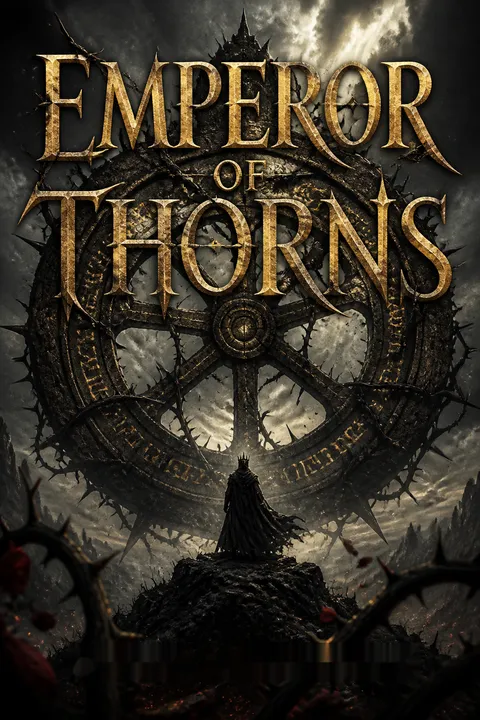


Plot Summary
Prologue
Kai Summerson,7 a sky-sworn scout, leaves his body to watch the world from above while meeting Sula, the woman he hopes to love. A cloud-serpent warns him that the dead are rising, then Kai7 sees a blood-red mist spreading across the marsh.
Before he can take Sula to safety, mire ghouls shoot them with poisoned darts. The warning becomes immediate: Kai7 falls numb beside Sula as the dead swarm the promontory.
The prologue gives the coming disaster an intimate scale before the novel turns to kings and armies. Kai’s flight above his body suggests both wonder and the danger of losing oneself in abstraction; Sula’s presence pulls him back toward attachment. The serpent’s warning becomes more than an omen when the attack turns love into a vulnerability the dead can exploit. This opening also plants a contrast central to the book: escape into a larger view may feel liberating, but survival depends on returning to the people and bodies left behind.
Birthday Under Gold
On his twentieth birthday, Jorg Ancrath1 prepares to leave his pregnant young queen, Miana,2 and travel with the Gilden Guard to Vyene, where the rulers of the empire will vote again for an emperor. His injured chancellor, Coddin,11 urges him to make peace with his father,9 Olidan,9 arguing that two Ancraths might break the influence of the hidden magicians.
Jorg1 refuses to trust either his father9 or prophecy. Before he rides, Bishop Gomst brings news that the Dead King4 is gathering a fleet and the graves are emptying. Jorg1 decides to carry the warning to Congression, but treats it as one more threat to be managed rather than a reason to change course.
Jorg’s birthday gathers the life he has built into one uneasy tableau: a crown, a wife, an unborn child, and a crippled adviser who can still challenge him. His refusal of Coddin’s counsel is not simple stubbornness. Making peace with Olidan would require him to surrender the right to define their history, while Jorg has built his identity around choosing the next move himself. Gomst’s warning widens the stakes, but Jorg initially processes catastrophe as strategy. The tension between private inheritance and public duty is established before either can be cleanly separated.
A Knife in the Dream
While Jorg1 sleeps miles from home, Katherine’s3 dream-magic places him inside a pale assassin’s body as the intruder crosses the Haunt. The assassin kills guards and reaches the east tower, where Marten tries to hold his post despite exhaustion. Jorg1 realizes the attack may be real when the killer enters Miana’s2 chamber and raises a knife toward her and their unborn child.4
Miana2 wakes and fires the Nuban’s crossbow, wounding the intruder; Marten then cuts him down. Jorg1 wakes shaken and sends Sir Riccard back to the Haunt to verify what he has seen. For once, his imagination has not merely rehearsed guilt. It has carried him into an immediate danger he cannot physically reach.
The dream sequence turns Jorg’s familiar habit of treating sleep as a private theater into a channel for consequence. He is forced to inhabit the assassin’s movements, discovering fear through the hands that threaten his family. Miana and Marten act without waiting for him, which unsettles the fantasy that Jorg can control every danger by anticipating it. His helplessness is not redeemed by cleverness; it produces a practical response, sending Riccard to check the facts. The scene makes attachment tangible: the threat matters because Jorg’s body reacts before his principles can explain why.
Gold for Absolution
Riccard confirms that Miana2 survived and brings back the assassin’s papal warrant, making clear that the attack was authorized by the Church. Miana2 refuses to remain behind while Jorg1 travels toward the Pope. Jorg1 opens a black coffer filled with two years of taxes from his seven kingdoms, then chooses to use the fortune to finish Hodd Town’s cathedral.
The construction will serve as an ostensible act of contrition and draw the Pope to its consecration, where he can confront her. Miana2 joins the journey as an adviser, with Marten and a purchased carriage to make the road bearable. Jorg1 has answered a private threat with a public trap, but his plan also places his pregnant wife2 closer to danger.
Miana’s decision to travel changes her from the person Jorg leaves behind into a political participant who shapes his response. The enormous coffer could fund soldiers or assassins, but the cathedral turns wealth into a public performance of repentance. Jorg’s strategy depends on the Pope believing the performance, even as he privately intends to challenge her. The plan reveals his continuing preference for control through spectacle and leverage. Yet Miana’s insistence complicates his command: the people he means to protect are not pieces he can simply place at a safe distance.
The Iberico's Red Star
Five years earlier, a Builder view-ring leads fifteen-year-old Jorg1 from his grandfather Earl Hansa’s castle toward a red point in the poisoned Iberico Hills. His uncle Robert warns that the land still carries lethal contamination, but Jorg1 goes anyway, taking the guardsman Greyson Landless,14 whom he calls Sunny,14 and meeting Lesha,13 a scarred granddaughter of Albaseat’s provost who has already explored the hills.
Before they leave the city, they see a smith beating a blond street boy. Sunny14 hesitates, but Jorg1 stops the smith by striking him with a hammer and leaves the boy alive. The rescue is partial and self-serving, yet it shows that the sight of a child in pain has begun to disturb the boy who once claimed not to care.
The red point gives Jorg a destination without explaining its purpose, matching his attraction to knowledge that cannot yet be named. His choice to go despite Robert’s warning shows curiosity as both intellectual hunger and a refusal to accept limits imposed by others. The encounter with the abused boy is deliberately compromised: Jorg acts, but frames the rescue through a contest and leaves the child without a protector. That mixture matters. His capacity for concern has not replaced cruelty; it has entered the same character, making his future choices less predictable and more morally consequential.
The Bad Dogs' Pit
Bandits known as the Perros Viciosos ambush Jorg,1 Lesha,13 and Sunny14 near the Iberico, killing Lesha13 before capturing the others. The gang tortures Sunny14 for sport, destroying his eyes and mouth while Jorg1 is bound nearby. A mechanical scorpion climbs Jorg’s1 post and cuts through his ropes as the bandits turn on him.
Jorg’s1 burn-scar reacts to a heated iron, injuring the torturer, and he uses the confusion to break free and kill the gang. Sunny14 is still alive but beyond Jorg’s1 power to heal, so Jorg1 ends his suffering. He buries Sunny14 and Lesha,13 then discovers that the scorpion contains Builder machinery. His curiosity has led to irreversible loss, and the victory cannot restore either companion.
The pit strips away the distance Jorg usually keeps between himself and other people’s pain. He cannot treat torture as a spectacle once he is bound beside Sunny, yet survival still comes through violence rather than a moral conversion. Killing Lesha before the bandits can torture her is an act of grim mercy that also exposes the limits of his control. Afterward, Jorg can kill the perpetrators but cannot repair the damage. The mechanical scorpion brings the larger history into this intimate disaster: ancient technology is not safely buried, and Jorg’s pursuit of it has already cost human lives.
Fexler's Frozen Cell
Following the ring’s signal, Jorg1 descends through a shaft into a ruined Builder installation and finds Fexler Brews8 frozen in time beside the gun he used to kill himself. Jorg1 breaks the mechanism holding the chamber in stasis, releasing both Fexler’s8 body and the data-ghost that has guided him.
The ghost explains that the Builders altered reality so human will could affect matter and energy directly. Magic is the growing consequence, and every use weakens the boundaries between life, death, and the physical world.
Some Builder ghosts want to restore civilization; others plan to destroy humanity before magic tears everything apart. Fexler8 asks Jorg1 to take the control ring to Vyene, where the throne may conceal a way to turn the process back.
The revelation recasts magic as an inherited technological catastrophe rather than a timeless gift. Human desire is powerful, but it operates inside a system whose designers did not foresee how their intervention would compound across generations. Fexler’s explanation also refuses a clean division between ancient wisdom and modern ignorance: the Builders possessed knowledge, yet their own weapons helped ruin the world. Jorg is offered a role in repair without being assured that he is a good person for the task. The control ring and the throne connect political authority to physical reality, preparing the story’s final claim that belief and power can become materially dangerous.
The Desert's Loaded Dice
Jorg1 travels into Afrique seeking revenge on Caliph Ibn Fayed and the mathmagician Qalasadi,12 whose earlier plot endangered his mother’s family. In Kutta, a game of dice and a chance encounter with Florentine banker Marco draw him into a caravan across the desert. Marco’s trunk contains a Builder device, and Jorg1 realizes its weight and strange sounds conceal a weapon.
At Hamada, he confronts Qalasadi,12 who explains that the mathmagicians chose political stability and the Prince of Arrow over Jorg’s1 family. Jorg1 lets Qalasadi12 live. When Marco’s mechanical body attacks Ibn Fayed, Jorg1 shoots it with Fexler’s8 gun after revealing that he buried the device’s explosive core far from the city. He leaves with the ring and a warning about Vyene.
The desert journey tests whether distance can loosen Jorg’s grip on grievance. Qalasadi’s reasoning does not erase the harm done to Jorg’s family, but it makes revenge look less like justice and more like obedience to an old injury. Jorg’s decision to spare him is therefore a genuine break in habit, grounded in recognition rather than forgiveness. Marco’s attack reveals that the Builder conflict is active, not historical, and that Jorg’s growing knowledge can protect people beyond his own circle. His choice to bury the explosive core also marks a shift from pursuing power to preventing its use.
Vyene's Sleeping Custodian
On an earlier visit to Vyene, Jorg1 finds that the Gilden Gate rejects him because of his magical taint, so he enters the palace by a side passage. He meets Sindri and Elin, then uses the view-ring beneath the emperor’s throne to awaken the ancient Custodian held in stasis. The palace lights return and its steel doors respond, earning Jorg1 the Lord Commander Hemmet’s gratitude.
Father Merrin, a blind priest who sees fragments of the future, warns that Jorg’s1 path will bring ruin. Later, Fexler8 confirms that the ring is a control device and sends Jorg1 back to Vyene when the time is right. Jorg1 leaves with knowledge, a favor owed by Hemmet, and no certainty that he can change the future he was shown.
Vyene is first presented as a political destination and then revealed as a functioning piece of ancient infrastructure. Jorg’s inability to pass through the Gate makes the boundary literal: his powers disqualify him from the very institution he hopes to influence. Waking the Custodian converts his trespass into a debt of gratitude, linking technical intervention to political relationship. Merrin’s prophecy threatens to make identity feel predetermined, but Fexler’s later instruction leaves room for action. Jorg carries both burdens forward: the knowledge that catastrophe may be coming and the suspicion that his own choices will help produce it.
Katherine Rides for Ancrath
On the road to Congression, Jorg’s1 father’s9 carriage breaks down, bringing him face to face with Katherine,3 his aunt and Olidan’s9 representative. She explains that Olidan9 remains in Ancrath, where the Dead King’s forces are draining the countryside and preparing to advance through the old poisoned lands. Olidan9 wants the Hundred to recognize his claim to the throne in exchange for defending the empire.
Katherine3 also refuses to let Jorg1 excuse his past by blaming the magicians who influenced him: he killed both Degran and her husband, Orrin. The meeting sharpens Jorg’s1 conflict between wanting his father9 dead and fearing what their feud has made of him. Makin,5 meanwhile, reveals that war once cost him his wife and daughter.
Katherine’s arrival brings Jorg’s private history into the same carriage as the empire’s emergency. Her insistence on naming his actions prevents him from treating manipulation as absolution, even when manipulation was real. Olidan’s proposal offers a practical alliance but asks Jorg to cooperate with the man he has made into the center of his grievance. Makin’s account of losing his family gives Jorg a parallel model of grief: violence can preserve a wound by turning it into a life’s organizing purpose. The section makes fatherhood less abstract, as Jorg recognizes that inherited harm can be continued or interrupted.
The Town Without Skin
Flooding forces the procession to stop at Gottering, where Jorg1 finds the skins of nearly two hundred townspeople piled in the square. Rather than ride on, he burns the skins, and the screams reveal that the victims are still alive in a nearby wood. A lichkin attacks the party with visions, showing Jorg1 his father9 stabbing him and dragging him beneath the flood.
At the same time, the creature reaches Miana2 inside the inn. Katherine3 confronts it through dream-magic, using the ghosts of Jorg’s1 guilt to weaken its hold. Jorg1 surfaces in shallow water, alive, and hurries back to find Miana2 giving birth. Their son, Prince William,4 survives. The encounter leaves Jorg1 newly aware that his family can be reached through his oldest fears.
Gottering converts horror into a tactical choice. The lichkin’s victims are not merely dead evidence; their pain is active, and Jorg’s decision to burn their skins reveals both the enemy’s cruelty and the cost of intervention. The attack splits his attention between public duty and the family he has tried to keep safe by command. Katherine’s defense depends on the very memories Jorg has treated as weapons against himself, showing that guilt can become either an opening for manipulation or a source of resistance. Miana’s delivery makes the consequences bodily and immediate: the future he fears to hold is now in his arms.
Jarco's Last Claim
After Prince William4 is born, Katherine3 reveals that Jorg’s1 cousin Jarco Renar is traveling under the Gilden Guard’s protection and may target the infant to avenge his family. Jorg1 demands a meeting, but Captain Harran refuses because the Guard must protect every delegate.
Jorg1 shoots Harran and another captain, exploiting the rules until the remaining commander brings Jarco forward. Jorg1 offers Jarco the ancestral sword, then provokes him into attacking.
Captain Devers kills Jarco under the Guard’s own rules, while Jorg1 claims he has not struck the fatal blow. The maneuver protects the child4 but costs the lives of honorable soldiers and deepens Katherine’s3 disgust. Jorg1 has chosen his son4 over convention, but the means are unmistakably his own.
The confrontation shows how readily Jorg can turn rules into weapons when ordinary authority blocks him. His reasoning is not false: Jarco threatens a newborn who is not protected by the Guard’s status rules. But Jorg chooses to create the crisis himself, sacrificing Harran and Rosson to force the outcome he wants. The distinction between killing and arranging a death offers little moral shelter. The episode therefore tests his new attachment to Prince William without making it redemptive by itself. Love has given Jorg something to defend, but it has not yet changed the methods he uses.
Chella Comes to Court
The Dead King4 sends Chella6 to Congression with voting seals and Kai Summerson,7 the sky-sworn survivor from the prologue. Chella6 had once been a powerful necromancer, but Jorg’s1 earlier attack left her close to ordinary life. After the ghouls killed Sula, Chella6 pressured Kai7 to become death-sworn by showing him Sula’s returned corpse.
Jorg1 meets them on the road and recognizes the danger, though Chella6 admits she does not know why the Dead King4 is so interested in him. In a later carriage journey, Jorg1 and Chella6 give in to their hostile attraction. Afterward, Jorg1 asks Gorgoth10 to protect his infant son.4 The leucrota agrees, offering the child4 a guardian Jorg1 believes he cannot be.
Chella and Kai embody different responses to death’s pressure. Chella has built a life around refusing ordinary vulnerability, while Kai’s attachment to Sula makes him susceptible to the very power Chella offers. Jorg recognizes the danger but is also drawn to Chella because she shares his appetite for darkness without pretending it is virtue. Their encounter gives him no absolution; it intensifies the split between desire and responsibility. Asking Gorgoth to protect William is a rare act of self-knowledge. Jorg begins to imagine that love may require placing a child in better hands than his own.
The Pope's Blood Price
At Vyene, Pope Pius XXV intercepts Jorg1 and offers to hear his confession, tying forgiveness and political recognition to the cathedral he is building. She also acknowledges the threat to his son4 but expects Jorg1 to submit to Church authority. Jorg1 kills her and her bodyguard before the confrontation can turn into another attempt on his family.
The Gilden Guard rush in, but Jorg1 argues that concealing the deaths is safer than provoking a war with Roma while the Dead King4 approaches. Lord Commander Hemmet’s dislike of the Vatican helps make the cover-up possible. Jorg1 then enters the palace, where the rulers are gathering. He has removed a powerful enemy, but has also made himself answerable for a crime that cannot be publicly admitted.
Pius offers Jorg a bargain in which political legitimacy and spiritual forgiveness reinforce one another. Jorg rejects the bargain not because he has escaped the need for power, but because he refuses to let the Church define the terms of his family’s safety. Killing her is both a personal act of protection and a reckless political gamble. The cover-up depends on Hemmet’s institutional resentment, showing that institutions are not unified moral actors but coalitions of interests. Jorg reaches Congression having eliminated one obstacle and created another: his claim to rule now rests on a secret everyone involved must keep.
An Emperor Before the Dead
As the Dead King’s forces reach Vyene, Jorg1 corners rival rulers in a sealed chamber and kills several to break their resistance. He then forces an early vote and wins enough support to become emperor. The Dead King4 enters through the broken Gilden Gate in Kai’s7 body, revealing himself as Jorg’s1 younger brother William,4 lost in childhood and remade by death.
William4 tries to make Jorg1 abandon his wife2 and son;4 Jorg1 refuses and uses the empire’s collective belief to weaken him. Kai’s7 wind-power lifts the Dead King,4 but Jorg1 stabs him. The dead army collapses. Jorg1 recognizes that he has killed his brother4 again, asks Rike to end his life so he can follow William,4 and is instead stabbed by Chella.6
The election and the battle are not separate victories. Jorg needs the imperial office because its accumulated legitimacy gives his will a force he cannot summon alone. Yet the revelation that the enemy is William turns political triumph into the repetition of Jorg’s founding failure. He chooses his living family over the brother he abandoned, then wounds himself with the same act of violence that has defined his life. His request for death is not a clean sacrifice; it is an attempt to follow the person he could not save. Chella’s intervention leaves him no control over what comes next.
The Wheel Beyond Death
After death, Jorg1 finds William4 and their old dog, Justice, before a shining gate that resembles heaven. Jorg1 understands that this afterlife has been shaped by human expectation, just as the world’s magic was shaped by desire. He refuses the comfort of staying there and finds the mechanism Fexler8 called the wheel.
Jorg1 and William4 turn it together, trying to restore the older reality and free the living, the dead, and the children trapped in human-made afterlives. Jorg1 finally reaches the brother4 he failed to protect, not by undoing the past but by accepting a shared task. Their effort ends the supernatural crisis, though it cannot return Jorg1 to his son.4
The afterlife scene refuses to make reunion equivalent to repair. Jorg meets William, but the meeting does not erase the years of abandonment or make death harmless. The imagined heaven is another human construction, comforting but potentially confining, so the brothers choose an uncertain reality over a perfected enclosure. Their cooperation answers the novel’s recurring question about whether a person can change without denying what he has done. Jorg cannot undo the first failure, but he can stop treating it as an excuse to remain fixed. The wheel turns through shared action, not private mastery.
Epilogue
The final account comes from a data-ghost modeled on Jorg,1 who watches the restored empire and its young emperor, Prince William.4 The child visits him, learns that the pale figure is an echo of his father,1 and asks for the father1 he never knew.
The ghost can offer only a trace of Jorg’s1 love, but it is strong enough to comfort the boy. Magic that burns, raises the dead, or bends matter has vanished. The subtler power of memory and attachment remains. The ghost watches the door, knowing Jorg1 will not return, then withdraws into the vast network of Builder machines.
The epilogue gives the ending a cost that a simple restoration would conceal. Jorg’s son inherits peace but not his father’s presence, while the data-ghost can transmit affection without becoming the person it represents. That distinction keeps memory from functioning as resurrection. The loss of magic also separates human tenderness from supernatural force: love survives not because it can overturn death, but because people carry and answer it. The ghost’s final retreat into the Builder network leaves the future open to uncertainty again. Prediction remains possible, but no longer has to govern the pleasure of living.
Analysis
Emperor of Thorns makes its political question inseparable from its psychological one: can a person who has been shaped by violence choose differently without pretending the violence never happened? Jorg’s1 pursuit of the throne begins as ambition, but the journey repeatedly tests whether power can serve anything beyond his own grievance. He spares Qalasadi,12 protects Miana2 and their child,4 and turns toward the dead not because he has become innocent, but because he increasingly understands what his choices cost other people.
The novel’s account of magic sharpens that dilemma. The Builders altered reality so that will could act directly on matter, and generations of human expectation have helped shape what lies beyond death. Belief is therefore neither merely private nor automatically virtuous. It can sustain an empire, authorize a Pope, produce a heaven, or strengthen a force that wants to end the living. Jorg’s1 political victory matters because the accumulated hopes of the Hundred give his will a structure stronger than solitary desire. The throne is not just a prize. It is an old channel through which millions can act together.
But the revelation of William4 prevents that collective power from becoming a clean triumph. Jorg1 wins the empire and still repeats the wound at the heart of his life, killing the brother4 he once failed to save. His final choice is not to claim that he can repair the past. It is to join William4 in an effort that may free people from the reality their ancestors made. The ending makes change possible without making it painless: Jorg1 cannot return to his son,4 and the restored world cannot give him back the years he lost. What survives is the less spectacular force of memory and attachment, which binds people without commanding the laws of nature.
Review Summary
Emperor of Thorns concludes Mark Lawrence's Broken Empire trilogy with a satisfying and intense finale. Readers praise Jorg's character development, the intricate world-building, and Lawrence's masterful prose. The book explores themes of redemption, power, and the consequences of one's actions. While some found the pacing slow at times, most agree it's a fitting end to Jorg's journey. The series is lauded for its unique anti-hero protagonist, dark and complex storytelling, and thought-provoking narrative. Overall, it's considered a standout in the grimdark fantasy genre.
People Also Read

Characters
Jorg Ancrath
The scarred claimantJorg is a young king whose intelligence, appetite for risk, and fluency in violence have carried him from a minor throne toward the empire’s center. As a child, he witnessed his brother’s4 death in the thorns, and that failure shaped his belief that attachment makes a person vulnerable. He distrusts prophecy and authority, preferring to force outcomes through nerve and calculation. Yet his growing ties to Miana2, his infant son4, Makin5, and Gorgoth10 expose a capacity for loyalty that he cannot comfortably name. Jorg’s central struggle is not whether he can become powerful, but whether he can act responsibly without pretending his past has made him powerless to choose.
Miana
The sharp-minded queenMiana is Jorg’s1 young queen, a quick reader of people and a political thinker whose small stature conceals a formidable will. She understands when Jorg1 is performing indifference and when his plans risk those closest to him. Her pregnancy makes the future he avoids imagining unavoidable, but she does not become merely a symbol of domestic safety. She argues, negotiates, and insists on taking part in decisions that affect her and their child4. Miana’s strength lies in combining affection with unsentimental judgment. She can care for Jorg1 without accepting his excuses, and her presence repeatedly forces him to confront the difference between protecting someone and controlling them.
Katherine Ap Scorron
The dream-witch auntKatherine is Jorg’s1 aunt by marriage, a princess and widow whose dream-magic lets her enter and shape other people’s sleep. She holds him responsible for the deaths of people she loved, and she refuses to let his explanations dilute that responsibility. Her intelligence and restraint make her difficult to read, while her grief gives her an intimate knowledge of the cost of political violence. Katherine’s connection to Jorg1 combines accusation, fascination, and reluctant cooperation. She recognizes his capacity for cruelty without reducing him to it, and her power makes memory a contested space rather than a private refuge.
William Ancrath
Jorg's lost brotherWilliam is Jorg’s1 younger brother, remembered as bright, iron-willed, and beloved by their mother. His childhood presence shapes Jorg’s1 sense of failure and his suspicion that the wrong child survived. William is not simply a lost innocent in Jorg’s1 memory; he represents the life Jorg1 imagines he might have had if he had acted differently. That idealization gives William enormous emotional power over his brother1. The new Prince William4, Jorg’s1 infant son, carries the same name, making the question of inheritance and repeated family harm especially charged.
Makin
Jorg's road-born adviserMakin is Jorg’s1 oldest companion and a former road-brother who became a trusted commander and lord. He knows Jorg’s1 humor and brutality well enough to challenge him without mistaking proximity for obedience. Makin carries private grief from the loss of his wife and daughter, a wound that informs his understanding of Jorg’s1 fear of fatherhood. His warmth and pragmatism make him a counterweight to Jorg’s1 isolation, though he has his own reasons to distrust easy redemption. He represents loyalty as a chosen practice, not a reward for being good.
Chella
The wounded necromancerChella is a necromancer whose pursuit of power has taken her far from ordinary human life. Jorg’s1 earlier defeat leaves her newly exposed to hunger, pain, and memory, experiences she had trained herself to avoid. She serves the Dead King4 while wrestling with the cost of that service and with a need for recognition she rarely admits. Her relationship with Jorg1 is antagonistic, intimate, and dangerous, shaped by their shared willingness to cross moral boundaries. Chella is both a threat and a mirror: she shows what happens when survival becomes an excuse to treat every human bond as disposable.
Kai Summerson
The wind-bound scoutKai is a sky-sworn scout who can send his perception soaring beyond his physical body. He is drawn to Sula and longs for a bond that can withstand more than passing desire, but fear keeps him from surrendering himself to the open sky. Captured by the Dead King’s forces, he is pressured by Chella6 to enter the necromantic world. Kai’s mix of courage and self-preservation makes him more than a passive victim. His abilities and attachments become important to the struggle over who controls the boundary between life and death.
Fexler Brews
The Builder echoFexler is a data-ghost preserved in the network of machines left by the Builders. Unlike a living adviser, he is a model made from a person’s recorded information, restricted by safeguards and shaped by centuries of isolation. He guides Jorg1 toward ancient machinery and explains how the Builders’ alterations made human will capable of changing the world. Fexler wants a future in which civilization can maintain the machines, but he is not certain that his proposed solution will work. His presence makes knowledge itself ethically complicated: an echo can advise the living while remaining unable to share their full experience.
Olidan Ancrath
Jorg's hard-handed fatherOlidan is the king of Ancrath and the father9 whose cold authority helped shape Jorg’s1 view of power. He rules through discipline, fear, and political calculation, and he has a long history of violence within his own family. Jorg1 both resents and resembles him, which makes any possible alliance emotionally fraught. Olidan’s choices give Jorg1 a model of what he fears becoming, but also a standard against which he measures strength. Their conflict is personal, dynastic, and inseparable from the wider danger threatening Ancrath.
Gorgoth
The mountain's giant kingGorgoth is a powerful leucrota and the acknowledged ruler of the trolls beneath the mountains. His immense strength makes him frightening to strangers, but he is also perceptive, independent, and difficult for Jorg1 to command. Gorgoth respects honesty more than rank and can offer the kind of judgment Jorg’s1 human advisers often temper. He understands the loneliness of being treated as a danger simply because of what one is. His bond with Jorg1 is built through shared experience rather than obedience.
Coddin
The wounded chancellorCoddin is Jorg’s1 long-serving chancellor, a soldier whose grave wound has kept him at the Haunt. Though physically diminished, he remains one of the few people willing to speak plainly to the king. Coddin sees similarities between Jorg1 and Olidan9 that Jorg1 would rather deny, and urges him to consider peace as a political necessity rather than a sentimental gesture. His authority comes from hard-earned judgment, not force. He represents the wisdom Jorg1 seeks but often refuses when it points toward reconciliation.
Qalasadi
The desert mathmagicianQalasadi is a mathmagician serving the court of Ibn Fayed. He studies probability and uses calculation to guide political choices, but recognizes that even complex models cannot eliminate uncertainty. His past decisions harm Jorg’s1 family, though his motives extend beyond personal malice. Qalasadi believes that peace sometimes requires choosing outcomes that sacrifice particular people for the greater number. His calm reasoning challenges Jorg1 to distinguish vengeance from justice, while his confidence in prediction raises questions about whether calculation can ever account for the value of an individual life.
Lesha
The scarred explorerLesha is the provost’s granddaughter, a daring explorer who has survived the poisoned Iberico Hills and returns there in search of answers. Her scars mark the physical cost of curiosity, but they have not made her cautious or withdrawn. Lesha shares Jorg’s1 appetite for forbidden knowledge while retaining a clearer sense of what the journey can take from them. Her presence complicates his belief that courage means refusing fear. She is a companion rather than a guide who can guarantee safety.
Greyson Landless
Jorg's reluctant escortGreyson, whom Jorg1 calls Sunny14, is a guardsman from Earl Hansa’s household assigned to accompany him into the Iberico. He is practical, conscientious, and more readily moved by another person’s suffering than Jorg1 is. Their arguments over whether to help strangers expose different moral instincts: Greyson acts from duty and empathy, while Jorg1 suspects both can become selective excuses. Greyson’s steady presence gives Jorg1 a glimpse of loyalty that does not depend on blood or ambition.
Plot Devices
The Builder view-ring
A window into old machineryThe view-ring lets its wearer observe the world from distant Builder systems and locate signals invisible to ordinary sight. Jorg1 uses it to find the red point in the Iberico Hills, expose contaminated ground, follow Fexler8 through the ruined installation, and interact with ancient controls. Its usefulness is inseparable from its danger: it draws Jorg1 into places where the Builders’ technology remains active and makes him a participant in conflicts he does not yet understand. The ring also gives the story a way to connect political events across enormous distances.
The Gilden Gate
A barrier against magicThe ancient wooden arch at Vyene tests those who enter Congression and rejects people carrying magical taint. It protects the rulers from supernatural influence, but it also reveals who has been changed by the broken world. Jorg1 first encounters it when his powers keep him from entering normally, then later returns after those powers have been burned out. The Gate’s eventual damage marks the collapse of the protection that has kept the emperor’s chamber separate from the Dead King’s forces.
The turning wheel
A mechanism for restoring realityFexler8 describes a process set in motion by the Builders that makes human will affect matter, energy, and even death. As magic spreads, the boundaries of the world weaken. The wheel is the image Jorg1 uses for this process and for the possibility of turning it back. It links the political climax at Vyene to the metaphysical resolution beyond death: restoring reality requires more than winning an election or defeating an army. The device makes human belief both a source of power and a source of danger.
The copper memory box
A sealed piece of guiltThe thorn-patterned box holds a memory Jorg1 has been made unable to access. Its weight follows him, making an absent event physically present without revealing what it contains. The box reflects his attempt to survive by dividing himself from painful knowledge, and its eventual recovery makes clear that memory cannot be removed without changing the person who carries it. It also connects Jorg’s1 private history to the larger question of whether facing truth can alter the choices he makes.
The Dead King's hosts
Death made into an armyNecromancers return the dead to their bodies, while lichkin are creatures of the deadlands that cannot be commanded like ordinary corpses. The Dead King4 uses both to spread terror, occupy living bodies, and move through terrain that would stop human armies. Chella’s6 diminishing control over her own power and Kai’s7 forced initiation show that service to the dead is not a simple matter of command. This device makes the supernatural threat intimate: the enemy can attack through memory, the body, and the dead people a character still loves.
FAQ
Synopsis & Basic Details
What is Emperor of Thorns about?
- Jorg's final power grab: The story follows Jorg Ancrath as he seeks to secure the empire throne at Congression, facing both political rivals and supernatural threats.
- Haunted by the past: Jorg is plagued by visions and memories, forcing him to confront his past actions and the consequences of his choices.
- A battle for the future: The novel culminates in a final confrontation with the Dead King, a powerful entity from the deadlands, as Jorg fights to save the empire and his loved ones.
Why should I read Emperor of Thorns?
- Complex anti-hero: Jorg Ancrath is a morally ambiguous character, making for a compelling and unpredictable protagonist.
- Intricate world-building: The novel features a richly detailed world with a blend of political intrigue, dark magic, and post-apocalyptic elements.
- High-stakes conflict: The story is filled with intense action, emotional turmoil, and a constant sense of danger, keeping readers engaged until the very end.
What is the background of Emperor of Thorns?
- Post-apocalyptic setting: The story takes place in a world that was once technologically advanced but has since fallen into ruin, with remnants of the old world scattered throughout.
- Political fragmentation: The empire is divided into numerous kingdoms and factions, each vying for power and influence, creating a complex political landscape.
- Magical elements: The world is infused with magic, which is often tied to the remnants of the old world's technology, blurring the lines between science and the supernatural.
What are the most memorable quotes in Emperor of Thorns?
- "I failed my brother. I hung in the thorns and let him die and the world has been wrong since that night.": This quote encapsulates Jorg's deep-seated guilt and the driving force behind his actions.
- "Life can tear away what's vital to a man, hook it from him, one scrap at a time, leaving him empty-handed and beggared by the years.": This quote reflects the harsh realities of the world and the toll it takes on individuals.
- "You're an observer of fashion now?" "Tin prices are four times what they stood at when I took my uncle's throne.": This exchange highlights Jorg's pragmatic and often cynical approach to leadership and the world around him.
What writing style, narrative choices, and literary techniques does Mark Lawrence use?
- First-person perspective: The story is told from Jorg's point of view, providing an intimate and often unreliable look into his thoughts and motivations.
- Dark and gritty tone: Lawrence employs a bleak and violent style, reflecting the harsh realities of the Broken Empire and the morally ambiguous nature of its characters.
- Foreshadowing and symbolism: The narrative is rich with foreshadowing and recurring symbols, adding layers of meaning and complexity to the story.
Hidden Details & Subtle Connections
What are some minor details that add significant meaning?
- The view-ring's red dot: The recurring red dot seen through the view-ring foreshadows the Dead King's influence and the impending conflict, acting as a subtle guide for Jorg.
- The black and white chessboard: The chessboard appears repeatedly, symbolizing the strategic and often ruthless nature of the political games played by the characters.
- The scent of white musk: The recurring scent of white musk is associated with Katherine, hinting at her presence in Jorg's dreams and her influence over him.
What are some subtle foreshadowing and callbacks?
- The thorns: The thorns from Jorg's childhood trauma are a recurring motif, symbolizing his pain, guilt, and the lasting impact of his past.
- The broken door: The broken door in the Tall Castle, a recurring image in Jorg's dreams, foreshadows the breach of the Gilden Gate and the Dead King's arrival.
- The red light: The red light that appears in Jorg's visions and dreams is a callback to the Builders' technology and the destructive power they wielded.
What are some unexpected character connections?
- Fexler Brews and the view-ring: The Builder ghost, Fexler Brews, is revealed to be the source of the view-ring, connecting Jorg to the ancient past and the forces that shaped his world.
- The Dead King and William: The Dead King's true identity as Jorg's brother, William, creates a complex and tragic connection, highlighting the personal stakes of the conflict.
- Katherine and Sageous: Katherine's possession of Sageous's dream-magic skills reveals a connection to the past and a potential for manipulation, adding layers to her character.
Who are the most significant supporting characters?
- Coddin: Jorg's chancellor, Coddin, provides wisdom and guidance, often challenging Jorg's decisions and offering a moral compass.
- Makin: Jorg's loyal friend and bannerman, Makin, serves as a constant presence, offering support and a grounded perspective amidst the chaos.
- Red Kent: A former road-brother, Red Kent's religious fervor and loyalty to Jorg make him a complex and significant supporting character.
Psychological, Emotional, & Relational Analysis
What are some unspoken motivations of the characters?
- Jorg's self-loathing: Jorg's actions are often driven by a deep-seated self-loathing and a desire to punish himself for his past mistakes.
- Katherine's desire for control: Katherine's use of dream-magic suggests a desire for control and a need to manipulate events to her own ends.
- The Dead King's longing for recognition: The Dead King's actions are driven by a desire for recognition and a need to be acknowledged as a force to be reckoned with.
What psychological complexities do the characters exhibit?
- Jorg's moral ambiguity: Jorg's internal struggles with morality and his willingness to commit violence make him a complex and often contradictory character.
- Katherine's internal conflict: Katherine's internal conflict between her loyalty to her family and her own desires creates a sense of unease and unpredictability.
- The Dead King's fractured identity: The Dead King's fractured identity, torn between his past life as William and his current existence as a powerful entity, makes him a tragic and compelling figure.
What are the major emotional turning points?
- Jorg's dream of Miana's attack: The dream of Miana's attack serves as a major emotional turning point, highlighting Jorg's vulnerability and his growing love for his wife and unborn child.
- Jorg's encounter with the Dead King: The encounter with the Dead King forces Jorg to confront his past and the consequences of his actions, leading to a moment of self-reflection and a shift in his priorities.
- Jorg's realization of his love for his son: The birth of his son and the threat to his life force Jorg to confront his own capacity for love and his desire to protect his family.
How do relationship dynamics evolve?
- Jorg and Miana's evolving bond: Jorg and Miana's relationship evolves from a political alliance to a deep and complex bond, marked by both love and conflict.
- Jorg and Katherine's complex dynamic: Jorg and Katherine's relationship is marked by a mix of attraction, guilt, and manipulation, creating a tense and unpredictable dynamic.
- Jorg and his road-brothers: Jorg's relationships with his road-brothers, particularly Makin and Kent, evolve from camaraderie to a deeper sense of loyalty and shared purpose.
Interpretation & Debate
Which parts of the story remain ambiguous or open-ended?
- The nature of the Builders: The true nature and motivations of the Builders remain ambiguous, leaving readers to speculate about their role in the world's history and future.
- The Dead King's origins: The Dead King's origins and the extent of his power remain somewhat mysterious, leaving room for interpretation and debate.
- The true nature of magic: The nature of magic and its connection to the Builders' technology is left open to interpretation, blurring the lines between science and the supernatural.
What are some debatable, controversial scenes or moments in Emperor of Thorns?
- Jorg's treatment of women: Jorg's often callous and objectifying treatment of women is a source of debate, raising questions about his morality and the nature of power.
- Jorg's violence and brutality: Jorg's willingness to resort to violence and his often brutal methods are a source of controversy, challenging readers to reconcile his actions with his role as a protagonist.
- The ending's ambiguity: The ending, with its focus on sacrifice and the turning of the wheel of fate, leaves room for interpretation and debate about the true nature of Jorg's redemption and the future of the empire.
Emperor of Thorns Ending Explained: How It Ends & What It Means
- Jorg's sacrifice: Jorg's decision to turn the wheel of fate and sacrifice his power is a pivotal moment, representing his willingness to give up everything for the greater good.
- The end of magic: The turning of the wheel of fate signifies the end of magic as it was known, restoring balance to the world and breaking the cycle of violence and vengeance.
- A new beginning: The ending suggests a new beginning for the empire, free from the influence of the Builders and the threat of the Dead King, but also leaves the future uncertain and open to interpretation.
About the Author

Download PDF
Download EPUB
.epub digital book format is ideal for reading ebooks on phones, tablets, and e-readers.








