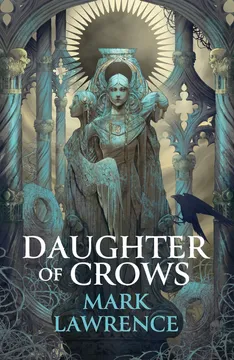


Plot Summary
Prologue
An aged narrator1 looks back on a life long enough to outlast enemies, cities, and the anger that once governed every choice. The years have taken beauty and strength, but have also softened the certainty with which she judged herself.
She still cannot explain what living has made of her, or whether the end will bring peace or one last reckoning. Her story, she decides, is too large for a single lesson. It must be told through the life that taught her.
The frame makes age more than a condition of the body: it is a change in the narrator’s power to interpret her own past. The younger self treated survival as proof of hardness; the older voice recognizes that endurance can also leave a person bewildered by what she has become. Her uncertainty about whether her life ends in peace or reckoning establishes the book’s central tension between escape and unfinished obligation. The prologue promises no tidy wisdom. Instead, it presents memory as a long argument between the person who acted and the person who must live with those actions.
Needles in the Market
For ten years, Molly Plight1 has lived quietly in the village of Pye, knitting, drinking turnip liquor, and letting ordinary routines loosen the anger she once carried. At Stones Corner Market, two armed strangers enter the inn, and Molly1 recognizes the practiced alertness of men preparing for violence.
She leaves a knitting needle where she can reach it, then drives it into the first man’s throat and attacks his larger companion. The patrons flee as the second man falls.
Outside, mounted mercenaries charge into the crowd. Senna Weaver,6 a suspicious neighbor who had warned others about Molly,1 is struck by an arrow; Molly1 is hit from behind. The market’s slaughter ends her borrowed peace and leaves her friends, Jayne11 and Ambeth,12 among the dead.
The knitting needle is not merely a weapon of surprise. It condenses Molly’s attempted transformation into an ordinary neighbor: the same hands that make domestic objects useful can still turn toward violence when danger arrives. Her swift response shows that her old training has not vanished, only been covered by habit. Yet the attack also destroys the social world that had begun to change her. Jayne and Ambeth are not anonymous casualties; they are the first people whose everyday companionship made Molly imagine a future not governed by vigilance. Violence therefore returns not as an abstract past, but as a direct assault on the fragile life she chose.
The Grave Opens Twice
As Molly1 lies among the bodies, a warrior named Sunder7 confronts a shifting woman in a graveyard. She claims no temple or worshippers, only the right to test those who reach for power, then vanishes as he throws his sword. At dawn, Molly1 claws her way out of a mass grave with a fractured head and a new name, Rue.1
A crow follows her and speaks with the voice and memories of Senna Weaver,6 though it cannot explain how a dead woman became a bird.6 Rue1 reaches Pye and sees mercenary horses in a neighbor’s field. She knows the attack has continued, but her years of peace have left her battered, unarmed, and uncertain whether she can still act.
The grave makes the book’s supernatural premise bodily before it makes it intelligible. Rue’s return is neither a clean resurrection nor a restoration of the person she was. She emerges injured, confused, and accompanied by Senna in a form that turns an old village grievance into an uneasy partnership. Sunder’s brief appearance frames the violence within a wider contest over power, while the woman’s refusal to explain herself keeps divine purpose distinct from human understanding. Rue’s immediate problem remains local: she must decide whether the village she once treated as temporary has become worth risking herself for.
Lucia’s First Death
Decades earlier, twelve-year-old Bek2 arrives at the Academy of Kindness knowing her illness will kill her and that her father has accepted payment for sending her there. On the first night, the large acolyte Lucia21 threatens her dormitory, but morning reveals Lucia21 strangled in her bed. Kindness Undu17 uses Lucia’s21 corpse to teach the students how death can be sensed, then forces Bek2 to touch it.
The contact throws Bek2 into a vision of a black river and nearly stops her breathing. Lucia’s21 body suddenly rises and attacks the class. Bek2 urges the girls to hold it back with stools; Einsa3 brings a hunting knife, and tiny Mollandra1 joins the fight with a sharpened spoon. Together the students batter Lucia21 down, and Mollandra1 calls them sisters.
The Academy gives its pupils a lesson in institutional violence before it offers them a usable account of its purpose. Lucia’s death becomes both a corpse and a teaching prop, while the students are forced to solve the danger the adults have deliberately unleashed. Bek’s leadership begins not with fearlessness but with practical attention: she identifies a problem that a frightened crowd can address collectively. The makeshift defense also creates the first bonds among Bek, Einsa, and Mollandra. Their sisterhood is chosen under pressure, a small act of mutual recognition inside a system designed to reduce each girl to a competitor.
The Black Berry Bargain
After the mercenaries beat her to death, Rue1 reaches the black river and sees the ferry that would carry her to the dead, including her lost daughters and the friends who have gone before her. Senna6 directs her to a single dark berry growing among the thorns. Rue1 eats it rather than cross, accepting the Morrigan’s power without knowing its cost.
She wakes again in Debban Tanner’s alehouse, still old, broken, and pierced, but able to draw strength from the dead. Using her pipe as a weapon and blood on the floor to hinder her attackers, she kills two mercenaries and then finishes the wounded Tabtha. Rue’s1 return gives her a chance to confront the company that destroyed Pye, but it does not restore her former speed or make her invulnerable.
Rue’s choice is not a rejection of death so much as a refusal to let this particular death settle her obligations. The berry offers power, but not youth, healing, or absolution. That distinction matters: she must continue inside the body that age and violence have already damaged. Her necromancy works through improvisation rather than mastery, making every victory dependent on attention, timing, and the willingness to use the dead. The scene also complicates the idea of divine gifts. The Morrigan gives Rue a means to act, not a guarantee that her actions will be wise or just.
Bek’s Knife Falls
At the Academy, Bek2 survives the second year’s brutal running trials only because Einsa3 and Mollandra1 refuse to leave her behind. By the third year, her lungs are failing, but she still tries to stop Mollandra1 from entering a lethal knife contest against Wenda.22
When Mollandra1 unexpectedly wounds Wenda,22 Bek2 attacks Kindness Terra19 from behind, hoping to interrupt the Academy’s machinery rather than watch another friend die. Terra19 turns the attack aside and drives a knife into Bek’s2 chest.
As Bek2 collapses, Mollandra1 rises and kills the wounded Wenda.22 Einsa3 and Mollandra1 are left with Bek’s2 death and the knowledge that her courage did not change the institution. Sharp4 later joins their remaining circle, while Mollandra’s1 grief hardens into a desire to strike back.
Bek’s defiance is emotionally intelligible but structurally doomed: she attacks the person who embodies the system without having any leverage over the system itself. Her death reveals the difference between moral clarity and strategic power. Mollandra’s response, killing Wenda, also shows how the Academy converts grief into the very violence it claims to cultivate. The surviving girls do not simply become colder; they inherit conflicting obligations. They want to honor Bek’s refusal to accept cruelty, yet the only tools available to them are those the institution has taught them to use.
The Coffin Flood
During a third-year escape exercise, Einsa3 is locked inside an iron coffin as instructors flood the chamber. Mollandra1 hears her friend struggling and tries to stop the lesson, but the others hold her back.
Einsa3 works at the lock until the water reaches her face; then a surge of anger erupts from her coffin, blowing its lid away too late to save her. Convinced that Treecie20 sabotaged the mechanism, Mollandra1 challenges her to a death match in the Bone Garden.
Treecie20 admits she jammed the lock and uses the catacombs’ dead to restrain Mollandra.1 As Mollandra1 begins to drown, Einsa’s3 corpse rises through her bond with Mollandra1 and breaks Treecie’s20 neck. Mollandra1 survives, but loses another sister and gains a fresh reason to hate the Academy.
Einsa’s death turns waiting, a skill taught as a route to survival, into a source of unbearable helplessness. Mollandra cannot rescue her by force, and the Academy’s exercise is designed to make spectators complicit in that failure. The later duel offers Mollandra a target, but not a repair: killing Treecie can punish the saboteur without restoring Einsa. The bond that lets Mollandra command her friend’s corpse is therefore both intimate and ethically troubling. Love makes the dead more reachable, while the act of using that closeness risks converting grief into another instrument of violence.
The Girl in the Chimney
The story reaches back to Mollandra’s1 life before the Academy. In a decaying mansion, she leads a crowd of children hunted at night by a tormentor they call Father,9 while their meals contain a substance that erases people from memory. Starving herself helps Mollandra1 recover fragments of a life beyond the mansion.
She escapes through a kitchen chimney and finds the Plight family, who seem to be her parents and older sister, Rebekka.24 The refuge fails: Cocran Plight25 sells Rebekka24 to the Academy, and Mollandra1 kills him before volunteering for the same place in exchange for nine marks. Years later, she understands that her childhood home was only another prison, and that the memory-eating substance was shaping her into something powerful.
Mollandra’s escape appears to be a return to family, but the book makes safety provisional even before the later revelations about her origins. Her starvation is at once self-harm, resistance, and a method of recovering evidence that the substance has buried. The choice to kill Cocran and enter the Academy shows how little freedom she believes she has: she can choose the institution that trained killers, but cannot imagine an untouched life outside systems of ownership. The episode gives her anger a history without reducing it to a single cause.
Pye’s Dead Rise
After Rue1 is captured by Gressa’s15 mercenaries, she is hung in the village elder’s house while the company studies maps. Gressa15 uses a black enchanted bone to make the severed head of Sebrin Weaver speak with Baron Mancer’s16 voice. The baron16 orders every inhabitant killed and every home burned. Rue1 reaches toward the villagers’ bodies, and the dead rise through the burning settlement, attacking the mercenaries who slaughtered them.
Once she can move again, Rue1 questions Isik’s14 severed head and learns that Mancer16 is burning border villages to manufacture a reason for war. The revelation turns Rue’s1 private demand for payment into a pursuit of the person directing the campaign, even as she knows the dead cannot be restored.
The revolt of Pye’s dead is a spectacular reversal, but it cannot be mistaken for rescue. Rue’s power arrives only after the villagers have been murdered, and their return is temporary, driven by anger rather than recovered life. The baron’s plan exposes how imperial violence disguises ambition as response: civilians are made into evidence for a conflict their deaths will supposedly justify. Rue’s decision to pursue Mancer shifts her from reactive vengeance toward investigation, though the line between justice and personal retaliation remains blurred.
Clakka’s Last Lesson
By the fourth year, Mollandra,1 Sharp,4 and Tmanga5 begin plotting to destroy the Academy after the instructor Clakka23 punishes Thurli by placing her in an exposed cage. Tmanga5 tells Mollandra1 that generations of acolytes have tried to rebel at this stage, and that the Academy expects their anger. Soon after, Clakka23 strikes Sallay during a lesson.
Mollandra1 attacks, using her book to trap Clakka’s23 razor-edged ruler before beating the instructor to death. The class joins the assault, while Kindness Terra19 arrives and treats Clakka’s23 death as a disruption to the schedule. Mollandra1 learns that fury can briefly unite the girls, but the Academy is built to absorb revolt and turn it into another part of its curriculum.
The Academy’s most effective defense is not secrecy but anticipation. By expecting rebellion, it can convert resistance into proof that its methods are working. Mollandra’s attack is still consequential: she and her classmates act together rather than waiting for permission. Yet the institution’s calm response shows how limited that victory is. Clakka’s death removes one tormentor, but the machinery continues. The scene asks whether anger can remain politically useful once an institution has learned to harvest it as fuel.
The Elixir Circle
In the fifth year, Kindness Undu17 takes the surviving acolytes into a sealed vault and reveals a crimson elixir meant to awaken the Furies’ power. Acolytes must drink in turn while Kindness Terra19 keeps a massive crossbow trained on them. Several girls die in flames or under the bolt when rage overwhelms them. Sharp4 drinks and begins to burn, but Mollandra1 tackles her before Terra19 can shoot.
Sharp’s4 fire subsides, revealing that she can contain the power rather than be consumed by it. Tmanga5 and Mollandra1 also survive their doses. The rite leaves the class smaller and makes Mollandra1 suspect that the elixir and the memory-altering substance from her childhood are related forces, each unlocking a different aspect of the Furies.
The initiation makes the Academy’s theology physically legible: belief and rage are not merely doctrines but forces that can burn through a person who cannot control them. The crossbow turns spiritual testing into an execution with an audience. Mollandra’s intervention matters because she risks herself to preserve Sharp, not because she can command the power. The survivors’ different responses resist a simple hierarchy of worth. Survival depends on a particular fit between person and force, while the institution treats that fit as evidence of divine selection.
The Family at the Gate
During a royal visit, the man Mollandra1 remembers as Father9 appears and claims the Academy has no right to keep her because it never paid him. Mollandra1 rejects him and shows the coins she received when she enrolled.
That night, the children she left behind in the mansion break into the dormitory, demanding her alone. Her classmates fight back, but the invaders’ numbers press them toward defeat. Sharp’s4 elixir-fueled rage catches fire and turns the assault, while Mollandra1 is stabbed and nearly killed.
The surviving acolytes forget the attackers as the memory poison takes hold. Mollandra1 feeds small amounts of a dead child’s brain to Sharp4 and Tmanga5 so they can perceive the hidden bodies, then the three animate the dead and carry them to the outer wall.
The return of Mollandra’s former siblings collapses the distance between her two institutions of suffering. The Academy may be more organized than the mansion, but both make children into instruments and obscure the damage afterward. Mollandra’s classmates defend her without knowing the full history, while she must face the cost of having escaped alone. Their use of the memory poison is a practical attempt to resist erasure, but it also shows how deeply the logic of the mansion has entered their survival. Remembering becomes an act that must be performed together.
Three in the Belfry
In their sixth year, Mollandra1 tells Sharp4 and Tmanga5 that she is consumed by anger and fears it may be all she has left. Sharp4 finally explains that an ordinary, repeated form of abuse shaped her childhood, and names the man who harmed her. Tmanga5 explains that her parents sold her despite having no financial need, and that emotional distance, not dramatic cruelty, defined her home.
The disclosures reveal how differently each girl has learned to survive: Mollandra1 clings to anger, Sharp4 hides pain beneath appetite and bravado, and Tmanga5 experiences much of life at a distance. They agree to stand and die together, giving their trio a trust that the Academy’s lessons cannot manufacture.
The scene refuses the idea that trauma must be exceptional to be devastating. Sharp’s pain is sharpened by how routinely the surrounding world dismisses it, while Tmanga’s account complicates the assumption that abuse always announces itself through overt violence. Mollandra asks for disclosure because their cooperation depends on more than tactical skill. Their agreement does not make them emotionally identical, nor does Tmanga claim a feeling she cannot access. Trust here means accepting difference without demanding that each person perform intimacy in the same way.
The Crow’s Old Nest
In the present, Rue1 follows Senna6 away from the burning Vale, but the black-clad Lip-Scar finds her in the forest and kills her with the memory power of the Cruelties. At the river, Rue1 refuses the ferryman’s demand for her Academy payment and chooses to return to her body. Senna6 guides her to Marriot House, where Sharp4 has spent years nearly catatonic.
Rue’s1 presence briefly stirs her old friend, but Sharp4 no longer recognizes Mollandra1 and mistakes her for an intrusive stranger. Lip-Scar enters the house to finish Rue.1 Sharp,4 moving on instincts her failing memory cannot explain, kills him with his own dagger. Rue1 takes an enchanted bone from his body, then leads Sharp4 out before the staff can stop them.
Rue’s refusal of the ferry is a second decision to remain among unfinished obligations, but this time the choice is not made for power alone. Finding Sharp forces her to confront what survival has cost someone she loves. Sharp’s confused violence is both an echo of her former skill and a sign of the life she can no longer reliably inhabit. Rue can bring her friend out of immediate danger, but cannot simply restore the past. Their reunion begins as an act of care under conditions neither can control.
The Baron’s Borrowed Hand
Rue sells one of the diamonds hidden inside her clay necklace to buy clothes that will get her and Sharp4 through the doors of Baron Mancer’s16 keep. She reaches the baron16 and breaks the enchanted bones he has used to control a silver replacement hand, inflicting the same damage on his body from a distance. Mancer16 dies as his guards falter.
His blindfolded official, Minor Remon, reveals herself as Milk-Eye,10 one of the Cruelties who has been tracking Rue.1 Milk-Eye10 explains that Sharp’s4 care home was bait. Sharp4 fights two masked Cruelties and kills one, but Milk-Eye10 drains her strength. Rue1 gives up the Ingredient inside herself, restoring Sharp’s4 memories while making Rue1 and Milk-Eye10 strangers to her.
The baron’s hand embodies power that tries to separate command from consequence: Mancer can direct violence at a distance until Rue turns the connection back upon him. His death removes one source of the border campaign, but reveals that the conflict reaches deeper than a single governor. Rue’s sacrifice to restore Sharp is deliberately costly. The same memory-altering force that once shaped the children becomes her only way to protect her friend, and protection requires relinquishing her own advantage rather than securing a clean victory.
Mother Beneath the Keep
Milk-Eye10 takes Rue1 into the keep’s catacombs and summons the gaunt woman Rue1 remembers as Mother.8 The woman tries to draw the Ingredient out of Milk-Eye10 and force Rue1 back into the family’s old struggle for power. Rue1 refuses, even after Mother8 begins killing Milk-Eye10 to reclaim the substance. The loss of her control over the Ingredient unleashes Rue’s1 fury, but Mother8 suppresses it.
A blade then pierces Rue’s1 heart, beyond the Morrigan’s protection. As she dies, Mother8 calls Rue1 her firstborn1 and refers to Milk-Eye10 as her sister, revealing that the children raised in the mansion were not all the same kind of family. Rue1 reaches the black river again, carrying a new understanding of the people she left behind.
The final confrontation makes lineage a burden rather than a source of belonging. Mother calls Rue family, but her claim is inseparable from possession: she wants Rue because of the power she can provide. Rue’s refusal separates kinship from obedience, though it cannot undo the abandonment that shaped both women. The revelation also unsettles Rue’s moral ledger. Some of the people she judged as parents and siblings were not what she believed, but changed facts cannot erase the lived bonds or the harm already done.
The Far Shore Waits
On the far shore, Rue1 reunites with Bek2 and Einsa,3 now free of the wounds that marked their deaths. They tell her that her daughter Cela is the Battle Queen of Tavoland and that Emperor Sunder7 is moving against her. Rue1 also learns that the child called Strong, whom she remembered as a lost brother, survived the mansion’s memory poison, killed the real Sunder,7 and took his place by making the royal household forget the substitution.
Rue1 turns toward the river, determined to return and protect Cela. Before she can decide how, Mother8 appears on the opposite bank, carried by a storm of darkness. The book ends with Rue1 facing a new crossing and a family conflict that has not yet been settled.
The ending expands the story’s private injuries into a political danger without resolving either. Rue’s grief for a daughter becomes an immediate reason to return, while the revelation about Strong recasts the empire as the outcome of a childhood survival strategy grown monstrous. Her old hope that Strong escaped into a better life is replaced by the knowledge that he remade one through theft. Mother’s arrival prevents the afterlife from serving as a simple refuge. Even death remains part of the conflict’s geography.
Analysis
Daughter of Crows is built around two systems that turn children into instruments. The Academy trains girls to become feared agents of retribution; the mansion uses memory-altering poison and terror to shape a different kind of weapon. Both claim necessity, and both make cruelty appear purposeful. The parallel matters because Mollandra1 cannot escape the first system simply by recognizing the second. She has to decide what kind of person she will be with the tools they gave her.
The novel’s strongest counterforce is not innocence but chosen attachment. Bek,2 Einsa,3 Sharp,4 and Tmanga5 do not share a single model of love. Bek2 leads through care, Einsa3 through dependable action, Sharp4 through instinctive loyalty hidden under humor, and Tmanga5 through a promise she can make even when she cannot feel what others expect. Their friendship does not erase damage; it creates obligations that the institutions around them cannot fully control. Rue’s1 later affection for Jayne11 and Ambeth12 extends that lesson beyond the Academy. Ordinary companionship becomes meaningful precisely because she has spent a life being trained not to need it.
Memory gives the book its moral pressure. The Ingredient can remove a person from other people’s awareness, while age changes Rue’s1 understanding of the same events without making them disappear. Her past is not a fixed record: it is a set of relationships she must reinterpret as new facts emerge. The black river offers release, but Rue1 repeatedly resists it because survival has become inseparable from unfinished responsibility.
The ending refuses closure. Rue1 discovers that the empire’s ruler7 is bound to the childhood she thought she had lost, learns that her daughter is in danger, and then sees Mother8 appear across death’s boundary. The story stops at the point where private history, family loyalty, and imperial war converge. Its final question is not whether Rue1 can defeat the past, but whether she can act without allowing the past to choose her purpose for her.
Review Summary
Daughter of Crows receives overwhelmingly positive reviews, averaging 3.95/5 stars. Readers praise its dark grimdark atmosphere, stunning prose, and the rare choice of an elderly female protagonist, Rue. The multiple timelines and shifting POVs initially confuse some readers but ultimately reward patience. The Academy of Kindness setting, mythology-infused world, and well-executed plot twists draw frequent acclaim. Critics note occasional pacing issues and familiar territory for Lawrence fans. Most consider it a triumphant return to his darkest form, with many calling it among their best reads of 2026.
Characters
Mollandra Plight, later Rue
The enduring avengerMollandra is observant, guarded, and difficult to kill, with a mind shaped by violence long before she enters the Academy. As a girl, she is willing to choose danger if it gives her even a narrow chance to act for herself. As an older woman, she tries to live quietly among people whose ordinary attachments are unfamiliar to her. Her sharpness is real, but so is her capacity to form bonds, especially with the friends who see past her defenses. She distrusts grand explanations and resists being used by gods, institutions, or family. Her deepest conflict lies between the survival habits that once protected her and the relationships that now make her responsible to others.
Bek
The dying strategistBek enters the Academy at twelve, already expecting to die from an illness in her lungs. She approaches its dangers with practical intelligence, using reading, observation, and planning to compensate for a body that cannot keep pace. Her instinct is to gather people rather than leave the weak behind, even when that choice costs her strength or safety. Bek’s kindness is not innocence; she understands that the Academy rewards cruelty and still chooses to resist becoming cruel by reflex. She gives Mollandra1 and Einsa3 a model of leadership built on attention and care, while her willingness to challenge authority reflects both courage and the limits of what one person can change.
Einsa
The fierce protectorEinsa is physically strong, capable with weapons, and more emotionally perceptive than her blunt manner suggests. Her mother was a Kindness, and Einsa carries a dangerous inherited anger that she works hard to contain. Pragmatic by temperament, she distrusts sentiment that could weaken her, yet she repeatedly chooses to remain beside Bek2 and Mollandra1 when leaving would be easier. Her loyalty is expressed through action: she hauls friends through trials, fights when cornered, and pushes them to recognize their own competence. Einsa’s steadiness gives the trio a counterweight to Mollandra’s1 intensity and Sharp’s4 volatility.
Sharp Mahalla
The laughing bladeSharp hides a formidable instinct for combat beneath jokes, appetite, and a willingness to provoke anyone in reach. She often treats danger as a game because play lets her keep some sense of choice inside a life designed to remove it. Her audacity can look like thoughtlessness, but she reads other people with an intuitive precision and is fiercely capable of loyalty. Sharp resists solemn displays of vulnerability, not because she feels little, but because exposing pain gives others another way to hurt her. She brings speed, humor, and dangerous unpredictability to the trio, while her private history reveals how ordinary social neglect can shelter serious abuse.
Tmanga
The quiet observerTmanga is controlled, watchful, and skilled at noticing the motives that other people miss. She prefers measured action to display and often understands an institution’s rules before her companions do. Her emotional distance is not a pose so much as a longstanding difficulty in feeling the attachments others assume are natural. That makes her loyalty unusual: she can promise to stand beside her friends even when she cannot honestly claim to love as they do. Tmanga’s reserve protects her from manipulation, but it also makes trust difficult. Her contribution to the trio is judgment, a capacity to temper the impulses that might otherwise turn anger into indiscriminate harm.
Senna Weaver
The sharp-eyed crowSenna begins as a village neighbor who distrusts Mollandra1 and helps spread warnings about her. In her crow form, she is still argumentative, proud, and quick to identify hypocrisy. She is compelled to follow Rue1, though the nature of that compulsion remains unsettling to her, and she does not confuse proximity with affection. Senna’s sarcasm lets her challenge Rue1 without pretending to be morally superior. Her viewpoint also enlarges the story beyond the Academy, bringing the losses of ordinary families into a conflict that might otherwise center on warriors and gods.
Emperor Sunder
The expanding emperorSunder is a ruler whose authority grows through conquest and the careful management of appearances. He is ambitious enough to challenge powers older than his empire and pragmatic enough to turn regional violence into a pretext for expansion. To Rue1, he represents a threat that cannot be dismissed as merely political, because his rise is tied to the Cruelties and the hidden history of her childhood. His confidence makes him dangerous, but the story also suggests that power can be built on identities and histories that have been manipulated.
Mother
The cellar’s architectMother is an unnerving presence associated with the deepest spaces of the mansion and with influence over its children’s minds. Her approach combines coercion with a warped language of care, making it difficult for the children to separate affection from threat. She appears to think in terms of plans, inheritance, and power rather than the needs of individual children. Her calm, broken movements make her frightening in a way that differs from the violence of Night-Father. She is the source of a family history that Mollandra1 cannot initially understand.
Father
The mansion’s hunterFather has a daytime role as teacher and a nighttime role as the children’s relentless pursuer. His lessons in reading, reasoning, and concealment exist alongside deliberate terror, so knowledge itself becomes part of the machinery that shapes his captives. He controls through pain, threat, and the children’s uncertainty about what lies beyond the mansion. To Mollandra1, he is not simply a villain from childhood but a figure whose presence can still awaken old fear. His methods expose how teaching can be used either to enlarge a person’s world or to make them more useful to a captor.
Milk-Eye
The mismatched-eyed survivorMilk-Eye is a child from the mansion whose pale and dark eyes make her difficult to forget. She is inventive, attentive to traps, and more spirited than many of the other children, though fear and loyalty pull her in conflicting directions. Her bond with Mollandra1 is formed through shared confinement and small acts of companionship, not through uncomplicated trust. Milk-Eye’s practical intelligence helps her endure a world where a moment’s hesitation can be fatal. She carries a fierce memory of the past and judges people by what they did when escape was possible.
Jayne Clay
The village truth-tellerJayne is an elderly neighbor of Molly’s1, known for confidently predicting the deaths of livestock and for talking about her many grandchildren. Her habits make her easy to underestimate, but she notices the people around her and recognizes that Molly1 carries a history she does not reveal. Jayne represents the ordinary companionship that slowly makes Pye feel like home to a woman accustomed to distance and danger.
Ambeth Potter
The generous cheesemakerAmbeth is a warm, ample-bodied neighbor who sells cheese and likes to share what she has. Her humor is broad, her generosity practical, and her willingness to treat Molly1 as one of the village women helps soften Molly’s1 isolation. Ambeth’s easy confidence offers a contrast to Molly’s1 guardedness without demanding that Molly1 become someone else.
Soosa Smith
The threatened village girlSoosa is a sixteen-year-old villager whose family is caught in the mercenaries’ attack. Her youth and fear make visible what military campaigns cost people who have no part in designing them. She is one of the children Molly1 notices even when she insists to herself that the village means little.
Isik
The mercenary commanderIsik leads the mercenary company operating in Pye and its surrounding settlements. He is calculating enough to understand how pride can be used against a fighter, yet willing to let his men indulge in cruelty. His command is practical and unsentimental, rooted in payment and military orders rather than personal loyalty to the people harmed.
Gressa
The campaign’s field captainGressa is a disciplined mercenary officer who studies maps, manages her subordinates, and recognizes that strange magic can be a threat without necessarily winning a war. She follows orders but does not initially understand the larger purpose behind them. Her confidence in practical military force makes Rue’s1 necromancy seem less decisive than it first appears.
Baron Mancer
The borderland plotterMancer is a provincial ruler whose authority depends on imperial favor and a cultivated display of wealth. He treats distant villages as pieces in a political design, not as communities with lives of their own. His use of an enchanted silver hand reflects a preference for power that reaches beyond his physical presence. He is important not because he commands the empire, but because he turns its ambitions into local violence.
Kindness Undu
The necromantic teacherUndu is one of the Academy’s three Kindnesses and teaches the acolytes about death and necromancy. Her childlike voice and imposing presence make her difficult to read, while her calm treatment of corpses reveals how thoroughly the Academy has normalized death. She values aptitude but never separates instruction from cruelty, and her lessons show students that supernatural power has rules, costs, and limits.
Kindness Marta
The Creed’s quiet voiceMarta explains the Academy’s history and theology in a manner that can seem almost ordinary. Her plain appearance conceals a forceful understanding of institutional power: she knows the order must be feared as well as skilled. She is especially attentive to how anger can be cultivated, directed, and made useful. Marta’s lessons make her an intellectual counterweight to the Academy’s more visibly imposing teachers.
Kindness Terra
The scarred combat teacherTerra is a tall, scarred warrior who teaches combat and enforces the Academy’s brutal standards. Her presence makes danger immediate, and she judges students by what they can do under pressure rather than by what they intend. Terra embodies the institution’s belief that a Kindness must be capable of surviving opposition, while her authority makes the cost of challenging it unmistakable.
Treecie
The careful rivalTreecie is a resourceful acolyte who understands how to improve her odds inside the Academy’s contests. She is capable with locks and necromancy, and knows how to exploit the weaknesses of a chosen opponent. Her caution is a survival strategy in a place where even friendship can become a disadvantage.
Lucia Aqualas Divinanar
The general’s daughterLucia is the large, confident daughter of a military commander, accustomed to taking up space and testing the other girls around her. Her bluntness makes her a formidable presence even before the Academy introduces necromancy. She arrives with the certainty of someone used to authority, but the Academy’s rules apply without regard to family rank.
Wenda
The disciplined knife fighterWenda is quiet, grim, and highly accomplished with a knife. She does not need to boast because her skill speaks for her. In the Academy, her restraint makes her as unsettling as a more openly aggressive opponent, and her competence forces other students to take the costs of a formal duel seriously.
Instructor Clakka
The unforgiving scholarClakka teaches geography, history, and the political facts the acolytes will need beyond the Academy walls. She is exacting and impatient with ignorance, treating knowledge as a survival requirement rather than an intellectual luxury. Her damaged face and long service make her a living warning of what happens to those who endure the Academy without graduating.
Rebekka
Mollandra’s older sisterRebekka is Mollandra’s1 older sister in the household where Mollandra1 briefly believes she has found safety. She is practical, protective, and determined to pursue work as a scribe despite the obstacles facing women. Her care offers Mollandra1 a glimpse of ordinary sisterhood, even as Rebekka’s own illness and vulnerability complicate their reunion.
Cocran Plight
The struggling scribeCocran is a poor, overworked scribe whose family lives close to the edge of what they can afford. His decisions are shaped by financial desperation and by the belief that the Academy might provide for a sick child better than he can. He represents the way economic necessity can be used to disguise a parent’s surrender of responsibility.
Plot Devices
The Furies’ elixir
Unleashes divine rageA rare crimson draught associated with the Furies and administered to acolytes late in their training. It awakens a capacity for supernatural anger, but survival depends on containing and directing the force rather than letting it consume the drinker. Some candidates burn, explode, or must be killed when their rage becomes uncontrollable. The elixir helps explain how Kindnesses acquire power and why the Academy delays the test until its students are older and fewer. Its effects also illuminate the contrast between the Furies’ rage and the memory-altering substance associated with the Cruelties.
The Ingredient
Makes memory unstableThe children in the mansion are fed a mysterious substance that can erase memories, conceal people from attention, and in extreme cases make a person vanish from the minds of those nearby. Its effects also allow the Cruelties to manipulate how people and objects are remembered. The Academy’s elixir and the Ingredient seem connected to different aspects of the old divine powers, anger and memory. The substance gives the mansion’s captors a means to shape children while making resistance difficult to preserve, because even the evidence of a lost sibling can disappear from memory.
The black river
Marks the threshold of deathThe river is the boundary between the living world and the dead, with a ferryman who accepts payment for passage. Different characters encounter it through visions, near-death states, or actual death. Rue1 repeatedly reaches its banks and must decide whether to cross or return. Her Academy payment, a set of marked coins, becomes tied to that choice. The river gives the novel a shared image for death across different religious traditions, but it does not make the afterlife simple or certain: memory, unfinished obligations, and the possibility of return remain part of its landscape.
Wergild
Prices violence in goldWergild is an ancient payment that can settle certain killings without further bloodshed. The Kindnesses use fixed rates, with the amount changing according to the victim’s rank and circumstances. Rue1 offers it as an alternative to revenge, insisting that the mercenaries or their employers can pay for Jayne11 and Ambeth12. The mercenaries’ refusal reveals that they mistake her demand for a bluff or a larger political scheme. Wergild gives Rue’s1 pursuit a concrete measure, while exposing the unequal value the world assigns to different lives.
Crows and the Morrigan
Carry warnings between worldsCrows serve as messengers, watchers, and signs of the Morrigan’s influence. Senna6 follows Rue1 after becoming a crow, reports danger, and appears able to perceive more than an ordinary bird. The Morrigan’s intervention returns Rue1 from death and gives her the power to work through corpses, though the goddess’s purpose remains ambiguous. The crows also link the Academy, the battlefield, and the river, making them part of both practical communication and supernatural observation. Their presence suggests that Rue1 is being watched, but never guarantees that she is being helped.
About the Author

Download PDF
Download EPUB
.epub digital book format is ideal for reading ebooks on phones, tablets, and e-readers.








