

Plot Summary
Prologue
A child is struck by an arrow in the book’s opening image. The moment is brief, without explanation, but it plants a blunt warning: the story’s vast questions about memory, history, and knowledge will be tested against bodies caught in war.
The child is not an abstraction for long. Soon, a child’s life in the Dust is overturned by an attack whose violence will echo across other times and other peoples.
The prologue reduces the novel’s scale to a single vulnerable body. That compression matters: the book will range across worlds, eras, and libraries, yet its grand histories repeatedly resolve into individual lives endangered by decisions made elsewhere. The arrow also makes violence a narrative measure. What matters is not only who survives an attack, but which account of the attack survives with them.
Livira at the Well
On the dry lakebed, eleven-year-old Livira1 fights Acmar, studies an intricate wind-weed sculpture made by Ella, and treasures a torn scrap of writing no one else values. She dreams of the distant city while hauling water for her settlement. Then a towering sabber approaches, followed by a raiding party.
Aunt Teela21 grips Livira’s1 hand as the settlers try to resist, but the sabber kills the men who confront him and claims the survivors. Dust and panic scatter the village. Livira1 is bound with the other children and marched east, unable to see what became of Teela,21 Ella, or the adults she knew. Only the loss of Ella’s sculpture finally breaks through her shock.
Livira’s hunger is not simply for escape from a harsh landscape. She is already alert to marks, patterns, and meanings that her community dismisses, and the scrap of writing embodies a larger world she cannot yet read. The raid makes that curiosity costly: her first contact with the unknown arrives not as discovery but as dispossession. Her refusal to collapse into grief is not emotional emptiness. It is a survival strategy, with sorrow finding its first safe opening in the loss of a small object she can actually name.
Malar's Dust Crossing
As the captives near the hills, soldiers attack the sabbers, killing children as well as their captors. The surviving children are assigned to three wounded soldiers, including Malar,5 a scarred fighter whose foul temper conceals a debt he means to repay. He leads them west toward Crath, sharing almost no water.
When a dust-bear erupts beneath him, Livira1 takes Malar’s5 dagger, dives into the creature’s mouth, and cuts her way out. The act saves him and earns his grudging protection. Their journey also reveals the city’s dependence on trade and the Library’s power: people bring food in exchange for knowledge. At the gates, Malar5 secretly gives Livira1 a clean cloak, hoping to steer her away from the worst work.
Livira’s courage is practical before it is heroic. She studies Malar’s habits, sees where he keeps his weapons, and acts when the ordinary rules of survival offer no useful option. Malar, meanwhile, makes a distinction between authority and obligation: he dislikes caring for the children, yet he treats his debt as binding. Their exchange establishes a form of trust that neither needs to soften into affection. In a world where institutions assign people a value, their relationship begins with specific acts that refuse easy accounting.
The Fifth Allocation Door
Inside Crath, Malar5 brings the children to the Allocation Hall, where white-robed officials sort newcomers into futures. Livira1 is meant to follow the others to ordinary work, but she walks toward the most prestigious entrance. When the elderly gatekeeper challenges her, she repeats the sabber words she heard during the raid. The sound unexpectedly opens the door.
In the assessment room, Livira1 cannot read or write, yet she performs mental arithmetic beyond the other candidates and reproduces the ancient writing from her scrap. Lord Algar19 dismisses her as a crude curiosity. Deputy Yute3 instead recognizes that her memory and encounter with a sabber make her valuable. He rejects the allocation system and takes her to train at the Library.
Livira’s entrance depends on a paradox: she gains access by repeating words she does not understand. Her first triumph is neither literacy nor formal learning, but the ability to retain what others fail to notice. The officials mistake education for evidence of worth, while Yute recognizes ability that their tests cannot measure. His intervention is generous, but also political. Livira enters an institution that can expand her world while still deciding which kinds of knowledge are permitted to count.
Evar's Unfinished Stair
Far inside the Library, Evar2 lives among his three brothers8 and sister,4 children once swallowed by the Mechanism and returned unchanged after years away. Each carries knowledge from a book, while Evar2 remembers almost nothing of his own lost time. He tries to build a staircase to the ceiling and search for a way out.
During a hunt for an Escape, a dangerous creature formed from stolen ideas, Clovis4 uses Evar2 as bait and kills it with him. Their struggle topples an enormous tower of books. In the wreckage, Evar2 finds a plain volume that awakens a sense of recognition. Its first page tells him not to turn further and directs him toward the Exchange. For the first time, his lost past has a destination.
Evar’s prison is abundant in information but poor in personal memory. His siblings can name their gifts; he experiences his lack as a hole that resists explanation. The mysterious book changes the quality of that absence. Instead of seeking escape in general, he is given the outline of a particular person to find. Clovis’s use of him as bait also shows how their family turns intimacy into a tool. Evar accepts the danger, but the rescue does not erase the cost of being useful to people he loves.
The Raven's Impossible Errand
While learning to read, Livira1 abandons her classmates’ hunt for a book and wanders into the Library’s distant chambers. A battered mechanical raven23 follows her through a maze, punishing damage to books and leading her to the volume that yielded her scrap. Beyond a sealed boundary, she touches a strange light and is pulled into a forest threaded with portals.
Evar2 reaches the same place through the pool in his chamber. They compare the worlds they see, help one another, and agree to search for what each has lost. A grey assistant tears Livira1 back into the Library before she can say goodbye. Evar2 is left with her scrap and the first stranger he has ever met.
The meeting gives each child something beyond information: a witness. Livira’s solitary curiosity meets Evar’s equally isolated need, and their brief alliance feels immediate because neither has to explain the hunger for elsewhere. Their perceptions already differ, however. The same passage appears to them as a forest and as a system of pools, a warning that even shared experience may not mean shared reality. The abrupt separation turns connection into an unanswered question that will persist for years in Livira’s life and only days in Evar’s.
Pools Remember Different Years
Livira1 returns to class with a rare book and begins years of study, while Evar2 explores the Exchange’s pools. One carries him into the childhood of Clovis,4 whose family and community are attacked by human soldiers. Evar2 watches her mother send her into the Mechanism and sees the massacre that shaped her into a fighter.
Another pool takes him to an ancient Crath, where he watches a city fall to a poison that kills humans and sabbers together. Later, Livira,1 now a young librarian, returns to the Exchange and meets Evar2 again. They test how pools connect worlds and times, but an attack by dark Escapes separates them. Livira1 returns wounded, while Evar2 carries the knowledge that history has already repeated itself.
The Exchange makes history experiential but not editable. Evar can witness the event that formed Clovis, yet he cannot save the people whose deaths made her who she is. Livira and Evar’s theories about time give them a way to navigate the forest, but no protection from what they find. Their encounters are asymmetric: she ages through years of longing while his experience barely advances. The pools therefore offer more than travel. They expose the unequal human costs of time itself.
A Librarian Against the King
At thirteen, Livira1 goes outside with Arpix6 to deliver books to the laboratory. A chemical blast fills the courtyard with choking gas, and Livira1 uses lessons from a book to drag Arpix6 and Malar5 to water. The attack strengthens her suspicion that Crath’s celebrated progress carries hidden costs.
Years later, after the Library has trained her into a capable scholar, Yute3 presents her at court as a junior librarian despite King Oanold’s contempt for people from the Dust.
The king objects, but the Library’s independence prevents him from simply overruling the appointment. Malar5 kills an assassin sent after them and is wounded protecting Livira.1 She enters the Library’s highest ranks, publicly representing the people whom the city’s rulers insist are inferior.
Livira’s rise does not dissolve the prejudice that shaped her arrival. It makes that prejudice harder to conceal. Her appointment is a personal achievement, but Yute turns it into a public test of whether the Library can resist the king’s political demands. The laboratory disaster also complicates the promise of progress: knowledge can save Livira in one moment and poison her in the next. Her new authority increases her capacity to act, while making each decision more consequential for the people she represents.
Yamala's Forbidden Book
Three years into her career, Livira1 sees a sabber killed in Crath’s plaza and cannot make herself deliver the weapons research the city wants. Yute’s3 warning about repeating civilizational collapses clashes with her fear of an approaching invasion. Determined to understand the Library and return to Evar,2 Livira1 breaks into Head Librarian Yamala’s10 private collection.
She steals a locked book about hidden spaces, and Arpix6 discovers its unusual clasp and opens it. The text describes a portal made with an assistant’s blood. Livira1 summons Volente,13 Yamala’s10 enormous black guide, then uses the Raven’s23 name and feather to reach a forbidden chamber. There she finds the blood and draws a working doorway to the Exchange.
Livira’s rule-breaking has changed in scale. As a child, she challenged boundaries because obedience bored her; as a librarian, she risks a position that carries obligations to others. Her theft is still impulsive, but it also follows research, collaboration, and a sustained attempt to understand the Library’s hidden structure. The contrast between a book’s difficult lock and the portal’s simple blood circle captures her growing insight: institutions can make access needlessly obscure, while the underlying mechanisms may be startlingly direct.
The Kiss Misreads History
Livira1 finds Evar2 again and brings him to an ancient city where humans and sabbers once lived together. Their growing intimacy culminates in a kiss. Then they discover that the city’s inhabitants have died from a chemical attack, and a pale child watches Livira1 from a window. Returning to the Exchange, they encounter Clovis,4 who sees Livira1 as the human enemy her family taught her to expect.
Clovis4 attacks, and Livira1 escapes through her portal with a claw wound. Evar2 learns that the language the Exchange supplied had hidden their species from one another: each thought the other was the same kind of person. Their affection was real, but it formed inside a distortion neither understood.
The revelation does not make their tenderness false; it makes its conditions visible. Each saw what expectation allowed, and their shared translation concealed the difference most likely to provoke hatred. That is not merely a magical trick. It resembles the political stories Crath tells about sabbers, stories that turn a distinct people into animals before anyone must listen to them. Livira’s wound gives the recognition a physical consequence, while Evar’s defense of her tests whether attachment can survive when the reassuring illusion is gone.
Crath Falls from Within
The sabbers attack Crath in force, and Yute3 tells Livira1 that the city will fall. She joins Malar5 in gathering survivors, including Neera,17 Katrin,18 and others from her childhood settlement. When frightened families refuse to leave, Livira1 snatches a baby and runs uphill, drawing its parents and neighbors after her.
From the mountain they see fire spreading through the city. Livira,1 Malar,5 and Yute3 return to the Library to find their friends. Malar5 kills a sabber attacking the bindery, while Jella15 helps wound it from behind a barricaded door. Livira1 finds Arpix6 and Meelan16 alive, then guides survivors toward Yamala.10 The attack turns her old homecoming into another desperate evacuation.
Livira’s leadership begins not with a speech but with a reckless act that gives frightened people a reason to move together. The stolen baby is a practical signal, as well as a reminder of how quickly survival can require morally uncomfortable improvisation. Malar’s violence and Jella’s improvised weaponry show that defense belongs to whoever can act, not only to trained soldiers. Crath’s fall also changes the meaning of Livira’s appointment: she is no longer a symbolic exception within the city, but a person responsible for those who may have no city to return to.
Fire Between the Shelves
Yamala10 leads the survivors through the Library, where a corrupted assistant kills a librarian before another assistant fights it to a standstill. Yute3 and Yamala10 reveal that they were once immortal assistants who chose mortal lives to guide humanity away from recurring catastrophe.
The group reaches the labyrinth, but fire spreads through the shelves and the fighting advances behind them. Livira1 discovers that the sabbers once shared Crath with humans, until a third people’s chemical attack killed both communities.
Malar5 is gravely wounded by Clovis4 during a confrontation in the Exchange. Evar2 carries him to the healing circle in his own chamber, where Livira1 follows. The immediate danger passes, but the Library’s destruction continues and their friends remain separated.
The Library’s destruction forces its custodians’ theories into the open. Yute and Yamala chose opposite remedies for humanity’s recurring disasters: gradual restraint and access to knowledge. Neither approach has prevented war. The history of the poisoned city then breaks the moral simplicity of both sides. Humans and sabbers were not always enemies, and the catastrophe came from outside their shared peace. Saving Malar requires Evar to act across the line of species and allegiance, making care a concrete choice rather than an argument.
The Book Makes Her Visible
After Livira1 and Evar’s2 books merge, the group returns to the Exchange, where Livira1 uses Volente13 to search for Arpix’s6 book. They find a band of sabbers escorting Carlotte, who is carrying one of the volumes Livira1 wrote. The old priest among them can see Livira1 because she holds the book. When Evar2 and Malar5 try to intervene, the book pulls Livira1 and Evar2 into one of her stories.
They escape its imagined world, but the encounter reveals that Livira’s1 writing can make her tangible across time. As the fire closes in, she takes control of a wounded assistant by defeating the Escape inside it, then uses its blood to open a portal. The rescue costs her the boundary between human and assistant.
Livira’s book has been a private record, a companion for Evar, and now a force that alters who can perceive her. The sequence refuses to treat storytelling as a decorative escape from history. Her pages preserve people and possibilities, but they can also expose her to danger and interfere with time. Possessing the assistant gives Livira access to a way out, yet the victory is unstable: the body she borrows begins to loosen her ties to the ordinary flow of days and feelings.
Mayland Breaks the Truce
Livira’s1 attempt to save the trapped group leaves her body broken, though she survives within the assistant she possessed. Evar2 returns to his chamber and finds her apparently dead among the skeer, then hears her ask for help. Clovis4 and Kerrol9 kill the attackers, and Kerrol9 tells Evar2 he knows where to find Livira.1 Before they can pursue her, Mayland7 emerges alive after years missing.
He seizes Yamala10 and rejects compromise, arguing that the Library itself perpetuates ruin. Starval8 fails to stop him before Mayland7 kills her, and portals turn black as Escapes spread through the Exchange. Evar2 runs toward Livira,1 while the family’s long captivity opens onto a new war. The book ends with her fate unresolved and the next battle beginning.
Mayland’s return overturns the family’s old assumption that absence means death, but his survival brings no reunion. He has converted historical knowledge into a total verdict against the Library, treating compromise as the cause rather than a fragile alternative to extermination. Yamala’s death makes that philosophy immediately violent. Evar’s movement toward Livira provides a counterweight: amid competing grand designs, he chooses the person whose life remains uncertain. The ending withholds resolution because the book’s central question has become whether connection can survive without being turned into another weapon.
Analysis
The novel treats knowledge as a material power, not an automatic good. Crath grows by mining the Library’s books, then uses selected histories to justify who counts as human and who deserves protection. Livira’s1 ability to remember, learn, and challenge those classifications makes her valuable to Yute,3 but it also places her at the center of a political struggle over access. The books can preserve an account, conceal it in an index, or lend authority to a convenient lie.
The parallel lives of Livira1 and Evar2 test how much of identity survives interpretation. In the Exchange, each initially sees the other through expectations shaped by species, language, and grief. The false appearances do not erase the care they feel, but the later revelation forces them to decide whether affection can outlast the story they first believed. Their separate experiences of time make that decision harder: Livira1 can spend years seeking Evar2 while he experiences only days.
The Library’s repeating catastrophes sharpen the political argument. Yute3 believes knowledge must be paced because societies repeatedly acquire the means to destroy themselves before the wisdom to restrain them. Yamala10 trusts that wider access and stronger defenses can prevent domination. Mayland’s7 later attack rejects both approaches and turns history into a verdict against compromise. The novel leaves these positions unsettled because each has evidence behind it and each can become lethal when treated as complete.
Stories offer a different kind of memory. Livira’s1 writing cannot prevent the destruction of Crath, and it cannot restore everyone she loves. But it preserves particular lives against the flattening effect of official histories. Her book gives Evar2 companionship, then makes their connection tangible. The ending insists that stories can shape what happens next, while refusing to promise that shaping the future will be enough to save the people inside it.
Review Summary
The Book That Wouldn't Burn received mostly positive reviews, with readers praising its beautiful prose, intricate world-building, and compelling characters. Many found the story captivating, particularly in its exploration of themes like knowledge, power, and the magic of libraries. Some readers noted pacing issues, especially in the first half, and felt the romance was underdeveloped. Despite these criticisms, most reviewers considered it one of Mark Lawrence's best works to date, leaving them eager for the sequel.
People Also Read



Characters
Livira
The restless readerRaised in the Dust, Livira is stubborn, observant, and unusually capable of remembering what others overlook. Her questions can exhaust the people around her, but they also expose the assumptions that hold Crath’s social order in place. She wants knowledge for its own sake and is quick to test rules that seem designed to keep it from her. Her resilience is not invulnerability: she has to find ways to experience grief rather than merely outrun it. As a friend, she acts before she can be certain that help will work; as a learner, she turns every setback into another route of inquiry.
Evar
The memory-haunted seekerEvar lives among books with three brothers8 and a sister4, but he feels defined by the memory lost to the Mechanism. His kindness makes him an informal bridge in a family whose members are more practiced in violence, manipulation, and scholarship than in ordinary intimacy. He is skilled in combat but uncomfortable with what killing asks of him. His search for a person described by a mysterious book gives direction to his desire to escape, then exposes how little he understands about the world beyond his chamber. Evar’s instinct is to protect others, even when he fears that doing so will make him a traitor to his own people.
Davris Yute
The dissenting deputyYute is a pale, eccentric deputy librarian who prefers independent judgment to institutional procedure. He recognizes Livira’s1 potential when the allocation system reduces her to her origins and gives her a place in the Library. His gentle manner can conceal political nerve, though he often guides through questions rather than direct instruction. Yute is troubled by the speed at which knowledge becomes power and power becomes weaponry. His long history with the Library makes him both an insider and a critic, someone who understands that preserving knowledge is not the same as teaching people to use it wisely.
Clovis
The relentless warriorClovis is Evar’s2 adoptive sister4, a disciplined fighter whose life is shaped by the threat of an enemy she expects to face again. She trains with relentless focus and distrusts hesitation, treating preparedness as the only reliable answer to danger. Her sharpness is partly tactical and partly defensive: emotional closeness risks exposing the grief she keeps under control. Clovis can be fierce without being simple. Her loyalties are deep, but they are organized around protection and vengeance, two impulses that can demand incompatible things from the same person.
Malar
The debt-bound soldierMalar is a battle-scarred soldier with a foul mouth, a precise eye, and little patience for ceremony. He dislikes being responsible for children, yet he treats a debt as a real obligation and protects Livira1 when he could have left her behind. His understanding of combat is practical rather than romantic: training is not the same as surviving a fight, and distance does not make violence morally clean. Malar’s cynicism is a defense against disappointment, but it does not prevent him from acting with courage or accepting the risks of protecting people who cannot repay him.
Arpix
The careful scholarArpix is a serious trainee with a gift for languages, systems, and patient analysis. He often urges Livira1 to think before acting, though his caution does not erase his loyalty to her. His curiosity is sincere and methodical, making him a useful partner when a problem requires more than boldness. Arpix also has a quieter emotional intelligence: he recognizes when Livira1 needs space and helps without forcing her to explain herself.
Mayland
The absent historianMayland is Evar’s2 missing brother and the family’s leading authority on history, myth, and the rise and fall of civilizations. His stories and observations remain part of how the siblings interpret their confinement, even while they disagree about what he would conclude from the Library’s history. Mayland’s scholarship gives him a long view of human behavior, but knowledge of repeated disaster does not necessarily provide a way to prevent it.
Starval
The watchful assassinStarval is Evar’s2 brother, a subtle tracker and practiced killer whose calm humor can make his capacity for violence easy to underestimate. He distrusts appearances and searches for motives beneath the surface, including within his own family. Starval recognizes Evar’s2 kindness as a strength rather than a weakness, though he expresses affection through sharp observations and practical help. He understands that survival is not the same as meaning, even when he has not settled on what meaning should be.
Kerrol
The reader of peopleKerrol, the eldest of Evar’s2 brothers, studies psychology and can steer a conversation toward the information he wants. He is perceptive enough to understand his siblings’ defenses, but his habit of treating people as patterns also keeps him at a distance from them. Kerrol’s intelligence is not presented as pure wisdom: insight can become a form of control when the person being understood has no equal say in the exchange.
Yamala
The guarded head librarianYamala leads the Library with formidable authority and keeps knowledge of its deeper workings close. Her decisions favor preservation, procedure, and the controlled use of information, which can make her seem distant to younger librarians. She and Yute3 have sharply different views about what the Library should give to the world. Yamala’s reserve does not mean indifference; she carries a sense of responsibility that makes every compromise feel like a risk to the institution she protects.
The Assistant
The ivory caretakerThe Assistant is a constructed caretaker who raises Evar2 and his siblings and maintains their chamber. She teaches, guards, and provides practical care, but her ability to help is limited by rules she rarely explains. Her stillness and silence make her difficult to read, though small acts of attention reveal a capacity for attachment. She embodies the Library’s protective systems: capable of sustaining life, yet not necessarily free to intervene when people face dangers beyond her appointed role.
The Soldier
The silent protectorThe Soldier is a constructed guardian who watches Evar’s2 family and trains them in combat. His white, unchanging appearance suggests an instrument rather than a person, but his actions imply a complicated history and an intense sense of duty. The Soldier rarely explains himself. His presence offers protection without comfort, and his rare departures from silence carry unusual weight.
Volente
The black guide houndVolente is a huge, unnervingly black guide associated with Yamala10. He is difficult to command and not especially interested in pleasing people, but his attention can lead Livira1 through parts of the Library she cannot navigate alone. His doglike form invites affection and fear at once, a reminder that the Library’s helpers are not ordinary tools and may have purposes of their own.
Salamonda
The generous housekeeperSalamonda runs Yute’s3 crowded household and offers Livira1 food, clean clothes, and a welcome that asks for no explanation. She is practical, outspoken, and unafraid to fuss over people who insist they do not need care. Her warmth makes Yute’s3 home feel inhabited rather than merely owned, and her steady attention offers a counterpoint to the Library’s impersonal systems.
Jella
The loyal bookbinderJella begins as one of Livira’s1 first friends among the trainees and later works with the bookbinders. She is sociable and candid, with a strong interest in people and the small dramas of daily life. Her loyalty shows most clearly when danger stops being theoretical and she acts to protect others with whatever tools are available.
Meelan
The guarded rich traineeMeelan is a blunt, observant trainee who conceals his wealth because he dislikes how money changes the way people treat him. He supports Livira1 without demanding that she become easier to manage, and his reserve often hides stronger feeling than he lets show. His family position gives him access to the city’s upper ranks, but his closest loyalties form among the trainees rather than the people who share his status.
Neera
The sharp-eyed friendNeera grows up beside Livira1 in the Dust and carries a persistent cough that does not diminish her shrewdness. She is observant and loyal, though her physical frailty often makes other people underestimate her. Her friendship with Livira1 predates the Library, giving Livira1 a link to the life she lost and to the people who must rebuild it.
Katrin
The gentle companionKatrin is Livira’s1 kind, trusting childhood friend. She is less quick to grasp an argument than Livira1, but her empathy makes her attentive to other people’s fear and grief. Her life in Crath ties the displaced children of the Dust to the city’s ordinary households, where belonging can be as fragile as a home.
Lord Algar
The king's hardline envoyAlgar is a royal envoy who believes political order depends on keeping authority in the hands of established families. He sees Livira’s1 advancement as a challenge to the king’s policies and to the social hierarchy those policies protect. His hostility is sharpened by personal ambition, but it is also sustained by a worldview that treats prejudice as a useful instrument of government.
Serra Leetar
The displaced diplomatSerra Leetar first encounters Livira1 at the Allocation Hall, where each girl is entering an unfamiliar future from a different social position. She is proud, ambitious, and sensitive to rank, but her polish does not make her immune to uncertainty. Her connection to Algar’s19 household and to the trainee community places her between inherited privilege and the practical ties she forms with others.
Aunt Teela
Livira's Dust-born guardianTeela raises Livira1 in the settlement and tries to keep her alive through scarcity, chores, and a landscape where every resource matters. Her affection is practical rather than demonstrative, which makes rare moments of tenderness especially meaningful to Livira1.
Benth
The settlement's older boyBenth breaks up fights among the settlement children and helps carry younger ones when the captives are marched toward Crath. His steady intervention makes him an early example of responsibility among people with little power.
Edgarallen
The irritable book ravenEdgarallen is a battered mechanical bird that guides Livira1 through a maze and reacts fiercely when she mistreats books. He is part of an older Library system, more demanding than helpful, but his stubborn direction gives Livira1 access to places she could not otherwise reach.
Heeth Logaris
The formidable tutorLogaris teaches Livira1 and the youngest trainees the languages and habits needed to work in the Library. His blunt demands can feel cruel to a child who begins with no formal education, but he recognizes persistence and expects students to become more capable than they imagine.
Plot Devices
The Library
Knowledge with guarded doorsThe Library is an immense structure of connected chambers containing books from many worlds and times. Its books can be difficult to locate because indexing systems overlap, sections remain uncatalogued, and some doors resist particular visitors. Crath draws political and economic power from the knowledge held inside it. The Library is also physically vulnerable: fires destroy books and shelves, while assistants restock it. It therefore operates as both cultural memory and a source of dangerous acceleration. Access is never simply free or simply forbidden; it depends on who controls the routes, the indexes, and the interpretation of what the books say.
The Mechanism
Books made into worldsThe Mechanism surrounds a reader with the world described by a book, allowing its contents to be experienced rather than merely read. Evar2 and his siblings were taken into it as children and returned much later, unchanged in age but shaped by what they encountered. The device gives its users a powerful escape from confinement, while also creating risks: people can vanish inside, and material drawn from books can escape as dangerous creatures. Its worlds are immersive, but their apparent freedom does not guarantee lasting consequences or reliable truth.
The Exchange
A crossing through timeThe Exchange connects libraries, worlds, and different times through portals that Livira1 perceives as light-filled doors and Evar2 perceives as pools. Travelers can arrive in their past as ghosts, unable to affect the people they observe, while journeys may also lead to different worlds or future moments. The Exchange adapts to its visitors’ expectations, changing the landscape and even concealing differences between them. Its ability to connect lives is also dangerous: time does not work evenly for everyone, and access can alter perception, identity, and the consequences of a meeting.
Escapes and Assistants
The Library's rival forcesAssistants are constructed caretakers11 bound to preserve and tend the Library, while Escapes emerge from the Mechanism and take forms assembled from ideas in nearby books. The Escapes can corrupt assistants through their wounds and use those bodies to move through the Library. Their conflict reflects opposing purposes within the Library itself, rather than a simple division between good and evil. When an Escape takes control of an assistant, it becomes a physical threat to people who would otherwise be unable to harm the caretaker11. The distinction between the two forces becomes critical as the Library burns.
Livira's Book
A story that binds two livesLivira1 writes her experiences and imagined adventures on the blank leaves of books hidden through the Library. Evar2 carries a mysterious book whose first page warns him not to turn further. Their books eventually prove to be two parts of one story: Livira’s1 writing has shaped what Evar2 experiences inside the Mechanism, while his reading gives her stories a reader who lives alongside her. The book also changes what can be seen and touched across the Exchange. It makes storytelling a causal force in the plot, not merely a record of events.
FAQ
0. Synopsis & Basic Details
What is The Book That Wouldn't Burn about?
- A Tale of Two Seekers: The Book That Wouldn't Burn follows Livira, a resilient girl from a desert settlement, whose life is upended by a sabber attack, leading her to Crath City and its colossal Library. Simultaneously, Evar, a young man trapped in a timeless Library chamber, searches for a lost memory of a girl, a quest that leads him to a mysterious interdimensional "Exchange."
- Unraveling Ancient Mysteries: Both protagonists are drawn into the Library's hidden depths, discovering its true nature as a nexus of worlds and times, governed by enigmatic artificial beings. Their intertwined journeys reveal a cyclical history of destruction and rebirth, driven by humanity's unchecked pursuit of knowledge and ancient conflicts.
- Love, War, and Identity: As a devastating war between humans and sabbers engulfs Crath City and threatens the Library itself, Livira and Evar must confront their own prejudices, the true identities of their allies and enemies, and the profound connection that binds their destinies across time and species.
Why should I read The Book That Wouldn't Burn?
- Intricate World-Building & Deep Lore: Mark Lawrence crafts a truly unique fantasy world centered around a sentient, labyrinthine library that is both a physical place and a nexus of all knowledge and realities. Readers will be captivated by the layers of history, mythology, and philosophical concepts woven into the narrative.
- Compelling Characters & Emotional Depth: The dual protagonists, Livira and Evar, are exceptionally well-developed, each driven by profound loss, a thirst for understanding, and a yearning for connection. Their emotional journeys, particularly their unexpected bond across species and time, provide a powerful core to the story.
- Philosophical Exploration of Knowledge & Power: Beyond the thrilling plot, the novel delves into profound themes about the nature of knowledge, its dangers, and its potential for both destruction and salvation. It challenges perceptions of good and evil, exploring how history is written and rewritten, making it a thought-provoking read for fans of intellectual fantasy.
What is the background of The Book That Wouldn't Burn?
- A World of Cycles and Forgotten History: The story is set in a world where civilization repeatedly rises and falls, driven by a "fire-limit" where advanced knowledge leads to self-destruction. Crath City, built around the Library, is the latest iteration, its people having forgotten previous cycles and the true origins of their knowledge.
- The Library as a Primal Force: The Library itself is an ancient, possibly infinite entity, predating current civilizations. It acts as a repository of all knowledge across countless worlds and timelines, tended by immortal "assistants" who are bound by ancient compromises between its mythical founders, Irad and Jaspeth.
- Human-Sabber Conflict: The immediate backdrop is a long-standing, escalating war between humans and sabbers (dog-like humanoids). This conflict is fueled by prejudice and misinformation, with both sides believing the other to be monstrous, mirroring the deeper, cyclical conflicts that plague their shared history.
What are the most memorable quotes in The Book That Wouldn't Burn?
- "The first arrow hit a child.": This stark, brutal opening line immediately establishes the novel's grim tone and foreshadows the pervasive violence and loss that define Livira's journey and the world's cyclical nature. It sets a visceral expectation for the story's emotional impact.
- "There are no useless skills, girl. Only talents that have yet to find an application.": Ella's wisdom to young Livira encapsulates the protagonist's inherent potential and resilience, serving as a guiding principle for her relentless pursuit of knowledge and her ability to adapt in the face of overwhelming odds. This quote highlights Livira's core character.
- "The library is our memory. It's all that survives. Perhaps it's part of us.": Yute's profound reflection on the Library's role reveals its symbolic significance as both a repository of collective history and a living entity intertwined with humanity's fate, underscoring the novel's central themes of memory, identity, and the cyclical nature of existence.
What writing style, narrative choices, and literary techniques does Mark Lawrence use?
- Dual Perspective & Intertwined Narratives: Lawrence employs a dual first-person perspective, alternating between Livira and Evar. This narrative choice allows for a rich exploration of contrasting experiences and perceptions, gradually revealing how their seemingly disparate lives are deeply connected across time and reality, enhancing the mystery and emotional resonance of The Book That Wouldn't Burn.
- Philosophical Undercurrents & Moral Ambiguity: The prose is often direct and visceral, particularly in action sequences, yet it is consistently infused with philosophical musings on knowledge, truth, and human nature. Lawrence avoids simplistic good-vs-evil dichotomies, presenting characters and factions with complex motivations and moral ambiguities, inviting readers to question established narratives and themes in The Book That Wouldn't Burn.
- Subtle Foreshadowing & Symbolic Imagery: The author masterfully uses subtle hints, recurring motifs (like dust, fire, and the concept of "circles"), and symbolic imagery (the Library as a living labyrinth, the Exchange as a forest between worlds) to build suspense and deepen thematic layers. This technique rewards careful reading, allowing readers to uncover hidden connections and foreshadowing that enrich the overall analysis of The Book That Wouldn't Burn.
1. Hidden Details & Subtle Connections
What are some minor details that add significant meaning?
- Livira's Name and the Weed: Livira is named after a tenacious weed that "would grow in places where rocks wouldn't," symbolizing her indomitable spirit and resilience. This seemingly minor detail foreshadows her ability to thrive in the harsh environment of the Dust and later, the unforgiving political landscape of the Library, reinforcing her core Livira motivations.
- Ella's Wind-Weed Sculpture: The half-finished wind-weed sculpture Ella gives Livira, which vaguely resembles a young man, subtly foreshadows Evar's eventual appearance and his initial "ghost-like" presence in Livira's perception. It hints at the idea of hidden forms and the shaping of identity, connecting to Evar character study and symbolism.
- Malar's Swearing as a Coping Mechanism: Malar's incessant swearing, initially presented as crude, is later revealed as a deeply ingrained coping mechanism for trauma and fear. His casual obscenities are a shield, a way to maintain control and distance in a brutal world, offering a nuanced insight into Malar motivations and the psychological toll of constant conflict.
What are some subtle foreshadowing and callbacks?
- The "First Arrow Hit a Child" Prologue: This chilling opening line is a direct callback to the sabber attack on Livira's settlement, but also subtly foreshadows the cyclical violence and the vulnerability of innocence throughout the narrative, linking to themes in The Book That Wouldn't Burn and the pervasive nature of conflict.
- The Library's Silence as a Character: The recurring descriptions of the Library's "thick, ancient" silence, which "congealed" or "healed over" disturbances, foreshadows its sentient nature and its role as an impartial, almost indifferent, observer of humanity's cycles. This Library symbolism hints at its deeper, non-human consciousness.
- Yute's Age and the "Old on New Streets" Comment: Yute's remark about needing "new streets to be old on" and his struggle with nostalgia subtly foreshadow his true, ancient identity as a former assistant. This detail hints at his vast lifespan and his unique perspective on time and history, crucial for understanding Yute symbolism and his role in the cycles of destruction and rebirth.
What are some unexpected character connections?
- Yute and Yamala as Former Assistants: The revelation that Deputy Yute and Head Librarian Yamala are married and both former assistants who chose mortality is a profound twist. It recontextualizes their individual motivations, their differing philosophies on the Library's role, and their complex relationship as a microcosm of the larger conflict between Irad and Jaspeth, deepening Yute symbolism and Yamala motivations.
- Serra Leetar as Meelan's Sister: The discovery that Serra Leetar, Lord Algar's ambitious diplomat, is Meelan's sister highlights the pervasive class and social divides within Crath City, even among those from the Dust. It underscores how individuals navigate and are shaped by societal expectations, adding a layer of personal conflict to Meelan character study and themes in The Book That Wouldn't Burn.
- Livira's Connection to the Assistant's Past: Livira's ability to "take back" the Escape's stolen memories while possessing the Assistant's body, and her subsequent understanding of the Assistant's long-held love for Evar, reveals a deep, almost spiritual connection between them. This unexpected bond transcends their physical forms and highlights the Assistant's hidden emotional depth, enriching Livira motivations and The Assistant & The Soldier explained.
Who are the most significant supporting characters?
- The Raven (Edgarallen): More than a mere guide, the Raven is a capricious, ancient mechanical construct that serves as Livira's key to forbidden chambers and the Exchange. Its ability to open doors and its unique personality (including its ear-splitting squawk) make it a vital, unpredictable ally, embodying the Library's hidden magic and the subversion of its rules.
- Volente, the Black Dog: Volente, the Head Librarian's "dog," is revealed to be another powerful, ancient guide, capable of traversing walls and sensing hidden truths. Its loyalty to Livira, despite her "theft," and its ability to reveal the Raven's name, underscore the idea that true connection transcends species and conventional understanding, adding to the symbolism of guides.
- Ella, the Wind-Weed Weaver: Though appearing only briefly at the beginning, Ella's wisdom and the gift of the wind-weed sculpture profoundly influence Livira. Her philosophical outlook on "useless skills" and the hidden meanings in seemingly random things plants the seeds for Livira's later discoveries about the Exchange and the interconnectedness of all things, subtly foreshadowing Livira's journey.
2. Psychological, Emotional, & Relational Analysis
What are some unspoken motivations of the characters?
- Clovis's Fear of Irrelevance: Beneath her fierce desire for vengeance against the sabbers, Clovis harbors a deep, unspoken fear that the war she has trained for her entire life might never happen, leaving her without purpose. Her constant combat training and aggression are a desperate attempt to maintain her identity as a warrior, revealing a core Clovis motivation rooted in trauma and the need for meaning.
- Starval's Search for "Realness": Starval, the assassin, is driven by a profound sense of unreality, finding meaning only in the simulated worlds of the Mechanism. His loyalty to Evar stems from a belief that Evar is the "only one of us that's . . . real," suggesting a deep yearning for authentic connection and purpose beyond his violent skills, a key aspect of Starval character study.
- Yute's Burden of Foresight: Yute's quiet subversion and melancholic wisdom are motivated by the immense burden of his immortal memory, having witnessed countless cycles of destruction. His desire to "slow things down" and nurture peace is an attempt to break this cycle, driven by a deep regret for past failures and a desperate hope for a different future, central to Yute motivations and themes in The Book That Wouldn't Burn.
What psychological complexities do the characters exhibit?
- Livira's Guilt and Resilience: Livira's initial resilience, born from her "weed-like" nature, is complicated by profound guilt over her survival and the destruction of her home. This internal conflict drives her relentless pursuit of knowledge and her need to "fix" things, even as she struggles with the emotional weight of her past, showcasing Livira psychological complexities.
- Evar's Naivety and Deep Longing: Evar, shielded from the harshness of the world by his imprisonment, exhibits a profound naivety that clashes with the deep-seated trauma of his lost memories. His yearning for the unnamed woman is not just romantic but existential, a quest to fill the void left by the Mechanism, revealing the Evar character study as a search for wholeness and identity.
- Malar's Cynicism as a Protective Shell: Malar's gruff, cynical exterior and constant complaints serve as a psychological defense mechanism, protecting a deeply loyal and empathetic core. His willingness to sacrifice himself for Livira, despite his protests, highlights the complex interplay between his hardened worldview and his innate capacity for care, adding depth to Malar character analysis.
What are the major emotional turning points?
- Livira's First Bath and Meal: After days of trauma and deprivation, Livira's first proper bath and meal in Crath City mark a significant emotional shift from pure survival to a nascent sense of self-worth and belonging. This moment, facilitated by Salamonda's unexpected kindness, allows her to process grief and begin to embrace new possibilities, a pivotal point in Livira's emotional journey.
- Evar's Witnessing of Clovis's Past: Evar's ghostly journey into Clovis's childhood, witnessing the brutal sabber massacre that forged her, is a major emotional turning point. It transforms his understanding of his sister's rage and his own past, deepening his empathy and solidifying his resolve to protect Livira, even as it reopens his own wounds, central to Evar character development.
- The Kiss in the Empty City: The kiss between Livira and Evar in the deserted ancient city is a powerful emotional climax, symbolizing their connection across time and species. It represents a moment of pure, unburdened intimacy before the full weight of their respective realities and prejudices crashes down, highlighting the novel's exploration of love and identity in The Book That Wouldn't Burn.
How do relationship dynamics evolve?
- Livira and Malar: From Captor to Protector: Their relationship evolves from initial antagonism and Malar's casual indifference to a deep, if gruff, bond of mutual respect and protection. Malar's repeated interventions to save Livira, culminating in his near-fatal injury, demonstrate his unspoken loyalty, transforming him into a surrogate father figure and highlighting the power of unexpected alliances in The Book That Wouldn't Burn.
- Evar and His Siblings: From Dysfunction to Shared Purpose: The initially fractured and competitive relationships between Evar, Clovis, Kerrol, and Starval, born from their shared trauma in the Mechanism, gradually shift towards a fragile, shared purpose. While their individual methods and motivations still clash, the threat to the Library and Evar's connection to Livira force them to unite, revealing the complex Evar relationship dynamics and the enduring bonds of chosen family.
- Livira and Arpix: Intellectual Partnership and Unspoken Affection: Their bond deepens from a mentor-mentee relationship into a profound intellectual partnership and unspoken affection. Arpix's unwavering loyalty, his willingness to risk expulsion for Livira, and his quiet support underscore the strength of their platonic connection, showcasing Arpix character development and the importance of intellectual companionship.
3. Interpretation & Debate
Which parts of the story remain ambiguous or open-ended?
- The True Nature of the Exchange: While described as a "forest between worlds and times," the Exchange's ultimate reality remains ambiguous. Is it a physical place, a collective dream, a manifestation of the Library's consciousness, or a blend of all three? The narrative suggests it adapts to the expectations of its visitors, leaving its fundamental nature open to reader interpretation and Exchange explained.
- The Fate of the Library's Unexplored Chambers: The vast, uncatalogued, and often forbidden chambers of the Library, including those accessible only by sabbers or other species, remain largely unexplored. The story hints at countless secrets and dangers within these depths, leaving the full extent of the Library's knowledge and its ultimate fate open-ended, inviting speculation on Library symbolism and its infinite possibilities.
- The Long-Term Impact of the Cycles: While the novel clearly establishes the Cycles of Destruction and Rebirth, the question of whether Livira and Evar's actions truly break this cycle or merely initiate a new, slightly different iteration remains open. The ending offers hope but also acknowledges the inherent human tendency towards conflict, leaving the ultimate success of their efforts a matter of ongoing debate and themes in The Book That Wouldn't Burn.
What are some debatable, controversial scenes or moments in The Book That Wouldn't Burn?
- Yute's Decision to Make Livira a Librarian: Yute's choice to appoint Livira as a librarian, defying the king and risking political instability, is highly debatable. Was it an act of hubris, using Livira as a pawn in his larger game against the Library's "curse," or a necessary, courageous act to introduce fresh perspective and break the cycle of prejudice? This moment highlights Yute motivations and the ethical complexities of his actions.
- Mayland's Act of Fratricide and Destruction: Mayland's murder of Yamala and his stated goal to "raze the library to the ground" is a controversial act. While presented as a radical solution to break the destructive cycles, his methods are brutal and his philosophy extreme. This challenges readers to consider whether such extreme measures are ever justified for a perceived "greater good," sparking debate on Mayland character study and the morality of his choices.
- The Exchange's "Translation" of Species: The revelation that the Exchange translates perceptions, making humans appear as sabbers to Evar and vice-versa, is a powerful but potentially controversial plot device. It forces characters (and readers) to confront deep-seated prejudices, but also raises questions about the nature of objective truth and whether genuine understanding is possible when reality itself is so malleable, central to translation and expectation themes.
The Book That Wouldn't Burn Ending Explained: How It Ends & What It Means
- Sacrifice and Rebirth: The ending of The Book That Wouldn't Burn sees Livira, possessing an Assistant's body, sacrifice her human identity to save her friends from the burning Library. She uses her blood to create a portal to the Exchange, sending the survivors to safety. This act symbolizes a profound commitment to others and a willingness to transcend her own species for a greater purpose, embodying Livira motivations and the theme of rebirth.
- The Cycle Continues, but with Hope: Evar, driven by love and guilt, follows Livira into the Exchange, where they are reunited. The Library continues to burn and rebuild, a testament to its eternal, cyclical nature. However, the survival of both human and canith (sabber) refugees, guided by Yute and Yamala (now fully committed to their roles as immortal guardians), suggests a new beginning where cooperation might finally break the ancient cycle of destruction. This offers a nuanced The Book That Wouldn't Burn ending explained that balances grim reality with enduring hope.
- The Power of Story and Connection: The titular book, which Livira wrote and Evar carried, becomes a tangible link between their lives and a symbol of their shared journey. It represents the enduring power of stories to shape reality, connect individuals across time and species, and offer a path towards understanding and healing. Their love, forged through shared trauma and mutual revelation, becomes a beacon for a future where empathy might overcome prejudice, a core themes in The Book That Wouldn't Burn message.
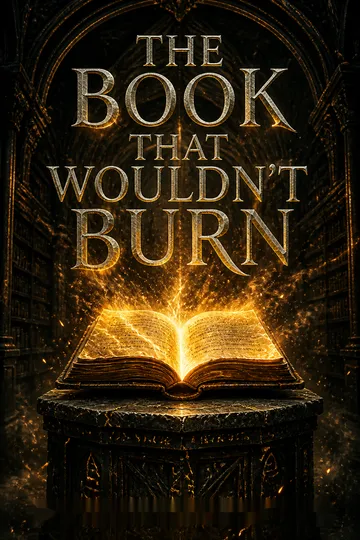
The Library Trilogy Series
About the Author

Download PDF
Download EPUB
.epub digital book format is ideal for reading ebooks on phones, tablets, and e-readers.








