

Plot Summary
Craw Holds the Heroes
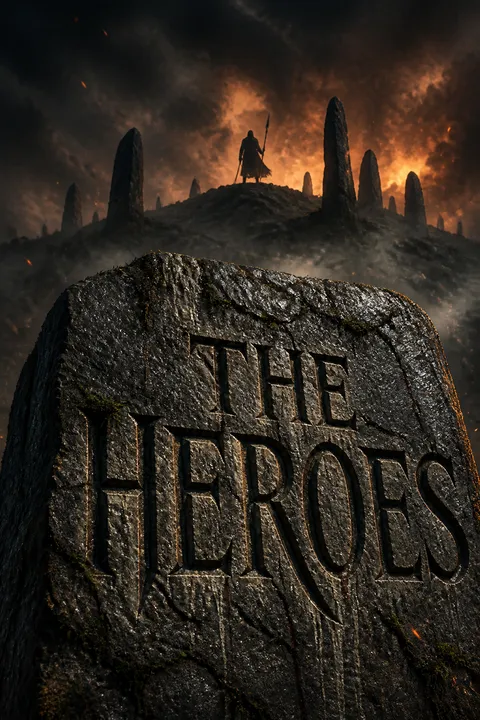
Curnden Craw, an ageing Northman chief with a bad knee and a stronger conscience than he likes, climbs to the ring of stones called the Heroes. There he finds Hardbread, a Dogman loyalist, guarding the hill for the Union. Although their sides are enemies, Craw arranges a bloodless exchange: Hardbread withdraws, and Craw keeps the hill for Black Dow.
Wonderful and the rest of Craw’s small crew emerge from hiding, including Whirrun of Bligh, carrying the enormous Father of Swords and trusting a prophecy about his death. Craw sends a rider to warn the Northmen’s other chiefs. The uneasy courtesy buys only a little time. The hill commands the crossings near Osrung, and both armies are being drawn towards it.
Craw’s first act establishes the book’s moral scale: a small decision to spare lives matters, but it cannot stop the machinery closing around him. His authority comes less from rank than from earned trust, and his crew’s concealed strength lets him negotiate without turning the meeting into a slaughter. The Heroes already function as more than a strategic height. They are a ready-made monument to the stories warriors tell about themselves, even while Craw sees only a windy hill that may soon acquire more graves.
Calder Returns to War
In Carleon, Calder, younger son of the dead King Bethod, tries to make exile tolerable beside Seff, his pregnant wife. His old enemy Black Dow summons him back to the army and keeps Seff as a hostage to ensure Calder’s obedience. Caul Shivers, Dow’s scarred enforcer, escorts him; Calder privately tests whether Shivers might be persuaded to change masters.
Shivers gives him no commitment. Elsewhere, Colonel Bremer dan Gorst reaches the Union camp carrying orders, still hoping military service will restore his place in the king’s favour. He meets Finree, the woman he loves, and learns she is happily married to Harod dan Brock. Her marriage closes a door Gorst has never managed to stop watching.
Calder’s charm is not confidence so much as a survival technique: he turns fear into performance, flattery, and calculation. Seff sees the fear beneath it and gives him a private reason to return alive, while Dow converts that love into leverage. Gorst faces the opposite trap. He can act decisively with a sword, but shame has made ordinary speech feel dangerous, and Finree’s marriage makes his longing both vivid and useless. Their parallel introductions place private needs inside a war that will exploit them.
Bayaz Orders a Battle
The Union’s slow advance has failed to force Black Dow into a decisive fight, so Bayaz arrives at Lord Marshal Kroy’s headquarters with money for the unpaid army and a command from the government: end the campaign quickly. Kroy abandons his cautious plan and orders the scattered divisions towards Osrung and the Heroes.
General Jalenhorm will lead the advance, Lord Governor Meed will abandon his siege, and General Mitterick will support either flank. Gorst volunteers to carry orders towards the front, hoping to reach combat rather than remain a royal observer. Finree, visiting her father, sees Gorst in the mud and renews his private torment. The Union’s timetable is now set by politics as much as by the Northmen.
Bayaz makes the war’s governing logic explicit through action: military lives are being spent to answer political impatience, not simply to defend a border. Kroy understands that haste carries tactical risk, yet his command is constrained by the need to satisfy distant authorities. Gorst’s eagerness for battle is not patriotism alone; he wants a chance to erase humiliation through visible usefulness. Finree, meanwhile, reads the same institution as a ladder to be climbed. The different motives meet in one hurried march.
Dow Courts a Giant
Black Dow gathers his War Chiefs and directs them towards the approaches to Osrung. Glama Golden and Cairm Ironhead despise each other, Brodd Tenways despises Calder, and none of them fully trusts Dow. The meeting’s biggest arrival is Stranger-Come-Knocking, a towering chief from beyond the Crinna who agrees to fight beside Dow but names the Bloody-Nine as the opponent he most wants.
Dow sends Shivers to reinforce Craw at the Heroes. Calder visits Caul Reachey, Seff’s father, hoping to secure allies against Dow. Reachey warns that Dow may be waiting for an excuse to kill him, but promises not to act against his son-in-law. Calder leaves with family protection, not the armed support he needs.
The North’s supposed unity is a bargain among competing appetites. Dow can command these men, but he cannot make them like or trust one another; their old feuds remain more durable than their shared cause. Stranger-Come-Knocking adds force while importing his own private legend and ambitions. Reachey’s limited promise shows how family loyalty operates under political pressure: he will not betray Calder, but will not openly risk himself for him either. Calder discovers that being related to powerful men is not the same as having their support.
A Farmer Seeks Glory
Seventeen-year-old Beck has spent his days farming and imagining himself a warrior like his dead father, the famous Shama Heartless. When word comes that Caul Reachey is mustering fighters, Beck takes his father’s sword and his mother’s cloak, despite the sadness she cannot hide. The weapontake disappoints him: the recruits are hungry, poorly equipped, and frightened, not the song-worthy company he imagined.
Beck joins a small group led by the veteran Brydian Flood and clashes with the sharper-tongued Reft, who doubts that a farm boy knows how he will behave in battle. Beck insists that he does. He is not yet tested, but he has traded ordinary work for the danger he has spent years romanticising.
Beck’s enlistment begins with a borrowed identity. His father’s sword gives him a physical link to a heroic past, while his mother’s cloak carries the home he is choosing to leave. The contrast between his imagined war and Reachey’s shabby, unwilling recruits punctures the romance before battle begins. Reft’s challenge is psychologically precise: courage cannot be known in advance, because it is shaped by pressure and circumstance. Beck hears the warning as an insult, not yet as a description of the test ahead.
The Hill Takes Its Price
Hardbread returns to the Heroes with twenty-two men and offers Craw a chance to surrender the hill. Craw refuses because Dow ordered him to hold it. Using the slope and Wonderful’s archers, Craw’s smaller dozen breaks the attack, but the victory costs young Athroc his life and leaves others wounded. The surviving crew argues over whether to take valuables from the dead.
Craw forbids it, insisting that they remain Named Men rather than scavengers. Then the Union’s advance appears in force. Craw orders a retreat, and Agrick blames Shivers for Athroc’s death before Craw accepts responsibility for choosing to fight. At the same time, the hill that cost them blood is abandoned to the advancing army.
Craw’s defeat is not simply losing ground. He wins the immediate fight by using the terrain well, then must judge that the larger force makes continued possession impossible. His insistence on leaving the dead untouched gives his code a concrete cost: his men need money, and he asks them to refuse it. Agrick’s grief exposes the moral remainder that victory cannot settle. Craw can take responsibility, but he cannot make Athroc’s death necessary or fair. The retreat tests whether his principles can survive a decision that appears to waste them.
Every Road Leads North
The Union divisions struggle along muddy roads under Jalenhorm, whose brave intentions are repeatedly tangled by poor decisions and confused orders. Corporal Tunny receives new recruits and tries to keep them fed, useful, and away from danger. Finree challenges Meed when he refuses aid to displaced Northmen, confirming her talent for spotting bad command and her impatience with the limits placed on her.
Calder reaches his brother Scale, who urges him to share the dangers of leadership by helping take the Old Bridge. Calder reluctantly accepts a shield. Before the armies meet, he is also attacked at Reachey’s camp by hired killers. Deep and Shallow save him, and Calder kills the captured horse-handler rather than risk leaving a witness.
The approaching battle is produced by failures at several levels: muddied supply routes, amateur command, political ambition, and private violence. Tunny’s practical cynicism keeps the army’s everyday machinery visible beneath its grand plans. Finree recognises that incompetence has human consequences, but her sharpness also makes her difficult to contain within the role allotted to her. Calder’s contrast with Scale is especially stark: he understands danger intellectually and avoids it bodily. His decision to kill the captive reveals that calculation does not make him merciful, even when he knows what mercy might signify.
The First Red Day
The Union reaches the valley in separate, badly coordinated divisions. Black Dow strikes before they can unite. Reachey attacks Osrung, Glama Golden’s cavalry hits Union troops in the open, and Dow leads the main assault up the Heroes. The Union’s defenders are overwhelmed; Jalenhorm’s orders send men into danger without adequate support, and the Sixth Regiment collapses.
Across the river, Gorst finally finds the battle he has wanted. He charges into the cavalry melee, kills repeatedly, and helps prevent the Union rout from becoming complete. Scale’s Northmen secure the Old Bridge, while Calder hangs back. By nightfall, Dow holds the hill and the Northmen celebrate a costly victory, with thousands dead or wounded across the valley.
The battle makes the difference between physical courage and competent command impossible to ignore. Jalenhorm’s decency cannot repair the damage caused by his confused orders, while Gorst’s exceptional fighting ability saves lives only by turning him into an instrument of mass killing. The Northmen prevail because Dow chooses the moment and concentrates force, not because their side is morally purer. Calder’s absence from the fighting protects him but deepens the distance between his intelligence and the respect he wants. The victory brings prestige, not safety.
The Town Becomes a Trap
On the next day, Meed’s Union division attacks Osrung while Mitterick tries to force the Old Bridge. Northmen defend the town building by building, but the Union takes the southern side and breaks into the streets.
At Meed’s headquarters, Finree spots Stranger-Come-Knocking’s warriors too late to prevent them from storming the inn. Meed is killed, and Finree stabs one attacker before the giant intervenes. The Northmen carry Finree and Aliz dan Brint away as prisoners.
Elsewhere in the town, Beck hides while the battle reaches the house where his recruits are sheltering. When he bursts from a cupboard, he mistakes Reft for an enemy and kills him. Flood finds Beck alive among the dead and credits him with killing four Union soldiers, earning him the name Red Beck.
The battle dismantles the distinction between headquarters and front line. Finree’s knowledge does not protect her once the attack reaches Meed’s inn, and Beck’s first violence is not a chosen act of heroism but a fatal misrecognition made under terror. His false reputation begins in the same moment as real grief: he has killed a comrade, while others believe he killed enemies. The giant’s intervention adds a competing kind of power, one that can stop violence but also treats captives as property. The town’s fall gives every character a different story to survive.
Finree Bargains for Prisoners
Black Dow uses Finree as a messenger to her father, Lord Marshal Kroy. Rather than plead for herself, she demands a gesture that would prove Dow’s offer of peace is serious. Dow agrees to release sixty wounded Union prisoners, but refuses to free Aliz, who remains under Stranger-Come-Knocking’s control. Finree returns to Kroy, injured and shaken, carrying the possibility of an armistice.
Bayaz blocks the proposal and orders the Union to keep fighting for another day. Kroy obeys, though the cost of the campaign has become painfully personal. The delay means that both armies prepare for another assault, while Aliz remains with the giant and Finree must live with the fear of having left her behind.
Finree turns captivity into a limited form of political agency. She cannot control the people holding her, but she can make Dow’s proposal more credible by demanding released prisoners. Her success is real and incomplete: Aliz remains beyond her reach, and Bayaz’s authority overrides the opening she has made. The episode distinguishes negotiation from control. Kroy and Dow can recognise the practical value of peace, yet Bayaz sees a different political interest in continuing the battle. Finree’s courage is not a clean victory; it leaves her with responsibility for someone still in danger.
Scale Waits for Help
As the Union renews its assaults on the Old Bridge, Scale’s men hold their position under heavy pressure. Calder receives a captured order showing that Union troops are hidden across a smaller stream, ready to attack the Northmen’s flank. He warns Brodd Tenways and asks him to help Scale, but Tenways refuses. Calder sees no safe way to leave his own position, and he does not ride to his brother.
The Union takes the bridge; Scale is killed, and his surviving men accuse Calder of abandoning them. Calder inherits his father’s claim with no brother beside him and little grief he can understand. Later, he learns the Father of Swords carries a history of champions, while his own new name remains only an aspiration.
Calder’s paralysis is more than cowardice. He has valid information about a threatened flank, but each possible action risks catastrophic defeat, and he cannot separate strategic caution from self-preservation. His choice produces a result he cannot reverse: Scale dies waiting for help that Calder neither sends nor provides. The emotional consequence is complicated rather than cleansing. Calder feels guilt, anger, and practical anxiety, but not the grief he expects himself to feel. The inherited claim to power arrives as an unwanted burden and an opportunity at once.
Calder Steals the Standards
After the Union wins the Old Bridge, Calder uses a captured order to infer that Mitterick has troops hidden near the smaller stream. He refuses to charge blindly into the danger and instead sends for help, then takes a small party out at night.
They kill guards and steal the Union standards, humiliating Mitterick and stoking his appetite for a decisive response. The raid gives Calder’s exhausted followers a brief victory and a reason to take him seriously.
Meanwhile, Dow appoints Craw as his Second, and Calder urges the old chief to kill Dow before Dow kills them. Craw refuses, bound by his promise to serve Dow, but tells Calder he will report the request. Calder leaves knowing that his plea has made Craw choose between his friend and his sworn duty.
Calder finally converts his strength as a thinker into a concrete military act. The standard raid is not a battlefield triumph, but it changes morale and provokes an opponent whose vanity can be predicted. At the same time, Calder tries to use Craw’s loyalty as a weapon against Dow. Craw’s refusal shows that his code is not merely a preference for decency; it binds him even when he suspects the person he serves may be dangerous. The two men’s relationship becomes a pressure point, with neither able to make the other’s choice painless.
The Heroes Explode
On the third day, Mitterick’s cavalry charges towards Calder’s line and runs into concealed trenches and spear ranks, losing horses and men in the barley. Union infantry then attacks across the valley as Jalenhorm drives his exhausted division up the Heroes. Bayaz’s experimental cannonballs strike the hill, killing Dow’s Second, Splitfoot, and blasting stone and bodies apart.
In the close fighting, Craw and his crew face the Union’s pressure while Gorst duels Whirrun of Bligh. A spear from outside the contest kills Whirrun, and Beck knocks Gorst aside just as Gorst is about to kill Craw. Jalenhorm dies in the melee. Both sides lose men at close quarters, then the attack falters under rain and exhaustion.
The cannon changes the meaning of battlefield courage. A fighter can meet an opponent’s skill with his own, but a projectile that obliterates a stone and everyone beside it offers no meaningful contest. Gorst and Whirrun briefly create the concentrated, almost private duel that both understand, only for an unrelated spear to end it. Beck’s intervention is similarly accidental in its mechanics but decisive in its consequence. The battle repeatedly denies the clean narratives its participants crave: heroic action matters, but chance, machinery, and exhaustion decide who remains alive.
The White Flag Rises
With the Union’s third assault failing and Jalenhorm dead, Kroy rejects Bayaz’s demand for another attack and sends a white flag towards Dow. Finree joins the parley because Dow knows her and because she has already spoken with him. Dow agrees to stop fighting and discuss terms the next day.
Before the armies can settle, Ishri’s explosive surprise destroys Osrung’s bridge, sending Finree running to find Hal among the wreckage. Kroy’s decision gives the soldiers a chance to stop killing one another, but the blast shows that peace cannot instantly undo the forces already set in motion. Craw, exhausted by the dead, decides he must tell Dow that Calder asked him to arrange Dow’s murder.
Kroy’s refusal is a rare act of command that accepts political risk in order to limit immediate harm. Bayaz has pressed for victory, but Kroy finally treats the lives under his authority as more important than obedience to a timetable. The bridge explosion arrives at the worst possible moment, exposing the gap between declaring peace and actually stopping violence. Finree’s sprint towards Hal is a personal response inside a public disaster. Craw’s decision to disclose Calder’s request begins the final political reckoning, even as the battlefield’s weapons continue to speak.
Dow Dies in the Circle
Craw reports that Calder asked him to kill Dow. Dow has Calder arrested and announces that he will die, but Calder challenges him to a duel rather than accept execution. At the circle, Dow dominates the fight, breaking Calder’s hand and choking him while the crowd cheers. Shivers, who has spent years serving Dow without being treated as a man in his own right, strikes Dow from behind and declares his independence.
Calder uses the sudden opening to kill Tenways, then finds the North’s chiefs rallying around him. Stranger-Come-Knocking, Reachey, Ironhead, Golden, and Pale-as-Snow accept Calder as their new leader. The rapid shift of allegiance leaves Calder holding Bethod’s chain, while his followers call him Black Calder.
The transfer of power is not won by Calder’s swordsmanship. He is losing badly when Shivers acts, and the political order changes in the space created by that intervention. Shivers’ choice is personal as well as tactical: after being treated as Dow’s weapon, he refuses to remain anyone’s dog. Calder’s killing of Tenways is opportunistic and decisive, while the chiefs’ swift support reveals how quickly loyalty follows a visible winner. The circle turns public violence into political theatre, but the outcome depends on alliances and timing as much as strength.
Bayaz Owns the Victory
At the peace meeting, Calder accepts the Union’s proposed border and a protectorate for the Dogman, but asks for time to persuade the North’s chiefs. Bayaz later summons him to a meal beside a mass grave and reveals how much of Calder’s apparent luck was arranged. Bayaz had sent Deep and Shallow to protect him, instructed Tenways to keep him alive, and secured Stranger-Come-Knocking as an ally through a better offer.
He also explains that Scale survived the battle, though badly maimed, and offers his release as another inducement. Calder agrees to the terms and learns that Bayaz expects future favours in return. The North has a king, but the First of the Magi has helped choose the circumstances of his rise.
Bayaz reframes the story’s apparent coincidences as managed contingencies. He does not claim complete control; Shivers’ intervention remains accidental. Instead, he reveals a political method built on multiple bets, purchased loyalties, and keeping alternatives available. Calder’s survival feels like personal luck until Bayaz itemises the protection behind it. The graveyard setting makes the bargain brutally legible: political power is fed by bodies, and the meal proceeds beside its evidence. Calder’s new authority is genuine, but it begins under a debt he did not know he owed.
The Survivors Choose Homes
After the fighting, Beck tells Craw that he hid during the assault on Osrung and killed Reft by mistake, despite being praised for killing four Union soldiers. Craw does not absolve him, but explains that battle leaves survivors carrying mistakes as well as wounds.
Beck returns to his family’s farm, gives his father’s sword back to his mother, and chooses the wood axe he knows how to use. His departure contrasts with Corporal Tunny, who mourns dead recruits while the army prepares to ship him to another campaign in Styria.
Finree’s efforts help secure Hal’s appointment as lord governor of Angland, and Gorst returns to service as the king’s First Guard. His reunion with Finree brings no romance or comfort, only the recognition that his appetite for war has made him a stranger to her.
The aftermath refuses to turn survival into a simple reward. Beck’s public name rests on a false account, but he does not use the lie to claim a heroic identity once he understands its cost. Returning the sword is a rejection of inherited violence, not a rejection of his family. Tunny, by contrast, stays within the institution that consumes successive recruits, translating grief into another duty. Finree converts wartime visibility into political advancement, while Gorst receives the position he wanted and discovers that status cannot repair the person he has become.
Craw Leaves the Bench
Craw leaves the army with Whirrun and Drofd buried in his cart, hoping to rebuild his life as a carpenter. The work frustrates him, and the quiet house he imagined does not feel like home. When Hardbread arrives with an offer from Calder, Craw initially refuses to return as a chief. He remembers the battles, the crew, and the comradeship that made the fighting bearable, then recognises that he misses the life he has left behind.
Craw locks neither door nor decision; he takes his sword and hurries after Hardbread. The book ends not with peace as a cure, but with Craw choosing the road back to the North’s unsettled politics, carrying both his grief and the knowledge that he may never be able to retire from himself.
Craw’s final choice complicates the apparent moral clarity of leaving war. He knows its costs intimately, and his home is not a fantasy of comfort once he arrives there. What draws him back is not glory but attachment: the crew, the work, and the sense of being useful among people who know him. The decision does not prove that violence is worthwhile; it shows how identity can become entangled with the very conditions that damage it. Craw chooses belonging, knowing it may demand the same sacrifices again.
Analysis
The novel’s central question is not whether war is glorious or terrible. It is how people build identities around a practice that repeatedly destroys the identities it promises to reward. Beck enters the campaign hoping to become a hero and discovers that a name can be founded on a mistake. Gorst is most effective when killing, but that competence sharpens his alienation rather than curing it. Craw’s code gives shape to his choices, yet cannot spare his companions or settle whether he should keep serving. Calder treats words as a route around violence, only to find that political power still rests on armed men, fear, and bargains made over bodies.
The competing military systems deepen the point. The Union’s command structure converts political urgency into delayed orders and avoidable losses; the North’s personal loyalties allow speed and improvisation, but its feuds make unity fragile. Neither side escapes the interests of those above it. Bayaz can shape the outcome not because every event obeys him, but because he can afford to place several bets and use the survivors. His power is the ability to turn contingency into a story of intention.
The book also distrusts the heroic memory its characters inhabit. The ancient stones remain indifferent while men attach names, songs, and national claims to them. Some brave acts save lives; others merely produce more corpses. A battle can end with a treaty, but its survivors carry grief, injury, ambition, and unfinished business into the peace. The final choices do not offer one moral answer: Beck goes home, Craw returns to the life he tried to leave, and Calder accepts a crown while learning the price of dependence. Their outcomes suggest that people are neither fixed heroes nor fixed cowards. They become what circumstances demand, then struggle to live with the names others give them.
Review Summary
People Also Read


Characters
Curnden Craw
The ageing straight edgeA veteran Northman and chief of a small band, Craw is cautious, self-mocking, and unusually attentive to the cost of a decision. He wants a quiet house and a life beyond fighting, yet his history has taught him that loyalty and responsibility rarely permit easy exits. He tries to keep his crew alive and to preserve a standard of conduct even when poverty and war make that standard inconvenient. His relationship with Calder is affectionate but strained by the competing duties they choose. Craw’s moral seriousness is not certainty; he doubts his choices constantly, then acts and accepts the burden.
Calder
The scheming younger princeBethod’s younger son is a sharp talker with a strong instinct for danger and a deep reluctance to meet it physically. He uses humour, flattery, and misdirection to survive among men who admire strength more than intelligence. His pregnant wife, Seff, is the person whose judgement most clearly reaches him, while Craw offers a rare bond that is not based on fear or advantage. Calder wants his father’s lost power but also argues that war is wasteful. His tension between ambition, fear, and attachment makes him difficult to reduce to either coward or strategist.
Bremer dan Gorst
The disgraced swordmasterA celebrated fighter serving as the king’s observer, Gorst is physically formidable and socially inhibited, with a high, awkward voice that has become part of his public humiliation. He measures his worth through service and martial skill because the loss of his former royal position left him unable to imagine another identity. His longing for Finree intensifies his self-contempt, while battle offers him a clarity he cannot find in ordinary life. Gorst is neither a simple hero nor a simple brute: he recognises the ugliness of his violence, yet keeps returning to the one arena where he feels powerful.
Finree dan Brock
The ambitious commander’s daughterFinree grew up around military command and understands strategy, logistics, and the political habits of officers better than many of them. She loves her husband Hal, but also wants advancement for him and for herself, often treating influence as a practical craft. Her sharpness helps her challenge poor decisions, though impatience can make her methods costly. Finree is not untouched by fear or guilt; she can be shaken by violence even while acting decisively within it. Her relationship with her father is affectionate and intellectually competitive, and she seeks a place in a world that routinely expects her to observe rather than decide.
Beck
The would-be heroA young farmer and son of the famed Shama Heartless, Beck leaves home believing the battlefield will turn him into a worthy figure from the songs. His imagined courage meets hunger, fear, and the confusion of real combat. He is proud, easily provoked, and initially more concerned with reputation than with the vulnerable recruits around him. His mother and younger brothers represent the life he has undervalued. Beck’s developing sense of himself depends on learning that a famous name and a brave act do not necessarily describe the same person.
Black Dow
The North’s feared protectorDow rules through a mixture of battlefield reputation, intimidation, and a blunt understanding of what fear can accomplish. He is volatile, but not thoughtless: he recognises that armies tire, alliances shift, and even a feared leader must account for the limits of his people. His history with Bethod and the Bloody-Nine shapes how others interpret his authority. Dow’s public cruelty sits beside flashes of doubt about the burden of command, though he rarely lets such uncertainty show. His relationships with his chiefs are built on usefulness and pressure more than affection.
Caul Shivers
The scarred enforcerA veteran fighter with a metal eye and a face marked by severe burns, Shivers has spent years being treated as a weapon others can point. His silence and frightening appearance make people assume they understand him, which allows him to move through rooms without being challenged. Yet he is attentive to respect, ambition, and the difference between service and ownership. His history connects him to both Craw and the Dogman, while his current position binds him to Dow’s power. Shivers is not free of violence, but he is increasingly conscious of who gets to decide how it is used.
Scale
Bethod’s warrior heirCalder’s older half-brother is immense, brave, loyal, and much quicker to act than to analyse. He loves Calder sincerely and wants him to earn respect through shared danger rather than clever argument. Scale’s bluntness can make him seem simple, but he understands the emotional demands of leadership and the burden of living in a famous father’s shadow. He values family and martial courage, even when those values pull him into conflict with Calder’s caution.
Wonderful
Craw’s battle-tested secondA skilled fighter and archer, Wonderful has served as Craw’s Second for years and knows how to challenge him without undermining his command. Her sharp humour masks a practical understanding of risk and a clear-eyed sense of what war takes from people. She has a husband and family beyond the battlefield, but her obligations as a fighter have repeatedly kept her away. Wonderful is loyal without being sentimental, and she notices motives others would rather leave unexamined.
Whirrun of Bligh
The prophetic sword-bearerWhirrun is a famous northern warrior carrying the enormous Father of Swords, a weapon treated by its keepers as a sacred inheritance. He speaks in riddles, jokes, and elaborate reflections, and believes a prophecy has told him how he will die. His apparent madness is partly theatre, but his skill in battle is very real. Whirrun questions the heroic stories that surround warriors even as he enjoys the fierce simplicity of combat. He follows Craw because he believes the old chief is linked to his destiny.
Bayaz
The Union’s hidden architectThe First of the Magi appears as a powerful political figure who can command generals without formally taking the field. He treats war as an instrument of government and people as elements in a larger design. Bayaz is often genial in manner, but his casual treatment of lives and loyalties reveals a hard appetite for control. He has a long history with Bethod and takes a particular interest in who can govern the North. His power lies not only in alleged magic but in money, information, leverage, and patience.
Seff
Calder’s steadfast wifeSeff is Reachey’s daughter, Calder’s wife, and the mother of their expected child. She understands her husband’s vanity and evasions, but loves him without mistaking him for a better fighter than he is. Her affection gives Calder a rare source of courage, while her pregnancy makes her vulnerable to the political struggle around him. Seff speaks plainly where others flatter, and she is often the person who sees most clearly what Calder is afraid to admit.
Caul Reachey
The honourable old chiefA veteran War Chief and Seff’s father, Reachey is widely trusted for honour and custom. He is affectionate towards Calder but cautious about risking his own men and family for him. Reachey’s reputation as a straight edge is important to how others judge him, and he understands that a public promise can be as binding as a private one. His warmth and political calculation coexist, making him more complicated than his respectable name suggests.
The Dogman
Dow’s northern rivalAn experienced Northman who fights beside the Union, the Dogman is a practical commander with old ties to the Bloody-Nine and a long hostility towards Dow. He is less interested in grand speeches than in reading ground, conserving lives, and understanding the people he commands. His alliance with the Union does not erase his identity as a Northman, and his exchanges with Calder expose the personal history beneath the political division.
Harod dan Brock
Finree’s honourable husbandKnown as Hal to Finree, Harod is a diligent, brave officer and the son of a disgraced nobleman. He is honest where Finree is strategic, and his loyalty to the army often conflicts with her desire to improve their position. He loves her, though he cannot always understand the pressure she puts on herself or on him. Harod’s decency is a genuine strength, but in a political world that rewards calculation it can also leave him exposed.
Lord Marshal Kroy
The burdened commanderKroy is a disciplined professional soldier responsible for an army whose size and politics make direct control nearly impossible. He values preparation and the lives of his troops, yet must answer to Bayaz, the king, and a government demanding quick results. His daughter Finree understands his habits better than most officers do. Kroy’s strength is his willingness to shoulder responsibility, though that burden can make him slow to act until the cost of delay is already visible.
General Jalenhorm
The brave, blundering generalA close friend of the king promoted beyond his tactical ability, Jalenhorm is courageous, sincere, and prone to confusion. He fusses over local decisions while larger problems go unmanaged, but he accepts personal responsibility when his choices hurt his soldiers. His wish to redeem himself through battle grows from genuine duty rather than vanity alone. Jalenhorm shows how decency can coexist with dangerous incompetence.
General Mitterick
The reckless career soldierMitterick is an experienced and ambitious Union commander, proud of his initiative and quick to resent interference from Kroy’s staff. He talks confidently about action and glory, but his eagerness can outrun his judgement. His rivalry with Felnigg reflects a larger contest over competence, authority, and recognition in the Union army. Mitterick is capable of learning from failure, though he rarely welcomes the lesson.
Stranger-Come-Knocking
The giant beyond the CrinnaA towering war chief from the lands beyond the Crinna, Stranger-Come-Knocking wants to bring civilisation to his people while measuring himself against legendary fighters. He admires order and manners, yet has built his authority through extreme violence. His size makes him a physical spectacle, but his ambitions are political as well as martial. He is difficult for Dow and the Northmen to command, because he recognises no authority automatically.
Corporal Tunny
The veteran shirkerTunny has survived decades of Union service through card-playing, trading, and an expert instinct for avoiding unnecessary danger. His cynicism is earned, but not complete: the regimental standard and the men under his care still matter to him. He sees military stupidity with unusual clarity, often using jokes to make it bearable. Tunny’s self-interest is real, though it coexists with a capacity for loyalty he would rather not advertise.
Brydian Flood
The recruits’ veteran chiefA limping veteran placed in charge of inexperienced Northmen, Flood values survival over the young fighters’ fantasies of glory. He tries to keep Beck and the other recruits away from unnecessary danger, even when they mistake caution for cowardice. His practical care makes him a useful counterweight to the battlefield’s appetite for new heroes.
Foss Deep and Shallow
Calder’s mercenary shadowsThe brothers Deep and Shallow are killers who watch over Calder because they expect to be paid. Their banter and opportunism make them seem comic until their violence becomes useful. They are not bound to Calder by affection or ideology, and their shifting loyalties expose how much of wartime protection is simply a transaction. Together they serve as a recurring reminder that self-interest can be more dependable than professed honour.
Ishri
Dow’s unsettling sorcerous allyA sorceress from the South and an enemy of Bayaz, Ishri moves through the story with unnerving ease and offers Dow intelligence and supernatural support. She treats people as pieces in an older conflict, even when their immediate concerns are painfully human. Her cryptic manner makes her difficult to trust, including for the Northmen who benefit from her help.
Aliz dan Brint
Finree’s vulnerable companionAliz is the young wife of Colonel Brint and a companion to Finree during the campaign. She is kind and inexperienced with military life, and her concern for displaced civilians contrasts with the officers’ talk of logistics and position. Her gentleness gives Finree someone to protect, while also exposing the limits of what either woman can control.
Brodd Tenways
The North’s spiteful chiefTenways is an ugly-tempered War Chief with an old grievance against Bethod and a deep dislike of Calder. His loyalty to Dow is tied to resentment and advantage rather than trust. He is quick to insult and slow to forgive, making him a volatile presence among the North’s rival leaders.
Plot Devices
The Heroes
A hill made for legendThe ring of ancient stones above Osrung is the battlefield’s crucial height and the story’s central image of heroic memory. Whoever holds it can watch the river crossings and resist an attack uphill. Its name invites warriors to imagine themselves joining the great figures of the past, while the fighting repeatedly turns that promise into bodies, wounds, and songs made after the fact. The stones do not protect anyone or explain the war. They merely remain in place as each generation uses them to stage its own claims to courage and power.
The Father of Swords
A weapon carrying historyWhirrun’s enormous sword is treated as a sacred inheritance, passed from one celebrated warrior to another. It gives Whirrun a visible role in the North’s heroic tradition and makes his prophecy feel connected to the weapon’s history. In battle, however, the sword is also simply heavy, sharp metal, unable to guarantee its bearer’s fate. Its intended passage becomes a question of whether inherited glory is a gift, a burden, or a curse. The weapon’s path through the story exposes the difference between the legend attached to an object and the human cost of carrying it.
Names and Songs
Reputation shapes allegianceThe Northmen’s Names, battle songs, and public reputations influence who is trusted, feared, or followed. Beck wants a name before he knows what battle will ask of him; Calder is trapped by the cowardly reputation others repeat; Whirrun’s fame makes men fear him before they see him. Craw questions how far stories drift from the people they describe. Reputation can create courage or panic, but it can also be manipulated, inherited, or falsely awarded. The device links private identity to public memory, showing how a name may help someone survive while distorting what actually happened.
Orders and Delays
Distance breeds battlefield chaosThe Union army depends on written orders, messengers, roads, and a chain of command that repeatedly fails under battlefield pressure. Jalenhorm’s contradictory instructions, Mitterick’s added conditions, and the delayed message to Vallimir change what units do and when they do it. By contrast, Northmen often rely on local knowledge and personal networks, though their own rivalries create other kinds of confusion. Orders are not neutral pieces of paper: they carry authority, ambition, and the chance of misunderstanding. Their movement across distance makes the campaign’s institutional failures tangible.
Bayaz’s Cannons
A new weapon breaks combatBayaz brings experimental metal tubes to the battlefield, promising the Union a way to strike the Northmen at a distance. Their first shots are loud and inaccurate, and one device explodes among its own operators. Later, a projectile destroys part of the Heroes and kills people without giving them a chance to meet an enemy face to face. The cannons alter the scale and emotional logic of combat: personal skill and courage cannot answer an invisible impact. Their uncertain operation also reflects Bayaz’s willingness to accept casualties in pursuit of political and technological advantage.
First Law World Series
About the Author
Other books by Joe Abercrombie


Download PDF
Download EPUB
.epub digital book format is ideal for reading ebooks on phones, tablets, and e-readers.








