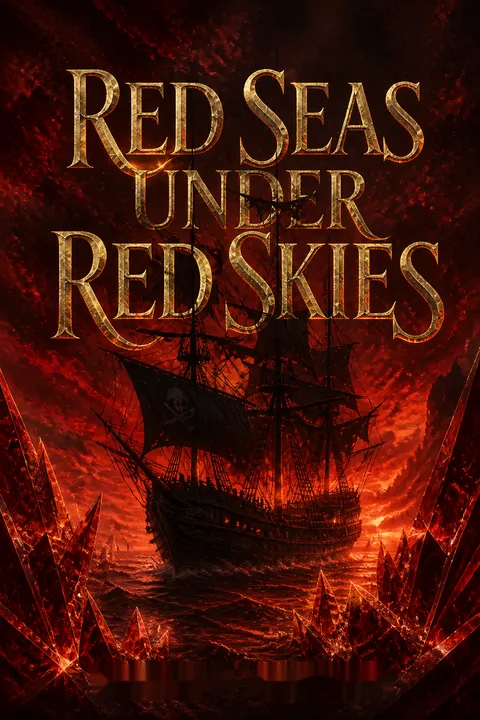


Plot Summary
Prologue
On a pier in Tal Verrar, Locke and Jean face four armed men beside a ship burning bright enough to turn night into day. Locke holds a crossbow on his opponent while Jean appears to know who hired the pursuers. Then Jean swings his weapon toward Locke and demands that he surrender it.
He claims he has made a deal, leaving Locke staring at the quarrel aimed between his eyes. The main story has not yet reached this confrontation, and the fragment offers no explanation for Jean’s apparent betrayal.
The opening frames friendship as a danger before the reader knows its history. Locke and Jean have survived by anticipating one another, so Jean’s sudden change of aim strikes deeper than an ordinary threat: it makes their shared instincts look unreliable. The burning ship and the mutual crossbow standoff also establish the book’s recurring grammar of choices made under pressure. Because the scene is not resolved within the main narrative, it functions as a promise of future fracture rather than a mystery the story immediately answers.
Vel Virazzo's Locked Door
Nearly two years before the Sinspire game, Locke arrives in Vel Virazzo battered, grieving, and intent on letting himself die. His friend Jean Tannen, who rescued him after the Grey King’s attack, tries to keep him fed and moving while building a living from the local Brass Coves.
Locke mistakes Jean’s new gang for a replacement family, and the two men erupt into a bitter fight over their dead friends. Jean locks Locke in their inn room and takes away his wine, forcing him to pick the lock and climb down a sheet-rope. Locke answers by robbing the governor’s household, then disguises them both as sufferers of a feared disease so they can escape the city and head for Tal Verrar.
Locke’s grief has become a method of self-erasure: he refuses care because survival feels like an insult to the dead. Jean counters this not with consolation but with tasks that restore Locke’s competence, first a lock and then a dangerous theft. Their conflict exposes the asymmetry of their bond. Jean can build another community, while Locke fears that any new attachment diminishes the one he lost. The escape does not heal him; it establishes a harder, more credible form of loyalty, one in which a friend may have to provoke the wounded person back into choosing life.
The Amusement War
During their first months in Tal Verrar, Locke visits Salon Corbeau to find a craftsman capable of building four chairs for the scheme against Requin. There he watches the Amusement War, where wealthy spectators direct punishments against poor people forced to serve as living game pieces.
A nobleman defends the spectacle as charity, but Locke sees desperation being dressed up as consent. Lauris Baumondain, the carpenter’s daughter, confirms that poverty drives the aspirants to risk humiliation for food and the chance of a prize.
Locke nevertheless leaves with the chairs ordered, incorporating unusual hidden features at his employer’s request. He also learns that humane disgust can become a practical danger when it threatens a carefully laid plan.
The Amusement War translates economic inequality into literal choreography: the poor move only when the wealthy command, and their injuries become entertainment. Locke’s response is not simply compassion. He recognizes the system as an offense to the Crooked Warden’s mandate that the rich remain vulnerable to thieves. Yet he still treats the chairs as components in a private operation, revealing the distance between moral perception and moral action. Salon Corbeau makes that distance uncomfortable by giving suffering specific faces, especially Lauris and her Gentled cat, rather than allowing Locke to dismiss cruelty as an abstract feature of the world.
The Sinspire's Newcomers
Two years into their Tal Verrar operation, Locke and Jean are still playing their way through the Sinspire, where they need access to Requin and his guarded vault. Their Carousel Hazard opponents, Maracosa Durenna and Izmila Corvaleur, seem certain to win until Corvaleur collapses after handling cards dusted with beta paranella.
The drug exploits her habit of licking her fingers while she plays, and the thieves take the pot without tampering with the house’s machinery. Requin has watched the game from above. His major-domo, Selendri, congratulates the pair and admits them to the sixth floor, turning a risky cheating victory into an opening toward the tower’s elusive master.
The con succeeds because Locke studies people more closely than rules. The Sinspire has designed its game to resist conventional cheating, but its protections cannot account for a player’s habits or a body’s limits. This is the book’s defining criminal intelligence in miniature: exploit the human system surrounding the mechanism. Yet victory is also exposure. By drawing Requin’s attention, Locke converts a profitable private trick into a public signal that the larger game is ready to begin. Their success does not remove danger; it gives danger a name and a higher floor.
The Bondsmagi Remember
On the walk home, Night Market sellers recognize Locke and Jean beneath their false identities. A child speaks for the Bondsmagi of Karthain, whose anger stems from the men’s earlier maiming of the Falconer, a sorcerer connected to the deaths of Locke’s friends. The magi warn that they can watch and harm the pair without simply killing them.
Jean fears that the Bondsmagi can use his real name to control him, and considers leaving before he endangers Locke. Locke refuses to lose his last surviving friend as well as the dead Gentlemen Bastards. He chooses to remain in Tal Verrar and press on with their scheme, despite knowing that the threat may be real.
The Bondsmagi’s power works partly through uncertainty. They do not need to demonstrate a specific spell; their control of the market’s ordinary people makes the whole city feel penetrable. Jean responds by imagining himself as a liability, while Locke treats separation as a second bereavement he will not accept. That refusal is loving but not purely selfless: Locke also resists any future in which another person gets to decide who remains beside him. The scene turns friendship into both vulnerability and resistance. Their shared work will continue because neither man can yet imagine safety as preferable to loyalty.
Requin Hears the Truth
Locke visits Requin and admits that he and Jean have cheated throughout the Sinspire, explaining how they beat controlled games by manipulating opponents instead of the equipment. Their original assignment is to break into Requin’s vault for an anonymous employer, but Locke claims he now wants to change sides.
He offers to expose the larger operation in exchange for a place in Requin’s organization and the chance to settle a grudge against Jean. Requin does not trust the offer, but keeps most of Locke’s money and agrees to investigate. Before Locke can learn whether the bargain will hold, the Archon’s agents seize both men and carry them into the Mon Magisteria.
Locke’s confession is itself a performance, calibrated to make his dishonesty legible enough to be useful. By explaining his methods, he offers Requin evidence of both danger and value. His fabricated personal grievance against Jean also exploits the fact that betrayal can sound more credible when attached to wounded pride. Requin’s response is characteristically transactional: suspicion does not prevent him from preserving a potentially valuable asset. The scene places Locke between two powerful men who both treat trust as a tool, while Jean remains the person whose loyalty makes the performance emotionally costly.
Cider With a Leash
Archon Maxilan Stragos welcomes Locke and Jean with cold pear cider, then reveals that he knows their real identities and can use a latent poison to control them. He plans to revive the public fear of pirates so the Priori will fund his navy and accept his political power. To create that crisis, he orders the landbound thieves to become pirates, provides a veteran sailing master named Caldris, and promises supplies and training.
His explanation of Tal Verrar’s artificial garden reveals his faith in machinery as a way for ordinary people to rival the Bondsmagi. Locke and Jean recognize the ambition beneath the spectacle, but Stragos’s poison and threats against each other leave them little room to refuse.
Stragos turns coercion into a political theory. He believes a frightened population will empower the military, and he treats Locke and Jean as instruments suited to manufacturing that fear. His artificial garden makes the contradiction visible: he celebrates human ingenuity while denying his agents meaningful choice. Locke and Jean are not persuaded by his grand purpose, but they understand that resistance without leverage is merely self-destruction. Their compliance is therefore neither consent nor simple cowardice. It is an attempt to remain alive long enough to recover agency from a ruler who has made their bodies part of his political machinery.
Poison in the Harbor
The thieves consult Pale Therese, a poisoner who warns that an unknown latent toxin cannot be safely treated without a sample. Soon disguised attackers ambush them at the docks, and an Archon agent named Merrain intervenes before Jean and Locke can question the surviving assassin. Elsewhere, poisoned ale kills a woman who drinks from their cups, confirming that someone has targeted the pair.
Locke suspects the Priori, while Jean traces the threat to the city’s political struggle. Requin accepts Locke’s claim that Stragos is behind the vault plot and offers protection in return for the Archon’s removal. With enemies closing in, Locke agrees to hide in the Sword Marina and begins training for the sea.
The failed attempts on their lives sharpen the distinction between visible and invisible power. A blade can be met with another blade; a poison with no known composition leaves its victim negotiating in the dark. Locke and Jean respond by assembling partial explanations, not certainty, and each new explanation becomes another bargaining chip with Requin or Stragos. This is also where Locke’s improvisation begins to outrun his preparation. He can tell powerful men what they want to hear, but the body remains vulnerable to toxins and arrows. The shift toward maritime training is therefore a forced change of skill, not a romantic adventure.
A Captain Without Cats
Caldris teaches Locke and Jean to row, read winds, handle sails, and speak credibly as officers, while Locke secretly plans to use the captaincy as a disguise. Stragos supplies the Red Messenger and directs them to free forty-four imprisoned sailors from Windward Rock.
Locke impersonates Captain Orrin Ravelle and recruits the prisoners, promising equal shares, but forgets the cats Caldris insisted were essential to a safe voyage. Four imprisoned women are too ill to sail, leaving the ship without women as well. The crew departs anyway. During the first severe storm, Caldris dies after his heart fails, and the exhausted sailors blame Locke’s ignorance and the missing cats for their suffering.
The ship becomes a test of whether charisma can substitute for competence. Locke can make prisoners believe in a captain, but belief cannot steer a vessel through a storm. Caldris’s practical instruction gives the thieves enough vocabulary to imitate command, not enough mastery to replace him. Their neglect of the cats and absence of women matter because the crew’s maritime religion is social infrastructure, not decorative superstition. Once Caldris dies, that shared system of meaning turns against Locke. His authority depended on a bargain with desperate men, and the first crisis exposes how thin the bargain is.
Cast Off in the Storm
The summer’s-end storm batters the Red Messenger, breaks its rigging, floods the lower deck, and kills several sailors, including the cook. Locke and Jean work alongside the crew, but the loss of Caldris and their false captaincy feed a mutiny. Jabril leads the sailors in accusing Locke of lying about his naval experience and bringing a cursed ship to sea.
They allow Locke and Jean to take the small boat but give them no provisions, then sail away. The pair seem doomed until a black brig appears under a red flag. Its crew mocks and disarms them, then hauls them aboard. The captain, Zamira Drakasha, identifies herself and sends them to the hold.
The mutiny is a consequence of more than one bad decision. The storm has killed people, the ship lacks the protections its crew expected, and Locke’s authority was always a fiction. Jabril’s judgment is harsh but intelligible: the captain’s lies have become inseparable from the risks everyone endured. Locke and Jean are cast adrift with only the freedom to choose how they face abandonment. The red-sailed brig offers rescue in a form that first resembles another humiliation. Survival arrives not as restoration of status but as entry into a stricter, more competent social order.
The Orchid's Scrub Watch
Zamira Drakasha questions Locke about his false identity while her first mate, Ezri Delmastro, keeps Jean in manacles. To test whether Locke values his supposed agent, Zamira pretends she will kill Jean; Locke lunges to protect him, and Zamira accepts that their bond is real.
She assigns both men to the ship’s humiliating scrub watch rather than enslaving them, making them earn a place among her crew. The Poison Orchid operates by discipline, equal shares, and the captain’s hard authority. Locke and Jean slowly learn its routines, while Ezri and Jean grow close through work, literary arguments, and mutual respect. Their new home offers competence, but not safety.
Zamira recognizes loyalty through action rather than biography. Locke’s reflex to save Jean costs him leverage, which is precisely why it convinces her. Her ship’s hierarchy is severe, yet its rules are legible: work earns standing, and consent matters even in a life organized around danger. For Locke and Jean, this is a marked contrast with Stragos’s invisible poison and Requin’s conditional protection. Jean’s connection with Ezri also begins outside Locke’s emotional orbit. That development threatens Locke’s habit of treating their partnership as the only relationship that counts, though he has not yet learned how to make room for change.
The Kingfisher's Bloody Deck
When the Orchid attacks the Kingfisher, a merchant ship carrying fanatical Jeremite Redeemers, Locke volunteers to board first in hopes of restoring the respect he lost. The Redeemers refuse surrender and charge the pirates. Locke survives by luck and trickery: he drops a suspended beer cask onto one attacker, kills others while they are stunned, and turns the hold into a trap.
Jean and Ezri fight through the main clash. Afterward, Zamira discovers that Locke and Jean are not Stragos’s spies by choice. Locke tells her the truth and asks her help against the Archon. Zamira accepts the risk, while the former Red Messenger crew gains a place on the Orchid through a staged initiation.
Locke’s apparent heroism is a useful lie, but the lie is built from real exposure. He asks to take the first risk because he wants to regain status, then discovers that panic can produce action even when skill fails. His confession to Zamira marks a decisive change: instead of manipulating her with the false story she already suspects, he asks her to become a knowing ally. Jean’s insistence on recognizing the pirates as their own kind makes this choice ethically charged. The crew is no longer merely a means of escape; its members have become people whose lives Locke must weigh against his revenge.
Port Prodigal's Red Flag
At Port Prodigal, the pirates sell the Red Messenger to the Shipbreaker and prepare to share their haul. Zamira defeats Captain Chavon Ranee in a tavern contest, restoring her standing, while Locke and Jean begin to settle into the crew. Jean’s bond with Ezri deepens, and Locke’s old resentment flares when he fears his friend is building a life beyond him.
Zamira then tells the pirate captains that Stragos engineered Locke and Jean’s escape to provoke a new war. The council debates whether to stay clear of Tal Verrar or act. Despite Jaffrim Rodanov’s opposition, the captains grant Zamira noninterference, allowing her to use the thieves as a chance to strike back at Stragos.
Port Prodigal makes piracy a political community rather than a loose collection of predators. The captains preserve their independence through agreements that are fragile precisely because none can enforce them without risking the whole port. Zamira’s case succeeds because she frames cooperation as a way to avoid being manipulated separately by Stragos. Locke’s emotional crisis runs alongside that politics: Jean’s intimacy with Ezri makes their partnership feel less exclusive, and Locke initially confuses change with abandonment. Both negotiations require him to accept a difficult truth, namely that loyalty need not mean possession.
A Raid Built for Rumor
Back near Tal Verrar, Locke and Jean stage a small raid on the Happy Pilchard during the Festa Iono, taking valuables but sparing its crew. Stragos dismisses the attack as too harmless and demands bloodier piracy. Rather than slaughter merchants, Locke devises a more spectacular target: Salon Corbeau, where the wealthy amuse themselves by ordering punishments against the poor.
Zamira’s pirates seize the resort, burn much of its town and destroy the Amusement War arena while leaving the countess’s fortified residence untouched. The attack delivers a vivid report to Stragos, but its scale frightens the pirates and damages a place Locke had once hoped merely to punish.
Locke tries to satisfy Stragos’s demand for spectacle without turning ordinary sailors into deliberate victims. His solution is morally compromised: Salon Corbeau is both a symbol of cruelty and a real community whose destruction will injure more than its wealthy spectators. The raid exposes the danger of treating a target as an idea. Locke’s earlier disgust at the Amusement War becomes an operational excuse for violence, even though the people harmed by the attack are not all its architects. The strategy buys attention, but it also moves the conflict closer to the uncontrolled consequences Locke claims to oppose.
The Sovereign's Fire
Rodanov catches the battered Orchid at sea and brings the larger Dread Sovereign alongside for a decisive fight. Drakasha positions her crew to funnel the attackers into a narrow boarding point, but Rodanov releases three starving valcona that tear through her first ranks. The battle kills many on both ships.
Then Utgar reveals a shipbane sphere and threatens to burn the Orchid unless Drakasha yields. Treganne shoots him, causing the sphere to fall into the hold. Ezri runs into the burning compartment, carries the white-hot device across the deck, and throws it onto the Sovereign. It destroys Rodanov’s ship, but the heat fatally burns Ezri. Jean, unable to save her, helps end her suffering.
The battle makes loyalty physical: every strategy depends on people choosing to hold a position while the cost becomes unmistakable. Rodanov’s animals break Drakasha’s formation; Utgar’s betrayal turns the ship itself into a hostage. Ezri’s act saves the crew by moving danger away from them, but it also makes the difference between protection and sacrifice impossible to romanticize. Jean’s grief is sharpened by his knowledge that love did not grant him control over the outcome. Locke, meanwhile, must assume command amid bodies and fire, discovering that leadership is often the work of continuing after the person you trusted most is gone.
The Priori's False Eyes
After Ezri’s funeral, Locke and Jean learn that Inner Seven councilor Marius Cordo had sent assassins against them after the Bondsmagi revealed their identities. Cordo’s son Lyonis nevertheless helps them use counterfeit Eye masks to enter Stragos’s gardens. Before that arrest, Locke visits Requin, takes ten paintings from the Sinspire, and seals the office doors with alchemical cement.
The paintings buy him a meeting with Stragos, where the false Eyes turn on the Archon and Cordo’s allies seize control. Locke takes the single antidote vial, but Merrain attacks and wounds the alchemist before escaping. The Priori move against Stragos, while Locke and Jean leave with the Archon captive and no certain cure for both.
The climax succeeds by braiding earlier tools into a political reversal. Locke’s fraud about the chairs, his knowledge of the Sinspire, the false Eye costumes, and the Priori’s need to depose Stragos all converge in one operation. But the victory is deliberately incomplete. Merrain’s unexplained allegiance and escape reveal that the city’s power struggle exceeds the visible conflict, while the antidote remains scarce. Locke and Jean can topple a ruler more readily than they can undo the bodily coercion he imposed. Their success therefore produces freedom of movement without restoring the simple security they hoped to steal.
Requin Keeps the Eyes
After Stragos is removed, Requin meets the Priori amid the wreckage of his office and presses them to preserve a reformed Eye service under Selendri. He argues that Tal Verrar still needs trained investigators, while using the Priori’s deposits in his vault to strengthen his own position.
The council members debate his demands, leaving their final agreement uncertain. Locke and Jean return to Zamira’s ship with Stragos and the one captured antidote.
Their money is less secure than expected, their friend is dead, and Jean’s future with Ezri has ended before it could begin. They nevertheless leave the political settlement to Requin and set their sights on Vel Virazzo, carrying grief, a captive Archon, and an unresolved choice about the cure.
Requin’s negotiation shows that removing a ruler does not erase the institutions built around him. He converts the Priori’s victory into leverage for a new security apparatus, arguing that power should be redistributed rather than abolished. The thieves have succeeded in changing who controls the city, but they cannot dictate what the new regime becomes. Their departure is equally unresolved. Locke and Jean have won an escape from immediate control, yet Ezri’s death and the antidote’s scarcity follow them aboard. Political liberation arrives as a changed set of risks, not as a clean restoration of the lives they had before.
Epilogue
In Vel Virazzo, an expert identifies the ten paintings Locke stole as brilliant reproductions, not Requin’s originals, reducing their expected fortune to a fraction of the promised sum. Locke buys a small yacht anyway, provisions it, and releases the kitten Regal aboard.
At dinner, Jean insists that the antidote should go to Locke, since the single dose cannot safely be divided. Locke produces a vial and tells Jean to drink it, then reveals that it contains only water. He has deceived Jean rather than let him choose who receives the cure. The two friends leave the poison’s outcome unsettled and sail toward an unplanned life.
The final deception reverses Locke’s usual work. Throughout the book he manipulates strangers to preserve both men; now he lies to Jean because he cannot bear to let his friend choose self-sacrifice. The gesture is intimate and ethically troubling: Locke protects Jean’s agency by taking it away. The reproduced paintings make the material reward smaller than the emotional cost, while the yacht offers a future that is not secured by wealth or cure. Setting sail becomes an answer to grief rather than a solution. The ending leaves the antidote question open, but gives the pair one genuine choice: where to go next.
Analysis
The novel treats deception as a form of labor. Locke and Jean do not simply invent identities; they maintain them through clothes, habits, memorized histories, and the ability to read other people’s expectations. That labor can expose the weakness of apparently secure systems, from the Sinspire’s games to Stragos’s palace, but it cannot make the body invulnerable. Poison, storms, exhaustion, and battle repeatedly interrupt the fantasy that cleverness alone can control outcomes.
The book also asks what loyalty means once it stops being private. Locke initially understands loyalty as keeping Jean beside him and avenging their dead friends. Jean’s relationship with Ezri challenges that model by giving him attachments beyond their partnership. Zamira’s command offers a different form: a crew bound by explicit rules, shared danger, and practical responsibility rather than family history or political obedience. These models collide when Stragos makes the pirates into instruments of statecraft. Zamira must choose whether to let her community be used or to risk it in a counterattack, while Locke must learn that recruiting allies creates obligations that cannot be reduced to a clever plan.
Power in Tal Verrar is never held by one person alone. Stragos has soldiers and a navy, but needs public fear. The Priori have money and legitimacy, but rely on Requin’s vault and the criminal networks he controls. Requin can preserve the Eyes by bargaining with the new rulers, while Locke can alter the balance only by giving each faction a reason to accept his next deception. The result is not a clean victory over authority; it is a rearrangement of authority by people who know its vulnerabilities.
The ending refuses to equate survival with repair. Locke and Jean escape the city, but Ezri is dead, the paintings are reproductions, and the cure cannot safely serve both men. Their final voyage begins not with triumph but with a painful choice about whose life can be preserved. The yacht offers room to move, not certainty. In this world, freedom is less a settled condition than the ability to keep choosing a direction.
Review Summary
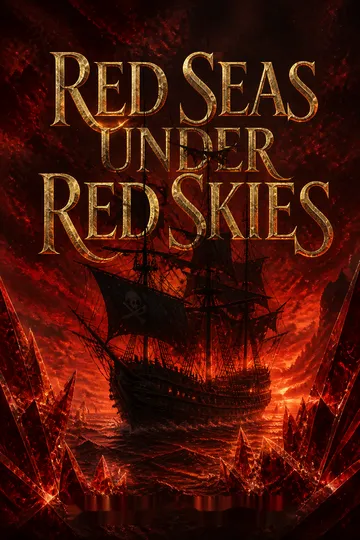
Red Seas Under Red Skies continues the adventures of Locke and Jean as they attempt a heist in Tal Verrar. Many readers praise the witty dialogue, complex plot, and character development. The addition of pirates and naval adventures is welcomed by most. Some find the pacing slow in parts, but overall the book is well-received for its humor, world-building, and exploration of friendship. While some consider it weaker than the first book, others find it equally engaging or even superior, appreciating Lynch's storytelling prowess and the expansion of the series' world.
People Also Read






Characters
Locke Lamora
The false-faced thiefLocke is a Camorri thief, gifted impersonator, and priest of the Crooked Warden who solves problems by studying what people want to believe. His wit and nerve make him persuasive, but his talent for improvisation can become an excuse to disregard consequences until they are already upon him. He carries the deaths of his former friends as both grief and guilt, and his dependence on Jean is deeper than he readily admits. The novel tests whether he can treat allies as people rather than pieces in a scheme. His instinct is to take control through deception; his more difficult task is deciding when honesty, trust, or restraint will serve better.
Jean Tannen
Locke's steadfast partnerJean is Locke’s closest friend, a formidable fighter, practical planner, and reader of romances who knows the difference between theatrical daring and real competence. He often acts as Locke’s anchor, but he is not merely a protector: he challenges Locke when grief or ambition makes him cruel. His loyalty has an element of self-sacrifice, and he worries that his real name could endanger his partner. Life aboard the Poison Orchid gives him a chance to form attachments beyond Locke, exposing a desire for a future that is not built around their shared past. He values fellowship, but increasingly insists that it cannot require him to abandon his own life.
Zamira Drakasha
The pirate captainZamira commands the Poison Orchid with a mix of naval discipline, personal authority, and deliberate theatricality. A former Syrune officer, she has rejected the landbound powers that once claimed her loyalty and now trusts her ship, crew, and judgment. She is feared because she acts decisively, but her command is not simply domination: she protects her children, honors surrenders, and makes the crew’s shared survival part of her leadership. Locke initially sees her as a possible mark; she sees through his evasions and measures him by what he risks for others. Her deepest conflict is the tension between keeping her people safe and refusing to let a stronger power dictate their lives.
Maxilan Stragos
The ambitious ArchonStragos is Tal Verrar’s military ruler, an experienced political operator who fears that the merchant councils are weakening the city’s defenses. His mechanical garden expresses his belief that human ingenuity can eventually rival sorcery, and he wants power partly to make that future possible. Yet his vision is inseparable from coercion: he poisons Locke and Jean, manipulates pirates, and treats people as instruments of state policy. He believes control is justified by the scale of what he hopes to build. The story makes his ambition legible without making its methods benign; he can imagine collective progress while denying the individuals through whom he intends to achieve it any meaningful consent.
Requin
Sinspire's ruthless masterRequin controls the Sinspire, its criminal networks, and a private vault that holds much of Tal Verrar’s wealth. He is an aesthete as well as a brutal administrator, collecting late Therin art and enforcing the Sinspire’s rules with exemplary violence. His relationship with Selendri is grounded in gratitude and devotion after she suffered an attack meant for him. Requin prizes competence and understands that his authority depends on useful institutions as much as fear. Locke’s audacity irritates and interests him because it reveals vulnerabilities in systems Requin considers secure. He is neither a simple patron nor a straightforward enemy; every offer from him carries a calculation about who will owe whom afterward.
Ezri Delmastro
The Orchid's first mateEzri is the Poison Orchid’s capable first mate, an officer whose directness and physical confidence conceal a thoughtful, well-read nature. She grew up in a privileged Nicoran family but chose the uncertainty of the sea, where competence matters more than inherited rank. She enforces Zamira’s rules, protects the crew, and can shift from teasing to command without losing credibility. Her shared love of Lucarno’s plays draws her toward Jean, whose education and fighting skill both intrigue her. Ezri represents the possibility of intimacy within a life organized around danger, but she refuses to become a sentimental exception to the ship’s hard realities.
Selendri
Requin's scarred major-domoSelendri manages the Sinspire for Requin, serving as gatekeeper, security chief, and the person most willing to doubt Locke’s carefully arranged stories. Her brass hand conceals blades, while the injuries to her face and throat mark the violence she survived. She is guarded rather than cold, and her loyalty to Requin is rooted in the life he saved as well as the life they built together. Selendri values caution because she knows how costly trust can be, and she is not easily won by charm alone.
Merrain
The Archon's field operativeMerrain is a resourceful operative in Stragos’s service who can track, escort, and protect Locke and Jean without making her motives easy to read. She is skilled at disguises and prepared for sudden violence, often appearing just when the thieves believe they have escaped surveillance. Her quiet efficiency contrasts with Locke’s showmanship. The book leaves the full extent of her loyalties uncertain, making her a reminder that political intelligence can extend beyond the factions the protagonists understand.
Caldris
The veteran sailing masterCaldris has spent decades at sea and carries the blunt, practical knowledge that Locke and Jean lack. He teaches them the basics of navigation and ship handling while making clear that a month of lessons cannot turn land thieves into sailors. His humor is rough, but his standards are serious because mistakes at sea endanger everyone aboard. Caldris’s dependence on maritime ritual reflects the way experience, faith, and safety have become intertwined in his life.
Jabril
The prisoners' natural mateJabril is a seasoned sailor and former prisoner whose strength is matched by sound judgment. He recognizes Locke’s limitations early, but also understands that Locke gave the Windward Rock prisoners their first chance at freedom. Jabril speaks for the crew when it is angry, helps maintain order, and has a practical sense of what an oath can and cannot mean. His regard must be earned, not commanded.
Treganne
The sharp-tongued ship's physikerTreganne is the Poison Orchid’s physician, a blunt and highly competent practitioner who values triage over bedside manner. A Nicoran royal punishment left her with a false leg and a deep distrust of anyone who assumes she is helpless. She treats injuries according to urgency, not rank, and is willing to confront the captain when a patient’s life is at stake. Her keeping of a dangerous spider reflects the same mix of scientific curiosity and alarming practicality.
Jaffrim Rodanov
The rival pirate captainRodanov commands the formidable Dread Sovereign and believes the Ghostwind captains must avoid provoking Tal Verrar. He is physically imposing, politically cautious, and capable of elaborate preparation, as his use of valcona demonstrates. His opposition to Zamira comes not from simple greed but from fear that her plan will bring the Archon’s fleet down on every pirate in the region. He considers himself responsible for a larger community, though his solution puts him into conflict with a friend.
Marius Cordo
The elder Inner Seven councillorMarius Cordo is an old member of Tal Verrar’s Inner Seven, the deepest circle of the Priori. He is a political survivor with a private household, a protected son, and a strong instinct for bargaining. His fear of Stragos and suspicion of Locke are shaped by the Bondsmagi’s warning, which makes him capable of treating a distorted account as a reason for violence. He remains alert to opportunities to preserve his family’s position when the city’s leadership shifts.
Lyonis Cordo
The younger Priori powerbrokerLyonis is Marius Cordo’s son, a well-connected Priori member whose confidence and political ambition make him willing to risk direct action against Stragos. He can organize allies within the Archon’s forces and understands the value of timing. His support for Locke and Jean is practical rather than sentimental: their access to Stragos offers a rare opportunity to change who governs Tal Verrar.
Xandrin
Stragos's personal alchemistXandrin prepares the poison and antidote that keep Stragos’s agents under control. He guards his formulas in his memory rather than on paper, treating alchemical knowledge as both professional property and political leverage. His skills make him indispensable to the Archon, but they also leave him vulnerable when the people he has poisoned finally reach him.
Father Chains
The thieves' teacherFather Chains was a priest of the Crooked Warden and the mentor who trained Locke, Jean, and their former companions. His lessons join criminal skill to a religious obligation: thieves should prosper, and the powerful should remember that they are not invulnerable. His teaching continues to shape Locke’s understanding of theft, loyalty, and what a successful con is for.
Lauris Baumondain
The humane craftswomanLauris is an apprentice craftswoman and the daughter of the carpenter Locke hires in Salon Corbeau. She cares for a Gentled kitten and speaks plainly about the desperation that brings poor people to the Amusement War. Her practical compassion gives Locke a human perspective on the resort’s cruelty without disguising how difficult it is to act against it.
Merrain's unseen masters
The distant powerMerrain serves interests not fully explained by the Archon’s immediate plans. Their existence hints that Tal Verrar’s political struggle is only one layer of a larger contest. The text keeps their identity and intentions uncertain, so they function as a source of unease rather than a fully developed faction.
Plot Devices
The latent poison
A leash disguised as medicineStragos uses a proprietary poison that remains hidden in the body until its victim misses an antidote. Its delayed effect lets him compel Locke and Jean to take assignments while allowing them to function normally between doses. Because the poisoner Pale Therese cannot identify the substance from a description, the men must find Xandrin or obtain an actual sample. The device turns time into political leverage: every voyage, injury, and delay is measured against the date of the next dose. Its existence also drives the final moral conflict, since Xandrin carries only one dose when the thieves reach him.
False faces
Identity as an escape toolLocke and Jean survive by shifting names, professions, and social roles. Leocanto Kosta and Jerome de Ferra pass as merchant-speculators; Orrin Ravelle and Jerome Valora pass as naval officers and pirates; Callas is a further invented identity used to manipulate the Shipbreaker. Their disguises are supported by rehearsed histories, altered appearances, costumes, and confidence. The method works because they understand that people often accept a plausible performance when it confirms what they already expect. It also risks collapse when observers compare details, as Zamira does, or when Locke and Jean mistake one another’s signals.
The Sinspire chairs
A gift hiding an escape kitLocke commissions four elaborate chairs with concealed features, then presents them to Requin as a considerate gift. Their outer appearance gains access and gratitude, while the hidden structure conceals climbing equipment and other tools needed for the eventual escape from the Sinspire. The chairs also help Locke tell Requin a plausible story about the invented lockbreaker Calo Callas. Their construction links the Salon Corbeau episode to the vault scheme without requiring Locke to attack the vault itself. The effort embodies the thieves’ preference for preparing an exit before they know exactly when they will need one.
Shipboard superstition
Belief becomes crew disciplineCaldris teaches Locke that a sea voyage without a woman officer or cats is dangerous, reflecting beliefs associated with the sailors’ gods. The rule is not merely ornamental: the crew interprets the missing cats and women as evidence that Locke has ignored the conditions of safe passage. When storms and deaths follow, those beliefs give the crew a shared explanation and help turn fear into mutiny. Later, Locke’s treatment of shipboard rituals and Zamira’s observance of the Parlour Passage show how custom can organize action even when its supernatural claims remain unproven.
The false Eye masks
Authority used to enter the palaceLyonis Cordo’s allies obtain the distinctive masks and uniforms of the Archon’s Eyes, allowing Priori supporters to pass as the very guards who normally protect Stragos. The disguise converts the Archon’s own symbols of authority into a way to reach him inside the Mon Magisteria. Its success depends on access, timing, and the expectation that the masked soldiers will be obeyed. Unlike Locke’s social disguises, this impersonation carries armed force behind it and helps transform a private meeting into a political coup.
FAQ
Synopsis & Basic Details
What is Red Seas Under Red Skies about?
- Gentleman Bastards on the Run: Following the devastating events in Camorr, master thief Locke Lamora and his loyal partner Jean Tannen flee to the city of Tal Verrar, seeking refuge and a new grand scheme to rebuild their fortune.
- High-Stakes Deception: Adopting new identities as wealthy merchant-speculators, they infiltrate the exclusive Sinspire gambling house, planning an elaborate long con to fleece its master, Requin, and his elite clientele.
- Entangled in Political Intrigue: Their plans are violently interrupted when they are forcibly recruited by the city's ruthless Archon, Maxilan Stragos, who knows their true identities and blackmails them into undertaking a perilous mission at sea.
- Forced Piracy & Rebellion: Under threat of a mysterious poison, Locke and Jean must navigate the treacherous waters of the Sea of Brass, posing as pirate captains to provoke conflict and serve the Archon's political ambitions against the city's merchant councils, the Priori.
Why should I read Red Seas Under Red Skies?
- Masterful World-Building: Scott Lynch expands the richly detailed world of the Gentleman Bastard sequence, introducing the unique, Eldren-built city of Tal Verrar and the perilous, mysterious Sea of Brass.
- Intricate Plot & High Stakes: The narrative weaves together multiple layers of deception, political maneuvering, and thrilling action sequences, constantly raising the stakes for the protagonists.
- Deepening Character Bonds: The story provides a profound exploration of Locke and Jean's friendship under extreme duress, showcasing their loyalty, wit, and resilience in the face of overwhelming odds and personal loss.
What is the background of Red Seas Under Red Skies?
- Eldren Architectural Wonders: The city of Tal Verrar is built upon ancient, artificial islands of black Eldren glass, showcasing remnants of a powerful, vanished race whose technology and purpose remain largely inscrutable to humans.
- Political Tension in Tal Verrar: The city is governed by a fragile balance of power between the merchant councils (the Priori) and the military ruler (the Archon), a tension that Stragos seeks to exploit for his own gain.
- Echoes of Past Conflicts: The narrative is shaped by the lingering consequences of the Thousand-Day War between Camorr and Tal Verrar, and the Archon's previous suppression of the Ghostwind Isles pirates, highlighting historical grievances and power dynamics.
What are the most memorable quotes in Red Seas Under Red Skies?
- "Nearly lost is just another way to say finally won.": Spoken by Jean, this quote encapsulates the Gentleman Bastards' philosophy of embracing extreme risk and finding success at the very edge of disaster, a recurring theme throughout their adventures.
- "Difficult. 'Difficult' and 'impossible' are cousins often mistaken for one another, with very little in common.": Locke's assertion to Requin highlights his core belief in the power of ingenuity and persistence to overcome seemingly insurmountable obstacles, defining his approach to cons and challenges.
- "You are a lever and a fulcrum, you two, looking for a city to turn upside-down.": Stragos's assessment of Locke and Jean perfectly captures their disruptive potential and their inherent nature as agents of chaos, even when operating under duress.
What writing style, narrative choices, and literary techniques does Scott Lynch use?
- Non-Linear Narrative Structure: Lynch employs flashbacks ("Reminiscences") interspersed throughout the main plot, revealing key past events (like their time in Vel Virazzo and Salon Corbeau) that inform the characters' present actions and motivations.
- Sharp Dialogue & Witty Banter: The characters, particularly Locke and Jean, engage in rapid-fire, often darkly humorous dialogue filled with elaborate insults, literary allusions, and coded language that reveals their intelligence and deep bond.
- Detailed World-Building & Sensory Language: Lynch creates a vivid and immersive world through rich descriptions of settings, customs, and the sensory details of food, drink, and environment, grounding the fantastical elements in tangible reality.
Hidden Details & Subtle Connections
What are some minor details that add significant meaning?
- The Parlour Passage's True Nature: Early mentions of the Parlour Passage as dangerous are vague, but later revealed to be haunted by entities that mentally assault those who pass, explaining the pirates' fear and the need for extreme precautions like drugging children.
- The Shipbreaker's Name: The Shipbreaker's name, "His Eminence the Fat Bastard," and his ruthless reputation are mentioned in passing before Locke and Jean interact with him, subtly foreshadowing his character and the danger he represents to anyone who crosses him.
- Merrain's Eye Tattoo: Merrain's tattoo of a lidless eye in a rose is a subtle detail that Locke initially misses but Selendri recognizes, revealing her identity as a former Eye of the Archon and hinting at her deeper connections and loyalties beyond Stragos's immediate service.
What are some subtle foreshadowing and callbacks?
- The Amusement War's Cruelty: Locke's horrified reaction to the "defaults" at the Salon Corbeau Amusement War foreshadows the casual cruelty he will witness and participate in during his time as a pirate, highlighting the moral compromises forced upon him.
- Jean's Lucarno Quotes: Jean's fondness for quoting Lucarno's plays, particularly "The Tragedy of the Ten Honest Turncoats," serves as a callback to their Camorr education and subtly foreshadows themes of betrayal, performance, and the blurred lines between reality and fiction that define their lives.
- The Shipbane Sphere's Purpose: The mention of shipbane spheres as expensive black alchemy, capable of immense destruction, foreshadows its eventual use as a devastating weapon in the battle against the Dread Sovereign, revealing its true, terrifying potential.
What are some unexpected character connections?
- Merrain's Past as an Eye: The revelation that Merrain was a former Eye of the Archon is unexpected, connecting her directly to Stragos's inner circle and explaining her ability to move within his organization and access sensitive information.
- Rodanov's Connection to Barsavi: Jaffrim Rodanov's past as a student of rhetoric under Vencarlo Barsavi in the Therin Collegium is a surprising connection, linking the pirate captain to Locke and Jean's mentor and highlighting the unexpected ways their paths intersect across different cities and lives.
- Selendri's Role in the New Order: Selendri's elevation to a position of power within the new Priori-led government, heading a "secret constabulary," is an unexpected twist, showcasing Requin's strategic thinking and rewarding Selendri's loyalty and competence in a surprising way.
Who are the most significant supporting characters?
- Zamira Drakasha: The formidable pirate captain becomes a crucial ally, providing Locke and Jean with a ship, crew, and the means to operate at sea, while also challenging their perspectives on loyalty and leadership.
- Caldris: The seasoned sailing master, despite his initial reluctance, imparts essential nautical knowledge to Locke and Jean, his tragic fate underscoring the dangers of their mission and the human cost of Stragos's manipulations.
- Lieutenant Ezri Delmastro: Ezri's intelligence, combat skill, and unexpected connection with Jean add significant emotional depth and plot relevance, making her a vital member of the crew and a key figure in Jean's personal journey.
Psychological, Emotional, & Relational Analysis
What are some unspoken motivations of the characters?
- Locke's Need for Control: Beneath his charming facade, Locke is driven by a deep-seated need to regain control after the trauma in Camorr and the helplessness he felt under the Grey King, pushing him towards increasingly audacious schemes.
- Jean's Search for Stability: Jean, having lost his family and home, yearns for a sense of belonging and stability, which he finds first in his partnership with Locke and later in his connection with Ezri and the Orchid crew, influencing his desire for a settled life.
- Stragos's Fear of Irrelevance: Stragos's elaborate plan to provoke piracy stems from a fear that his military office is becoming obsolete in peacetime, driving him to create a crisis that will restore his power and justify his existence.
What psychological complexities do the characters exhibit?
- Locke's Performance as Coping Mechanism: Locke's constant performance and adoption of new identities serve as a psychological defense mechanism, allowing him to compartmentalize grief and trauma by immersing himself in the roles he plays.
- Jean's Emotional Resilience: Jean exhibits remarkable emotional resilience, processing loss and trauma through action and loyalty, providing a grounding force for Locke while navigating his own complex feelings, particularly his burgeoning relationship with Ezri.
- Drakasha's Maternal Instincts vs. Ruthlessness: Drakasha embodies the psychological complexity of balancing fierce maternal protectiveness for her children with the brutal ruthlessness required to survive and lead in the cutthroat world of piracy.
What are the major emotional turning points?
- Locke's Breakdown in Vel Virazzo: Locke's descent into drunken self-pity in Vel Virazzo is a major emotional turning point, forcing Jean to confront the depth of his friend's grief and prompting a desperate intervention that ultimately revitalizes Locke's will to live and scheme.
- The Parlour Passage Experience: The psychological assault of the Parlour Passage, where the crew hears voices calling their names, is a shared emotional turning point that bonds the Orchid crew and underscores the unique, non-physical dangers of the Ghostwinds.
- Ezri's Sacrifice: Ezri's self-sacrificial act with the shipbane sphere is the most devastating emotional turning point, profoundly impacting Jean and Locke, forcing them to confront the ultimate cost of their actions and reshaping their future motivations.
How do relationship dynamics evolve?
- Locke and Jean's Partnership Under Strain: The core relationship between Locke and Jean is tested by grief, forced servitude, and differing coping mechanisms, evolving from a seemingly unbreakable bond to one that requires conscious effort and renewed commitment.
- Jean and Ezri's Unexpected Romance: Jean's relationship with Ezri develops unexpectedly amidst the chaos of piracy, providing him with emotional connection and a vision of a future beyond thieving, adding a new layer of complexity to his loyalty to Locke.
- Locke and Drakasha's Alliance of Necessity: Locke and Drakasha's relationship evolves from captor/prisoner to an alliance based on mutual self-interest and a shared enemy (Stragos), built on a foundation of cautious respect and calculated risk.
Interpretation & Debate
Which parts of the story remain ambiguous or open-ended?
- The Nature of the Parlour Passage Entities: The exact nature and origin of the entities that haunt the Parlour Passage remain ambiguous, leaving readers to interpret whether they are magical, psychological, or something else entirely.
- The Full Extent of the Bondsmagi's Knowledge: While it's clear the Bondsmagi aren't omniscient, the precise limits of their knowledge about Locke and Jean's past and present activities remain unclear, leaving their future interventions unpredictable.
- The Reliability of Stragos's Poison: The story leaves open the possibility that Stragos's poison claim was a bluff, forcing readers to question whether Locke and Jean's actions were truly necessary for survival or driven by fear of a non-existent threat.
What are some debatable, controversial scenes or moments in Red Seas Under Red Skies?
- The Amusement War Defaults: The graphic descriptions of the "defaults" in the Salon Corbeau Amusement War are highly controversial, sparking debate among readers about the depiction of cruelty and the moral implications of the wealthy's entertainment at the expense of the desperate poor.
- Drakasha's Treatment of Prisoners: Drakasha's casual ruthlessness, such as throwing Mazucca overboard or her willingness to sacrifice the scrub watch in boarding actions, can be debated, challenging readers' perceptions of her as a sympathetic character despite her alliance with the protagonists.
- Locke's Decision Regarding the Antidote: Locke's choice to destroy the antidote rather than risk splitting it or letting Jean force it upon him is a highly debatable moment, forcing readers to weigh the value of one life against another and question the morality of his decision.
Red Seas Under Red Skies Ending Explained: How It Ends & What It Means
- Stragos's Downfall and the Priori's Rise: The ending sees Locke and Jean orchestrate Stragos's capture by the Priori, effectively ending the Archonate's independent power and placing Tal Verrar under the control of the merchant councils, fulfilling a key part of Locke's plan.
- The Cost of Victory: The victory comes at a terrible price, most notably the death of Ezri Delmastro, whose sacrifice allows the Orchid to escape Rodanov and provides Jean with a profound, tragic motivation for revenge against Utgar and, by extension, Rodanov.
- An Uncertain Future and Lingering Threats: Locke and Jean escape with Stragos as their prisoner and the single dose of antidote, but Xandrin's death leaves them without a way to replicate it, meaning Locke is still poisoned. They set sail for an unknown future, leaving behind the chaos in Tal Verrar and the Ghostwinds, with the threat of the Bondsmagi and the consequences of their actions still looming.
Gentleman Bastard Series
Download PDF
Download EPUB
.epub digital book format is ideal for reading ebooks on phones, tablets, and e-readers.








