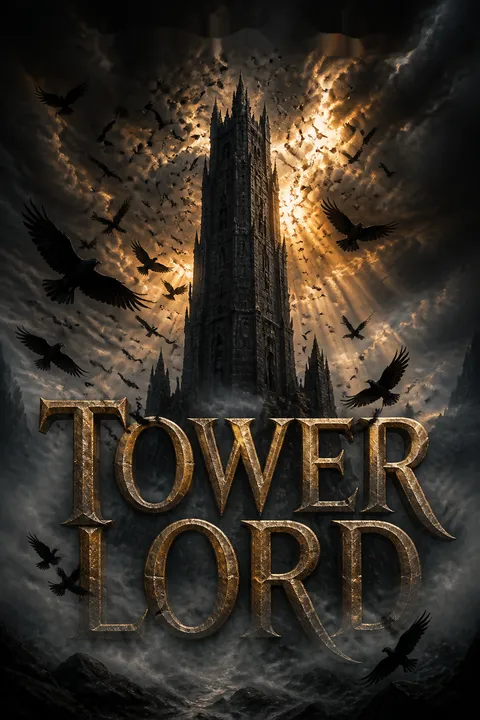


Plot Summary
The Chronicler in Chains
Verniers Someren, an Alpiran court historian captured during the Volarian invasion, is brought before General Reklar Tokrev and his wife, Fornella. Tokrev admires Verniers’s work but orders him to praise a battle won by treachery and superior numbers. Fornella recognizes the lie in the account and makes Verniers tell her what happened.
The next morning Tokrev shows him the siege plan: Volarian troops will assault Alltor’s breached walls while Kuritai climb elsewhere and attack from behind. Before the final assault begins, a foul-smelling stranger boards the ship and demands to know where Vaelin Al Sorna is. Even the general’s composure falters at the visitor’s presence.
Verniers’s predicament establishes the book’s conflict over who gets to narrate a war. Tokrev wants history to serve his reputation, while Verniers knows the battle’s actual causes include betrayal and coercion. Fornella’s demand for truth makes her more than a general’s ornament, yet she cannot free Verniers from slavery. The stranger’s question shifts the frame from a siege to a larger hunt: the invaders fear Vaelin enough to seek him before he can reach them.
Reva Chooses the Sword
Reva, a Cumbraelin girl trained by a priest to kill Vaelin, follows the newly returned warrior from Warnsclave and attacks him in his camp. Vaelin defeats her without seriously hurting her, then recognizes her as the daughter of Hentes Mustor, the man who once carried the title Trueblade.
Reva insists she has come for her father’s sacred sword, which she believes will help overthrow Vaelin’s rule. He claims he knows where it is, but will reveal the location only if she travels with him to Varinshold disguised as his sister. Reva accepts. As they walk, he feeds her, makes her a bow, and begins teaching her skills her priest deliberately withheld.
Reva’s first choice is still made inside the priest’s terms: the sword matters more than safety, companionship, or evidence. Vaelin’s restraint complicates the enemy she has been taught to hate, while his teaching quietly gives her capacities her upbringing denied her. Their false siblinghood creates intimacy before trust. That imbalance matters: Vaelin knows more about Reva’s past than she does, and his bargain rests on a lie that will later force her to choose between inherited belief and lived experience.
Frentis Bound by Scars
Frentis, Vaelin’s former Order brother, has spent years fighting in a Volarian pit under a binding imposed through the scars cut into his body. A mysterious woman tests his swordsmanship, then chooses him after he kills his overseer rather than submit to another command. She can tighten the binding by touching him and forces him to travel as her escort.
In Mirtesk, a dying man who recognizes Frentis as a brother gives the woman a list and a timetable for reaching South Tower. Frentis learns that her purpose involves the Fief Lord and another target, but cannot resist her. She keeps him moving toward the Realm under changing disguises.
Frentis’s body remembers a violence he cannot control. The scars make obedience physical, turning his trained discipline into a weapon for someone else. His refusal to honor the Volarian master’s etiquette and his killing of the overseer show that an inner self survives captivity, but it cannot yet direct his actions. The woman’s shifting roles, from owner to companion to captor, make coercion emotionally confusing as well as bodily. Frentis’s central struggle is therefore not simply escape, but reclaiming the meaning of his own choices.
Vaelin Returns to Varinshold
Vaelin enters Varinshold quietly and finds his childhood home nearly ruined. His sister Alornis lives there, impoverished but devoted to drawing, and resents that he stayed away while their father died. Vaelin secures legal recognition of her inheritance, then reunites with Caenis, who has risen to command the Sixth Order.
Vaelin tells him he has abandoned both the Order and its Faith, breaking their brotherly bond. King Malcius restores Vaelin’s titles but refuses permission to search for Frentis. Instead, he names Vaelin Tower Lord of the Northern Reaches, where the previous lord’s adopted daughter has been governing. Vaelin accepts when his blood-song points north.
Vaelin’s homecoming gives him a family life he cannot recover and a political role he did not seek. Alornis’s anger makes his absence tangible, while Caenis’s rejection shows how completely Vaelin’s loss of faith separates him from the institution that raised them. Malcius offers power as a substitute for the freedom Vaelin requested. The blood-song makes the appointment feel less like a promotion than a path he must follow, leaving Vaelin to govern a place and people he has not yet met.
Lyrna Crosses the Pass
Princess Lyrna rides north to meet the Lonak High Priestess, taking Brother Sollis and a small escort. Her guide, Davoka, has been chained after attacking a brother, but Lyrna discovers she understands Realm Tongue and releases her. The journey turns dangerous when Kiral, Davoka’s sister, leads the Sentar in an attack that kills Nersa and Brother Hervil.
Davoka explains that the Sentar oppose the High Priestess’s peace policy and that Kiral has changed into a ruthless leader. Rather than retreat, Lyrna dismisses most of her escort and continues with Davoka, Sollis, Ivern, and Lord Marshal Smolen. Their route leads toward a volcanic mountain.
Lyrna begins the journey treating diplomacy as an intellectual problem, but the attack makes its human cost immediate. She refuses the safe retreat even after losing a companion and much of her guard, partly because she wants proof about the supernatural powers she has spent years investigating. Davoka’s presence undermines Lyrna’s assumptions about Lonak society: a warrior can be both bluntly different and increasingly loyal. Their emerging bond is forged through shared risk, not through the formal treaty Lyrna hoped to negotiate.
The Mountain’s Hidden Truth
At the Mouth of Nishak, Davoka times a volcanic eruption that destroys the pursuing Sentar, then leads Lyrna to the Mountain of the High Priestess. Below it, the Mahlessa pours a painful substance onto Kiral’s hand and drives the possessing spirit out of her sister’s body. The frightened young woman who remains has little memory of the intervening years.
The Mahlessa explains that three ancient beings seize gifted people and use their bodies to spread violence. She offers Lyrna a peace treaty with no territorial demands and coats Lyrna’s throwing knife with a substance that causes extreme pain when it touches blood. Davoka is appointed ambassador to the Realm.
Lyrna gets the evidence she sought, but it is not a clean answer. The Mahlessa reveals that possession is real while using torture as a tool of rescue, complicating any easy division between benevolent and monstrous power. Kiral’s restored vulnerability makes the danger personal for Davoka, who has been fighting the person her sister became. The treaty’s lack of demands forces Lyrna to confront peace as a choice rather than a bargain. The treated knife becomes a practical instrument whose meaning will only emerge later.
Reva Finds No Relic
After Vaelin admits he lied about knowing where Hentes Mustor’s sword is, Reva runs south, convinced the priest will restore her faith. She reaches the High Keep and finds the Trueblade’s chamber stripped of everything valuable, including the sword. On the road she saves Modahl’s family from Fourth Order fanatics who burn his mother for following a dissenting interpretation of the Faith.
Reva then goes to Alltor, where an innkeeper directs her to the Fief Lord’s manor. Disguised as a servant, she steals a sword bearing the Mustor crest, only to discover it belonged to her great-grandfather, not her father. When the priest attacks her uncle, she turns against him.
Reva’s pilgrimage dismantles the physical proof her beliefs depend on. The empty chamber and the wrong sword reveal how much of her mission was built from stories she was never allowed to test. Saving Modahl’s family also places compassion ahead of her priest’s command, though she has not yet named that change. When she finds the priest attacking her uncle, her trained violence finally serves her own judgment. The old order has not simply failed her; it has made her useful to people who wanted her dead.
A Niece Becomes an Heir
Reva kills one of the priest’s companions and wounds the priest before her uncle, Fief Lord Sentes Mustor, stops the fight. Sentes recognizes her as his niece, daughter of his brother Hentes and a woman Sentes remembers fondly. He confirms that the sword she stole is only an ancestor’s weapon, while Hentes’s actual sword disappeared from the High Keep.
Reva realizes the priest raised her to die as a martyr, not to recover a relic. Sentes formally acknowledges her and names her his heir. He also tells her that the priest answered to a powerful man, but delays the search to avoid destabilizing Cumbrael. Reva stays, now with family and a future she never expected.
Reva’s inheritance is not a simple restoration of identity. Sentes offers kinship without demanding that she share his beliefs, giving her the first relationship in which affection is not a reward for obedience. Her confusion about the Father’s love remains, but she can now distinguish faith from the priest who weaponized it. The heirship also makes her politically visible just as danger approaches. Personal belonging and public responsibility arrive together, leaving little room for the private recovery she might otherwise need.
The List of Future Dead
The woman makes Frentis kill people whose names came from tortured seers’ visions: future leaders and defenders who might obstruct Volaria’s conquest. He kills a magistrate and other targets while discovering that the victims are not all villains. At a villa near Alpira, the woman reveals her intended prize, Emeren, the emperor’s chosen successor.
She orders Frentis to torture Emeren’s young son, but the healing scars in his side surge with pain and briefly weaken her control. Frentis frees Emeren instead. The woman burns the house, escapes with him, and continues toward the Realm. At South Tower she tries to kill its charitable lord, but the people he helped protect her long enough for them to flee.
The list turns prophecy into preemptive political murder: possible futures are treated as threats that can be erased before their subjects act. Frentis understands that the people he is killing have lives beyond the role assigned to them by the seers. His partial resistance begins not with a grand escape plan, but with refusing to harm a child. The woman’s language of purpose cannot make her victims abstract again. Yet his resistance is incomplete, and that gap between moral recognition and actual freedom drives the violence toward Varinshold.
Varinshold Burns
The woman and Frentis enter Varinshold as escaped slaves, with Lord Al Telnar arranging to present Frentis to King Malcius. During the reunion, Frentis’s binding forces him to break the King’s neck. Lyrna’s knife, coated by the Mahlessa, strikes Frentis and triggers a final surge that heals his scars and frees his will.
He kills the woman as she sets the throne room ablaze, but the fire consumes Queen Ordella and her children, and burns Lyrna’s face. Lyrna escapes the palace in shock and is captured by Volarian slavers. Frentis, still wounded, finds Davoka and young Arendil in the city, tells them the King is dead, and leads them toward the Sixth Order’s house.
The palace catastrophe joins political invasion to intimate betrayal. Frentis’s return is staged as a homecoming, then turned into an execution by the same binding that has controlled him for years. Lyrna’s knife does what her journey to the Mountain could not prepare her for: it releases Frentis while leaving her physically and politically devastated. His freedom arrives at the cost of Malcius’s life and his own trust in himself. The Realm’s collapse is therefore not only military; it ruptures the relationships that might have held it together.
A Queen Escapes the Hold
Aboard a slave ship, Lyrna hides her identity and studies the overseer’s routines. She persuades Iltis, a disgraced brother, and the outlaw Harvin to help free the captives, then enlists Fermin, whose gift lets him command a rat. When the overseer discovers the plan, Fermin’s rat is killed, but the captive summons a red shark that smashes the ship’s hull.
Lyrna unlocks the manacles and helps the prisoners reach a boat before the ship sinks. A Meldenean vessel rescues them. Lyrna translates a coded Volarian document for its captain, exposing the planned invasion of the Meldenean Isles, and earns passage for herself and the survivors.
Lyrna’s authority first reappears in the hold as a capacity to organize frightened people, not as a title anyone recognizes. Her plan depends on trusting prisoners whose histories include crime and shame, while her own concealed identity keeps her from asking for royal deference. Fermin’s animal control turns their escape into a collaboration between gifts, calculation, and sacrifice. Lyrna survives by reading both people and documents. The ship’s code also widens the conflict: the Volarian invasion is a campaign with multiple targets, not merely the fall of the Realm.
Alltor Arms Its People
When the Volarians invade Cumbrael, a surviving cavalryman brings Reva and Sentes news that Varinshold has fallen and the Realm Guard has been betrayed by Fief Lord Darnel. Sentes refuses to surrender Alltor and asks the garrison to defend the city. Reva helps organize thousands of recruits, supplies, and arrows while Sentes’s illness worsens.
She accepts command despite her uncle’s insistence that she stay protected. The first Volarian assaults fail: Antesh’s archers burn siege towers, and defenders drive attackers from the walls. Reva’s skill in battle earns the citizens’ belief that the Father favors her, even as she knows their praise is more a need for hope than proof of divine protection.
Reva’s military authority grows from concrete service: organizing food, listening to defenders, and standing where the attack is strongest. The city’s belief that she is blessed gives her influence, but also risks turning her into a symbol people obey without understanding. She does not yet reject their faith; she rejects the passivity it can encourage. Sentes’s illness makes her public role inseparable from private loss. Alltor’s defence becomes a test of whether a community can preserve its capacity to act under a story that promises rescue.
The Reader Turns on Alltor
As the siege tightens, the Reader claims that Alltor’s suffering comes from tolerating unbelievers and demands that the Faithful be surrendered. Reva refuses, while Sentes’s health declines and the city runs short of food. The Volarians bombard the walls with stone engines and launch repeated attacks. Reva and Antesh organize six successive defensive rings through the city, pulling down houses to build barricades and killing grounds.
When the Reader later incites a crowd against the captives, Reva confronts him, but Sentes reaches the square and kills the old man with his grandfather’s sword. Sentes dies in Reva’s arms after naming the man behind the priest’s conspiracy, Brahdor. Reva assumes command as the bombardment opens a breach.
The siege exposes two competing ways to explain suffering. The Reader offers a scapegoat and a ritual purge; Reva’s defence depends on keeping the vulnerable within the city and asking them to contribute. Sentes’s final act is both familial and political: he rejects the sermon that would divide his people and gives Reva the authority to continue. His death removes her last private refuge. The six rings turn the city itself into a sequence of choices, each retreat preserving life only by surrendering more familiar ground.
The North Shelters the Lost
Vaelin reaches the Northern Reaches and learns that its mines hide vast gold seams the late Tower Lord concealed from the Crown. Soon a new Ice Horde appears, but Vaelin finds its starving remnants are refugees, not invaders. Through the shaman Wise Bear’s visions, he learns that Volarian forces drove them from the ice.
Vaelin gives them shelter and a coastal home, then realizes their warning means the Volarians are coming for the Realm and the Reaches alike. He gathers the North Guard, miners, and settlers. At Nehrin’s Point he reunites with Nortah and Sella, then questions exiled scholar Harlick, learning that Harlick helped arrange an earlier assassination attempt on Vaelin to prevent a prophecy.
The apparent monster invasion reverses as soon as Vaelin listens to the people who arrive. The Bear People are not an enemy to be defeated but a population whose destruction would repeat the Volarians’ own logic of conquest. Vaelin’s decision to shelter them converts military caution into a broader political obligation. Harlick’s confession adds another layer: attempts to prevent prophecy have already cost innocent lives. The North’s army forms not from a single nation but from people whose experiences of betrayal and exile make cooperation a choice.
The Forest Grants Passage
Vaelin persuades Eorhil leader Wisdom to join him, then asks the Seordah to let his army cross their forest. They distrust the Realm but agree after Vaelin touches a memory stone and meets the blind seer Nersus Sil Nin, who confirms that an unseen force seeks the world’s destruction.
On his return, a giant wolf appears and howls, prompting the Seordah to accept him as Beral Shak Ur and guide the army through the forest. Vaelin learns to read with Dahrena during the march, while his sister Alornis paints the army’s new banner. At the forest’s edge, Dahrena’s spirit walk reveals Alltor still holds out, and a bright soul remains on its walls.
The forest crossing is secured through relationships that cannot be reduced to military advantage. The Seordah demand that Vaelin earn passage by acknowledging their history and their authority over the forest. The wolf’s appearance confirms a bond older than any kingdom, but does not give Vaelin a simple answer about the coming threat. His literacy lessons and Alornis’s banner place small acts of learning and representation beside the army’s growing scale. The journey binds disparate peoples without pretending their histories have become identical.
Frentis Becomes the Red Brother
Frentis finds the Sixth Order’s house occupied by Volarians and its brothers tortured or dead. He kills the garrison, frees the horse-master Rensial, and returns to the forest with weapons and a captured slave torturer, Thirty-Four, who chooses freedom and the name Karvil. Frentis’s band raids slavers and rescues captives, including Illian, while Janril joins them after learning his wife was killed.
Darnel’s hunters pursue the refugees, and the Volarians burn the Urlish to drive them out. Frentis leads the survivors through the fire and collapses a cliff on Darnel’s riders, but the effort kills the Seventh Order’s Aspect, Grealin. The group escapes north and meets Brother Sollis.
Frentis’s leadership grows through acts that distinguish resistance from the system he escaped. He uses Karvil’s knowledge but lets the former slave choose whether to stay, even as the group’s methods become brutal. Janril’s grief shows the danger of making vengeance the only available form of loyalty. The burning forest strips away the rebels’ refuge and forces them to carry their cause into open country. Grealin’s death marks the price of gifts used under pressure, while Frentis’s band remains a fragile community rather than a conventional army.
The Isles Fight Back
Lyrna reaches the Meldenean Isles and convinces the Shield, Atheran Ell-Nestra, to abandon his self-imposed exile and defend his people. At the Teeth of Moesis, the Meldeneans discover the Volarian fleet is larger than expected. Ell-Nestra attacks anyway, using wind, fire, and shipboard engines to cripple the enemy.
Lyrna and her companions help operate the mangonels, while Fermin’s summoned shark destroys a Volarian ship threatening the Sea Sabre. A storm later drives more enemy vessels onto the Serpent’s Tail reef. During the final pursuit, Harvin is killed by a ballista bolt, but the Meldeneans defeat the remaining ships. Lyrna persuades Ell-Nestra to sail for Alltor, where the siege still rages.
Lyrna’s return to public power begins with a choice not to treat escape as the only form of survival. Her scars and the crew’s reverence make her a symbol, but she earns their trust by translating intelligence and joining the work of battle. Ell-Nestra’s defeat at Vaelin’s hands has made him mistake shame for a sentence; Lyrna gives him a reason to act without erasing that history. The shark’s violence turns Fermin’s sacrifice into an ongoing force, while Harvin’s death prevents victory from feeling clean.
Vaelin Breaks the Siege
With Cara’s storm approaching Alltor, Vaelin rejects a cautious flanking plan and rides straight at the Volarian line, inviting any soldier who chooses to follow. He uses the blood-song to break one battalion’s discipline and cuts a path through the enemy. Nortah, the North Guard, Eorhil, Seordah, and freed captives widen the breach, while Snowdance tears into the ranks.
Vaelin reaches the city, where Seordah warriors rescue defenders at the broken walls. He finds Reva, but his gift overwhelms him and he collapses, apparently dead. Dahrena enters his mind and pulls him back from a prison where an ancient woman tempts him with a flute and the return of his song. Vaelin wakes alive, but the blood-song is gone.
Vaelin’s charge is both tactical rupture and personal declaration: he refuses to let an abstract calculation make Alltor expendable. The army follows because its members have chosen a shared purpose, not because the plan is safe. His use of the blood-song wins ground while exhausting the gift that has guided his life. The inner prison makes the temptation concrete: power can be offered as a way to return to oneself, even when its source is compromised. Dahrena saves Vaelin, but not the identity he had built around hearing the song.
The Next War Revealed
Lyrna brings Meldenean survivors and Verniers, who killed Tokrev aboard the captured Volarian ship, back to Alltor. She and Vaelin are reunited, while Reva remains Lady Governess of a battered Cumbrael. In questioning Fornella, Lyrna learns that the invasion of the Realm was only preparation for a larger assault on the Alpiran Empire. She vows to carry the war to Volar.
Later, while walking beside the river with Iltis, Lyrna is ambushed by two men sent by the priesthood. She kills the archer with her treated knife, but a powerful young stranger strangles the other attacker and then grabs Lyrna. He touches her burns, identifies the pain in her, and she begins to burn. The book ends before her fate is known.
The apparent victory at Alltor opens outward rather than closing the conflict. Lyrna’s return joins the survivors of separate campaigns, but Fornella’s testimony reveals that the Volarians treated the Realm as a staging ground. Reva’s leadership and Vaelin’s survival create a fragile political center, while the attack on Lyrna shows that the forces working through faith and possession remain active. The final assault also reverses the promised security of her treated knife: she can kill one attacker, but cannot anticipate the second. The ending leaves victory real, necessary, and unfinished.
Analysis
Tower Lord is built around the collision of three kinds of authority: inherited rule, religious certainty, and the power of gifts that no institution can reliably govern. Its protagonists keep being handed roles by others. Vaelin is made a legendary weapon, Reva a martyr-in-training, Frentis a controlled assassin, and Lyrna a princess whose intelligence is treated as a danger. Each resists those roles unevenly, often discovering that refusal alone is not freedom. They must decide what to do with the skills and histories that shaped them.
The novel’s most consequential reversals arise from listening. Vaelin recognizes the Bear People as refugees rather than invaders because he gives their shaman’s visions attention. Lyrna gains a peace treaty by treating Davoka as a political partner rather than an exotic guide. Reva becomes a leader by protecting people the Reader would cast out. These actions contrast with Tokrev’s empire, which converts people into slaves, predicted obstacles, or disposable soldiers. Its methods are efficient but strategically brittle because they mistake fear for loyalty and prediction for knowledge.
Faith is not presented as a simple contest between belief and disbelief. The World Father’s Church shelters both compassionate practice and a violent faction that weaponizes doctrine. The Lonak Mahlessa protects her people through morally costly decisions, while the Seordah’s memory traditions preserve knowledge without promising certainty. Vaelin’s eventual loss of the blood-song is therefore more than a power reduction. It removes the instrument through which he has organized trust and judgment, forcing him toward a life not guaranteed by supernatural guidance.
The ending refuses to make military victory synonymous with safety. Alltor survives, the Meldeneans defeat the fleet, and Vaelin returns to Lyrna, yet the empire’s larger plan and the forces behind possession remain active. The novel’s final danger is not an unrelated sequel hook: it tests whether the coalition can preserve its political and moral commitments after the immediate enemy has been driven back. Its deepest argument is that resistance requires more than defeating an invader. It requires refusing the invader’s habit of treating human beings as instruments, even when fear makes that habit seem useful.
Review Summary
Tower Lord received mixed reviews. Many praised the expanded scope and multiple POVs, finding the new characters engaging. However, some fans were disappointed by the shift away from Vaelin's singular perspective and felt the pacing was slower. The siege scenes and female characters were highlights for many readers. While some found it less addictive than Blood Song, others thought it surpassed the first book. Overall, most agreed it was a solid continuation of the series, though opinions varied on how it compared to its predecessor.
People Also Read




Characters
Vaelin Al Sorna
Reluctant war leaderA former brother of the Sixth Order and celebrated commander, Vaelin returns to a Realm that has turned him into legend and assigns him a new northern lordship. His blood-song lets him sense intentions, danger, and gifted souls, but its use exacts a physical cost. He distrusts titles and religious institutions, yet repeatedly accepts responsibility for people who have reason to fear or resent him. His habits are practical and understated: he walks rather than rides to avoid notice, teaches Reva what she was denied, and tries to reconnect with his sister. His central tension is between being used as a symbol and acting as a person who remains accountable for the lives his power can destroy.
Lyrna Al Nieren
Exiled royal strategistPrincess and sister to King Malcius, Lyrna is an exacting scholar whose political intelligence is often hidden beneath courtly polish. She studies supernatural claims because she wants evidence, not comfort, and approaches the Lonak peace mission with the same analytical discipline she brings to history and strategy. Years of being excluded from her brother’s decisions have taught her to observe quietly and act when an opening appears. Her loyalty to the Realm is complicated by her father’s ambition and her own hard choices, but she does not confuse inherited authority with moral innocence. Lyrna’s sharp memory helps her survive, while making it difficult to escape what she has witnessed.
Frentis
Captive brother turned rebelA former Sixth Order brother and close friend to Vaelin, Frentis began as a street thief and became a disciplined soldier. He has a strong moral instinct, but captivity and a magical binding repeatedly force him to commit acts he would refuse freely. His dry humor and practical skill survive even when agency does not. Frentis’s struggle is not to become innocent again, but to act responsibly after being used as an instrument of violence. He is capable of tenderness toward the young, the injured, and people society would discard, yet his wartime choices increasingly trouble those who follow him.
Reva Mustor
Doubtful Cumbraelin heirRaised in isolation by a priest, Reva is a gifted fighter whose devotion to the World Father has been shaped by discipline, beatings, and a mission she never chose. She is observant, hungry for knowledge, and uncomfortable with softness because her upbringing taught her to treat care as weakness. Meeting Vaelin and Alornis exposes her to forms of affection that do not demand obedience. Reva’s fierce loyalty to the people of Alltor grows alongside her skepticism about religious authority. Her skill with bow and sword is matched by a developing talent for leadership, though she remains unsure how to reconcile desire, faith, and the violence she has learned to wield.
Dahrena Al Myrna
Northern counsel and seerThe adopted Lonak daughter of the previous Tower Lord, Dahrena is deeply respected in the Northern Reaches and trusted by Seordah and Eorhil communities. Her spirit-walking gift lets her see distant places and souls, but returning from long journeys leaves her depleted. She combines political judgment with practical care, protecting the Reaches’ prosperity while resisting the Crown’s appetite for its resources. Dahrena’s grief for her Seordah husband remains private, and her affection for Vaelin grows through shared work rather than declaration. She offers a model of authority rooted in local knowledge, earned trust, and an understanding of how power consumes its wielder.
Davoka
Lonak spear and envoyA fierce Lonak warrior and protector of the High Priestess, Davoka serves first as Lyrna’s guide and later as her ambassador. She speaks plainly, values strength, and is shaped by customs that differ sharply from the Realm’s. Her love for her sister Kiral survives even when Kiral becomes dangerous, making loyalty a painful obligation rather than an easy virtue. Davoka respects action more than ceremony, but she learns to use language and companionship in unfamiliar settings. Her friendship with Lyrna grows through shared hardship and an increasing willingness to protect one another.
The Volarian woman
Possessive imperial agentA beautiful, highly trained woman of Volarian society, she moves through the world with the confidence of someone accustomed to commanding others. Her intelligence, patience, and skill at disguise make her dangerous, while her attachment to Frentis complicates her cruelty without excusing it. She sees killing as purposeful and treats people as pieces in a design, yet her need to be loved gives that control a deeply personal source. She can be charming, playful, or brutal within moments, leaving those around her unsure whether tenderness is sincere or another means of possession.
Sentes Mustor
Ailing lord of CumbraelFief Lord of Cumbrael and uncle to Reva, Sentes has a reputation as a drunk and womanizer, but he is also a practiced judge of people and a skilled political gambler. His fondness for wine masks a declining body and a sharp understanding of how Alltor survives. He gives Reva affection without demanding that she become a replica of her father, while preparing her to inherit a dangerous office. Sentes knows that public legitimacy is built through visible service, and he wants the people to see Reva as their protector before he can no longer protect them himself.
Veliss
Cumbraelin political counselorSentes’s counselor, Veliss is a former Varinshold sex worker who has become an astute administrator and political operator. She understands money, public opinion, and the daily needs of a besieged city. Her frankness can wound, but it is usually more honest than the courtesies surrounding her. Veliss is loyal to Sentes and increasingly protective of Reva, while her love for women places her at odds with the religious rules used to judge her. She balances sensual confidence with tireless practical work, making her an essential organizer rather than a courtly ornament.
The Mahlessa
Ancient Lonak guardianThe High Priestess of the Lonakhim has lived through centuries and carries the burden of protecting her people from threats they cannot understand. She is politically unsentimental, willing to use pain and deception when she believes survival requires it. Her control over a healing gift comes at a steep personal cost, and her memory preserves knowledge the Lonak once possessed before war and displacement diminished them. She treats Lyrna as an equal mind, not merely a foreign ruler, but does not confuse respect with trust.
Alornis Al Sorna
Artist and Vaelin’s sisterVaelin’s younger sister, Alornis is a gifted artist whose exact drawings reveal a close attention to ordinary lives and neglected places. She has spent years surviving poverty and working as an apprentice, and she resents being treated as someone who must be protected from every danger. Alornis combines warmth with a stubborn independence, and her faith in Vaelin is tested by his secrecy and repeated decisions on her behalf. Her paintings preserve the people and events a military chronicle might reduce to numbers.
Nortah Al Sendahl
Teacher and veteran archerA former Sixth Order brother and Vaelin’s friend, Nortah has built a life as a teacher with his wife, Sella, and their children. He is a superb archer and a patient instructor, but family responsibility makes him wary of returning to war. His dry humor and practical judgment temper Vaelin’s intensity. Nortah understands the cost of violence and does not romanticize his own skill, yet he will risk his settled life when his family and the wider community are threatened.
Caenis Al Nysa
Commander of the WolfrunnersVaelin’s former brother in the Sixth Order, Caenis has risen to command the Realm Guard’s Wolfrunners. He is disciplined, loyal to the Faith, and capable of making difficult battlefield decisions. Vaelin’s rejection of the Order wounds him because their bond was never merely institutional, even if Caenis cannot yet separate faith from brotherhood. His measured manner conceals grief for the men he leads and a deep conflict between duty to the Order and affection for Vaelin.
Fermin
Thief and beast charmerA captured thief with a gift for controlling animals, Fermin uses a rat to steal the key that can free the slave ship’s captives. He is charming when it suits him, but fear and self-preservation shape many of his choices. Lyrna persuades him to help by appealing to the mother he has not seen since the city fell. His gift proves powerful but physically draining, and he must decide whether the risk of helping others is worth losing his chance at a safer life.
Atheran Ell-Nestra
Shamed Shield of the IslesKnown as the Shield of the Meldenean Isles, Ell-Nestra is a brilliant sea captain who has withdrawn from public life after failing to kill Vaelin in single combat. He believes survival has left him disgraced and is reluctant to lead the people who once trusted him. Beneath his charm and confidence is an unresolved shame that makes him mistake self-punishment for honor. Lyrna challenges that belief by offering him service rather than absolution.
Verniers Someren
Enslaved imperial historianThe Alpiran Emperor’s chronicler, Verniers is learned, perceptive, and keenly aware of how power edits the past. He has spent his life writing authoritative histories, but enslavement forces him to produce flattering lies for his Volarian owner. His observations are often sharp, though fear makes him cautious and self-preserving. Verniers’s loyalties are complicated by the war and by his grief for people he has lost. His perspective reveals the invasion’s machinery from inside the enemy’s ranks.
Reklar Tokrev
Volarian siege commanderA privileged Volarian general, Tokrev is ambitious, vain, and accustomed to having his decisions recorded as triumphs. He can plan a complex assault but has little patience for resistance that does not fit his expectations. His treatment of prisoners and subordinates shows how imperial hierarchy converts cruelty into routine. Tokrev’s confidence is sustained by status as much as military competence, leaving him poorly equipped for opponents who refuse to behave like defeated subjects.
Fornella Tokrev
General’s perceptive wifeTokrev’s wife and sister to Council-man Arklev Entril, Fornella is highly educated and politically alert. She sees through her husband’s self-presentation and understands the machinery of Volarian power better than he does. Her cool control can turn into sharp mockery, though beneath it lies a weariness that few around her recognize. Fornella’s social position gives her access to imperial decisions, but her marriage also places her close to the violence those decisions unleash.
Grealin
Hidden Order AspectA longtime mentor to the Sixth Order, Grealin is a genial, heavyset keeper of stores and stories. His apparent harmlessness hides a rare gift, along with knowledge of the prophecy surrounding Vaelin and the unseen force behind the Volarian invasion. Grealin prefers teaching and practical care to command, but the destruction of the Order forces him into a role he did not want. His warmth gives the displaced fighters a measure of stability when their former institutions fail.
Nersus Sil Nin
Seordah blind seerAn ancient Seordah woman whose visions reach across time, Nersus Sil Nin is a recurring point of contact for Vaelin and Dahrena. She speaks with hard-won humility about the limits of prophecy and the decline of her people. Her counsel is neither a map nor a promise of victory. She urges action despite uncertainty, and her presence links the present conflict to a much older history.
Plot Devices
The Blood-Song
Gift that hears dangerVaelin senses gifted souls, danger, and emotional intent through a music only he can hear. It can guide him toward people and alert him to threats, but stronger use brings bleeding, cold, and exhaustion. In battle he can push the song outward to overwhelm opponents with fear or make their movements easier to read. The gift is not an unlimited superpower: its bodily price forces Vaelin to decide when knowledge is worth the damage, and its loss alters his identity.
The Scar Binding
Control through living scarsThe Volarian woman uses the scar pattern cut into Frentis by One Eye to bind his body and force obedience. Her will can tighten the scars into unbearable pain, while the healing changes in them create brief openings in her control. This device makes the conflict intimate: Frentis can recognize a moral choice without being able to act on it. His gradual resistance depends on a wound changing physically, not on a sudden revelation that simply cancels years of coercion.
The Seers’ List
Prophecy turned into assassinationVolarian seers identify people who may obstruct the empire’s future conquest. Their names become a list of targets for the woman and Frentis to eliminate before those people can fulfill their potential. The method makes the invaders’ planning seem omniscient, but the visions describe possibilities rather than certainties. By treating possible resistance as a fixed threat, the empire creates the very violence it claims to prevent. Frentis’s growing refusal exposes the human lives hidden inside the strategic predictions.
The Memory Stones
Contact across timeAncient Seordah stones allow certain gifted people to encounter the blind seer Nersus Sil Nin across time. Vaelin’s contact gives him partial knowledge about the threat and confirms that the future remains uncertain rather than settled. The stones also carry the risk of overwhelming or trapping those who touch them. They expand the world’s history beyond the current kingdoms, but do not solve its crisis. Their narrative function is to deepen the stakes while denying the characters a reliable prophecy to follow.
Lyrna’s Treated Knife
Pain that breaks a bindingThe Mahlessa treats Lyrna’s small throwing knife with a chemical substance that becomes active when it touches blood. The substance causes extreme pain without necessarily killing its target. Lyrna carries it as a keepsake and later uses it against Frentis in the throne room. Its effect disrupts the binding that controls him and helps restore his agency. The knife connects Lyrna’s northern journey to the Realm’s fall, making a seemingly modest diplomatic gift decisive in a crisis neither woman could fully foresee.
FAQ
Synopsis & Basic Details
What is Tower Lord about?
- A Realm Invaded: Tower Lord plunges the Unified Realm into chaos as the Volarian invasion launches a brutal invasion, spearheaded by cunning generals and dark, ancient powers. The narrative follows multiple protagonists—Vaelin Al Sorna, Princess Lyrna Al Nieren, Reva Mustor, and Frentis—as they navigate the war, each facing personal trials and moral dilemmas.
- Intertwined Destinies: The story weaves together disparate plotlines: Vaelin's reluctant leadership in the Northern Reaches, Lyrna's perilous diplomatic mission to the Lonak, Reva's fierce defense of Alltor, and Frentis's harrowing journey as a captive assassin. Their individual struggles and evolving powers are set against the backdrop of a collapsing kingdom.
- Survival and Revelation: Beyond the immediate conflict, the book delves into deeper mysteries surrounding ancient gifts, prophecies, and the true nature of the invading forces. Characters are forced to confront long-held beliefs, forge unexpected alliances, and make impossible choices to survive and protect what remains of their world.
Why should I read Tower Lord?
- Deep Character Evolution: Readers should delve into Tower Lord for its profound exploration of character arcs, particularly Vaelin's struggle with his "blood-song" and leadership, Lyrna's transformation from sheltered princess to hardened queen, and Frentis's harrowing journey of liberation and vengeance. The novel excels at showing how extreme circumstances forge and break individuals.
- Intricate World-Building: Anthony Ryan expands the rich tapestry of his world, introducing new cultures like the Eorhil and Lonak, and delving deeper into the Volarian Empire's sinister machinations. The detailed descriptions of diverse landscapes, from the frozen Northern Reaches to the humid Meldenean Isles, immerse the reader in a vibrant, yet brutal, fantasy setting.
- Moral Ambiguity Explored: The book consistently challenges conventional notions of good and evil, forcing characters and readers alike to question motivations and consequences. Actions deemed heroic by some are seen as monstrous by others, prompting reflection on the true cost of war and the blurred lines of morality. This psychological depth makes Tower Lord a compelling read.
What is the background of Tower Lord?
- Post-War Political Instability: Tower Lord is set roughly five years after the events of Blood Song, with King Malcius Al Nieren struggling to maintain control over a Unified Realm still reeling from Janus's expansionist wars and the devastating Alpiran conflict. The Realm is internally fractured by religious tensions (Faith vs. Deniers) and political infighting, making it vulnerable to external threats.
- The Volarian Imperial Threat: The primary external conflict is the calculated and ruthless invasion by the Volarian Empire, a technologically advanced and militarily disciplined power. Their expansionist goals are driven by a hidden, ancient entity known as the "Ally," which seeks to destroy the Realm for reasons tied to its own mysterious origins and hunger.
- Ancient Gifts and Prophecies: The world is subtly infused with "gifts" – innate magical abilities like Vaelin's blood-song, Dahrena's spirit-walking, and Fermin's beast-charming. These powers are often tied to ancient prophecies and hidden histories, suggesting a deeper, cosmic struggle at play that predates the current political conflicts. The existence of these gifts, and the fear/worship they inspire, shapes cultural interactions and personal destinies.
What are the most memorable quotes in Tower Lord?
- "Judge a nation best by its allies.": This quote, spoken by Fornella Av Entril Av Tokrev (Verniers's mistress), encapsulates the cynical and pragmatic worldview of the Volarian elite, highlighting their strategic approach to power and conquest. It also subtly foreshadows the complex and often morally compromised alliances formed throughout the book.
- "All victory is an illusion.": Attributed to King Janus Al Nieren by Alucius Al Hestian, this profound statement reflects the grim reality of war and power. It suggests that even apparent triumphs come at a hidden cost, leaving behind ruin and moral compromise, a theme deeply explored through the experiences of Vaelin, Lyrna, and Frentis.
- "Cruelty is in all of us. But they made it a virtue.": Frentis's stark observation about the Volarians, made to Illian, cuts to the core of the novel's exploration of human nature and the dehumanizing effects of systemic oppression. It highlights the philosophical difference between innate human flaws and the deliberate cultivation of malice.
What writing style, narrative choices, and literary techniques does Anthony Ryan use?
- Multi-Perspective Narrative: Ryan employs a shifting third-person limited perspective, primarily focusing on Vaelin, Lyrna, Frentis, and Reva. This allows for a comprehensive view of the unfolding invasion from various angles—military, political, personal, and even spiritual—enriching the reader's understanding of the conflict's scope and impact.
- Psychological Realism and Internal Monologue: The prose frequently delves into the characters' internal thoughts, fears, and moral struggles, particularly evident in Vaelin's battles with his blood-song and Frentis's tormented reflections on his forced actions. This emphasis on psychological depth grounds the fantastical elements in relatable human experience.
- Foreshadowing and Thematic Echoes: Ryan masterfully uses subtle foreshadowing, often through cryptic prophecies, recurring symbols (like the wolf or the burning), and seemingly minor details that gain significance later. This creates a sense of impending doom and intricate design, rewarding attentive readers with a deeper appreciation of the narrative's layered complexity.
Hidden Details & Subtle Connections
What are some minor details that add significant meaning?
- Fornella's Scorn for Reklar: Verniers's early observation that Fornella "doesn't respect this man" (Reklar Tokrev) despite being his wife, and her subtle barbs, immediately establishes a complex power dynamic within the Volarian command. This foreshadows her eventual betrayal and reveals her deeper, ancient motivations beyond mere spousal loyalty, hinting at her true age and connection to the "Ally."
- The "Sun and Moon" Ring: The gold ring found on the outlaw Kella, described as having an engraving of "the sun and the moon," is later identified by Vaelin as a Denier symbol. This seemingly minor detail subtly connects the seemingly random outlaw attack to the broader religious conflicts within the Realm and hints at the Deniers' hidden networks and beliefs, which become more prominent later in the series.
- Warrior's Bluff Rules: The inclusion of the detailed rules for "Warrior's Bluff" in the appendix, a card game Sentes Mustor mentions, is more than just world-building. It subtly foreshadows Sentes's strategic mindset and his "all-in" gamble in defending Alltor, implying his belief in holding a "Warrior's Bluff" hand against overwhelming odds, even if it means sacrificing everything.
What are some subtle foreshadowing and callbacks?
- Frentis's Scars and Fornella: The immediate recognition and mirroring of Frentis's whirling scars on Fornella's body subtly foreshadows their shared connection to the "Ally" and the nature of the binding power. This visual callback hints at a deeper, more ancient origin for their abilities and their shared torment, revealing that Fornella is not merely a human strategist but a vessel for something far older.
- The Wolf's Recurring Presence: The wolf that saves Vaelin in Blood Song and later appears to Dahrena as a child, reappears to Vaelin in the Great Northern Forest. Its presence consistently signals protection and a deeper connection to the ancient magic of the land, subtly foreshadowing its role in Vaelin's ultimate "rebirth" and the nature of his lost blood-song.
- Reva's Hair and Alornis's Art: Reva's initial refusal to cut her hair, despite her self-proclaimed "sluttish" appearance, is a subtle callback to Alornis's later admiration for its beauty and her desire to draw it. This seemingly trivial detail highlights Reva's subconscious yearning for acceptance and connection, contrasting with her ingrained dogma and foreshadowing her eventual emotional vulnerability and shift in identity.
What are some unexpected character connections?
- Harlick and Artis Al Sendahl: The revelation that Brother Harlick, the cynical Seventh Order scholar, conspired with Artis Al Sendahl (Nortah's father) to assassinate Vaelin is a shocking and unexpected connection. This deepens the moral ambiguity of the Order and highlights the lengths some would go to "prevent" prophecy, directly linking Vaelin's past trauma to Nortah's family history.
- Sentes Mustor and Reva's Mother: The unexpected familial bond between Sentes Mustor and Reva, and his detailed knowledge of her mother, reveals a hidden history of love and loss that directly contradicts the priest's narrative of Reva's "misbegotten life." This connection provides Reva with a genuine family and a new perspective on her past, challenging her ingrained beliefs.
- The Shield of the Isles and Vaelin's Past: Atheran Ell-Nestra's deep-seated resentment towards Vaelin, stemming from his "defeat" in Blood Song, reveals an unexpected psychological impact of Vaelin's actions on a seemingly minor character. This personal vendetta adds a layer of complexity to the Meldenean alliance, showing that even allies carry hidden grudges.
Who are the most significant supporting characters?
- Verniers Alishe Someren (The Chronicler): Beyond his role as a captive observer, Verniers serves as a crucial narrative lens, offering a detached yet insightful commentary on the Volarian invasion and the characters involved. His internal struggles with fear, his keen observations of power dynamics (especially Fornella's true nature), and his reluctant admiration for Vaelin provide a unique, often cynical, perspective on the unfolding events.
- Master Grealin (Aspect of the Seventh Order): Initially appearing as a minor Order figure, Grealin is revealed to be a powerful gifted individual and a hidden Aspect of the Seventh Order. His ability to "spirit walk" into the memories of the dead, his profound weariness with prophecy, and his eventual self-sacrifice to save Frentis and the others, make him a pivotal, albeit tragic, figure who embodies the heavy cost of ancient powers.
- Lady Veliss (Honoured Counsel to Alltor): More than just Sentes Mustor's pragmatic advisor, Veliss is a complex character whose past as a "whore" in Varinshold contrasts sharply with her fierce loyalty and strategic brilliance in defending Alltor. Her evolving, intimate relationship with Reva provides a powerful emotional anchor for Reva's journey, challenging rigid dogma with genuine human connection and love.
Psychological, Emotional, & Relational Analysis
What are some unspoken motivations of the characters?
- Fornella's Weariness and Desire for "Love": Fornella's true motivation, beyond serving the "Ally," is a profound weariness with her eternal existence and the endless cycle of manipulation and cruelty. Her "love" for Frentis, though twisted and abusive, is an unspoken attempt to find genuine connection or distraction from her cursed immortality, a desperate yearning for something real amidst her monstrous servitude.
- Sentes Mustor's Quest for Legacy: Sentes's seemingly drunken and cynical demeanor masks a deep, unspoken desire to leave a meaningful legacy, particularly in contrast to his "mad brother" Hentes. His calculated manipulation of Reva and his self-sacrificing defense of Alltor are driven by a profound need to prove his worth and ensure his fief's survival, even if it means a "Warrior's Bluff" with his own life.
- Vaelin's Search for Absolution: While Vaelin explicitly states his desire to find Frentis, an unspoken motivation is his subconscious search for a way to reconcile his past actions and the "cost" of his blood-song. His willingness to embrace new alliances and protect the vulnerable, even at great personal cost, hints at a deeper need for redemption and a return to a sense of moral purity.
What psychological complexities do the characters exhibit?
- Frentis's Shattered Agency: Frentis's psychological complexity lies in his struggle with agency under the "binding" of his scars. He is forced to commit horrific acts, leading to profound guilt and self-loathing, yet his eventual liberation is triggered by Lyrna's knife, suggesting that true freedom can only be found through extreme pain and the breaking of external control. His internal battle between obedience and rebellion is central to his character.
- Lyrna's Traumatic Transformation: Lyrna's experience of being burned and enslaved, coupled with witnessing her family's brutal murder, shatters her privileged worldview. Her subsequent physical scarring and emotional hardening reveal a complex psychological shift from a detached intellectual to a ruthless, pragmatic queen. Her ability to compartmentalize trauma and focus on survival highlights a formidable, yet chilling, resilience.
- Reva's Dogmatic Deconstruction: Reva's journey is a psychological deconstruction of her ingrained fanaticism. Her absolute belief in the World Father and her father's "holy mission" is systematically dismantled by Vaelin's truths and her own experiences of love and betrayal. This internal conflict between rigid dogma and emerging empathy creates a complex portrait of a young woman grappling with the collapse of her entire belief system.
What are the major emotional turning points?
- Reva's Confrontation with Vaelin: The moment Vaelin reveals the truth about her father and the priest's manipulation ("I lied, Reva"), is a devastating emotional turning point for Reva. It shatters her foundational beliefs, leading to profound grief and confusion, but also opens the door for her to forge her own path and find genuine connections beyond dogma.
- Frentis's Liberation from the Binding: When Lyrna's knife strikes Frentis, triggering the "nova of all-consuming pain" that breaks the "Ally's" binding, it marks a pivotal emotional release. The immediate surge of freedom, despite the physical agony and the surrounding carnage, is a moment of profound psychological liberation, allowing him to reclaim his will and identity.
- Lyrna's Dream of King Janus: Lyrna's dream where she confronts her deceased father, King Janus, and accepts her role as queen of a "land of ruin and death," is a crucial emotional turning point. It signifies her acceptance of her inherited burden, her reconciliation with his complex legacy, and her resolve to rebuild the Realm on her own terms, shedding the last vestiges of her former self.
How do relationship dynamics evolve?
- Vaelin and Alornis: From Duty to Sibling Love: Their relationship evolves from Vaelin's sense of duty as a distant brother to a deep, trusting sibling bond. Vaelin's decision to share his full, unvarnished history with Alornis, and her unwavering support despite the shocking revelations, solidifies their connection, making her one of the few people he truly trusts.
- Reva and Sentes Mustor: From Inherited Hatred to Familial Affection: Reva's initial mission to kill her "heretic" uncle transforms into a complex familial bond. Sentes's acceptance, his genuine affection, and his calculated self-sacrifice for Alltor lead Reva to shed her inherited hatred and embrace him as her only living family, culminating in a poignant moment of mutual love and understanding.
- Lyrna and Davoka: From Wary Alliance to Sisterhood: Their dynamic shifts from a pragmatic diplomatic alliance to a profound sisterhood forged through shared peril and mutual respect. Davoka's fierce loyalty and Lyrna's growing empathy for the Lonak woman transcend cultural barriers, culminating in Lyrna's declaration, "Your sister is my sister too, and so I will be yours," signifying a deep emotional connection.
Interpretation & Debate
Which parts of the story remain ambiguous or open-ended?
- The "Ally's" True Nature and Ultimate Goal: While the "Ally" is revealed as an ancient, malevolent entity that manipulates the Volarians, its precise origin, its full capabilities, and its ultimate objective beyond "destruction" and "hunger" remain largely ambiguous. The blind seer Nersus Sil Nin's cryptic warnings ("After you, there is no future") hint at a cosmic threat whose full scope is yet to be revealed.
- The Full Extent of the "Gifts" and Their Cost: The novel introduces various "gifts" (blood-song, spirit-walking, beast-charming, knowledge-transfer, healing touch) but leaves their precise mechanics, limitations, and the full "price" they exact largely open to interpretation. The nature of the "void" where souls go, and the entity that "twists" gifted souls, is hinted at but not fully explained, leaving room for future revelations.
- The Fate of Key Supporting Characters: While the main protagonists' immediate fates are clear, the long-term destinies of several significant supporting characters remain open-ended. For instance, the future of Nortah's gifted family, the role of the newly formed "Army of the North," and the ultimate impact of the Meldenean alliance on the broader conflict are left for future installments.
What are some debatable, controversial scenes or moments in Tower Lord?
- Frentis's Forced Murders and Moral Culpability: The scenes where Frentis is compelled by Fornella's binding to commit horrific acts, such as the murder of the magistrate's family or the torture of the hunter, are highly controversial. Readers might debate his moral culpability: is he a victim, a monster, or both? His internal torment and eventual liberation highlight the complex interplay between free will and external control.
- Lyrna's Calculated Sacrifices and Pragmatism: Lyrna's strategic decisions, such as using her own party as "bait" for the Sentar or her willingness to sacrifice the lives of her people in the Meldenean naval battle, can be seen as controversial. Her transformation into a ruthless queen, prioritizing the Realm's survival above individual lives, raises questions about the morality of leadership in wartime and whether the ends justify the means.
- The "Healing" of Frentis's Scars: The sudden and seemingly miraculous healing of Frentis's scars, triggered by Lyrna's knife and the old man's blood, is a debatable plot point. Some might question
Raven's Shadow Series
Download PDF
Download EPUB
.epub digital book format is ideal for reading ebooks on phones, tablets, and e-readers.








