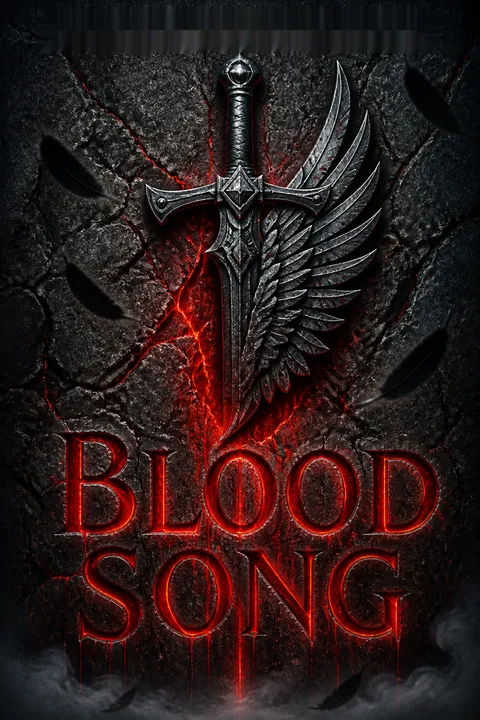


Plot Summary
Prologue
Imperial chronicler Verniers meets Vaelin Al Sorna1 on a ship bound for the Meldenean Islands, where the prisoner is expected to die in a duel. Verniers knows him as the Hope Killer,1 the enemy who slew the heir to the Alpiran throne.
Vaelin1 offers no defense and no easy explanation. Instead, he agrees to recount the life that brought him here, while Verniers records the story of a man whose reputation has grown larger than the person carrying it.
The frame begins with a verdict already passed: Verniers sees Vaelin as a killer before he knows him as a child, a brother, or a reluctant servant of kings. His chronicle is therefore both record and contest. Vaelin’s account complicates the public legend, while the looming duel keeps every memory under the shadow of its outcome. The frame also makes storytelling political. Whoever controls the account can decide whether Vaelin is remembered as a monster, a hero, or something more unsettlingly human.
Abandoned at the Order Gate
Ten-year-old Vaelin Al Sorna1 rides through the mist with his father, Kralyk,4 and reaches the fortress of the Sixth Order soon after his mother’s death. Kralyk4 tells him that loyalty must guide him, then leaves him with Gainyl Arlyn,13 the Order’s Aspect. Vaelin1 can run, but the family creed stops him.
He chooses to enter, even as Arlyn13 warns that the Order will replace his family and shape him for war. Master Sollis14 begins the schooling with beatings, chores, and sword drills. Vaelin1 parries Sollis’s14 first serious attack, drawing the other boys’ attention and the master’s scrutiny. That night, frightened and alone, Vaelin1 hears his mother’s voice speak his name.
Vaelin’s first defining choice is made under pressure, not freedom. He enters the Order because loyalty has been planted in him as both moral rule and emotional leash. His father’s departure teaches him that love can arrive as abandonment, while the Order immediately recasts that loss as belonging. The mother’s voice offers comfort but also establishes a lifelong ambiguity: Vaelin’s spiritual experiences may be memory, faith, or something real. His character begins in the gap between obedience and self-protection.
A Boy Learns Blood
A year of training makes Vaelin1 faster with a bow, but the Test of the Run turns practice into survival. An unseen archer shoots at him in the Urlish forest. Vaelin1 fires back and kills the man, then finds evidence that the supposed test has concealed a real attack. Nearby, he overhears two men discussing the beheaded body of Mikehl, another novice.
A huge wolf bursts into their camp and kills them before Vaelin1 can act. He returns to the Order with Mikehl’s remains, but Sollis14 orders him to report that a bear killed the boy. Vaelin1 gives his grieving friends the lie. The Order burns Mikehl, and Vaelin1 privately vows to discover who sent the assassins.
This is the moment Vaelin learns that moral judgment cannot wait until danger is over. He kills to survive, then must conceal the truth to protect a fragile institution and its boys. The lie gives him safety but separates him from his friends, especially Caenis, who senses that Vaelin knows more than he admits. Mikehl’s death also exposes the Order’s cost: it treats children as future soldiers while burying the evidence of political violence. The wolf’s intervention makes the supernatural feel less like wonder than an unanswered debt.
The Wolf’s First Gift
During the Test of the Wild, Vaelin1 builds a shelter in the snow and hears what he thinks is a voice from the dead. It is Erlin,12 a wounded traveler, and Sella,11 a mute young woman fleeing the Fourth Order’s hunters. Vaelin1 shelters them, learns they are pursued because Sella11 follows another faith, and helps them evade the trackers with a scent-masking root.
When the hunters’ slave-hounds attack, Vaelin1 kills two and the surviving dog, Scratch, accepts him as its pack leader. Vaelin1 keeps Sella’s11 scarf as a reminder and lies to the hunters to protect the fugitives. He returns to the Order, refusing his father’s4 offer to take him home and choosing his brothers instead.
Vaelin’s compassion becomes an action that places him against his own institution. He does not yet have a developed critique of the Order’s persecution, but he recognizes the injustice of killing a frightened woman for belief alone. Sella’s touchless gaze seems to reach him more deeply than physical contact, while Scratch converts violence into an unexpected bond. Vaelin’s decision to stay is not simple loyalty to authority. He chooses the people who have become his family, even while beginning to distrust the rules they serve.
The Family He Never Knew
As the novices mature, Vaelin1 learns that his talent for metalworking is not ordinary: Barkus8 once forged a perfect knife without lighting the forge, frightening his blacksmith father into sending him away. Vaelin1 also meets Alornis, a girl gathering winter flowers, and realizes she is his half-sister. Her mother confirms that Kralyk4 fathered her after Vaelin1 entered the Order.
Soon afterward, assassins strike several Order houses. Sister Henna, secretly one of them, attacks Vaelin1 with a poisoned blade. He kills her and fights through more attackers to reach Aspect Elera, saving her from a thrown knife. Sherin2 treats Vaelin1 with a dangerous antidote. In delirium, Vaelin1 demands his mother’s name and learns it was Ildera Vardrian.
Family arrives here as a set of withheld truths rather than a stable refuge. Vaelin learns that Kralyk’s household continued without him, while his own latent gift resembles Barkus’s frightening, involuntary craft. The attack on the Aspects shows that institutional secrecy has consequences: the novices are exposed to a conspiracy they barely understand. Sherin’s care links bodily survival to intimacy, but Vaelin’s first demand after being poisoned is not for comfort. He wants his mother restored to history, a sign that identity has become as urgent to him as survival.
Frentis Joins the Brothers
At the Summertide Fair, Vaelin1 befriends Frentis,10 a starving pickpocket who has blinded the gang leader known as One Eye with a throwing knife. Frentis10 asks to join the Order, knowing the gang will kill him if he returns to the streets. Vaelin1 vouches for him, and the boy’s quickness and nerve soon win him a place among the novices.
Before the Test of the Sword, Frentis10 disappears during the Test of the Wild. Vaelin1 follows his scent with Scratch and finds a hidden temple beneath the city, its seven pillars hinting at a forgotten Order. One Eye has tortured Frentis10 to learn the Order’s secrets and can paralyze others with an apparent power. Caenis6 sees through the false fire and kills him.
Frentis is not dragged into the Order as Vaelin was. He chooses it because the freedom available to him is only another form of danger. Vaelin’s sponsorship therefore carries a moral burden: he gives Frentis belonging, but also introduces him to institutional violence. The rescue forces the brothers to see that their training is not the only source of power in the world. The ruined temple and One Eye’s ability make the Order’s official history look incomplete, while Frentis’s scars leave the cost of knowledge written on a living body.
An Innocent Dies in the Circle
At the Test of the Sword, Vaelin1 kills three condemned men, including Urlian Jurahl, a former Sixth Order brother who had defended his Denier wife from a mob. Erlin12 tells Vaelin1 that the trial was manipulated to force Urlian into the arena and that his wife remains imprisoned. Vaelin1 bargains with King Janus:5 he will serve the Crown if the King5 secures her release and protects her son.
Janus5 agrees, then assigns Vaelin1 to the Martishe campaign and orders him to help ensure Linden Al Hestian dies. At court, Princess Lyrna3 urges Vaelin1 to reject the King’s5 design. He refuses, but he also refuses to shoot Linden during an ambush. A poisoned arrow wounds Linden, and Vaelin1 ends his suffering himself.
The Test makes violence public and bureaucratic: a man’s innocence is subordinate to a ritual that must certify Vaelin as a warrior. The King then turns Vaelin’s guilt into leverage, converting a request for justice into a contract for political murder. Vaelin’s refusal to kill Linden is a genuine ethical limit, but it cannot undo the role he played in bringing him to the battlefield. Lyrna recognizes the machinery of power more clearly than Vaelin does. Their shared complicity begins not with affection, but with a decision whose human cost neither can escape.
The Martishe Betrays Its King
In the Martishe, Vaelin1 and Brother Commander Makril try to turn a frightened regiment of criminals into soldiers capable of hunting Cumbraelin archers. Vaelin1 proposes a raid on Black Arrow’s camp, then secretly abandons the King’s5 plan to have Linden killed.
When a Cumbraelin arrow poisons Linden, Vaelin1 grants his dying friend the quick death he asks for. At the High Keep, Vaelin1 confronts Hentes Mustor, the Trueblade who murdered his father4 and holds Sherin2 hostage.
Hentes believes a god has promised him salvation through Vaelin’s1 death, but his certainty collapses when the battle outside disrupts his prophecy. Barkus8 kills him with a thrown axe before Vaelin1 can take him alive. Letters found afterward link the rebellion to the Cumbraelin leadership, and the Realm moves toward open war.
Vaelin’s moral choices are increasingly made inside systems designed to make refusal costly. He rejects the King’s assassination plan, yet still participates in a campaign that produces more death and ultimately kills Linden. His mercy is real, but not clean. Hentes’s religious certainty mirrors the Realm’s own use of faith to authorize violence, while Barkus’s decisive intervention denies Vaelin the answers he wants. The letters turn a local rebellion into a state crisis, showing how evidence can be both a clue and a weapon when rulers are already preparing to fight.
The King’s War Begins
After raising Vaelin1 to Sword of the Realm and commander of the Thirty-fifth Regiment, Janus5 reveals that his real aim is to seize Alpiran ports and the trade in bluestone, spices, and silk. He intends to invent religious provocations to justify the invasion. Vaelin1 refuses to treat conquest as defense of the Faith, but the King5 threatens Vaelin’s1 half-sister and her mother, forcing him to obey.
The invasion fleet lands on the Alpiran coast, where Vaelin’s1 Wolfrunners meet the Empire’s cavalry. Vaelin1 kills Seliesen, the Eruhin and chosen heir, then watches the Alpiran ranks freeze in shock before the Realm Guard’s reinforcements arrive. The victory gives Vaelin1 the name Hope Killer1 and makes him the Empire’s most hated man.
Janus’s power lies less in command than in controlling the story that makes command seem necessary. He manufactures a moral emergency to disguise economic ambition, then uses Vaelin’s family to make refusal impossible. Vaelin’s obedience is therefore neither wholehearted nor innocent: he knows the war is built on lies and still becomes its most visible weapon. Seliesen’s death transforms a strategic victory into a personal wound for the Empire. The title Hope Killer replaces Vaelin’s private identity with a public symbol that will govern every encounter afterward.
Linesh Opens Its Gates
Janus5 sends Vaelin1 to take Linesh while the main army moves on Marbellis. Vaelin1 leads his soldiers through a harbor sewer and captures the city with little bloodshed, then keeps Governor Aruan in office and promises that his daughter will remain safe. Soon the girl falls ill with the Red Hand, a plague that once devastated the Realm.
Sister Gilma identifies the symptoms and seals the mansion, the city gates, and the harbor. Vaelin1 sends Frentis10 aboard the swift Meldenean Red Falcon to fetch Sherin,2 whose research may offer a treatment. To pay the captain, Vaelin1 gives him an enormous bluestone. While the city waits for the disease to spread, the governor’s daughter and a maid worsen behind guarded doors.
Vaelin’s command is tested not by a battlefield but by the obligations of occupation. He wins cooperation by protecting Aruan’s daughter, then must use coercive measures to protect the city from contagion. The juxtaposition is deliberately severe: a ruler who has just taken a port with restraint now has to imprison its inhabitants for their own survival. The bluestone also exposes the war’s material motive in miniature. A single stone can buy speed across the sea, while the larger pursuit of wealth has brought an army and a plague into the same streets.
Sherin Returns in Chains
The Red Falcon returns with Sherin,2 but the Fourth Order has arrested her for publicly condemning the war as unjust. Vaelin1 attacks Brother Commander Iltis when he refuses to let her speak, and Frentis10 stops the beating before it becomes murder. Sherin2 nevertheless prepares her experimental cure and saves Aruan’s daughter, containing the outbreak before it spreads through Linesh.
Vaelin1 learns that Sister Gilma died nursing the sick. While Sherin2 works, Ahm Lin,15 a stonemason whose blood-song guides his craft, helps Vaelin1 begin carving a wolf from marble. An Alpiran servant burns the workshop, nearly killing Ahm Lin15 and destroying the unfinished statue. Sherin2 later tells Vaelin1 she was imprisoned because she tried to protect him.
Sherin’s return reveals the price of speaking against a war that claims to defend the Faith. Her healing work contradicts the Fourth Order’s punishment: she risks herself for the same people the state classifies as enemies or liabilities. Vaelin’s violence against Iltis is protective but uncontrolled, forcing Sherin to confront the killer beneath his restraint. Ahm Lin’s art offers another way to use a gift, yet the fire destroys the object before Vaelin understands what it might reveal. Care and knowledge survive here only through exposure to danger.
The Desert Takes Dentos
When a vast Alpiran army approaches, Vaelin1 refuses to abandon Linesh and prepares the walls for siege. The Red Hand is contained, but the city’s sailors revolt in an attempt to escape; Vaelin1 crushes the uprising and burns fifteen ships in punishment.
The army later breaches Marbellis, and its surviving defenders flee toward Linesh. Vaelin1 leads a desert mission to destroy the enemy’s siege engines before they reach the city. The raid succeeds, but the retreat turns desperate as Alpiran riders pursue them across the sand.
A mysterious wolf appears, and Vaelin’s1 blood-song rises into a sandstorm that scatters the pursuers. Dentos9 is struck by an arrow in the chaos and dies before they reach Linesh. Vaelin1 returns with his brother’s body and no answer for the power he has unleashed.
The storm marks a threshold in Vaelin’s relationship with his gift. Until now, the blood-song has warned or guided him; here its power changes the physical world, but it cannot save Dentos. That failure makes supernatural ability feel less like mastery than responsibility without control. Vaelin’s decision to burn the ships also shows how siege conditions narrow his moral options, even as his punishments risk confirming the enemy’s view of him. Dentos’s death strips away the familiar humor that once made the Order survivable and leaves Vaelin carrying the consequence of command.
A Truce, Then a Trap
With Untesh and Marbellis lost, Janus5 accepts a treaty and orders the army home. Vaelin1 sends his surviving brothers ahead, then remains in Linesh under the Emperor’s terms. He also sends Sherin2 away with Ahm Lin,15 telling her he will follow, though the promise hides a plan to face the consequences alone. Grand Prosecutor Velsus arrives to take him into custody.
Before dawn, Vaelin1 waits outside the walls as agreed, believing the war has ended and his surrender will spare the city further bloodshed. He has surrendered his sword and dismissed the men who might defend him. The quiet desert becomes a stage for one last reckoning, while Vaelin1 still does not know that one of his closest brothers has been lost to something living inside him.
The treaty ends the state’s campaign but not the intimate violence it has set in motion. Vaelin attempts to protect Sherin by separating her from his fate, repeating a pattern of deciding what others can bear without asking them. His surrender is both an act of responsibility and a final bid to control the damage. Yet his isolation makes him vulnerable precisely when the personal conspiracy reaches its end. The apparent quiet is not resolution; it is the pause before the book’s deepest betrayal becomes visible.
Barkus Reveals the Departed
Barkus8 reaches Vaelin1 at the beach, pretending to have followed him from the ship. Vaelin1 recognizes that his friend’s manner is wrong and confronts him with evidence that the Cumbraelin letters were never truly Black Arrow’s. Barkus’s8 body changes under the conversation: the One Who Waits has inhabited him since the Test of the Wild, when he ate the nearly dead Jennis rather than starve.
The entity claims that the dead are not benevolent souls in a peaceful Beyond but hungry spirits seeking living bodies. Scratch attacks, giving Vaelin1 the opening to fight. Vaelin1 retrieves his dagger, evades the axe, and kills the possessing spirit. Scratch is mortally wounded. Vaelin1 buries the dog and Barkus8 separately, then waits for Velsus.
The revelation destroys the safety of brotherhood at its most intimate point. Barkus has been both friend and vessel, and the entity’s account turns a moment of desperation in the snow into the seed of possession. Its claim about the dead undermines the faith that has shaped Vaelin since childhood, but the book leaves the cosmology morally unstable rather than offering a simple replacement doctrine. Scratch’s intervention is a final act of loyalty, paid for with his life. Vaelin survives, yet victory leaves him bereaved and spiritually unmoored.
The Shield Loses His Sword
Velsus takes Vaelin1 into custody and the Emperor sends him to the Meldeneans, where Atheran Ell-Nestra, the Shield of the Isles, will fight him. The duel is meant to avenge the City Burner’s destruction of the Meldenean capital and Seliesen’s death. Verniers watches as the two men meet in the ancient amphitheatre.
Vaelin1 moves first, knocking the Shield’s sabre from his hand with a single stroke. Instead of killing him, Vaelin1 tells him what he knows about the childhood terror behind his hatred and strikes him unconscious. He then asks Emeren, Seliesen’s widow, to leave with him. The Ship Lords honor the law of the challenge, and Vaelin1 departs alive, though Emeren’s grief and hatred remain unresolved.
The duel completes the pattern set by Vaelin’s earlier refusals to let violence become automatic. He defeats the Shield but declines the revenge the spectacle has been designed to deliver. By naming the childhood wound beneath the Shield’s hatred, Vaelin recognizes the person inside the enemy without excusing the violence that brought them together. His victory is therefore not triumph over grief but refusal to reproduce it. Emeren cannot accept that distinction; her unresolved sorrow shows that mercy may end a fight without healing its history.
Epilogue
As Vaelin’s1 ship leaves the Meldeneans behind, Verniers watches him disappear toward the Northern Reaches. Emeren remains on the dock, unwilling to release her claim on vengeance.
In the final image, Vaelin’s1 story has not become a clean legend of redemption: he has spared the Shield, abandoned the Order, lost his brothers, and chosen a future with Sherin2 that he cannot yet reach. The chronicle closes on departure rather than arrival, with the man called Hope Killer1 sailing toward an uncertain life beyond the war that named him.
The ending grants Vaelin survival, not absolution. He refuses the expected execution and interrupts a cycle of vengeance, but the people he has harmed remain hurt, and some will continue to hate him. His departure with Sherin is an opening rather than a settled reward. The frame also complicates the archive’s authority: Verniers has learned enough to question his own history, but his record still cannot contain everything Vaelin experienced. Memory here is not a final verdict. It is an unfinished account carried by people who must live beyond it.
Analysis
Blood Song asks what remains of a person when every institution tries to make him useful. The Sixth Order trains Vaelin1 to kill for the Faith, King Janus5 values him as a political instrument, the Empire names him an enemy, and the One Who Waits seeks to use his gift as a doorway. Each force offers a story about what Vaelin1 is. His struggle is not to escape all violence, which the plot makes impossible, but to preserve the ability to judge violence for himself.
The book makes loyalty morally unstable. Vaelin’s1 childhood creed binds him to the Order, his affection binds him to his brothers, and Janus5 weaponizes both. Loyalty can sustain community, as it does among the novices, but it can also disguise coercion. Vaelin’s1 most consequential acts occur when he refuses the assigned meaning of duty: he protects Sella,11 spares Linden when he can, honors the dead at the High Keep, and refuses to kill the Shield after winning the duel. These decisions do not erase the people he has killed. They do establish that obedience and goodness are not synonyms. Faith is treated with similar complexity. The Realm’s religion offers ritual, memory, and a language for grief, yet its authorities hide history and persecute other beliefs. The Alpiran gods, Cumbraelin teachings, and the Gifted communities complicate any claim that one institution owns truth. Even the final revelation about the dead remains uncertain, because the One Who Waits is both a liar and a source of knowledge. Vaelin1 cannot simply exchange one certainty for another.
The frame narrative makes memory another contested territory. Verniers begins with a label and ends with a fuller, still incomplete human story. Vaelin’s1 own blood-song does not supply a moral answer; it sharpens perception, while choice remains his burden. The novel’s final movement toward departure offers no clean absolution. It offers a possibility: a life beyond the systems that trained, purchased, and named him.
Review Summary
Blood Song is a highly praised epic fantasy debut by Anthony Ryan. Readers laud its compelling coming-of-age story, well-crafted world-building, and engaging characters. The book follows Vaelin Al Sorna's journey from abandoned boy to legendary warrior. Many compare it favorably to Patrick Rothfuss's Name of the Wind. While some criticize the narrator's performance in the audiobook version, most readers find the story gripping and eagerly anticipate the sequels. A few dissenting voices find the protagonist too perfect or the plot predictable, but overall reception is overwhelmingly positive.
People Also Read




Characters
Vaelin Al Sorna
Reluctant sword of the FaithVaelin is the son of Kralyk Al Sorna4, a celebrated commander, and Ildera Vardrian, a healer who once served the Faith. Raised in the Sixth Order, he becomes a gifted swordsman with an instinctive sensitivity to danger that he cannot initially explain. He values loyalty and brotherhood, but his obedience repeatedly collides with his growing refusal to accept cruelty as necessary. His guardedness comes from childhood abandonment and the conviction that love makes others vulnerable. Vaelin is capable of decisive violence, yet he keeps searching for limits that will distinguish a warrior from a weapon. His central tension is not whether he can kill, but whether he can preserve compassion while living by the sword.
Sherin
Healer who speaks plainlySherin is a gifted sister of the Fifth Order, known for her unusual diagnostic skill and steadfast care for people the powerful prefer to ignore. She grew up in the poor quarter of Varinshold and learned early that kindness can be an active form of resistance. Her directness unsettles Vaelin1 because she sees both his violence and his capacity for tenderness without confusing one for the other. Sherin’s compassion is not passivity: she speaks against a war she believes violates the Faith, accepts the consequences, and continues treating those in danger. She wants a life organized around healing rather than courtly power, and her bond with Vaelin1 rests on seeing him clearly, not on believing him harmless.
Lyrna Al Nieren
Princess with a hidden strategyLyrna, daughter of King Janus5 and sister to Prince Malcius, is intelligent, disciplined, and acutely aware that the court treats her beauty as political property. She studies people as carefully as she studies strategy, using charm, information, and carefully chosen confidences to shape events. Her private garden gives her a rare space beyond public performance, but it does not make her naïve about power. Lyrna wants influence over the Realm’s future and understands that affection, marriage, and public reputation can all become instruments. Her relationship with Vaelin1 is complicated by shared guilt and mutual suspicion. She can care for people while also making decisions that place them at risk.
Kralyk Al Sorna
The absent Battle LordKralyk is Vaelin’s1 father, a renowned soldier whose long service to King Janus5 has made him respected and feared. He is emotionally restrained, accustomed to giving orders rather than explaining himself. His decision to leave Vaelin1 at the Sixth Order appears cruel to the boy, while Kralyk’s marriage to Ildera and later family life remain obscured by silence. He embodies the cost of making loyalty to the Crown a private virtue: even intimate bonds become subject to royal designs. Kralyk’s reputation precedes him, but Vaelin’s1 childhood memories reveal a more painful, uncertain figure.
King Janus
Architect of the RealmJanus has united the four Fiefs and holds the Realm together through force, political calculation, and a formidable understanding of public belief. He is neither a simple mad tyrant nor a benevolent father figure. He sees people as pieces in long strategies and believes the survival of his political legacy can justify severe individual costs. His wit and candor can feel disarming, but both are often used to make manipulation appear reasonable. Janus values Vaelin1 as a military symbol and a potential instrument of dynastic unity. His greatest strength is also his danger: he can imagine outcomes on a scale that makes the suffering required to reach them seem, to him, manageable.
Caenis Al Nysa
Keeper of storiesCaenis is Vaelin’s1 closest intellectual companion, a quiet, observant novice who knows histories, languages, and old stories with unusual depth. His reserve hides strong convictions, especially his reverence for King Janus5 and his belief that the Faith can give shape to suffering. He excels in tracking and later proves capable in battle, but he is most himself when interpreting events and preserving their meaning. Caenis’s loyalty is sincere, not merely convenient, and his dreams of glory make him vulnerable to the Realm’s official narratives. He gives the brotherhood a memory beyond its immediate violence, even as experience continually tests what he believes.
Nortah Al Sendahl
The proud, wounded riderNortah is the son of Artis Al Sendahl, a powerful minister, and enters the Order resenting the loss of his privileged life. A skilled rider and archer, he hides grief behind sarcasm and a hunger for combat. His father’s execution deepens that grief, while Vaelin’s1 companionship gradually gives him a place that is not defined by his family name. Nortah is both proud and capable of loyalty, often showing care through instruction rather than confession. His ability to teach, especially when he helps Frentis10, reveals a patience that his early arrogance conceals. He is searching for a life that can contain his anger without being ruled by it.
Barkus Jeshua
A craftsman among warriorsBarkus is a broad, warm-hearted novice whose humor helps keep Vaelin’s1 group intact through punishing training. The son of a blacksmith, he has an uncanny affinity for shaping metal, a gift that frightened his father and left Barkus unsure whether his talent belongs to him. He dislikes being treated as a curiosity and prefers the honest demands of physical work and friendship. His easy manner can conceal private fear, particularly when old experiences return. Barkus values the group’s survival and is often willing to shoulder the practical burden others avoid. He represents the possibility that a person can possess unusual power without seeking status, though such gifts make him vulnerable to forces he does not understand.
Dentos
The archer with a jokeDentos comes from poverty and turns his quick wit into armor against shame. His endless stories about imaginary uncles disguise a childhood marked by his mother’s precarious life and his own lack of secure belonging. He is an exceptional archer and a loyal brother, often using humor to loosen tension when others would rather retreat into silence. His courage is practical rather than grand: he follows orders, watches his companions, and keeps fighting when fear is close. Dentos’s jokes do not mean he feels less; they are how he keeps pain from owning the room. He is among the most grounded members of Vaelin’s1 circle.
Frentis
The street boy who choseFrentis begins as a pickpocket in Varinshold, quick with his hands and alert to danger because the streets have taught him that hesitation is costly. He asks Vaelin1 to help him enter the Order, choosing its harsh discipline over the gang that wants him dead. His energy and eagerness make him a natural student, while his loyalty to Vaelin1 becomes deep and sometimes unquestioning. Frentis’s talent with knives and his ability to endure hardship make him an effective fighter, but he remains emotionally shaped by the vulnerability of his childhood. He wants not simply to survive, but to belong to something in which his life matters.
Sella
The mute guide to the GiftedSella is a mute young woman who communicates through fluent sign and follows a faith outside the Realm’s dominant Order. Hunted as a Denier, she meets Vaelin1 when he shelters her and Erlin12 during a winter test. Her ability to influence others and communicate with animals makes her a target, but she is not merely a power to be feared. Sella is perceptive, cautious, and capable of recognizing gifts in others before they understand them themselves. Her relationship with Nortah7 grows from shared refuge and trust. Through her, Vaelin1 encounters a community organized around differing abilities rather than a single creed.
Erlin
A traveler who shelters outcastsErlin is an experienced traveler who helps people persecuted for their beliefs find refuge. He meets Vaelin1 during the Test of the Wild, where his honesty and Sella’s11 danger prompt Vaelin1 to defy the Order’s hunters. Erlin is patient, observant, and wary of institutions that mistake uniformity for virtue. He does not try to force Vaelin1 into a new belief; instead, he gives him information and trusts him to make his own judgment. His long travels connect isolated communities and suggest a world much wider than the Realm’s official maps.
Gainyl Arlyn
The measured AspectArlyn leads the Sixth Order with austere discipline and a deep sense of the Faith’s obligations. He rarely explains more than necessary, leaving Vaelin1 to interpret the silences around his decisions. Beneath that reserve is a man who knows the Order’s history and its political entanglements more fully than he admits. Arlyn sees Vaelin’s1 potential early and gives him responsibilities that test judgment as much as strength. His authority rests on restraint, not theatrical force, and his concern for the Realm’s future often conflicts with his reluctance to make the young brothers instruments of political ambition.
Sollis
The unforgiving swordmasterSollis trains Vaelin1 in the sword through relentless repetition, sharp criticism, and an unyielding belief that errors in practice become deaths in battle. He appears emotionally cold, but he notices fear, talent, and disobedience with precision. Sollis teaches Vaelin1 to watch an opponent’s feet rather than be trapped by a stare, a lesson that becomes part of his survival. His harshness is shaped by the brutal demands of the Order, yet he also recognizes when a boy needs care rather than another punishment. He is the authority Vaelin1 resists and, at times, the mentor whose lessons save him.
Ahm Lin
The stonemason who hears songsAhm Lin is a stonemason from the Far West whose gift lets him hear and shape a song he understands as part of himself. His craft is patient and exacting, and he treats the work of carving as a collaboration between skill and inner guidance. A former servant of a Merchant King, he has learned the cost of allowing power to make a person useful to others. Ahm Lin offers Vaelin1 a vocabulary for his own ability and encourages control rather than fear. His marriage and quiet life in Linesh represent the kind of ordinary peace Vaelin1 longs to find.
Plot Devices
The Blood-Song
Instinct becomes a guideVaelin1 experiences an inner signal that warns him of danger, identifies deception, and sometimes directs him toward a person or place. At first he treats it as an instinct sharpened by training. Sella11 and Ahm Lin15 identify it as a rare gift shared by other Singers, and Ahm Lin15 teaches him that it can be directed rather than merely endured. The song is not a separate spirit speaking inside Vaelin1; it expresses his own nature. Its limits matter as much as its power: it cannot prevent every death, and its warnings do not automatically tell him what moral choice to make.
The Order’s Tests
Training doubles as selectionThe Sixth Order’s tests move its boys from childhood exercises toward adult service. The Run, Wild, Knowledge, Melee, Horse, Bow, and Sword test survival, memory, judgment, skill, and willingness to fight. Their severity creates the close bond among Vaelin1, Caenis6, Nortah7, Barkus8, and Dentos9, but the tests also normalize violence and conceal political dangers beyond the walls. Each trial changes the group: Mikehl and Jennis do not survive, Vaelin1 learns to lie, and the brothers become responsible for one another. The tests are both a school and a mechanism that decides who is allowed to remain.
Keschet
Power hides its true targetLyrna3 uses the logic of the Alpiran strategy game Keschet to think about political plots. In one opening, an apparent broad attack distracts an opponent while a narrower sequence targets the Scholar, a piece central to defense. She applies this model to the attacks on the Aspects, suspecting that the visible violence may conceal a more precise aim. The game gives the book a way to describe strategy without reducing it to military maneuver: people, loyalties, and institutions can all be pieces, but the player may not know which move is decisive until too late.
The Imperial Frame
A life becomes disputed historyVerniers’s account frames Vaelin’s1 story from a ship carrying him toward the Meldeneans. The chronicler begins with a fixed judgment of the Hope Killer1, then listens as Vaelin1 recounts the events that made that title. Their different positions matter: Verniers is an Imperial scholar invested in the history of the war, while Vaelin1 has lived through the violence on both sides. The frame places a looming duel over the narrative and asks whether a record can contain a person without turning him into a legend or an excuse.
The One Who Waits
Death becomes an entranceA hostile presence can inhabit a living person whose life has nearly ended, using that person’s knowledge and manner to remain hidden. The idea first surfaces through One Eye’s strange power and Hentes Mustor’s borrowed voice, then returns in the final confrontation with Barkus8. The entity claims the dead are hungry, bodiless spirits rather than the benevolent Departed of Vaelin’s1 faith. Its account destabilizes the Order’s central beliefs without proving every part of its cosmology true. The threat is especially intimate because it turns trust, memory, and a familiar face into possible instruments of deception.
FAQ
Synopsis & Basic Details
What is Blood Song about?
- A warrior's origin story: Blood Song follows Vaelin Al Sorna from childhood, detailing his harsh training within the Sixth Order, a brotherhood of warriors dedicated to serving the Faith and the Realm.
- Forging brotherhood amidst trials: The narrative chronicles Vaelin's deep bonds with fellow novices like Caenis, Barkus, Dentos, and Nortah, as they face brutal tests of survival, combat, and loyalty that shape them into hardened soldiers.
- Unraveling political and spiritual mysteries: As Vaelin grows, he becomes entangled in the complex politics of the Unified Realm under King Janus and uncovers hidden truths about the Faith, including the existence of a secret order and a malevolent entity known as the One Who Waits.
Why should I read Blood Song?
- Deep character development: The story offers an intimate look at Vaelin's psychological and emotional journey, exploring the cost of violence and the struggle for identity amidst a life dictated by duty and fate.
- Intricate world-building: Anthony Ryan crafts a detailed fantasy world with distinct cultures, political factions, and a unique religious system centered around the "Departed" and the Orders of the Faith.
- Compelling blend of action and introspection: While featuring intense combat and military strategy, the narrative also delves into philosophical questions about faith, loyalty, destiny, and the nature of good and evil, offering a thought-provoking reading experience.
What is the background of Blood Song?
- A Realm forged in conflict: The story is set in the Unified Realm, a relatively young kingdom united by King Janus through conquest and diplomacy, comprising four distinct Fiefs (Asrael, Renfael, Nilsael, Cumbrael) with lingering tensions and cultural differences.
- A dominant, complex Faith: The Realm's primary religion centers on the worship of the "Departed," the souls of the dead who are believed to guide the living, served by six (or secretly seven) distinct Orders with specialized roles, from healing to warfare.
- Political maneuvering and external threats: The Realm faces internal strife due to King Janus's ambitious and often ruthless policies, as well as external threats from neighboring powers like the Alpiran Empire and the enigmatic Lonak and Seordah tribes.
What are the most memorable quotes in Blood Song?
- "Loyalty is our strength.": This creed, given to Vaelin by his father, becomes a central, often ironic, motif throughout the story, representing both the bonds forged in the Order and the conflicting demands of duty and personal conviction.
- "A god is a lie.": Vaelin's stark declaration, born from his experiences and observations of various faiths and the hypocrisy he witnesses, encapsulates his often cynical view of organized religion and the manipulation of belief for power.
- "War is blood and shit and men maddened with pain calling for their mothers as they bleed to death. There's no honour in it, boy.": Brother Makril's brutal assessment of combat stands in stark contrast to the romanticized notions of glory often presented in the Order and highlights the grim reality faced by the characters.
What writing style, narrative choices, and literary techniques does Anthony Ryan use?
- First-person retrospective narration: The primary narrative is told from Vaelin's perspective as an older man recounting his youth to Chronicler Verniers, creating a sense of destiny and allowing for foreshadowing and commentary on past events.
- Dual narrative structure: The story alternates between Vaelin's past experiences and the present-day framing narrative with Verniers, providing context for Vaelin's legendary status and adding layers of mystery to his capture and impending duel.
- Focus on sensory detail and internal monologue: Ryan employs vivid descriptions of training, combat, and environments, often filtered through Vaelin's internal thoughts and emotional reactions, immersing the reader in his subjective experience and psychological state.
Hidden Details & Subtle Connections
What are some minor details that add significant meaning?
- The significance of names: Many names carry subtle weight; Vaelin Al Sorna links him to his father's fame, while titles like "Hope Killer" and "Darkblade" reflect his reputation and connection to darker forces. The name "Eruhin Makhtar" (Hope Killer) used by the Alpirans directly connects his legend across cultures.
- Recurring animal motifs: The wolf appears repeatedly – from the Order's informal name for Vaelin's regiment ("Wolfrunners") to the literal wolf that saves him and the wolf statue in Ahm Lin's shop – symbolizing instinct, protection, and perhaps a connection to the wild or the "Dark." Spit, Vaelin's horse, is a "wild horse from the north lands," mirroring Vaelin's own untamed nature.
- The symbolism of hands: Characters' hands are often described in detail – Vaelin's scarred hands, Aspect Arlyn's scarred hands, Master Jestin's burned hands, Sherin's healing hands, Sella's gloved hands, Ahm Lin's mason's hands. Hands represent skill, experience, identity, and the capacity for both creation and destruction, often revealing more than words.
What are some subtle foreshadowing and callbacks?
- The wolf's repeated appearances: The wolf that saves Vaelin during the Test of the Run reappears in his dreams and is later revealed to be a significant entity connected to Ahm Lin and the blood-song, foreshadowing Vaelin's deeper connection to non-human forces.
- The "Once there were seven" phrase: This seemingly cryptic phrase, first uttered by Sister Henna, is a direct foreshadowing of the revelation about the Seventh Order and its hidden history, hinting at a deeper conspiracy within the Faith.
- The recurring motif of fire: Fire appears in various contexts – the burning Meldenean city, the pyres for the dead, the forge in the smithy, the wall of fire conjured by One Eye, the burning ships in Linesh harbor. It symbolizes destruction, purification, transformation, and the dangerous power of the "Dark" or Gifted abilities.
What are some unexpected character connections?
- Vaelin's mother's past: The revelation that Vaelin's mother was a sister of the Fifth Order and a close friend of Aspect Elera is unexpected, adding a layer of hidden history to his background and explaining Elera's particular interest in him.
- The link between the Aspects and the Seventh Order: The confession by Harlick that the Aspects are aware of the Seventh Order's continued existence is a major, unexpected connection that re-contextualizes the actions and motivations of figures like Aspect Arlyn and Aspect Elera.
- The shared history of the "Departed" and the "One Who Waits": The shocking revelation that the "Departed" are the same entities as the malevolent force known as the "One Who Waits" fundamentally alters the understanding of the Realm's core religion and the nature of the afterlife.
Who are the most significant supporting characters?
- The core brotherhood (Caenis, Barkus, Dentos, Nortah, Frentis): These five characters are crucial to Vaelin's development, providing camaraderie, rivalry, and emotional anchors throughout his training and early military career. Their individual struggles and fates deeply impact Vaelin.
- The Masters of the Sixth Order (Sollis, Grealin, Hutril, Jestin, Rensial): These figures represent the various facets of the Order's brutal but formative training, each contributing to Vaelin's skills and understanding of the world, often through unconventional or harsh methods.
- Key figures outside the Order (Janus, Lyrna, Sherin, Ahm Lin): These characters represent the complex external world of politics, faith, and hidden powers, drawing Vaelin into larger conflicts and revealing truths that challenge his understanding of his place in the world.
Psychological, Emotional, & Relational Analysis
What are some unspoken motivations of the characters?
- Janus's fear for his legacy: Beyond ambition, Janus's actions are driven by a deep-seated fear that his Unified Realm will collapse after his death, as previous dynasties have, leading him to make ruthless decisions to secure his son's reign.
- Lyrna's hunger for influence: While presenting herself as dutiful, Lyrna is motivated by a desire for power and influence, using her intelligence and position to navigate court politics and position herself as a key figure in the Realm's future, potentially independent of her father's direct control.
- Aspect Arlyn's protective stance: Aspect Arlyn's seemingly cold adherence to Order rules and the King's commands is subtly motivated by a deeper desire to protect the Order and its brothers from external threats, including the King's schemes and the dangers posed by the One Who Waits.
What psychological complexities do the characters exhibit?
- Vaelin's struggle with identity: Vaelin grapples with the conflict between the killer the Order has made him and the compassionate person he was raised to be, particularly after his first kill and his interactions with characters like Sella and Sherin. His internal conflict is a central psychological theme.
- The burden of trauma: Characters like Dentos (after the Test of the Run), Nortah (after his father's execution), Frentis (after torture), and Barkus (after his secret is revealed) exhibit psychological trauma that manifests in various ways, from emotional numbness to increased aggression or withdrawal.
- The nature of fanaticism: Characters like Aspect Tendris and Hentes Mustor display psychological fanaticism, driven by unwavering belief that overrides reason and empathy, leading them to commit brutal acts in the name of their respective faiths.
What are the major emotional turning points?
- Vaelin's abandonment at the Order gate: This initial act of perceived betrayal by his father is a foundational emotional turning point, shaping Vaelin's early resentment and his reliance on the brotherhood forged within the Order.
- The first kill during the Test of the Run: Killing the assassin is a profound emotional shock for Vaelin, forcing him to confront his capacity for violence and marking a loss of innocence that haunts him.
- The death of his brothers: The deaths of Mikehl, Jennis, and later Dentos are significant emotional blows, reinforcing the harsh reality of their lives and deepening the bonds and shared trauma among the surviving brothers.
How do relationship dynamics evolve?
- Brotherhood under pressure: The relationships between Vaelin, Caenis, Barkus, Dentos, and Nortah evolve from shared hardship to deep, complex bonds of loyalty and mutual reliance, tested by secrets, trauma, and conflicting paths.
- Mentor-student complexities: Relationships with masters like Sollis and Grealin are initially defined by authority and fear but evolve into nuanced dynamics of respect, understanding, and even subtle rebellion as the boys mature.
- Love and connection amidst violence: Vaelin's relationships with Sella and Sherin represent moments of emotional connection and potential escape from the brutal reality of his life, highlighting the contrast between the world of war and the possibility of love and peace.
Interpretation & Debate
Which parts of the story remain ambiguous or open-ended?
- The full nature of the blood-song: While revealed as a gift and a connection to other "Singers," the ultimate origin and extent of the blood-song's power remain somewhat mysterious, particularly its link to the wolf and its ability to influence others.
- The true identity and motives of the "One Who Waits": The entity is revealed to be the "Departed" and capable of possessing bodies, but its ultimate goal beyond destroying the Order and its connection to the Seventh Order's internal conflict are not fully explained.
- The future of the Unified Realm and the Alpiran Empire: The war ends with a treaty, but the underlying tensions, the political maneuvering of figures like Lyrna and Velsus, and the continued existence of the One Who Waits leave the future of both powers uncertain and ripe for further conflict.
What are some debatable, controversial scenes or moments in Blood Song?
- The morality of the Order's training: The brutal, often dehumanizing training methods of the Sixth Order, including corporal punishment and tests that result in death, are highly debatable in their ethical implications, raising questions about whether the ends justify the means in creating warriors.
- Vaelin's actions in the Martishe: Vaelin's decision to facilitate Linden Al Hestian's death, even to fulfill a bargain and potentially save his own family, is morally complex and open to debate regarding whether it constitutes murder or a necessary sacrifice in a cruel world.
- The nature of the "Departed": The revelation that the revered "Departed" are in fact malevolent entities capable of possessing the living is a controversial twist that challenges the core tenets of the Realm's Faith and forces a re-evaluation of everything the characters believed about the afterlife.
Blood Song Ending Explained: How It Ends & What It Means
- The War Ends, Not with Victory, But Treaty: The Alpiran war concludes not with a decisive victory for the Realm, but a treaty negotiated after the destruction of the main Realm Guard army at Marbellis and the Alpiran vanguard at Untesh. King Janus, weakened and facing internal unrest, opts to preserve his remaining forces.
- Vaelin Chooses Freedom and Love Over Duty: Vaelin orchestrates the safe return of his surviving brothers and the army to the Realm, but chooses not to go with them. He fakes his death (or disappearance) to the Alpirans and the Realm, leaving the Order and his life as a warrior behind to sail to the Far West with Sherin and Ahm Lin, seeking a life of peace.
- The True Enemy and Future Conflicts Revealed: The ending confirms the existence of the One Who Waits (the "Departed") as a malevolent force capable of possessing the living, and reveals the Seventh Order as guardians against it, not simply harmless mystics. Vaelin's blood-song is confirmed as a powerful gift connecting him to other Singers and marking him as a key player in the ongoing, unseen conflict against this entity and potentially the Seventh Order itself, setting the stage for future books.
Raven's Shadow Series
Download PDF
Download EPUB
.epub digital book format is ideal for reading ebooks on phones, tablets, and e-readers.








